The Quick Answer: Matching the Pouch to Your Product
Here's the short version on how to choose retort pouch packaging that actually works: match four things to your product. Those are the barrier needs (oxygen, moisture, light), the film structure and thickness, the right size and shape, and verified heat resistance for your sterilization process. Get those four aligned, and everything else falls into place. Now,Let's walk through it together, step by step.
What Exactly Is a Retort Pouch, and Why It Matters for Your Product
A retort pouch is a flexible package that can survive high-heat sterilization while still protecting what's inside. Think of it as a lightweight alternative to a can. The food goes in, the package gets sealed, then the whole thing gets cooked under pressure to kill bacteria.
This matters because the package becomes part of your food safety process, not just a wrapper. A weak seal or the wrong film can mean burst pouches, spoilage, or worse. That's why getting the selection right protects both your customers and your brand reputation.
Brands love these packages for good reasons. They weigh less than cans, ship cheaper, take up less shelf space, and let you print vivid graphics across the whole surface. For shoppers, they're easy to open, easy to store, and easy to recycle in growing programs.
Start With Your Product: The Questions That Shape Everything
Before talking about materials, get clear on what you're packing. The product drives every decision that follows. We've seen brands fall in love with a film structure before they've answered these basics, and it costs them later.
Ask yourself these questions first:
- What's the product? Liquid, solid, paste, chunks, or a mix? A chunky stew puts different stress on seals than a smooth puree.
- How is it sterilized? Standard retort at 116–121°C, or high-temperature processing above 121°C?
- What's the shelf life goal? Six months, a year, two years? Longer life demands stronger barriers.
- Is it oily, acidic, or salty? These can attack certain films and adhesives over time.
- How will it ship and sit? Stacked on pallets, hung on pegs, or stood upright on a shelf?
Working with brands across North America and Europe, we've found that the most common mistake is skipping these questions and copying a competitor's package. Your product is unique, so your package should be too.
Picking the Right Film Structure and Barrier
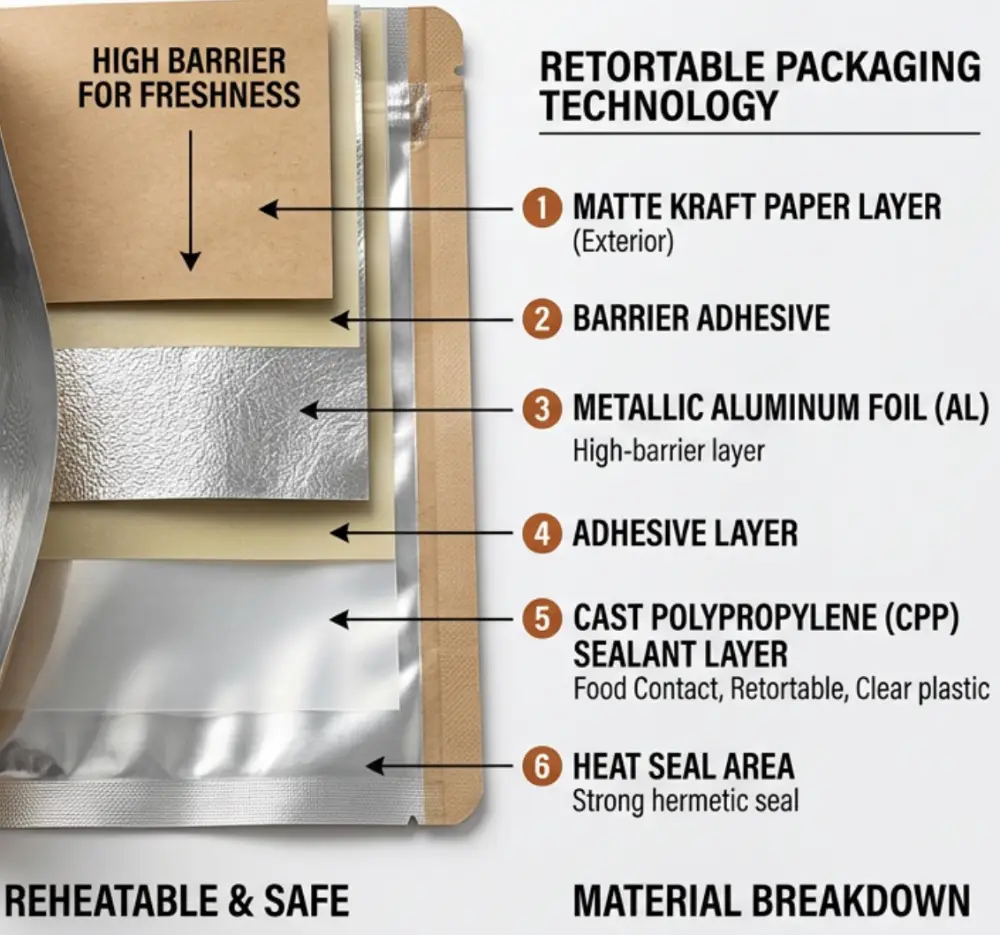
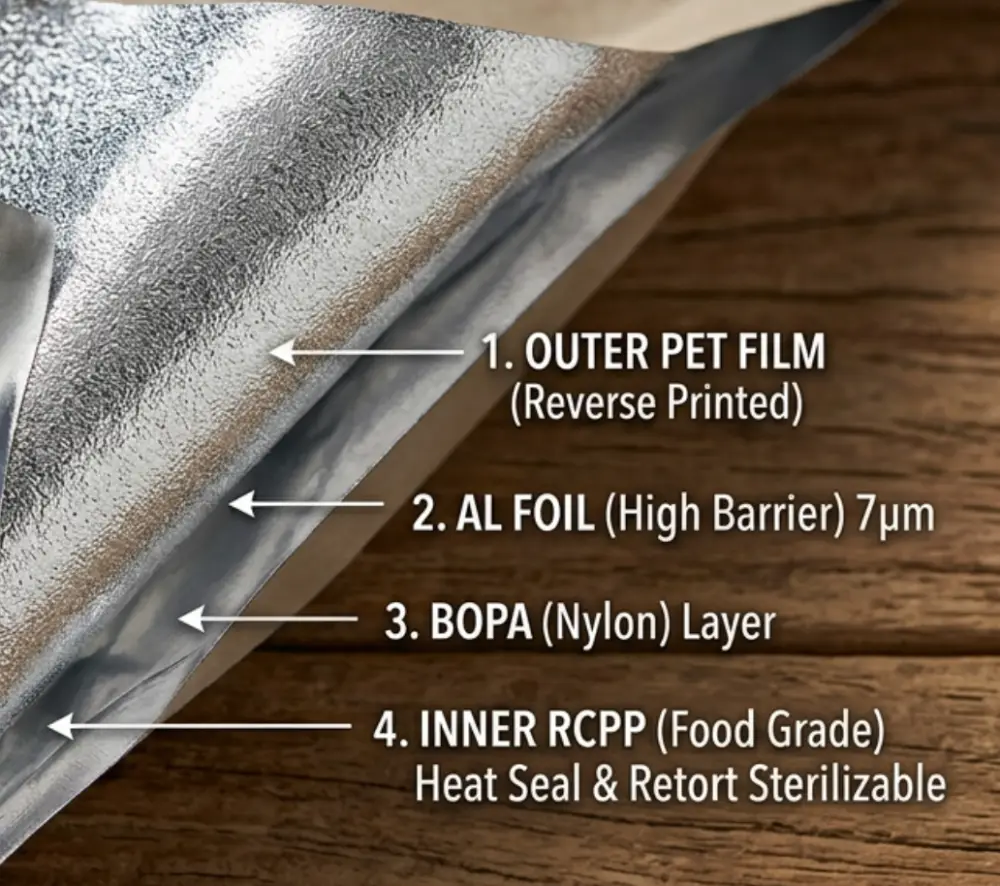
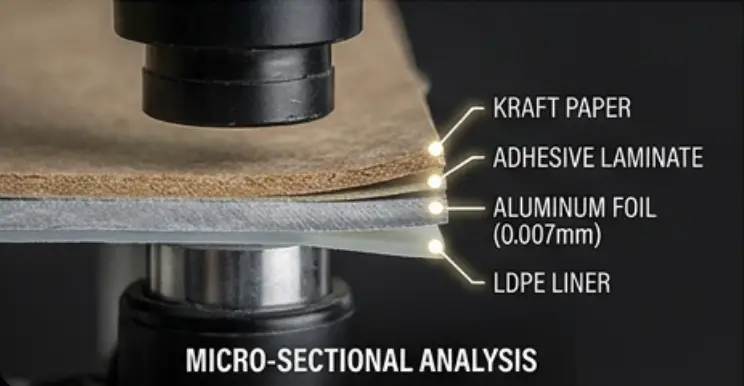
The film structure is the heart of the package. Most retort pouches use multiple layers laminated together, and each layer has a job. The outer layer carries print and resists punctures, the middle layer blocks oxygen and light, and the inner layer seals and contacts the food.
The Common Layers Explained
Here's how the typical layers break down so you can speak the language with confidence:
- PET (polyester): The tough outer layer that holds print and survives abuse.
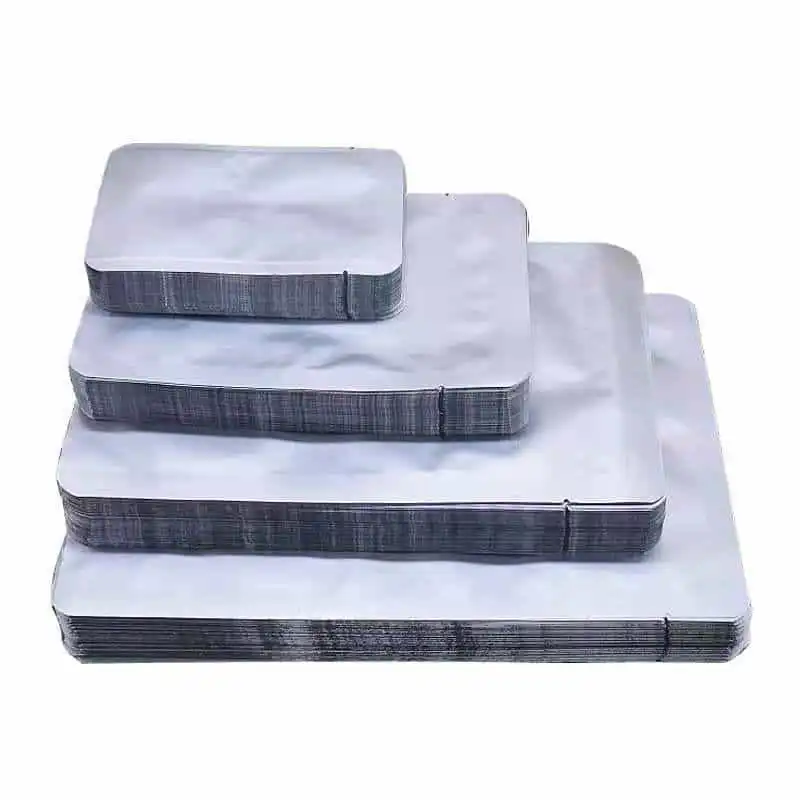
- Aluminum foil: The gold standard for blocking oxygen, light, and moisture. Used when you need long shelf life and zero light exposure.
- Nylon (BOPA): Adds puncture resistance and flexibility, great for chunky products.
- CPP (cast polypropylene): The food-contact sealant layer that handles the heat of sterilization.
Foil vs. Transparent Barriers
One big decision is whether to use foil or a clear high-barrier film. Knowing how to select retort pouch material for sterilization starts here, because the choice affects shelf life, appearance, and recyclability all at once.
Foil gives the strongest barrier and longest shelf life, but you can't see the product and it's harder to recycle. Clear structures using transparent coatings let shoppers see what they're buying, which builds trust, though they typically offer shorter protection.
| Barrier Type | Oxygen Protection | Typical Shelf Life | See-Through? | Best For |
|---|---|---|---|---|
| Aluminum foil | Excellent | 18–24 months | No | Pet food, soups, long-life meals |
| Transparent high-barrier | Good | 9–12 months | Yes | Premium sauces, visible products |
| Metallized film | Very good | 12–18 months | No | Snacks, dry mixes |
Because we hold FDA and ISO 22000 certifications, we always recommend matching the barrier to your real shelf-life target, not just the longest one available. Over-engineering the package wastes money you could spend elsewhere.
Getting the Thickness Right
Thickness is where a lot of brands either overspend or risk failure. Too thin, and seals burst during processing or pouches puncture in shipping. Too thick, and you're paying for material you don't need while making the package stiff and hard to fill.
The factors to consider when choosing retort pouch thickness include the weight of your product, the sharpness of any chunks, the sterilization temperature, and how rough the shipping journey will be. A 200g sauce sachet and a 2kg pet food bag live in completely different worlds.
As a manufacturer that has produced flexible packaging for over 20 years, we usually start testing in this range and adjust based on drop tests and seal-strength results:
| Product Weight | Typical Total Thickness | Common Use |
|---|---|---|
| Up to 250g | 90–110 microns | Sauces, condiments, single servings |
| 250g–1kg | 110–140 microns | Ready meals, soups, baby food |
| 1kg–3kg | 140–180 microns | Pet food, bulk meals, foodservice |
These are starting points, not rules. The only way to know for sure is to test your actual product through your actual retort cycle. That's why we run samples before any production run.
Choosing Size, Shape, and Format
Size seems simple until you factor in fill volume, headspace, and how the package sits on a shelf. Figuring out how to choose retort pouch size and barrier properties together is smart, because the two interact. A larger package with thin film may sag or leak, while the right pairing stands tall and proud.
Common Formats and Where They Shine
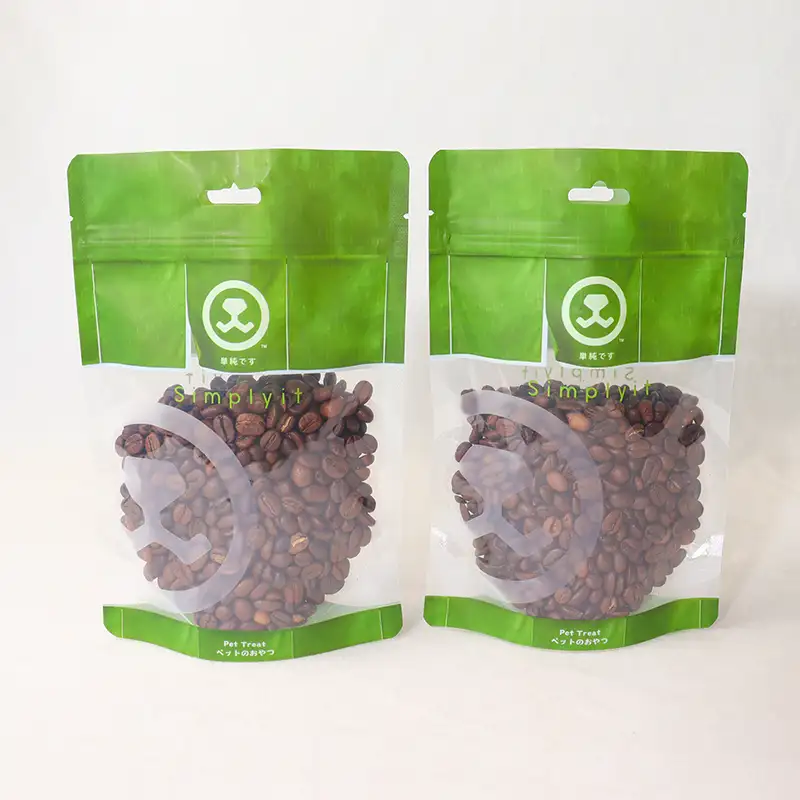
- Stand-up pouches: The shelf favorite. They stand on their own, show off your branding, and work for sauces, pet food, and meals.
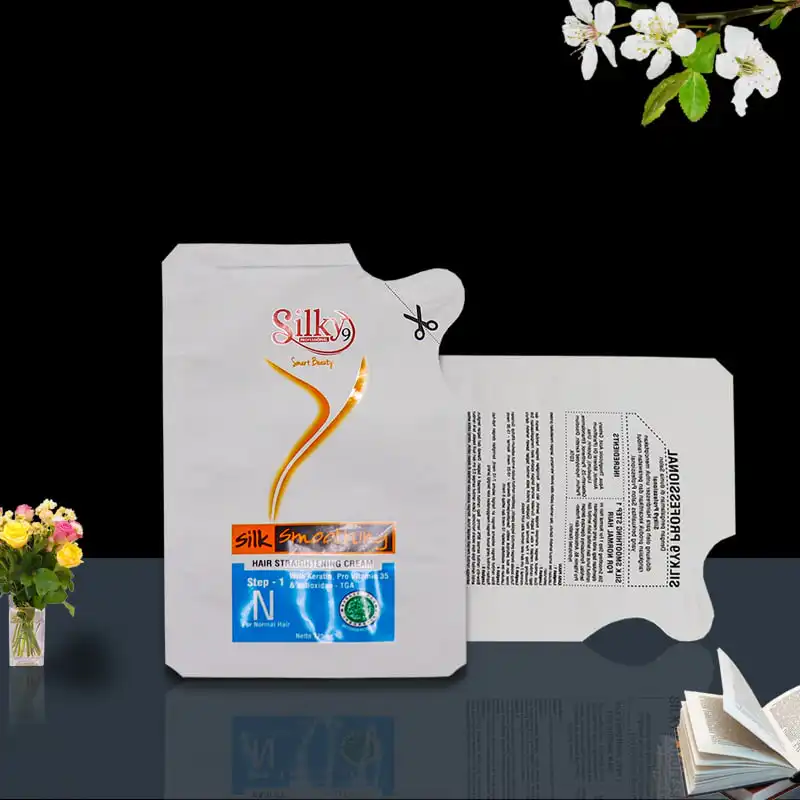
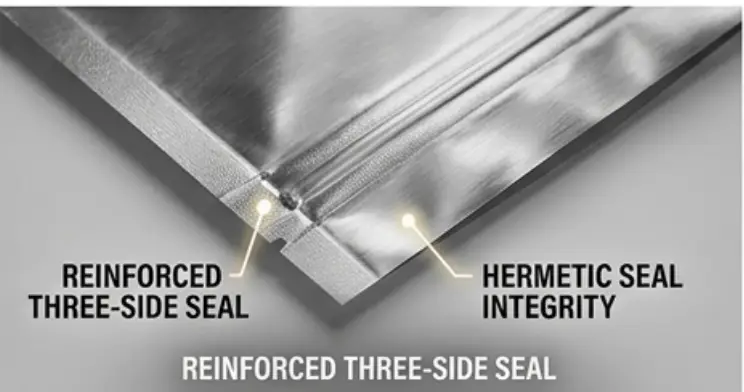
- Flat three-side seal: Great for thin or single-serve products like sauces and pre-cooked grains.
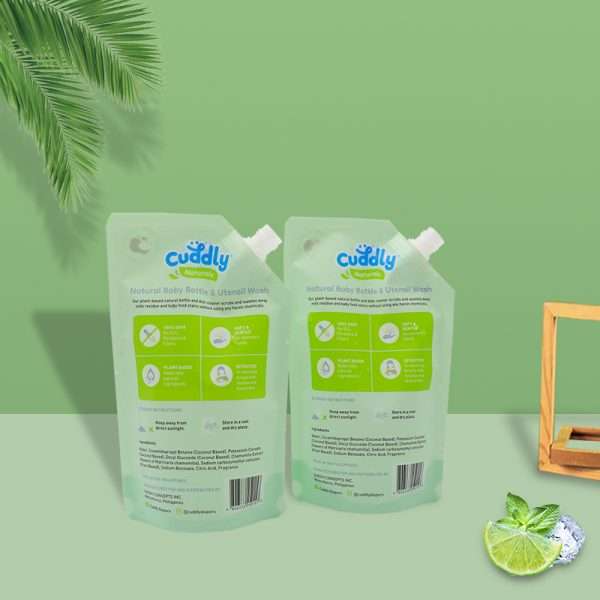
- Spouted pouches: Perfect for liquids and purees that need easy pouring or resealing, popular for baby food and drinks.
- Gusseted bottom: Adds volume and stability for heavier contents.
Add-ons matter too. A tear notch, a zipper for resealing, or a rounded corner can lift the whole experience. Our in-house design team often helps brands who only have a rough idea, turning a sketch into dieline-ready artwork that runs cleanly on the press.
Matching the Package to Your Sterilization Process
This is the make-or-break step. Your package has to survive the exact heat and pressure of your process without delaminating or losing seal strength. The right structure for a gentle pasteurization cycle is not the right structure for an aggressive high-heat cook.
If you're running aggressive cycles, the best retort pouch for high temperature processing uses a heat-stable adhesive and a CPP sealant rated above your peak temperature. Standard adhesives can break down under repeated high heat, causing layers to separate, which nobody wants to discover after a full production run.
A pouch that passes a single test cycle can still fail in volume production if the seals weren't validated across a full batch. Always test under real conditions.
In our 6,800㎡ cleanroom facility, we validate seal integrity and lamination strength before scaling up, so surprises stay out of your supply chain. Sterilization testing isn't a formality, it's the proof your package will hold.
Knowing Your Industry: Real-World Considerations
Different products carry different unwritten rules, and understanding them sets a strong package apart from a generic one.
For pet food, today's pet parents read ingredient lists like they're shopping for themselves. A high-barrier package keeps fats from going rancid and aroma locked in, which signals freshness and quality the moment the bag opens.
For sauces and ready meals, acidic and oily contents demand films that won't break down over months on the shelf. Shoppers also judge premium meals partly by how the package feels in hand, so matte finishes and clean print pay off.
For baby food, parents scrutinize safety more than any other category. Spouted formats with tamper-evident features and certified food-contact films aren't optional, they're expected.
Knowing how to choose the right retort pouch for food packaging means thinking past the spec sheet and into the hands of the person who finally opens it.
Sustainability: A Growing Decision Factor
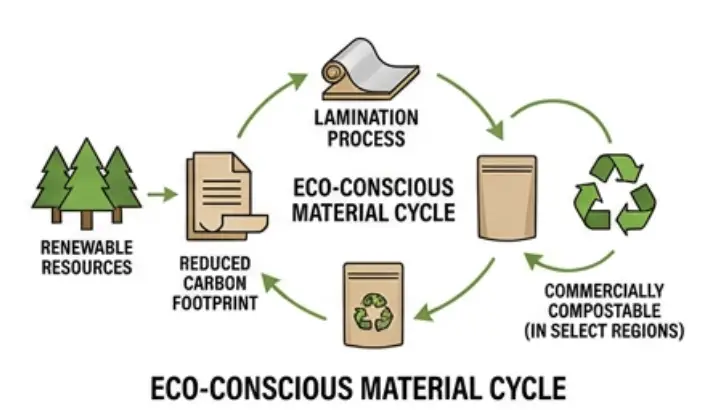
Recyclability has moved from a nice-to-have to a real purchase driver. A 2024 industry survey found that a majority of shoppers consider packaging environmental impact when choosing between similar products, and that share has kept climbing.
Mono-material structures, often all-polypropylene, are emerging as recyclable alternatives to traditional mixed laminates. They don't yet match foil's barrier in every case, but they're closing the gap fast for medium shelf-life products.
Our GRS certification means we can source recycled content where it makes sense for your goals. If sustainability is part of your brand story, build that into the conversation early rather than retrofitting it later.
Your Decision Checklist
Before you finalize anything, run through this quick checklist. It captures the whole process in one glance:
- Product profile: Defined the contents, texture, and chemistry?
- Sterilization specs: Confirmed your exact temperature and cycle time?
- Barrier match: Chosen foil or transparent based on real shelf-life needs?
- Thickness: Sized for weight, chunks, and shipping stress?
- Format and size: Picked a shape that fills, ships, and sells well?
- Extras: Decided on spouts, zippers, notches, or finishes?
- Samples tested: Validated through a real retort cycle, not just on paper?
- Certifications: Confirmed your supplier holds the right food-safety credentials?
Tick all eight, and you're in a strong position to move forward with confidence.
Why Working With the Right Partner Changes Everything
The package is only as good as the people making it. A supplier who tests, validates, and shares samples saves you from costly failures down the line. One who just quotes a spec and ships it leaves you holding the risk.
At YLTPACK, we've spent over two decades helping brands move from rough concept to shelf-ready packaging, with our own design team, cleanroom production, and full food-safety certifications backing every order. We'd rather get the structure right the first time than rush a run that fails in the retort.
If you're weighing options and want a second set of eyes on your project, reach out and talk it through. You can message us on WhatsApp at +86 182 1944 5665 or email [email protected], and we'll help you map specs to your product, samples included.
Frequently Asked Questions
How long does it take to develop a custom retort pouch?
Most custom projects move from design to validated samples in a few weeks, depending on complexity and artwork readiness. Sterilization testing adds time but is non-negotiable, since it confirms your package survives real conditions. Rushing this stage is the fastest way to a failed production run, so we build in proper testing from the start.
Can I get a clear pouch and still have a long shelf life?
Yes, to a point. Transparent high-barrier films have improved a lot and now support 9–12 months for many products, which suits sauces and visible foods well. For 18–24 month shelf life or light-sensitive contents, foil or metallized structures remain the safer call. The right answer depends on your specific product and shelf-life target.
What's the minimum order quantity for custom heat-resistant pouches?
Minimums vary by structure, print method, and whether you need special add-ons like spouts or zippers. Simpler formats often carry lower thresholds, while highly customized laminates may need larger runs to justify setup. Reach out with your project details and we'll share a realistic figure for your specific design, along with options if you're starting small.
Are these flexible packages microwave safe?
Many are, but it depends on the film makeup. Foil-based structures can't go in a microwave, while certain transparent or specially designed steam-vent versions are built for it. If reheating in the package is part of your product's appeal, tell us early so we can spec a structure that handles it safely and vents pressure the right way.
How should I store the empty pouches before filling?
Keep them in a cool, dry space away from direct sunlight and strong odors, ideally in their original sealed cartons until you're ready to run them. Extreme heat or humidity can affect the sealant layer and adhesives over time. Following first-in, first-out rotation also helps keep stock fresh and performing as tested.