If you sell shelf-stable food, the package is not just a container. It directly affects food safety, shelf life, shipping cost, and how fast consumers choose your product on the shelf.
That is why retort pouch packaging has become a serious alternative to cans and jars across ready meals, sauces, seafood, baby food, and pet food. For many brands, it offers the shelf stability of a can with the convenience and lighter weight of flexible packaging.
What Is a Retort Pouch?
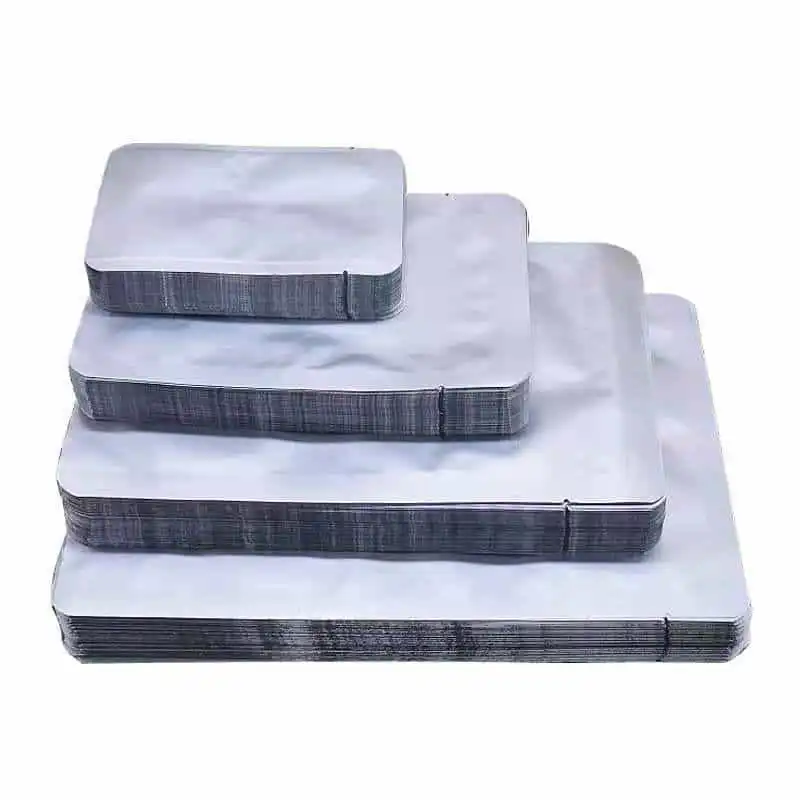
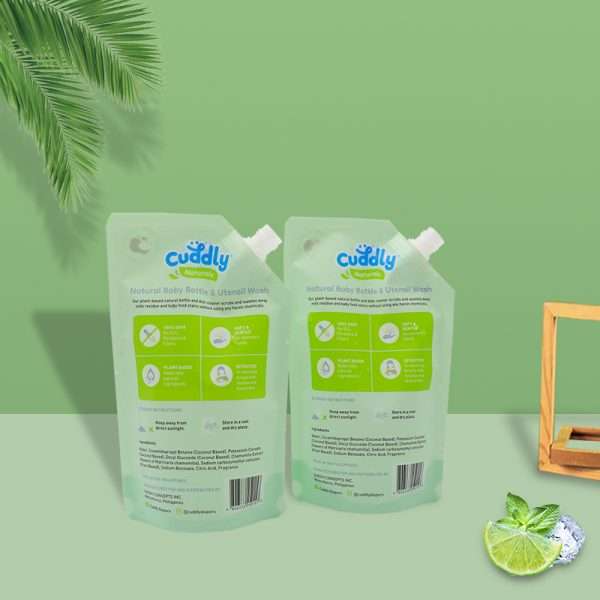
A retort pouch is a flexible, heat-resistant, multilayer package designed to hold food that will be thermally sterilized after filling and sealing. In simple terms, what is retort pouch packaging? It is a pouch engineered to survive high-temperature processing so food can remain shelf-stable without refrigeration.
This format is widely used for retort pouch food packaging because it combines strong barrier protection with lower material weight than rigid packaging. When processed correctly, it can deliver commercial sterility and long shelf life.
How Retort Pouch Packaging Works
Retort pouch packaging works by combining high-performance barrier films with controlled thermal processing. The pouch protects the product from oxygen, moisture, light, and contamination, while the retort process destroys harmful microorganisms.
After the food is filled and hermetically sealed, the pouch is heated under pressure in a retort system. This allows the contents to reach sterilization temperatures without the package bursting or losing seal integrity.
The result is a shelf-stable pack that can often be stored at room temperature for months or even years, depending on formulation, process validation, and pouch structure.
Key Layers in a Retort Pouch
Most retort pouches use a multilayer construction because no single material can deliver all required properties. Each layer has a specific job.
| Layer Material | Main Function | Why It Matters |
|---|---|---|
| Polyester (PET) | Printability and heat resistance | Provides outer strength and supports graphics quality |
| Aluminum Foil | Excellent oxygen, moisture, and light barrier | Helps protect flavor, color, and shelf life |
| Nylon (PA) | Puncture resistance and durability | Improves mechanical strength during processing and transport |
| Polypropylene (CPP or RCPP) | Food-contact sealant layer | Enables heat sealing and retort resistance inside the pouch |
Not every pouch uses the exact same structure. The right laminate depends on the food, fill temperature, viscosity, fat content, shelf-life target, and whether the product requires hot fill, pasteurization, or full retort.
What Makes It Different From Regular Flexible Packaging?
Regular flexible packaging may look similar, but it is usually not built for sterilization at high temperature and pressure. Standard snack or dry-food pouches often cannot tolerate retort conditions without seal failure, delamination, distortion, or barrier loss.
Retort pouch food packaging is specifically engineered to remain stable during the retort pouch sterilization process. That is the critical difference.
Retort Pouch Sterilization Process Explained
The retort pouch sterilization process is a controlled thermal treatment that makes food commercially sterile. This means the product is processed to eliminate harmful microorganisms and reduce spoilage risk to a safe level for shelf-stable distribution.
While exact parameters vary by product, the process usually follows these steps:
- Product preparation — Food is cooked or prepared to specification.
- Filling — The product is accurately dosed into the pouch.
- Sealing — The pouch is hermetically sealed to prevent contamination.
- Pressurized heating — Pouches are processed in a retort chamber at validated temperature and pressure.
- Cooling — Controlled cooling protects pouch integrity and product quality.
- Drying — Exterior moisture is removed before packing.
- Final inspection — Seal quality, appearance, and process records are checked.
In professional food manufacturing, this process is validated based on product pH, water activity, particle size, viscosity, pack dimensions, and target microbial lethality. Industry experts generally agree that process validation is essential because under-processing creates safety risks, while over-processing can reduce texture, flavor, and nutrition.
Typical Temperature and Time Range
Typical retort conditions are often in the range of 110°C to 135°C. The actual time and temperature depend on whether the food is low-acid or high-acid, thin or viscous, and packed in a small or large format.
For example, a smooth sauce in a flat pouch may heat faster than a chunky meat stew. This is one reason pouches often provide better heat penetration than cans of similar fill weight.
| Factor | How It Affects Retort Conditions |
|---|---|
| Product Acidity | Higher-acid foods may require less severe processing than low-acid foods |
| Viscosity | Thicker products usually heat more slowly |
| Package Size | Larger packs generally need longer process time |
| Food Particulates | Chunky products may require more careful heat distribution validation |
| Pouch Shape | Flat profiles often improve heat penetration efficiency |
Types of Products Commonly Packed in Retort Pouches
Retort pouches are now used across a wide range of food categories. They are especially effective where brands need shelf stability, lower shipping weight, and convenience.
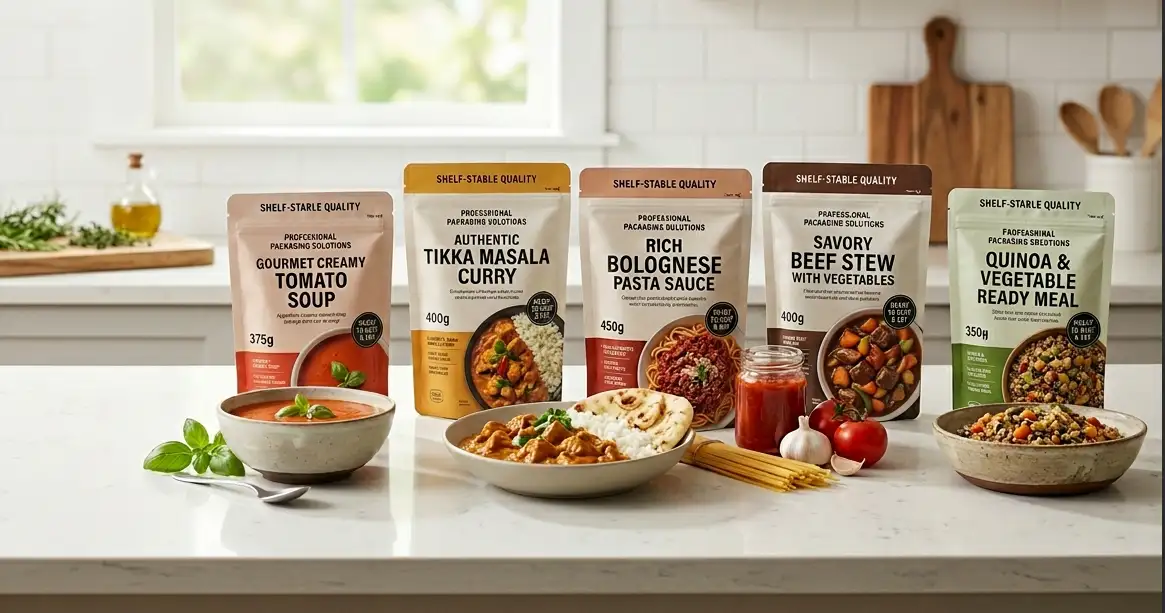
- Ready-to-eat meals
- Curry and rice dishes
- Soups and broths
- Pasta sauces and gravies
- Seafood products
- Bean dishes and stews
- Baby food and purees
- Military rations
- Outdoor and emergency meals
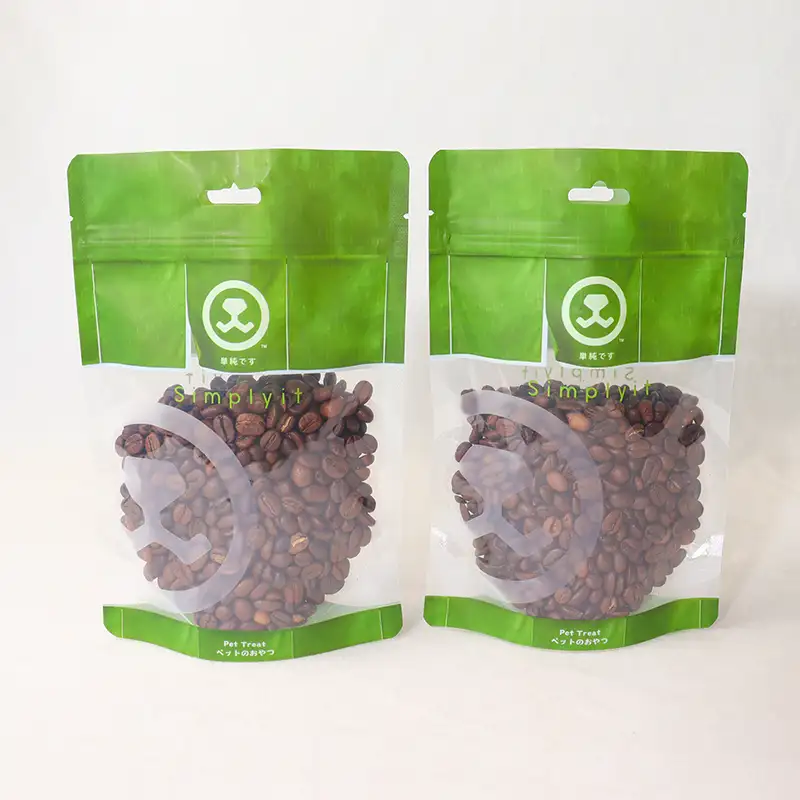
- Wet pet food and pet treats
In real-world retail, this format is common in Asian ready meals, premium pet food, camping food, and single-serve convenience products. Many brands prefer pouches because they reduce freight weight and improve consumer ease of use.
Benefits of Retort Pouch Food Packaging
Retort pouch food packaging offers both technical and commercial advantages. It is not the right fit for every product, but it solves several major packaging problems at once.
- Long shelf life — Supports ambient storage when properly processed.
- Lower transport weight — Often much lighter than metal cans or glass jars.
- Efficient storage — Flat or stand-up formats save warehouse space.
- Faster heating — Thin profiles can improve heat transfer in processing and end use.
- Consumer convenience — Easy-open, portable, and suitable for single-serve or portioned use.
- Strong branding surface — High-quality graphics improve shelf impact.
Industry packaging studies commonly show that flexible formats can reduce logistics costs because they take up less space before filling and weigh less after filling. For brands shipping large volumes, that difference can be significant.
Retort Pouch vs Canned Packaging
The search query retort pouch vs canned packaging is common because buyers want a practical comparison, not just technical theory. Both formats can deliver shelf-stable food, but they perform differently in logistics, filling, consumer experience, and sustainability trade-offs.
Cans still offer excellent durability, a long history of use, and established recycling streams in many regions. However, retort pouches often win when a brand prioritizes lightweight packaging, lower shipping cost, and convenience-focused design.
Table: Retort Pouch vs Can Comparison
| Criteria | Retort Pouch | Can |
|---|---|---|
| Package Weight | Very light | Heavier |
| Shelf Life | Excellent when properly processed | Excellent when properly processed |
| Heating Efficiency | Often faster due to thin profile | Usually slower for equivalent fill weight |
| Transport Cost | Often lower due to weight and space savings | Often higher |
| Opening Convenience | Easy tear options available | May require ring pull or opener depending on design |
| Filling and Storage Efficiency | Efficient in many flexible-pack systems | Well established in high-volume canning lines |
| Consumer Portability | High | Moderate |
| Sustainability Considerations | Uses less material by weight, but multilayer recycling can be difficult | Metal recycling infrastructure is often stronger |
| Shape Flexibility | High | Limited |
If your product is sold in e-commerce, travel retail, outdoor food, or modern convenience channels, pouches often make strategic sense. If maximum crush resistance and traditional infrastructure matter most, cans may still be the better choice.
Are Retort Pouches Safe for Food?
Yes, retort pouch food packaging is safe when the pouch structure, sealing conditions, and thermal process are properly designed and validated. Safety depends on the entire system, not just the packaging material.
The key food safety principles include:
- Commercial sterility — The retort cycle must achieve the required microbial lethality.
- Seal integrity — Poor seals can compromise the entire pack.
- Barrier performance — The laminate must protect against oxygen, moisture, and light as required.
- Food-contact compliance — Materials must meet applicable food-contact regulations.
- Process control — Filling, sealing, retorting, and cooling must be validated and monitored.
Reputable manufacturers also use migration testing, seal-strength testing, burst testing, and shelf-life evaluation to confirm package performance. In practice, food safety comes from the combination of approved materials, a validated process, and strict quality assurance.
At YLTPACK, we understand that compliance matters as much as packaging performance. YLTPACK was founded in 2005 and supports custom packaging based on client requirements. The company can provide free samples and has certifications including ISO 22000 and FDA-related compliance standards for applicable food packaging needs.
When Should Brands Use Retort Pouches Instead of Cans?
Brands should consider retort pouches when product strategy goes beyond basic shelf stability. The right packaging should support your logistics model, target market, and consumer use case.
Retort pouches are often a strong fit when you need:
- Lightweight packaging for lower freight cost
- Single-serve or portable meal formats
- Fast-heating ready meals
- Premium shelf appearance with strong graphics
- Flexible pack sizes and custom formats
- E-commerce-friendly packaging with reduced shipping weight
Cans may still be preferable for highly impact-prone supply chains, products requiring maximum rigidity, or operations already optimized around canning infrastructure. The decision should be based on total cost, processing compatibility, shelf-life targets, and consumer expectations.
| Business Goal | Better Fit | Reason |
|---|---|---|
| Reduce shipping weight | Retort pouch | Flexible packs are typically lighter than cans |
| Traditional high-volume canned line | Can | Existing infrastructure may reduce conversion cost |
| Portable convenience meals | Retort pouch | Easy to carry, store, and open |
| Maximum rigidity | Can | Metal structure provides strong physical protection |
| Custom-shaped branding opportunities | Retort pouch | Flexible design options support brand differentiation |
FAQ
What is a retort pouch made of?
A retort pouch is usually made from multiple laminated layers such as polyester, aluminum foil, nylon, and polypropylene. Each layer contributes a different function, including heat resistance, puncture resistance, barrier protection, and reliable sealing during thermal processing.
What is retort pouch packaging used for?
Retort pouch packaging is used for shelf-stable foods and pet food that require thermal processing, including ready meals, curry, rice, sauces, seafood, soups, baby food, military rations, and wet pet food.
How does the retort pouch sterilization process work?
The product is filled into the pouch, hermetically sealed, and then heated under pressure in a retort system at validated temperatures. After heating, the pouches are cooled, dried, and inspected to confirm package integrity and process compliance.
Is retort pouch food packaging safe?
Yes, it is safe when commercially sterile processing, approved food-contact materials, seal integrity, and validated manufacturing controls are in place. The safety of the pack depends on both the pouch structure and the processing system.
What is the difference between retort pouch vs canned packaging?
In the comparison of retort pouch vs canned packaging, pouches are generally lighter, more portable, and often heat faster, while cans offer strong rigidity and established recycling systems. Both can provide excellent shelf life when properly processed.
How long does food last in a retort pouch?
Food in a retort pouch often lasts from several months up to 1 to 2 years, and in some cases longer, depending on the formulation, barrier structure, storage conditions, and validated retort process.
Can retort pouches be recycled?
Many traditional retort pouches are difficult to recycle because they use multilayer laminates made from different materials. However, the industry is developing more recyclable mono-material and advanced barrier solutions to improve future sustainability.
Need Help Choosing the Right Retort Pouch Packaging?
Choosing the wrong pouch structure can lead to seal failure, poor shelf life, wasted testing time, and higher production cost. Choosing the right one can improve product safety, logistics efficiency, and brand performance.
YLTPACK helps brands select the right retort pouch structure based on product type, sterilization compatibility, barrier requirements, and custom packaging goals. We offer custom solutions based on your requirements, free samples, and support backed by ISO 22000 and FDA-related compliance standards.
Founded in 2005, YLTPACK works with food brands that need dependable packaging, practical guidance, and scalable customization.
Contact YLTPACK today at [email protected] to discuss your product, request free samples, and get expert support on retort pouch packaging that fits your market and process.