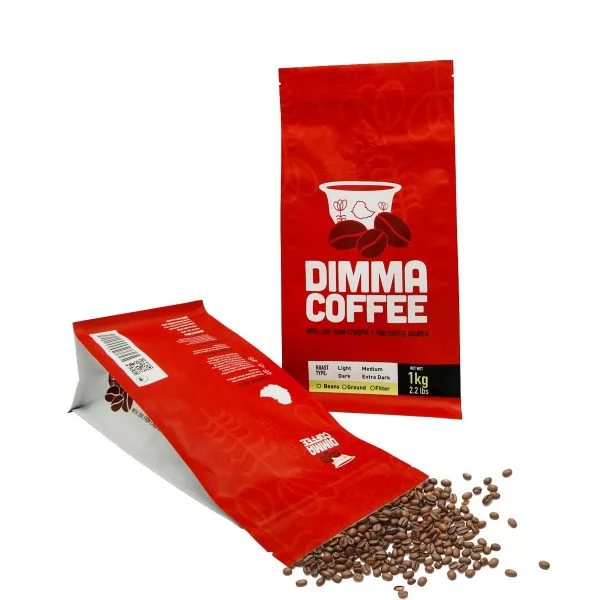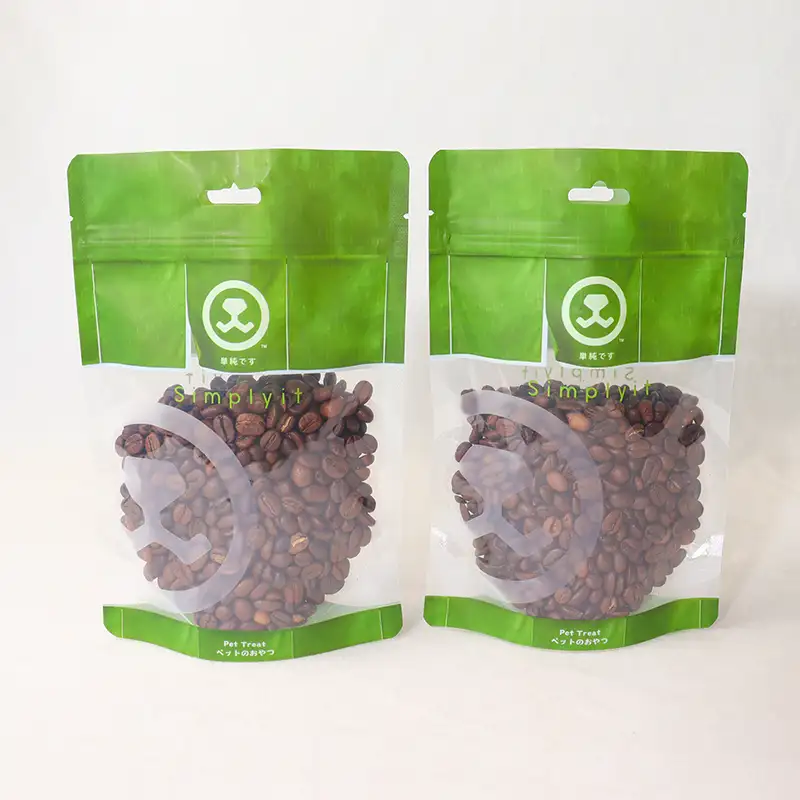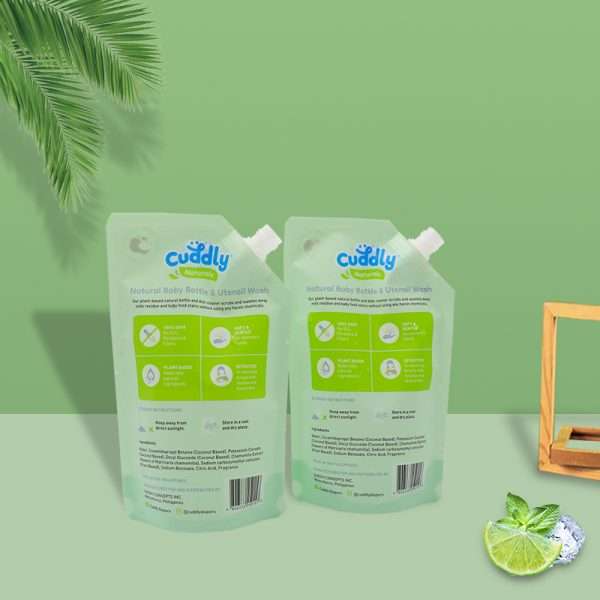
A sample pouch arrives with 100 g of tea in it and the bag is half empty. Or the opposite: the tea fits, but the zipper won't close and the shipper carton lid sits proud. Both problems come from the same gap, and loose leaf tea pouch size is best settled from fill weight, leaf density and bag style before artwork is approved.
What Size Pouch Holds a Given Weight of Loose Leaf Tea?
Pouch size follows the volume the tea occupies, not its weight alone. Two teas of the same weight can differ in volume by a factor of two or more, so a weight-to-size rule is only a starting point. Confirm it with a fill test on your own leaf, because the chart below gives typical ranges, not guarantees.
Volume is then reduced by what the bag itself uses up. The top seal, the zipper zone, any tear notch and the folded-over top all take height that tea cannot occupy. A pouch printed at 200 mm tall may only hold tea in the lower part of that height.
Why weight alone misleads
Rolled or pelleted oolong and gunpowder-style green tea pack tightly. Broken-leaf black tea sits in the middle. Whole-leaf white tea, large-cut herbal blends and flowers are light and bulky, and a 50 g fill can look like twice the volume of the same weight of rolled leaf.
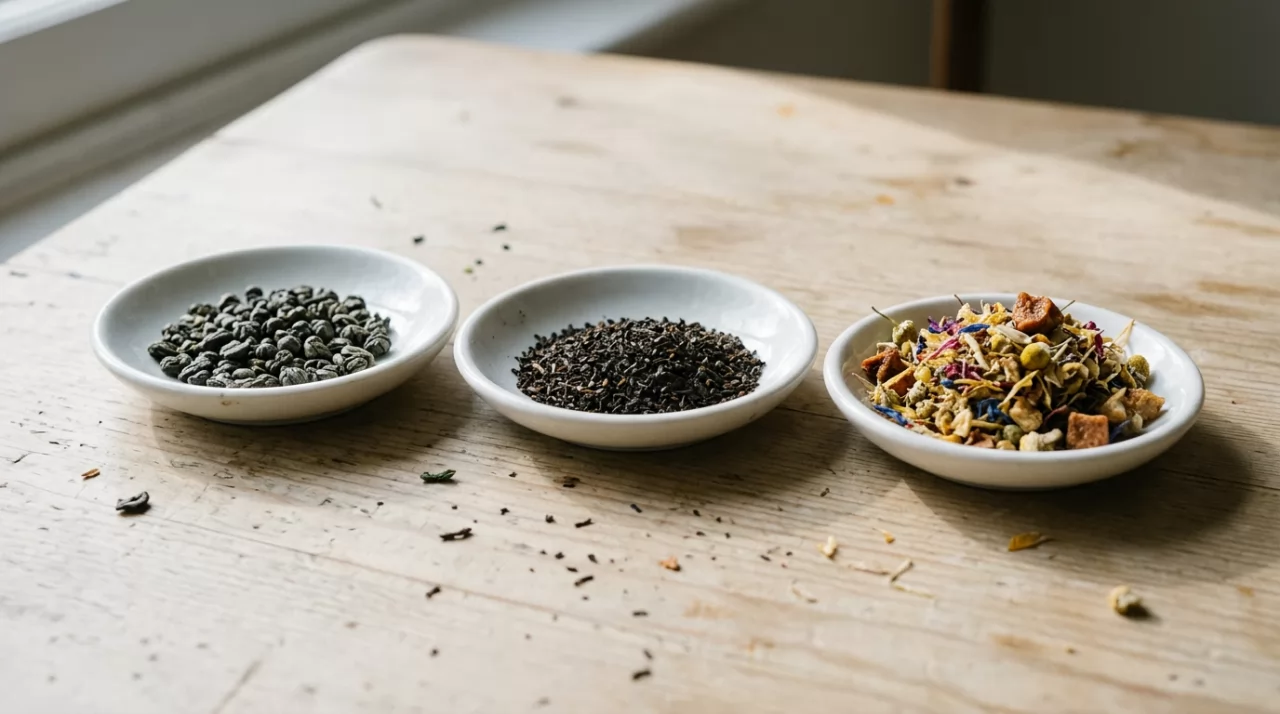
Blends complicate it further. A herbal mix with dried fruit pieces settles unevenly, and the fine dust sinks while the large pieces ride on top. Size the bag for the blend as it will be filled, not for the densest ingredient.
Usable height versus printed height
Subtract the zones that cannot hold product. A pouch with a press-to-close zipper typically loses a band at the top for the seal, the zipper and the finger space above it. If a tear notch sits above the zipper, that band is a little larger again. Stand-up pouches also lose some height to the bottom gusset seal and the curve of the fold.
So ask for the filled height, not the cut height. Many sizing mistakes start when a buyer matches a competitor's printed dimensions without checking how much of that bag is usable.
Tea Pouch Size Chart by Weight and Leaf Type
The table below is a reference for stand-up pouches with a zipper. Widths and heights are approximate and written as ranges, because the final dimension depends on leaf density, fill method and the exact bag build. Treat every row as a starting point to confirm with a sample.
| Fill weight | Leaf style | Typical width (mm) | Typical height (mm) | Typical gusset (mm) |
|---|---|---|---|---|
| 25 g | Rolled or dense | 90–110 | 140–160 | 50–60 |
| 50 g | Broken leaf | 100–120 | 160–190 | 60–70 |
| 50 g | Fluffy or whole leaf | 120–130 | 190–210 | 70–80 |
| 100 g | Rolled or dense | 110–130 | 170–200 | 70–80 |
| 100 g | Broken leaf | 120–140 | 200–230 | 70–90 |
| 250 g | Broken leaf | 140–160 | 230–280 | 80–100 |
| 250 g | Fluffy or herbal | 160–180 | 260–310 | 90–110 |
The pattern to take from it: fluffy leaf pushes the same weight up one size step, in height first and then in width.
Reading the chart for your blend
Start from the row that matches your fill weight and leaf style, then adjust. Denser than the example, say a tightly rolled leaf, and you can often drop toward the lower end of the range. Lighter, with long leaf, flowers or large herbal pieces, move to the upper end or one size up.
Also consider how full you want the bag to look. A pouch filled tight to the zipper looks generous on a shelf but is hard to close and reseal. A bag that is two-thirds full looks short-changed. Most brands aim for product to fill the lower portion, with a clear band of empty bag above it for sealing and for the hand.
Where metric and ounce labels diverge
If you sell in both metric and ounce markets, decide which unit the fill is based on. One ounce is about 28.35 g, so 50 g is roughly 1.76 oz, and 100 g is roughly 3.53 oz. Many brands round the label to a clean number such as 1.75 oz or 3.5 oz.
Rounding is where mismatches happen. If the bag is filled to 100 g and labelled 3.5 oz (which is 99.2 g), the label is lower than the contents, which is generally the safe direction. Filling to the rounded ounce and labelling the metric figure can leave the label above the actual contents. Check the labelling rules of each destination market, and let the fill target drive the declared quantity.
Measure First: Six Steps to a Confirmed Size
This procedure takes a bench, a graduated container and a ruler. Do it with the actual production blend, not a stand-in, since leaf cut and moisture change the result. Each step has a check you can write down.
- Weigh the target fill. Use a scale you trust at the weight you intend to label, and note the tolerance your filling line can hold.
- Measure the settled volume. Pour the tea into a graduated container and tap it until it stops settling, since transit vibration does the same thing.
- Add headspace and closure allowance. Add room for the top seal, zipper, tear notch and any fold-over, so the filled height is correct and not just the cut height.
- Compare against a capacity calculator and a sample. The calculator gives a first dimension, and a physical pouch of similar size tells you whether it holds up.
- Check shelf and carton fit. Confirm the pouch fits the shelf, display box or mailer, then work out cartons per pallet.
- Fill a sample pouch and sign off. Close it, stand it up, tip it, and only then approve the dimensions for artwork.
Fill and tap a test volume
Tap the container on a bench ten or so times, or until the level stops dropping. Read the volume at the top of the leaf. Do this three times and use the largest reading, since you are sizing for the loosest realistic fill, not the best case.
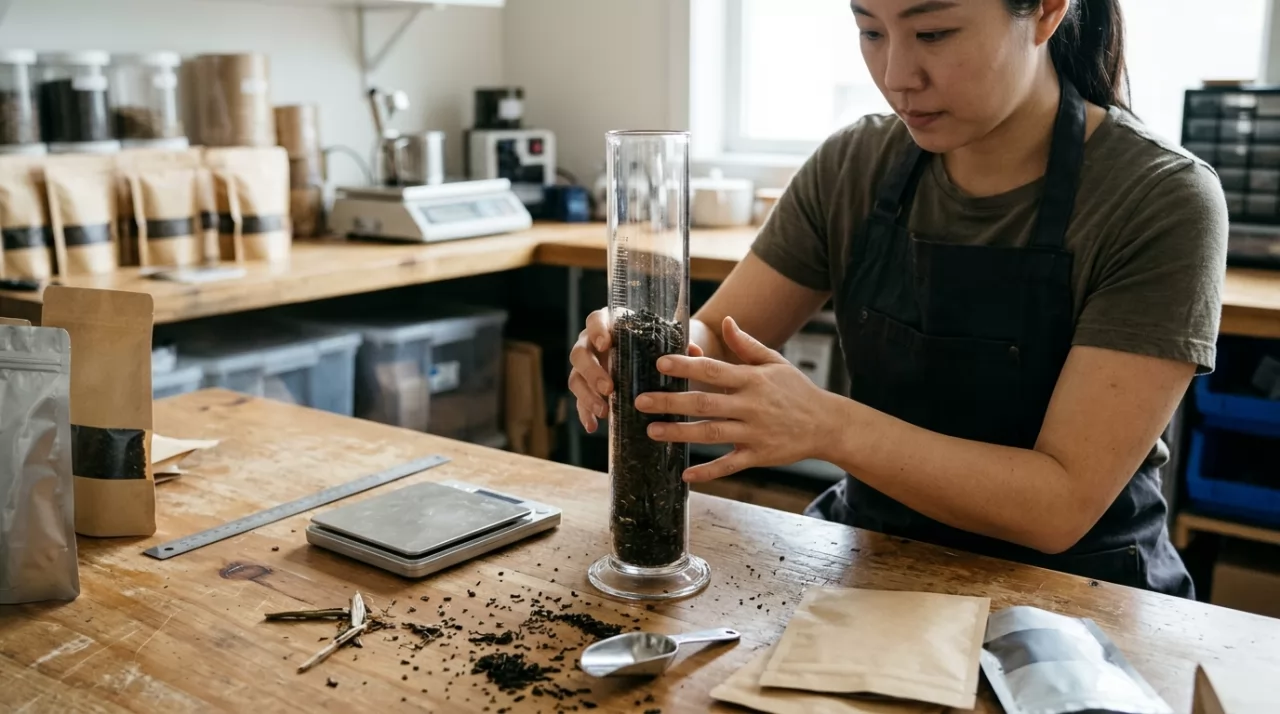
Tea shipped long distances compacts, and the bag that looked full at filling may look slack on arrival. That is normal and is why a slightly conservative fill volume is safer than a snug one.
Add headspace and closure allowance
The tested volume is only the tea. A bag needs air space above the fill so the seal does not trap leaf, and it needs a zipper zone that stays clear. A pouch with a window or a valve can also lose a little printable and usable area.
Work out the required filled volume, then convert it to dimensions with a pouch capacity calculator, or compare it against a physical sample of similar size. The calculator gives a first estimate. The sample shows how the bag actually stands and folds.
Do not size from the printed dimensions of a bag you like. The same 200 mm height can hold very different amounts of tea depending on where the zipper and seals sit.
Check shelf fit and carton count
Measure the shelf opening or the display box, and allow for the pouch to bulge when full. A stand-up pouch bulges at its mid-height, so the depth when filled is more than the flat gusset suggests.
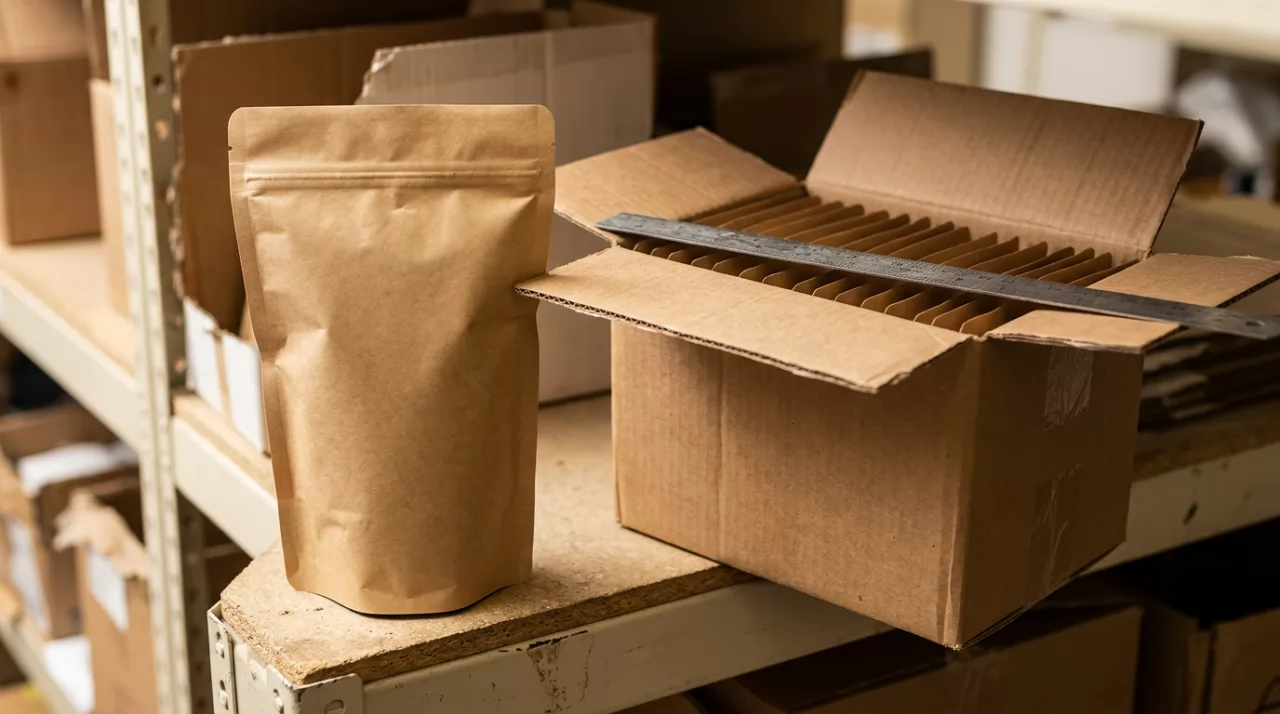
Then check the carton. Divide the inner carton dimensions by the filled pouch dimensions, in both orientations, to see how many fit. A pouch that is a few millimetres too wide may drop a whole column per carton, which raises the freight cost per unit across a pallet.
Stand-Up, Flat Bottom or Flat Pouch: Which Shape Suits Your Tea?
Style changes the dimensions needed for the same fill. A stand-up pouch is a bag with a folded bottom gusset that lets it stand on a shelf. A flat bottom pouch is a bag with a rectangular base and side panels, giving a box-like shape. A flat pouch, such as a three-side-seal bag, has no gusset and holds less for its footprint.
| Criterion | Stand-up pouch | Flat bottom pouch | Flat pouch |
|---|---|---|---|
| Capacity for the same height | Medium | Highest | Lowest |
| Shelf stability | Good when filled | Strongest | Needs a box or hook |
| Printable faces | Front and back | Five panels | Front and back |
| Usable height lost to bottom | Moderate | Moderate | Small |
| Best for | Most retail tea | Premium tins-style look | Samples, small fills |
For most retail loose leaf tea, a stand-up pouch is the default. Choose a flat bottom when a rigid, box-like shelf presence matters and the budget allows.
The practical effect on size: a flat bottom pouch usually needs less height than a stand-up for the same fill, because its base is wider and more of the volume sits low. A flat pouch needs more height or width for the same tea, and sample sachets are where it fits best.
Size Is Tied to Barrier, Closure and Print
Material, closure and extras change the usable volume and the cost. Tea is sensitive to light, moisture and odor, so the structure usually includes a barrier layer, such as foil or a metallised film, or a paper-based laminate with a high-barrier liner. Thicker laminates are stiffer and stand differently, which can shift the dimensions you need.
A window shows the leaf but admits light, so it is usually kept small or omitted for light-sensitive teas. A press-to-close zipper takes height, as covered earlier. A printer can advise on structure and size once it knows the product, the fill weight and the filling method, and that is worth doing before artwork is drawn up. YLTPACK, for one, gives structure and size advice on that basis.
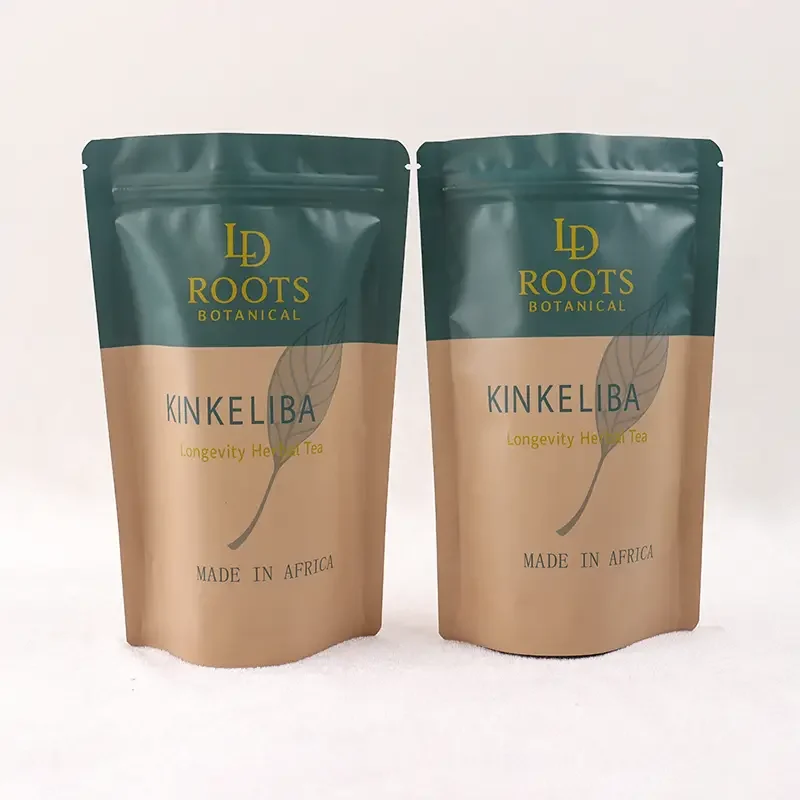
Check the barrier and closure choice at the same time as the size. Changing from a paper laminate to a foil laminate after approving artwork can change stiffness, and so the way the bag stands.
Custom Tea Pouch Sizes: Minimums, Samples and Lead Time
A custom size is normal, but it interacts with the print method. Digital printing starts from 1,000 pcs per design and uses no printing plates, which suits launches, test runs and several blends in one order. Gravure printing starts from 10,000 pcs per design and carries a one-time cylinder charge per colour, which is reused on reorders and suits repeat volume.
Production takes 7–15 days after artwork approval. Shipping is quoted separately with the order, so do not plan the launch date from the production window alone.
Test a sample before a full run. A size that looks right on a drawing can fail once filled, and a change after printing means new artwork or new cylinders. Similar sample bags are free from YLTPACK, with the courier paid by the buyer, so a fill test on real tea costs little compared with a misfit run.
Pre-Order Size Checklist
Run through these before you send a quote request, so the first quote is based on real numbers.
- Have I stated the fill weight and the leaf type or blend?
- Have I measured the tapped volume of the actual tea?
- Is the bag style chosen, and does it fit the shelf or display?
- Do I know the closure, window and any valve I need?
- Do I know the carton or mailer the pouch must fit?
- Are the label units and artwork area settled?
A quote built on these answers is usually accurate the first time, and the sample then confirms it.
When the Sample Doesn't Fit: Troubleshooting
If the pouch is too loose, drop the height or width one step. If it is too tight to close, add height first, since the zipper zone is the usual cause. If the bag bulges at the sides, increase the gusset or reduce the fill. If it tips forward or back, widen the base or reduce the height relative to the width.
FAQ
How much loose leaf tea fits in a pouch of a given size?
It varies by leaf. A pouch around 120 × 200 mm with a gusset often holds roughly 50 to 100 g, depending on density. Confirm with a fill test on your own tea.
Do I need a different size for the same weight of a different tea?
Yes, usually. Light leaf, flowers and large herbal pieces need more volume than rolled or broken leaf of the same weight.
Can one pouch size cover several blends in a range?
Sometimes. Size the pouch for the bulkiest blend, and check that the denser ones do not look under-filled on the shelf.
Should the label show grams, ounces or both?
Both is common when you sell in several markets. Check the labelling rules for each destination, and make sure the declared amount does not exceed the actual fill.
When your fill weight, leaf type and bag style are settled, send them with the quote request and the size can be checked against a sample.