This guide breaks down the engineering, material science, shelf life implications, and total cost considerations of retort pouches versus regular pouches. It's written for procurement teams, product developers, and brand owners who need to make an informed sourcing decision — not a rushed one.
What Is a Retort Pouch? Understanding the Technology Behind Shelf-Stable Packaging
Definition and Core Engineering
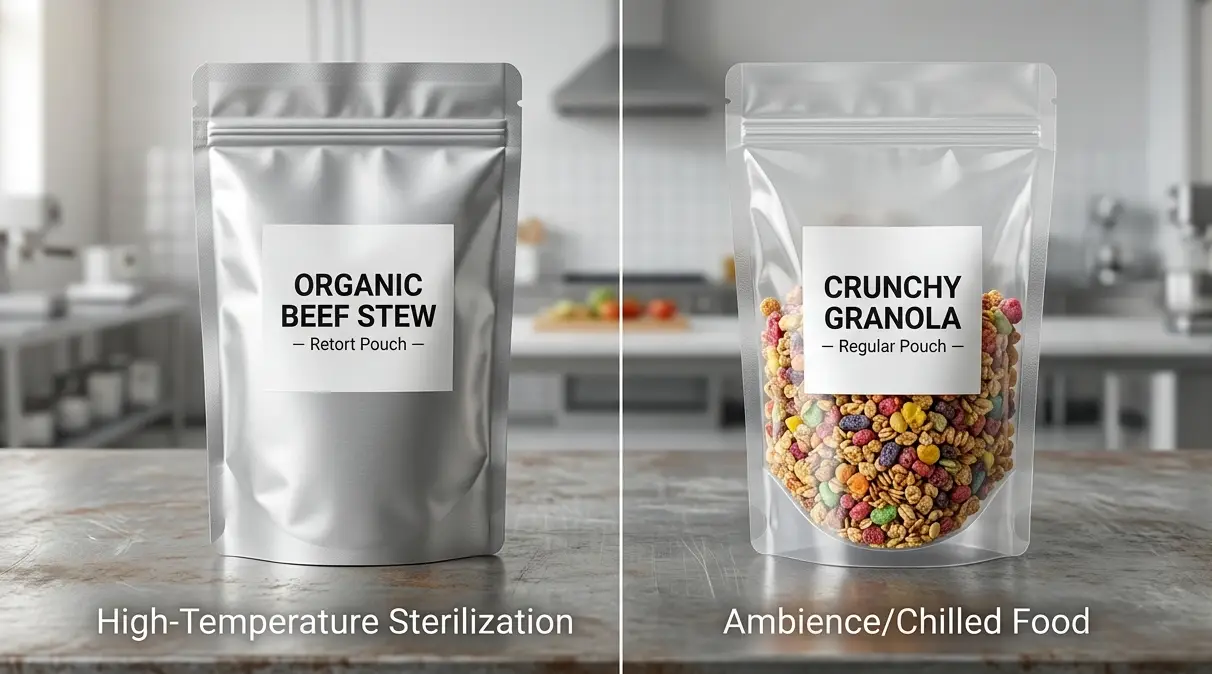
A retort pouch is a multi-layer laminated flexible package engineered to survive high-temperature sterilization — typically 121°C to 135°C (250°F–275°F) — inside a retort autoclave. Unlike standard pouches, every layer is selected specifically for thermal endurance, pressure resistance, and long-term barrier integrity.
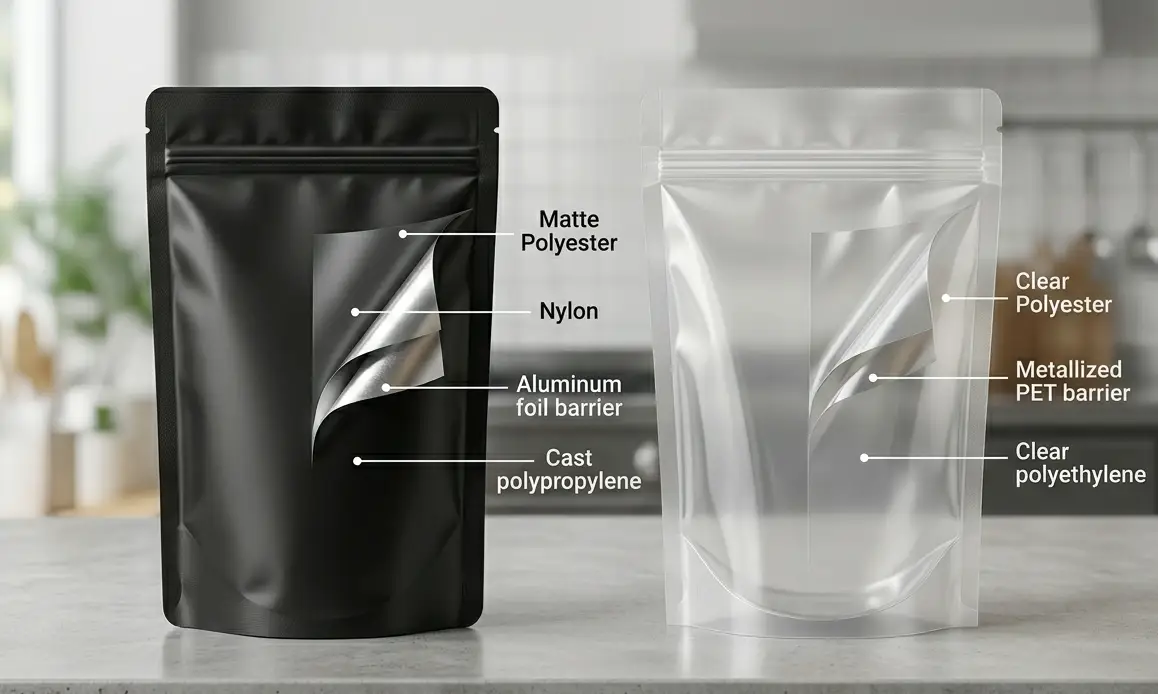
The typical layer structure looks like this:
- PET (polyester): Provides structural rigidity, printability, and abrasion resistance
- Aluminum foil: Creates a near-total barrier against oxygen, moisture, and light
- Nylon (OPA): Adds puncture resistance and flex-crack durability during transport
- CPP (cast polypropylene): The inner sealant layer — withstands retort temperatures without softening or failing
Each layer serves a non-negotiable function. Remove the aluminum, and your oxygen barrier collapses. Swap CPP for standard polyethylene, and your seals fail under autoclave pressure. This is precision engineering, not just "a thicker bag."
Because we hold FDA and ISO 22000 certifications, we often advise brands that retort pouch compliance isn't optional — it's a regulatory requirement for any thermally processed food product sold in the United States and most international markets.
How Retort Processing Works
The retort sterilization cycle follows a precise sequence:
- Filling: Product is hot-filled or cold-filled into the pouch
- Sealing: The pouch is hermetically sealed under controlled conditions
- Autoclaving: Sealed pouches enter a retort chamber where steam or pressurized hot water raises the internal temperature to 121°C+ for a calculated duration
- Cooling: Pouches are cooled under pressure to prevent seal burst from internal steam expansion
The critical distinction: the pouch and its contents are sterilized together as a sealed unit. This achieves commercial sterility — meaning all pathogenic microorganisms and spoilage organisms are eliminated without chemical preservatives.
The result? Shelf stable pouches that maintain product safety and quality for 1 to 5+ years at ambient temperature. No refrigeration. No freezing. No preservative-heavy formulations.
Common Applications
Retort packaging pouches dominate in categories where wet, perishable products must survive ambient storage and long distribution chains:
- Ready-to-eat meals: Military MREs, institutional food service, emergency preparedness kits
- Wet pet food: Single-serve pouches replacing cans — pet owners increasingly prefer the portion control and modern shelf appeal
- Sauces, soups, and curries: Particularly for export to markets without cold chain infrastructure
- Seafood and meat products: Tuna, chicken breast, pulled pork — competing directly with traditional canning
The global flexible packaging market continues expanding in this segment. Industry reports from 2025 project retort pouch demand growing at 6–7% annually, driven by consumer preference for convenience and the food industry's push to reduce cold chain dependency.
What Is a Regular Pouch? Standard Flexible Packaging Explained
Definition and Material Composition
A "regular pouch" encompasses the broad universe of flexible pouches NOT engineered for thermal sterilization. This includes stand-up pouches, flat pouches, three-side-seal bags, ziplock pouches, gusseted bags, and more.
Material structures are chosen for cost efficiency, printability, and moderate barrier performance rather than extreme heat survival:
- PET / PE (polyethylene)
- BOPP / PE
- PET / Aluminum / PE
- Nylon / PE
The key difference at the molecular level: regular pouches use polyethylene (PE) as their sealant layer. PE melts or weakens well below retort temperatures, making these pouches fundamentally incompatible with autoclave processing.
Sealing and Preservation Methods
Without thermal sterilization, regular pouches rely on alternative preservation strategies:
- Vacuum sealed food packaging: Removes oxygen to slow oxidation and microbial growth
- Modified atmosphere packaging (MAP): Nitrogen flushing replaces oxygen inside the pouch
- Refrigeration or freezing: Temperature control as the primary preservation mechanism
- Chemical preservatives: Added to the product formulation itself
- Low water activity: Dry products that naturally resist microbial growth
These methods work well within their design parameters. But they are NOT interchangeable with retort sterilization. Attempting to autoclave a regular pouch will cause seal failure, delamination, and potential contamination — a food safety disaster.
Common Applications
Regular pouches serve an enormous range of products:
- Snack foods: Chips, nuts, dried fruit, jerky
- Coffee and tea: Where oxygen barrier and aroma retention matter more than heat resistance
- Powdered supplements and protein blends
- Frozen foods: Vegetables, fruits, prepared meals distributed frozen
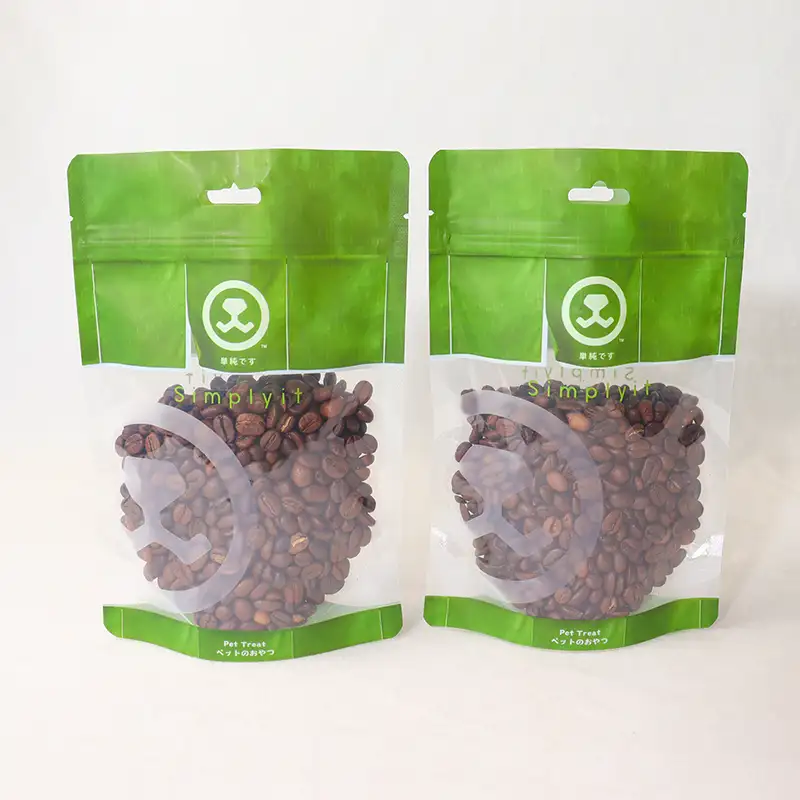
- Dry pet food and treats: Where pet owners want to see ingredients through clear windows
- Non-food items: Cosmetics samples, hardware components, pharmaceutical sachets
Working with brands across North America, we've found that the most common mistake is assuming all pouches are interchangeable. A pouch that works beautifully for coffee beans will catastrophically fail if someone tries to retort a wet sauce inside it.
Retort Pouch vs Regular Pouch — A Detailed Side-by-Side Comparison
| Feature | Retort Pouch | Regular Pouch |
|---|---|---|
| Heat Resistance | Withstands 121°C–135°C (autoclave) | Typically rated below 100°C |
| Material Layers | 3–4+ layers (PET/AL/Nylon/CPP) | 2–3 layers (PET/PE, BOPP/PE, etc.) |
| Shelf Life (ambient) | 1–5+ years without refrigeration | Days to months (depends on product & method) |
| Sterilization Method | Thermal retort (autoclave) | Not sterilized; relies on MAP, vacuum, refrigeration |
| Barrier Properties | Excellent (oxygen, moisture, light) | Moderate to good (varies by structure) |
| Seal Integrity Under Stress | Engineered for pressure + heat cycling | Standard heat-seal; not pressure-rated |
| Typical Thickness | 100–150 microns+ | 60–120 microns |
| Unit Cost | Higher per pouch | Lower per pouch |
| Regulatory Compliance | FDA/USDA thermal process approval required | Standard food-contact compliance |
| Best For | Wet, perishable products needing ambient stability | Dry, frozen, or refrigerated products |
The table tells a clear story, but the real insight lies beneath the numbers. Choosing between these two formats isn't simply a per-unit cost decision — it's a total supply chain decision.
The retort pouch costs more per unit, but it eliminates refrigerated trucking, reduces spoilage to near zero, and opens export channels that would be impossible with a cold-chain-dependent product. The "expensive" pouch often becomes the cheaper total solution.
Material Science — Why the Layers Matter for Bulk Buyers
Retort Pouch Layer Breakdown
When you're ordering hundreds of thousands of pouches, understanding the "why" behind each layer protects you from cutting corners that compromise product safety:
- Outer layer — PET (12μm): Your brand's canvas. Provides excellent ink adhesion for high-resolution printing, plus abrasion resistance so graphics survive warehousing and retail handling.
- Barrier layer — Aluminum foil (7–9μm): The oxygen transmission rate drops to virtually zero. This is what gives retort pouches their multi-year shelf life. Without foil, even a sterilized product will eventually oxidize and degrade.
- Reinforcement — Nylon/OPA (15–25μm): Provides puncture resistance and flex-crack protection. During palletized shipping, pouches endure compression, vibration, and impact. Nylon prevents micro-perforations that would break sterility.
- Inner sealant — CPP (60–80μm): This is the critical differentiator. Cast polypropylene maintains seal integrity at 121°C+. Standard polyethylene softens at 110°C and fails catastrophically under retort conditions.
In our 6,800㎡ cleanroom facility, we laminate these layers under controlled humidity and temperature to ensure bond strength meets retort cycling demands — because a delamination failure inside an autoclave means an entire production batch is lost.
Regular Pouch Layer Options
Regular pouches offer more flexibility in material selection because they don't face the thermal stress constraint:
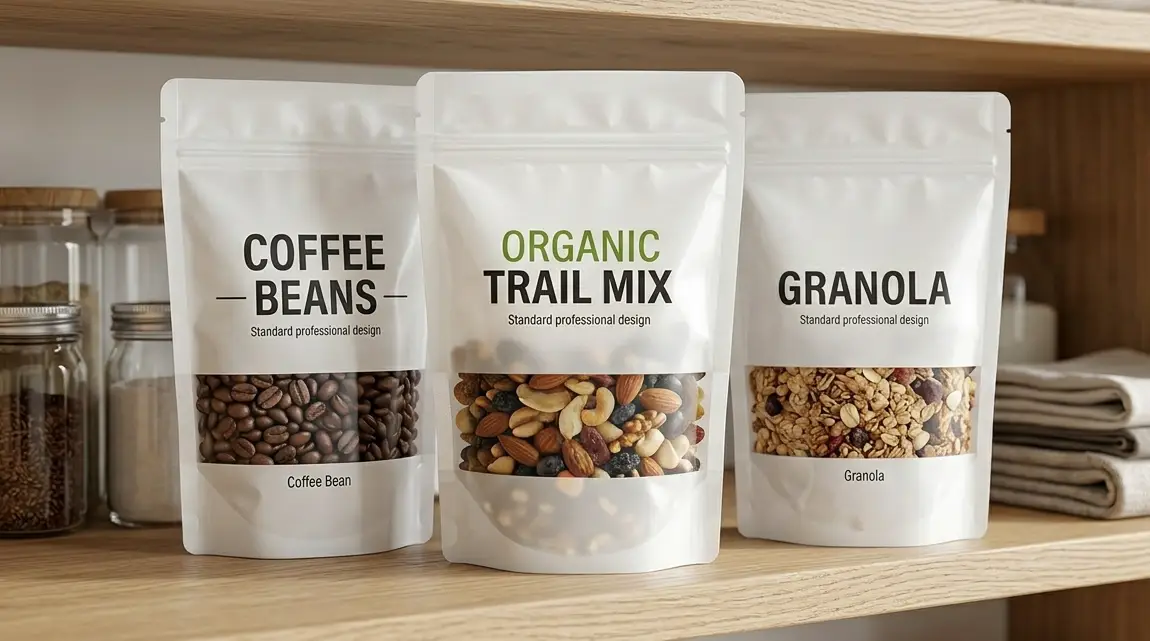
- Aluminum-free options: Metalized PET or EVOH barrier films provide good oxygen protection while allowing clear windows — popular for products where consumers want to see what they're buying
- Mono-material structures: All-PE or all-PP pouches are gaining traction as brands pursue recyclability goals. As of 2026, several major retailers now require recyclable-ready packaging for new product listings
- Cost-optimized structures: A simple BOPP/PE lamination works perfectly for dry snacks where moisture and oxygen barriers are secondary to cost efficiency
| Layer Function | Retort Pouch (Typical) | Regular Pouch (Typical) |
|---|---|---|
| Outer / Print Layer | PET (12μm) | PET or BOPP (12μm) |
| Barrier Layer | Aluminum foil (7–9μm) | Metalized PET, EVOH, or none |
| Reinforcement | Nylon / OPA (15–25μm) | Optional (nylon for puncture-sensitive items) |
| Sealant (Inner) | CPP (60–80μm) | LLDPE or LDPE (50–80μm) |
| Total Thickness | ~100–150μm | ~60–120μm |
Our in-house design team often helps brands who only have a rough idea of their product's requirements. We'll evaluate your product's moisture activity, target shelf life, distribution conditions, and filling process to recommend the exact lamination structure — rather than offering a one-size-fits-all solution.
Shelf Life and Food Safety Implications for Commercial Buyers
How Retort Pouches Achieve Commercial Sterility
Commercial sterility isn't about killing every single microorganism — it's about reducing pathogenic and spoilage organisms to a level where they cannot grow under normal storage conditions. This is measured using the F-value: the equivalent minutes of heating at a reference temperature (typically 121.1°C) needed to achieve a target microbial reduction.
In plain terms: the retort process delivers enough sustained heat to make the sealed product shelf-stable without any preservatives, refrigeration, or special handling.
The practical implications for your business are significant:
- No cold chain required: Ship via standard freight, store in ambient warehouses, distribute to retailers without refrigerated cases
- No preservative formulation: Clean-label products that meet consumer demand for "no artificial preservatives"
- Extended market reach: Export to regions where cold chain infrastructure is unreliable or nonexistent
- Reduced waste: Military MRE pouches routinely maintain quality for 3+ years at ambient temperatures — spoilage-related losses approach zero
Shelf Life Limitations of Regular Pouches
Regular pouches — even with vacuum sealed food packaging or nitrogen flushing — cannot achieve commercial sterility. For wet or high-moisture products, this means:
- Refrigerated shelf life of 2–8 weeks (typical for vacuum-packed fresh proteins)
- Frozen storage required for longer preservation
- Continuous cold chain monitoring and liability
For dry products, regular pouches perform well. A properly structured pouch with adequate oxygen barrier can deliver 6–18 months of ambient shelf life for products with low water activity (below 0.6 aw) — think coffee, spices, protein powders, or dried snacks.
The critical risk: if a regular pouch is mistakenly specified for an application that requires retort-grade packaging, the consequences include product spoilage, consumer illness, regulatory action, and costly recalls. As a manufacturer that has produced packaging for 20+ years, we've seen this mistake cost brands far more than the savings they thought they were capturing.
When to Choose Retort Pouches — Key Decision Factors for Bulk Orders
Your Product Requires Ambient Shelf Stability
If your product has high water activity (above 0.85 aw) and must be stored at room temperature, retort processing is your path to safety and compliance. This includes:
- Wet pet food (gravy-based, pâté, stews)
- Prepared meals and entrées
- Sauces, marinades, and cooking pastes
- Soups and broths
- Cooked grains and legumes
For wet pet food specifically, the retort pouch format has become the fastest-growing segment in the category. Pet owners associate pouches with freshness and premium quality — and single-serve portions reduce waste, which matters to today's environmentally conscious consumer.
You're Replacing Cans or Glass Jars
The "can-to-pouch" transition continues accelerating across the food industry. Retort pouches offer compelling advantages over traditional rigid containers:
- Lighter weight: 80–90% less packaging weight than equivalent cans — dramatic freight savings at scale
- Faster heat penetration: The thin, flat profile heats through more quickly and evenly, resulting in less thermal degradation of flavor, color, and nutrients
- Modern shelf presence: Full-surface printing, stand-up formats, and shaped pouches create premium brand differentiation
- Reduced storage footprint: Empty pouches ship flat; empty cans do not
Your Distribution Chain Lacks Cold Storage
This is often the deciding factor for brands entering export markets, supplying military or institutional contracts, or distributing to remote retail locations. If you cannot guarantee unbroken refrigeration from your production facility to the consumer's hands, shelf stable pouches eliminate the risk entirely.
Disaster relief organizations, remote mining operations, and cruise ship provisioning all rely on retort pouches precisely because ambient stability removes logistical complexity.
When Regular Pouches Are the Right Choice
Dry or Low-Moisture Products
If your product is inherently shelf-stable due to low moisture content, retort processing adds cost without adding value. Snack foods, coffee beans, protein powders, spices, grains, and dried fruits all perform excellently in well-engineered regular pouches.
For coffee specifically, the priority is an oxygen barrier that preserves volatile aromatic compounds — not heat resistance. A PET/AL/PE structure with a one-way degassing valve solves the real problem at appropriate cost.
Frozen or Refrigerated Distribution
If your established supply chain already includes reliable cold storage and refrigerated transport, regular pouches with vacuum sealing or MAP provide adequate shelf life at lower packaging cost. This is common for:
- Fresh-prepared meal kits
- Marinated proteins
- Fresh pasta
- Frozen vegetables and fruits
Budget-Sensitive or High-Volume SKUs
For products where packaging cost is a significant percentage of total COGS — think value-tier snacks or single-use condiment sachets — the lower material cost of regular pouches makes clear financial sense when the product doesn't require thermal sterilization.
Aesthetic and Consumer-Facing Priorities
Regular pouches offer greater design flexibility:
- Clear windows to showcase product appearance
- Matte, gloss, or soft-touch finishes
- Resealable zippers for multi-use convenience
- Shaped pouches and unique die-cut formats
- Lighter-weight materials that feel premium in hand
For brands where the Instagram unboxing experience drives repeat purchase — think premium supplements, artisan snacks, or specialty tea — the visual and tactile flexibility of regular pouches often outweighs other considerations.
Total Cost Analysis — Beyond the Per-Unit Price
This is where purchasing decisions either create long-term value or long-term regret. The per-unit cost of a retort pouch is undeniably higher than a comparable-sized regular pouch. But unit cost is only one line item in your total cost equation.
Where retort pouches save money downstream:
- Cold chain elimination: Refrigerated trucking costs 30–50% more than ambient freight. Refrigerated warehouse space costs 2–3x ambient storage. Multiply these savings across your annual volume.
- Spoilage reduction: Products that achieve commercial sterility have near-zero spoilage rates. For perishable goods in regular pouches, industry-average spoilage runs 2–8% depending on supply chain length.
- Extended selling window: A 2-year ambient shelf life versus a 6-week refrigerated shelf life means dramatically less pressure on inventory turns and markdown cycles.
- Weight savings vs. cans: If you're transitioning from rigid containers, the freight reduction alone can offset the pouch premium.
Where regular pouches win on economics:
- Products that don't need thermal sterilization — paying for retort capability you don't use is pure waste
- High-volume SKUs where even small per-unit savings compound significantly
- Products already operating within a reliable cold chain
The right framework is total cost of ownership across your full supply chain — not a simple price-per-pouch comparison. We encourage brands to map their complete distribution cost before making a material decision. Costs depend on material structure, order volume, pouch dimensions, print complexity, and customization requirements — which is why a tailored consultation produces better decisions than catalog pricing.
Frequently Asked Questions
Can I use a regular pouch in a retort autoclave?
No. Regular pouches use polyethylene sealant layers that soften and fail at retort temperatures (121°C+). The seals will burst, the lamination will delaminate, and product contamination becomes a certainty. This creates both a food safety hazard and a regulatory violation. Always verify your pouch is specifically certified for retort processing before autoclaving.
Are retort pouches microwave-safe?
It depends on the structure. Standard retort pouches containing aluminum foil cannot be microwaved — the metal layer will arc and potentially cause fire. However, transparent retort pouches (using EVOH or SiOx barrier layers instead of aluminum) can be engineered specifically for microwave reheating. Specify your intended consumer use case when ordering so the correct structure is selected.
What is the typical shelf life of food in a retort pouch?
Most retort-processed foods achieve 1–3 years of ambient shelf life, with some products (particularly low-acid foods with robust barrier structures) validated for 5+ years. Actual shelf life depends on the product's pH, water activity, fat content, storage temperature, and the specific barrier properties of the pouch lamination.
Are retort pouches recyclable?
Currently, most retort pouches are difficult to recycle through standard municipal programs because they use multi-material laminations (PET, aluminum, nylon, CPP) that cannot be easily separated. However, the industry is actively developing mono-material retort structures and compatible recycling streams. When evaluating suppliers, ask about their roadmap for recyclable retort solutions — this is an area evolving rapidly as of 2026.
Can retort pouches replace tin cans completely?
In many applications, yes. Retort pouches offer lighter weight, better heat penetration (preserving food quality), superior shelf presentation, and flat shipping of empty packaging. However, cans still hold advantages in extreme long-term storage (10+ years for some products), vertical stacking strength on retail shelves, and consumer familiarity in certain legacy categories. The transition is accelerating but not yet universal.
What certifications should I look for in a retort pouch supplier?
At minimum, verify FDA compliance for food-contact materials, ISO 9001 for quality management systems, and ISO 22000 or FSSC 22000 for food safety management. For products entering the U.S. market, USDA process filing support is also valuable. Additionally, ask whether the facility operates under cleanroom or controlled-environment production conditions — contamination control during lamination is critical for retort pouch integrity.
Do regular pouches work for vacuum sealed food packaging?
Yes — vacuum sealing is one of the most common preservation methods used with regular pouches. By removing oxygen from the package, vacuum sealed food packaging significantly slows oxidation and aerobic microbial growth. It's widely used for refrigerated meats, cheeses, frozen products, and dry goods. Just remember that vacuum sealing extends shelf life but does not achieve commercial sterility — cold chain or low water activity is still required.
What's the difference between retort pouches and boil-in-bag pouches?
Boil-in-bag pouches are designed for consumer reheating in boiling water (~100°C) — they are NOT engineered for autoclave sterilization at 121°C or higher. The material structures, seal strengths, and barrier requirements are fundamentally different. A boil-in-bag pouch will fail under retort conditions, and a retort pouch is over-engineered (and over-costed) for simple boil-in-bag applications. Clarify your processing method before specifying materials.
Making the Right Decision for Your Product and Supply Chain
The retort pouch versus regular pouch decision ultimately comes down to three questions:
- Does your product require commercial sterility for safe ambient storage? If yes, retort is non-negotiable.
- Does your distribution chain depend on — or benefit from — eliminating cold storage? If yes, retort pouches likely deliver superior total ROI despite higher unit cost.
- Is your product inherently stable (dry, frozen, or refrigerated with reliable cold chain)? If yes, a well-engineered regular pouch gives you the performance you need at the right cost.
Neither format is universally superior. The right choice is the one aligned with your product's preservation science, your distribution reality, and your growth trajectory.
As a manufacturer that has produced packaging for 20+ years, we've guided hundreds of brands through exactly this decision — from startups launching their first SKU to established companies transitioning entire product lines from cans to flexible pouches. The brands that get the best outcomes are the ones that invest time in the specification phase rather than rushing to the lowest quote.
If you're evaluating flexible packaging materials for a bulk or custom order — whether retort pouches, standard stand-up pouches, vacuum pouches, or something you haven't fully defined yet — we'd welcome the conversation. Our engineering and design team can review your product specifications, recommend the optimal lamination structure, produce custom samples for your validation testing, and scale to production volumes when you're ready.
Request a free packaging consultation and custom sample. Share your product details, target shelf life, and distribution requirements, and we'll provide a tailored material recommendation — no obligation, no generic catalog, just the specific solution your product needs.