The Short Answer: Which Packaging Wins for Shelf-Stable Food?
If you want the quick verdict on retort pouch vs can vs glass jar, here it is: retort pouches win on weight, shipping cost, and shelf appeal; cans win on rock-bottom unit economics at huge volumes; glass jars win on premium perception and reusability. There's no single champion. The right choice depends on your product, your customers, and how far your goods need to travel.
Quick Comparison at a Glance
Before we dig into the why, here's how the three formats stack up across the factors buyers ask about most. These figures reflect typical industry ranges as of early 2026.
| Factor | Retort Pouch | Can | Glass Jar |
|---|---|---|---|
| Typical shelf life | 12–24 months | 24–60 months | 12–36 months |
| Package weight | Very low (5–15g) | Medium (30–80g) | High (150–400g) |
| Breakage risk in transit | Very low | Low (dents) | High |
| Shelf visibility of product | Window or print | None | Full transparency |
| Reheat convenience | Microwave/boil-in-bag | Transfer needed | Transfer needed |
| Reusability | Low | Low | High |
What Each Format Actually Is
Let's make sure we're speaking the same language. Each of these containers cooks and protects food differently, and that shapes everything downstream.
The Flexible Pouch
A retort pouch is a multi-layer laminate bag, usually combining plastic films with a thin aluminum or metallized barrier. The filled, sealed bag goes into a pressurized steam chamber where the food is sterilized right inside the package. The result is a lightweight, flat pack that's hard to break and easy to ship.
The Metal Can
Cans are tin-plated steel or aluminum containers, sealed and then heat-processed. They've been the backbone of shelf-stable food for over a century. Their strength is durability and an exceptionally long storage window, which is why they still dominate categories like canned vegetables and fish.
The Glass Jar
Glass offers a chemically inert, fully transparent container that signals quality. Shoppers can see exactly what they're buying. The trade-off is weight and fragility, which raise both freight costs and the chance of loss during handling.
Shelf Life: Who Keeps Food Fresh Longest?
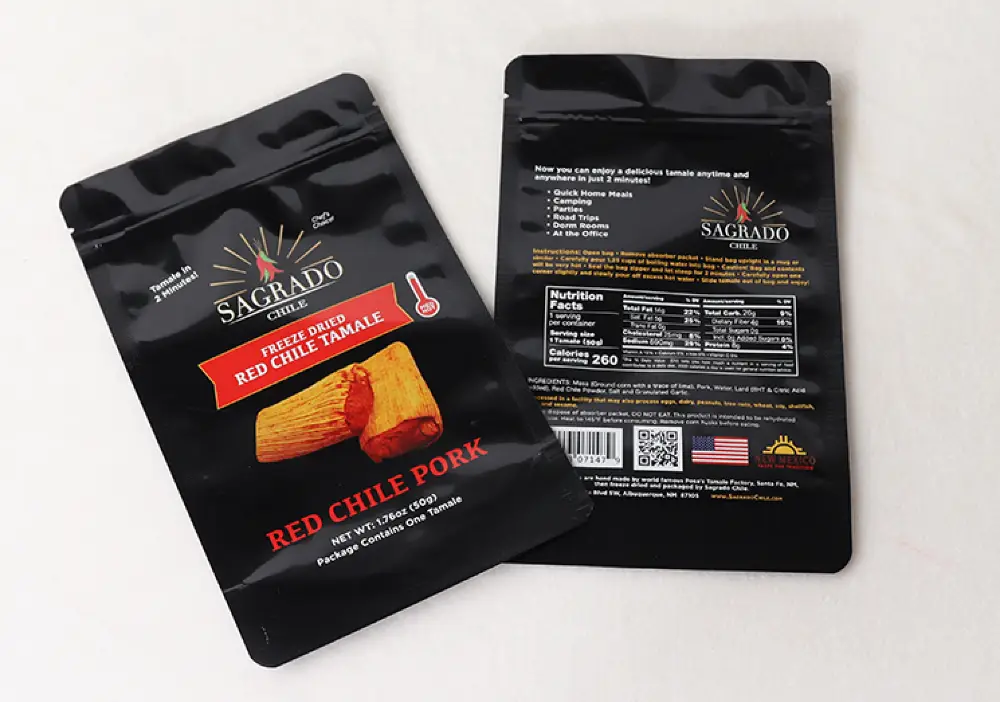
This is where buyers often have misconceptions. When it comes to retort pouch vs can shelf life, cans generally edge ahead, often holding food safely for three to five years thanks to their rigid, light-proof, fully sealed metal body.
Pouches typically deliver 12 to 24 months, which is plenty for fast-moving products. The barrier layer is the deciding factor. A high-barrier laminate with aluminum foil performs far closer to a can than a basic transparent film does.
Because we hold FDA and ISO 22000 certifications, we usually steer clients toward a barrier spec matched to their real distribution timeline rather than overbuilding. A sauce that sells through in eight months doesn't need a five-year structure, and paying for one quietly erodes margin.
Food Safety and Sterilization
All three formats can produce commercially sterile, shelf-stable food when processed correctly. The question buyers really care about is reliability under real conditions. On glass jar vs retort pouch food safety, both perform well, but the failure modes differ.
- Pouches: Risk centers on seal integrity. A clean, validated seal is everything, which is why production environment matters.
- Glass: Risk centers on breakage and lid vacuum loss. A cracked jar is an obvious hazard.
- Cans: Risk centers on dents and seam defects that can compromise the seal.
As a manufacturer that has produced flexible packaging for over 20 years, we've seen that most pouch failures trace back to contamination or weak seals at the filling stage. That's part of why production happens in our 6,800㎡ cleanroom facility, where particulate control and consistent seal strength reduce the variables that cause recalls.
Nutrition: Does the Container Change What's Inside?
Heat is heat, but exposure time and surface contact differ by format. Looking at retort pouch vs can nutritional value, pouches often have a slight edge. Their thin, flat profile heats through faster, so food spends less time at high temperature.
Shorter cook cycles tend to preserve more heat-sensitive vitamins, color, and texture. That's why many ready-meal and baby-food brands have migrated to flexible formats. The food simply tastes fresher and looks closer to home-cooked.
Glass and cans require longer thermal processing because heat has to penetrate a larger, denser mass. For delicate items, that extra time can soften texture and dull flavor.

Shipping, Storage, and Hidden Logistics Costs
Here's a factor that quietly decides profitability. A pallet of pouches weighs a fraction of the same number of jars, and they pack flatter with less wasted space. For brands shipping across regions or overseas, that difference compounds fast.
| Logistics Factor | Pouch | Can | Glass Jar |
|---|---|---|---|
| Freight weight | Lowest | Medium | Highest |
| Volume per pallet | Highest (flat-pack) | Medium | Lowest |
| Breakage loss rate | Under 1% | Low | 2–5% typical |
| Empty-package storage | Compact rolls/cartons | Bulky | Very bulky |
Working with brands across North America, we've found that the most common mistake is choosing a format based on unit price alone and ignoring freight. A glass jar can cost more to ship than to fill once it crosses borders.
Sustainability: The Honest Picture
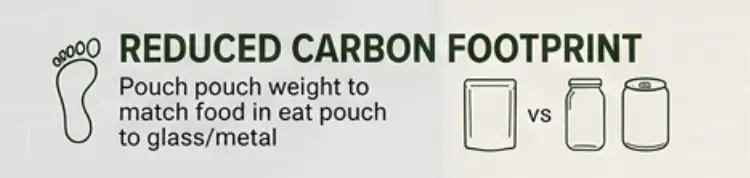
This topic gets emotional, so let's keep it grounded in facts. On a glass jar vs can vs pouch sustainability comparison, each format trades one environmental cost for another.
- Glass: Infinitely recyclable and reusable, but heavy, which raises transport emissions significantly.
- Metal cans: Highly recyclable with strong recovery rates, but energy-intensive to produce.
- Pouches: Lightest footprint in production and transport, but multi-material laminates have historically been hard to recycle.
The encouraging news is that recyclable mono-material pouches have matured quickly. Because consumer demand for greener packs keeps climbing, we now produce GRS-certified recycled and recycle-ready pouch structures for brands that want a lighter footprint without sacrificing shelf life.
Matching the Format to Your Product
The smartest decision comes from your category, not a generic ranking. Here's how we guide brands through a best packaging for food preservation comparison based on what they're actually selling.
Sauces, Soups, and Ready Meals
Flexible pouches shine here. Microwave-ready and boil-in-bag features add real convenience, and the flat shape merchandises beautifully. Shoppers increasingly expect heat-and-eat ease.
Pet Food
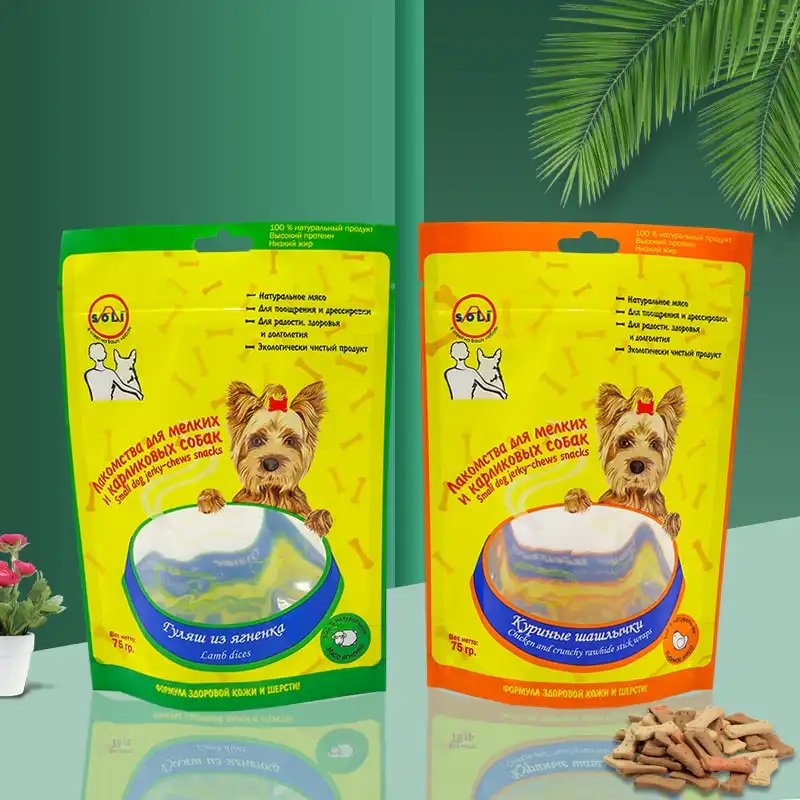
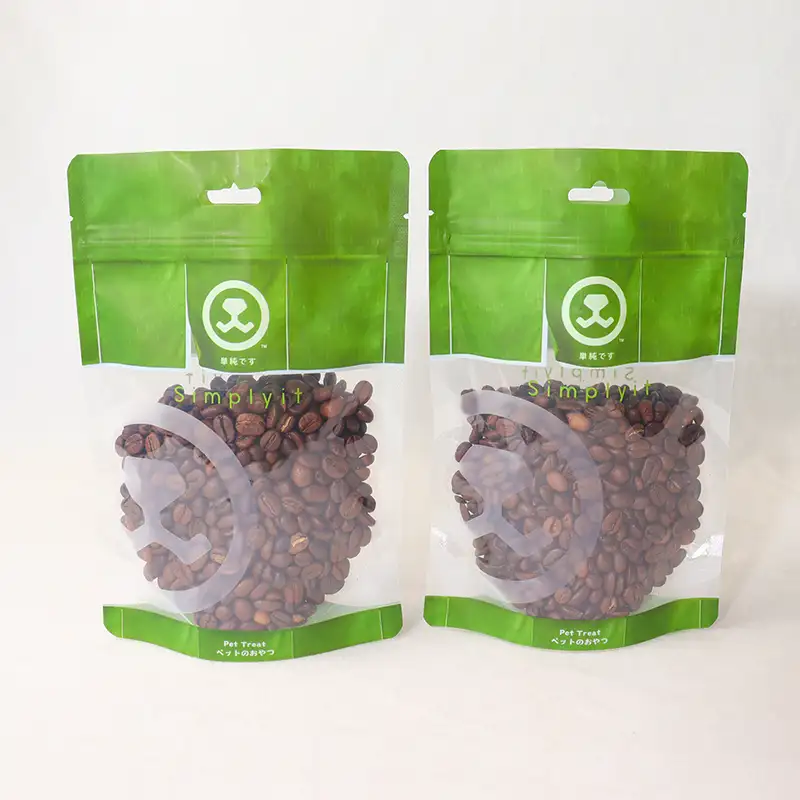
Pet owners scrutinize ingredient lists closely, so a clear window or premium matte pouch that signals quality and freshness builds trust. Single-serve pouches also reduce waste, which resonates with this audience.
Premium Preserves, Honey, and Pickles
Glass still rules categories where seeing the product is part of the sell. Transparency communicates purity, and a jar earns a second life in the kitchen, keeping your brand in view.
Coffee, Spices, and Dry Goods
Here a high oxygen-barrier pouch with a one-way degassing valve protects aroma and freshness in ways rigid formats struggle to match cost-effectively. Aroma retention is the entire game in coffee, and the right barrier film makes or breaks it.
How to Decide: A Simple Checklist
Run your product through these questions before committing to a format.
- How long must it stay shelf-stable? Beyond three years leans toward metal.
- How far will it travel? Long distances favor lightweight flexible packs.
- Does seeing the product help sell it? If yes, glass earns its place.
- Is reheat convenience a selling point? Pouches lead here.
- What sustainability story do you want to tell? Each format offers a different angle.
Our in-house design team often helps brands who arrive with only a rough idea. We'll prototype structures, test barrier performance against your shelf-life target, and refine artwork so the pack performs both technically and on the shelf.
The Bottom Line
There's no universal winner among these three containers, only the right fit for your product and your supply chain. Cans dominate ultra-long storage and bulk economics. Glass owns premium, see-through categories. Flexible pouches lead on weight, convenience, freshness retention, and modern shelf appeal, which is why so many growing brands choose them today.
If you're weighing options for a custom run, it helps to talk through your shelf-life target, distribution plan, and brand goals before locking anything in. YLTPACK has spent more than two decades helping brands make exactly this call, backed by FDA, ISO 9001, ISO 22000, and GRS certifications and a cleanroom production line. Reach our team on WhatsApp at +86 182 1944 5665 or email [email protected] to map the format to your product.
Frequently Asked Questions
Are flexible pouches as safe as cans for shelf-stable food?
Yes, when properly processed and sealed. Both reach commercial sterility through heat processing. The key for pouches is seal integrity and a clean filling environment, which is why production conditions and barrier specs matter more than the format itself.
Why do cans last longer than pouches?
A rigid metal body blocks light, oxygen, and physical stress more completely than most films, often pushing storage life to three to five years. Pouches commonly reach 12 to 24 months, which suits products that sell through within that window.
Which option is cheapest overall?
It depends on volume and distance. Cans can be very economical at massive scale, but pouches frequently win on total landed cost once you factor in lighter freight, denser pallets, and minimal breakage. Glass usually carries the highest logistics cost.
Can pouches be made recyclable?
Increasingly, yes. Mono-material recyclable structures have improved a lot in recent years, and GRS-certified recycled-content options are available. They let brands cut weight and emissions while keeping a workable shelf life.
How do I choose between these formats for a new product?
Start with three questions: how long it needs to stay stable, how far it ships, and whether shoppers benefit from seeing the contents. Those answers point clearly toward one format. A quick consultation with a packaging specialist can confirm the barrier and structure before you commit.