Quick Answer: What You Actually Need to Know
If you're a brand owner or procurement lead hunting for a pouch that fits your protein powder, here's the short version: choose a food-grade, multi-layer laminated pouch with a resealable zipper, moisture and oxygen barriers, and a matte or gloss finish that suits your shelf presence. The pouch must meet food-contact safety standards, hold up to shipping and stacking, and carry a design that tells shoppers what's inside at a glance. Everything below dives into the how and why, so you can make a decision with confidence.
Why the Right Pouch Matters More Than You Think
Your powder does not exist in a vacuum. Once it leaves your filling line, it faces humidity, heat, light, and the occasional careless warehouse forklift. The pouch is the only shield between your product and the outside world, and the wrong one will quietly cost you money in returns, unhappy reviews, and lost repeat purchases.
Consumers judge protein powder on three things: how it looks, how it pours, and how it tastes weeks after opening. A pouch that fails on any of those three will sink your brand faster than a mediocre formula ever could. That's why the decision deserves more than a quick browse through a supplier's catalog.
We've spent 20+ years producing flexible packaging, and the single most common mistake we see from brands is choosing a pouch based on looks alone, before considering the barrier properties that protect the product inside. Get the science right first, and the aesthetics become a bonus rather than a gamble.
How to Package Protein Powder for Retail: A Step-by-Step View
Retail shelves are a battle for attention, but the packaging has to solve practical problems long before it solves marketing ones. Let's walk through the sequence a thoughtful brand follows when preparing powder for store shelves.
Step 1: Define Your Volume and Serving Size
Are you selling 500g single-serving tubs, 1kg family packs, or bulk 5kg bags for gyms and cafes? The pouch size and shape change dramatically with each. A tall, narrow stand-up pouch works well for shelf display, while a wider format stacks more efficiently in bulk shipping.
Think about how much powder your customer actually uses per week. That shapes whether a resealable zipper is a must-have or a nice-to-have, and it influences the fill weight you commit to on the label.
Step 2: Match the Material to the Product
Protein powder is hygroscopic, meaning it loves to soak up moisture from the air. That one fact drives nearly every material decision you'll make. You need a multi-layer structure that combines an outer print layer, a middle barrier layer, and a food-safe inner sealant layer.
We recommend families based on your specific recipe, and because we hold FDA/ISO 22000 certifications, we're able to advise on films that meet both safety and performance requirements for food contact.
Step 3: Choose the Closure System
The options are typically a resealable zipper, a slider closure, or a simple heat seal. For retail the zipper wins almost every time, because customers reopen the bag daily and expect the powder to stay fresh until the last scoop.
Step 4: Lock In the Design and Printing
This is where your brand personality meets shelf reality. High-quality flexographic or rotogravure printing gives you rich, saturated color, and a matte finish with spot gloss details can make the pouch feel premium in hand. Make sure the front panel leaves room for a clear product name, a serving suggestion, and the nutrition panel.
Best Protein Powder Packaging Materials for Freshness
Now that the steps are clear, let's talk about the actual layers doing the heavy lifting. You're asking one question: how long can this pouch keep my powder tasting like it did on day one?
| Layer | Typical Material | What It Does | Notes for Protein Powder |
|---|---|---|---|
| Outer Print Layer | PET or BOPP | Carries your design, resists scuffing | Matte or gloss finishes available |
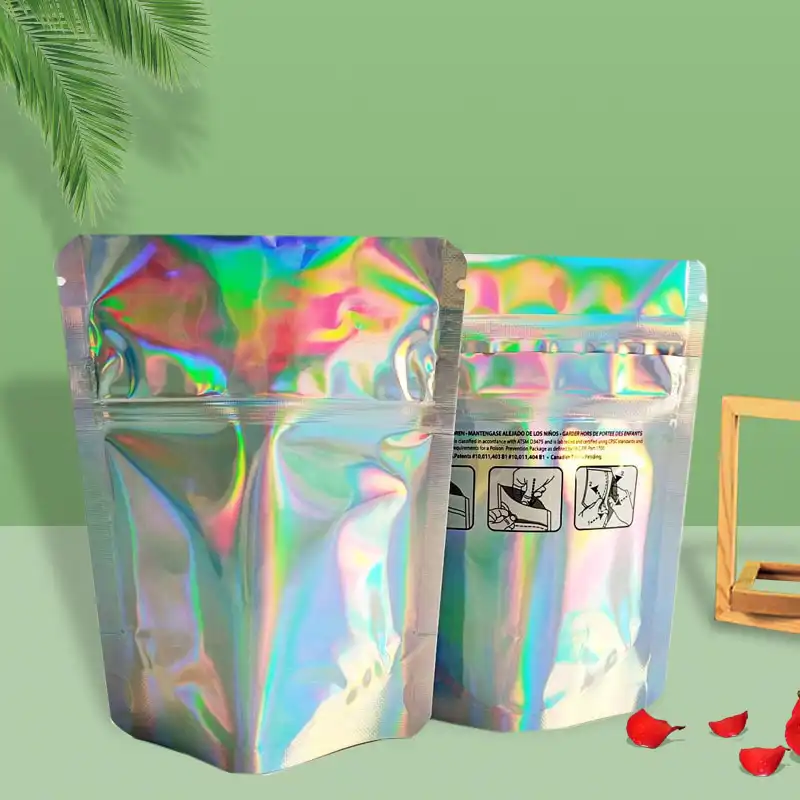
| Barrier Layer | Aluminum foil, or metallized film | Blocks oxygen, moisture, and light | Foil gives the strongest protection, typically dropping oxygen transmission below 0.5 cc/m²/24h |
| Inner Sealant Layer | PE or laminated LLDPE | Food-safe contact, heat seal strength | Must meet food-grade requirements for direct contact |
| Optional Add-on | Desiccant sachet or valve | Absorbs residual moisture or vents gases | Useful for powders that clump easily or contain certain additives |
For most retail protein powders, a foil-laminated stand-up pouch delivers the best balance of protection and cost. If you're moving toward a lighter footprint for a specific channel, a high-barrier metallized film can work, as long as you've verified the moisture barrier is sufficient for your product's shelf life target.
In our 6,800㎡ cleanroom facility, we run regular barrier testing to confirm that the film you choose actually delivers what's on the spec sheet, because a beautiful pouch that lets humidity in is a product-quality problem waiting to happen.
Food-Grade Protein Powder Packaging Requirements
This is the section where compliance becomes your friend rather than a headache. If your pouch isn't food-grade, nothing else matters, because you cannot legally sell it.
What Food-Grade Actually Covers
- The inner layer must be made from materials approved for direct food contact (typically food-grade PE or PP films).
- No harmful substances should migrate from the film into the powder under normal storage and use.
- Inks used for printing should be food-safe and should not bleed through to the inner layer.
- The finished pouch should be produced in a facility that maintains hygiene standards for food packaging.
Common Certifications to Look For
Depending on where you sell, you'll encounter different marks. FDA compliance covers the US market, while ISO 22000 relates to food safety management across the supply chain. A supplier that can produce under these standards gives you a head start on the documentation your buyers and regulators expect.
Before you commit to a large order, ask your supplier three questions: What is the inner layer made of? Which food-safety standard is your production line audited against? And can you share the migration test results for this specific film structure? A confident manufacturer answers all three without hesitation.
Protein Powder Pouch Packaging Design Guide
Design is where your packaging stops being a container and starts being a salesperson. Let's break it down into decisions you can actually act on.
Front Panel Real Estate
Reserve the top third for your logo and product name, the middle for a bold variant label (chocolate, vanilla, unflavored), and the bottom for key selling points like "30g protein per serving" or "no added sugar." Shoppers scan from top to bottom in about two seconds, so make the hierarchy obvious.
Color Psychology in the Aisle
Certain colors come with built-in expectations. Rich browns and creams scream chocolate, pale yellows and whites lean vanilla, and bold greens or reds suggest performance or intensity. Your pouch color should match the flavor story without fighting it.
Finish and Texture
A matte finish communicates a natural or premium feel and hides fingerprints nicely, while a gloss finish reads as shiny and energetic and shows up well in bright store lighting. Many premium brands combine both with spot UV for a tactile, unboxing-worthy moment.
Window or No Window?
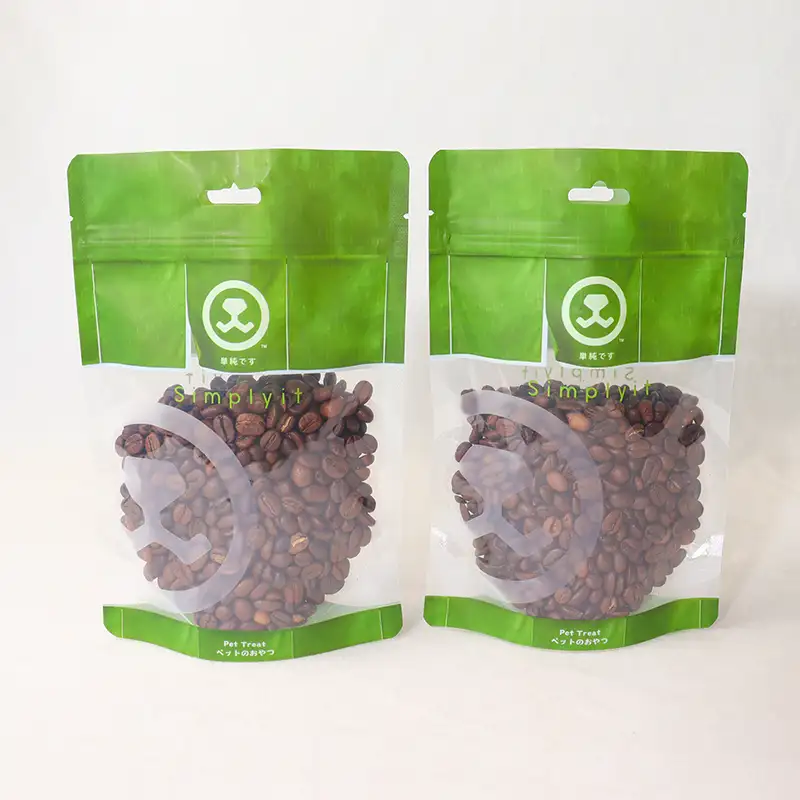
A clear window lets shoppers see the actual powder texture, which builds trust for some brands but can hurt others if your powder looks inconsistent. If you use a window, make sure it doesn't compromise the barrier layer that keeps moisture out.
Custom Protein Powder Packaging Solutions for Small Brands
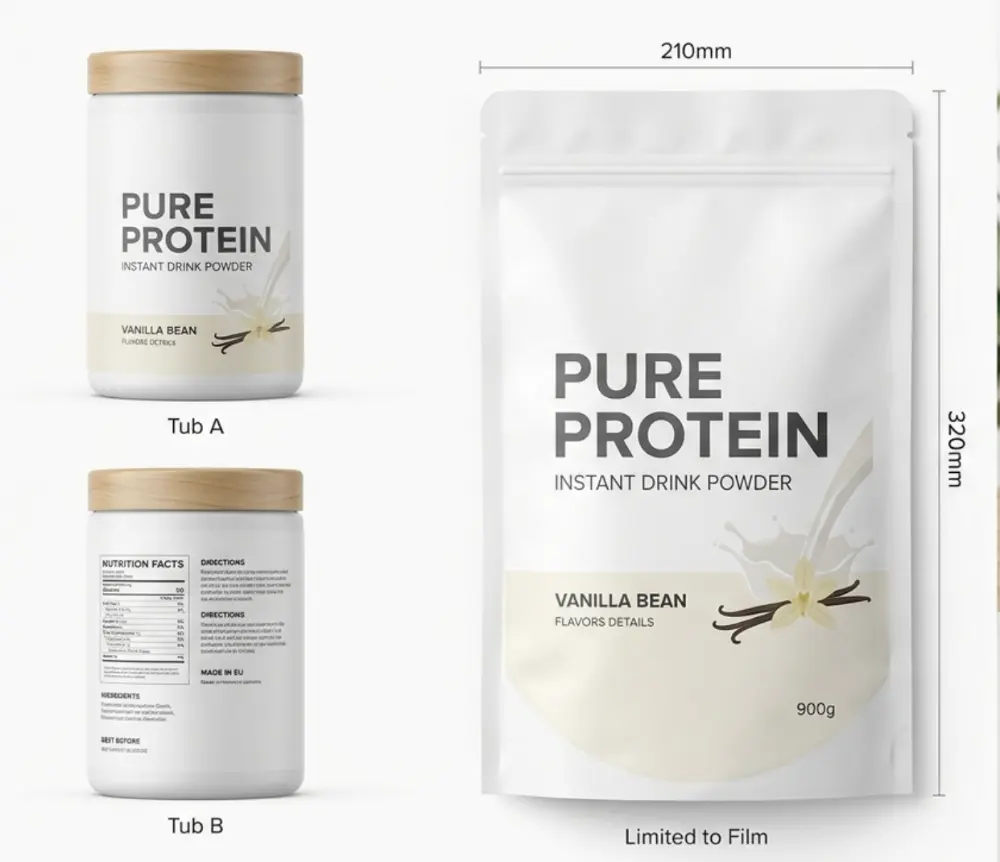
If you're a startup or a growing brand, you might worry that custom packaging is only for the big players with huge order volumes. That's no longer true. Flexible packaging has become far more accessible, and small brands can now order reasonable minimum quantities while still getting a pouch that looks like it belongs on a national shelf.
The smart move is to start with a modular design: a standard pouch size and a set of colors you can rotate for new flavors, so your first investment keeps working as you expand your lineup. This approach stretches your budget without forcing you into a single rigid design.
Our in-house design team often helps brands who only have a rough idea, turning a sketch or a brand mood board into a print-ready file that factories can actually reproduce. That support matters most when you're ordering for the first time and don't want to spend weeks learning the technical details on your own.
Common Mistakes and How to Avoid Them
We've seen a lot of brands make the same handful of errors, and each one is avoidable if you know it's coming.
Ignoring Moisture Control
This is the biggest one. A pouch that looks great but lacks a proper moisture barrier will produce clumpy, hard-to-scoop powder within weeks. Your customer's first bad experience is often their last.
Choosing Size Over Usability
A bag that's too large makes the powder shake and settle oddly on the shelf, while one that's too small forces clumsy pours and messy scooping. Always prototype with real powder before you commit to a final dimension.
Forgetting the Unboxing Moment
For brands shipping direct to consumers, the first impression happens when someone opens a delivery box, not a store shelf. A well-designed pouch with a clean structure turns that moment into a small brand-building event, especially when the customer shares it online.
Ignoring Storage and Shipping Realities
If you sell in bulk to gyms or cafes, your pouch needs to survive stacking on a pallet and riding in a truck. Here the analogy with grain or rice packaging holds up: high load-bearing and stable stacking are not luxuries, they're basics. Make sure your pouch's structure can handle the weight above it without buckling.
Checklist: 8 Questions to Ask Before You Order
Bring these questions to your supplier meeting and you'll walk away with far fewer surprises down the line.
- What is the exact layer structure, and what barrier values does it deliver?
- Which food-safety standards does your production line comply with?
- What is the minimum order quantity for a custom design?
- Can you share samples of a similar pouch I can test with my powder?
- What is the standard turnaround time from approved artwork to delivery?
- Do you offer resealable zippers, valves, or other functional add-ons?
- Can your design team work from my rough concept or brand guidelines?
- What artwork file requirements do you need for print-ready production?
A good supplier treats these as routine questions. A great one has clear, confident answers ready because they've answered them hundreds of times before.
How to Choose a Partner You Can Trust
Credentials matter, but only when they connect to your actual needs. Look for a manufacturer whose facility, certifications, and track record line up with the product you're putting inside the pouch.
Working with brands across North America, we've found that the most common mistake is choosing a supplier on price alone, then discovering months later that the barrier film underperforms or the print quality can't hold up to retail standards. The cheapest pouch is rarely the cheapest overall when you factor in returns and damaged brand reputation.
A factory with 20+ years of experience, FDA/ISO 22000 certification, and a cleanroom production environment can talk to you about barrier values and migration tests with real numbers, not vague promises. That's the kind of conversation you want before you place a six-figure order.
Frequently Asked Questions
What's the serving size? The FAQ started with a question about how long my powder will stay fresh in the pouch.
Typically 12 to 18 months when the pouch has proper moisture and oxygen barriers and is stored in a cool, dry place. Once opened, a resealable zipper helps extend freshness to several months, but the clock really starts the moment the seal is broken.
Can I order small quantities as a new brand?
Yes. Many flexible packaging manufacturers offer reasonable minimums for custom designs, and some support lower first runs to help startups get started. Ask upfront about minimum order quantities so there are no surprises.
Do I need foil, or will a metallized film work?
Foil gives the strongest barrier and the longest shelf life, making it ideal for most retail protein powders. A metallized film is lighter and slightly less costly but offers slightly lower barrier performance. Your choice depends on your target shelf life and storage conditions.
What finish is best for a protein powder pouch?
Matte feels premium and hides fingerprints, while gloss is eye-catching in bright lighting. Many brands use a matte base with spot gloss accents to get the best of both worlds. For an e-commerce and Instagram-friendly unboxing, that combination tends to photograph especially well.
How do I ensure my packaging is compliant for food contact?
Work with a manufacturer that produces under recognized food-safety standards and can provide migration test results for the specific film structure. Ask for documentation, and confirm that the inner layer and inks are food-safe for direct contact before you commit to a full run.
Your Next Step
By now you should have a clear picture of what your protein powder needs from its pouch, from barrier film to zipper to finish. The decision comes down to matching those technical requirements with a manufacturer who can deliver them consistently.
If you'd like a second opinion on the film structure or pouch size that fits your product, reach out to YLTPACK at [email protected] or WhatsApp +86 182 1944 5665. We're happy to review your product and recommend a structure that balances freshness, shelf appeal, and budget, with no pressure and no obligation.