The Quick Answer: How to Choose Frozen Food Packaging
Pick a material that survives sub-zero temperatures without cracking, blocks moisture and oxygen, and matches how your product ships and sells. For most brands, that means a multi-layer laminate pouch with a strong seal and a stand-up or flat-bottom shape. This frozen food packaging guide walks you through the decision so you can order with confidence.
If you only remember three things: prioritize freeze durability, seal integrity, and barrier strength. Everything else—shape, print, sustainability—builds on that foundation.
Why Frozen Packaging Is a Different Game
Cold changes how materials behave. A film that feels flexible at room temperature can turn brittle at -18°C, and a weak seal that survives the warehouse may split in the freezer aisle. That's the core challenge here.
Working with brands across North America, we've found the most common mistake is reusing a standard snack pouch spec for a frozen line. It looks fine on day one, then cracks after a few freeze-thaw cycles.
Frozen goods also face condensation. When a pack moves from freezer to counter, moisture forms on and inside the film. Your packaging has to handle that without delaminating or fogging up the print.
The Best Frozen Food Packaging Materials, Compared
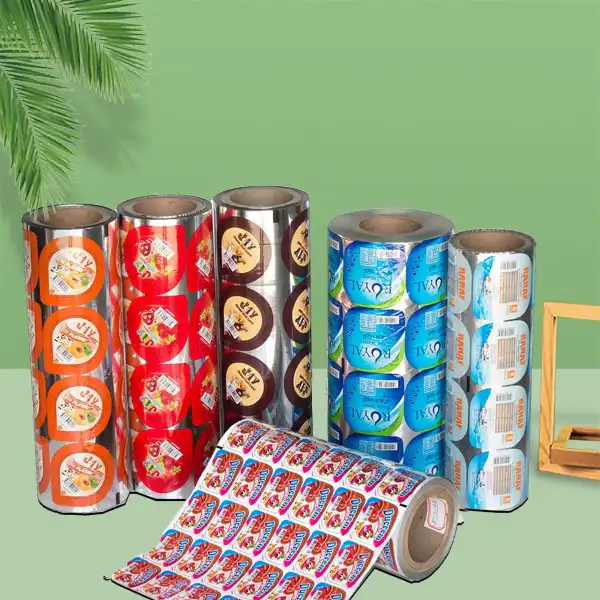
There's no single winner—the right structure depends on your product, shelf life target, and shipping method. Below is a practical breakdown of the best frozen food packaging materials we specify most often.
| Material Structure | Cold Resistance | Barrier Level | Best For |
|---|---|---|---|
| PE (Polyethylene) mono-layer | Excellent to -50°C | Low–Medium | Simple bags, veggies, IQF fruit |
| PET / PE laminate | Very good | Medium | Retail pouches, dumplings, seafood |
| Nylon (PA) / PE laminate | Excellent, puncture-resistant | High | Sharp bones, shellfish, long shelf life |
| Metallized / foil laminate | Very good | Very high (light + oxygen) | Premium meals, oxygen-sensitive items |
| Recyclable mono-PE | Very good | Medium (with coating) | Eco-focused retail lines |
A note on nylon for tough products
If your product has bones, shells, or hard edges—think chicken wings or crab legs—puncture resistance matters more than anything. Nylon-based laminates flex in the cold and resist tearing far better than basic PE.
Because we hold FDA and ISO 22000 certifications, we recommend food-contact-safe resin grades specifically rated for freezer conditions, not just generic film.
Bag Styles That Work in the Freezer
Material keeps food safe; the bag shape decides how it sells and stacks. Here's how the common formats behave once frozen.
Stand-up pouches
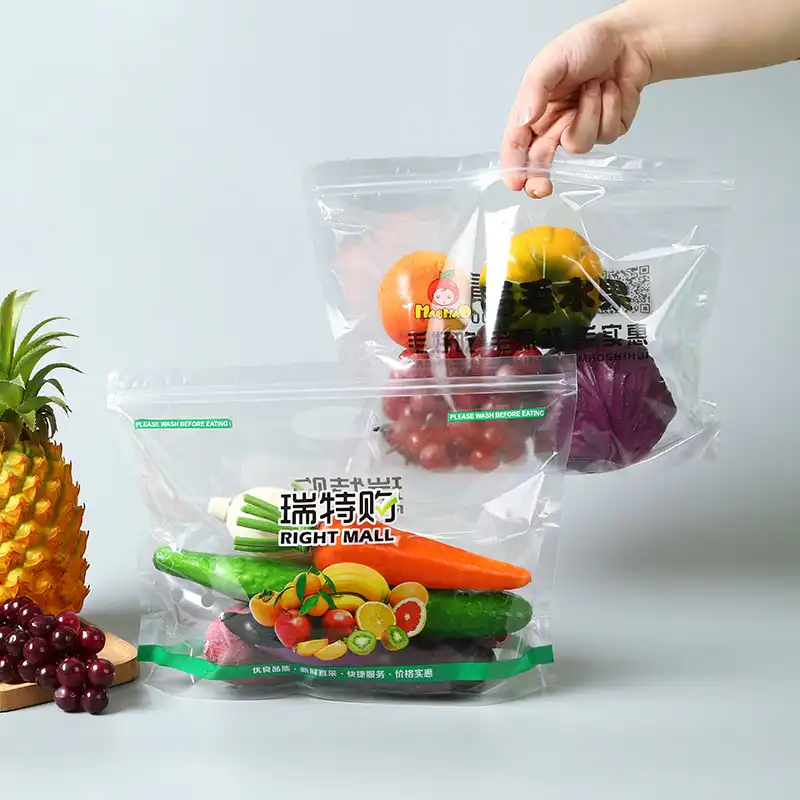
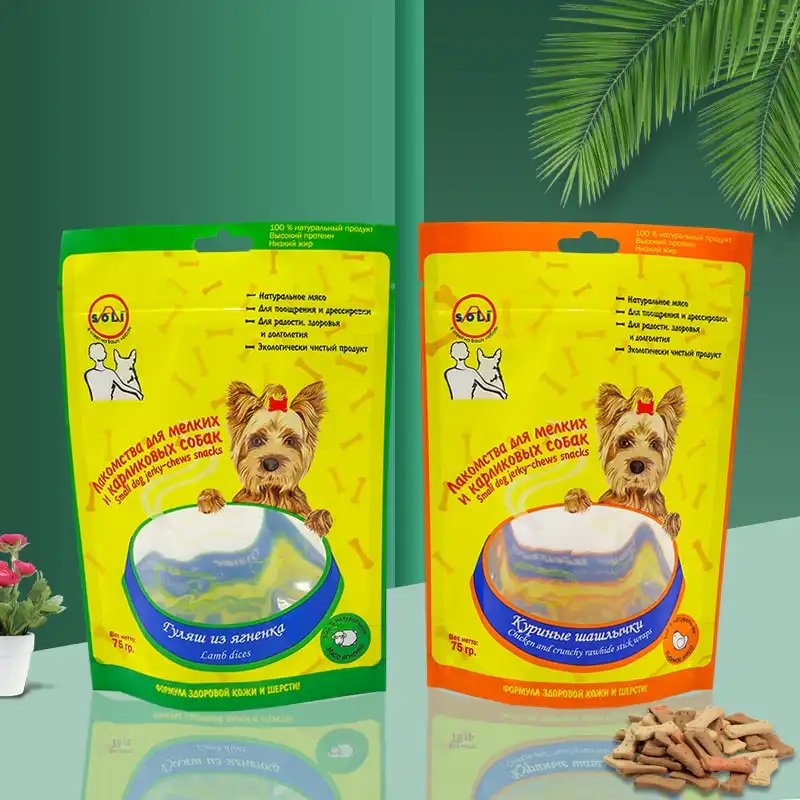
The retail favorite. They stand tall on shelves, offer a big print area, and often add a resealable zipper for portion control. Great for dumplings, berries, and prepared meals.
Flat-bottom (box) pouches
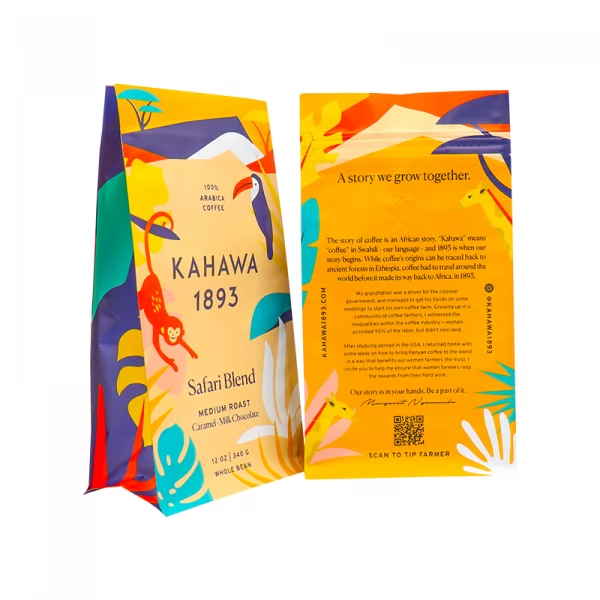
Five panels give a premium, boxy look and better stacking stability. Popular for higher-end frozen meals where shelf presence drives the purchase.
Flat / pillow bags
The most economical for high-volume, simple products like IQF vegetables. Less shelf appeal, but efficient for filling lines and bulk formats.
Gusseted bags
Side or bottom gussets expand to hold more volume. A solid choice for bulk seafood or foodservice packs that get portioned later.
| Bag Style | Shelf Appeal | Stacking | Typical Use |
|---|---|---|---|
| Stand-up pouch | High | Medium | Retail meals, fruit, dumplings |
| Flat-bottom pouch | Very high | High | Premium ready meals |
| Pillow bag | Low | Medium | IQF vegetables, bulk |
| Gusseted bag | Medium | Medium | Bulk seafood, foodservice |
How to Package Frozen Food for Shipping
Retail and shipping are two different problems. Knowing how to package frozen food for shipping is about keeping temperature stable while the primary pouch protects the product itself.
Your bag should have reinforced, wide seals that won't fail under weight or during rough handling. Inside a shipper, pouches get stacked and jostled, so seal strength matters as much as the film.
- Seal width: aim for wider, double seals on shipping-heavy products.
- Puncture resistance: nylon layers reduce leaks from shifting loads.
- Insulation: pair pouches with insulated liners and gel packs or dry ice.
- Fill level: avoid overfilling; headspace absorbs expansion and shock.
As a manufacturer that has produced packaging for 20+ years, we've seen more shipping failures come from thin seals than from film choice. It's the detail buyers underestimate most.
Meeting Safety Rules and Requirements
Frozen food packaging regulations and requirements exist to keep food-contact materials safe and honestly labeled. Ignoring them risks recalls and blocked shipments—an expensive surprise for a new brand.
At a minimum, your material should be food-grade and compliant with FDA guidelines (or EU equivalents for European sales). Labeling usually requires clear storage instructions, allergens, and net weight.
In our 6,800㎡ cleanroom facility, we produce under ISO 9001 and ISO 22000 systems, which helps brands document compliance when a retailer or auditor asks for it. Keeping that paperwork ready saves headaches later.
Tip: Ask any supplier for material safety documentation and migration test data before your first order. If they hesitate, that's a red flag.
Design Ideas That Sell in the Freezer Aisle
Shoppers decide fast, and freezer doors fog up. Strong frozen food packaging design ideas make your product readable through cold glass and condensation.
- High-contrast color blocks that pop through frosted doors.
- A clear window so customers see the actual food—trust builds instantly.
- Matte finishes that resist glare and hide fingerprints.
- Cooking steps on the back—convenience is a major purchase driver for frozen meals.
Our in-house design team often helps brands who only have a rough idea, turning a mood board into print-ready artwork that accounts for how ink behaves on cold-resistant films.
Know your category's buyer
Frozen seafood buyers scan for catch origin and sustainability claims. Ready-meal shoppers want portion size and prep time front and center. Speaking your category's language on-pack quietly builds credibility.
Eco-Friendly Options Without Sacrificing Protection
Sustainability is now a real buying factor, not a nice-to-have. According to industry surveys from 2024–2025, a majority of shoppers say packaging environmental impact influences their choices.
The honest challenge: freezer performance and recyclability sometimes pull in opposite directions. Still, practical eco friendly frozen food packaging solutions exist and keep improving.
- Mono-material PE pouches designed for recyclability while holding barrier performance.
- Reduced film thickness (down-gauging) that cuts plastic without losing strength.
- Post-consumer recycled content in outer layers where food contact allows.
We're GRS-certified for recycled materials, so brands chasing a lower-impact story can back up the claim with traceable sourcing rather than vague marketing.
Your Pre-Order Checklist
Before you approve a spec, run through this quick list. It catches the issues that cause reorders and complaints.
- Material rated for freezer temperatures (down to at least -18°C)
- Seal strength tested for your shipping method
- Barrier level matched to your shelf life target
- Bag style suited to shelf display and stacking
- Food-contact safety documentation on file
- Artwork tested for cold-film printing and condensation
- Sustainability claims supported by certification
Bringing It All Together
Choosing cold-chain packaging comes down to matching material, seal, and shape to your product and how it travels. Get the freeze durability and barrier right first, then layer on design and sustainability. That order of priorities keeps you out of trouble.
If you'd like a second set of eyes on your spec, YLTPACK can help you compare structures, request samples, and confirm compliance before you commit to a run. Reach us at WhatsApp +86 182 1944 5665 or [email protected]—happy to talk through your product and where it ships.
Frequently Asked Questions
What thickness should my frozen pouch be?
It depends on product weight and edges. Light items like berries do well with thinner film, while heavy or sharp products need thicker, nylon-reinforced structures. A sample run under real conditions is the safest way to confirm.
Can I use resealable zippers on frozen bags?
Yes, and shoppers love them for portion control. Just make sure the zipper resin is rated for low temperatures so it doesn't crack or lose grip when frozen.
How do clear windows perform in the freezer?
They work well if the film is chosen for cold clarity and anti-fog behavior. Poor film can frost or haze, hiding the product—so specify freezer-grade window material.
What's the minimum order for custom frozen packaging?
Minimums vary by structure, print, and bag style. Pricing is quoted to your specific requirements, so share your product details and volume for an accurate answer.
How long does custom production usually take?
Timelines depend on artwork approval, material, and finishing. Building in time for a sample review upfront almost always prevents costly reprints and keeps your launch on schedule.