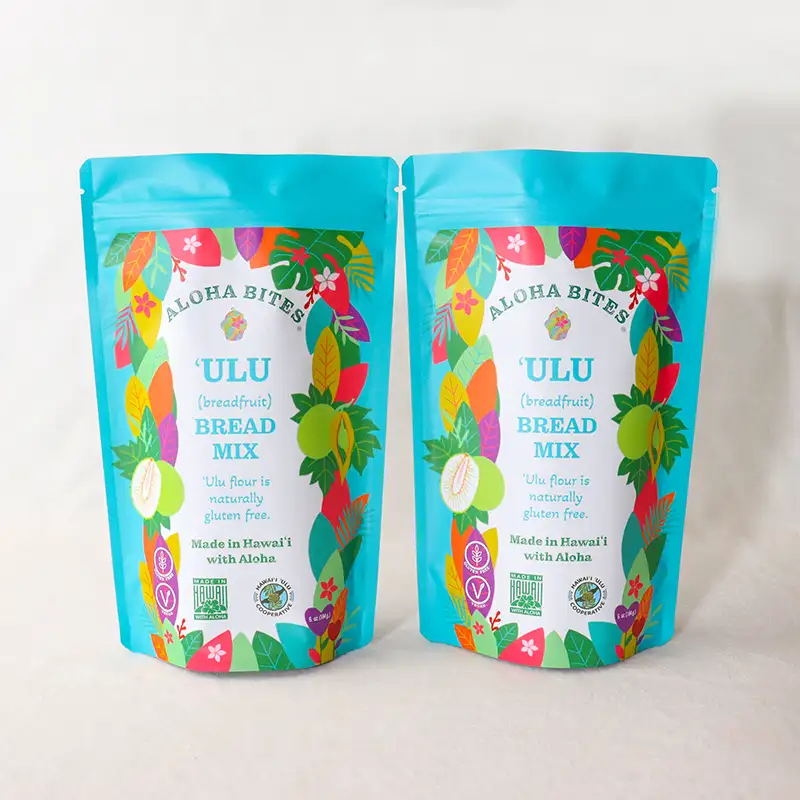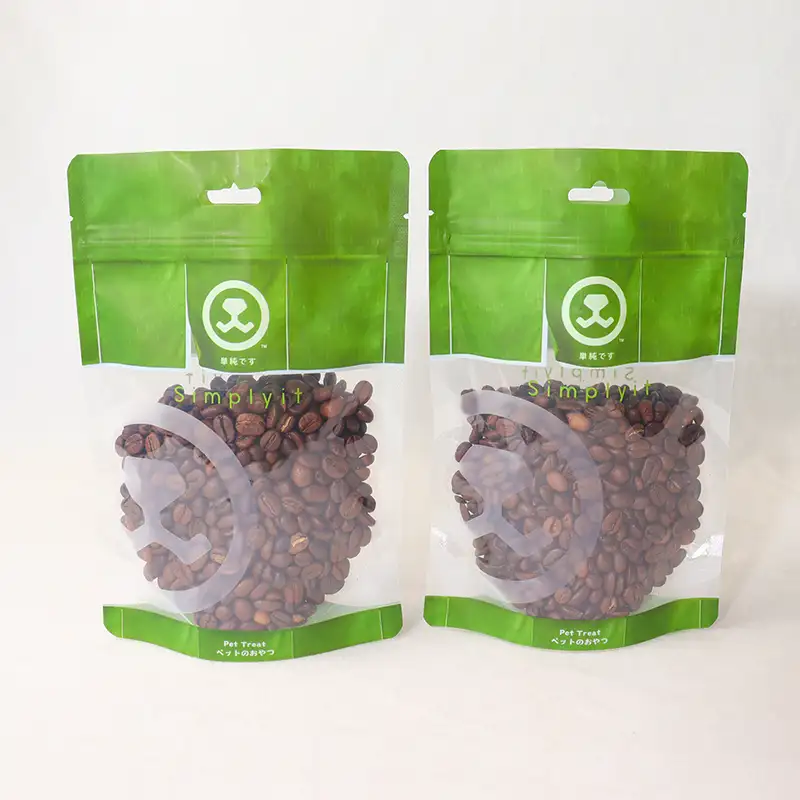
The kraft coffee pouch looked fine on the shelf, and a few weeks later the beans tasted flat. Nobody had asked what was under the paper. Kraft is only the outer face. Freshness depends on the barrier layer and the sealant behind it, so a useful flexible packaging materials comparison starts there and leaves the outer finish for last.
Flexible Packaging Materials Comparison
Choose the barrier first and the outer face second. Aluminum foil laminate gives the most protection against oxygen, moisture and light. Metallized PET comes next. Clear PET/PE and mono-PE suit less sensitive goods. How well kraft and compostable kraft/PLA protect depends entirely on the barrier layer laminated inside them.
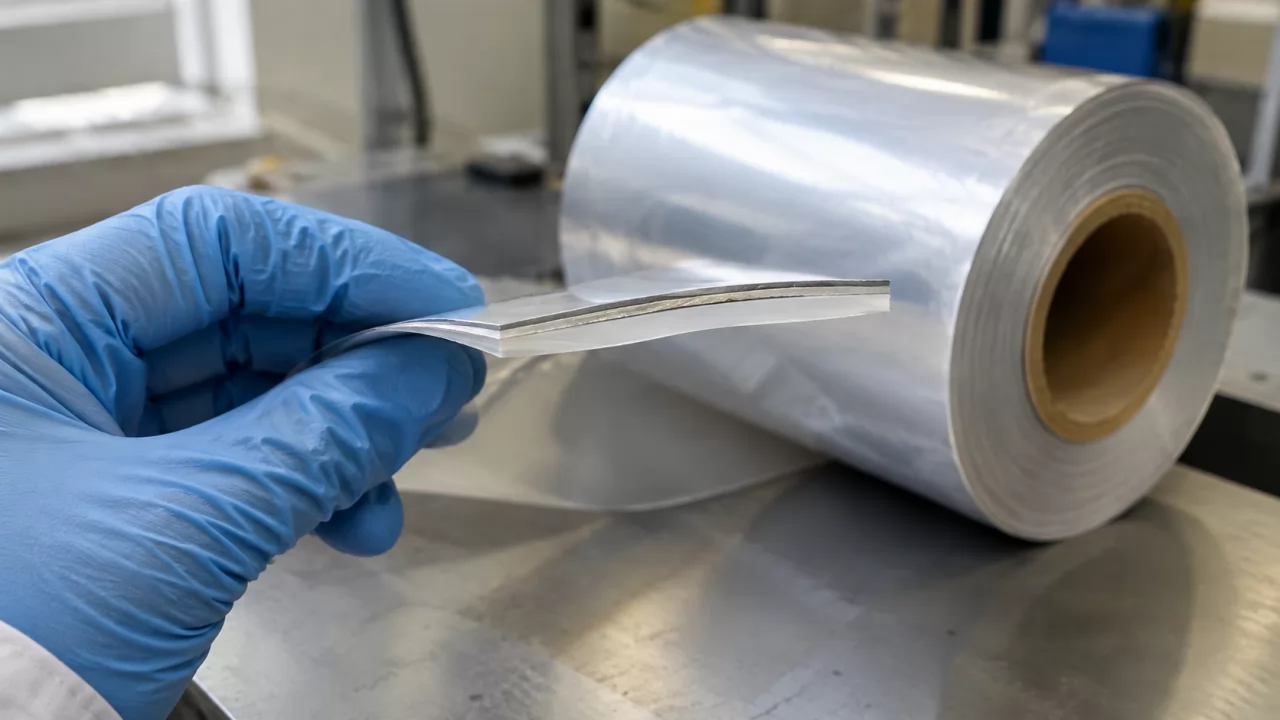
A laminate is a film made from two or more bonded layers. Each layer does one job: the print face, the barrier or the heat-seal (sealant) layer. Most pouches on retail shelves are laminates. That is why two bags that look the same can protect very differently.
| Material | Oxygen / moisture barrier | Light block | Heat / retort | Print look and typical use |
|---|---|---|---|---|
| Aluminum foil laminate | High | Full | Suited to retort when built for it | Printed or metallic. Coffee, retort meals, long shelf life |
| Metallized PET ("mylar") | Medium to high | Partial to high | Usually not for retort | Bright metallic. Snacks, coffee, dry goods |
| Kraft paper laminate | Set by the inner barrier | Good | Not suited | Natural matte. Coffee, granola, tea |
| Clear PET/PE | Low to medium | None | Limited | Full print with product view. Snacks, frozen goods |
| Mono-PE | Low to medium, higher with coatings | Low unless white or fully printed | Not suited | Matte or gloss print. Dry and frozen goods |
| Compostable kraft/PLA | Low to medium | Moderate | Not suited | Natural kraft. Dry goods with shorter shelf life |
Only foil reliably blocks oxygen, moisture and light together. Every other option gives up some of that protection in return for product visibility, a certain feel or a different end-of-life route.
Coffee, Snacks and Dry Goods
For long freshness, use foil or metallized film. Use kraft for the look. Kraft paper on its own lets oxygen and moisture through, so a kraft pouch only works when a foil, metallized or coated barrier film is laminated under the paper. Ask for the full layer stack on the quote, written out layer by layer, and not just "kraft pouch".
Foil vs Kraft vs Mylar Pouch
"Mylar" began as a trade name for PET film. In the pouch trade it usually means metallized PET, which is PET film with a very thin vacuum-deposited aluminum coating. It is not the same as a solid foil layer, and the difference shows up in barrier, flexibility and cost.
- Foil laminate: the strongest barrier and full light block, a good fit for oily snacks and specialty coffee. The catch is that foil can develop pinholes at sharp folds, and you cannot see the product.
- Metallized PET: a strong barrier for most dry goods, a bright metallic look and usually a lower film cost than foil. Barrier drops where the coating gets scratched or creased, so rough handling matters.
- Kraft laminate: a natural, tactile shelf look that suits craft and organic positioning. The paper adds thickness and cost, and you get no product protection from the paper itself.
The main cost drivers are the number of layers, the film thickness, the print colors and any extras.
Valves and Zippers
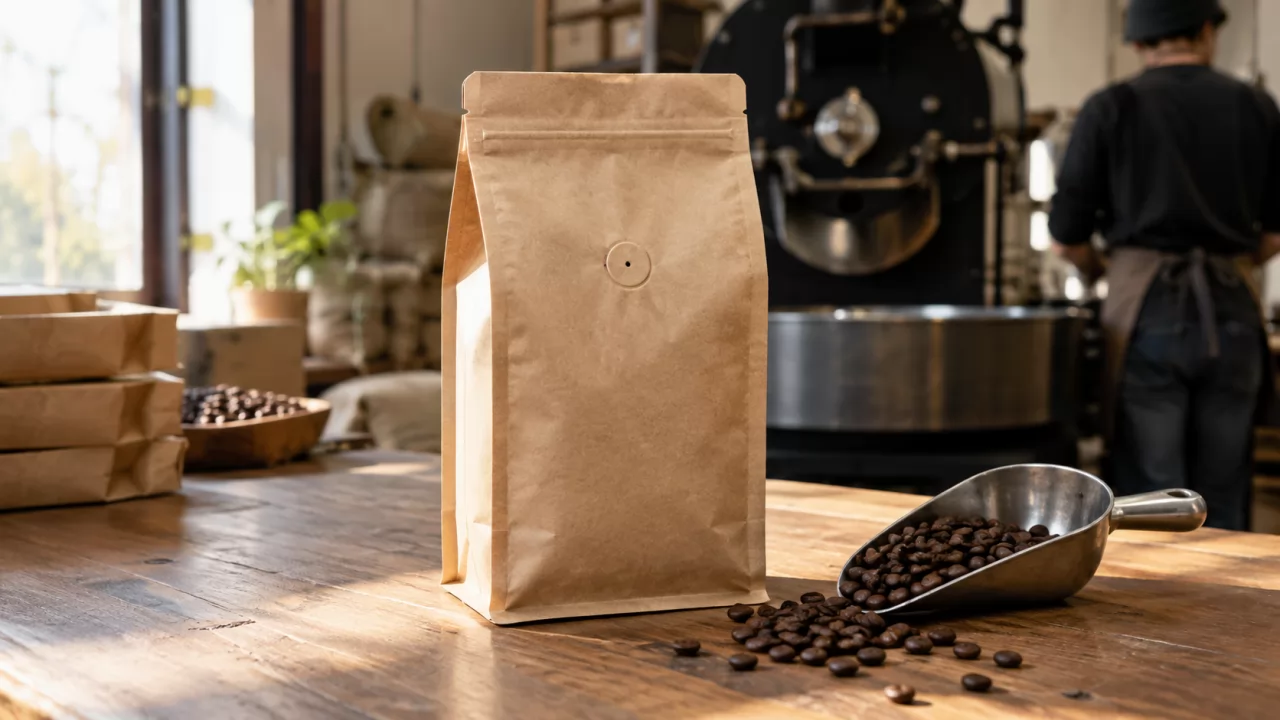
Fresh-roasted coffee gives off carbon dioxide for days after roasting. A degassing valve is a one-way valve that lets that gas out and keeps air from getting in. Without one, a sealed bag can swell or burst, whatever film you choose. A zipper adds its own seal zone near the top of the bag. That changes where the top seal can go and how much headspace you need. Once the bag is opened, the zipper also becomes the weakest point of the barrier.
Sauces, Retort and Frozen Lines
Here the process and the contents decide the structure, and print comes second. A pouch that looks right but delaminates in the retort, or cracks in the freezer, is a product recall, not a packaging problem. Fix the layer stack against your filling and storage conditions first. Then design the artwork.
Barrier Film Options for Food Packaging
High-barrier laminates usually combine a PET or nylon outer layer, a barrier layer and a sealant. Foil is the barrier layer with the highest protection. EVOH (ethylene vinyl alcohol) is a plastic barrier resin that blocks oxygen well while keeping the pack clear. Transparent oxide-coated PET films (AlOx or SiOx) are another clear option. Foil is worth its trade-offs when shelf life matters more than anything else. Those trade-offs are real, though. You cannot see the fill, inline inspection is harder, and standard metal detectors generally do not work on foil packs, so many lines use X-ray inspection instead.
Heat, Oil and Cold
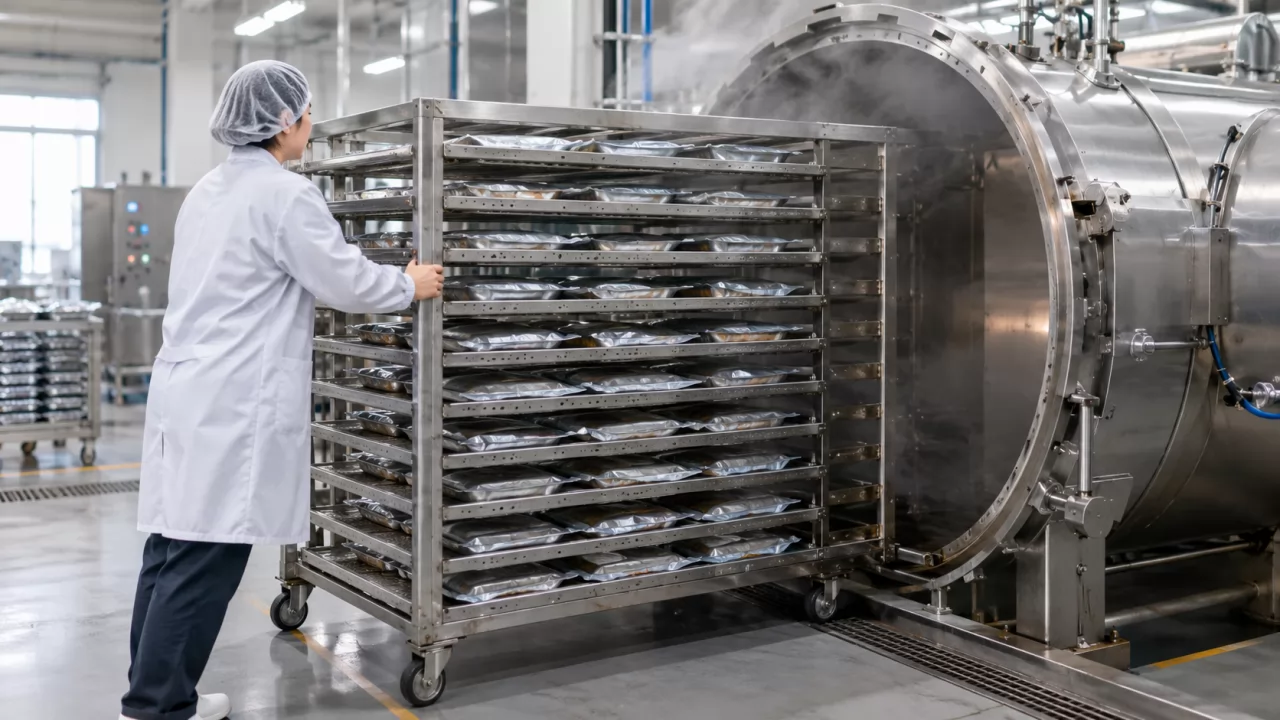
A retort pouch is a heat-resistant laminate that is filled, sealed and then sterilized under pressure. Many retort processes run at around 121 °C, but your process matters, not a general figure. The pouch must be rated for your own time and temperature. If your process changes, ask for confirmation in writing.
Oily, acidic or spiced fills put stress on the sealant and the adhesive. Over time they can weaken seals or cause layers to separate. Frozen storage causes a different problem: some films become brittle in the cold, and seals that pass at room temperature can crack when a frozen case is dropped. Drop-test filled samples at your storage temperature.
Tip: Ask which layer actually touches the food. Then ask for the food-contact test report for that specific layer, checked against the rules of your target market.
Mono-PE vs Laminated Pouch Material
Mono-PE suits brands whose retail partners ask for single-polymer packs. A mono-PE pouch is built mostly or entirely from polyethylene, so the whole pack is one plastic family and not a bonded mix. Compared with a multi-material laminate, you give up some barrier and some stiffness.
Where Mono-PE Holds Up
Mono-PE works well for dry goods, frozen goods and products with a short shelf life. Products that are sensitive to oxygen or aroma usually need an extra barrier coating or an EVOH layer, and that has to be checked against any claim you plan to print. Compared with PET or foil laminates:
Where it helps you:
- Single material: suits retailer requests for single-polymer packaging.
- Cold performance: PE stays flexible at freezer temperatures.
- Seal behavior: it seals readily on common pouch and form-fill-seal equipment.
Where it costs you:
- Barrier: lower than foil or metallized PET unless it is coated.
- Stiffness: a softer pouch that may stand up less well on the shelf.
- Heat: a narrower sealing window, and not suited to retort.
- Minimums: usually higher than for standard laminates.
The benefits matter most if a retailer's packaging policy is driving your brief. The costs matter most if your product goes stale quickly or sits in long distribution chains.
Claims and Certificates
A recyclable or compostable claim belongs to a specific structure in a specific market, not to a material name. Recycling infrastructure and labeling rules differ by country. A structure that qualifies in one market may not qualify in another. Get the film certificates before the artwork is final, and print only what those documents support. Foil and metallized laminates should not carry recyclable claims.
Note: Single-polymer and compostable structures usually have a higher MOQ per design than standard laminates. Plan your launch volume and the number of designs around that before you commit to the claim.
Which Pouch Material Is Best for My Product?
The right pouch material is the lightest structure that protects your product for its full shelf life, survives your filling process and supports any claim you print. Start with how sensitive the product is to oxygen, moisture, light, aroma and oil. Then check process, market rules, look and volume, in that order.
Shelf look comes late on purpose. A full print, a window or a matte kraft finish can be added to most structures. A missing barrier cannot be added after the order.
- If the product is oily, aromatic or light-sensitive, then start from foil or metallized PET, and use kraft only as an outer face.
- If the pouch goes through retort, hot fill or freezing, then confirm in writing that the sealant is rated for that exact process.
- If you fill on automatic lines, then order roll stock film and check its seal window against your machine settings.
- If you need to print a recycling or compostable claim, then get the certificates for that exact structure before artwork goes final.
- If quantity per design is small or you run many designs, then digital printing keeps minimums down. Gravure usually costs more to set up but gives a lower unit price on repeat runs.
Before you sign off the proof, fill a sample with your actual product, seal it on your own equipment and check that it fits the carton. Bulk density changes how a pouch stands and fills, and a sample shows that more reliably than a capacity estimate.
FAQ
Is a mylar bag the same as a foil bag?
No. Most mylar bags are metallized PET, which has a thin aluminum coating, while foil bags contain a solid aluminum foil layer. Foil generally gives the higher barrier and full light block.
Can a kraft pouch hold oily or wet products?
Yes, if it is laminated. The paper has to be backed by a barrier film and a sealant that suit the fill. Unlined kraft will absorb oil and moisture.
Is mono-PE as protective as a foil laminate?
No. Mono-PE has a lower barrier, even when coated. It works well for dry, frozen and short-shelf-life goods, but sensitive products usually need a higher-barrier structure.
Does the material choice change MOQ and price?
Yes. As one example, YLTPACK sets minimums per design at 1,000 pcs for digital print, 10,000 pcs for gravure and 30,000 pcs for compostable, mono-PE and recycled-content structures. Material, size, print colors and extras all affect the unit price.
Get Two Structures Priced
Questions about which barrier structure fits your product are welcome. Include the product, fill weight, process, quantity per design and target market, and our team will price one recommended structure and one alternative, itemized, within one business day, with a free sample (you pay the courier).