The Short Answer: It Depends on What's Inside the Pouch
Here's the truth from someone who has spent over two decades producing custom packaging: the outer kraft layer can absorb ambient humidity, but what matters is the inner barrier structure. A well-engineered pouch uses multiple layers that prevent moisture from ever reaching your product. Let's break this down so you can make an informed decision for your brand.
Understanding the Multi-Layer Construction
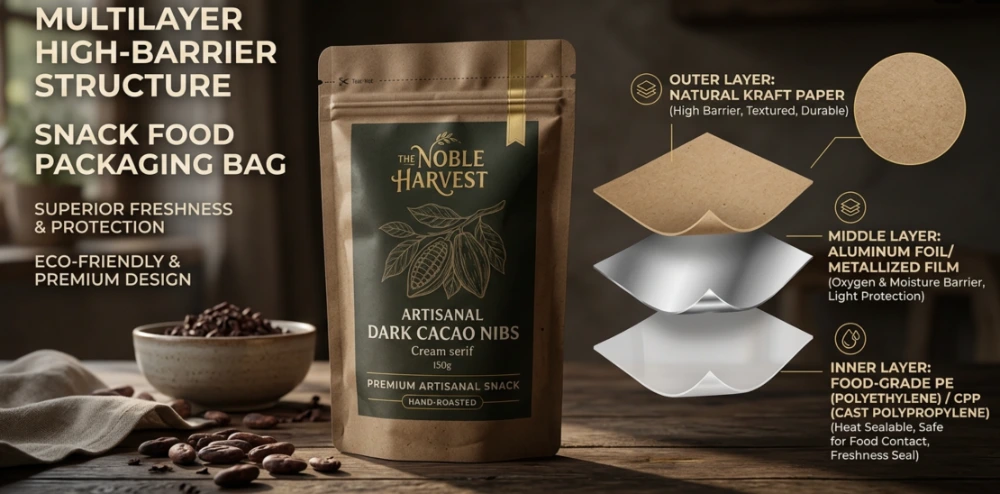
When people ask "do kraft pouches protect against humidity," they're usually picturing a single sheet of brown paper folded into a bag shape. That's not how modern flexible packaging works. Today's pouches are laminated composites — typically three or more layers bonded together, each serving a specific purpose.
What Each Layer Does
- Outer layer (kraft paper): Provides the natural, eco-forward aesthetic your customers love. Offers printability and structural rigidity.
- Middle layer (aluminum foil or metalized film): Acts as the primary moisture and oxygen barrier. This is the layer doing the heavy lifting.
- Inner layer (food-grade PE or CPP): Creates the heat-seal surface and adds a final waterproof shield between the barrier and your product.
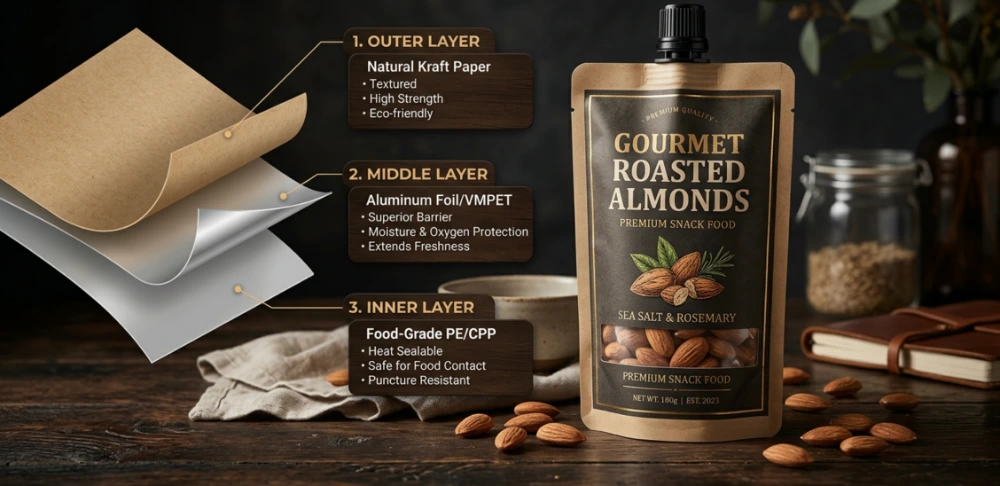
So while the outer kraft paper can feel slightly soft in high-humidity environments, the aluminum or metalized layer inside blocks water vapor from migrating inward. Think of it like a raincoat with a waterproof membrane — the outer fabric might get wet, but you stay dry.
Moisture Barrier Performance: Real Numbers
Let's get specific. The moisture resistance of kraft paper packaging depends entirely on the laminate structure chosen. Here's a comparison of common configurations we produce at YLTPACK's 6,800㎡ cleanroom facility:
| Pouch Structure | WVTR (g/m²/24h) | Suitable Products | Humidity Protection Level |
|---|---|---|---|
| Kraft / PE (no barrier) | 8–15 | Short-shelf-life snacks, bakery items | Low |
| Kraft / AL foil / PE | 0.5–1.0 | Coffee, tea, spices, supplements | High |
| Kraft / Metalized PET / PE | 1.0–2.5 | Nuts, granola, dried fruit | Medium-High |
| Kraft / EVOH / PE | 1.5–3.0 | Pet food, organic snacks | Medium-High |
WVTR stands for Water Vapor Transmission Rate — the lower the number, the less moisture passes through. For reference, plain uncoated kraft paper alone has a WVTR above 300 g/m²/24h. Add an aluminum foil layer, and you drop that by over 99%.
The takeaway: the paper isn't your barrier. The laminate is. Choose the right structure for your product's sensitivity, and humidity won't be a problem.
When Moisture Becomes a Real Risk
Not every product needs Fort Knox-level protection. But some categories demand it. Here's where we see brands get caught off guard:
Coffee and Tea
Freshly roasted coffee releases CO₂ and is extremely sensitive to both oxygen and moisture. A kraft pouch moisture barrier with aluminum foil plus a degassing valve keeps beans fresh for months. Without the right barrier, you'll get stale, flat flavor within weeks — and unhappy customers leaving reviews about it.
Protein Powders and Supplements
Hygroscopic products (those that attract moisture from the air) will clump, degrade, and lose potency. We've worked with supplement brands who switched from basic poly bags to properly laminated pouches and saw return rates drop significantly because the product stopped arriving caked and clumpy.
Pet Food and Treats
Pet owners today scrutinize ingredient labels and expect freshness. A kraft paper pouch with a robust inner barrier keeps kibble crunchy and treats chewy — exactly how they were when they left your production line. Pet parents also love the natural look of kraft because it signals "clean ingredients."
Dried Fruits and Nuts
These products need to stay at specific moisture activity levels. Too dry and they become unpleasant to eat. Too moist and you risk mold. The right stand-up pouch material properties keep the equilibrium exactly where it should be throughout transit and shelf life.
How to Prevent Moisture Problems Before They Start
Choosing the right pouch structure is step one. But there are other decisions that affect whether moisture ever becomes an issue for your packaged product:
1. Match the Barrier to Your Storage Conditions
If your product ships to tropical markets (Southeast Asia, Central America, coastal regions), you need a higher-grade barrier than if you're selling in dry climates. Sounds obvious, but many brands specify packaging based on their own warehouse conditions — not where the product ends up.
2. Seal Integrity Matters as Much as Material
The barrier means nothing if the seal fails. A weak heat-seal or inconsistent sealing temperature creates micro-channels where vapor creeps in. Because we hold FDA and ISO 22000 certifications, we test seal strength on every production run — a step that catches problems before 50,000 pouches ship to your warehouse.
3. Consider Zipper Type
Resealable zippers are convenient for consumers, but some zipper profiles seal more tightly than others. For moisture-sensitive products, a press-to-close zipper with a tear notch (so the original seal stays intact until first opening) gives you both freshness and usability.
4. Add a Desiccant Pocket if Needed
For extremely sensitive items — think pharmaceutical-grade supplements or electronics components — an internal desiccant sachet adds an extra safety net. The pouch keeps external moisture out; the desiccant handles any residual moisture sealed inside during packing.
Are Kraft Stand Up Pouches Waterproof Inside?
Yes — when constructed with a proper inner lining. The inner PE or CPP layer is completely waterproof. You could pour liquid into a well-made kraft pouch and it would hold without leaking (though these pouches are typically designed for dry goods, not beverages).
This is actually one of the most common misconceptions we address when talking with brands new to flexible packaging. They see "paper" and assume fragility. In reality, the kraft layer is purely cosmetic and structural. It gives your packaging that premium, earthy look consumers associate with natural and artisanal products — while the hidden inner layers do all the protective work.
Working with brands across North America, Europe, and Australia, we've found that the most common mistake is under-specifying the barrier because someone on the procurement team assumed "kraft = basic." Specify by function, not appearance.
Kraft vs. Other Pouch Materials: A Quick Comparison
| Feature | Kraft Laminate Pouch | Clear PET Pouch | Matte Poly Pouch |
|---|---|---|---|
| Moisture barrier (with AL foil) | Excellent | Excellent | Excellent |
| Product visibility | Window option only | Full visibility | No visibility |
| Consumer shelf appeal | Natural, premium | Modern, clinical | Versatile, brandable |
| Sustainability perception | Strong | Weak | Moderate |
| Print quality | Good (textured surface) | Excellent (smooth) | Excellent (smooth) |
| Kraft paper packaging durability | High (puncture resistant) | Moderate | Moderate |
The point: kraft pouches match or exceed other materials on moisture protection when the barrier layer is equivalent. The difference is aesthetic and brand positioning — not functional performance.
What to Specify When Ordering Custom Pouches
If you're preparing to source packaging for a moisture-sensitive product, here's a checklist to bring to your supplier conversation:
- Product type and moisture sensitivity level — Tell your manufacturer exactly what you're packing.
- Target shelf life — 6 months? 12 months? 24 months? This determines barrier grade.
- Storage and shipping conditions — Temperature range, humidity range, transit duration.
- Pouch size and fill weight — Affects material thickness requirements.
- Closure type — Zipper, spout, tear notch, or permanent seal.
- Regulatory requirements — FDA compliance, EU food contact certification, etc.
Our in-house design team often helps brands who only have a rough idea of what they need. You don't need to show up with a full material specification — that's our job. You show up with your product and your goals, and we engineer the right solution.
Sustainability and Moisture Protection: Can You Have Both?
This is the tension every brand feels right now. Consumers want eco-friendly packaging. But recyclable mono-materials (like all-PE structures) don't always deliver the same kraft pouch shelf life protection as traditional multi-layer laminates with aluminum.
Here's where the industry is heading: high-barrier coatings applied to paper-based structures that maintain recyclability while blocking moisture. According to a Smithers market study published in early 2025, demand for sustainable barrier packaging grew 18% year-over-year, with paper-based solutions leading adoption in food and beverage categories.
At YLTPACK, we now offer recyclable-ready kraft structures with water-based barrier coatings for brands whose products have shorter shelf life requirements (under 6 months). For longer-life products, the aluminum-laminate structure remains the gold standard — and it's worth noting that aluminum is infinitely recyclable where proper infrastructure exists.
Humidity Testing: How We Validate Performance
Choosing the right specification is one thing. Proving it works under real-world conditions is another. As a manufacturer with 20+ years of experience, we run accelerated aging tests that simulate months of shelf life in days.
Standard Tests We Perform
- WVTR testing (ASTM F1249): Measures exactly how much water vapor passes through the laminate over 24 hours.
- Seal strength testing: Ensures seals won't peel open under stress or temperature change.
- Drop and compression testing: Confirms the pouch survives shipping without barrier compromise.
- Accelerated shelf-life simulation: Exposes pouches to elevated temperature and humidity (38°C / 90% RH) to predict long-term performance.
We share test reports with every order so your quality team has documentation for internal records or retailer requirements. Moisture-resistant food packaging isn't just a marketing claim — it's a measurable, verifiable specification.
Frequently Asked Questions
Will the outside of a kraft pouch feel damp in humid weather?
It can absorb slight ambient moisture on the paper surface, similar to any paper product in a humid room. However, this surface-level absorption does not penetrate to the interior. The inner barrier layers remain unaffected, and your product stays protected.
How long can a properly sealed kraft laminate pouch keep products fresh?
With an aluminum foil barrier structure, most dry goods maintain target moisture levels for 12–24 months. Exact duration depends on product type, initial moisture content, and storage conditions. Your packaging partner should run shelf-life validation for your specific product.
Can I use kraft pouches for products shipping to tropical climates?
Absolutely. We ship to brands distributing in Southeast Asia, Central America, and the Middle East regularly. The key is specifying a higher-grade barrier (aluminum foil rather than metalized film) and ensuring seal integrity is tested to withstand temperature fluctuations during transit.
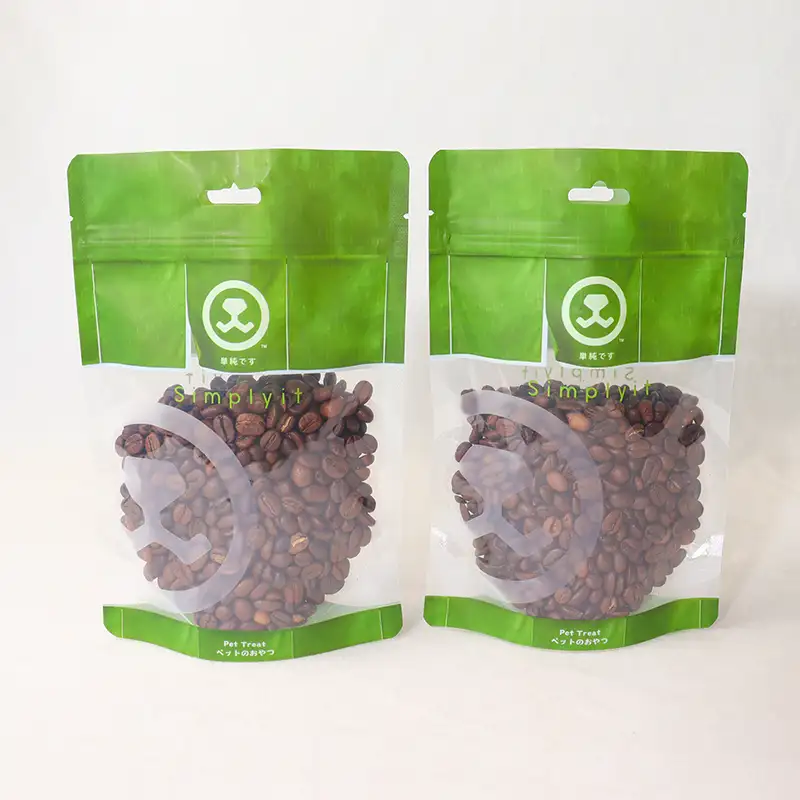
Do kraft pouches with windows compromise moisture protection?
The window area uses clear barrier film (usually PET/PE laminate) that maintains the same WVTR as the rest of the pouch. A window doesn't weaken the moisture barrier — it simply replaces the kraft paper in that section with transparent material that has equivalent or better protective properties.
How do I know if my current packaging is letting moisture in?
Signs include product clumping, shortened shelf life complaints from retailers, visible condensation inside the pouch, or inconsistent product weight over time. If you're experiencing any of these, it's likely a barrier or seal issue — and it's fixable with the right structure redesign.
Ready to Specify the Right Structure for Your Product?
Getting moisture protection right isn't about choosing the most expensive option — it's about matching the barrier to your product's actual needs. Over-engineering wastes money. Under-engineering costs you customers.
If you're sourcing custom packaging and want to talk through how to prevent moisture in kraft pouches for your specific product, reach out to our team. We'll walk you through material options, run sample tests, and help you land on a specification that protects your product without overspending.
YLTPACK — Custom flexible packaging, manufactured in-house since 2003.
WhatsApp: +86 182 1944 5665
Email: [email protected]