Quick Answer: Why Brands Use Kraft Window Pouches
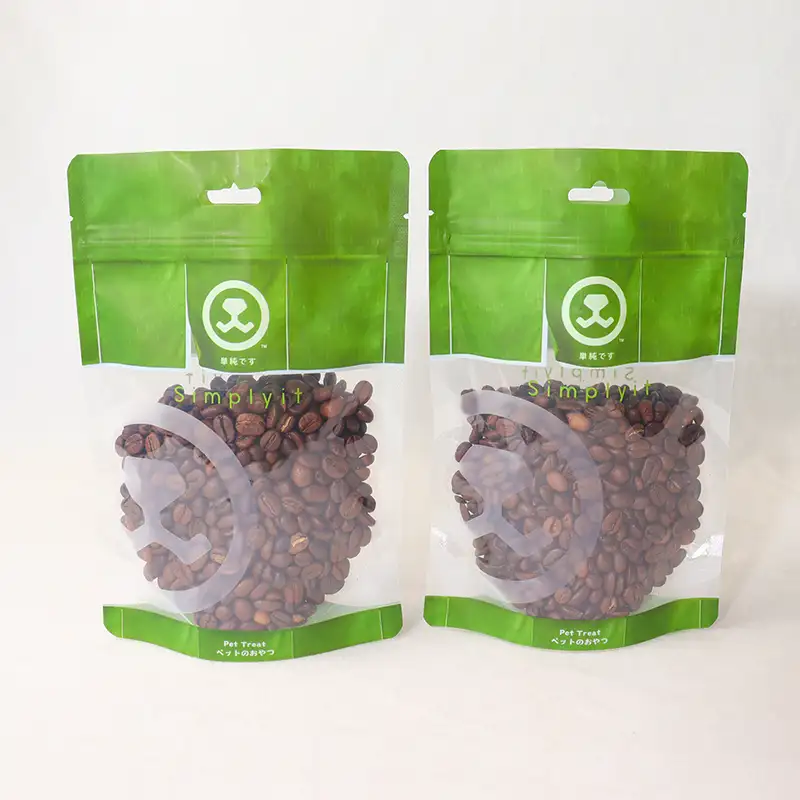
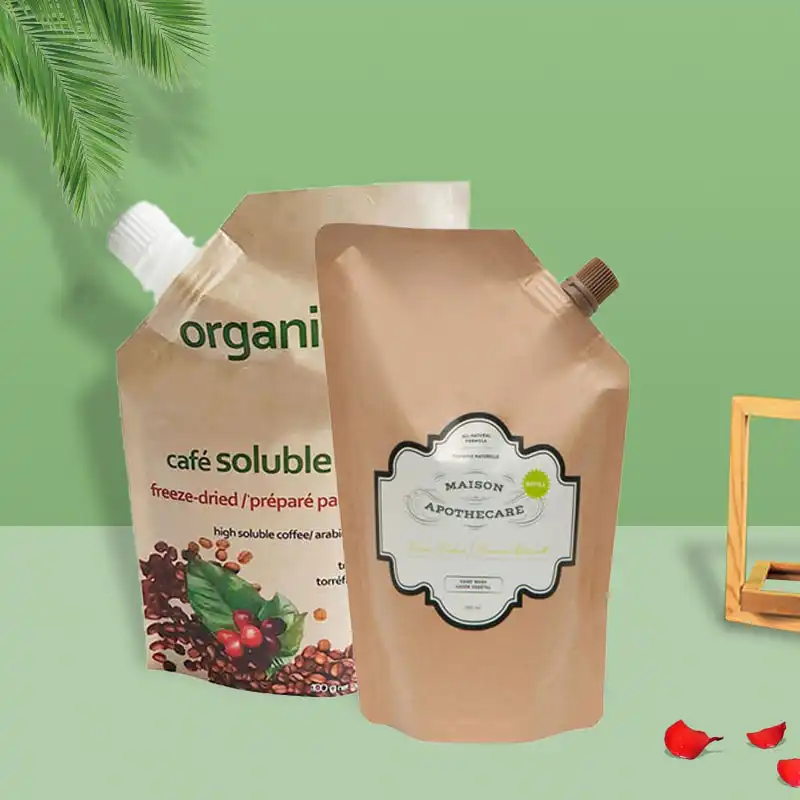
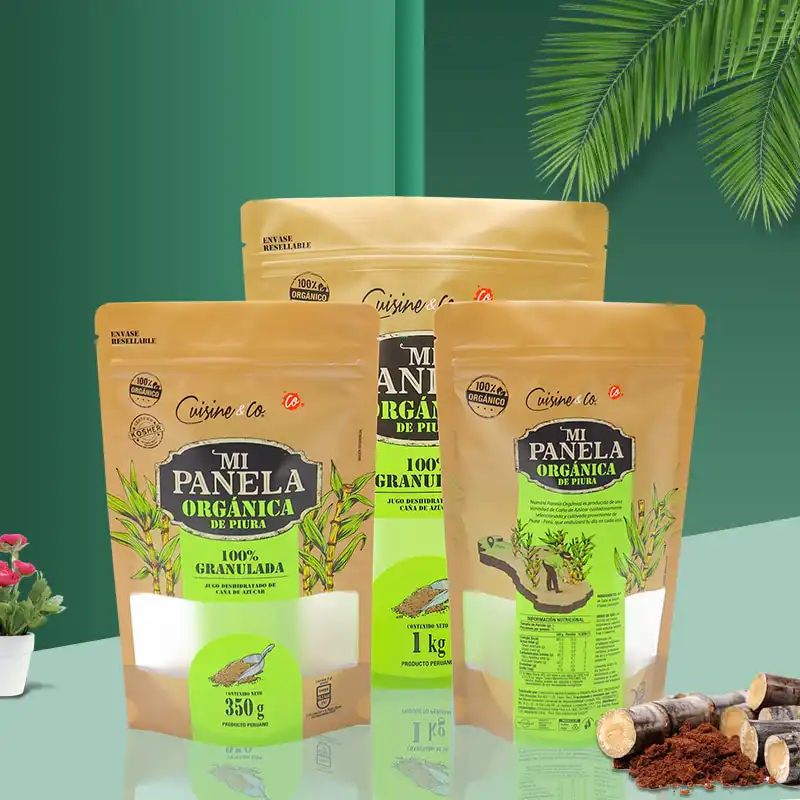
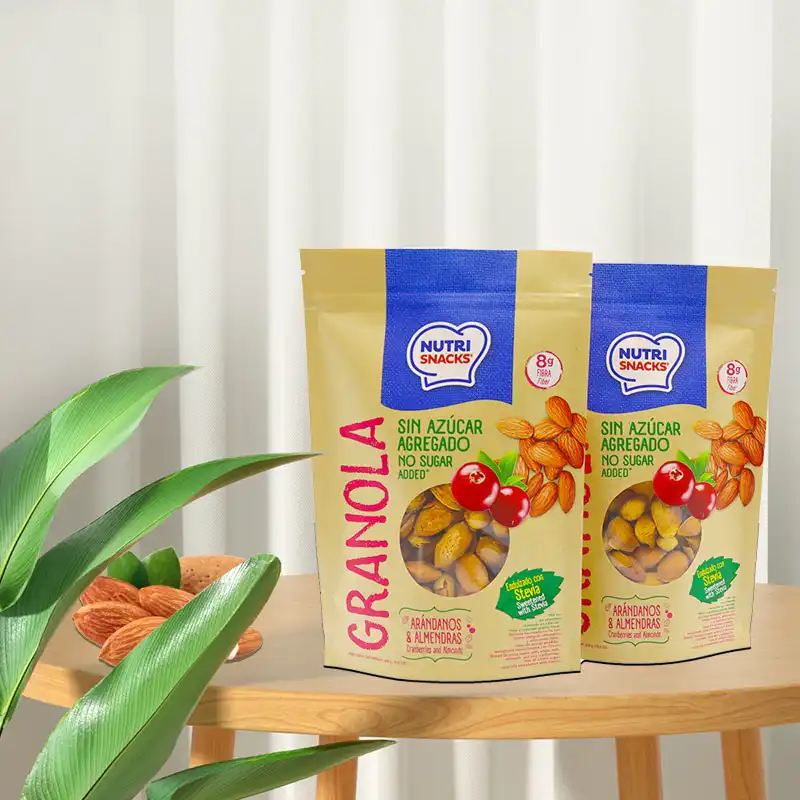
A kraft paper bag with a clear viewing panel is popular because it combines a natural paper look with product visibility. Shoppers can see the color, texture, and quality of what is inside, while the kraft surface gives the pack a warm, simple, eco-conscious feel.
It works especially well for coffee, tea, snacks, nuts, granola, pet treats, powders, dried fruit, spices, rice, cosmetics, bath salts, and handmade goods. For brands ordering in quantity, the main value is simple: better shelf trust, more flexible customization, and a packaging style that can fit many product lines.
The important part is choosing the right structure, window shape, zipper, barrier layer, and printing method. A nice-looking pouch can fail quickly if it does not protect aroma, block moisture, or survive transport.
What Is This Type of Pouch, Really?
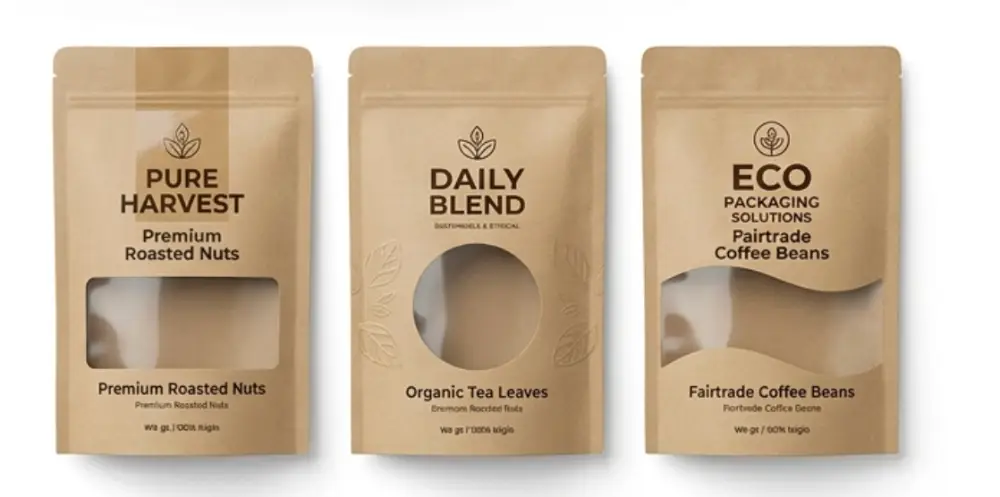
This packaging style is usually made with kraft paper on the outside and one or more inner films for sealing, barrier protection, and food contact safety. The transparent panel is commonly made from PET, PE, CPP, or another clear film, depending on the product and shelf-life requirement.
As a manufacturer that has produced packaging for 20+ years, YLTPACK has seen one pattern again and again: the outside paper look attracts attention, but the inside structure decides whether the product stays fresh. That is why material selection should come before decoration.
Some pouches are flat. Some stand upright. Some include zippers, tear notches, hang holes, valves, rounded corners, or matte printing. The right version depends on how your product is filled, shipped, displayed, opened, and stored after purchase.
Why Does the Window Matter So Much?
The window is not just a design feature. It is a trust shortcut. When shoppers can see coffee beans, loose tea, nuts, pet treats, or rice grains, they need less imagination and feel more confident about what they are buying.
According to Trivium Packaging’s 2024 Buying Green Report, 82% of surveyed consumers said they were willing to pay more for products in sustainable packaging. That does not mean every paper-looking pouch is automatically sustainable, but it shows why natural materials and honest presentation now influence buying behavior.
The window also helps smaller brands compete without heavy shelf education. If your product has a beautiful texture, color, or handmade appearance, hiding it completely may be a missed opportunity.
Which Products Are a Strong Fit?
A window pouch is most useful when the product itself helps sell the product. Think roasted coffee beans, colorful candies, premium granola, dried mango slices, herbal tea blends, dog biscuits, sea salt, or bath soak crystals.
Here are common product matches and the packaging details that matter most:
| Product Category | Why the Window Helps | Packaging Details to Check |
|---|---|---|
| Coffee and tea | Shows roast color, leaf quality, or blend texture | Oxygen barrier, aroma retention, optional one-way valve |
| Snacks, nuts, granola | Makes freshness and texture visible | Moisture barrier, zipper strength, oil resistance |
| Pet treats | Pet owners can inspect size, color, and ingredient quality | Grease resistance, resealability, puncture resistance |
| Rice, grains, seeds | Shows grain size, cleanliness, and color consistency | Load-bearing strength, bottom gusset, stacking durability |
| Beauty and wellness | Creates a clean unboxing look for social sharing | Matte finish, clean printing, powder leakage control |
| Spices and powders | Displays color and product identity quickly | Fine powder sealing, static control, strong heat seal |
How to Choose the Right Structure for Freshness
Many buyers start with color, size, and logo placement. Those matter, but freshness protection should come first, especially for food, coffee, pet treats, and powdered products.
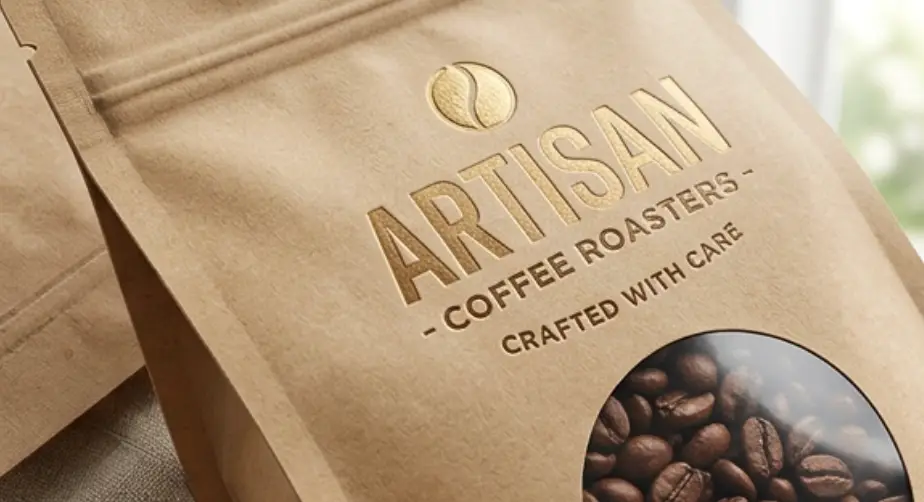
For coffee, oxygen is the enemy because it weakens aroma and flavor. A paper-look exterior can be paired with high-barrier films or aluminum-free barrier structures, depending on shelf-life goals and filling conditions.
For pet food and treats, ingredient transparency matters because pet owners increasingly read labels like they read human food labels. A clear panel can support that trust, but the pouch still needs puncture resistance against sharp biscuits or freeze-dried pieces.
For rice or grains, the main issue is not aroma. It is weight, stacking, and transport pressure. The bottom gusset, side seals, and film thickness must match the filled weight, not just the package size.
Material Options: Paper Look, Barrier, and Seal Strength
Not all kraft pouches perform the same. Two bags may look nearly identical on a shelf, yet one may hold freshness for weeks longer because the inner layers are different.
In our 6,800㎡ cleanroom facility, we separate material planning, printing, lamination, pouch making, and inspection steps to reduce contamination risks and improve batch consistency. This matters most when packaging food, supplements, pet treats, or personal care products.
| Structure Type | Typical Use | Strengths | Watch-Outs |
|---|---|---|---|
| Kraft paper / PE | Dry goods with short shelf life | Simple structure, good heat sealing | Limited barrier for aroma or moisture-sensitive items |
| Kraft paper / PET / PE | Snacks, tea, candy, pet treats | Better strength and print stability | Not ideal for products needing high oxygen protection |
| Kraft paper / high-barrier film / PE | Coffee, nuts, powders, premium food | Improved oxygen and moisture protection | Requires product-specific testing |
| Kraft paper / CPP | Some dry foods and lightweight goods | Good clarity and sealing performance | May need upgrades for heavier fill weights |
| Recycled-content or GRS-related options | Brands with sustainability targets | Supports responsible sourcing claims | Claims must match certified material documentation |
Flat, Stand-Up, or Gusseted: Which Format Should You Pick?
The pouch format affects shelf impact, filling speed, shipping efficiency, and how customers use the product at home. A small spice refill and a two-pound rice pack should not use the same structure.
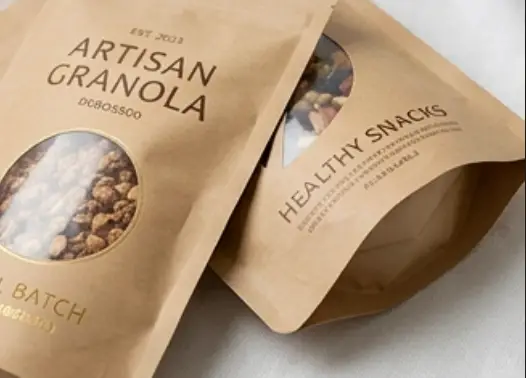
A stand up kraft paper pouch with window is often chosen for snacks, coffee, tea, granola, and pet treats because it sits upright and gives the front panel more space for branding. It also improves shelf presentation compared with a flat bag.
Flat pouches are useful for samples, refills, single-use goods, and lightweight items. Side-gusset or quad-style formats can work better for coffee, rice, grains, and larger dry goods where capacity and stacking matter.
| Pouch Format | Common Fill Range | Good For | Buyer Tip |
|---|---|---|---|
| Flat pouch | Small samples to light retail packs | Tea samples, spices, masks, accessories | Great when shipping space matters |
| Stand-up pouch | About 50 g to 1 kg, depending on density | Snacks, coffee, candy, pet treats | Check bottom gusset stability before mass production |
| Side-gusset pouch | Medium to larger fills | Coffee, grains, powders | Good for boxy shelf shapes and efficient packing |
| Heavy-duty gusseted pouch | Higher-weight dry goods | Rice, seeds, pet food | Test drop strength and seal width |
Resealability: When a Zipper Is Worth It
If customers do not finish the product in one use, a zipper usually improves the experience. It helps reduce spills, slows exposure to air, and makes the package feel more useful after opening.
A resealable kraft paper pouch with window is a strong choice for coffee beans, trail mix, pet snacks, supplements, baking ingredients, and dried fruit. For powder products, zipper placement and powder trapping should be tested because fine particles can affect closure.
Do not assume every zipper is the same. Wider zippers, powder-resistant zippers, child-resistant closures, and slider options all serve different needs. Your filling method also matters because some zippers perform better on automatic lines than others.
Food Safety: What Should Buyers Check?
Food packaging is not only about looking clean. It must be made from suitable contact materials, sealed correctly, and supported by documentation that matches your market requirements.
Because we hold FDA food-contact documentation and ISO 22000 certifications, we recommend confirming three things before ordering: inner film safety, ink and adhesive suitability, and whether the final pouch has been tested with your real product.
A food grade kraft paper pouch with window should be reviewed based on the product inside. Oily nuts, acidic dried fruit, fragrant tea, and protein powder each interact differently with packaging materials.
If you sell across markets, ask your supplier for clear documents instead of vague claims. Helpful records may include material safety data, food-contact declarations, ISO certificates, migration test reports, and GRS documentation when recycled-content claims are involved.
Custom Printing: How to Make the Pouch Sell Without Overdesigning
The kraft background already creates a natural shelf style, so the print design should stay clear and readable. Many strong designs use fewer colors, bold product names, and a window shape that supports the brand story.
Our in-house design team often helps brands who only have a rough idea turn it into print-ready artwork. The most common fix is not adding more decoration; it is improving hierarchy so shoppers understand the product in three seconds.
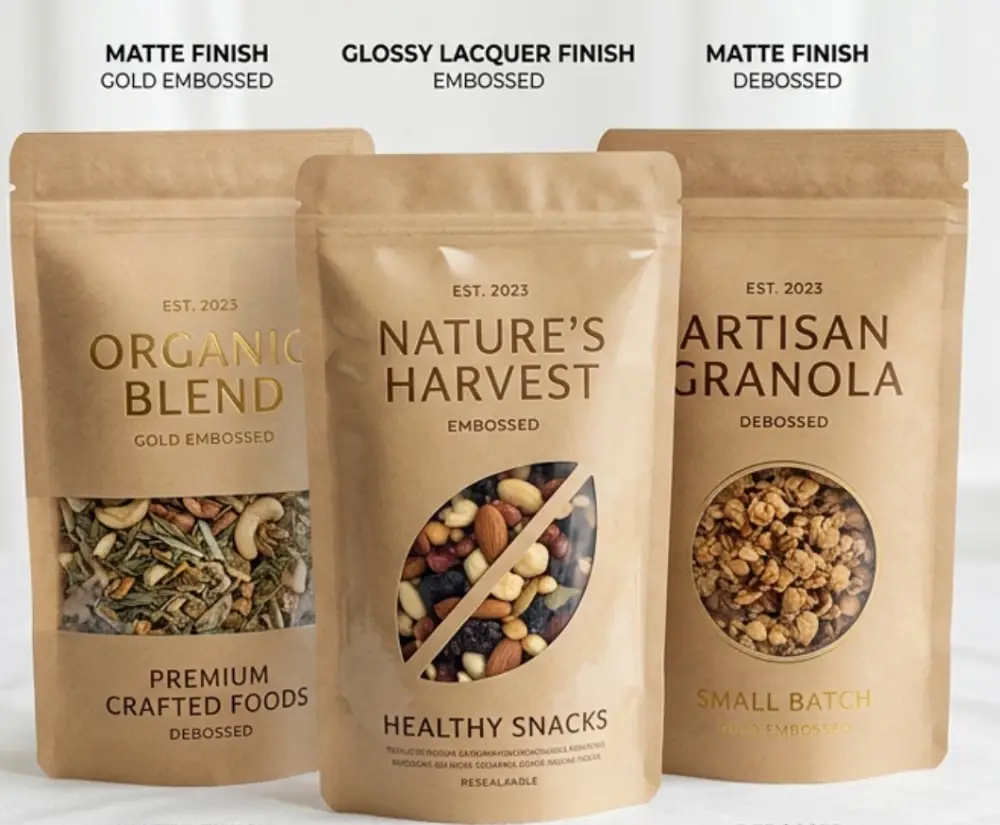
A custom printed kraft paper pouch with window can include matte finish, spot gloss, metallic details, QR codes, batch coding areas, transparent windows in special shapes, and back-panel storytelling. For Instagram-friendly beauty or wellness products, clean layouts and balanced negative space often photograph better than busy artwork.
If your product line has multiple flavors or sizes, build a design system early. Keep the logo and structure consistent, then use color bands, icons, or window shapes to separate varieties.
Wholesale Ordering: What Should You Prepare Before Asking for a Quote?
When you request kraft paper pouch with window wholesale supply, the fastest way to get an accurate recommendation is to share product details first. A supplier cannot choose the right barrier or pouch size from a logo alone.
Before you send an inquiry, prepare this simple checklist:
- Product type, such as coffee, snacks, powder, pet treats, rice, or cosmetics
- Fill weight or volume per pouch
- Product texture, such as oily, sharp, powdery, fragrant, or moisture-sensitive
- Expected shelf life and storage conditions
- Preferred pouch style: flat, stand-up, side gusset, or heavy-duty gusset
- Need for zipper, valve, hang hole, tear notch, or rounded corners
- Printing needs, including colors, finish, and artwork status
- Target market and any certification requirements
- Filling method: manual, semi-automatic, or automatic
YLTPACK can review these details and suggest structure, size, window placement, and finishing options. For a packaging review, you can reach the team by WhatsApp at +86 182 1944 5665 or email [email protected].
Common Mistakes That Cause Packaging Problems
Most packaging issues are preventable. The tricky part is that problems often appear after filling, shipping, or several weeks on the shelf, not when the empty pouch first arrives.
Working with brands across North America and other markets, we have found that the most common mistake is choosing by appearance only. The pouch may look perfect in a photo but still fail because of weak seals, poor barrier selection, or the wrong window size.
- Using a window that is too large: This may reduce barrier area and weaken the pouch structure.
- Ignoring product oils: Nuts, granola, pet treats, and coffee can stain or affect unsuitable materials.
- Skipping filled-product testing: Empty pouch approval is not enough for heavier or sharp products.
- Choosing weak zippers: A poor zipper can make a premium product feel frustrating.
- Printing too close to seal areas: This can affect heat sealing or create visual defects.
- Forgetting shipping pressure: Rice, grains, and pet food need stronger seals and drop testing.
How to Compare Suppliers Without Looking Only at the Sample
A nice sample is useful, but it does not tell the whole story. You also need to understand how consistently the supplier can make the same pouch across production runs.
Look for evidence in five areas: material recommendation, food-contact documentation, print control, pouch-making accuracy, and communication during revisions. If a supplier cannot explain why a structure is suitable, that is a warning sign.
| What to Compare | Good Sign | Risk Sign |
|---|---|---|
| Material advice | Supplier asks about product, shelf life, and filling | Supplier recommends one structure for every product |
| Certifications | Clear FDA-related, ISO 9001, ISO 22000, or GRS documents when needed | Only general claims without documents |
| Print review | Artwork is checked for bleed, color, barcode, and seal zones | No technical artwork feedback before production |
| Quality control | Seal strength, size tolerance, appearance, and packing checks are defined | Inspection process is unclear |
| Communication | Questions are answered with options and trade-offs | Only short answers with no reasoning |
Window Shape and Placement: Small Detail, Big Impact
The window should show enough product to build confidence without weakening protection. A narrow vertical window may work for coffee beans or granola, while a cloud, leaf, circle, or custom shape can support a softer brand personality.
For powders, avoid placing the window where dust may stick heavily and make the pouch look messy. For pet treats, place the panel where treat shape and size are easy to see. For rice or grains, a clean lower window can show grain quality while leaving room for product information.
Also think about store lighting. Glossy windows can reflect light, while matte kraft surfaces absorb it. A balanced layout keeps the product visible without making the pack hard to photograph.
Sustainability Claims: Be Clear, Not Vague
Paper-look packaging often feels eco-friendly, but claims must be accurate. A pouch made with paper plus plastic film may not be recyclable in regular paper streams, even if the outside is kraft.
That does not make the format a bad choice. It means your claim should match the actual material structure and local recycling reality. If you need recycled-content claims, compostability claims, or lower-plastic structures, ask for documentation before printing those claims on the bag.
As of July 13, 2026, retailers and consumers are paying closer attention to greenwashing language. Simple phrases like “made with kraft paper” or “designed to reduce outer plastic appearance” may be safer than broad claims such as “100% eco-friendly” unless you have proof.
Practical Specification Guide for First-Time Buyers
If you are ordering this packaging style for the first time, you do not need to know every technical term. Start with the product, then match the pouch features to real use.
| Decision Point | Simple Rule | Example |
|---|---|---|
| Moisture sensitivity | Higher sensitivity needs stronger barrier | Powder, tea, and crispy snacks need careful protection |
| Aroma sensitivity | Strong aroma needs oxygen and odor control | Coffee beans benefit from barrier layers and sometimes valves |
| Product weight | Heavier products need stronger gussets and seals | Rice and pet food need drop and stacking checks |
| Repeat use | Add zipper if customers reopen often | Granola, nuts, and pet treats are usually resealed many times |
| Shelf display | Use stand-up or gusset formats for retail presence | Snacks and beauty items often need front-facing display |
| Brand education | Use back panel space wisely | Ingredients, brewing notes, origin story, or usage steps |
Conclusion: When This Packaging Choice Makes Sense
A kraft pouch with a clear panel is a smart choice when you want natural shelf appeal, product visibility, and flexible customization in one package. It is especially useful when the product’s texture, color, or quality can help convince shoppers.
The key is not choosing the prettiest pouch. It is choosing the structure that fits your product’s freshness, weight, filling method, and sales channel. That is where material testing, certification documents, and practical manufacturing experience make a real difference.
If you are comparing options for coffee, snacks, pet treats, rice, powders, or beauty products, YLTPACK can help review pouch style, material, window design, printing, and safety documentation before production. For a project discussion, message WhatsApp +86 182 1944 5665 or email [email protected].
FAQ
1. Is a kraft window pouch suitable for oily snacks or nuts?
Yes, but the inner layer must be selected carefully. Oily products can stain weak materials or affect shelf appearance, so you should use oil-resistant inner films and test the pouch with the real product before production.
2. Can this packaging keep coffee fresh?
It can, if the structure includes suitable oxygen and moisture barriers. For roasted coffee, you may also need a one-way degassing valve, especially when beans are packed soon after roasting.
3. Is the clear window safe for food contact?
It can be safe when made with approved food-contact materials. Always ask for documentation related to the inner film, adhesives, inks, and finished pouch structure, especially if you sell food, supplements, tea, or pet treats.
4. Can I print my logo and use a special window shape?
Yes. Logos, product information, matte finishes, QR codes, and custom window shapes are common options. For cleaner results, finalize the pouch size and window position before completing the artwork.
5. What information should I send before ordering custom pouches?
Send your product type, fill weight, shelf-life target, pouch style, zipper or valve needs, artwork files if available, and target market requirements. With those details, YLTPACK can suggest a practical structure and customization plan.