Quick Answer: How to Design and Order Kraft Paper Pouches for Your Brand
The short answer: successful custom kraft paper pouches design starts with your product, not the bag. Decide what the pouch must protect, how it will be filled, where it will be sold, and what customers need to understand in the first three seconds.
Then turn those answers into a clear specification: pouch style, size, barrier layer, zipper or valve, printing method, surface finish, safety requirements, and order quantity. A capable manufacturer can then guide sampling, artwork checks, production, inspection, and delivery without guesswork.
- For coffee: focus on oxygen barrier, aroma retention, degassing valve, and shelf appeal.
- For snacks or powders: confirm food-contact safety, moisture resistance, and resealability.
- For pet food: make ingredients easy to read because pet owners compare formulas closely.
- For beauty products: consider tactile finish, color accuracy, and the unboxing moment.
- For rice or grains: prioritize load strength, gusset stability, and stacked transport performance.
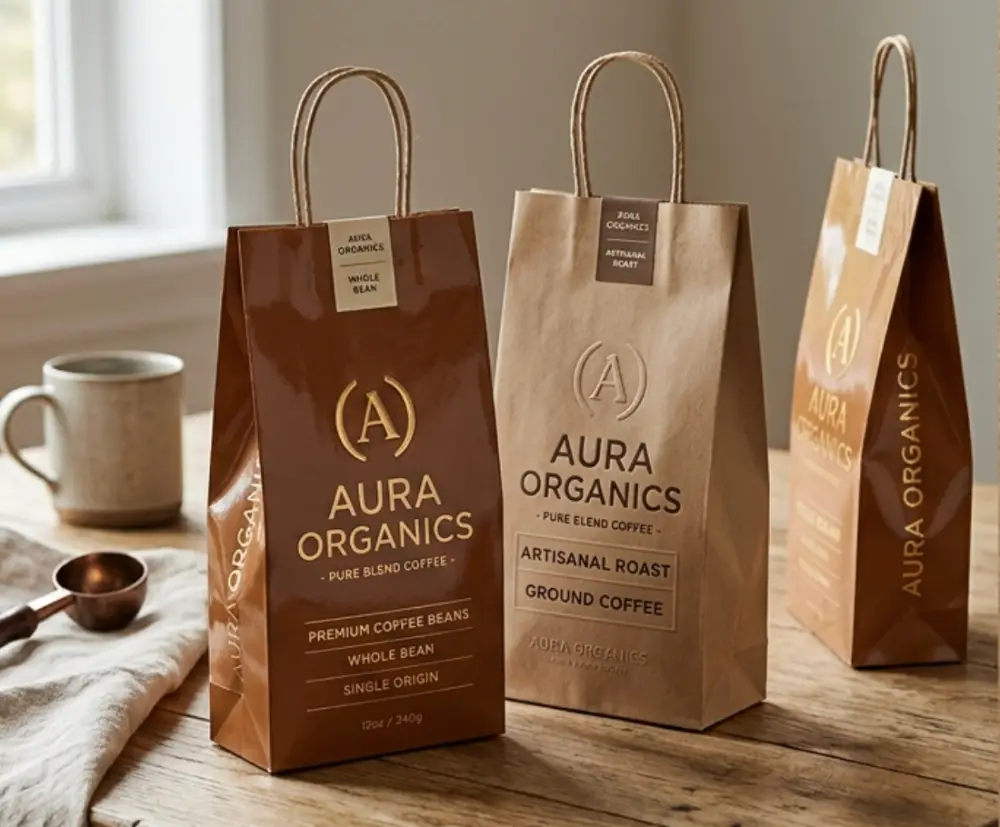
Start With the Product: What Must the Pouch Actually Do?
Before choosing colors or finishes, ask one practical question: what would damage the product before the customer opens it? Moisture, oxygen, light, puncture, odor transfer, and compression are common risks.
Working with brands across North America, we have found that the most common mistake is designing for appearance first and protection second. A great-looking pouch that fails during storage, shipping, or retail display can cost much more than a careful specification review.
As a manufacturer that has produced packaging for 20+ years, YLTPACK usually begins with the product’s sensitivity, filling method, shelf life target, and transport route. Those details decide the material structure long before the artwork is finalized.
| Product Type | Main Risk | Recommended Packaging Focus | Useful Feature |
|---|---|---|---|
| Coffee beans | Oxygen exposure and aroma loss | High barrier layer and tight sealing | One-way degassing valve |
| Protein powder | Moisture clumping | Moisture barrier and wide opening | Resealable zipper |
| Pet treats | Grease migration and odor | Oil-resistant inner layer | Clear nutrition panel area |
| Cosmetic refills | Leakage and brand presentation | Strong seal and refined finish | Matte or soft-touch surface |
| Rice and grains | Weight pressure during stacking | Durable structure and bottom stability | Reinforced gusset |
Choose the Right Pouch Style for How Customers Use the Product
The pouch shape should match the customer’s hand, shelf, pantry, or storage habit. If the package is awkward to open, reseal, or stand upright, customers notice quickly.
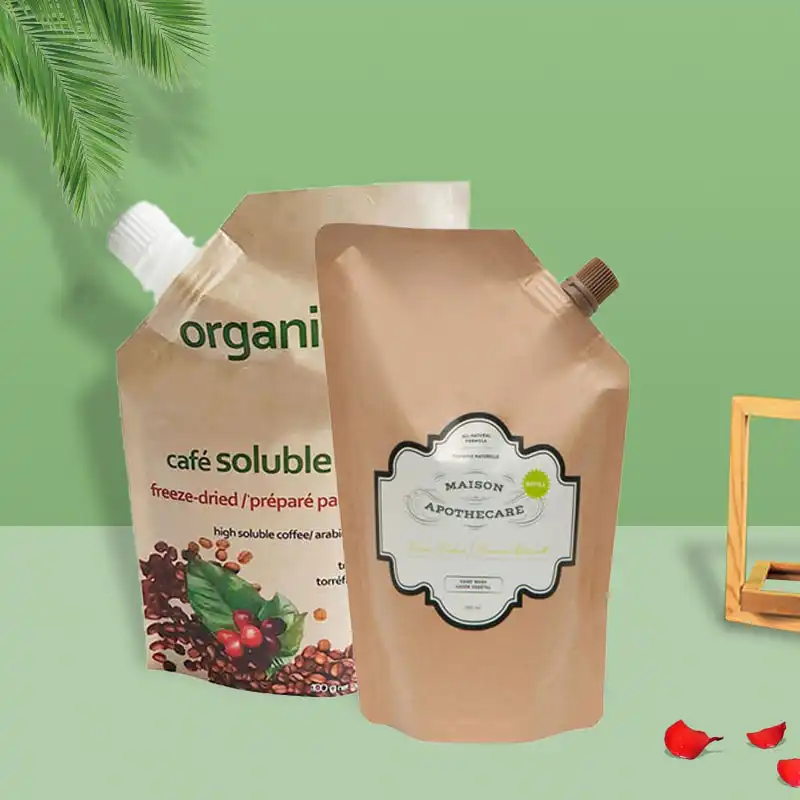
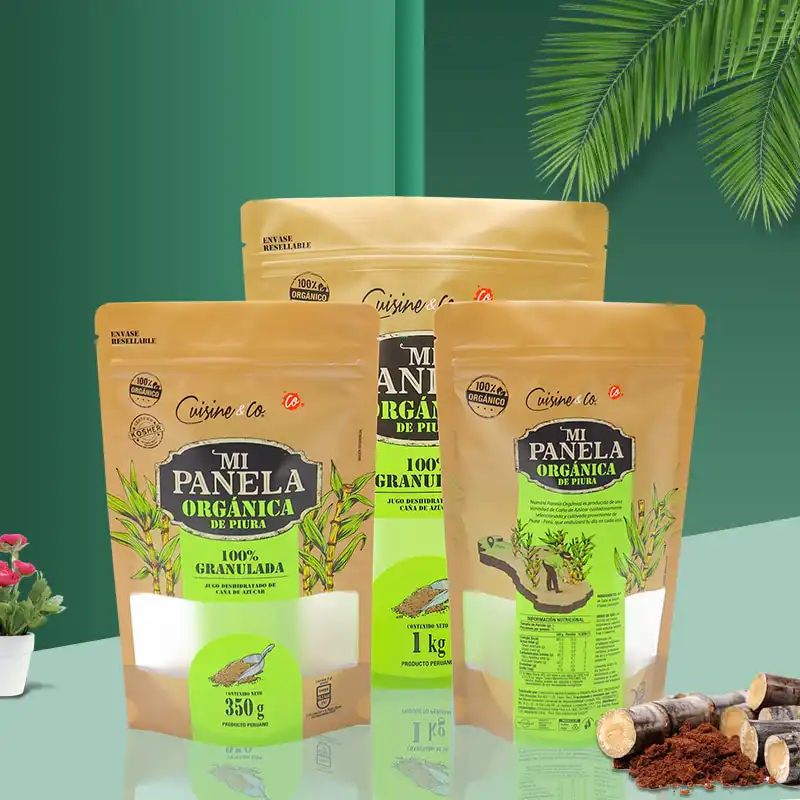
For many retail products, custom kraft paper stand up pouches are popular because they save shelf space and display the front panel clearly. They also work well for products that customers use multiple times, such as coffee, tea, granola, pet snacks, and supplements.
| Pouch Style | Good For | Customer Experience | Design Note |
|---|---|---|---|
| Stand-up pouch | Coffee, snacks, powders, pet treats | Easy shelf display and home storage | Leave enough front space for brand and product name |
| Flat pouch | Samples, sachets, single-use items | Lightweight and compact | Keep messaging simple because space is limited |
| Side gusset pouch | Coffee, rice, grains, bulk food | Holds more volume with a rectangular shape | Check side-panel readability after filling |
| Flat bottom pouch | Premium food, coffee, larger pet products | Stable display and strong shelf presence | Use five printable panels wisely |
| Spout pouch | Liquid refills, sauces, gels | Controlled pouring and reuse | Confirm cap size and leak testing early |
Build the Artwork Around Buyer Decisions, Not Decoration
Your pouch has a small job window. In a store or online thumbnail, buyers usually notice shape, color, product name, and one clear reason to care.
That is why custom printed kraft paper pouches design should not be treated like filling every inch with text. The stronger approach is to create a visual hierarchy: brand name, product type, key benefit, flavor or variant, and trust details.
Our in-house design team often helps brands who only have a rough idea, such as a logo, color direction, or competitor reference. The goal is not to copy a market style, but to turn the product’s value into packaging customers understand fast.
What to Put on the Front Panel
- Brand mark: visible enough to build recognition across product lines.
- Product name: clear, readable, and not hidden by textures or patterns.
- Variant: flavor, roast level, scent, size, or formula.
- Primary benefit: such as resealable, organic, high protein, refill pack, or compostable where supported by documentation.
- Net weight: placed according to the sales market’s labeling expectations.
What to Keep Away From the Front Panel
Avoid placing long ingredient lists, dense certifications, and complex brand stories on the main selling area. Those belong on the back or side panel, where customers can read them after the pouch has already earned attention.
For pet food, ingredient transparency matters because owners compare protein sources, additives, and feeding instructions. For beauty packaging, the front panel should also support an Instagram-friendly unboxing experience, especially when refills or masks are sold online.
Select Materials and Barriers That Match Your Shelf Life Goal
Kraft paper gives the natural, warm look many brands want, but the paper layer is only part of the package. The inner layers decide seal strength, barrier performance, food-contact suitability, and filling compatibility.
For eco friendly custom kraft paper pouches, be careful with broad claims. As of July 13, 2026, many buyers are asking for recyclable structures, reduced plastic use, recycled-content documentation, or GRS-related proof instead of vague “green” wording.
YLTPACK holds GRS certification and can help compare material options based on your product and market claims. If sustainability is part of your brand promise, ask for documentation before printing the claim on the pouch.
| Material Choice | Typical Use | Benefit | Watch-Out |
|---|---|---|---|
| Kraft paper plus PE | Dry goods with moderate protection needs | Natural look and heat sealability | May not be enough for aroma-sensitive products |
| Kraft paper plus high-barrier film | Coffee, tea, powders, specialty food | Better oxygen and moisture resistance | Requires correct sealing parameters |
| Kraft paper with window | Snacks, grains, pet treats | Lets customers see the product | Window placement can reduce printable space |
| Recyclable-oriented structure | Brands with sustainability targets | Supports clearer environmental positioning | Barrier performance must still be tested |
Confirm Food Safety Before You Approve the Design
If your pouch will touch edible products, safety cannot be an afterthought. The ink, adhesive, inner film, sealing process, and production environment all matter.
Because we hold FDA/ISO 22000 certifications, we recommend confirming food-contact requirements before sample production, especially for coffee, snacks, powders, rice, tea, spices, and pet treats. This helps avoid redesigns after artwork approval.
In our 6,800㎡ cleanroom facility, production controls support cleaner handling for custom kraft paper pouches for food packaging. This is especially important when brands sell through retailers, distributors, subscription boxes, or online stores with strict quality checks.
Food Packaging Questions to Ask Early
- Will the pouch directly contact food or hold an inner sachet?
- Does the product contain oil, salt, acid, or strong aroma?
- Is the product filled hot, cold, or at room temperature?
- Will the pouch be nitrogen flushed or vacuum packed?
- What shelf life do you expect under normal storage conditions?
- Which market will the product be sold in?
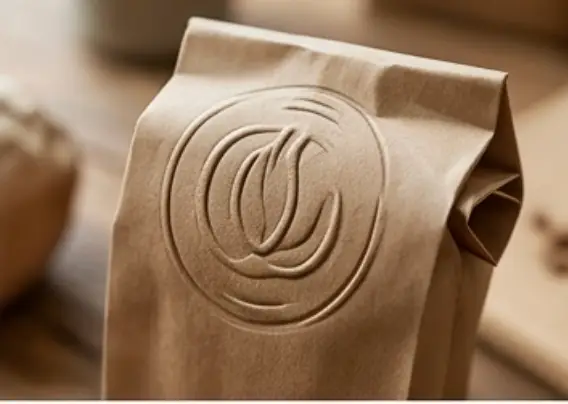
Decide the Functional Features Before Finalizing Artwork
Features change the layout. A zipper, tear notch, valve, hang hole, rounded corner, window, or spout can affect the safe print area and the way customers interact with the pouch.
For coffee, a one-way degassing valve helps release carbon dioxide while reducing oxygen entry, supporting aroma retention. For rice or grains, handle style, bottom shape, and sealing width matter because the pouch may be stacked, lifted, and transported many times.
| Feature | Why It Matters | Design Impact |
|---|---|---|
| Zipper | Supports repeated opening and closing | Keep key text below the zipper area |
| Tear notch | Makes opening easier | Do not place logos or QR codes too close |
| Degassing valve | Useful for freshly roasted coffee | Reserve a clear valve position on the back or front |
| Clear window | Shows product texture and quality | Balance visibility with shelf-life protection |
| Hang hole | Allows peg display | Leave top margin for punching |
Prepare a Clear Specification Before Asking for a Quote
A quote is only useful when the manufacturer understands the same package you have in mind. If the request is vague, the response will usually include assumptions that may not match your product.
For kraft paper pouch packaging design services, the most helpful starting point is a simple specification sheet. You do not need to know every technical term, but you should describe the product, target weight, pouch style, desired finish, and sales channel.
| Specification Item | Example Detail to Provide | Why It Helps |
|---|---|---|
| Product | Roasted coffee beans, 250g | Guides barrier and valve choice |
| Pouch size | Width x height x bottom gusset, such as 130 x 210 x 70 mm | Supports accurate capacity checking |
| Structure | Kraft paper outer layer with food-contact inner layer | Clarifies performance expectations |
| Printing | Front and back full-color artwork | Determines plate or digital workflow |
| Finish | Matte, gloss, spot effect, or natural kraft feel | Affects brand appearance and touch |
| Feature | Zipper, valve, hang hole, window, or rounded corner | Changes layout and production setup |
| Filling method | Manual, semi-automatic, or automatic filling | Helps confirm sealing and opening requirements |
| Destination | Retail, Amazon-style fulfillment, subscription box, export shipment | Guides carton packing and durability checks |
Understand the Ordering Process From Idea to Bulk Production
Ordering custom packaging feels easier when you know the steps. The process is not just “send logo, print bag”; it is a sequence of decisions that reduce risk before production starts.
At YLTPACK, a typical project moves through requirement review, structure recommendation, artwork adjustment, sample confirmation, production, inspection, and shipping arrangement. The timeline depends on material choice, print complexity, order quantity, and approval speed.
- Share your product details: include product type, weight, shelf life goal, and market.
- Confirm pouch structure: choose style, size, material, and functional features.
- Prepare artwork: use the dieline and keep important elements inside the safe area.
- Review digital proof: check text, barcode, color references, and regulatory claims.
- Approve sample: evaluate size, feel, seal, zipper, valve, and filling fit.
- Begin production: proceed after all specifications are confirmed in writing.
- Inspect and pack: review printing, sealing, dimensions, and carton protection.
- Arrange delivery: choose shipping based on launch schedule and storage plan.
Avoid These Common Mistakes Before Production
Most packaging problems are preventable. They usually come from rushed artwork, unclear specifications, or choosing a pouch based only on appearance.
One practical rule: never approve a pouch before checking it with the real product or a close substitute. Capacity, shelf shape, zipper feel, and filling speed can look different in real use than they do on a flat dieline.
- Ignoring the fill volume: 250g of coffee, 250g of powder, and 250g of dried fruit may need different pouch sizes.
- Placing text too close to seals: heat-sealed areas can distort fine details.
- Choosing a weak barrier: natural-looking kraft does not automatically protect aroma or moisture-sensitive goods.
- Overloading the front panel: too many claims make the product harder to understand.
- Skipping barcode tests: scan the printed barcode before sending products to retailers or warehouses.
- Using unsupported sustainability claims: only print claims that match the material documentation.
How to Make Your Pouch Feel Like Your Brand
Kraft paper is flexible from a brand perspective. It can feel rustic, clean, premium, playful, scientific, or handmade depending on color, typography, finish, and layout.
If your product is organic tea, a calm color palette and simple ingredient story may work well. If it is a bold coffee roast, high-contrast printing and a strong valve-side back panel can help communicate freshness and craft.
For cosmetic refills, the package may need to photograph well under natural light and feel pleasant in the hand. For pet treats, large flavor names and visible protein cues can help shoppers decide faster.
Practical Design Tips
- Use fewer typefaces and make the product name easy to read from a distance.
- Keep a consistent color system across flavors or sizes.
- Use the back panel for instructions, origin story, nutrition, ingredients, and QR code.
- Ask for print-safe dielines before final artwork begins.
- Check whether your chosen finish affects barcode readability.
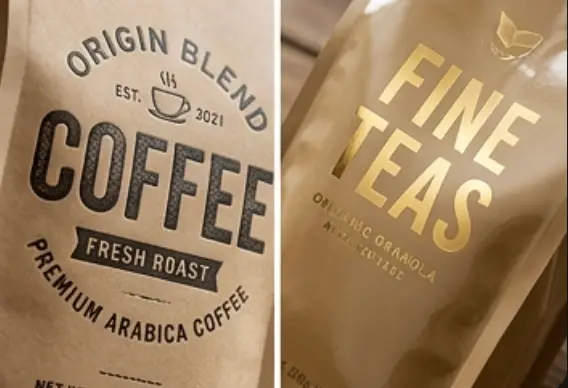
What to Review Before You Approve the Final Sample
The sample stage is where you should be picky. A small correction before production is much easier than a large correction after pouches are printed.
Use real handling conditions whenever possible. Fill the pouch, seal it, place it upright, lay it in a carton, open and close the zipper, and check whether the design still looks right after filling.
| Sample Check | What to Look For | Pass Question |
|---|---|---|
| Size and capacity | Product fits without over-stressing the seals | Does it fill cleanly with enough headspace? |
| Seal strength | No easy splitting, leaking, or uneven closure | Can it survive normal packing and shipping? |
| Print accuracy | Correct logo, color, text, barcode, and claims | Would you be comfortable showing it to a retailer? |
| Standing shape | Stable bottom and clean front display | Does it stand well after filling? |
| User opening | Tear notch, zipper, and opening width work smoothly | Can a first-time customer use it easily? |
When to Bring in a Packaging Manufacturer
Bring in a manufacturer as soon as you know the product type, approximate fill weight, and launch channel. You do not need finished artwork to begin the technical conversation.
Early review can prevent a design from being built around the wrong pouch size, feature position, or material structure. It also helps your team understand which ideas are simple, which need testing, and which may create avoidable production risk.
YLTPACK supports factory-direct custom pouch projects with ISO 9001 quality management, ISO 22000 food safety management, FDA-related compliance support, GRS certification, a 6,800㎡ cleanroom production environment, and an in-house design team. The practical value is fewer blind spots before your order moves into production.
If you already have a pouch sample, artwork draft, or product details, you can request a specification review from YLTPACK through WhatsApp at +86 182 1944 5665 or email [email protected]. Share your product type, target weight, pouch style, and destination market so the reply can be specific.
Conclusion: A Better Pouch Starts With Better Questions
Kraft pouch packaging is not only about a natural paper look. It is about product protection, customer convenience, shelf appeal, compliance, and repeatable production quality.
If you start with the product’s real needs, choose the right structure, prepare clean artwork, and confirm samples carefully, your packaging project becomes much easier to manage. The right manufacturing partner should help you ask better questions before production, not just print what is sent.
For brands planning bulk customized packaging, the smartest next step is to prepare a simple brief: product, fill weight, shelf life goal, pouch style, artwork status, and desired features. That gives your supplier enough information to recommend a practical path forward.
FAQ
1. What information should I prepare before ordering kraft paper pouches?
Prepare your product type, fill weight, pouch size if known, expected shelf life, artwork files, sales market, and preferred features such as zipper, valve, window, or hang hole. If you do not know the exact structure, share your product details and ask for recommendations.
2. Can kraft paper pouches be used for coffee packaging?
Yes, but coffee usually needs more than a kraft paper appearance. For roasted beans, consider a high-barrier inner layer and a one-way degassing valve to help manage oxygen exposure and aroma retention.
3. Are kraft paper pouches suitable for food contact?
They can be, when the inner material, ink system, adhesive, and production controls are selected for food-contact use. Always confirm compliance documents and testing expectations before approving packaging for edible products.
4. How do I know which pouch size is right?
The right size depends on product density, target weight, filling method, and desired shelf shape. A 250g powder, 250g coffee bean, and 250g snack may require different dimensions, so sample testing is strongly recommended.
5. Can YLTPACK help if I only have a logo and rough idea?
Yes. YLTPACK’s in-house design team can help turn your logo, product details, and market direction into a workable pouch layout and specification. For a review, send details by WhatsApp at +86 182 1944 5665 or email [email protected].