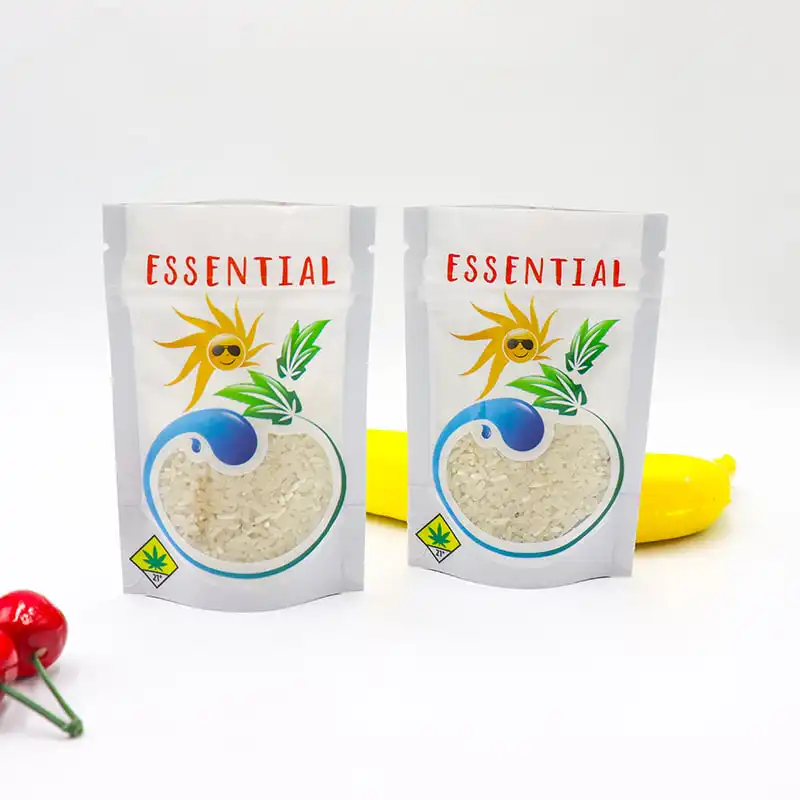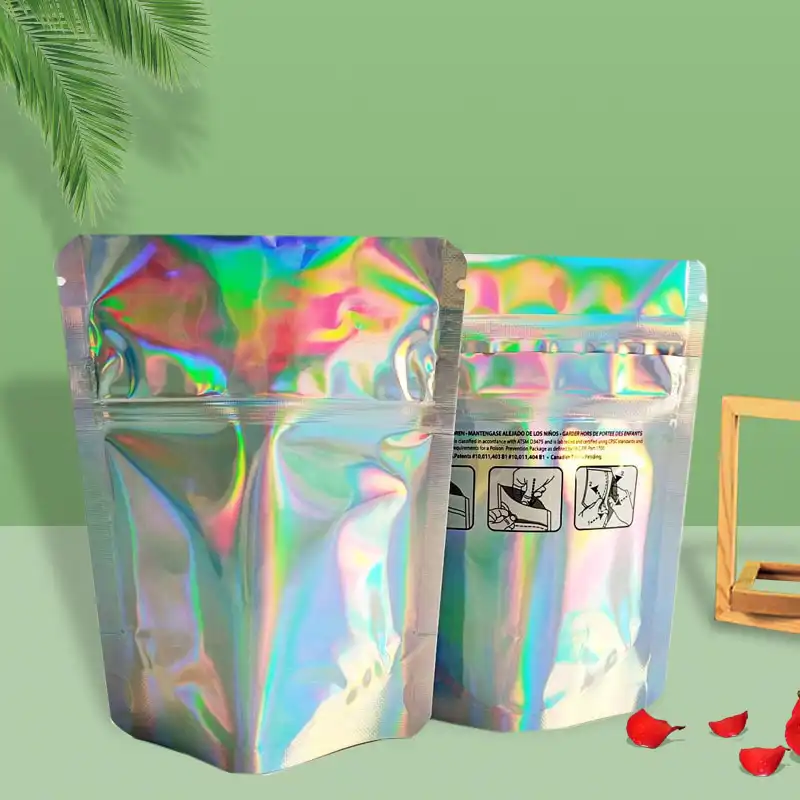
You have a flavor-tested product, a photo of the bag you want and a finished artwork file. Three quotes come back. One is a single line, one lists film microns, one adds a cylinder fee. They cannot be compared. The pieces that make them differ are structure, print method, minimums, compliance paperwork and the sample route. Once those are fixed, custom mylar bag manufacturers in China can be judged on the same terms.
A mylar bag is a laminated pouch with a PET outer layer, usually metallized or combined with aluminum foil, and a heat-seal inner layer. Quotes differ because the structure, print method and minimums behind "the same bag" differ. Fix those first, then compare itemized prices, and get the structure in writing.
What a mylar bag actually is, and why quotes for "the same bag" differ
"Mylar" is trade shorthand. The name began as a brand of biaxially oriented PET film, but it now gets used for almost any shiny barrier pouch. Behind the word sits a laminate: a printed PET layer, a barrier layer, and a sealant layer such as PE or CPP. One supplier may quote PET/metallized PET/PE, another PET/aluminum foil/PE, and both call it a mylar bag. The price gap is real. So is the performance gap.
Mylar, metallized PET and foil are not the same barrier
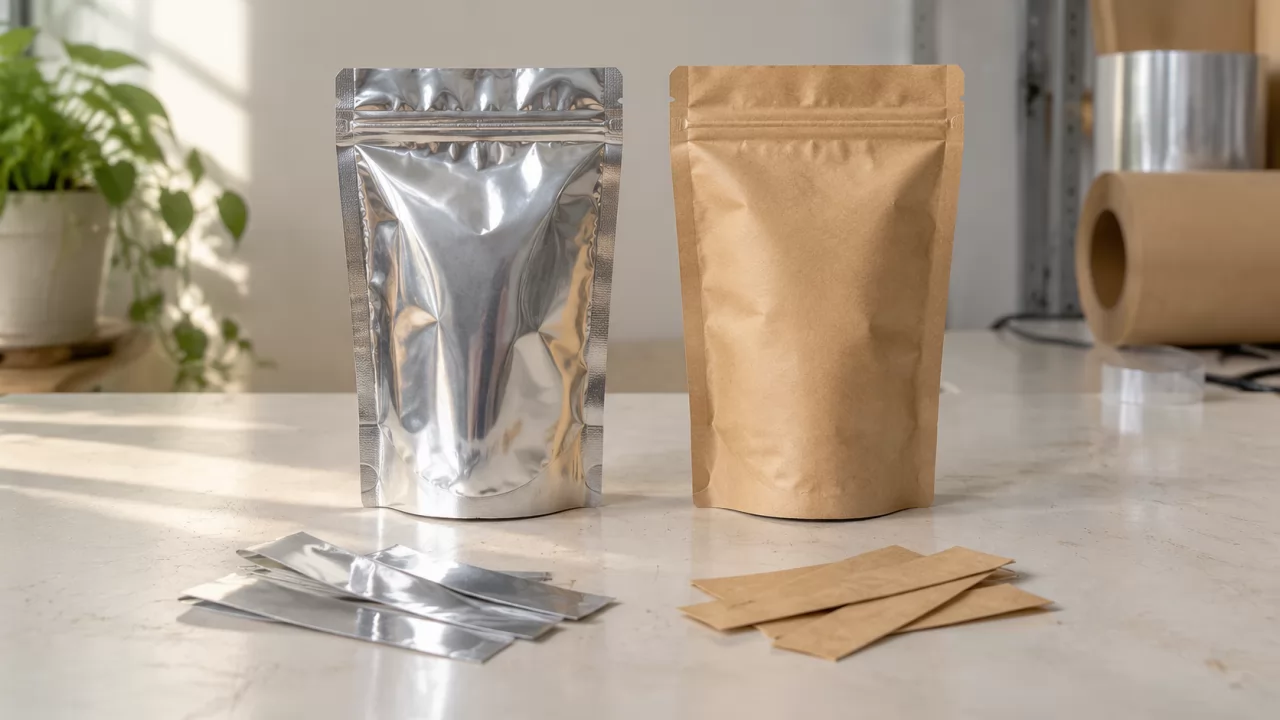
Metallized PET (VMPET) is PET film with a very thin vacuum-deposited aluminum layer. It blocks light well and gives a moderate oxygen and moisture barrier, which is often enough for snacks, granola, tea and other dry goods with a few months of shelf life. Aluminum foil laminate is a solid metal layer with a much higher barrier. It suits products that go stale or lose aroma, though it costs more and cannot be seen through at all.
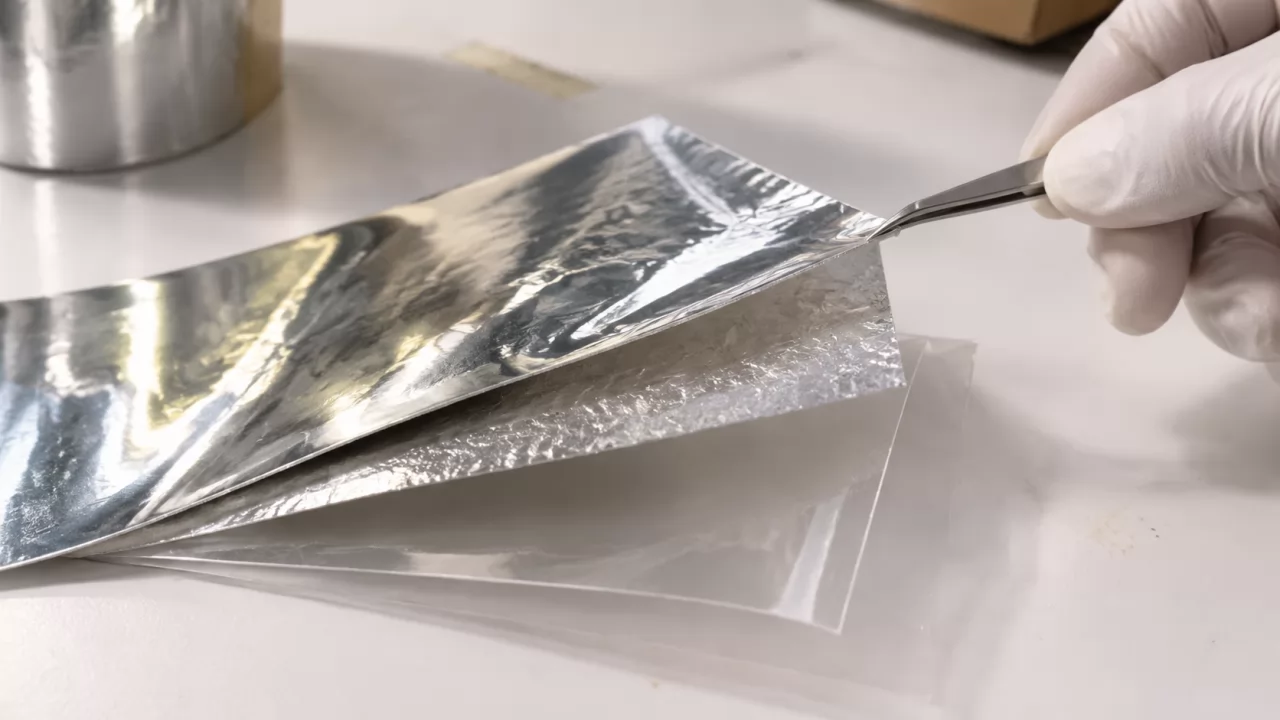
Clear high-barrier films, such as coated PET, exist too, and some people call those mylar. Ask for the layer sequence and the thickness of each layer. A quote that says only "mylar, matte" tells you nothing about how long the product will keep.
Why resealable mylar stand up pouches and smell proof mylar pouches need extra specs
A foil layer does not make a bag smell proof. Odor escapes through the zipper track, the seal edges and any pinholes, so zipper type, seal width and sealant layer decide the result. Press-to-close zippers differ in grip and tightness, and a slider behaves differently again. What is the zipper, and how wide are the side and bottom seals? Is seal strength tested? If smell control is the point of the order, say so in the brief and test samples with the real product.
Which bag style and extras fit your product
Match the format to what goes inside. Stand-up pouches usually suit powders, snacks, granola and pet treats. Coffee goes in flat bottom or stand-up pouches with a one-way degassing valve, because roasted beans release CO2. Sauces, drinks and refills belong in spout pouches. Anything opened many times needs a zipper or slider. If you fill on an automatic line, form-fill-seal roll stock film may make more sense than premade bags. When two formats fit, ask the supplier to recommend one in writing and price both. That is how you tell advice from a sales push.
Fill weight and size drive pouch dimensions
Pouch size comes from product density and fill weight, not from a weight printed on a reference photo. Fine powder and whole-bean coffee at the same weight need very different volumes. Leave headspace for sealing and for the zipper, and remember that a stand-up pouch needs gusset depth to stand. A free pouch capacity calculator on the supplier's website is a fair first check, and a physical sample confirms it. Hold the artwork until the size has been tested with real product, because the print layout depends on the dimensions.
Extras add cost and failure points
Each extra changes the unit price and adds something that can fail: the zipper, degassing valve, window, hang hole, tear notch. A valve can leak if it sits too close to a seal. A window weakens the barrier in that area and lets light in. A hang hole can tear under a heavy fill. Test each one with your product, and note which your retailer requires and which are only nice to have.
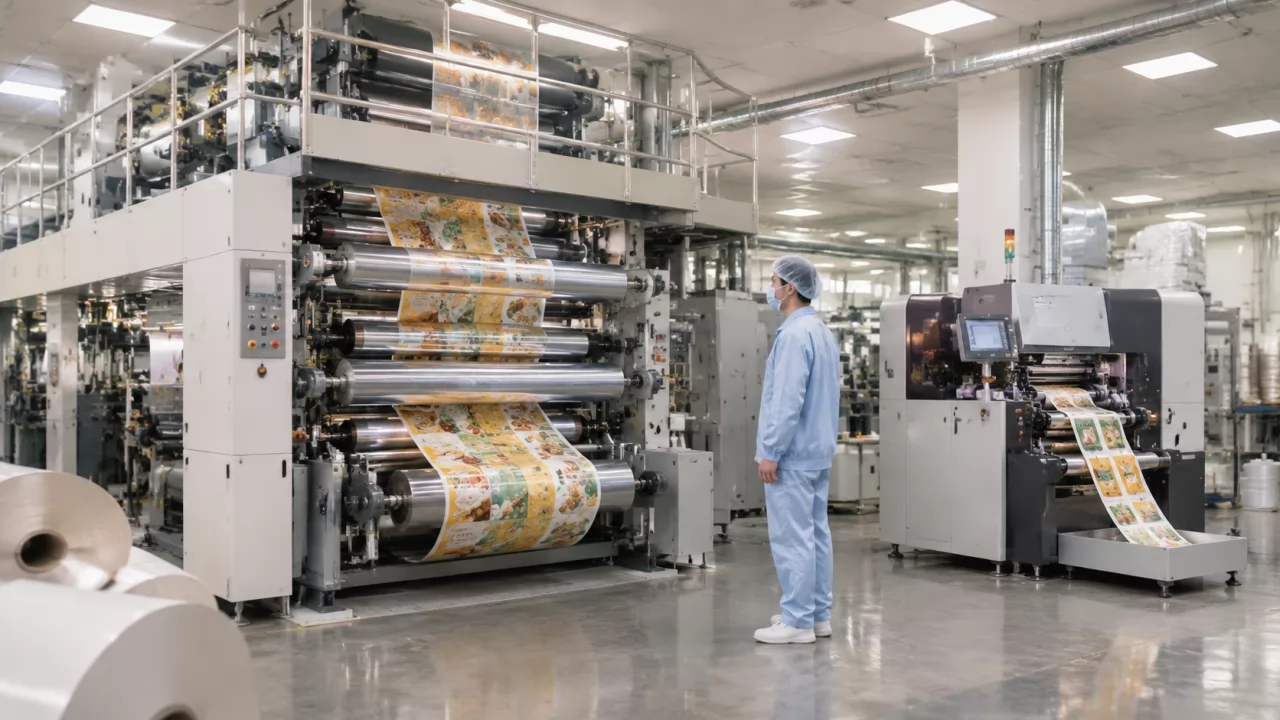
Digital or gravure: the print method sets your minimums and unit price
Digital printing suits launches, test runs and several designs in one order. Gravure uses an engraved copper cylinder for each color, which makes it cheaper per bag on large repeat orders but expensive to start. For custom printed mylar bags wholesale, the real question is how many designs you run and how often you reorder. Few designs with steady volume point to gravure. Many flavors or uncertain demand point to digital.
What the minimums are for each method
The mylar bag manufacturer MOQ depends on the method. Digital printing starts at 1,000 pcs per design with no cylinder cost, and several designs can share one order. Gravure starts at 10,000 pcs per design. The cylinder is a one-time cost per color, shown separately in the quote and kept on file for reorders.
| Criterion | Digital | Gravure |
|---|---|---|
| MOQ per design (pcs) | 1,000 | 10,000 |
| Cylinder cost | None | One-time, per color |
| Several designs in one order | Yes | Minimum applies per design |
| Unit price at volume | Higher | Lower |
| Best for | Launches, test runs | Repeat orders |
If you are unsure of demand, start with digital. Move a proven design to gravure once volume is steady.
Artwork, color count and proofing
Send vector files or images at print resolution, and run them through a DPI checker first. If a brand color must match, ask how the supplier matches spot colors against an approved standard. The number of colors affects price, so it should appear as its own line in the quote. For custom mylar pouches with a logo, confirm where the logo sits relative to the zipper, seals and valve, since those areas can cut into a design. Production time starts when you approve the artwork proof, so a slow approval costs time on your side, not the factory's.
Food-contact compliance: what to ask for and what the papers really prove
Three kinds of document get mixed up. A third-party test report covers a specific structure and a specific test. A management system certificate, such as ISO 9001 for quality or ISO 22000 for food safety management, describes how a plant operates, not what a given bag will do. An internal standard is the supplier's own work instruction. All three are useful, but only the first says anything about your bag.
Wording matters here. The FDA does not approve or certify packaging films the way some suppliers imply. The accurate statement is that the PE film is tested to FDA 21 CFR food-contact requirements, for example 21 CFR 177.1520 for polyolefins. If a quote says "FDA approved", ask for the report. For the EU, the relevant tests are overall and specific migration under Regulation (EC) No 1935/2004, plus Regulation (EU) No 10/2011 for plastics.
Match the paperwork to your market
US, EU and UK customers ask for different documents. US retailers usually want FDA 21 CFR evidence. EU importers want migration test reports and a declaration of compliance. UK buyers need the equivalent under retained rules. Ask for reports on the exact structure you will order, not a similar film: a report for a PET/PE laminate does not cover a foil laminate with a different sealant.
One company reference point
YLTPACK says it prints, laminates and makes bags in its own cleanroom plant under an ISO 22000 food safety management system. Put the same questions to any supplier. Is the cleanroom where your bags are actually made? Can they show the certificate and the test reports that go with your structure?
Eco claims need the exact structure, not the word "mylar"
Foil and metallized laminates are generally not recyclable, because the bonded layers cannot be separated in standard streams. Do not accept a "recyclable mylar" claim. Compostable (kraft/PLA), recyclable mono-PE and recycled-content (PCR, with GRS chain of custody) are separate structures. Each carries its own certificates and a higher minimum, from 30,000 pcs. Their barrier also differs, so a coffee or long-shelf-life product may need a trade-off conversation. If you plan an environmental claim on the pack, name the exact structure to the supplier and ask for the documents that support that claim in your market.
How to choose a mylar bag manufacturer in China: a vetting checklist
These checks separate a plain quote from a useful one.
- Request the recommended structure in writing, with the layer sequence.
- Compare itemized quotes line by line: material, print colors, extras, cylinders.
- Confirm that printing, lamination and bag making happen in the supplier's own plant.
- Ask what leak or seal testing is done before shipment.
- Check which documents come with the quote and which structure each covers.
- Confirm the minimum per design, not per order.
- Ask about the sample policy and who pays the courier.
The first two do most of the work. If a supplier cannot name the layers, the rest of the quote is guesswork.
Red flags in a quote
A vague structure name such as "mylar, high barrier" with no layer breakdown is one. A single minimum with no mention of per-design rules is another. Watch also for certificates offered without the structure they cover, and for lead times that include shipping, since only production time can be fixed in advance. Any of these deserves a follow-up question before you pay a deposit.
From brief to delivery: the order path and where time is lost
The path runs from brief to quote, free design support, sample, artwork approval, production and shipping. A quote with a recommended structure and itemized price arrives within one business day. Production takes 7-15 days after you approve the artwork proof. Transit depends on the shipping mode and destination, and the full timeline is given with the quote. Payment is a 30% deposit to start and the 70% balance before shipment, against a proforma invoice. Incoterms offered are EXW, FOB, CIF and DDP.
| Stage | What happens | Timing |
|---|---|---|
| Brief | Product, quantity, reference photo | Your side |
| Quote | Structure and itemized price | Within one business day |
| Sample | Check size, feel, fit | Confirmed with quote |
| Proforma and deposit | 30% to start production | On order |
| Production | Printing, lamination, bag making | 7-15 days after proof approval |
| Balance and shipping | 70% before shipment | Given with quote |
Most time is lost before production starts, in slow artwork corrections and extra sample rounds.
FAQ
What information do I need to send for a quote?
Send the product and fill per bag, the bag type or a photo, size if known, quantity per design, number of designs, artwork or an idea, extras and target market. Missing size or fill is the most common reason a quote is delayed.
Can I order several designs in one run?
Yes, with digital print. Gravure minimums apply per design, so each gravure design needs its own quantity.
Are samples free?
Yes, for similar bags. You pay the courier.
Is a mylar bag recyclable?
Generally no, when it is a foil or metallized laminate. Recyclable options are separate structures with their own minimums and documents.
Decide your next step
Settle the structure and print method first. Then ask each supplier for an itemized quote on that same basis, with the layer breakdown and the documents for that structure attached. If you want the brief checked before you send it out, our team at [email protected] or WhatsApp +86 182 1944 5665 will return an itemized quote within one business day.