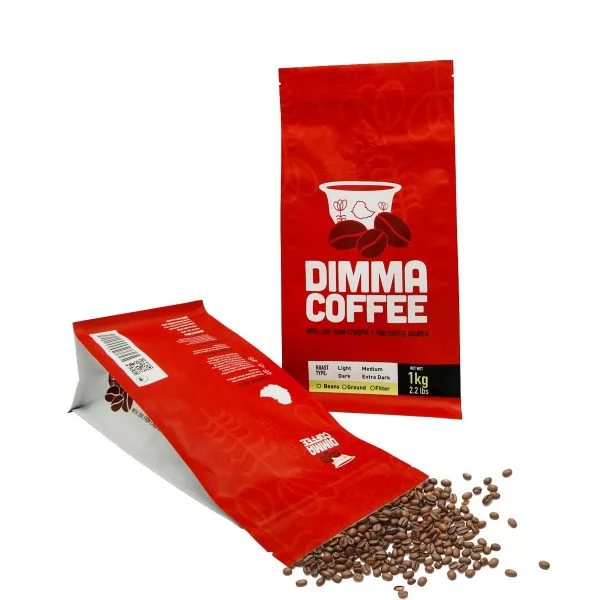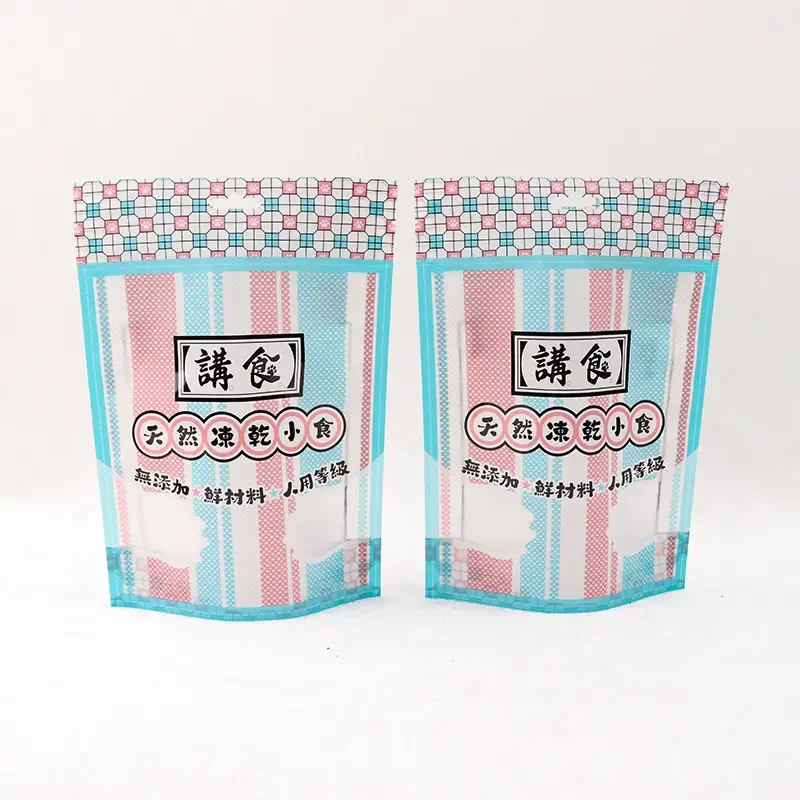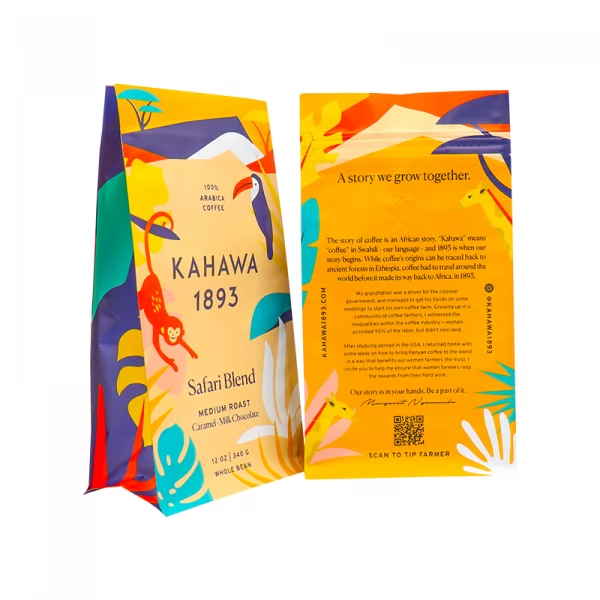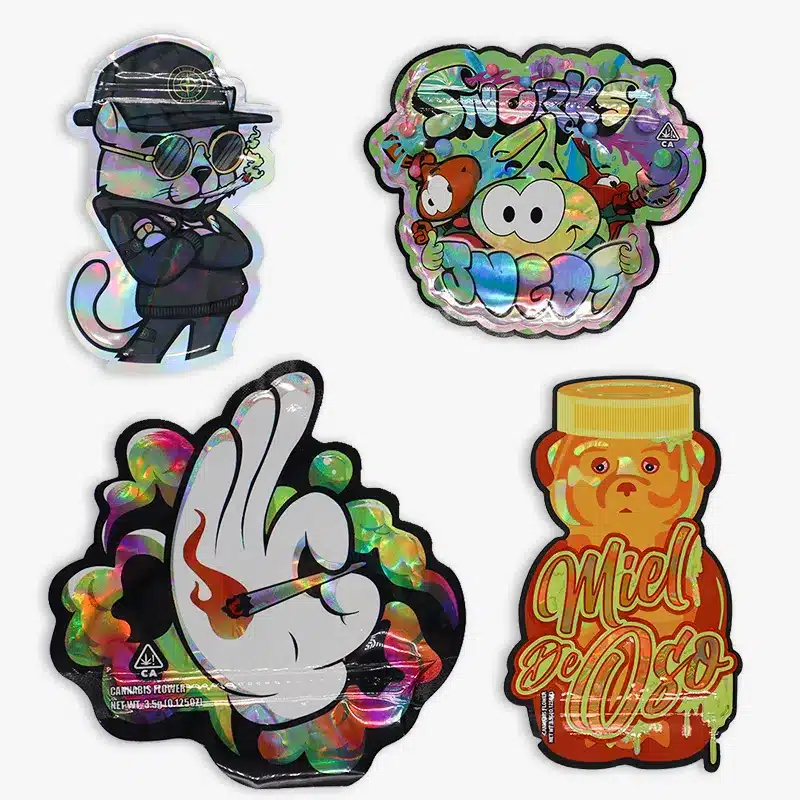
The wrong custom Powder Packaging Bag size does more than waste film.
It can trigger seal failures, slow filling lines, increase freight cost, and create avoidable customer complaints across your supply chain.
For bulk buyers, the real goal is not just finding a bag supplier. It is finding a packaging partner who can help you choose a Powder Packaging pouch size that fits your product, your filling process, your logistics plan, and your market expectations.
This guide is built for importers, brand owners, and procurement teams who need practical answers before placing a custom order.
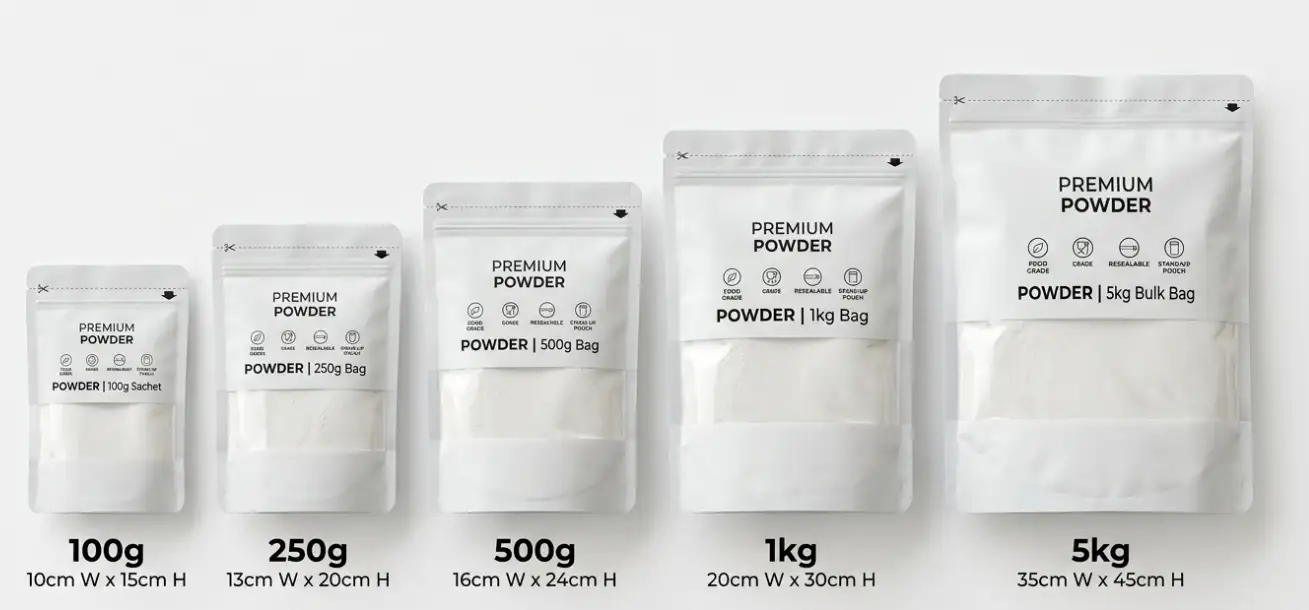
Why the Wrong Powder Packaging Bag Size Costs More Than You Think
An oversized pouch may look safer at first. In reality, too much empty space often leads to poor shelf appearance, excess carton space, and higher shipping costs.
An undersized pouch creates a different problem. It can reduce sealing margin, increase powder contamination in the seal area, and raise the risk of leakage or burst packs.
Unstable fill performance is another hidden cost. If bag dimensions do not match powder behavior and machine settings, production becomes slower and less consistent.
In food, supplement, detergent, and industrial powder packaging, even small sizing mistakes can affect thousands of units per batch. Industry packaging engineers generally agree that fill accuracy, headspace control, and seal integrity are among the top drivers of pouch performance in powder applications.
Common Bulk Buyer Problems When Choosing Powder Packaging Pouch Size
Western B2B buyers usually care less about sales talk and more about risk control.
These are the issues that most often create sourcing frustration:
- Leakage after filling or transport
- Poor sealing caused by dust contamination in the seal area
- Inconsistent filling due to powder flow differences
- Wasted carton and pallet space from poor pouch proportions
- Retail bags that look underfilled or unstable on shelf
- Supplier miscommunication about usable volume versus external dimensions
- Costly trial-and-error because size was quoted without product data
These problems are common when suppliers recommend dimensions based only on target weight. Powder does not behave like liquid, and not all 500g products need the same pouch size.
How to Choose the Right Custom Powder Packaging Bag Size
The right decision path starts before quotation.
Buyers should confirm product behavior, target fill, pouch style, barrier needs, and machine compatibility before locking in dimensions.
Start with Powder Type and Flow Behavior
Different powders occupy space differently during filling.
Protein powder can be fluffy and highly aerated. Spices may settle more densely. Detergent powder can be abrasive, while chemical blends may have special handling and barrier requirements.
This changes how the product moves into the pouch, how much headspace is needed, and how stable the final pack will be.
Typical examples include:
- Protein powder: often lower bulk density, larger pouch volume needed for the same weight
- Spice blends: may flow better, but aroma barrier and seal cleanliness are critical
- Milk powder: often needs controlled barrier performance and reliable seal support
- Detergent powder: may require stronger structure for heavier pack weights
- Industrial or chemical powder: often needs transport safety and drop resistance review
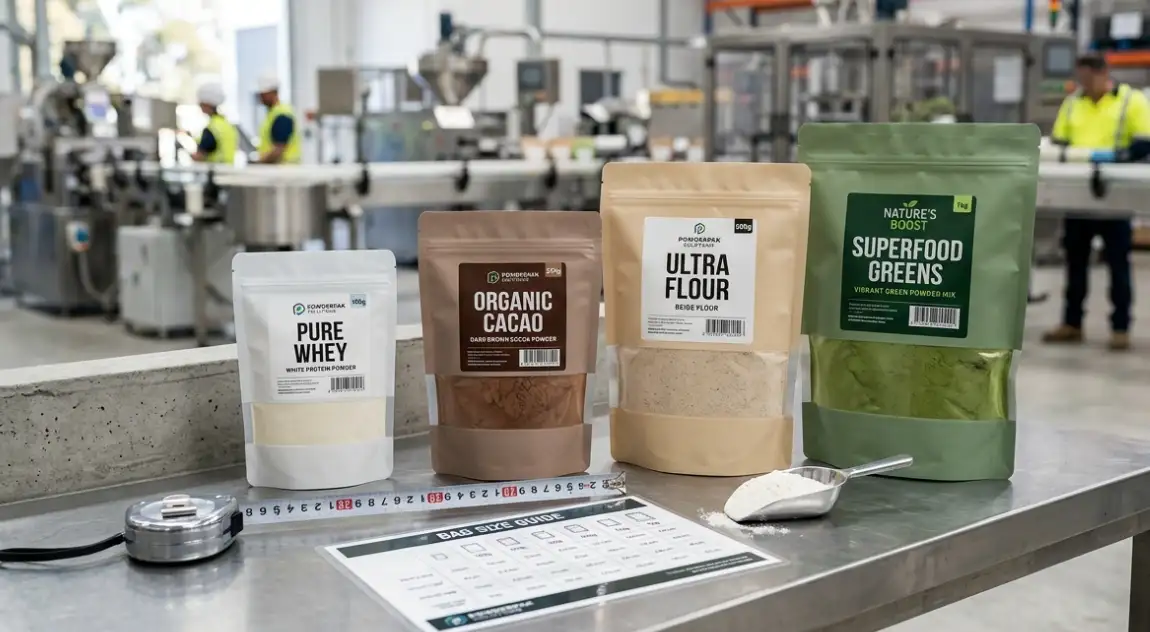
Confirm Fill Weight, Bulk Density, and Headspace
This is where many sizing mistakes begin.
Fill weight alone is not enough. A 1kg powder with low bulk density will need a much larger pouch than a 1kg dense powder.
To estimate pouch volume correctly, buyers should confirm:
- Net fill weight
- Bulk density
- Desired headspace
- Settling behavior after filling
- Seal area requirement
Headspace matters because the bag still needs safe sealing room and transport tolerance. If the pouch is filled too close to the top seal, failure risk rises fast.
Match Bag Style to Packing Line and Retail Use
Bag style changes usable internal volume.
A flat pouch, stand-up pouch, gusset bag, and shaped pouch can all hold powder, but each uses space differently and works differently on filling equipment.
- Flat pouch: simple and efficient for small fills or samples
- Stand-up pouch: popular for retail and e-commerce, better shelf display
- Gusset bag: useful for heavier fills and better volume expansion
- Shaped pouch: brand-focused, but requires stricter size and line matching
If the pouch runs on an automatic line, dimensions must match machine grippers, forming limits, and filling behavior. A pouch that looks right on paper may still perform badly in production if machine compatibility is ignored.
Consider Barrier, Seal Strength, and Transportation Risk
Pouch size cannot be separated from material structure.
As the pack gets larger or heavier, film support and seal strength become more important. A large pouch with weak structural balance can deform, burst, or fail drop testing.
Buyers should review:
- Barrier requirement for moisture, oxygen, aroma, or light
- Seal layer suitability for the powder and machine temperature range
- Drop resistance for heavy or industrial products
- Storage and shipping conditions such as humidity, stacking, and long transit time
In many real projects, the best result comes from balancing size and structure together, rather than choosing dimensions first and fixing failures later.
Standard Powder Packaging Bag Size Reference Table
The table below is a practical starting point for bulk buyers.
Final dimensions should still be confirmed through product data, machine review, and sample testing.
| Fill Weight | Typical Product Example | Common Pouch Style | Approx. Suggested Size Range | Bulk Buyer Notes |
|---|---|---|---|---|
| 50g–100g | Spices, samples, supplements | Flat pouch / small stand-up pouch | Based on powder density and sealing margin | Good for trial packs and promotional SKUs |
| 250g–500g | Coffee powder, protein powder, seasoning | Stand-up pouch | Adjust width/depth by flowability | Popular for retail and e-commerce |
| 1kg | Milk powder, detergent powder, food ingredients | Stand-up pouch / gusset pouch | Requires stronger bottom support | Balance shelf impact and shipping efficiency |
| 2kg–5kg | Industrial powder, bulk ingredients, pet supplements | Gusset bag / heavy-duty pouch | Depends on drop test and pallet plan | Focus on seal strength and logistics cost |
Real-World Examples: How the Right Bag Size Improves Efficiency
Good sizing decisions produce measurable business value.
Below are common sourcing scenarios that show how a more accurate pouch size improves efficiency and reduces risk.
| Customer Scenario | Original Problem | Size/Packaging Adjustment | Business Result |
|---|---|---|---|
| Protein powder brand | Bag looked full but sealed poorly | Recalculated pouch size using bulk density and headspace | Fewer seal failures and better shelf appearance |
| Spice importer | Excess air increased carton waste | Reduced pouch dimensions and optimized case pack | Lower freight cost per unit |
| Detergent supplier | Large bag burst during transit | Switched to better size-to-weight ratio and stronger structure | Reduced damage claims and more stable deliveries |
In practical terms, even a small reduction in excess pouch volume can improve carton loading efficiency. Many procurement teams see meaningful savings when pack dimensions are optimized together with case count and pallet layout.
Likewise, reducing seal failure on powder products can save labor, product loss, and customer service costs. This is especially important for high-volume SKUs and automated packing lines.
Our Solution Process for Custom Powder Packaging Bag Orders
At YLTPACK, we focus on helping buyers make correct packaging decisions early, so they avoid costly revisions later.
We were established in 2005, support customized packaging based on customer requirements, and can provide free samples for validation. Our manufacturing system is supported by ISO 22000 and FDA-related compliance standards for relevant applications.
Fast Requirement Review Based on Your Product and Filling Method
We first review the details that actually affect pouch performance.
This includes powder type, target fill weight, bulk density, filling method, pouch style, and target market. That helps reduce early quoting errors and speeds up technical alignment.
Size Recommendation with Material and Structure Advice
We do not recommend dimensions in isolation.
We suggest pouch size together with film barrier, sealing layer, pouch format, and practical transport considerations. This helps buyers avoid trial-and-error across multiple production rounds.
Sampling, Testing, and Production Stability Control
Bulk purchasing needs stable quality, not one good sample followed by inconsistent batches.
That is why sampling and testing matter. We support sample validation, seal testing, and specification confirmation before mass production to improve long-term purchasing reliability.
For powder applications, stable quality control usually focuses on:
- Dimension consistency
- Seal strength stability
- Material structure accuracy
- Printing and appearance consistency
- Batch-to-batch production control
Clear Communication for Western B2B Buyers
Many delays in international sourcing come from unclear technical communication.
We work to provide timely communication, specification confirmation, and issue follow-up in a format that is easier for Western buyers to review and approve. That reduces sourcing friction and improves project speed.
What Buyers Should Prepare Before Requesting a Custom Powder Packaging Bag Quote
The more complete your product data, the more accurate the recommendation and quotation will be.
| Information Needed | Why It Matters |
|---|---|
| Powder type | Affects flow, dusting, and bag structure |
| Fill weight | Determines pouch volume and dimensions |
| Bulk density | Helps calculate correct internal capacity |
| Pouch style | Changes usable size and machine compatibility |
| Filling machine type | Prevents sizing mistakes during production |
| Target market | Influences compliance, shelf display, and user preference |
| Annual volume | Helps plan cost, MOQ, and supply stability |
Useful optional details include target carton size, pallet standard, required accessories such as zipper or valve, and whether the pouch must stand steadily on shelf.
FAQ
How do I calculate the right powder packaging bag size?
Use fill weight, bulk density, pouch style, and sealing headspace rather than weight alone. For accurate sizing, the product’s real occupied volume after filling matters more than nominal weight by itself.
What is the difference between powder packaging pouch size and actual fill capacity?
Bag dimensions do not equal usable volume because seal area, gussets, bottom shape, and product settling reduce effective capacity. A pouch may look large externally but still offer less filling space than expected.
Can you recommend a custom powder packaging bag size based on my product?
Yes. If you provide powder type, target weight, density, and machine details, a suitable size can be suggested together with structure recommendations to reduce testing risk.
What pouch style is best for powder products?
It depends on fill weight, display needs, barrier requirements, and whether the bag runs on manual or automatic lines. Stand-up pouches are common for retail, while gusset bags are often better for larger or heavier fills.
How can the wrong bag size affect my packaging cost?
It can increase film waste, freight cost, seal failure rates, and packing inefficiency across the whole supply chain. It may also reduce pallet efficiency and create a poor shelf presentation.
Do you support samples before bulk production?
Yes. Sampling and testing help confirm size, structure, sealing, and filling performance before mass order launch. YLTPACK can provide free samples for evaluation.
Get the Right Custom Powder Packaging Bag Size for Your Product
If you are sourcing a custom Powder Packaging Bag for bulk purchase, the fastest way to reduce risk is to start with the right technical data and a supplier who understands real production conditions.
YLTPACK helps buyers choose the right Powder Packaging pouch size based on product characteristics, filling method, material structure, and logistics needs. We offer custom development, free samples, and professional support backed by experience since 2005.
To get a faster and more accurate recommendation, send your powder type, fill weight, bulk density, pouch style preference, machine type, and annual volume.
Contact YLTPACK today at [email protected] to request a professional size recommendation, sample support, and a bulk quotation tailored to your project.