The Three Pricing Pillars You Need to Understand
Every quote you receive boils down to a balance of three variables. Each one pushes your unit cost up or down, and they're deeply connected. Change the bag size, and your material usage changes. Bump up your order volume, and your per-piece cost drops.
Here's a quick snapshot before we dive deeper:
| Factor | What It Affects | Impact on Cost |
|---|---|---|
| Size & Capacity | Material consumed per unit | Larger = more film = higher cost |
| Material Structure | Barrier, durability, finish | More layers/special films = higher cost |
| Order Quantity | Setup cost spread across units | Higher volume = lower per-piece price |
Understanding how these three pull against each other is the key to controlling your budget. Let's look at each one.
How Size and Capacity Shape Your Cost
Size is the most intuitive driver. A 2 oz sample pouch uses a fraction of the film that a 5 lb bag does. But it's not just about width and height—the gusset (the bottom or side that lets the bag stand) adds material too.
Two products of the same weight can need different bag dimensions. Whole coffee beans take up more volume than ground coffee, so the bag must be larger even at the same gram count.
What "fill weight" really means
When you tell a supplier your fill weight, they calculate the bag dimensions that hold it comfortably—plus headspace for sealing. Underestimate this and your product won't fit; overestimate and you're paying for film you don't use.
- Powder products (protein, spices) pack densely—smaller bags work.
- Light, bulky items (chips, dried fruit, kibble) need more volume per gram.
- Liquids and pastes require reinforced seals, affecting both size spec and material.
Our in-house design team often helps brands who only have a rough idea of their fill weight, turning a vague "around 250 grams of granola" into precise, cost-efficient dimensions.
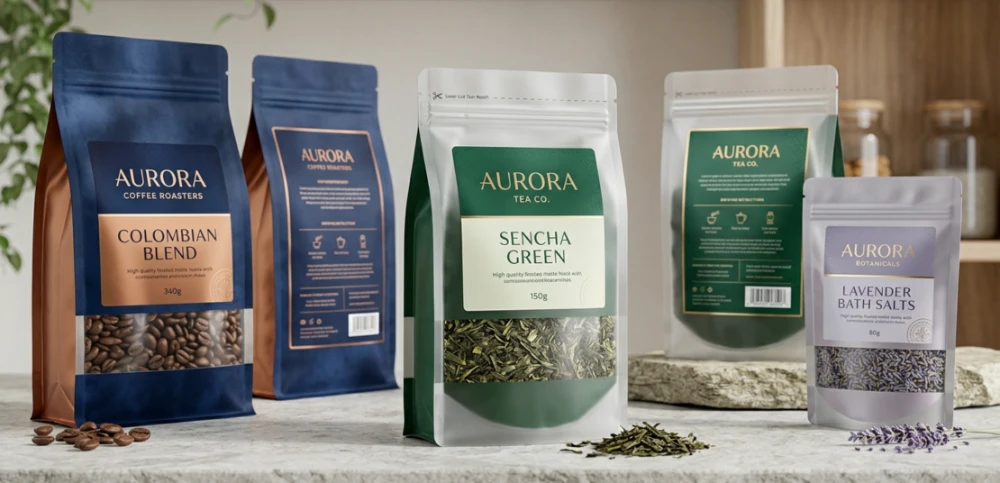
How Material Structure Drives the Price
This is where most buyers underestimate the cost difference. The film is built in layers, and each layer adds a function—and a price. A simple snack bag and a coffee bag may look similar but use very different structures.
Common material layers and what they do
| Layer Type | Primary Function | Typical Use |
|---|---|---|
| PET (outer) | Print surface, durability | Almost all pouches |
| Aluminum foil | Light, oxygen, moisture barrier | Coffee, supplements |
| Metallized film (VMPET) | Lighter barrier, lower cost | Snacks, dry goods |
| Kraft paper | Natural look, premium feel | Coffee, organic brands |
| Compostable films | End-of-life sustainability | Eco-focused brands |
The coffee example: why barrier matters
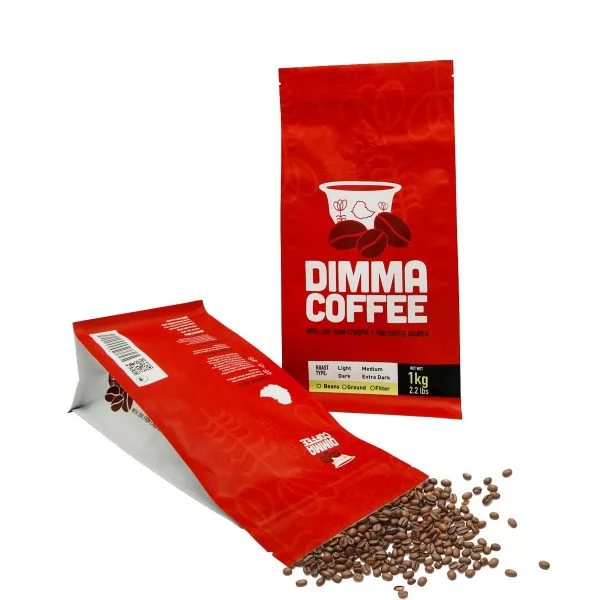
Coffee is a perfect lesson in material economics. Freshly roasted beans release CO₂ and are highly sensitive to oxygen, which steals aroma and flavor within days. That's why effective stand up pouch packaging for coffee beans almost always includes a high oxygen barrier film and a one-way degassing valve.
Skimping on the barrier here saves a little upfront but can ruin the product experience. As a manufacturer that has produced packaging for over 20 years, we've seen that aroma retention is often the deciding factor in whether a coffee brand earns repeat customers.
Sustainable materials and the cost trade-off
Demand for greener options keeps climbing—industry surveys through 2025 consistently show that a majority of shoppers consider recyclability when choosing a brand. Recyclable mono-material and compostable structures cost more today because the supply chain is still scaling.
If sustainability is core to your identity, it's worth it. Brands sourcing eco friendly stand up pouch packaging wholesale should plan for a modest premium, which often narrows at higher volumes. Because we hold FDA, ISO 9001, ISO 22000, and GRS certifications, we can guide you toward food-safe structures that also meet recycling claims you can stand behind.
How Order Quantity Changes Everything
Quantity is the lever with the most dramatic effect on your per-unit price. The reason is simple: a big chunk of your cost is one-time setup—printing plates, machine calibration, and material minimums.
Spread those fixed costs across 1,000 bags and each pouch carries a heavy share. Spread them across 50,000 bags and the per-piece cost drops sharply.
Where the fixed costs hide
- Printing plates or cylinders: a one-time charge per design and color count.
- Material minimums: film is produced in rolls; small runs waste more.
- Machine setup: calibrating presses takes the same time for any run size.
Illustrative cost behavior by volume
| Order Volume | Setup Cost Share Per Unit | Relative Per-Piece Price |
|---|---|---|
| Low (startup test run) | Very high | Highest |
| Medium (growing brand) | Moderate | Significantly lower |
| High (established line) | Minimal | Lowest |
This is why a startup ordering a small test batch pays more per bag than a national brand. It's not unfair pricing—it's the math of fixed costs. The good news? Digital printing options now make smaller, full-color runs more accessible than they were a decade ago.
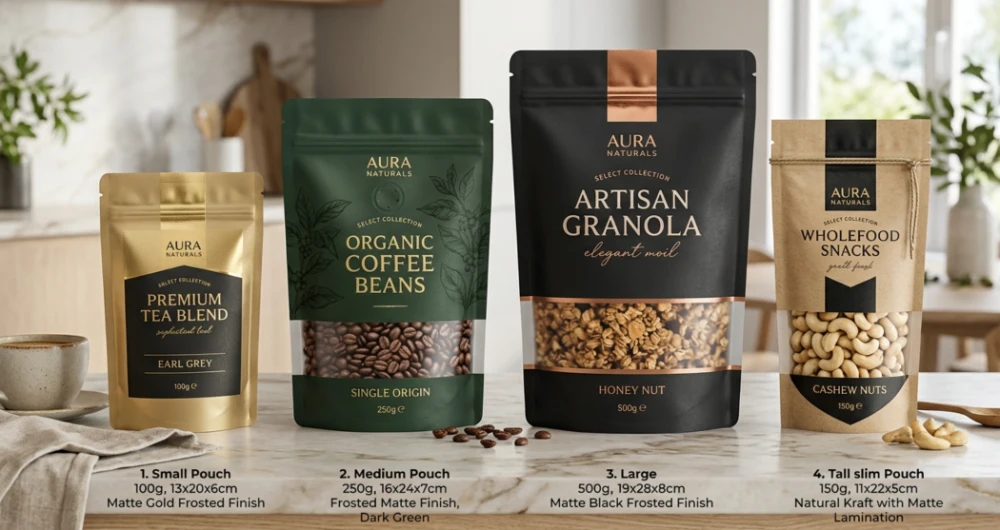
Features That Add Value (and Cost)
Beyond the big three, several add-ons influence your final number. Each one solves a specific shopper problem, so think of them as investments rather than extras.
Resealable closures
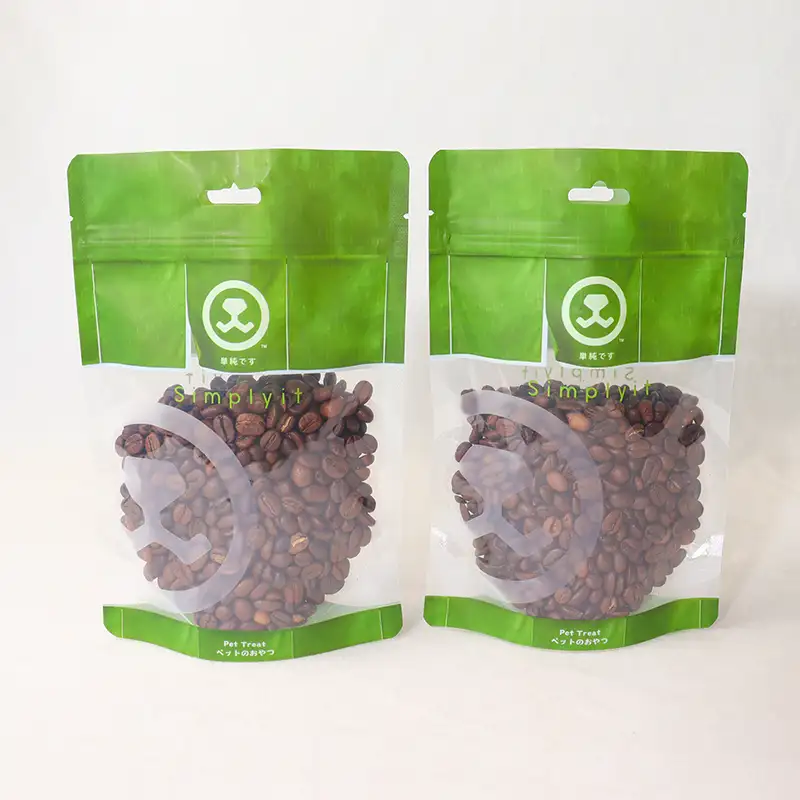
A zipper transforms a single-use bag into a reusable container—critical for snacks, pet treats, and supplements. When you add stand up pouch packaging with resealable zipper, you're improving freshness and convenience, which shoppers reward with loyalty.
Press-to-close zippers, slider zippers, and child-resistant closures each sit at different price points. Resealable zipper pouches are now an expectation in many categories, not a luxury.
Print quality and finish
Your bag is your shelf and your unboxing moment. The number of print colors, special finishes (matte, gloss, soft-touch, spot UV), and registration accuracy all affect cost.
For beauty and lifestyle brands, the tactile finish often matters as much as the design—a soft-touch matte pouch photographs beautifully and feels premium in hand, fueling the social sharing that drives discovery.
Shape, windows, and special structures
- Clear windows: let pet owners and food shoppers verify quality—great for transparency-focused brands.
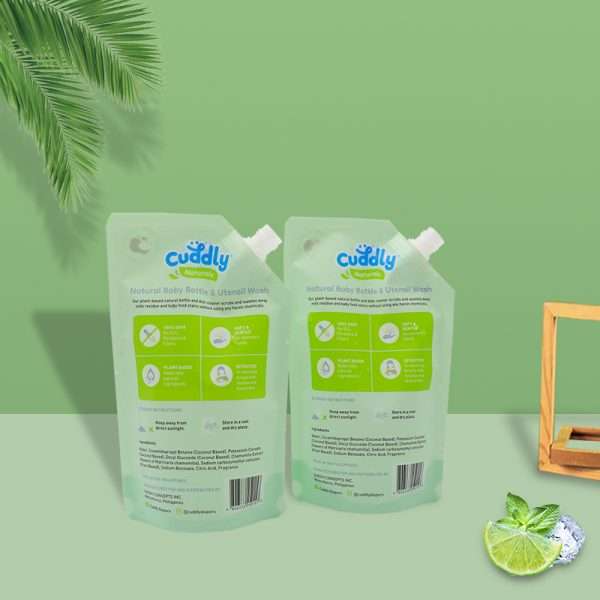
- Spout pouches: for liquids, sauces, and baby food.
- Flat-bottom (box) pouches: premium shelf presence and better stacking.
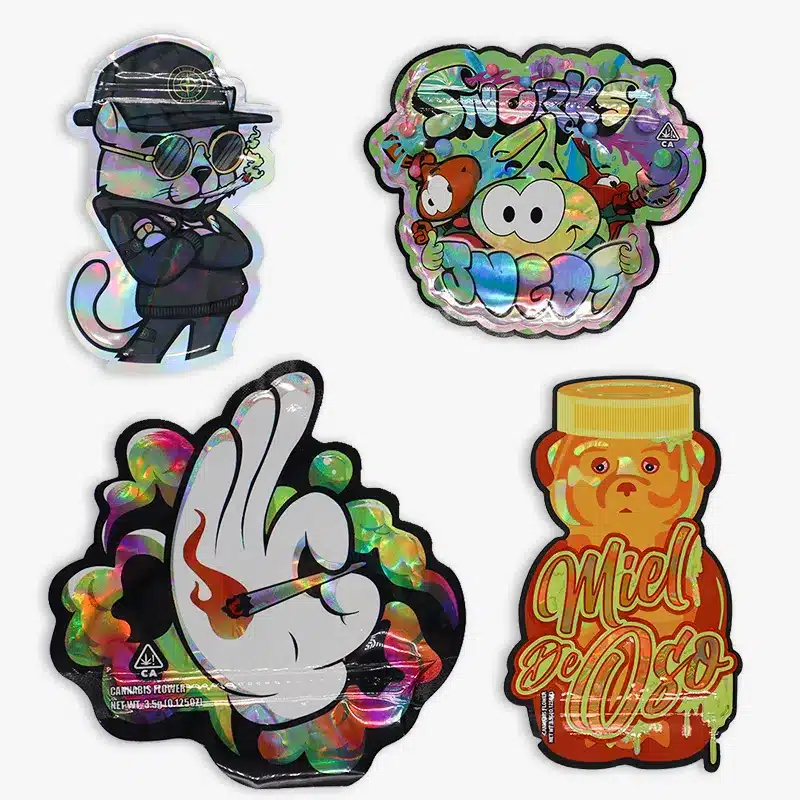
- Custom die-cut shapes: standout silhouettes, with added tooling cost.
Industry-Specific Pricing Considerations
Different products carry different non-negotiables. Knowing these helps you budget for what actually matters to your category.
Pet food and treats
Today's pet owners read ingredient lists like nutrition-conscious parents. They want durable, often resealable bags with clear labeling space—and increasingly, recyclable options. Grease and odor barriers add cost but protect the product and the shelf.
Coffee, tea, and snacks
Freshness is everything. Beyond the barrier discussion above, snack brands often weigh metallized vs. foil films to balance crunch protection against budget. Food grade pouch packaging is the baseline here, never the upgrade.
Supplements and nutrition
Powders demand strong moisture barriers and tamper evidence. Compliance documentation matters too—buyers in this space frequently ask for certifications before placing an order.
How to Compare Quotes Like a Pro
When two quotes differ, the gap is almost always in the details. Use this checklist to compare apples to apples:
- Confirm the exact dimensions and gusset—not just "medium bag."
- Ask for the full material structure (every layer and micron).
- Clarify what setup fees are one-time vs. recurring.
- Check whether print colors and finishes match.
- Verify closure type and any valve inclusion.
- Request certification documents relevant to your product.
Working with brands across North America, we've found that the most common mistake is comparing a foil-barrier quote against a metallized one and assuming the cheaper supplier is simply more efficient. Often they're quoting a different—and weaker—structure entirely.
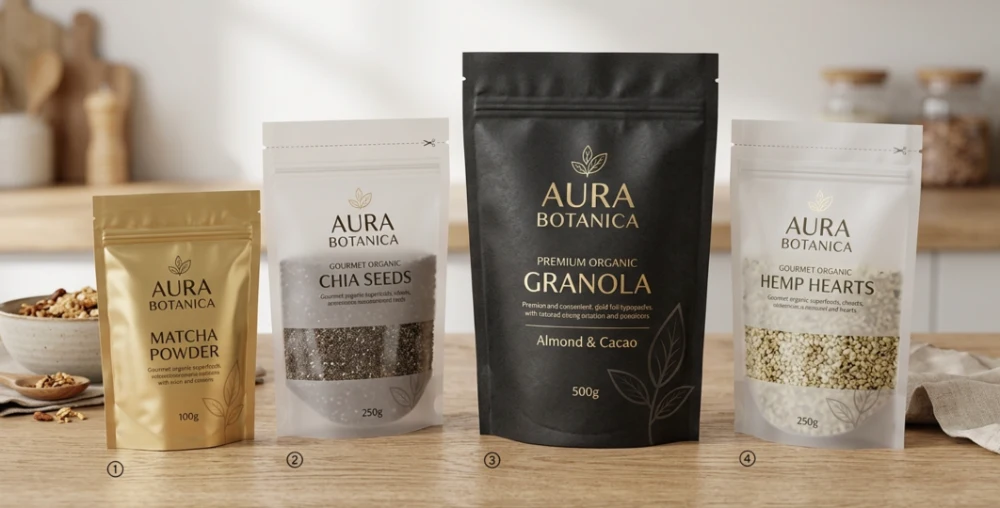
Smart Ways to Optimize Your Budget
You don't have to choose between quality and cost. A few strategic moves can stretch your budget meaningfully.
- Standardize sizes across your line so you share plates and material orders.
- Match barrier to actual shelf life needs—don't pay for 18 months of protection on a 3-month product.
- Consolidate designs to reduce per-design setup charges.
- Plan volume in advance to unlock better tier pricing.
- Use digital print for test runs, then move to traditional printing as you scale.
In our 6,800㎡ cleanroom facility, we produce flexible packaging across a wide range of structures, which lets us suggest the most cost-effective film that still meets your barrier and safety needs. Sometimes the right advice is to spend less, not more.
Getting an Accurate Quote
The clearer your brief, the sharper your quote. Before reaching out, gather these details: product type, fill weight, desired bag style, target shelf life, print color count, closure preference, and estimated annual volume.
If you only have part of this, that's perfectly normal. We design custom printed stand up bags from rough concepts every week, and our team can fill in the technical gaps. Whether you need custom printed stand up pouch packaging for a new product launch or you're comparing biodegradable stand up pouch packaging suppliers for a relaunch, a quick conversation usually clarifies the path.
You can reach YLTPACK directly via WhatsApp at +86 182 1944 5665 or email [email protected]. As a source factory with two decades of experience and full food-safety certifications, we're glad to walk you through your options without pressure.
Key Takeaways
Pricing isn't random—it's the sum of size, material, and quantity, plus the features that serve your shoppers. Larger bags use more film, advanced barrier film packaging protects sensitive products, and higher volumes dramatically lower your per-piece cost.
Match each choice to what your product and customers genuinely need, compare quotes on equal terms, and you'll make confident, profitable decisions. The smartest buyers don't chase the lowest number—they chase the best fit.
Frequently Asked Questions
Why do different suppliers quote such different prices for the same bag?
Usually the specifications aren't identical. A cheaper quote may use a thinner film, fewer barrier layers, or a less durable closure. Always compare the full material structure, dimensions, and finishes before judging which offer is truly better value.
Does ordering a larger quantity really lower my cost that much?
Yes. Fixed costs like printing plates and machine setup are spread across every unit, so larger runs sharply reduce the per-piece price. Test batches naturally cost more per bag, which is normal for any custom production.
Which costs more: a bigger bag or a stronger material?
It depends on the gap. A modest size increase adds a little film, but jumping from a basic structure to a high-barrier or compostable one can raise cost more significantly. Match both to your real needs rather than overspecifying.
Are eco-friendly pouches always more expensive?
At the moment, recyclable mono-material and compostable films carry a premium because the supply chain is still scaling. However, that gap often narrows at higher volumes, and many brands find the loyalty payoff worth the investment.
What information do I need before requesting a quote?
Have your product type, fill weight, preferred bag style and closure, target shelf life, print color count, and estimated volume ready. If you're missing some details, a knowledgeable supplier's design team can help you finalize the specs.