Food-contact and packaging-material rules in Europe and North America keep tightening. A pouch is no longer judged on looks alone. It is judged on structure and paperwork. This guide matches flexible pouch packaging types to products, so your brief to a supplier starts from the right bag.
The right pouch is the one whose structure fits the product's form, fill weight and sensitivity. Liquids usually need a spout pouch, fresh coffee a valved flat bottom or stand-up, and cooked-in-bag meals a retort pouch. Decide on the product first, then shape, then print.
What a Good Pouch Result Looks Like on Day One
A good result is easy to check when the first cartons arrive. The pouch stands (or lies) the way the shelf plan needs. The seals hold under fill and handling. The laminate protects the product for the shelf life you promised retailers. The print matches the approved artwork. And the right documents arrive with the goods.
Those five points work as checkpoints for the rest of this article:
- Form: stability on the shelf, panel space, how the bag looks when filled.
- Seal and closure: seal integrity, zipper or spout function, valve if needed.
- Barrier: oxygen, moisture and light protection matched to the product.
- Print: colour accuracy, registration, text legibility at small sizes.
- Documents: food-contact test reports and material statements for your target market.
Most failed first orders miss one of these because the brief covered only the look. A pouch that photographs well but lets coffee go stale in eight weeks has failed at checkpoint three.
Which Pouch Type Fits My Product?
Match the pouch to the main job it must do. Liquids and pastes go in spout pouches. Products cooked or sterilised in the bag go in retort pouches. Shelf visibility points to stand-up or flat bottom pouches. Frequent opening needs a zipper. Fresh coffee needs a degassing valve. Automatic filling lines run on roll stock film.
- Liquid, sauce or paste: spout pouch. Ask for leak testing before production starts.
- Cooked or sterilised in the bag: retort pouch, rated for your process temperature, not a generic figure.
- Strong shelf presence: stand-up or flat bottom pouch with full print.
- Opened many times: ziplock or slider closure.
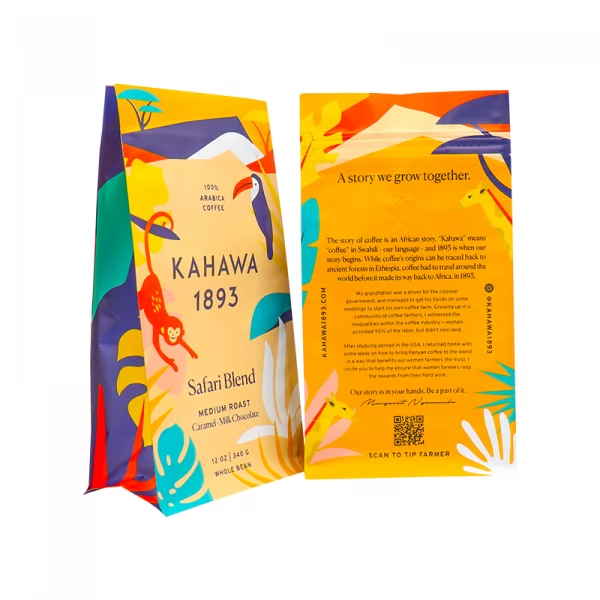
- Fresh roasted coffee: flat bottom or stand-up pouch with a degassing valve (a one-way valve that lets roasting gas out and keeps air out).
- Your own filling line: form-fill-seal (FFS) roll stock film.
- Long freshness: foil or high-barrier laminate.
Often two types fit. A granola brand might use a stand-up or a flat bottom. Then the sensible move is one recommendation in writing, with each option priced, so you compare on cost and not on guesswork.
The Main Pouch Families
Stand-up pouch vs flat bottom pouch
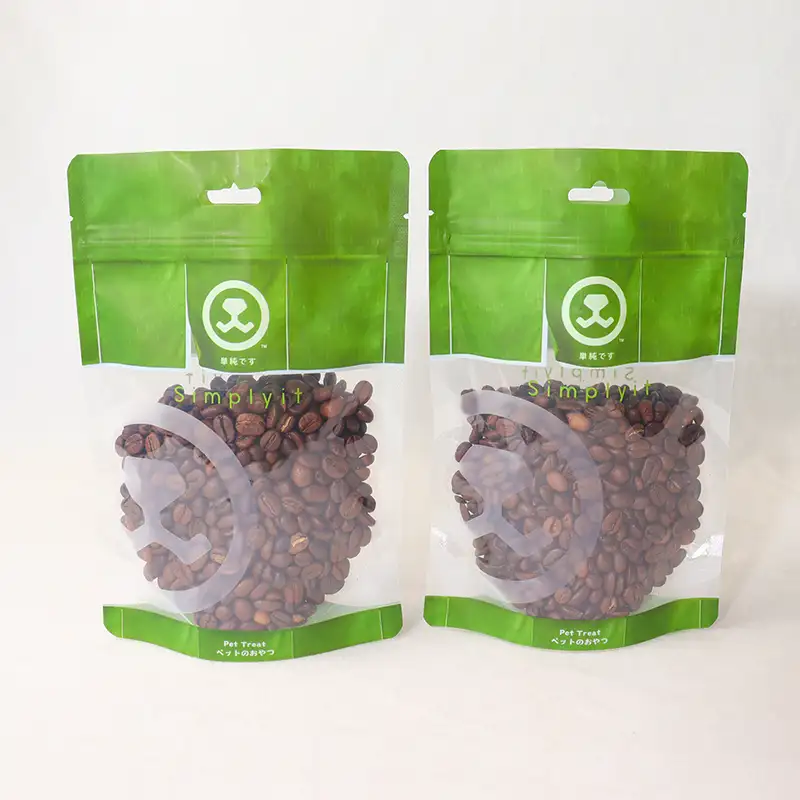
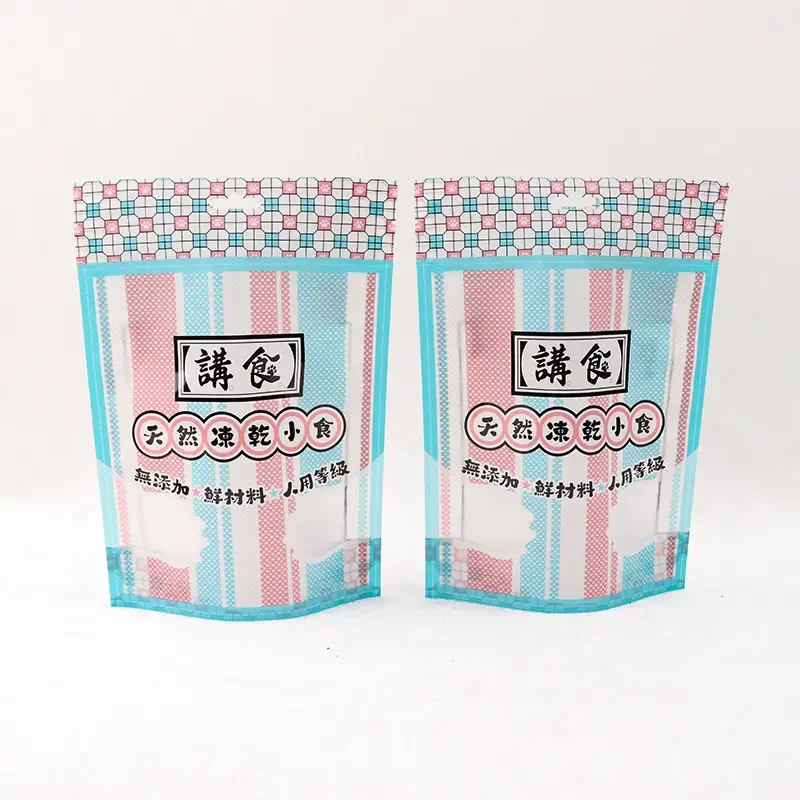
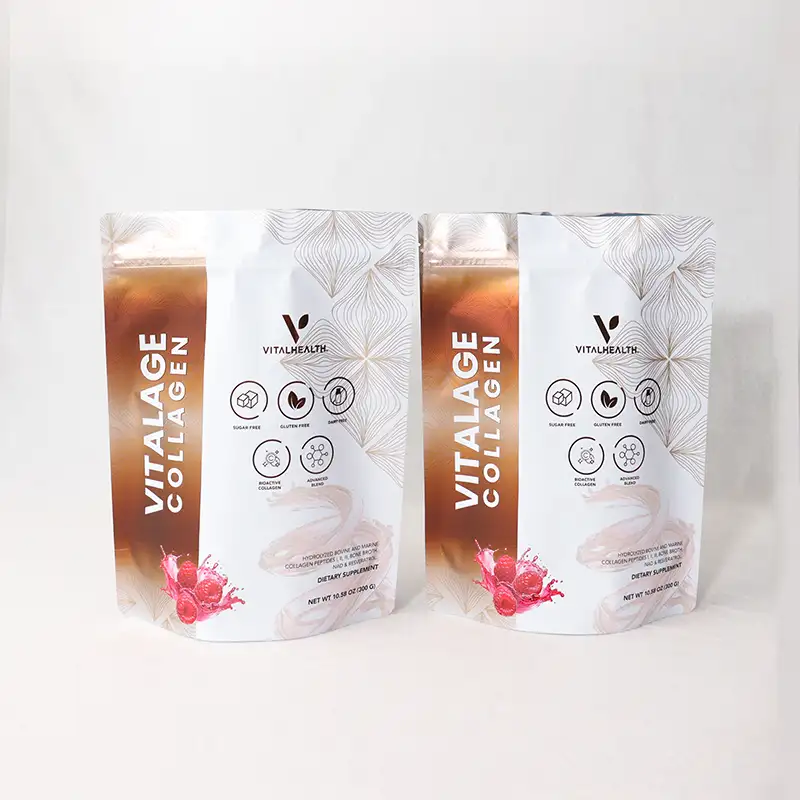
A stand-up pouch is a bag with a sealed gusset at the base that lets it stand when filled. A flat bottom pouch (also called a box pouch) has a squared base and side gussets, so it forms a box-like shape. Both suit snacks, granola, powders and pet treats.
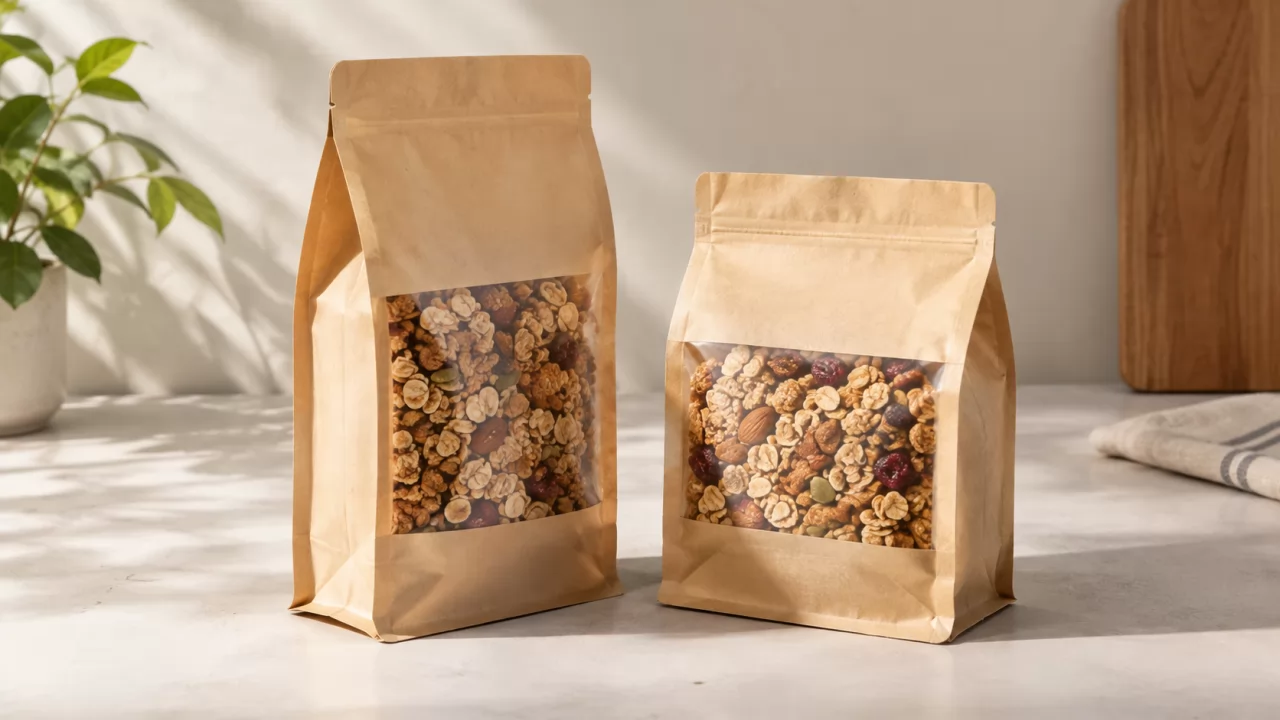
The difference shows on the shelf. The flat bottom has a firmer footprint, five printable panels and a more premium look, and it tends to hold larger fill weights better. That is why coffee, premium food and pet food often use it. The stand-up is simpler in construction and often lighter on material, so it is usually the lower-cost route for small to mid fills. It bulges more when filled and offers fewer print panels.
Spout, retort and ziplock pouches
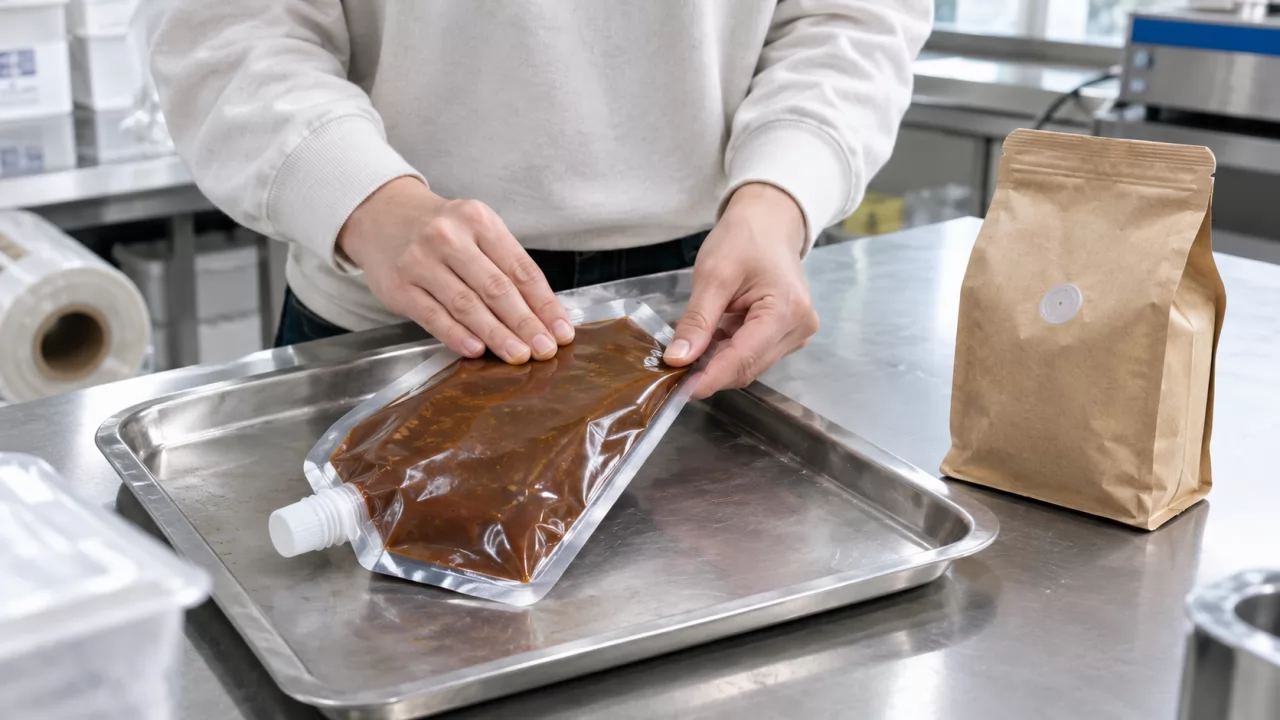
A spout pouch is a stand-up bag with a fitted spout and cap. It carries sauces, drinks, detergent and refills, and the spout allows controlled pouring or filling through a nozzle. Its weak point is the spout weld, which is why leak testing matters.
A retort pouch is a laminate pouch built to withstand heat sterilisation after filling. It suits ready meals, rice and pet food. The laminate and seal must be rated for your actual process temperature and time.
A ziplock pouch carries a press-to-close zipper. It suits dry food, frozen food and accessories. The zipper adds cost and a possible leak path, so use it only where consumers really open the pack repeatedly.
Fancy shape bags and roll stock film
Fancy shape bags are die-cut pouches with contours, such as a rounded top or a custom outline. They work for candy, drinks and kids' products, where the bag shape is part of the appeal. Die-cutting adds tooling, and odd shapes can reduce fill efficiency.
Roll stock film is printed laminate on a reel, formed into bags on your own form-fill-seal machine. It suits high-volume automated lines. The film must match your machine's web width, core size and sealing window, so send those details early.
Side by Side: Pouch Types Compared
The table below compares the main types on the points that usually settle the choice. Its key takeaway: closure and barrier needs narrow the field faster than shape does.
| Type | Best-fit product | Closure options | Barrier level | Main limit |
|---|---|---|---|---|
| Stand-up pouch | Snacks, granola, powders, pet treats | Zipper, tear notch, hang hole | Depends on laminate | Fewer print panels, bulges when full |
| Flat bottom pouch | Coffee, premium food, pet food | Zipper, valve, tear notch | Depends on laminate; high with foil | Higher construction cost than a stand-up |
| Spout pouch | Sauces, drinks, detergent, refills | Spout and cap | Depends on laminate | Spout weld needs leak testing |
| Retort pouch | Ready meals, rice, pet food | Usually sealed, tear notch | High | Must match the process temperature |
| Ziplock pouch | Dry food, frozen food, accessories | Zipper or slider | Depends on laminate | Zipper adds cost and a leak path |
| Roll stock film | Products run on FFS lines | Set by your machine | Depends on laminate | Must fit machine settings |
Shelf presence is strongest on flat bottom and stand-up bags with full print. Fancy shapes stand out most, but only if the die-cut suits your filling method.
Materials and Barrier: The Layer Behind the Look
Structure decides shelf life more than shape does. Two stand-up pouches that look identical can protect a product for very different times if one is a clear film laminate and the other carries an aluminium foil layer. Ask for the laminate structure in writing, layer by layer.
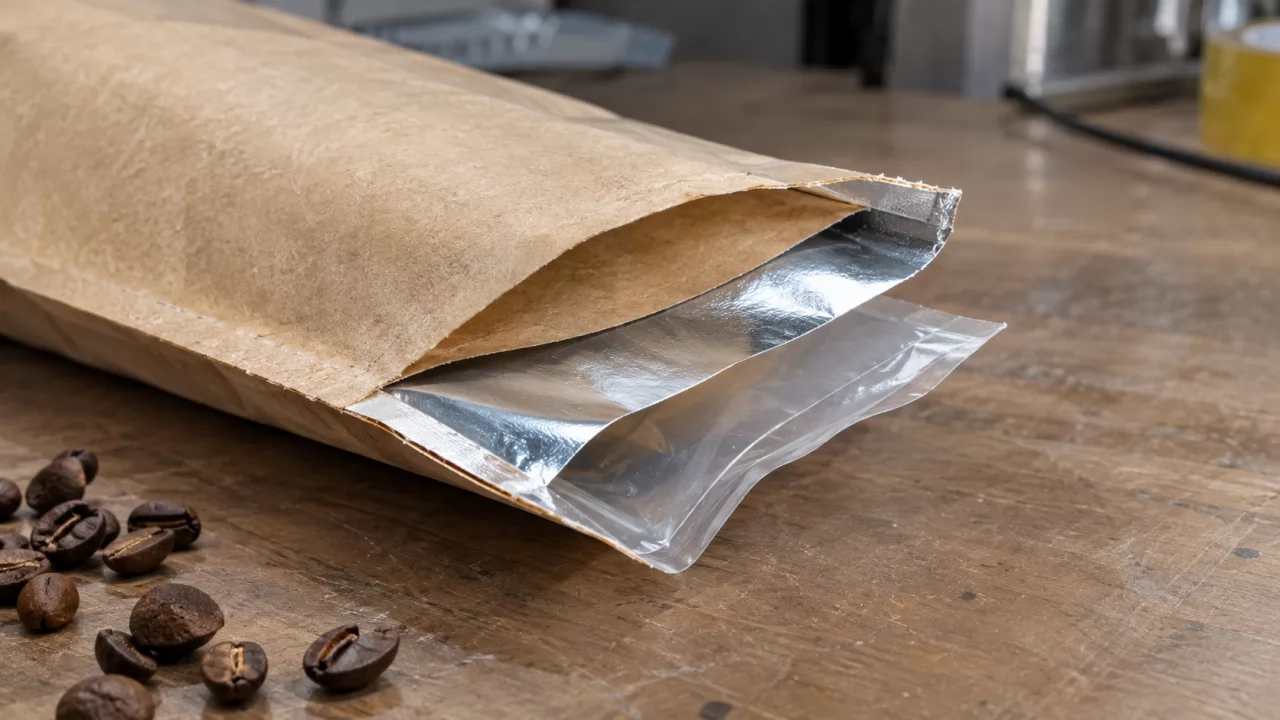
- Aluminium foil laminate: very high barrier to oxygen, moisture and light. Opaque, and not recyclable.
- Kraft paper laminate: natural look. Barrier comes from the inner layers, not the paper, so check what sits behind it.
- Mylar (metallised polyester film): good barrier at lower cost than foil, with a metallic finish. It is not recyclable.
- Mono-PE (single-material polyethylene): designed for recycling streams. Barrier is usually lower than foil, so it suits less sensitive products.
- Compostable kraft/PLA: a plant-based option. Barrier and shelf life are usually more limited, and the claim depends on the exact structure and certification.
Recyclability and compostability are properties of a specific structure, not of a material family. Ask about the exact build you plan to use and request the matching certificates. Never describe a foil or Mylar bag as recyclable on your own pack.
Barrier against oxygen, moisture and light
Match the laminate to what spoils the product. Roasted coffee, nuts and oily snacks suffer from oxygen and light, so they usually call for foil or a high-barrier laminate. Dry powders and crisp snacks mainly fear moisture. Sauces and wet foods need a strong seal layer and sometimes an oxygen barrier. A shelf life target in months, plus storage conditions, helps a supplier recommend the right build.
Food-contact compliance in general terms
In the US, plastic film for food contact is assessed against FDA 21 CFR requirements, and suppliers can test PE film to those requirements. Note the wording: film is tested to them, not "FDA approved". In the EU, food-contact materials fall under Regulation (EC) No 1935/2004, with plastics covered by Regulation (EU) No 10/2011 and good manufacturing practice under Regulation (EC) No 2023/2006.
Certificates and test reports are issued per structure, not per supplier. If you change the laminate, the print coverage or the inner layer, ask whether the existing report still applies before you assume it does.
How to Choose: Six Checks Before You Request a Quote
Work through these in order. The first two decide most cases.
Product and fill. Form (liquid, powder, granule, paste), weight or volume per bag, and whether the product is hot-filled, retorted or frozen. Fill weight drives size and gusset type. Shelf and handling. Does the bag stand in a retail display, hang on a peg, or ship in a carton? That separates flat bottom and stand-up bags from flat pouches.
Barrier. Name the enemy: oxygen, moisture, light or all three, and the target shelf life. Closure. Zipper, spout, valve, tear notch or none. Each addition costs something, so keep only those the consumer will use.
Print method. Digital printing has an MOQ of 1,000 pcs per design. It suits launches, test runs and many designs. Gravure has an MOQ of 10,000 pcs per design and gives the lowest unit price on repeat orders. Compostable, recyclable mono-PE and recycled-content structures start at 30,000 pcs. So a brand with five flavours and uncertain demand should price digital. A proven single line with steady volume should price gravure.
Target-market rules. Say where the product will be sold. Europe and North America ask for different documents, and label rules differ too.
Rule of thumb: pick the structure from the product's sensitivity, the shape from the shelf, and the print method from the quantity per design.
Which Pouch Type Is Best for Coffee or Sauce? Two Worked Cases
The best pouch for coffee is a flat bottom or stand-up bag with a degassing valve and a foil or high-barrier laminate. The best for sauce is a spout pouch with a laminate suited to the recipe, leak-tested before production. The product's own behaviour sets both choices.
- Fresh roasted coffee, whole bean, sold in retail: freshly roasted beans release gas, so the bag needs a one-way degassing valve or it can swell. Oxygen and light shorten freshness, so foil or a high-barrier laminate is the normal route. A flat bottom gives the most panel space and shelf stability, and a zipper helps after opening. A stand-up is the lighter-cost alternative. Ask for both priced and one recommended.
- Cooking sauce or liquid refill: a spout pouch holds and pours the product, and the weld between spout and film is the part to test. If the sauce is hot-filled or sterilised, confirm the laminate can take that temperature. For a refill pack that goes on a bathroom shelf, ask about the cap type and how consumers will pour.
Order a sample and fill it with your real product before approving production. Check the seal after a day under load, the valve or spout function, and how the print reads next to your competitors on a shelf. Size and feel are cheap to correct at sample stage and costly after bulk.
YLTPACK prints, laminates and makes bags in one cleanroom plant in Shenzhen, and leak-proof testing is done before shipment. Samples of similar bags are free. You pay the courier.
FAQ
How many pouch types do I need to compare before ordering?
Two at most. Ask the supplier for a written recommendation of one type, with both options priced, so the cost difference is on paper.
Can one pouch type serve several products in my range?
Yes, when the products share a similar fill weight and barrier need. Size and bag style can be shared. Barrier differs when one product is oily or oxygen-sensitive and another is not, so those may need different laminates.
What do I send to get an accurate quote?
Send the product and fill per bag, bag type or a reference photo, size if known, quantity per design, number of designs, artwork or an idea, extras such as zipper, valve or window, and your target market. Artwork can follow later.
Is production time the same as delivery time?
No. Production takes 7-15 days after artwork proof approval. Air, sea or express shipping is quoted separately with the order.
Before you write the brief, write down the product's fill weight and what spoils it. Pick the structure from that.