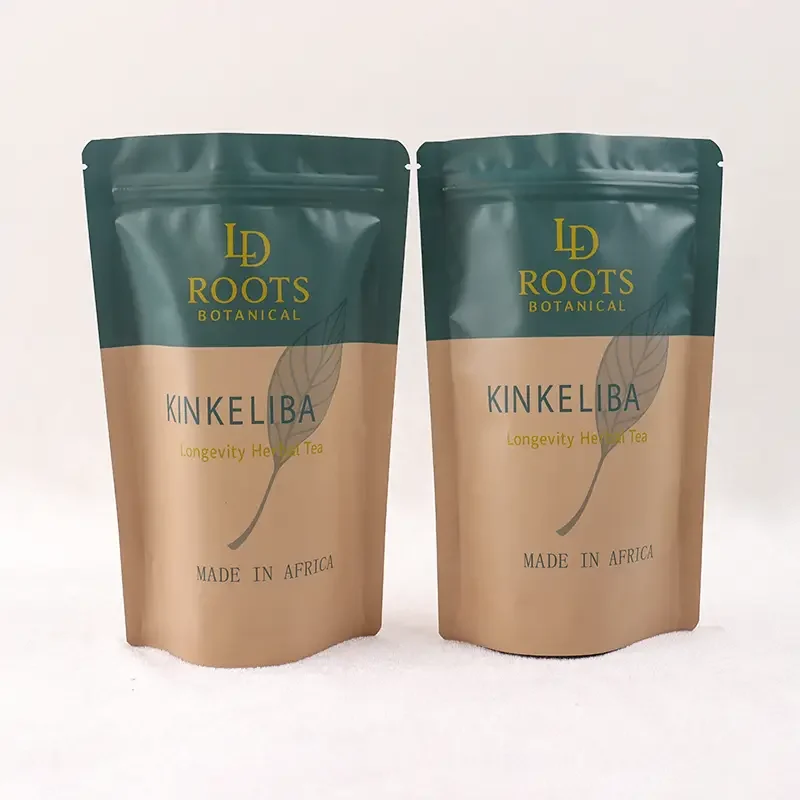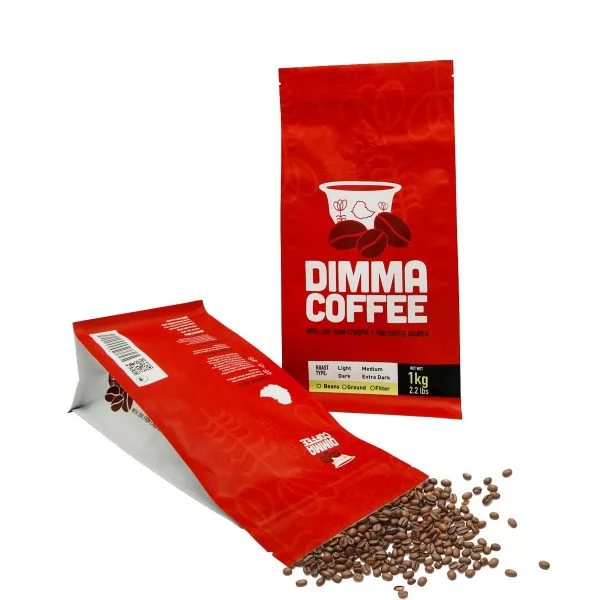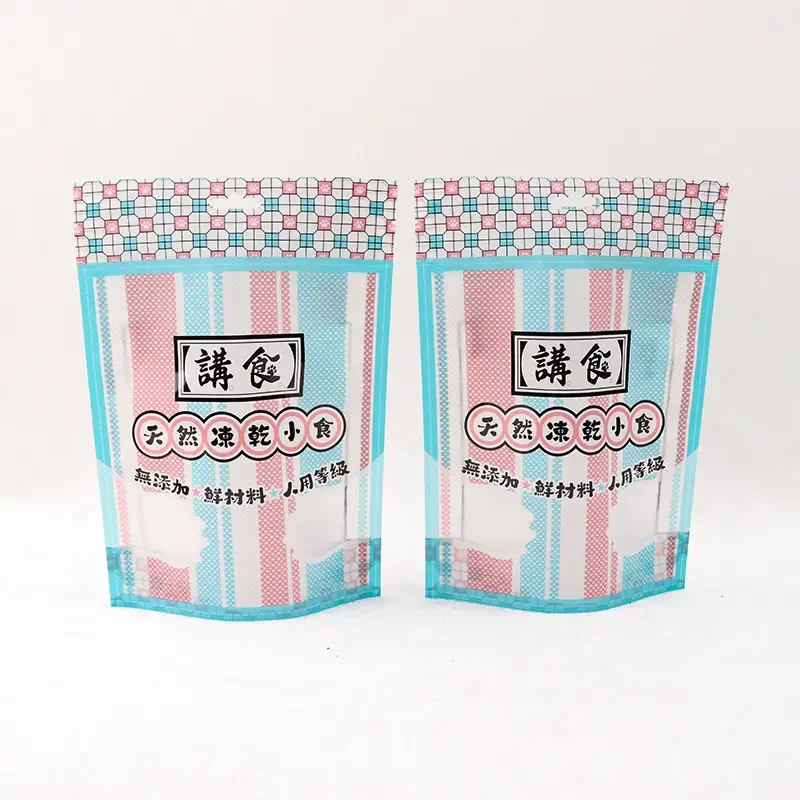
Fix the tea format and fill weight before you ask any supplier for pouch dimensions. A pouch that is too tight crushes sachets and strains the zipper. One that is too loose looks half empty on the shelf and wastes film. Tea bag packaging size follows two different logics: loose leaf pouches are sized by weight and bulk density, tea bag pouches by count and sachet footprint.
Loose Leaf or Sachets
Loose leaf tea is sized by weight and bulk density. Sachets are sized by count and flat dimensions. Mixing the two methods is the most common reason a first sample does not fit, so settle which one applies to each SKU before anything else.
Sizing by weight
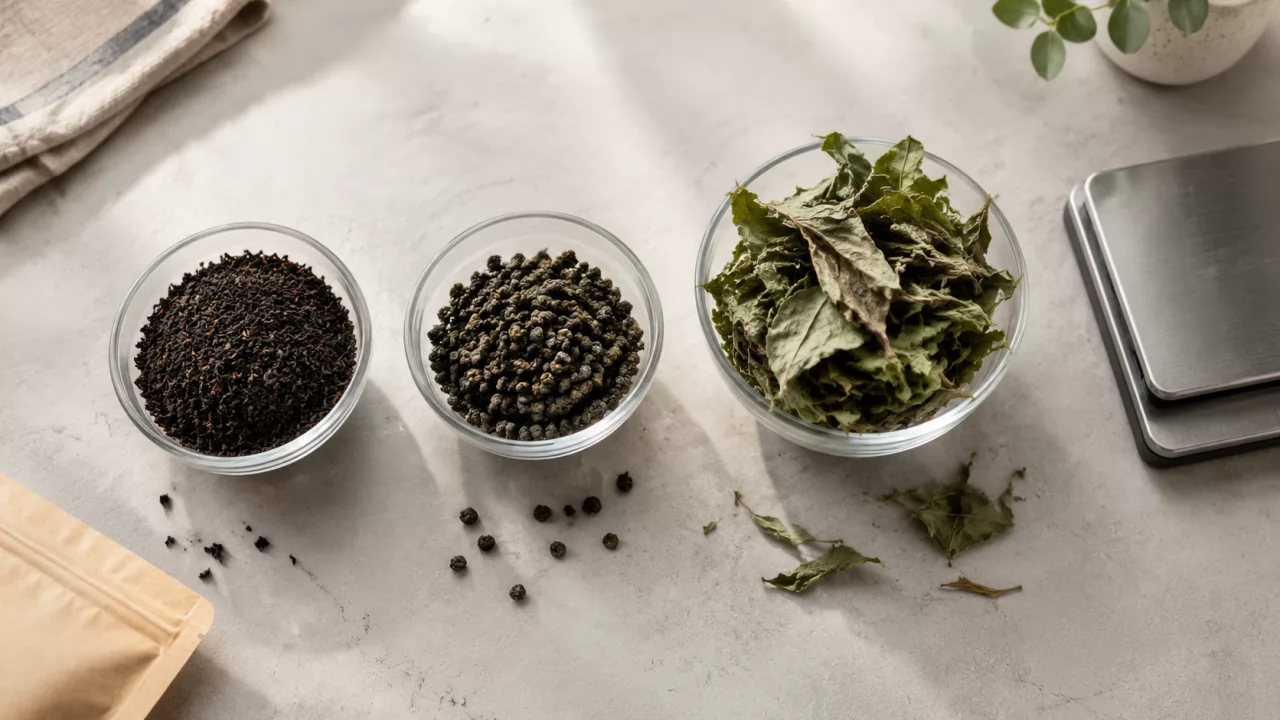
Density varies a lot between teas. Fine broken leaf packs tightly. Rolled or twisted leaf sits in between. Large leaf, whole flowers and herbal blends are bulky and take far more volume for the same gram weight. So 100 g of one tea and 100 g of another can need noticeably different pouches.
Sizing by count
A sachet has a fixed footprint and thickness. The pouch is built around how the sachets stack and how much clearance they need, not around gram weight. Weight only becomes a check at the end, for the label and the shipping carton.
What Size Pouch for Tea Bags?
Measure the sachet, add allowance for width, headspace and the zipper zone, then check the stack height against the gusset depth. That gives the internal size you need. The external size is larger, because seals and closures take space.
- If your sachets are flat envelopes or filter bags, size from their width and height plus a small side clearance.
- If they carry a string and tag, add height for the tag and expect a looser stack.
- If they are pyramids, plan more depth and headspace than the flat footprint suggests.
- If the pouch will be opened daily for weeks, specify a zipper and add its allowance from the start.
The shape of the sachet decides how much room the stack wastes, so measure real product, not a spec sheet.
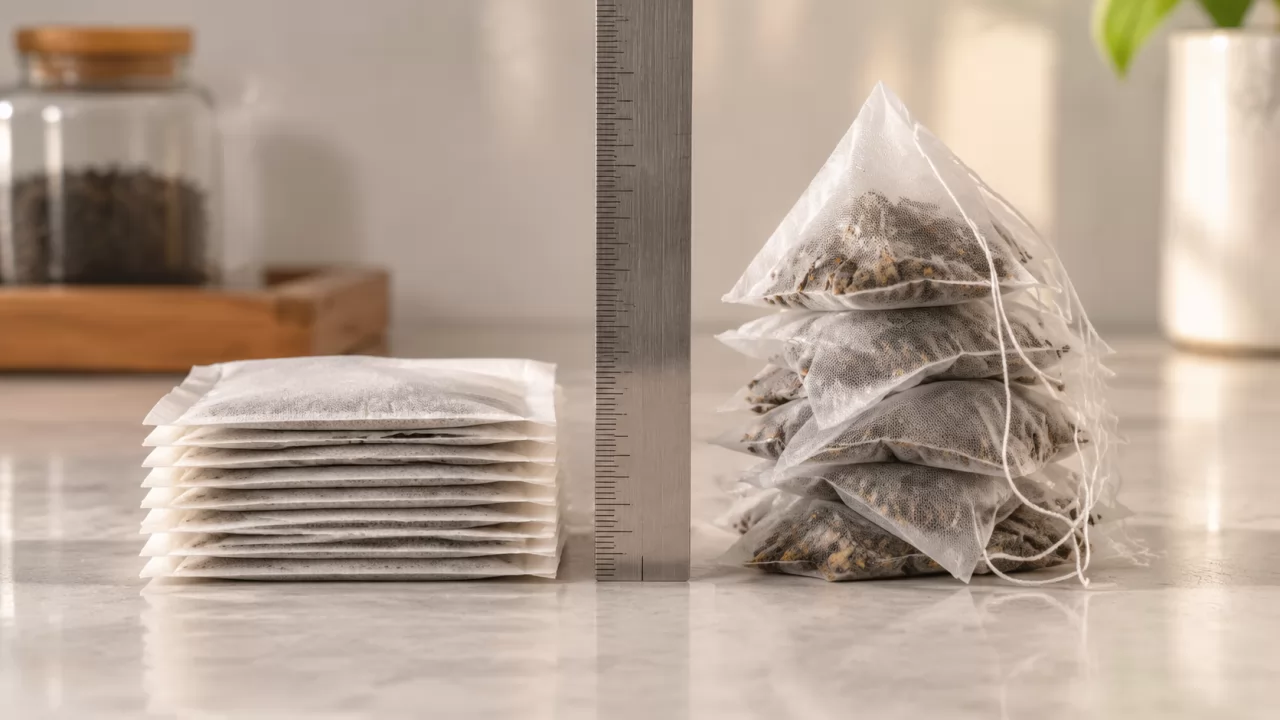
Flat sachets versus pyramids
Flat envelopes and filter bags stack like cards. Pyramid sachets, and those with strings and tags, do not. They leave gaps, rock against each other and need more depth. A pouch that suits flat sachets will often feel tight with the same count of pyramids.
Allowances that matter
The top seal, the zipper zone and the tear notch all consume height. The usable interior is therefore shorter than the listed bag height. This is why internal and external dimensions differ, and why you should always state which one you mean when you send a size.
Tea bag count per pouch
How many tea bags fit in a pouch depends on stack height and gusset depth, not on a universal count. Thin filter sachets pack far more tightly than pyramids with tags. Test with your real sachets and count what fits without bowing the front panel. Leave a little headspace so the zipper closes without catching a corner.
Stand-Up Pouch Size for Loose Leaf Tea
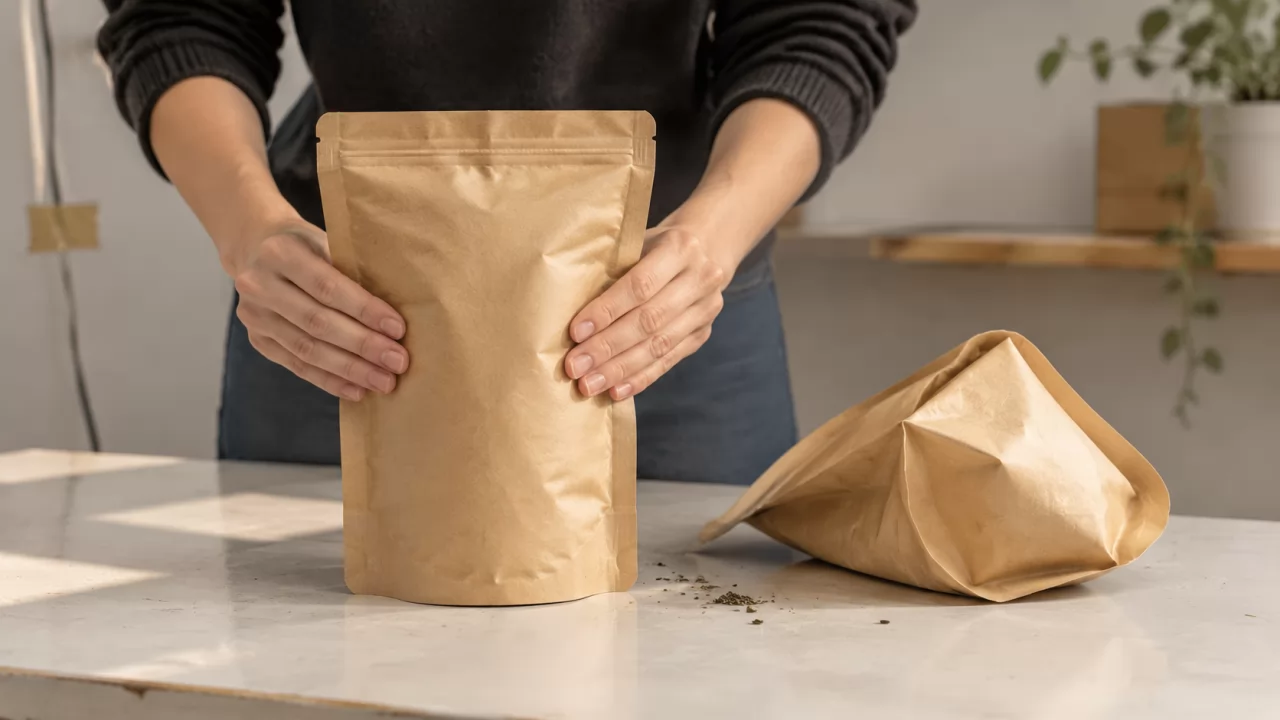
A stand-up pouch is a flexible bag with a bottom gusset that lets it stand on a shelf. For loose leaf, pick width and height from the fill volume, then set the gusset so the filled pouch is stable without bulging into a ball. Leaf type drives that choice more than any size chart.
Reading a size chart
Pouch dimensions are normally written as width × height + bottom gusset. Some suppliers list external size, others the usable interior. Ask which. A listed nominal capacity is a starting point only, since it is usually based on a reference product and a standard headspace. Your tea will behave differently.
Usable volume is what remains after seals, zipper and headspace are removed. It is always lower than the volume you would calculate from the outer dimensions.
Fill weight by leaf type
One pouch size cannot serve a whole range. The table shows how leaf type changes the volume needed for the same weight.
| Leaf type | Bulk density | Volume for same weight | Sizing note |
|---|---|---|---|
| Fine broken leaf | Higher | Smaller | Settles; watch for dust at seals |
| Rolled or twisted leaf | Medium | Medium | Good baseline for sample fills |
| Large whole leaf | Lower | Larger | Needs extra height and headspace |
| Flowers and herbs | Lowest | Largest | Often needs a taller pouch |
Treat these as relative guides. Size each SKU from its own sample fill and give blends their own check.
Stand-up versus flat bottom
A flat bottom pouch, also called a box pouch, has a squared base and side gussets, giving five printable panels. It stands more firmly and holds a stiff, rustling fill without slumping. A stand-up pouch is lighter on film and usually cheaper, but its front panel curves as it fills. For a premium loose leaf range, a flat bottom format is usually the better recommendation. For everyday lines, stand-up is sufficient.
Test fill before approval
Fill a sample pouch with real product, close it, shake it and stand it on a shelf. Look for slumping, a bulging front, tea trapped in the seal and a zipper that will not close. Lock the size only after this check passes, because artwork is built on the final dimensions.
Barrier and Closure Trade-Offs
Tea is sensitive to moisture, oxygen, light and aroma loss. The film you choose to protect it adds thickness, and a zipper adds more. Both change the size you need, so decide the structure before you fix the dimensions.
| Option | Light barrier | Moisture and oxygen barrier | Best for |
|---|---|---|---|
| Foil laminate | Full | Highest | Long shelf life, delicate aroma |
| Kraft-look laminate | Depends on inner layer | Depends on inner layer | Natural look, barrier set by structure |
| Clear window pouch | Lower at the window | Lower at the window | Showing leaf, shorter storage |
Foil laminate suits most buyers who care about shelf life. A window shows the leaf but weakens light protection across that area, so keep it small, or choose it for teas that turn over quickly.
For tea bags used over weeks, a resealable zipper matters more than a thicker film. It keeps the stack from absorbing moisture each time the pouch is opened. Remember that a zipper reduces usable height, so add its allowance when you count sachets.
Format Choice and Order Impact
Size decisions change minimums, print method and unit cost. Digital print has an MOQ of 1,000 pcs per design, which suits several sizes or blends in small runs. Gravure has an MOQ of 10,000 pcs per design, which suits one stable size at volume and gives the lowest unit price.
Each size and each design counts separately toward the minimum. Changing size between runs is possible, but a new size is a new design for MOQ purposes.
Production takes 7-15 days after artwork approval. Shipping time is quoted separately with the order. Carton size, pallet layout and freight cost all follow pouch size, so a few millimetres on the gusset can change how many pouches fit per carton.
Where a Supplier Fits In
Printing, lamination and bag making can all run in one cleanroom plant, and the pouch can be made to custom dimensions. A free sample of a similar bag lets you check size, feel and fit before production. You pay the courier.
Sizing Mistakes to Avoid
Most size problems come from a short list of errors. Each has a simple fix.
Sizing from a photo. A picture of someone else's pouch tells you nothing about its fill. Measure your own product and fill a sample.
Ignoring headspace. A pouch filled to the brim will not seal cleanly or close with a zipper. Add room above the fill line.
Forgetting the zipper zone. The zipper and top seal remove usable height. Add that allowance to the interior size.
Mixing internal and external dimensions. Write "internal" or "external" next to every figure in the brief. Otherwise two parties may read the same numbers differently.
Skipping a real-sachet test. Pyramids, tagged sachets and filter bags stack differently. Test the actual product before artwork is locked.
FAQ
How many tea bags fit in a pouch?
It depends on sachet type and stack height. Flat filter bags pack tighter than pyramids with tags. Count a real fill in a sample pouch.
What size pouch is right for loose leaf tea?
It depends on fill weight, leaf density and bag format. Start from a sample fill of your own tea, then adjust the gusset and height.
Can I change size between runs?
Yes. Each size and design counts toward the minimum per design, so a new size starts its own count.
Do I need a different size for a window pouch?
No. The window does not change the dimensions. It can affect which barrier structure you choose, since it lowers light protection.
Send Your Brief
Send the product and fill per bag, a bag type or photo, size if known, quantity per design, number of designs, artwork or idea, extras and the market you sell in. We reply with a structure recommendation and an itemized quote within one business day. Write to [email protected].