Protein powder acts like a dry sponge left in a humid room. It pulls in any moisture and oxygen the bag lets through, and that shows up weeks later as clumps, a stale smell and customer complaints. The pouch is the only wall between the powder and the room.
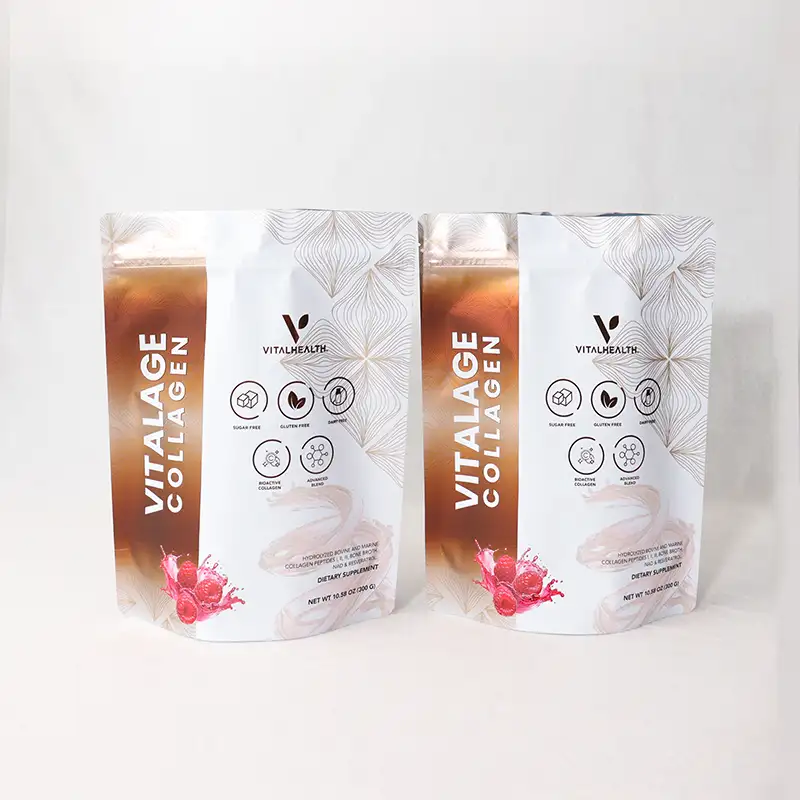
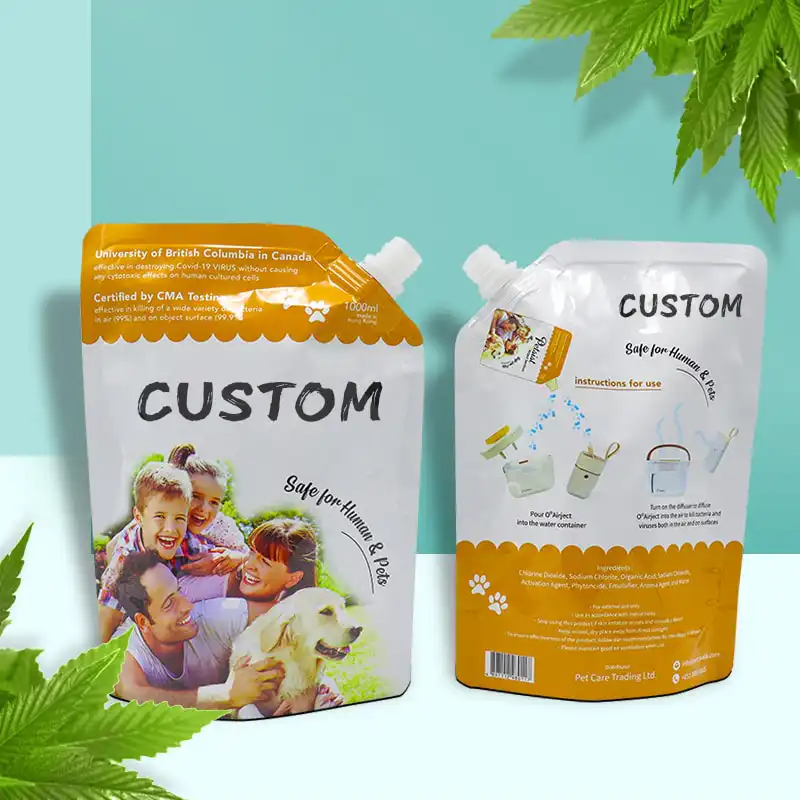
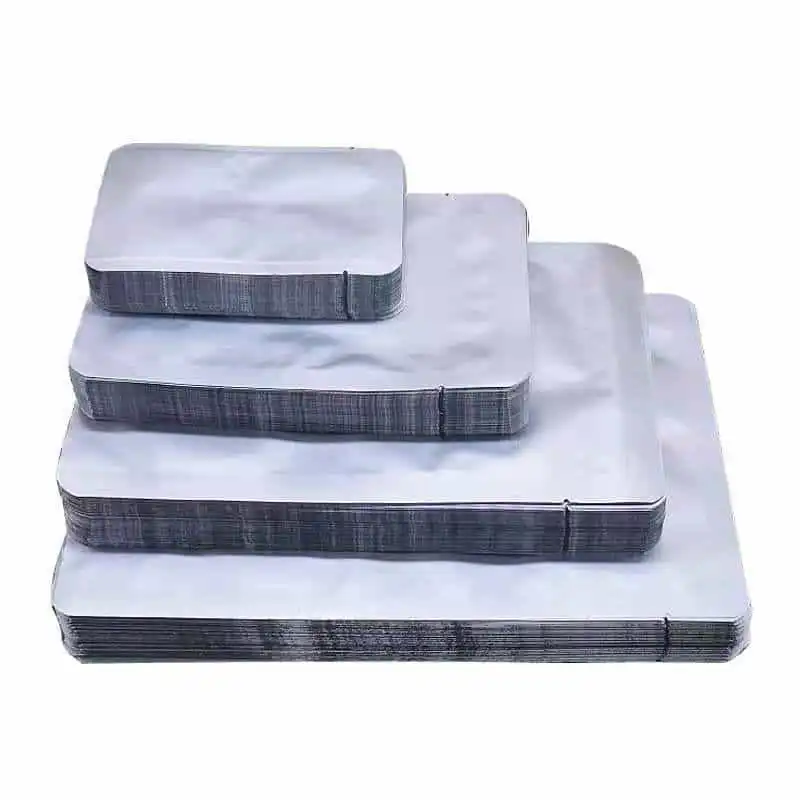
For most brands, mylar bags for protein powder means a foil-laminate stand-up or flat bottom pouch with a resealable zipper and a food-contact PE inner layer. That structure handles barrier and reuse. After that, your print method and the quantity you order per flavor set the MOQ and the unit cost.
What Is the Best Packaging for Protein Powder?
A high-barrier foil laminate pouch with a resealable zipper suits most protein powder SKUs. The aluminum layer blocks moisture, oxygen and light, and the zipper protects the powder between scoops. Clear and kraft-only structures look good on the shelf. They give up barrier to get that look, so the powder stays free-flowing for less time.
In the packaging trade, a "mylar bag" is a pouch laminated from PET (polyethylene terephthalate) film with an aluminum foil or metallized layer and a heat-sealable PE (polyethylene) inner layer. Mylar started out as a trade name for PET film. Buyers now use it for almost any foil-look laminate pouch.
Why a Protein Powder Bag Needs a Moisture Barrier First
Set the protein powder bag moisture barrier before you choose size, print or closures. Whey, casein and plant proteins are hygroscopic, which means they absorb water vapor from the air. Absorbed moisture causes caking. It also changes flavor and makes the powder harder to mix.
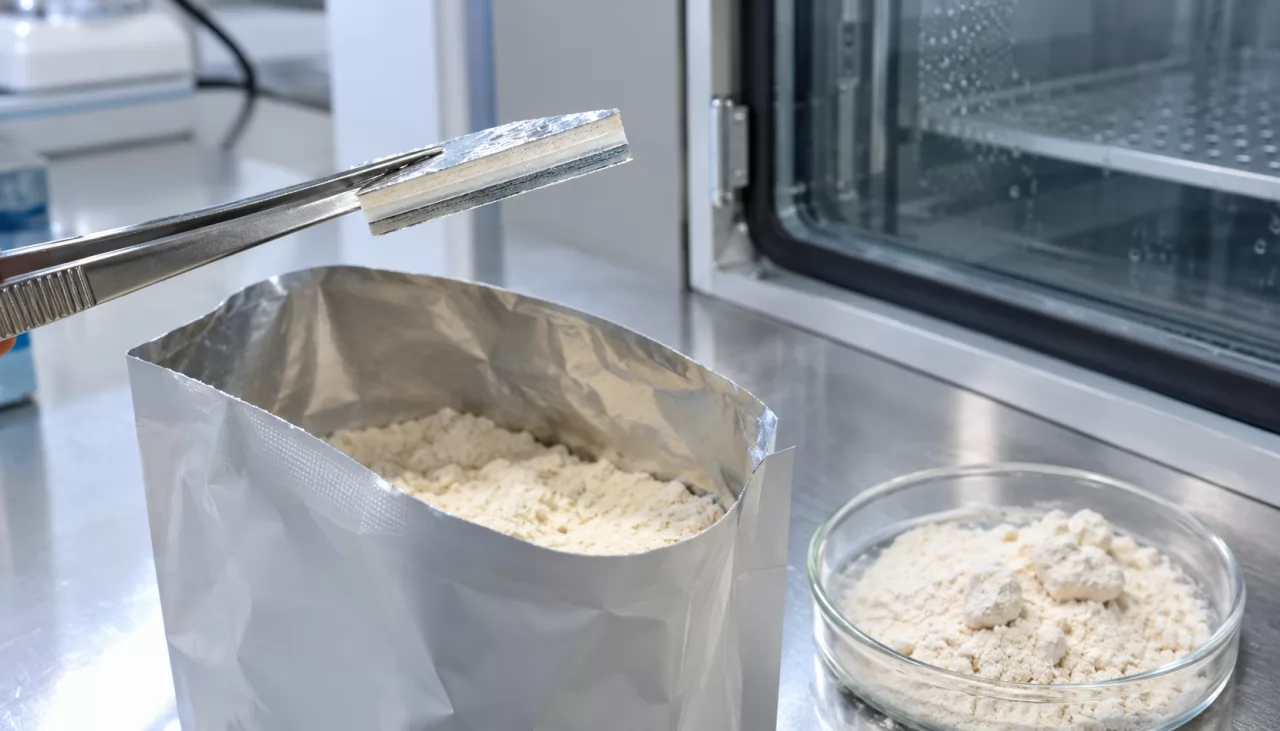
Oxygen is the second threat. Many blends contain fats, flavor oils or added vitamins, and these can oxidize into off-notes over time. Light usually speeds this up.
Barrier is measured as WVTR (water vapor transmission rate, the amount of moisture that passes through a film over a set area and time) and OTR (oxygen transmission rate, the same measure for oxygen). Ask for both values for the exact structure on the quote. Don't accept a general "high barrier" label.
Foil, Metallized and Clear Structures Side by Side
| Structure | Moisture and oxygen barrier | Light block | Appearance | Typical use |
|---|---|---|---|---|
| Foil laminate (PET/AL/PE) | Highest of the pouch options | Full | Opaque, printed or metallic finish | Core SKUs, long shelf life, humid markets |
| Metallized PET (PET/VMPET/PE) | Medium to high | High, but not total | Metallic look, lighter feel | Shorter shelf life, cost-sensitive SKUs |
| Clear (PET/PE) | Lower | None | Product visible | Samples and fast-moving trial sizes |
| Kraft paper with PE only | Low without a barrier layer | Partial | Natural, matte | Short-cycle products, or with a foil layer added |
| Rigid HDPE tub | High when the lid is sealed | High if pigmented | Bulky, label-printed | Reference point; more freight volume per serving |
The key takeaway: if your shelf-life target is long or the product ships to humid regions, foil laminate is the safe default, and every other structure is a trade-off you should choose on purpose.
How Do You Spec Mylar Bags for Protein Powder?
A protein powder pouch spec starts from three facts: fill weight, filling method and how often the end customer opens the bag. Format, dimensions, gusset and closures all follow from those three. If you lock them first, a supplier can recommend one structure and price it, so you don't have to compare loose options.
Check these criteria before you send an RFQ:
- Fill weight: Fill weight sets the pouch format and the gusset depth. Trial sizes and multi-kilo bulk bags rarely share one format.
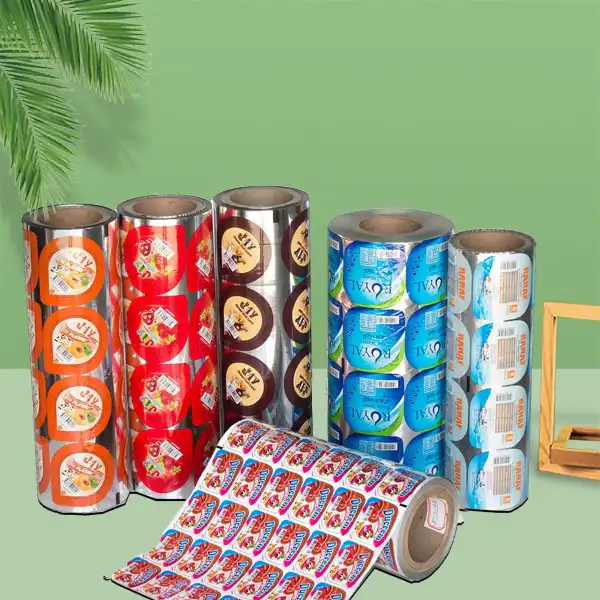
- Filling method: Hand or semi-auto filling works with premade pouches. Form-fill-seal lines need roll stock film, which YLTPACK supplies from an MOQ of 100 kg.
- Opening frequency: A product scooped daily for a month needs a zipper or slider that keeps resealing well after many openings.
- Sales channel: Peg display needs a hang hole. Shelf display needs a stable base. E-commerce shipping puts more stress on seals during transit.
- Target market: Labeling and food-contact rules differ between the US and the EU, and they affect both artwork and documentation.
Rule of thumb: decide barrier and format before artwork, because changing the structure after the proof means a new quote and a new proof.
Stand-Up vs Flat Bottom Pouches for Bulk and Trial Sizes
Stand-up pouches cost less per unit and suit smaller fills, such as single-serve packs and small retail sizes. A flat bottom pouch, also called a box pouch, has a square base and four side panels. It stands steadier on the shelf with larger fills and gives you more print area for nutrition panels, usage directions and flavor branding.
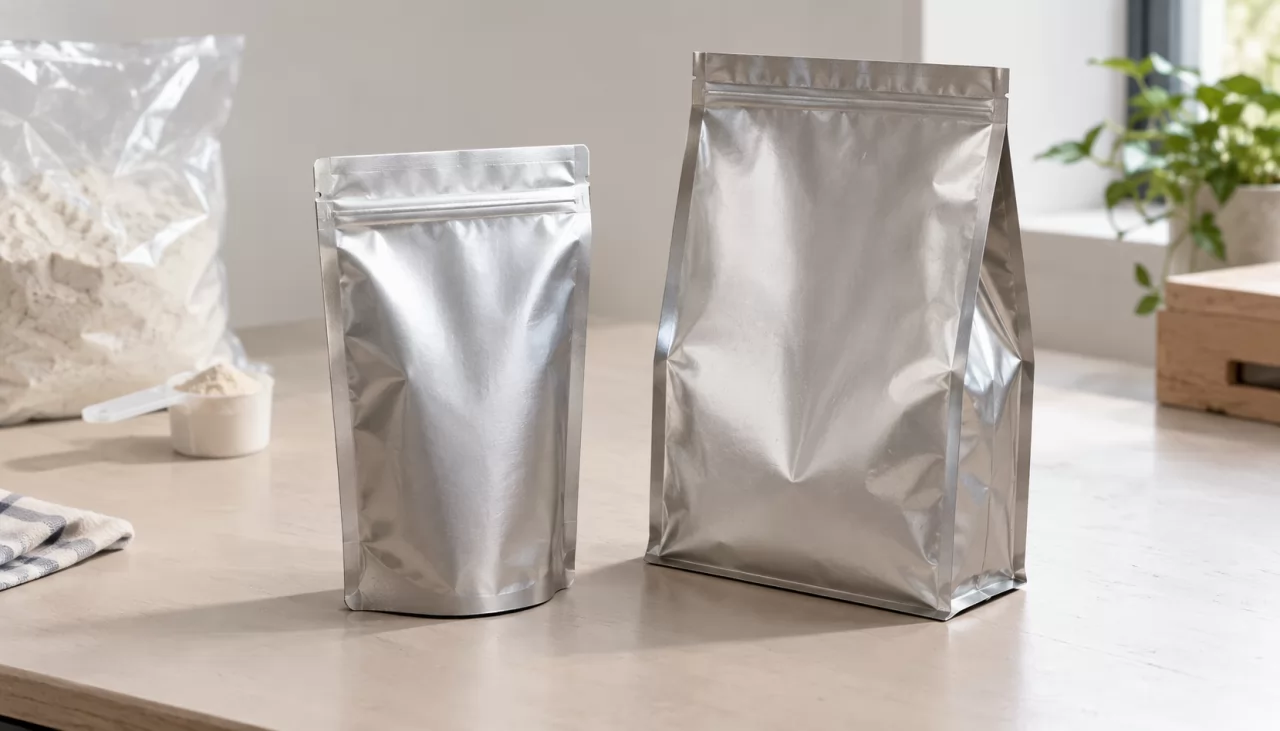
Stand-Up Mylar Pouch With Zipper for Supplements: Closure Details
A stand-up mylar pouch with zipper for supplements needs three closure details checked on the drawing:
- Zipper type: A standard press-to-close zipper suits most powders. A slider is easier to use for customers who open the bag often.
- Tear notch: Place the notch above the zipper so the first opening doesn't cut through the reclose track.
- Hang hole: Add one only if the retailer uses peg display. It takes up headspace above the zipper.
Set the zipper far enough below the top seal that a scoop and a hand fit through the opening. Resealable mylar pouches that are too tight at the mouth are a frequent source of complaints.
Sizing the Pouch to Fill Weight and Headspace
Powder density changes how much volume a given weight needs. Two flavors with the same net weight can fill a pouch to different heights. Leave headspace for settling and for a clean seal. The Pouch Capacity calculator on yltpack.com gives a starting size with no sign-up. Then fill a physical sample with your actual powder before you sign off the artwork.
Custom Printed Protein Powder Pouches: Digital or Gravure?
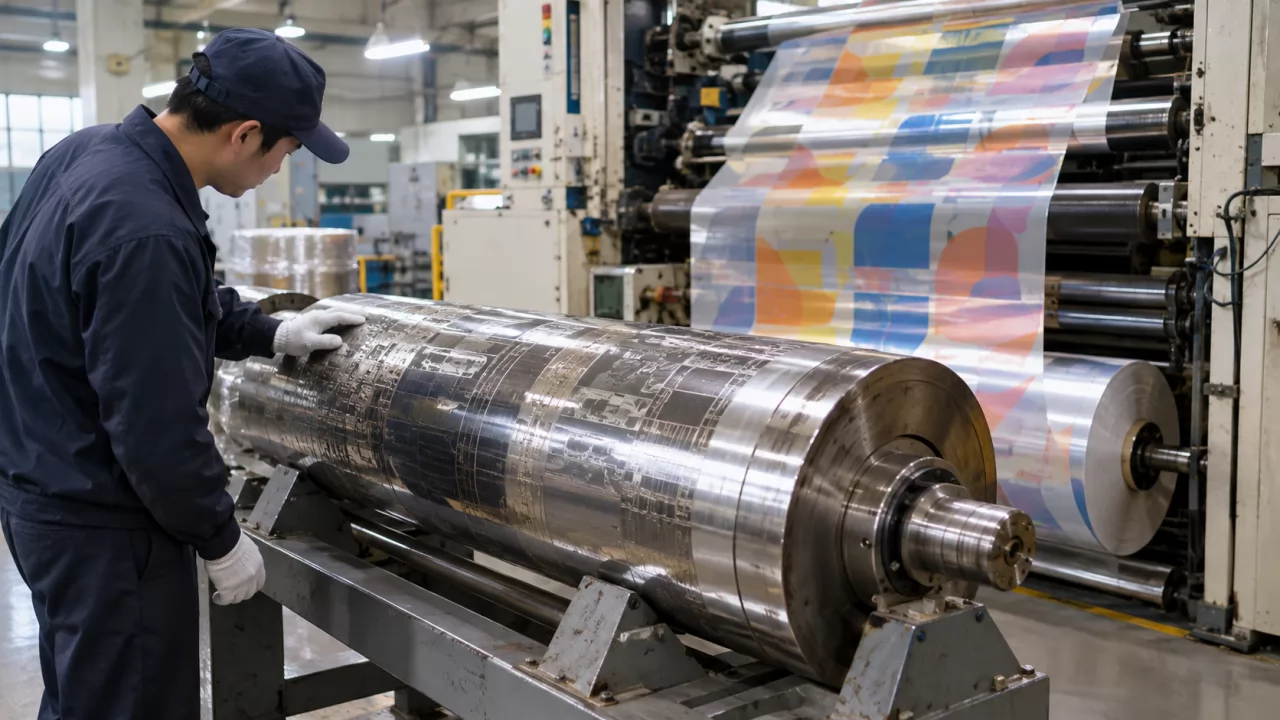
Custom printed protein powder pouches use digital print for launches and many flavors, with an MOQ of 1,000 pcs per design at YLTPACK. Gravure print suits repeat orders and gives the lowest unit price, with an MOQ of 10,000 pcs per design. Many brands start digital and move proven flavors to gravure.
Gravure is a printing process that transfers ink from engraved cylinders, one cylinder per color. That setup cost is why it pays off on longer runs. YLTPACK runs 9-color printing in house. The number of colors in your artwork is listed as its own line on the quote.
Flavor SKUs, Colors and What Drives Unit Cost
Each flavor counts as its own design, so a five-flavor launch is five designs, each with its own MOQ. Unit cost comes from material, size, number of print colors, quantity per design and extras such as zipper, window or hang hole. Each driver is itemized on the quote. That shows you which choice moves the price.
Label Content and Artwork Readiness
Nutrition and ingredient panels follow the target market's rules. In the US, the panel format depends on whether the product is sold as a conventional food or as a dietary supplement. In the EU, Regulation (EU) No 1169/2011 sets food information requirements. Have your regulatory contact confirm the label copy before the proof stage.
Check image resolution early. Print artwork is commonly prepared at around 300 dpi at final size. The free Artwork DPI Checker on yltpack.com flags low-resolution files before they reach prepress.
Which QC Checks and Timelines Should You Lock Before Ordering?
Before you approve artwork for protein powder pouches, ask for food-contact documents, confirm seal and leak testing, and get a written production window. YLTPACK's production time is 7-15 days after artwork approval, with 11 quality checks before packing and leak-proof testing before shipment. Freight is quoted separately.
- Request the food-contact test report for the inner PE film with the quote.
- Confirm the full laminate structure and the WVTR and OTR values for that exact structure.
- Fill a free sample with your real powder and check fit, headspace and how the zipper feels.
- Test the seal on the sample after filling, including a squeeze or drop check.
- Verify the tear notch, zipper height and hang hole positions on the dieline.
- Approve every flavor proof in writing before production starts.
- Agree the shipping method and freight terms separately from the production window.
Food-Contact Compliance in Plain Terms
The inner PE film is tested to FDA 21 CFR food-contact requirements. That is a test against US regulations. It is not "FDA approved", and no supplier should describe it that way. For the EU, ask how the structure meets Regulation (EC) No 1935/2004, the framework for food-contact materials, and Regulation (EU) No 10/2011, which covers plastic materials in contact with food.
Plant-level systems are a separate question. YLTPACK holds ISO 22000 (food safety management) and ISO 9001 (quality management). Copies are sent with the quote.
Pitfalls That Cause Reorders and Delays
- Window in the barrier: A clear window lets in light and weakens moisture protection where the foil is removed.
- Low zipper: A zipper set too low leaves no room for a scoop and pushes customers to tear the bag wider.
- Powder in the seal: Fine dust on the seal area during filling can cause weak or leaking seals. Funnel guides and a clean seal zone help.
- Unapproved proofs: Production can't start until every proof is signed off. One missing flavor holds the whole order.
- Shipping assumptions: Production time does not include shipping. Air, sea or express freight is quoted with the order.
FAQ
Are mylar bags recyclable?
No. Foil-laminate pouches combine layers that standard recycling streams can't separate. If you need a recyclable structure, ask about mono-PE, which has an MOQ of 30,000 pcs per design.
Can I add a clear window to a protein powder pouch?
Yes, but the window reduces barrier and lets light reach the powder. The quote explains the trade-off for your structure so you can decide whether the window is worth it.
Does protein powder need a degassing valve?
Usually not. Degassing valves are for fresh-roasted coffee, which gives off gas after packing. Protein powders don't, so a valve only adds cost and creates another path for moisture.
Can I order several flavors at a low quantity?
Yes. With digital print, the MOQ is 1,000 pcs per design, and each flavor counts as one design.
Get an Itemized Quote and a Free Sample
Send your product, fill weight, bag type or reference photo, quantity per flavor, artwork or idea, extras and target market to [email protected] or WhatsApp +86 182 1944 5665. You'll get a recommended structure and an itemized price within one business day, plus free design help. The sample is free, and you pay the courier.