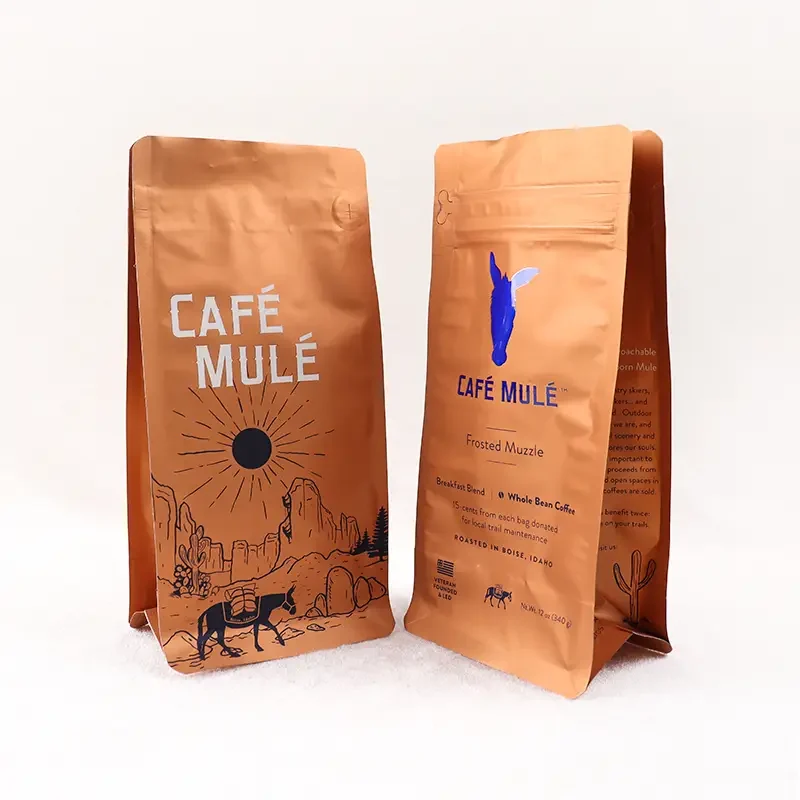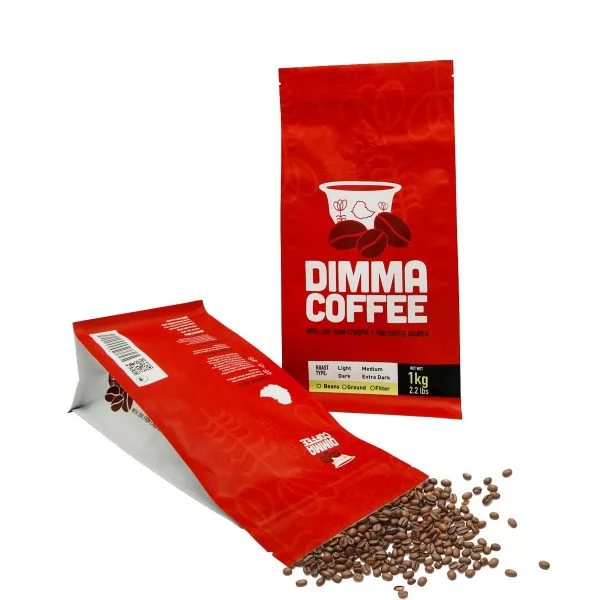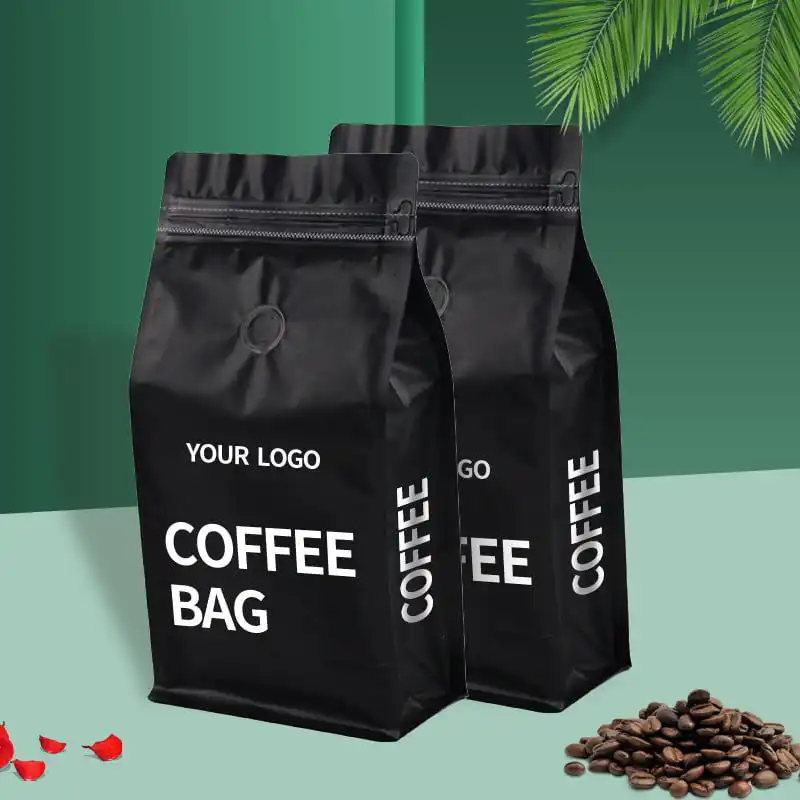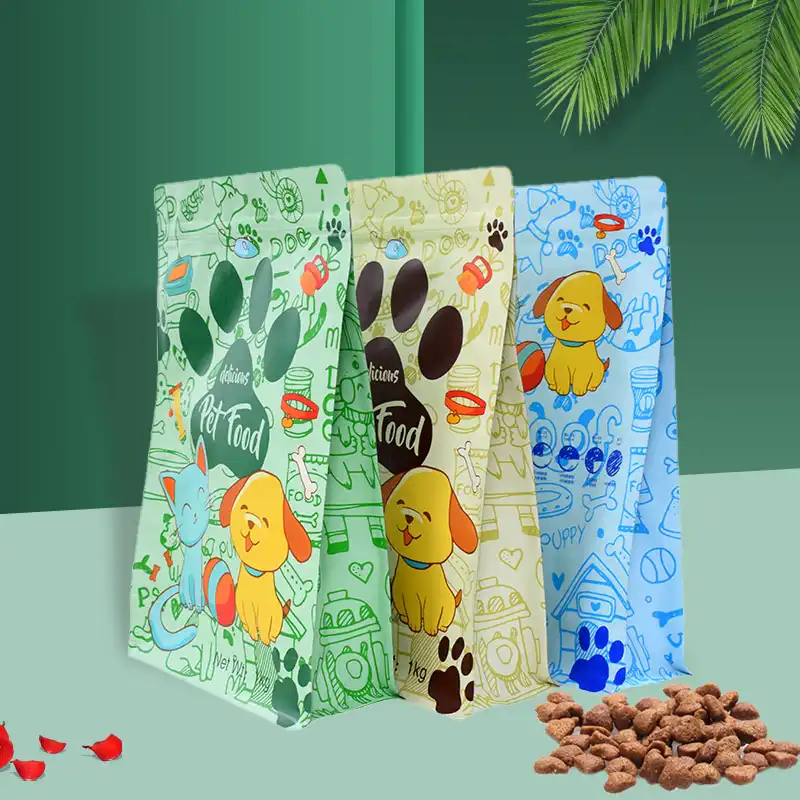
Check the barrier structure and the seal before you look at artwork. Powder spoils from moisture and air getting in, and a plain-looking bag with the right laminate protects it better than a striking print on a weak film. This guide compares the two formats most brands shortlist for custom mylar bags for protein powder: the stand-up pouch with zipper and the flat bottom pouch, both in foil laminate.
Barrier Structure First
A foil laminate pouch with a sealed zipper suits most protein powders. The foil layer blocks moisture, oxygen and light far better than clear plastic film. Powder is hygroscopic, so it clumps and loses flavor when humidity gets through. The pouch has to stop that for the whole shelf life.
What Mylar Means Here
"Mylar" is trade shorthand for a laminate with a metallized or foil barrier layer. It is not one fixed structure. Two bags sold as mylar can have very different layer stacks and very different protection.
Foil Versus Metallized Film
Aluminum foil laminate uses a thin sheet of aluminum between plastic layers. Metallized film is a plastic film with a vapor-deposited metal coating. Foil is generally the stronger barrier. Metallized film is lighter and often cheaper, and it can be enough for powders with a short turnover.
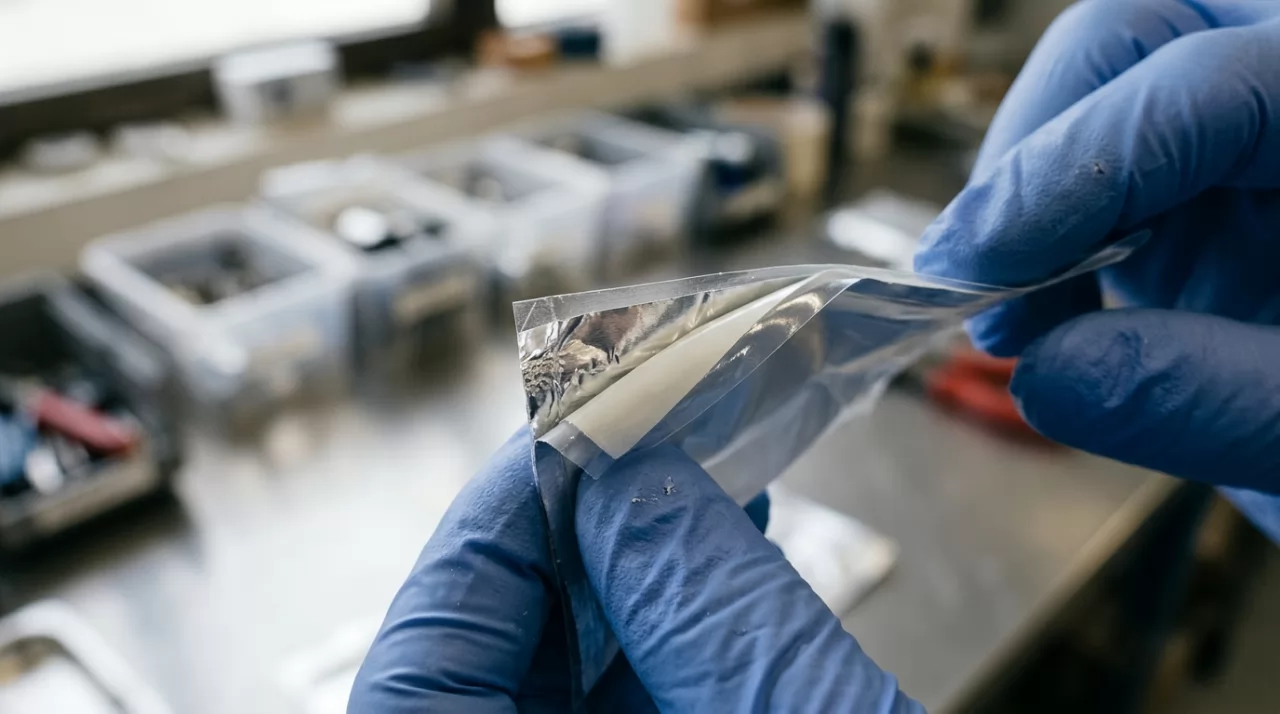
So ask for the layer stack on the quote, written out layer by layer, with the sealing layer named. Do not assume two quotes describe the same bag. Foil and mylar bags are not recyclable, so do not plan claims around that for these structures.
Stand-Up vs Flat Bottom
Both formats stand on a shelf and both take a zipper. The difference is shape, print area and how the pouch behaves when full. Stand-up pouches usually win on cost and flexibility. Flat bottom pouches usually win on shelf presence and stability with larger fills.
Stand-Up Pouch Strengths
A stand-up pouch has a gusset folded into the bottom. It opens into a rounded base and stands when filled. Tooling is simpler than for flat bottom, so unit cost is typically lower. Stock-style sizes are common, which helps when you are testing a new flavor.
It suits sample sachets and smaller fills. It can slump or lean when the powder is heavy and the pouch is tall, which is the main limit.
Flat Bottom Pouch Strengths
A flat bottom pouch has a true base and two side gussets, so it forms a box shape. That gives five printable panels: front, back, two sides and the bottom. The shelf block is stable, and the pouch looks like a tub without the tub.
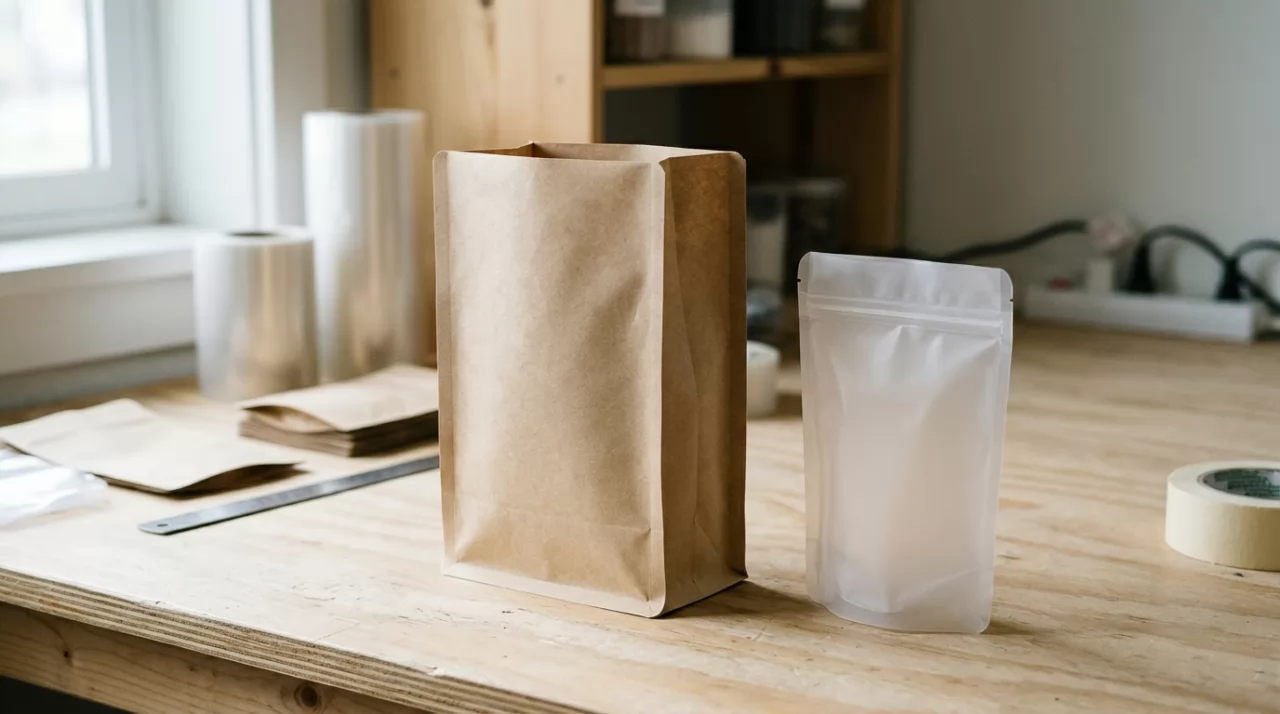
It fits larger fills and brands that want a stronger shelf look. The trade-off is cost and minimums, which are confirmed per quote and can sit higher than for a stand-up pouch.
Side-by-Side Comparison
| Attribute | Stand-up pouch | Flat bottom pouch |
|---|---|---|
| Printable panels | Front and back, plus limited gusset area | Front, back, two sides and bottom |
| Shelf stability | Good at small and mid fills | Higher, holds shape at larger fills |
| Fill range | Sachets to mid-size fills | Mid to large fills |
| Zipper options | Press-to-close or slider | Press-to-close or slider |
| Cost direction | Lower | Higher, confirmed per quote |
| Better when | Testing flavors, small fills, tight budget | Large fills, strong shelf look, side-panel information |
The takeaway: choose stand-up for cost and flexibility, and flat bottom when shelf impact and larger fills matter more than unit price.
Does the Zipper Matter?
Yes. A protein pouch is opened daily, so the zipper decides how the last scoop compares with the first. Powder dust collects in the zipper track and stops it from closing fully. A stand-up pouch with zipper for protein powder should have a track that stays clean enough to seal after scooping.
Press-to-close zippers are common and cost less. Slider zippers close with one pull and tolerate residue better, but they add cost. Ask for a zipper sample and test it with your actual powder.
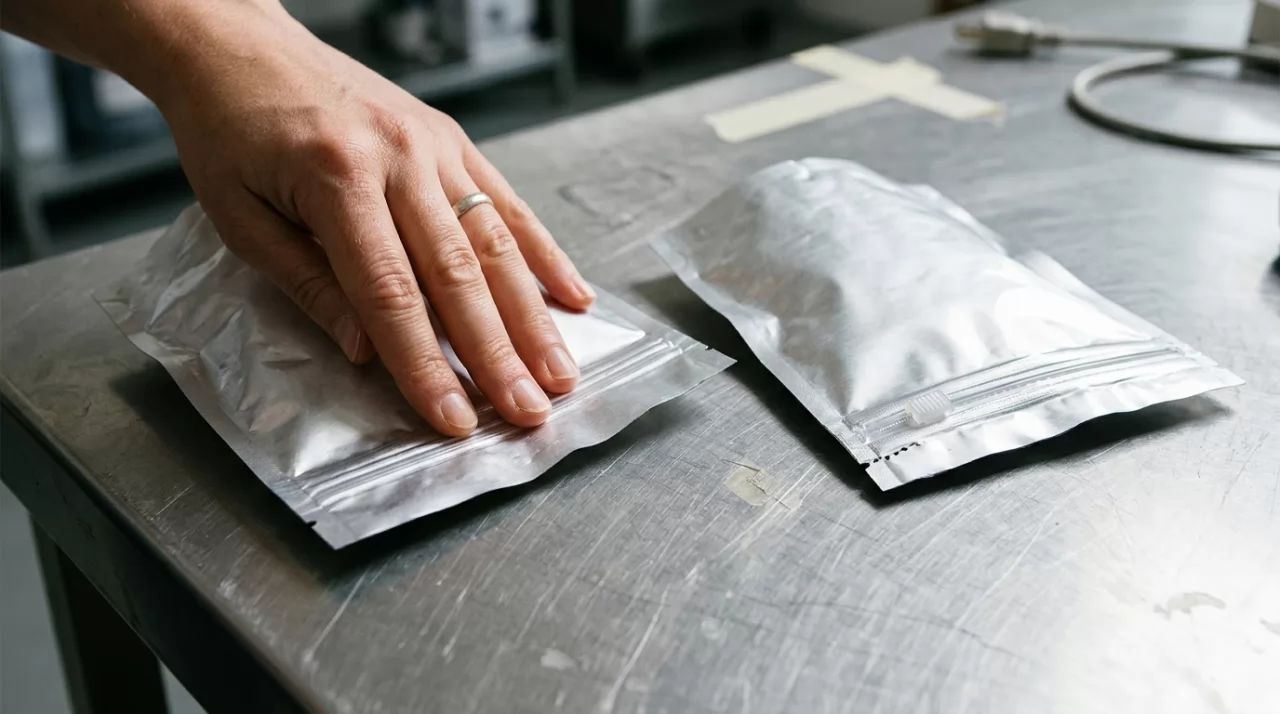
Tear notch placement matters too. It should sit above the zipper, so the first opening leaves the zipper intact.
How to Choose a Pouch for Protein Powder
Settle the points below in this order. Each one narrows the options for the next.
- If your fill is large and the powder is dense, then lean toward flat bottom. Small fills and sachets point to stand-up.
- If the formula is sensitive to moisture or the shelf life is long, then specify foil laminate rather than metallized film.
- If the product sells mainly on a retail shelf, then flat bottom's five panels help. If it ships mostly by e-commerce, then a stand-up pouch is often enough and costs less.
- If customers scoop daily, then specify a zipper type you have tested with your powder, and consider a slider.
- If your target market has labelling rules, then plan the panel space for them before you finalize the layout.
Fill weight and density come first because they set the dimensions. Shelf life and moisture sensitivity come second because they set the barrier. Shelf versus shipping, closure, print panels and labelling follow from those.
When two options both work, ask for both to be priced and ask for one to be recommended in writing. A written recommendation tells you what the supplier would pick for your product. The price gap then shows what the shelf look is costing you.
Sizing Custom Mylar Bags for Protein Powder
Fill weight does not equal bag size. Two powders of the same weight can need pouches of different dimensions, because bulk density differs. Headspace matters as well: the pouch needs room above the powder to fold, seal and close the zipper. Gusset depth changes how much a pouch holds and how it stands.
A pouch capacity calculator gives a starting size from fill weight and density. Then run a sample fill check with your real powder to confirm the size, the headspace and the stance on a shelf. Calculators estimate. A filled sample settles it.
Food-contact rules also apply to the inner film. Depending on the market, buyers usually ask for test reports against FDA 21 CFR food-contact requirements in the US, or EU food-contact materials rules in Europe. State your target market when you ask for a quote so the right documents come with it.
Print Method and Minimums
Two print methods cover most orders: digital and gravure. Digital prints directly from a file with no plates. Gravure uses engraved cylinders, one per color, which cost money up front and pay back in volume. Your order quantity per design decides which one fits.
Digital for Low Minimums
Digital suits launches and brands running several flavors. Custom printed mylar bags at a low minimum order let you test a flavor before committing to a large run. The trade-off is unit price, which is usually higher than gravure at volume.
Our plant runs digital from 1,000 pcs per design and gravure from 10,000 pcs, with free layout help and a free sample. You pay the courier.
Gravure for Repeat Runs
Gravure gives the lowest unit price at volume, so it fits flavors you will reorder. Cylinder cost and the number of colors shift the price, and both are itemized on the quote. Production runs 7-15 days after artwork approval. Shipping is quoted separately, so ask for it as its own line.
Pre-Order Checklist
Confirm these before you approve production.
- Does the quote list the layer structure, with the barrier layer and the sealing layer named?
- Is the zipper type stated, and have you tested it with your powder?
- Do you actually need a valve? (Usually not for powder.)
- Does the size hold your sample fill, with headspace left for sealing?
- Is the artwork at the right resolution, with the barcode zone kept clear?
- Have you received the film test documents for your market, and checked the seals and leaks on the sample?
A quote also needs the product and fill per bag, the bag type or a photo, the size if known, the quantity per design, the number of designs, the artwork or idea, the extras and the target market. Missing items slow the quote down.
FAQ
Are mylar bags safe for protein powder?
They can be, if the inner film is suitable for food contact. That depends on the film and its test reports. Ask for the documents that apply to your market.
What is the minimum order for custom printed pouches?
For digital print it is 1,000 pcs per design, and for gravure it is 10,000 pcs per design. Other structures are confirmed in the quote.
Does protein powder need a degassing valve?
Usually not. Fresh coffee releases gas after roasting, and most powders do not. The formula and the packing process decide, so confirm it with your own product.
Can I get a sample before ordering?
Yes. Similar bags are free and you pay the courier. Use them to check size, feel and fit.