Yes—But Only If the Pouch Is Designed for Freezing
Can you freeze food in stand up pouches? Yes, provided the pouch is made from freezer-suitable materials, has a reliable seal, and leaves enough room for the contents to expand. A standard dry-food pouch is not automatically suitable for frozen storage, especially when it contains liquid, oily food, or sharp pieces.
For home use, the key is choosing the correct pouch and handling it carefully. For a food brand, the decision also involves seal strength, oxygen protection, puncture resistance, filling equipment, transport conditions, and the customer’s experience when opening the pack.
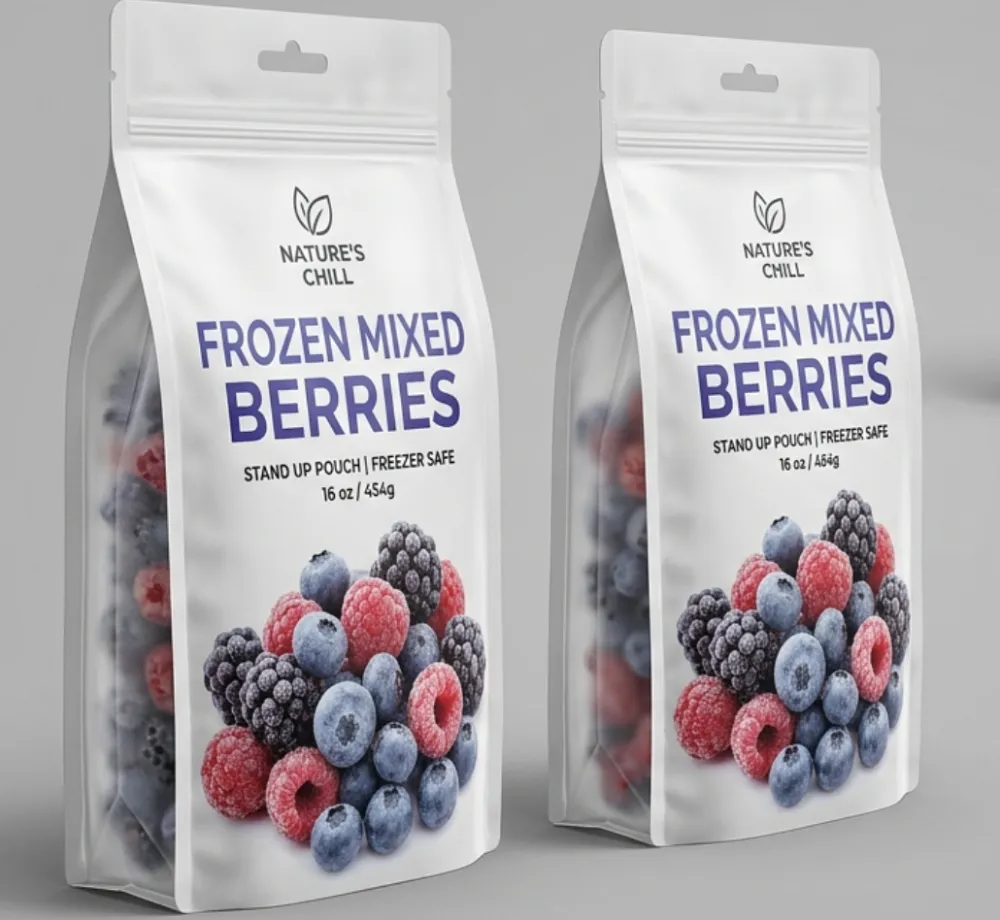
What Makes a Stand-Up Pouch Suitable for the Freezer?
Freezing exposes packaging to low temperatures, moisture, pressure changes, and repeated handling. A pouch that performs well on a warm shelf may become stiff, brittle, or more vulnerable to seal failure in a freezer.
The structure should remain flexible at the intended storage temperature. It must also maintain a strong seal after filling, freezing, transportation, and thawing.
| Packaging factor | Why it matters in frozen storage | What to confirm with a supplier |
|---|---|---|
| Low-temperature flexibility | Reduces cracking and stress around folds or corners | Material performance at approximately -18°C or the required storage temperature |
| Seal strength | Prevents leaks and protects against freezer air and moisture | Seal testing after freezing and thawing |
| Puncture resistance | Protects against bones, frozen pieces, sharp edges, or rough handling | Drop, abrasion, and puncture testing for the filled product |
| Barrier protection | Helps reduce oxygen, moisture, odor transfer, and freezer burn | Oxygen and moisture barrier data for the complete structure |
| Closure quality | Keeps the package usable after opening and closing | Zipper performance at low temperature and after repeated use |
Are All Stand-Up Pouches Safe for Frozen Food?
No. “Stand-up pouch” describes the shape, not the complete material specification. A pouch made for coffee, snacks, or powdered supplements may not have the flexibility or seal performance needed for frozen food.
For example, a coffee pouch usually focuses on oxygen and aroma protection. That is valuable for roasted beans, but the same construction still needs separate validation before it is used for frozen berries, prepared meals, seafood, or sauces.
When asking are stand up pouches suitable for freezing food, look beyond the appearance. Ask whether the finished pouch—not just an individual film layer—has been evaluated for the product, filling method, storage temperature, and distribution route.
Products That Commonly Work Well in Freezer Pouches
- Frozen fruit, vegetables, and smoothie ingredients
- Prepared meals and meal kits
- Frozen sauces, soups, and purees
- Marinated meat or seafood, when the pouch has suitable puncture and seal resistance
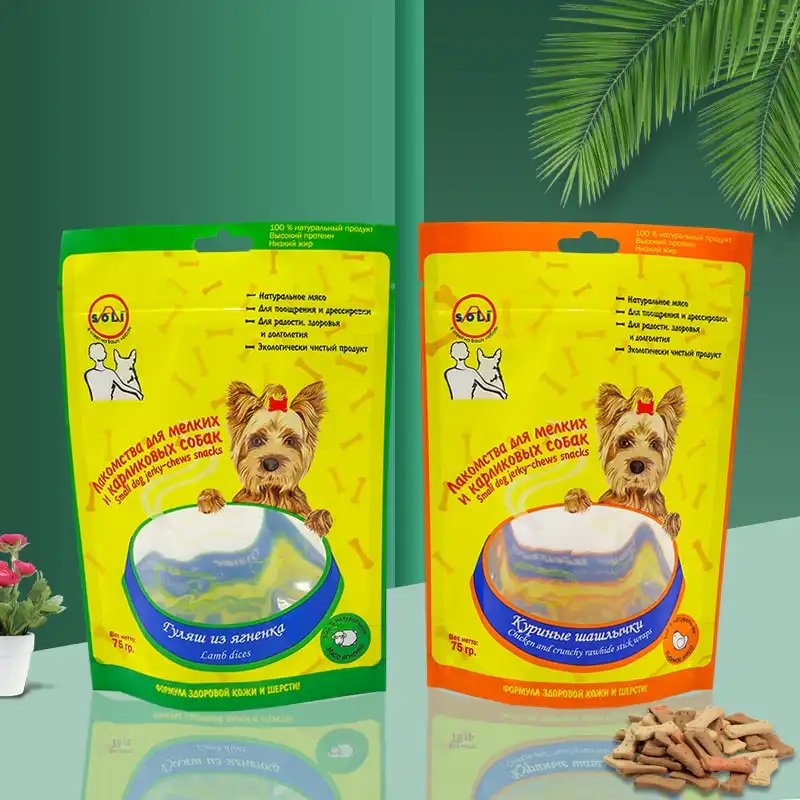
- Pet food portions and frozen treats
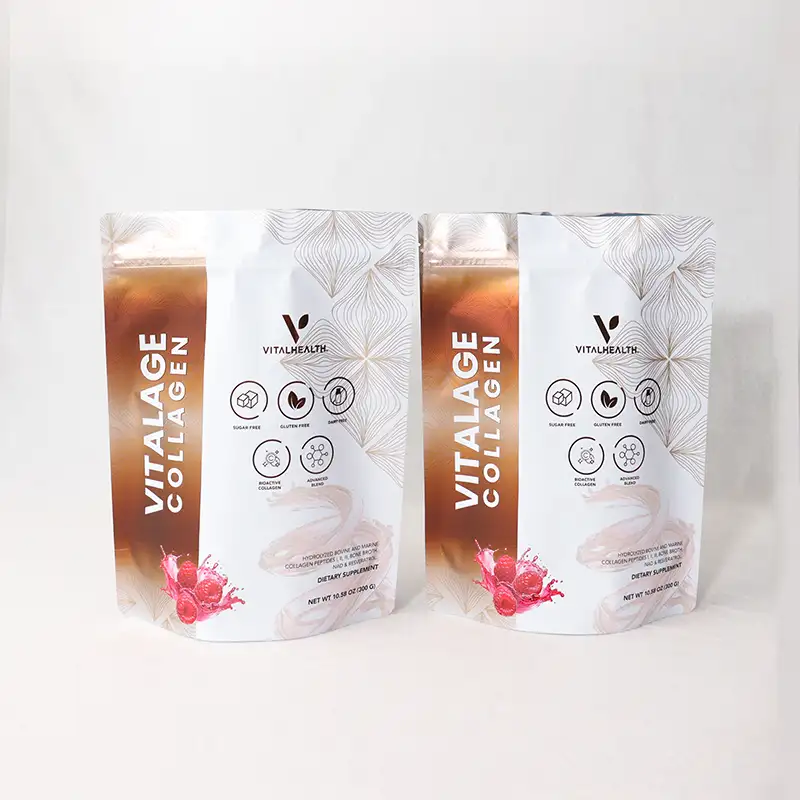
- Dry products that benefit from cold storage, such as certain specialty ingredients
Products That Need Extra Care
- Foods with sharp bones, shells, or hard frozen pieces
- Products with high oil content that may affect seal cleanliness
- Carbonated or pressure-producing products
- Very hot-filled food that is frozen immediately afterward
- Liquids filled too close to the top of the pouch
Which Materials Are Commonly Used?
Freezer packaging is usually built as a multilayer structure. Each layer performs a different job: the outer layer supports printing and handling, the middle layer can provide barrier protection, and the inner layer creates the food-contact surface and heat seal.
Common structures may include polyethylene-based sealant layers, polypropylene options, nylon for added toughness, or barrier layers selected for oxygen and aroma protection. The correct choice depends on whether the food is dry, fatty, acidic, liquid, frozen, or intended for microwave or boiling use.
| Food type | Important packaging priorities | Potential design considerations |
|---|---|---|
| Frozen fruit and vegetables | Moisture protection, seal cleanliness, easy opening | Clear windows, tear notches, resealable zipper |
| Frozen meals | Puncture resistance, seal integrity, clear labeling | Large fill area, cooking instructions, strong bottom gusset |
| Frozen sauces | Leak resistance, expansion space, flexible sealant | Rounded corners and carefully controlled filling volume |
| Specialty coffee stored cold | Oxygen barrier and aroma retention | One-way valve requirements must be reviewed separately |
| Frozen pet food | Odor control, toughness, portion convenience | Handle or zipper options and transparent ingredient information |
For coffee brands, cold storage does not remove the need for oxygen protection. Roasted coffee can lose aroma when oxygen enters the pack, so the barrier, valve design, seal area, and filling process should be considered together.
For pet food, packaging also has to support trust. Owners often want to see clear ingredients, feeding guidance, and portion information, while the pack itself must withstand cold handling and possible contact with oily food.
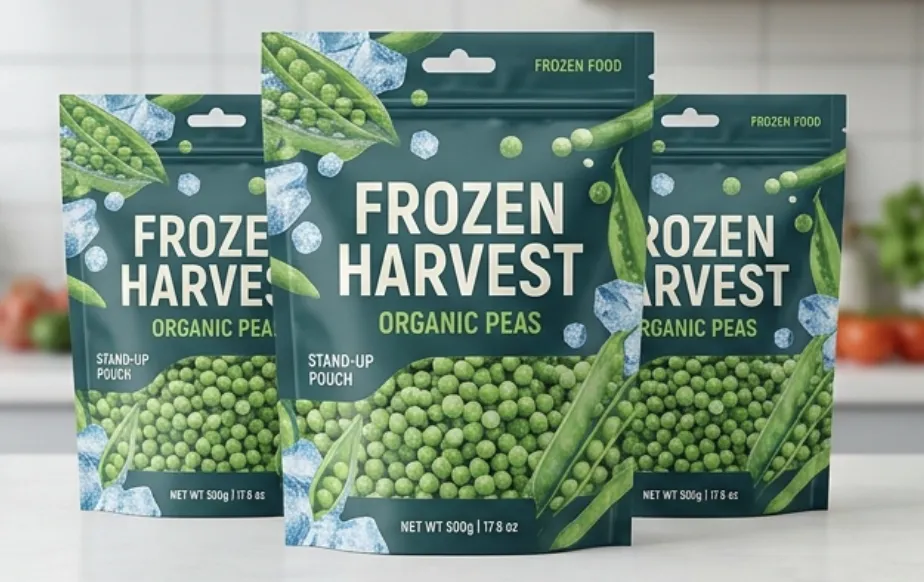
Can You Freeze Liquids in These Pouches?
Can you freeze liquids in stand up pouches? Yes, but liquids require more planning than solid food because they expand as they freeze. A pouch filled to the top may swell, strain the seal, or burst if there is not enough headspace.
Leave a controlled amount of empty space above the product. The precise fill level depends on the liquid, pouch dimensions, material flexibility, freezing speed, and whether the pack will be stacked during storage.
Liquid-Filling Checklist
- Use a freezer-rated structure with a sealant layer designed for the application.
- Keep the sealing area clean and free from sauce, oil, particles, or puree.
- Allow expansion space rather than filling to the maximum visible capacity.
- Freeze the pouch in a stable, upright or flat position according to the product design.
- Avoid placing heavy frozen items on a soft pouch before the contents are fully frozen.
- Test the package after freezing, thawing, squeezing, stacking, and transport simulation.
For soups, sauces, and purees, rounded corners can reduce stress points. A wider bottom gusset may improve stability, but it also changes how the package freezes and how much pressure reaches the side seals.
How Much Headspace Should You Leave?
There is no universal fill percentage for every frozen product. As an initial design discussion, many projects examine approximately 10% to 15% empty space for liquid products, followed by physical testing with the actual recipe and pouch size.
This range is not a substitute for validation. Foods differ in water content, solids, fat, acidity, freezing speed, and expansion behavior.
| Example pouch capacity | Illustrative liquid fill | Approximate remaining space |
|---|---|---|
| 500 ml | 425–450 ml | 50–75 ml |
| 1,000 ml | 850–900 ml | 100–150 ml |
| 2,000 ml | 1,700–1,800 ml | 200–300 ml |
These figures are practical starting points for testing, not a guarantee of performance. A packaging engineer should confirm the fill level using the real product, production temperature, sealing conditions, freezing profile, and transport method.
How Long Can Frozen Food Stay in a Pouch?
How long can you freeze food in stand up pouches? The answer depends more on the food and barrier performance than on the pouch shape alone. Properly frozen food may remain usable for several months, but quality can decline through oxidation, moisture migration, freezer burn, odor transfer, or repeated temperature changes.
Set the printed use-by or best-before period through product testing and food-safety review. Do not use a packaging estimate as a replacement for shelf-life validation.
| Product category | Common quality concern | What to evaluate during testing |
|---|---|---|
| Frozen vegetables | Moisture loss and texture change | Color, texture, seal condition, and freezer-burn appearance |
| Frozen fruit | Oxidation and juice leakage | Flavor, aroma, pouch staining, and seal strength |
| Prepared meals | Odor transfer and sauce leakage | Barrier performance, reheating behavior, and corner integrity |
| Meat and seafood | Freezer burn and puncture damage | Oxygen barrier, drop resistance, and seal performance |
| Frozen pet food | Odor retention and handling damage | Odor control, zipper function, and repeated opening |
Keeping the cold chain stable is equally important. A well-designed pouch cannot compensate for repeated thawing and refreezing, overloaded freezers, or long periods above the intended storage temperature.
How Should Consumers Freeze Food in a Pouch?
For household use, place food into a clean pouch, remove excess air where appropriate, leave expansion space, and close the zipper or heat seal completely. Label the contents and date before freezing so the package can be managed safely.
Lay liquid-filled packs flat until solid, unless the pouch has been designed and tested for upright freezing. Once frozen, flat packs are easier to stack and may thaw more evenly.
Safe Handling Steps
- Check that the pouch is specifically marked or supplied for freezer use.
- Inspect the pouch for pinholes, damaged edges, or an incomplete closure.
- Fill below the seal area and leave room for expansion.
- Remove trapped air without squeezing food into the seal zone.
- Freeze promptly at the recommended temperature.
- Thaw in the refrigerator or according to the product instructions.
- Discard the package if it leaks, smells unusual, or shows signs of contamination.
Do not assume that a freezer-safe pouch is automatically safe for microwave cooking, boiling, or direct oven heating. Those uses require separate material and construction approval.
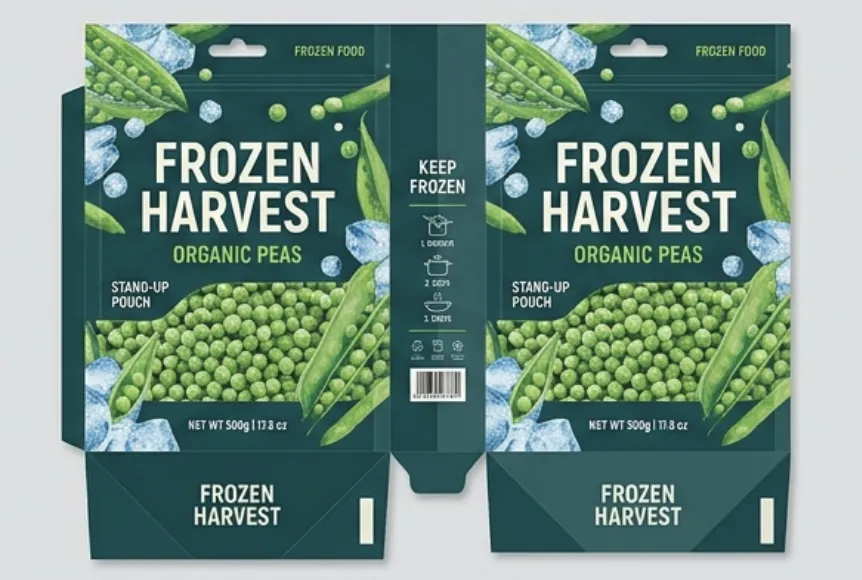
What Should Food Brands Test Before Launch?
A sample can look perfect on a desk and still fail after filling, freezing, stacking, and transport. Testing should reproduce the real commercial process as closely as possible.
- Seal integrity: Check for channels, wrinkles, contamination, and weak areas.
- Leak testing: Test liquid products after freezing, thawing, dropping, and compression.
- Drop testing: Use filled pouches at the intended low temperature.
- Barrier testing: Review oxygen and water-vapor performance for the food’s shelf-life goal.
- Closure testing: Open and reseal zipper packs repeatedly at cold temperatures.
- Consumer testing: Confirm that the pouch is easy to hold, open, pour, and store.
- Regulatory review: Confirm that all food-contact materials and inks are suitable for the destination market.
Working with brands across North America, we have found that the most common mistake is testing an empty pouch rather than a filled pouch. The product’s weight, temperature, oil, moisture, and shape can all change the result.
How Do You Choose a Supplier for Custom Freezer Pouches?
When comparing suppliers, ask for more than a product photo. A useful supplier should help connect the food, pouch structure, filling method, storage conditions, and customer experience.
Questions Worth Asking
- Is this exact structure intended for frozen storage?
- What temperature range has been evaluated?
- Can you provide seal and barrier specifications?
- How will the pouch perform with our actual food formula?
- Can the zipper, tear notch, spout, or valve be tested at low temperature?
- What printing and finish options support clear product information?
- Can the factory supply pilot samples before mass production?
- Which quality documents are available for our target market?
As a manufacturer that has produced packaging for 20+ years, YLTPACK recommends confirming the complete pouch construction before approving artwork. A glossy finish, matte finish, window, zipper, or handle should never be selected separately from the freezer-use requirements.
In our 6,800㎡ cleanroom facility, production teams can review cleanliness, sealing, printing, and appearance as connected parts of the same project. This is especially useful for frozen meals and sauces, where small seal-area defects may create large leakage problems later.
Because we hold FDA, ISO 9001, ISO 22000, and GRS certifications, YLTPACK can help organize material and quality documentation around food-contact, quality-management, food-safety, and recycled-content requirements. The relevant documents still need to match the destination market and the specific pouch structure.
Our in-house design team often helps brands who only have a rough idea. They can turn a target weight, product type, shelf format, and storage condition into sample dimensions, artwork guidance, and practical opening features.
What Pouch Features Improve the Customer Experience?
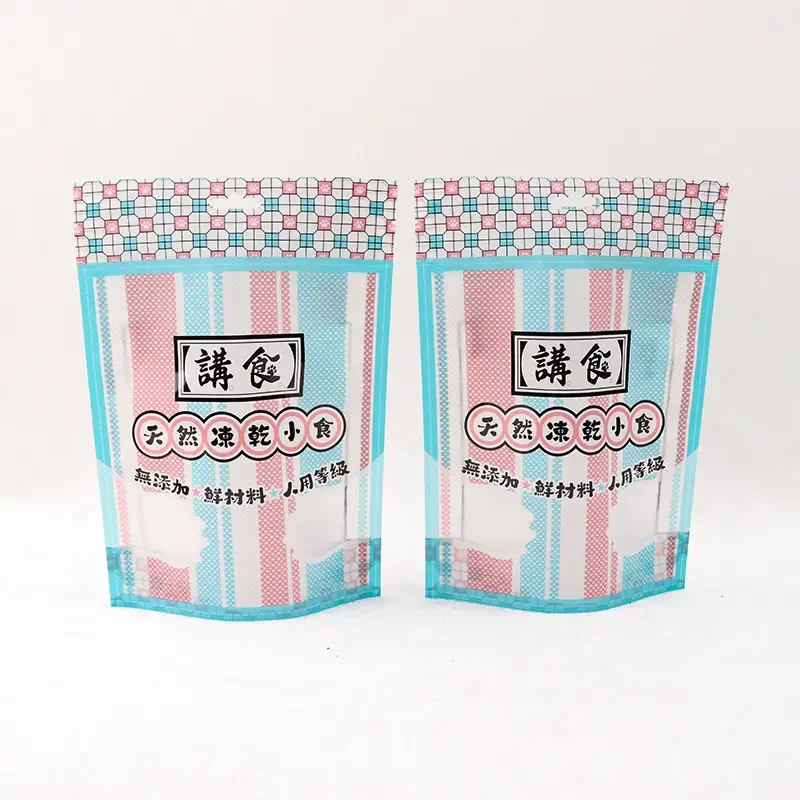
Freezer packaging should be easy to recognize and use, not merely strong enough to survive storage. A flat bottom can improve shelf stability, while a zipper can help customers protect unused portions after opening.
For meal brands, a broad front panel gives space for cooking instructions, allergen information, nutrition details, and serving suggestions. For frozen fruit or smoothie ingredients, a clear window or strong color coding can help customers identify the product quickly.
For rice or other heavy products, the main issue is not freezing but load-bearing performance. A reinforced bottom gusset, suitable film toughness, and realistic stacking tests matter more than decorative finishes.
Instagram-friendly unboxing can be valuable for premium frozen food, but visual appeal must not reduce readability or compromise the seal area. Matte surfaces, selective gloss, handles, and shaped corners should be checked against production and cold-handling requirements.
What Are the Best Stand-Up Pouches for Freezing Food?
Best stand up pouches for freezing food depends on the product and the way customers will use it. For a liquid, prioritize expansion control and leak resistance; for frozen meat, prioritize puncture protection; for coffee, prioritize oxygen and aroma retention.
| Application | Recommended feature direction | Feature to avoid choosing without testing |
|---|---|---|
| Frozen fruit | Flexible sealant, moisture barrier, zipper or tear notch | Very sharp corners |
| Frozen sauces | Generous headspace, clean seal area, leak testing | Overfilling for a fuller appearance |
| Frozen prepared meals | Tough structure, clear instructions, stable bottom gusset | Microwave claims without separate validation |
| Frozen pet food | Odor protection, strong seals, convenient portion size | Lightweight construction chosen only to reduce material use |
| Cold-stored coffee | High oxygen barrier and aroma retention | Assuming freezer performance from coffee performance alone |
Practical Decision Checklist
Before approving a custom design, use this short checklist:
- Product type and formula have been identified.
- Storage temperature and expected storage period are defined.
- Required pouch capacity and fill weight are confirmed.
- Expansion space has been tested for liquid or semi-liquid products.
- Material structure is confirmed for freezer performance.
- Seal, zipper, corner, and bottom-gusset performance have been reviewed.
- Filled samples have completed freezing and handling tests.
- Food-contact and quality documents are available for the target market.
- Artwork leaves enough room for mandatory product information.
- Production samples match the approved specification.
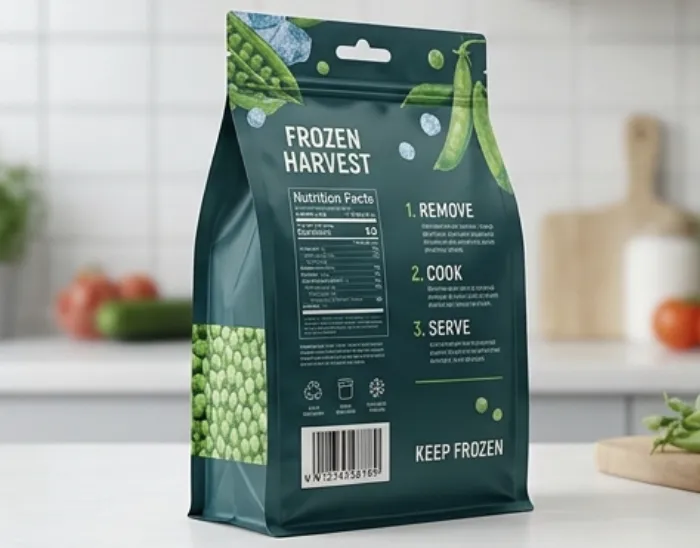
Conclusion: The Shape Is Convenient, but the Specification Matters
Stand-up pouches can be a practical choice for frozen food because they are lightweight, space-efficient, printable, and easy to portion. However, freezer performance comes from the material structure, seal design, headspace, testing process, and storage instructions—not from the pouch shape alone.
If you are developing a frozen meal, sauce, fruit, pet food, coffee, or another product, begin with the food and distribution conditions. YLTPACK can review your target fill weight, pouch size, storage temperature, barrier needs, and opening features through WhatsApp at +86 182 1944 5665 or by email at [email protected].
Frequently Asked Questions
Can you freeze food in stand up pouches safely?
Yes, when the pouch is specifically designed and tested for freezer storage. Leave room for expansion, keep the seal clean, and confirm that the material remains flexible at the intended temperature.
Will a zipper pouch prevent freezer burn?
A zipper can reduce air exchange after opening, but it cannot guarantee protection by itself. The complete pouch structure, closure quality, oxygen barrier, fill condition, and temperature stability all influence freezer-burn risk.
Can frozen food be reheated directly in the same pouch?
Not unless the package has been separately tested and clearly approved for that heating method. Freezer suitability does not automatically mean microwave, boiling, or oven suitability.
Should liquid food be frozen flat or upright?
Flat freezing can improve stacking and storage efficiency, while upright freezing may be suitable for certain designs. The correct position depends on the pouch shape, fill level, closure, and expansion behavior of the product.
What information should a custom packaging supplier receive?
Share the product formula or general food type, fill weight, pouch dimensions, storage temperature, expected shelf life, filling process, distribution route, closure preference, and destination market. These details allow the supplier to recommend a structure that can be tested realistically.