A chip bag's ounce rating does not tell you its size. Two bags with the same net weight can differ in width, height and gusset, because the chips inside differ. This guide covers weight tiers, the two main formats, a size chart and a selection method for private label.
What Size Are Chip Bags in oz?
Retail chip bags typically run from single-serve packs of roughly 1 oz (about 28 g) to family-size bags of 10 oz or more (about 280 g and up). Between those sit common tiers around 2 to 3 oz, 5 to 6 oz and 8 oz. These are market habits, not standards, and they vary by brand and retailer.
Regional norms differ. US shelves count in ounces, and the usual take-home bag is a few ounces up to about 8 oz. European and metric markets label in grams, and common bags often sit near 40 g, 90 to 150 g and 200 g or more. Ounce and gram tiers do not convert cleanly, so a "5 oz" bag and a "150 g" bag are different fills (5 oz is about 142 g). If you sell in both markets, plan two fill weights, not one converted number.
Why Net Weight Doesn't Settle Chip Bag Sizes
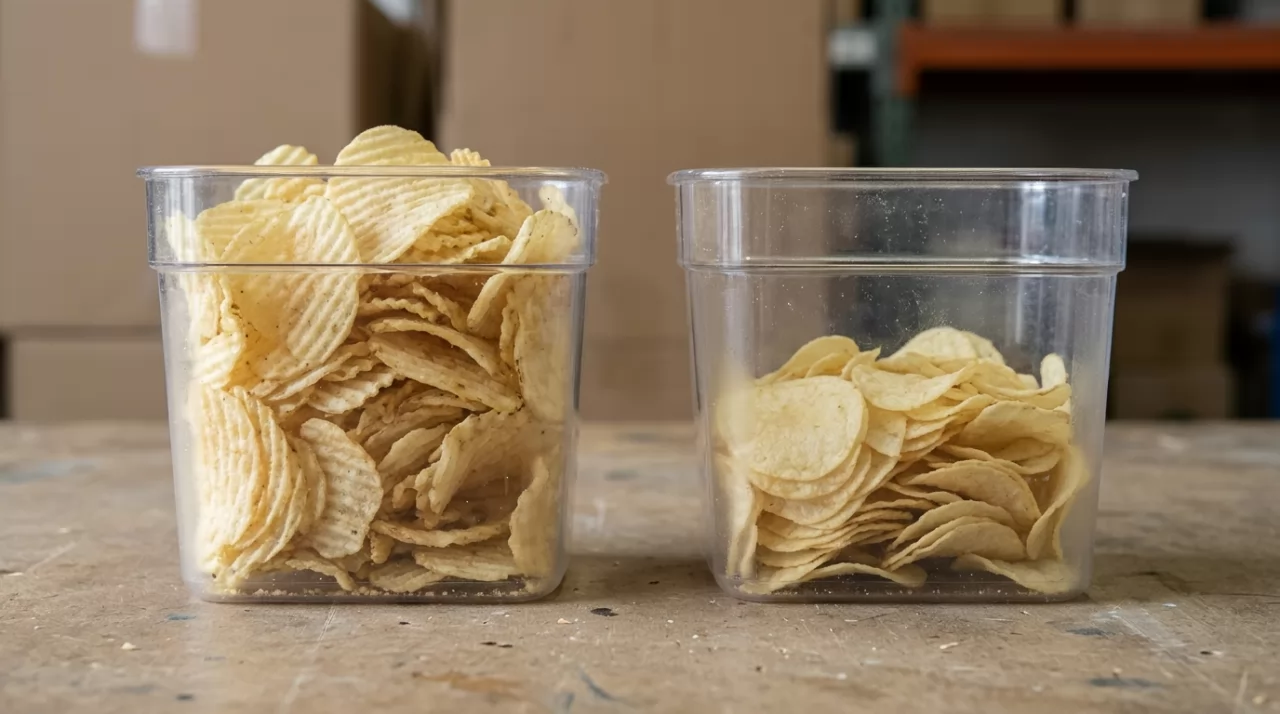
Bulk density is the weight of product per unit of volume, and it drives bag volume more than the ounce figure does. Thin, flat kettle chips pack loosely and need a tall bag for a given weight. Dense extruded snacks or thick-cut chips fill the same weight in a much smaller bag.
Shape matters too. Ridged and folded chips nest poorly, and the air between them adds volume. Then there is crush protection: a bag filled tight to the seal transmits pressure straight to the chips, so most snack bags are deliberately under-filled by volume. That air cushion is headspace.
Many chip lines flush the bag with nitrogen before sealing. Nitrogen displaces oxygen to slow staling and also inflates the bag, which helps resist crushing. A bag that looks half empty on the shelf may simply be built this way.
So the weight on the front panel and the physical dimensions are two separate specifications. Net weight is a legal and pricing figure. Dimensions come from density, headspace, seal allowances and the format's geometry. Set the weight first, then size the bag around a real filled sample.
Pillow Bags vs Stand-Up Pouches
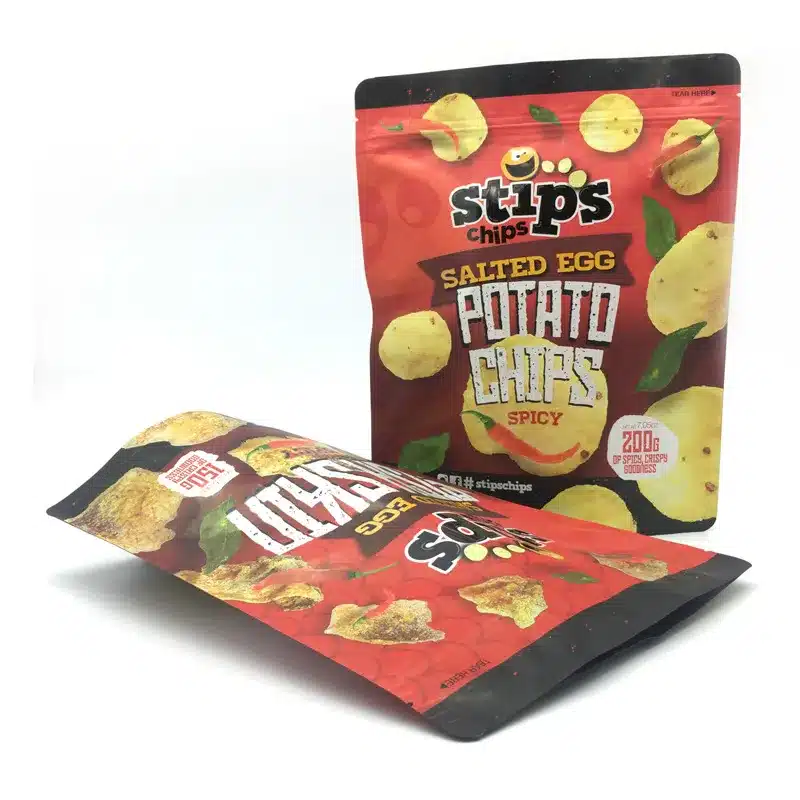
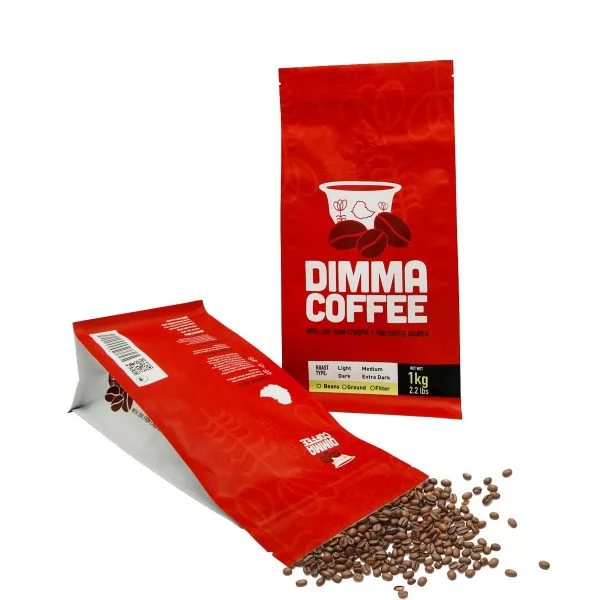
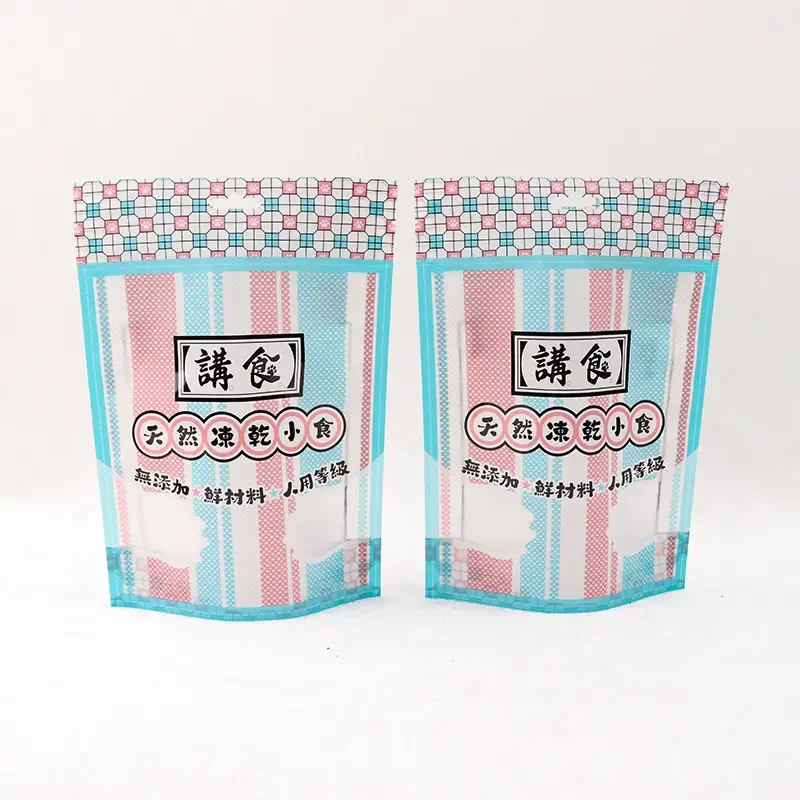
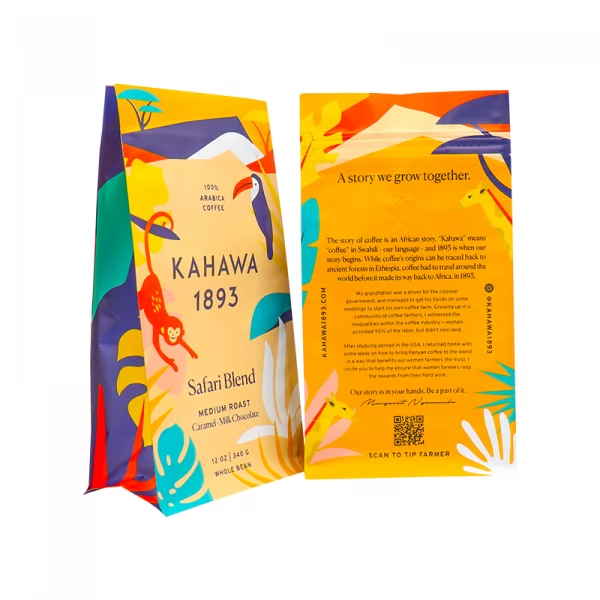
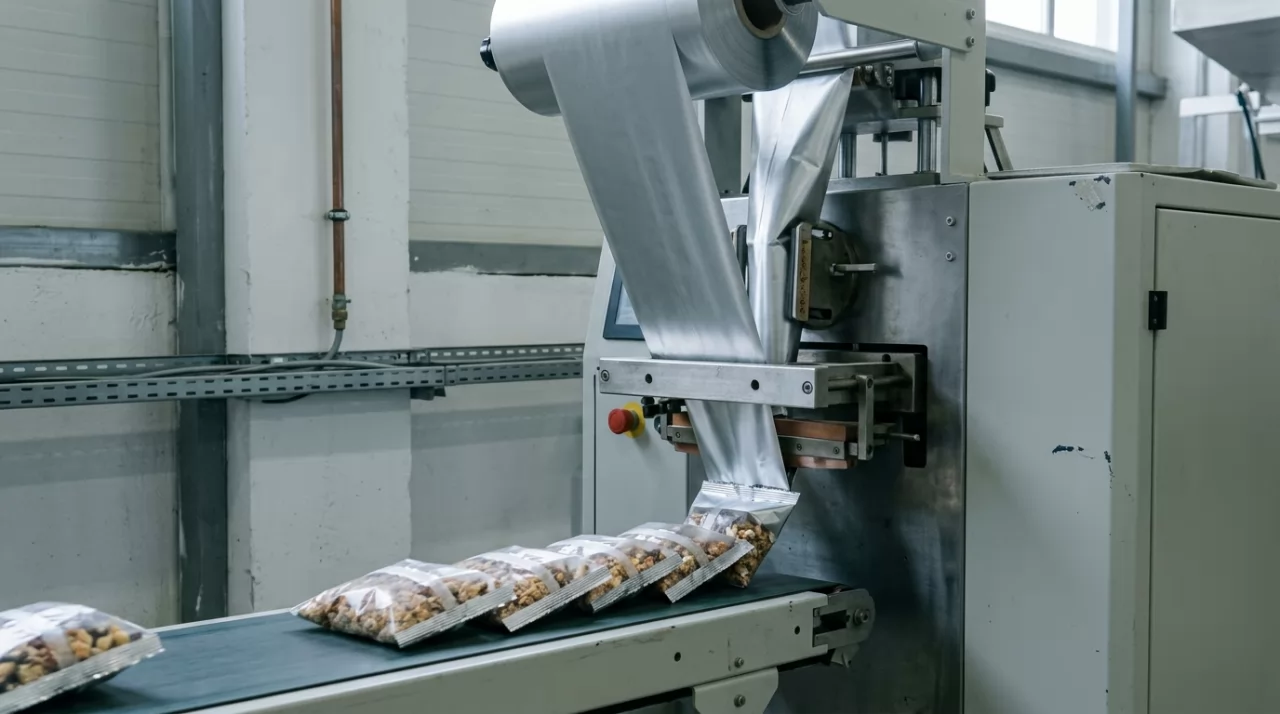
A pillow bag is a bag with a fin seal down the back and crimped seals at the top and bottom, formed from roll film on a form-fill-seal (FFS) machine. A stand-up pouch is a premade bag with a gusseted bottom that lets it stand on a shelf. A flat bottom pouch is a premade bag with a box-like base and side gussets, which gives it a more stable and larger front panel.
Filling is the first difference. Pillow bags form, fill and seal in one pass, so they suit high-speed lines and large runs. Premade pouches are opened and filled on a separate filler or by hand, then sealed, which is slower per bag but needs no forming equipment on your side.
Shelf presence differs as well. A pillow bag lies flat or hangs on a peg, and its front panel is partly lost to the seals. Stand-up and flat bottom pouches stand upright and give a larger usable print area. Resealable zippers are practical on premade pouches and less common on pillow bags.
Cost follows the format. Pillow bags generally cost less per bag in film terms, but they assume you own or can access an FFS line. Premade pouches cost more per bag, and a zipper, window or valve adds to that. Price on custom runs depends on material, size, print colors, quantity per design and extras.
The rule: if you fill on an existing FFS line at volume and sell on price, use a pillow bag. If shelf standing, a resealable closure or a premium look matters, or you have no FFS line, use a premade stand-up or flat bottom pouch.
Snack Bag Size Chart by Format
The table below gives typical ranges only. Treat every figure as a starting point to be confirmed with a filled sample.
| Format | Typical net weight range | Typical width × height range | Filling method | Shelf behavior |
|---|---|---|---|---|
| Pillow bag | Single-serve to family size | Roughly 100–300 mm wide, 150–400 mm tall, set by film width and cut length | FFS line from roll film | Lies flat or hangs; seals reduce print area |
| Stand-up pouch | Single-serve to about 10 oz | Roughly 100–250 mm wide, 150–350 mm tall, plus a bottom gusset | Premade, filled by hand or filler | Stands upright; full front print |
| Flat bottom pouch | Mid-size to family size | Roughly 100–200 mm wide, 150–350 mm tall, plus side and bottom gussets | Premade, filled by hand or filler | Stands firmly; five printable panels |
The row that decides most cases is the filling method.
Read potato chip bag dimensions and stand-up pouch sizes as ranges. A pouch is usually quoted as width × height × bottom gusset, and the same label can describe a bag that holds noticeably different volumes depending on whether the height is measured to the top edge or to the fill line. Ask which measurement is meant before you compare two quotes. And remember that no body sets a standard snack bag size chart: brands pick dimensions to fit their chip, their shelf and their equipment.
How to Choose Chip Bag Size for Private Label
Work through three criteria in order: the retail weight and price, the shelf and carton fit, then the filling equipment. Each one can rule out sizes before you spend on samples.
- If your target shelf price fixes the weight, then pick the tier first and size the bag second.
- If the shelf is shallow or uses pegs, then favor narrower bags with a hang hole.
- If you run an FFS line, then choose a pillow bag within the film width your machine takes.
- If you have no line, then pick a premade stand-up or flat bottom pouch.
- If two sizes both fit, then take the smaller one that still clears the headspace test.
Fill Weight and Price Point
Start from the weight you want the shopper to see and the price you want beside it. A private-label range usually works as a ladder: a single-serve pack, a mid-size bag and a family bag, each with a clear step in weight. Keep steps wide enough that the shopper sees the difference on the shelf.
Each rung needs its own bag. Do not assume the family bag is the mid-size bag scaled up, because density and headspace do not scale in a straight line. Larger bags often need proportionally more headspace to protect the chips.
Shelf, Carton and Pallet Fit
Measure the shelf depth and opening your retailer gives you. A pouch with a wide bottom gusset takes more depth than a pillow bag of the same weight. For peg display, a hang hole must sit clear of the top seal and any zipper.
Then check logistics. Carton volume decides how many bags travel per carton and how many cartons fit a pallet. Run a carton CBM (cubic meter) check on the filled bag size before you lock it. A few millimeters on bag height can cost a layer on the pallet.
Filling Equipment and Bag Format
An existing FFS line points to roll stock film. Roll film is flat printed film wound on a core, and the machine forms it into a bag. Bag width is limited by the former and film width your machine accepts, and length by the cut setting and jaw stroke. Check those limits against your machine before designing.
Premade pouches remove those limits but add others. The filler or the operator must be able to open the pouch mouth, so very narrow, tall bags are hard to fill. Roll stock minimums are set in kilograms, and premade minimums per design, so the choice also changes how much you commit to one size.
Seals, Zippers and Barrier: Where Final Size Goes Wrong
A bag's printed size is not its usable size. Side seals take width, and a bottom or side gusset takes more. Top seals and a fin seal take height. A drawing that says 150 × 250 mm can leave noticeably less interior once those allowances are removed, so ask for the interior fill dimensions as well as the cut size.
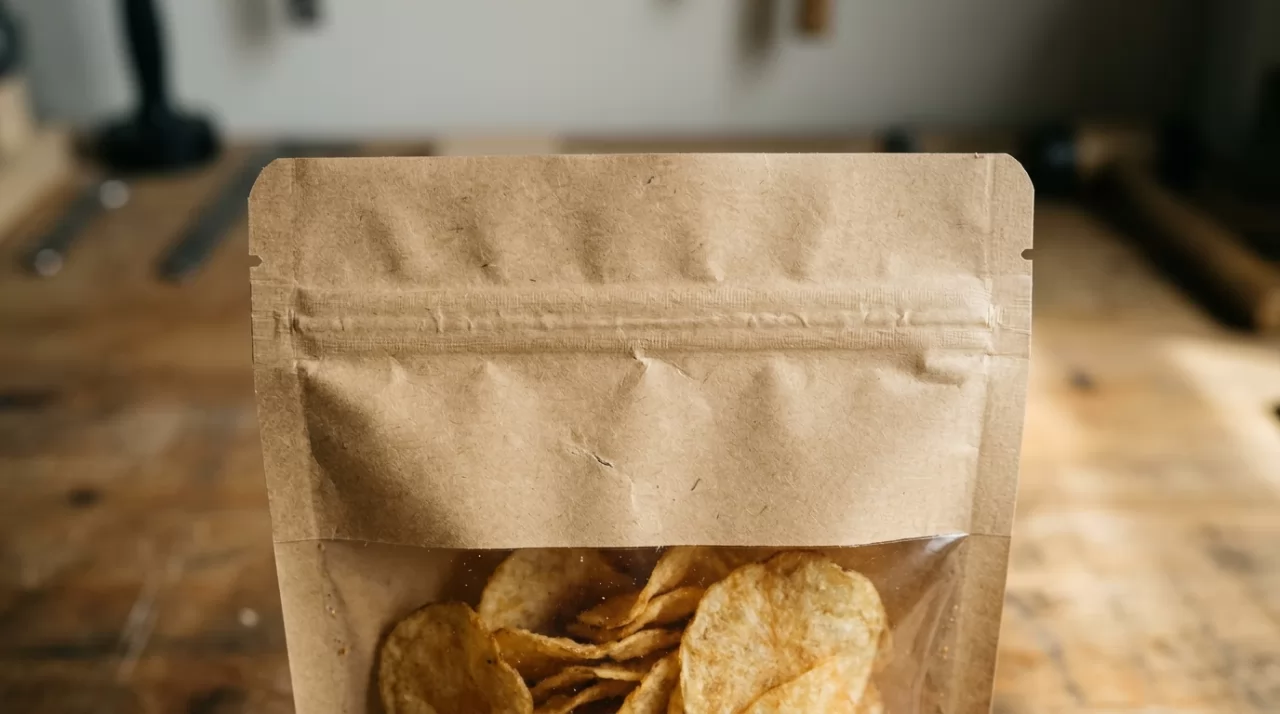
A zipper adds its own band below the top seal, and a tear notch needs clear space beside it. Both move the fill line down. Product must stay below the zipper track, or crumbs get into the closure and it will not reseal.
Barrier choice affects structure and shelf life. Clear film shows the chips but lets in more light and oxygen. Metallized film improves the barrier and blocks light. Aluminum foil laminate gives the highest barrier, which suits long freshness. Foil and mylar bags are not recyclable, so do not market them that way. A thicker laminate also feels stiffer, which changes how the bag stands and fills, and may justify a size change.
Tip: Always measure fill-to-seal headspace on a real filled sample, with the zipper closed and the bag standing, not on a drawing.
Sampling and Minimums for a Custom Snack Pouch Size
The route is short. You send the product, the fill weight per bag and a reference bag or photo. The supplier recommends a structure and size and quotes it. You then check size, feel and fit on a sample before production.
Our team offers stand-up and flat bottom pouches in digital and gravure print, and the sample route above applies to both. The sample is free, and you pay the courier. Fill it with your actual chips and look at headspace, crush and how the bag stands.
Minimums are set per design. Digital print starts at 1,000 pcs, which suits launches, test runs and several designs. Gravure starts at 10,000 pcs and suits repeat orders at the lowest unit price. Production takes 7-15 days after artwork approval.
Price depends on material, size, print colors, quantity per design and extras such as a zipper, valve or window. Shipping by air, sea or express is quoted with the order, and no shipping time is promised in advance. Compostable, mono-PE and recycled-content structures have a higher minimum of 30,000 pcs, and certificates are sent with the quote if you ask for those structures.
FAQ
What are standard potato chip bag sizes for retail?
There is no formal standard. Common weight tiers run from about 1 oz single-serve to 10 oz family bags, and dimensions vary with chip type and format. Confirm the size with your own filled sample.
Can one bag size fit two different net weights?
Yes, within limits. A denser chip or a lower fill can share a bag with a lighter weight, as long as headspace and crush protection still pass. A visibly under-filled bag can draw complaints, so test both fills.
Is a stand-up pouch or a pillow bag better for a first private-label run?
A stand-up pouch is usually the easier start if you have no FFS line. It needs no forming machine, and digital print starts at 1,000 pcs per design. A pillow bag makes sense once you fill at volume on a line.
What information does a supplier need to quote a custom chip bag?
Product and fill weight per bag, bag type or photo, size if known, quantity per design, number of designs, artwork or idea, extras and target market. With those, the quote can include a recommended structure and an itemized price.
Next Step
Still comparing? Fill a sample bag with your chips and check headspace and carton fit before you pick a format. Ready to ask for a quote? Send the product, fill weight, bag type or reference photo, quantity per design and target market to [email protected] or WhatsApp +86 182 1944 5665, and we will return an itemized quote with free design help.