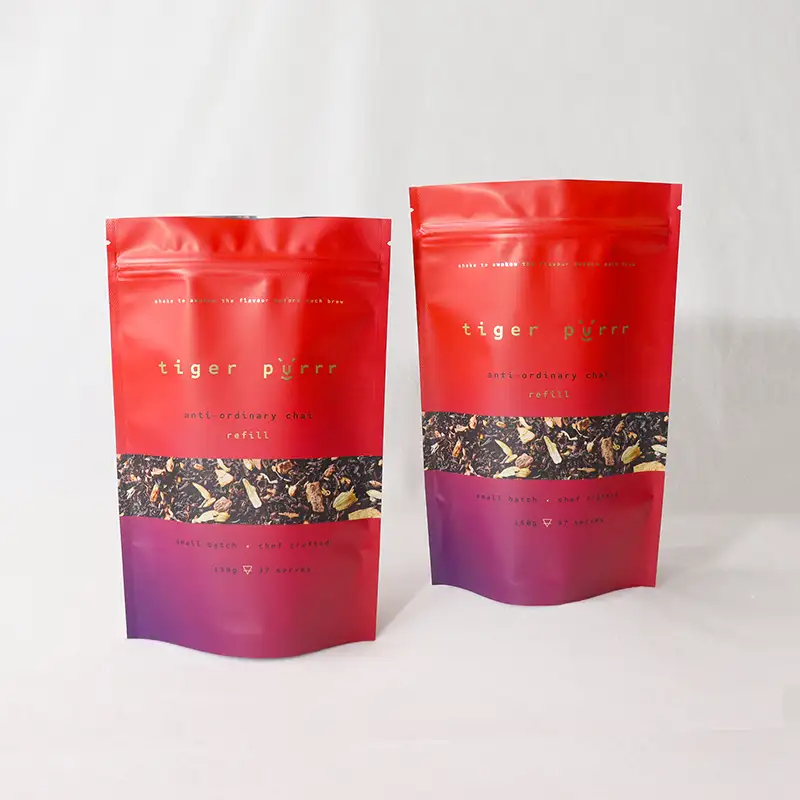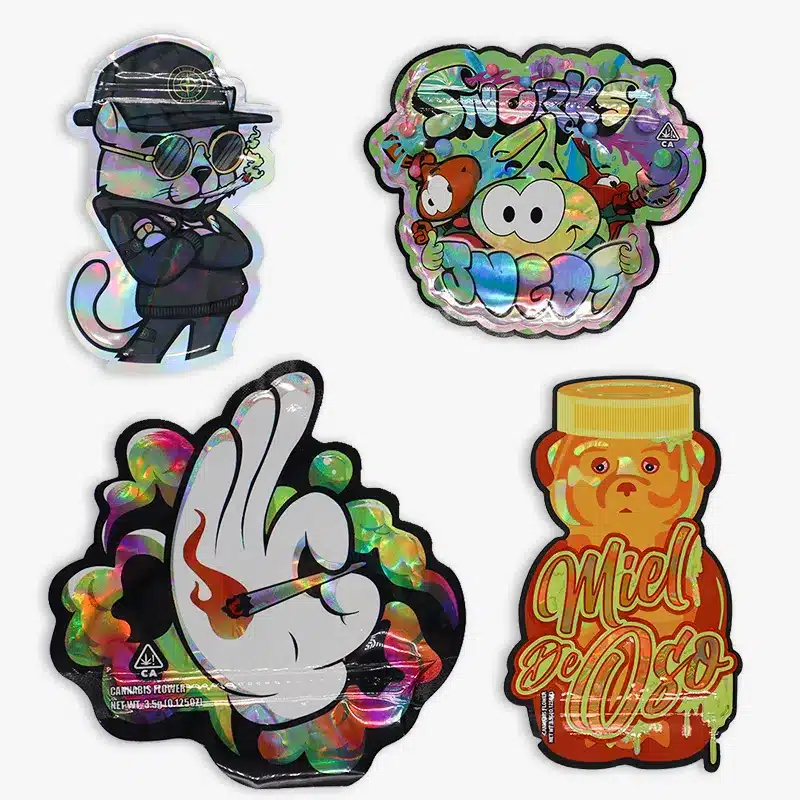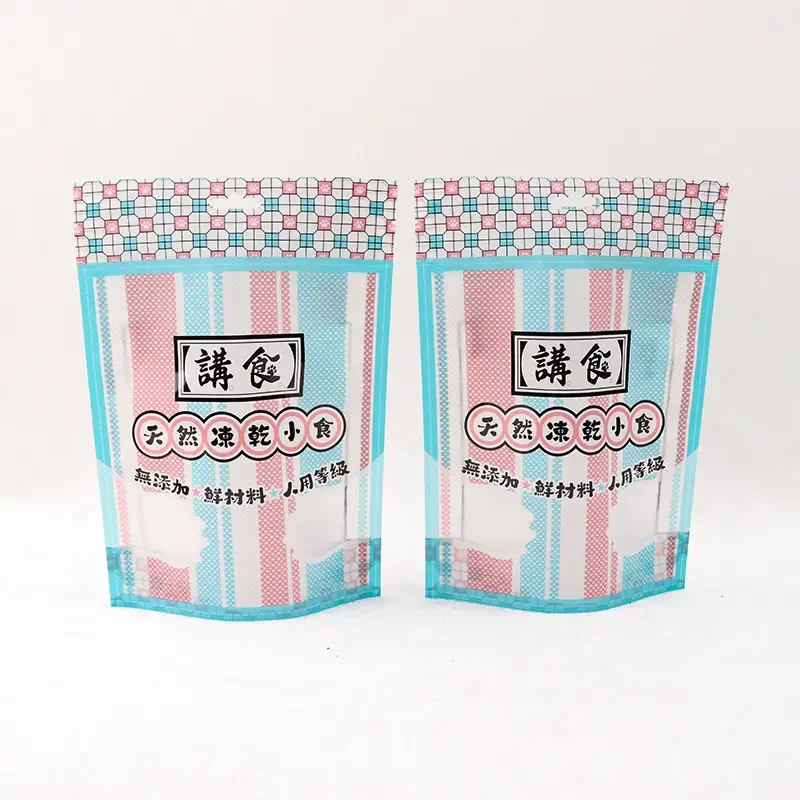
"Just pick whatever looks good on the shelf" is how most finish decisions get made, and it skips the parts that cause trouble later. Finish changes how ink behaves, how a pouch scuffs in a carton, whether fingerprints show, and how a whole run reads under retail lighting. It is unglamorous work, and it still decides whether the pack looks right. This article compares holographic vs matte mylar bags on their trade-offs, then gives a verdict by use case at the end.
Which Finish Suits Which Product? The Short Answer
Matte suits premium, wellness and supplement positioning. Holographic suits impulse, novelty and loud-shelf edibles. Gloss is the safe middle for brands that want color depth without a strong statement. These are tendencies, not rules, and nothing here implies a sales lift from any finish.
Finish is a surface and print decision. It does not set shelf life. The laminate structure under it does, so a finish should be chosen after the barrier is settled, not before.
Three questions narrow it fast. What does the product need to say about itself? Where will the pack be seen, and under what light? And how many designs, in what quantities, are you printing? The sections below take each in turn, starting with the part that is easiest to overlook.
What the Finish Actually Is
Mylar here means a laminated pouch with a PET outer layer and a metallized or foil layer inside, usually with a PE sealing layer. Finish describes the outer surface of that stack.
Matte laminate finish: a surface coat, not a different barrier
A matte laminate finish is a low-gloss outer film or coating that scatters light instead of reflecting it. It softens glare and gives a velvety feel. The barrier layers underneath are the same ones a gloss pouch would carry.
Holographic film: patterned metallized PET
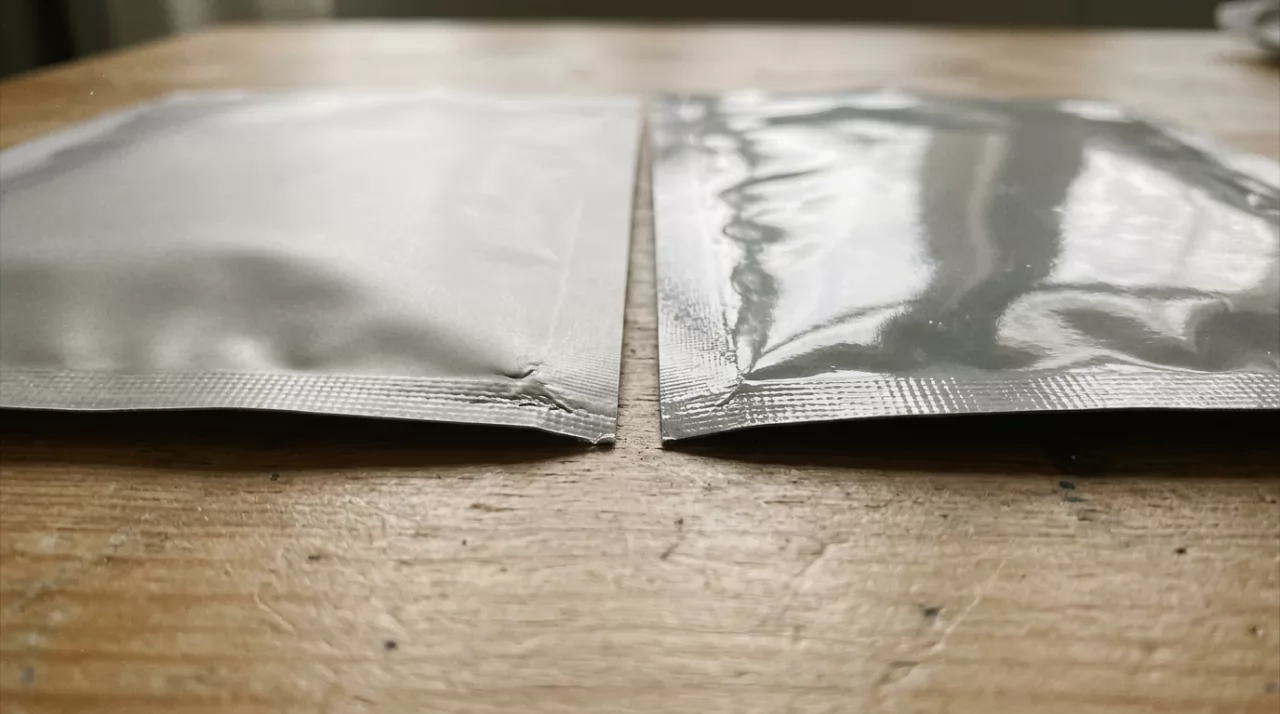
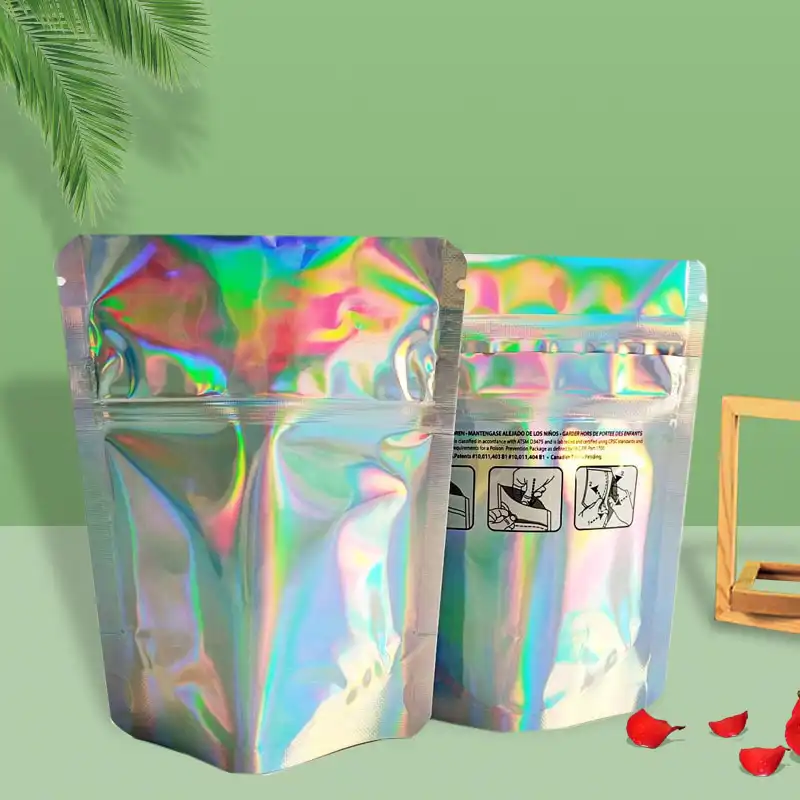
Holographic film is metallized PET embossed with a diffraction pattern that splits light into shifting colors. It is a different material on the outside, not a coating, and it changes the print path. Ink usually sits over or beneath a patterned, reflective base, so colors behave differently than on a plain white or clear surface.
Gloss as the baseline
Gloss is the standard clear, shiny PET surface. It gives the deepest color saturation and the sharpest detail, and it shows fingerprints and glare most readily. Most buyers use it as the reference when judging the other two.
Barrier Comes First, Finish Second
Shelf life depends on the laminate structure, not on whether the outside is matte or holographic. High-barrier foil laminate, which includes an aluminum foil layer, generally blocks light, oxygen and moisture better than metallized PET, which carries a very thin vacuum-deposited metal layer. Both are widely used. They are not equivalent for sensitive products.
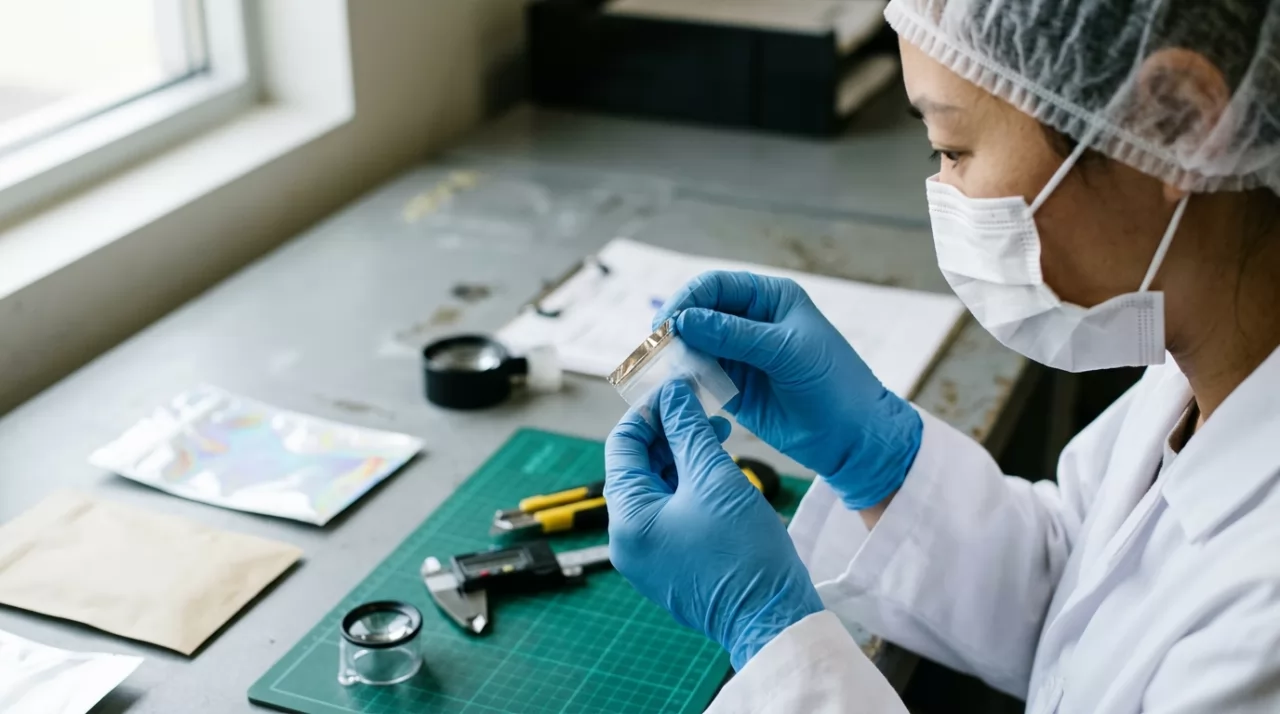
For edibles with oils, THC or CBD infusions, vitamins, probiotics or powders that clump, the question is how long the contents must stay stable and how much light and oxygen they tolerate. A holographic outer film can be laminated over a foil layer, but it can also be part of a lighter metallized structure. The look of the pouch will not tell you which one you received.
That is how a finish choice quietly downgrades a barrier. A buyer approves a striking holographic mockup, the quote comes back on a thinner structure to hit a price, and nobody connects the two until the product ages in the warehouse.
Ask for the full laminate stack in writing, layer by layer, for every finish you are comparing. If the holographic quote and the matte quote list different barrier layers, you are comparing two products, not two finishes.
Thickness and layer figures vary by supplier and by product, so they are best confirmed per specification once the fill, filling method and target shelf life are known. A sample filled with your own product tells you more than a datasheet does.
Shelf Visibility Versus Brand Tone
The first real trade-off is attention against credibility. Holographic film catches light from every angle and stands out in a crowded aisle or on a gas-station rack. Matte reads as quiet, and that reads as considered, particularly where the buyer is already skeptical of the category.
Matte vs gloss mylar bags differ in three practical ways. Glare: matte removes the hot spots that make a pouch hard to read under overhead retail lights and in product photos. Fingerprints: gloss shows them readily, while matte tends to hide light marks but can show rub and oil marks differently. Color depth: gloss gives richer blacks and brighter saturation, while matte flattens them slightly, which many brands treat as part of the look.
Where holographic helps and where it cheapens the pack
Holographic helps when the product is bought on impulse, the design is playful, and the brand wants to be seen from across a room. It suits candy-style edibles, novelty lines and limited drops. It hurts when the brand is trying to look clinical, natural or high-end. The same shimmer that draws the eye can make a supplement look like a toy.
It also fights fine print. Small text, ingredient panels and regulatory warnings can lose contrast over a shifting reflective background, so those areas often need a solid opaque block behind them.
Why matte suits supplement and wellness positioning
Supplement and wellness packs lean on trust. A matte surface looks calm, photographs cleanly, and lets typography and a restrained palette do the work. It also hides the minor handling marks that a pouch collects on its way to a shelf.
| Advantages | Limitations |
|---|---|
| Matte: low glare, clean photography, calm brand tone | Matte: slightly flatter color, less saturation than gloss |
| Holographic: strong attention from a distance | Holographic: can undercut a premium or clinical look |
| Gloss: deepest color and sharpest detail | Gloss: shows fingerprints and glare most |
| Matte: hides light handling marks | Holographic: small text can lose contrast |
Pick on the tone the product needs. Attention is only useful if the pack also looks like something the customer wants to trust.
Print Method, Scuffing and Production Reality
The second trade-off is between look and production practicality. The same artwork will not look identical on each finish, and approving it on screen alone is how surprises happen.
Color matching is the main issue. On gloss, ink sits on a clean surface and reads close to the proof. On matte, the same ink looks slightly softer and darker. On holographic, the reflective pattern shows through lighter tints and mixes with the ink, so pale colors and gradients often shift most. Brands with strict color standards sometimes find holographic the hardest finish to hold across reorders.
Scuff is the other reality. Pouches rub against each other in cartons and in transit. Dark matte surfaces can show scuff as lighter streaks. Gloss tends to hide fine scratches in its shine but shows scratches clearly in raking light. Holographic can disguise minor abrasion in its pattern, though deep creases in the film stay visible. Which of these matters depends on how the pouch ships and where it sells.

Print method affects cost more than finish does. Digital printing needs no plates or cylinders, so minimums are low and several designs or flavors can run together. Gravure needs a cylinder per color, a one-time charge that is reused on reorders, so minimums are higher and unit price drops at volume. Finish can limit the options: specialty films and unusual structures may carry higher minimums than a standard gloss or matte build, and that is confirmed per quote, not assumed.
| Criterion | Matte | Holographic | Gloss |
|---|---|---|---|
| Ink behavior | Softer, slightly darker | Shifts over pattern | Closest to proof |
| Scuff visibility | Streaks on dark colors | Masked by pattern | Shows in raking light |
| Fingerprints | Light marks hidden | Visible on flat areas | Most visible |
| Artwork limits | Few | Pale tints, small text | Few |
| Cost drivers | Matte film, print method | Specialty film, minimums | Standard film, print method |
Gloss and matte are forgiving, while holographic asks more of the artwork and the proofing. Treat a physical proof as part of the price, not an extra.
Compliance, Child-Resistant Closures and Window Decisions
The third trade-off is where regulation meets design. Regulated edibles often require child-resistant resealable pouches, and in many markets that means a closure that passes recognized testing, not just a zipper with a warning label. Rules differ by state and country, so confirm the requirement for your market before artwork is locked.
The closure, the window and the finish all occupy the same surface. A child-resistant zipper adds thickness and a track that has to sit cleanly in the seal area. A clear window cuts through the barrier layer, so the product behind it is exposed to more light, and the window placement has to avoid the zipper and the seals. On a holographic pouch, the reflective film around a window can make the contents look washed out, which is why windows are more often paired with matte or gloss.
Food contact is a separate question from finish. The inner sealing layer is what touches the product, so ask for a test report on that film. Suppliers commonly state that PE film is tested to FDA 21 CFR food-contact requirements, which is a testing statement and not an approval. Plants may also run under a food-safety management system such as ISO 22000. YLTPACK, for example, supplies PE film tested to FDA 21 CFR requirements and produces in an ISO 22000-certified plant, with copies of the documents sent alongside the quote.
Whatever the supplier, ask which documents apply to which structure. A report for one laminate does not cover a different one, and a holographic build may not share a report with a matte build.
How to Choose: A Buyer's Checklist
Six criteria decide most cases, in roughly this order. First is product sensitivity. If the contents are light-, oxygen- or moisture-sensitive, settle the barrier laminate first and pick the finish from what that structure allows. Second is price position. A premium or clinical brand points to matte, while a playful or low-price impulse item can carry holographic.
Third is channel and lighting. Under bright retail lights, matte reduces glare. In online photography, matte is easier to shoot cleanly, and holographic can be hard to capture without hot spots. Fourth is print volume. Low volumes and many flavors favor digital printing, and large repeat runs of a stable design favor gravure.
Fifth is closure and window needs. If you need a child-resistant zipper, a window or both, check that the finish and layout leave room for them. Sixth is the compliance market, since the destination decides which closure standard and which documents you need.
Rule of thumb: choose matte for supplements and premium edibles, holographic for novelty and impulse lines where the artwork is bold and simple, and gloss when color depth matters most. Whichever you pick, approve a physical sample before the full run. Screens do not show how a finish reads under light or in the hand.
FAQ
Does matte or holographic change shelf life?
No, not by itself. Shelf life is set by the laminate structure underneath, such as foil laminate or metallized PET. Confirm the layers in writing for each finish you compare.
Can a holographic pouch be printed digitally?
Often yes, though it depends on the film and the printer. Digital printing avoids plates and suits short runs, but ink behaves differently over the pattern, so ask for a physical proof.
Does a matte finish scuff or show fingerprints more?
Matte usually hides light fingerprints better than gloss. It can show rub marks as lighter streaks, especially on dark colors. Shipping method and carton packing matter as much as the finish.
What should an RFQ include to get a finish quoted accurately?
State the product and fill weight, bag type, size, quantity per design, number of designs, artwork, and extras such as a zipper, window or valve. Add the finish options you want priced and the target market. Ask for the full laminate stack on each quote.
Before you send the next RFQ, write down the barrier you need and the closure your market requires, then ask for matte, holographic and gloss quotes on that same structure so the prices compare cleanly.