What Pet Food Packaging Should You Choose?
This pet food packaging complete guide gives you the practical answer first: choose the material and bag format according to the product’s moisture level, fat content, oxygen sensitivity, serving size, transport conditions, and required shelf life. For most dry food, a high-barrier laminated pouch with a resealable zipper is a reliable starting point; wet food usually needs a heat-resistant retort pouch or another hermetically sealed format.
The right pack must do more than look attractive. It should protect flavor and nutrients, prevent leaks and contamination, carry the required information, survive filling and shipping, and make feeding convenient for pet owners.
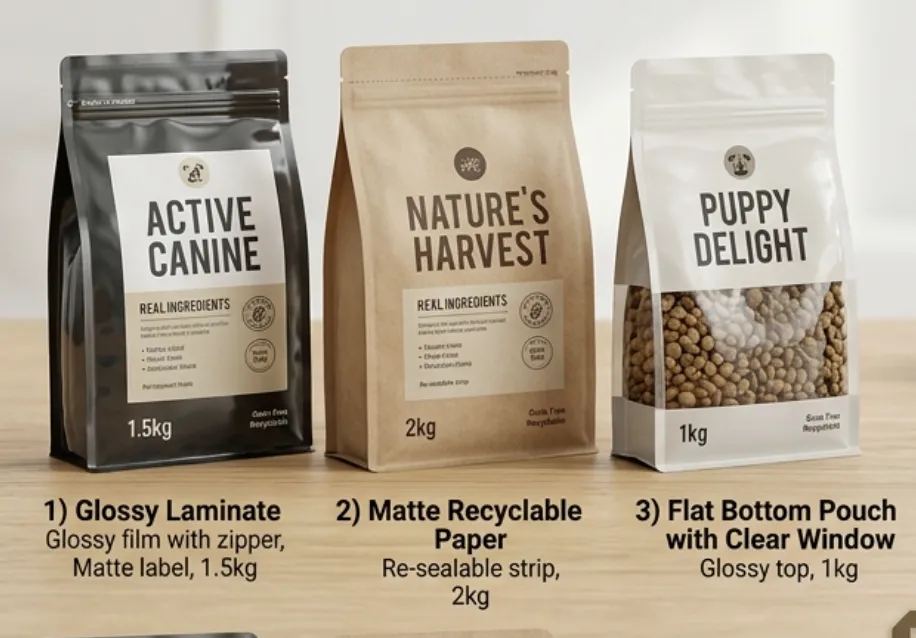
How Do You Match the Bag to the Product?
Begin with the food itself rather than choosing a material from a sample catalog. Kibble, freeze-dried treats, supplements, wet meals, and frozen products place very different demands on the package.
| Product type | Main packaging risks | Common suitable formats | Important features |
|---|---|---|---|
| Dry kibble | Oxygen, moisture, oil migration, odor loss | Stand-up pouch, flat-bottom bag, side-gusset bag | High oxygen and moisture barrier, zipper, strong seals |
| Freeze-dried food | Moisture pickup, texture loss, oxidation | High-barrier pouch, flat-bottom bag | Very low moisture transmission, optional oxygen absorber compatibility |
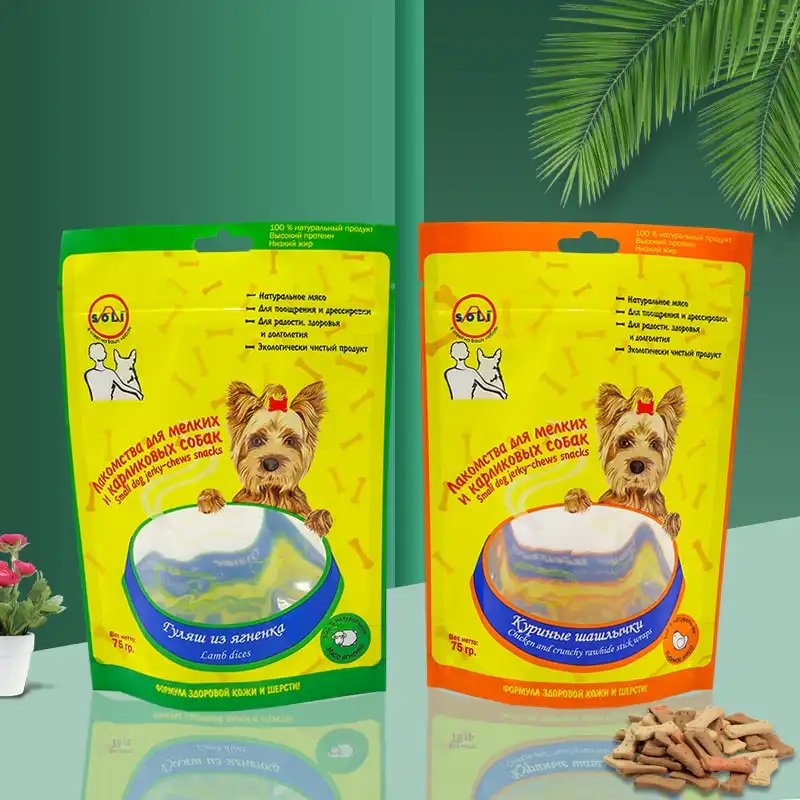
| Dog and cat treats | Breakage, aroma loss, repeated opening | Stand-up pouch, flat pouch, small sachet | Resealable closure, suitable tear notch, clear product presentation |
| Wet food | Leaks, heat processing, microbial contamination | Retort pouch, spouted pouch, tray or can | Heat resistance, hermetic sealing, validated processing |
| Powdered supplements | Clumping, moisture, dust leakage | Flat-bottom pouch, jar, sachet | Moisture barrier, clean opening, accurate filling performance |
| Frozen pet food | Low-temperature cracking, freezer burn, leaks | Freezer-grade pouch, vacuum pouch | Cold flexibility, puncture resistance, dependable seals |
Dry food
Dry food often contains oils and animal proteins that can lose aroma or develop off-notes when exposed to oxygen. A multilayer structure is commonly used to balance barrier protection, seal strength, print quality, and cost.
For products with a higher fat content, ask for oxygen transmission and moisture transmission data rather than relying on the word “premium.” Laboratory values should be considered alongside the actual filling weight, storage climate, and intended shelf life.
Wet and retort products
Wet food requires a different technical approach. If the pouch will be sterilized under pressure and heat, every layer, adhesive, ink, seal, and fitting must be compatible with the process.
Do not treat a standard snack pouch as a retort pack. A packaging supplier should review the process temperature, time, filling conditions, seal width, and distribution risks before recommending a structure.
Which Materials Are Used in Pet Food Bags?
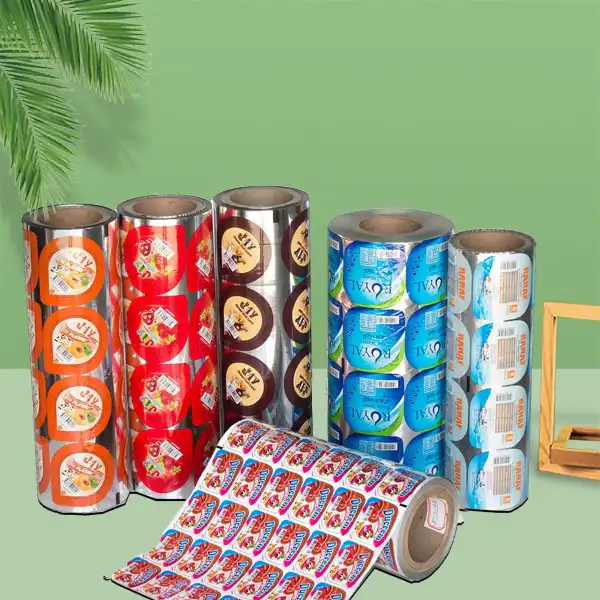
There is no single material that performs perfectly for every formula. The most suitable structure is usually a combination of layers, with each layer serving a specific purpose.
| Material | Typical role | Strengths | Points to review |
|---|---|---|---|
| PE or LLDPE | Inner sealant layer | Good sealing, flexibility, food-contact compatibility | Limited oxygen barrier when used alone |
| PP | Strength, stiffness, heat resistance | Useful for certain high-temperature or durable structures | Needs correct sealing and recycling assessment |
| PET | Outer layer | Print clarity, stiffness, abrasion resistance | Usually combined with barrier and sealant layers |
| MET-PET | Light and oxygen barrier | Strong barrier at relatively low material thickness | Not transparent; recycling route depends on the full structure |
| Aluminum foil | Very high barrier layer | Excellent protection from light, oxygen, and moisture | Higher material complexity and limited transparency |
| EVOH | Oxygen barrier | Useful in selected recyclable or coextruded structures | Performance can be affected by humidity and layer design |
| Kraft paper | Appearance and tactile effect | Natural visual identity and good print surface | Usually needs inner barrier layers for food protection |
How should you assess multilayer films?
Ask four questions before approving a specification:
- What is the oxygen transmission rate and moisture vapor transmission rate?
- Will the inner layer remain stable when exposed to oils, fats, salt, or acidic ingredients?
- Can the film withstand the filling line, transport handling, and repeated opening?
- Does the structure meet the intended food-contact and environmental requirements in the sales market?
Paper-look packaging can be attractive, but paper alone rarely provides the barrier needed for oily kibble or freeze-dried food. The appearance and the protective structure should be evaluated separately.
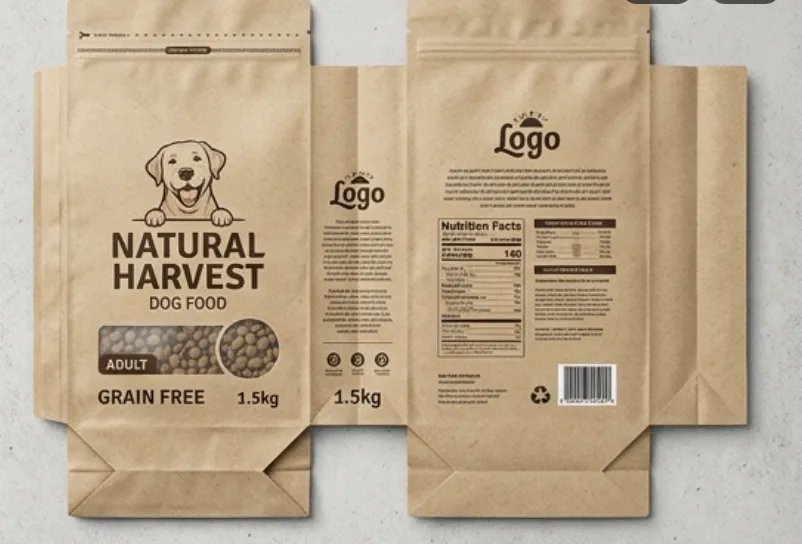
What Bag Types Work for Different Selling Formats?
Bag shape affects shelf presence, filling efficiency, storage, consumer convenience, and shipping volume. A small treat brand and a large-volume kibble brand may need completely different formats even when both use flexible packaging.
Stand-up pouches
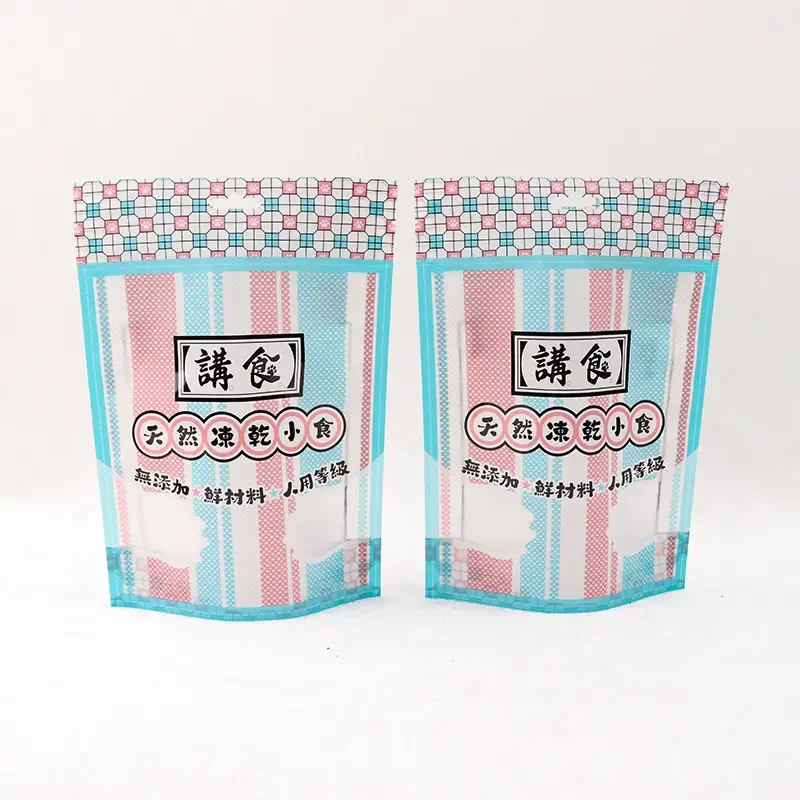
Stand-up bags display well on shelves and work for treats, supplements, freeze-dried pieces, and smaller food sizes. They can include a zipper, tear notch, window, handle, or rounded corners.
Check the base design carefully. A narrow bottom may reduce stability, while an oversized gusset can increase material use without adding useful capacity.
Flat-bottom bags
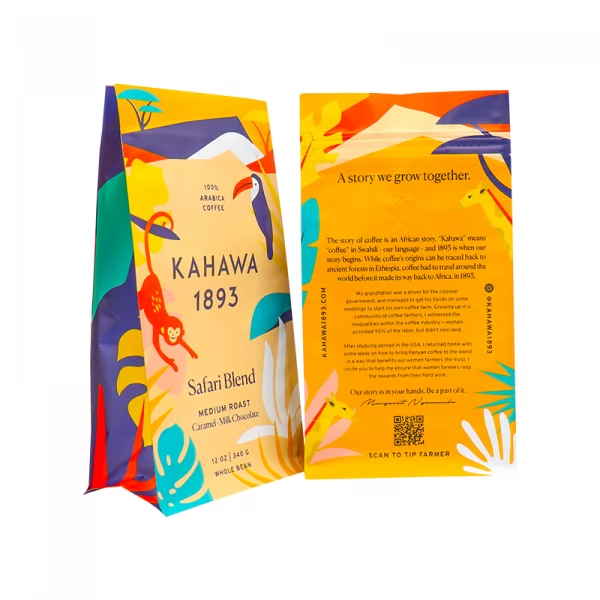
Flat-bottom packaging offers a broad display face and strong shelf stability. It is often selected for premium kibble and larger pack sizes where the brand wants a structured, box-like appearance without using a rigid carton.
The additional panels create more printable space, but they also require accurate dimensions and careful seal placement. The filled bag should be tested for leaning, bulging, and corner stress.
Side-gusset bags
Side-gusset formats are suitable for high-volume dry food and can be produced with a handle or top closure. Their flexible sides allow efficient filling and useful capacity.
Because the bag may be lifted repeatedly, handle strength, top seal construction, and drop performance deserve particular attention.
Quad-seal and block-bottom bags
These formats create a more rigid appearance and can improve stacking on pallets or shelves. They are useful when a brand wants strong front-and-back panels with clear side surfaces.
However, more seams mean more areas to inspect. A production trial should confirm seal integrity at the corners and folds.
Sachets and small pouches
Single-serve packs are convenient for supplements, toppers, samples, and travel portions. They require accurate powder or granule filling, clean tear behavior, and enough barrier for the intended consumption period.
How Do You Protect Freshness and Shelf Life?
Freshness depends on the interaction between the food, package, closure, headspace, storage conditions, and distribution period. A thick film cannot compensate for poor sealing or excessive oxygen inside the filled pack.
Barrier performance
Oxygen can affect fats, vitamins, color, and aroma. Moisture can soften crunchy food, damage freeze-dried texture, or cause powdered supplements to clump.
For that reason, the best pet food packaging for freshness and shelf life is not automatically the thickest option. It is the structure that provides the necessary barrier while matching the food’s chemistry and the brand’s handling process.
Closure and resealing
A zipper helps protect the product after opening, but it does not replace a properly sealed primary pack. The first seal must be clean, continuous, and strong enough for the product weight.
For large bags, consider whether consumers can comfortably open and close the pack. A zipper that is difficult to align may lead to unnecessary exposure, even when the material itself performs well.
Headspace and oxygen control
Excessive headspace can increase the amount of oxygen available to the product and make the bag look underfilled. Nitrogen flushing or oxygen absorbers may help in suitable applications, but they should be validated with the filling equipment and food formula.
Practical testing should include seal checks, transport simulation, storage trials, and, where appropriate, shelf-life analysis. Record the test conditions so the result can be compared with future production lots.
What Labeling and Compliance Details Must Be Planned?
Packaging rules vary by country and by product category, so the final label should be reviewed for every target market. A design that is acceptable in one region may need changes elsewhere.
In general, pet food labels may need to identify:
- Product name and intended animal or life stage
- Net quantity or net weight
- Ingredient list in the required order and format
- Guaranteed analysis or nutritional information where required
- Feeding directions and applicable warnings
- Manufacturer, distributor, or responsible party details
- Lot or batch identification
- Expiration, best-before, or production information when required
- Storage instructions and contact information
The phrase pet food packaging design and labeling requirements covers two connected but separate tasks: making the pack attractive and ensuring the printed information is accurate and legally appropriate.
Food-contact safety
Use materials and inks intended for the relevant food-contact application. Suppliers should be able to provide appropriate declarations, test reports, or compliance documentation for the destination market.
Because YLTPACK holds FDA, ISO 9001, and ISO 22000 certifications, we recommend reviewing the food-contact structure and documentation before artwork is finalized, not after mass production begins.
Artwork controls
Confirm the following before approving the printing file:
- Correct net weight and product claims
- Readable ingredient and feeding text at the final print size
- Barcode contrast and quiet zones
- Safe margins around zippers, seals, gussets, and tear notches
- Color references and acceptable variation
- Correct language versions and regulatory symbols
A printed proof or digital mock-up is useful, but it cannot fully predict how colors will appear on a flexible film. Request a physical sample when color accuracy and shelf appearance are important.
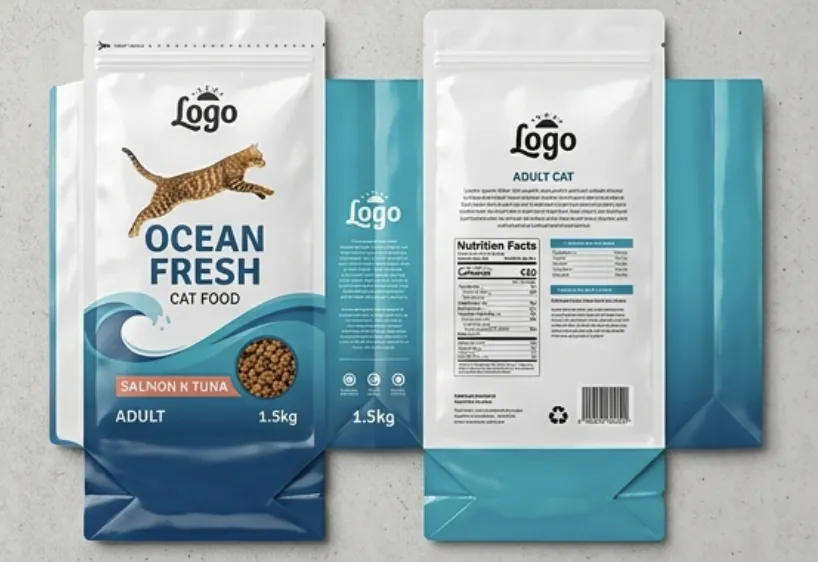
How Can Sustainable Packaging Be Evaluated Honestly?
Sustainability should be assessed across the entire package life cycle rather than by appearance alone. A paper-look pouch may still contain several plastic layers, while a thinner high-barrier structure may reduce material use and product waste.
When comparing sustainable pet food packaging materials and solutions, examine:
- Total material weight per filled pack
- Whether the local recycling system accepts the structure
- Barrier performance and the risk of food spoilage
- Use of recycled content where technically and legally suitable
- Production waste and printing efficiency
- Whether the bag can be reduced in size without harming protection
Mono-material options
PE-based or PP-based mono-material structures may support simpler recycling routes in selected markets. Their suitability depends on the required barrier, closure, graphics, filling method, and local collection infrastructure.
Recycled content
Recycled resin can support a lower-impact specification, but it must be evaluated for food-contact rules, appearance, odor, consistency, and mechanical performance. Requirements differ between regions and applications.
GRS-related claims
If recycled content is promoted on the package, maintain traceable documentation and use claims that match the applicable certification and local advertising rules. YLTPACK’s GRS certification can support supply-chain discussions, but the final claim still needs to match the actual material and certification scope.
What Should You Know About Printing and Visual Design?
Pet owners often look for clear ingredients, recognizable proteins, feeding guidance, and trustworthy product information. A visually attractive bag should make those details easy to find rather than hiding them behind decorative graphics.
Choose the right finish
- Gloss: strong color impact and a smooth, reflective appearance
- Matte: a softer visual effect and reduced glare
- Spot varnish: emphasis on logos, illustrations, or selected text
- Metallic effect: strong shelf visibility, usually with reduced transparency
- Transparent window: product visibility, but with potential barrier and light-exposure trade-offs
For products containing visible treats or freeze-dried pieces, a window can build confidence, but it should not expose sensitive food to unnecessary light. A small, carefully positioned window may provide the benefit without weakening the entire protective strategy.
Our in-house design team often helps brands who only have a rough idea. The practical goal is to convert that idea into correct dimensions, a usable panel layout, and artwork that respects seals, closures, and filling equipment.
How Do You Control Custom Packaging Costs?
The pet food packaging costs and supplier comparison process should consider the complete delivered solution, not just the quoted unit amount. Material structure, bag size, print method, order quantity, tooling, testing, freight, lead time, and quality controls can all affect the final result.
| Cost or risk factor | Questions to ask |
|---|---|
| Material structure | Is every layer necessary for the actual product and shelf life? |
| Bag dimensions | Can the pack be reduced without causing filling or presentation problems? |
| Printing | Will the selected method support the artwork, color expectations, and order plan? |
| Closures and accessories | Does the zipper, handle, spout, or valve improve use enough to justify its complexity? |
| Minimum order planning | Can the quantity be matched to sales forecasts and artwork versions? |
| Quality inspection | Are seal strength, dimensions, appearance, and barrier documentation checked? |
| Shipping | How will packed bags be protected from moisture, compression, and transit damage? |
Do not reduce cost by removing the barrier layer before understanding the product’s sensitivity. It is usually safer to optimize dimensions, artwork coverage, material thickness, or accessory selection first.
As a manufacturer that has produced packaging for 20+ years, we have found that the most common mistake is approving a bag before confirming the filling line and actual product density. A filled sample can reveal capacity and handling problems early.
What Information Should You Send to a Supplier?
A clear specification helps suppliers recommend a structure instead of simply copying a previous bag. Share as much of the following information as possible:
- Product category and ingredient characteristics
- Filled weight and approximate product density
- Bag width, height, gusset, and preferred shape
- Expected shelf life and storage environment
- Target sales countries
- Filling method and equipment type
- Closure, handle, window, valve, or tear-notch requirements
- Artwork format, number of designs, and color expectations
- Estimated order schedule and forecast
- Required testing, certifications, and compliance documents
If you do not know the exact dimensions, send the product sample, target weight, and a reference bag. A supplier can then propose a starting size for testing, but the final dimensions should be confirmed with a filled production sample.
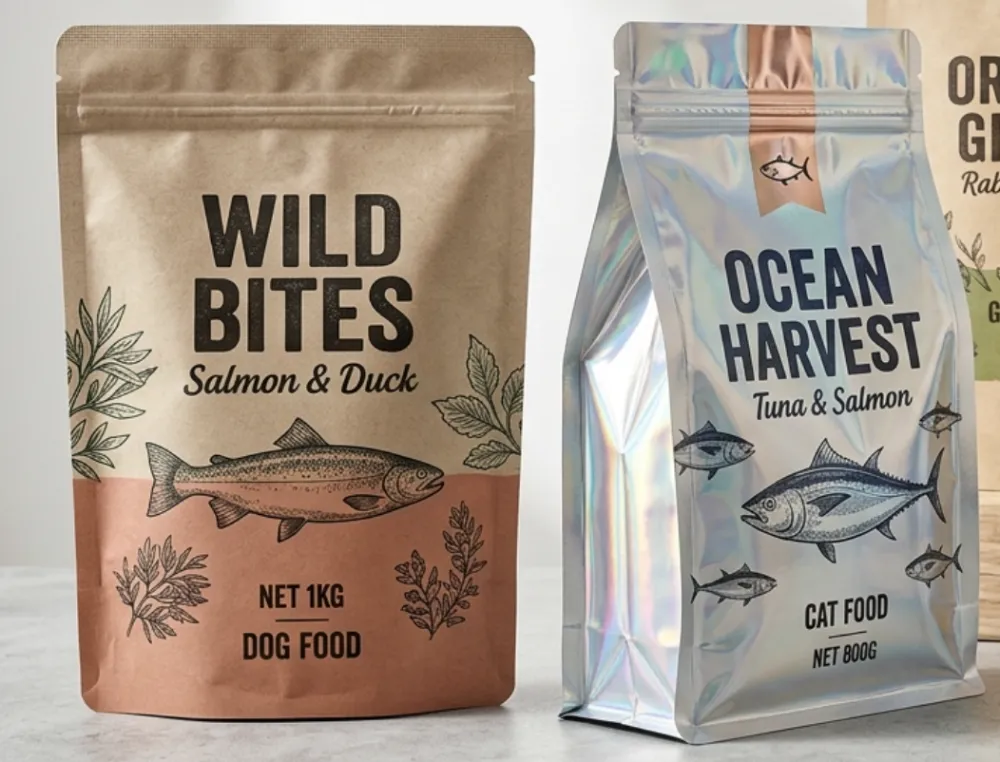
How Does YLTPACK Support a Safer Decision?
Supplier capability matters most when your product has demanding barrier, sealing, compliance, or delivery requirements. A useful partner should explain trade-offs clearly and identify risks before the order is released.
YLTPACK combines more than 20 years of manufacturing experience with a 6,800㎡ cleanroom facility. This helps support controlled production for food-contact packaging and more consistent handling across custom projects.
Our quality discussions cover material selection, artwork, dimensions, seal performance, production inspection, and documentation. FDA, ISO 9001, ISO 22000, and GRS certifications provide reference points for different project requirements, but the specification must still be matched to the product and destination market.
For a practical review, send the product type, target weight, preferred bag format, sales region, and artwork status to [email protected] or WhatsApp +86 182 1944 5665. This information is enough to begin discussing a suitable structure and sample plan without committing to an unsuitable design.
Final Checklist Before Mass Production
- Confirm the product’s oxygen, moisture, light, and odor requirements.
- Approve the complete material structure, not only the outer appearance.
- Check filled dimensions, capacity, stability, and handling.
- Test zipper operation, tear behavior, seals, corners, and handles.
- Review every label statement for the intended sales market.
- Validate barcode readability and artwork placement.
- Request relevant food-contact and certification documentation.
- Run storage and transport testing appropriate to the product.
- Confirm inspection standards and acceptable appearance variation.
- Plan quantities and artwork versions around realistic sales demand.
Conclusion
Choosing a pet food bag is a product-protection decision, a labeling decision, and a user-experience decision at the same time. Start with the food formula and distribution conditions, then select the barrier, format, closure, print finish, and sustainability approach.
The most dependable projects are tested with filled samples before mass production. When a supplier can explain why a material or bag type is suitable—and can support that recommendation with documentation and practical testing—you can move from attractive artwork to packaging that performs in real life.
Frequently Asked Questions
What is the usual material for dry pet food bags?
Dry food bags commonly use a multilayer film with a printable outer layer, a barrier layer, and a heat-sealable inner layer. The exact structure depends on oil content, moisture sensitivity, required shelf life, bag size, and destination market.
Is a zipper necessary for kibble packaging?
A zipper is not mandatory for every pack, but it can improve freshness after opening and make larger bags easier to use. Its value depends on pack size, feeding frequency, closure quality, and whether consumers can close it reliably.
Can kraft paper packaging protect oily pet food?
Kraft paper by itself generally does not provide enough protection for oily food. It is normally combined with one or more inner barrier layers, and the full structure—not the paper surface alone—should be tested for oil resistance and shelf-life performance.
How early should a brand request packaging samples?
Request samples before finalizing the artwork and well before the planned launch. A filled sample can expose capacity, seal, zipper, stability, and machine-compatibility issues that are difficult to solve after printing.
What should a new brand do if it has no final bag dimensions?
Provide the product type, target fill weight, product density if available, preferred format, and a reference package. The supplier can recommend a starting size, but the final choice should be confirmed through filled samples and production-line testing.