First, Why Material Structure Decides Everything
A stand up pouch isn't a single material — it's a laminate, usually three or more layers bonded together. Each layer has a job: barrier protection, strength, and sealing. The heat tolerance of the whole package is only as good as its weakest layer.
Here's the catch. Many standard pouches use PET on the outside and ordinary polyethylene (PE) on the inside. PE softens around 120°C (248°F), and microwaves can easily push food hotter than that in fatty or sugary spots.
As a manufacturer that has produced flexible packaging for over 20 years, we've seen the same mistake repeated: brands assume "food-grade" automatically means "heat-safe." Those are two different specifications entirely.
The layers that actually matter for heating
- Inner sealant layer — This touches your food and faces the most heat. CPP (cast polypropylene) handles microwave temperatures far better than standard PE.
- Barrier layer — Aluminum foil is a hard no for the microwave. Metalized films can spark too.
- Outer layer — Usually PET; generally fine, but it's the inner layers that make or break safety.
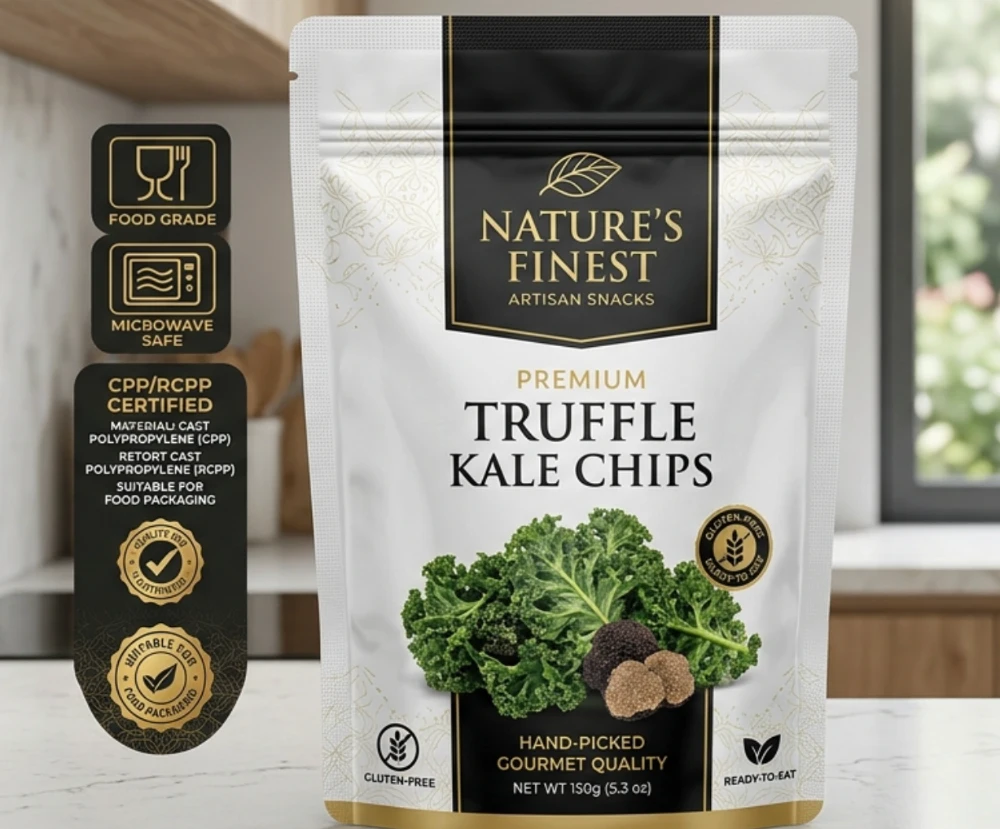
Can You Microwave Stand Up Pouches With Food Inside?
Yes — but only if the package was specifically designed for it. The question of whether you can microwave stand up pouches with food comes down to three things: the sealant film, the presence of a steam vent, and whether any metallic component is present.
Microwave-ready pouches almost always include a self-venting feature. Without it, steam builds up and the seals can burst — messy at best, dangerous at worst. A purpose-built vent releases pressure gradually as contents heat.
Rule of thumb: if a pouch contains any foil or metalized layer, keep it out of the microwave. Sparks and fire are real risks, not theoretical ones.
How to Tell If a Stand Up Pouch Is Microwave Safe
You don't need a lab to make a smart call. Knowing how to tell if a stand up pouch is microwave safe starts with reading what's already printed on or supplied with the packaging.
A quick checklist before you heat anything
- Look for the symbol — Three wavy lines indicate microwave compatibility. No symbol means assume "no."
- Check for a steam vent — A small notch, valve, or laser-scored line signals it's engineered for heating.
- Confirm the sealant material — Ask your supplier whether the inner film is CPP/RCPP (retort-grade) rather than standard PE.
- Rule out metal — Shiny silver interiors usually mean foil or metalization. Skip the microwave.
- Read the temperature rating — Look for a max heat spec in the technical data sheet.
Because we hold FDA and ISO 22000 certifications, we always recommend brands request a material safety data sheet rather than trusting a generic claim. A reputable maker can show you exactly which films were used and their tested heat ratings.
Which Stand Up Pouches Are Microwave Safe?
If you're sourcing packaging and need heating capability, here's a clear breakdown of which stand up pouches are microwave safe versus which ones aren't. The structure tells the whole story.
| Pouch Structure | Max Heat Tolerance | Microwave Safe? | Typical Use |
|---|---|---|---|
| PET / CPP (retort-grade) | Up to 121°C (250°F) | Yes, with vent | Ready meals, soups, sauces |
| PET / Nylon / RCPP | Up to 121°C (250°F) | Yes, with vent | Heat-and-eat entrees |
| PET / AL / PE (foil) | High, but metal present | No | Coffee, dry goods |
| PET / PE (standard) | ~80–100°C (176–212°F) | Not recommended | Snacks, dry storage |
| Kraft / PE (standard) | ~80°C (176°F) | No | Nuts, tea, dry products |
Notice the pattern? Retort-grade CPP is the hero material for heat. These films are tested to survive sterilization processes far harsher than a home microwave, which is why they double as microwave-friendly options.
The Difference Between "Microwave Safe" and "Retort"
People often blur these terms, but they describe different performance levels. Understanding both helps you spec the right product the first time.
Microwave-safe pouches
Designed to be reheated in a microwave for a few minutes. They typically include a steam vent and a CPP sealant rated for short bursts of high heat.
Retort pouches
Built to withstand full thermal sterilization — think 121°C under pressure for 30+ minutes. These are shelf-stable wonders for ready meals, and they're inherently microwave-friendly too.
Working with brands across North America, we've found that companies launching ready-to-eat lines often need retort capability but only ask for "microwave safe." Clarifying this early prevents costly reorders.
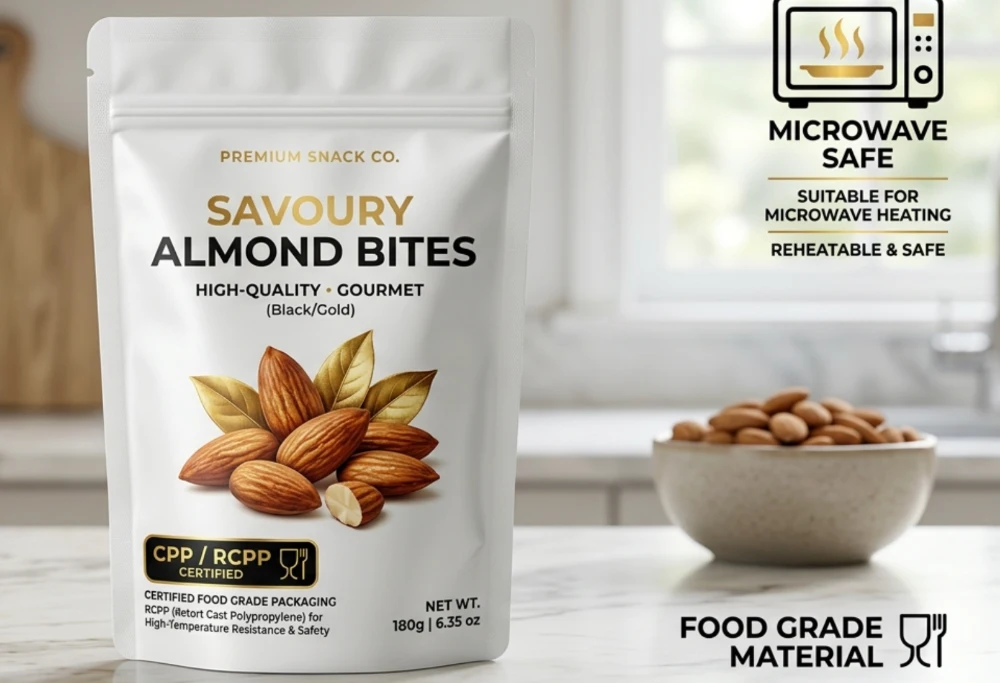
Common Mistakes That Cost Brands Money
Heat-related packaging failures rarely show up until products are in customers' hands. Here are the slip-ups we see most often.
- Assuming all clear pouches are heat-safe — Transparency has nothing to do with temperature rating.
- Skipping the steam vent — Even the right film will burst without pressure relief.
- Printing "microwaveable" without testing — A label claim you can't back up is a liability.
- Reusing a coffee pouch spec for soup — Foil barriers great for aroma are wrong for the microwave.
That last point matters if you're in specialty food. A coffee pouch prioritizes an oxygen barrier to lock in freshness and aroma, which usually means foil — perfect for the shelf, but never for the microwave. Different jobs, different builds.
Choosing the Right Heat-Safe Packaging for Your Product
The best microwave safe stand up pouches for food storage aren't a one-size-fits-all product — they're matched to what's inside and how customers will use them. A few guiding questions help narrow it down fast.
Ask yourself these before ordering
- Will customers heat it in the package, or transfer to a dish? Heat-in-bag needs a vent and CPP sealant.
- Is the product wet, oily, or sugary? Fatty foods reach higher temperatures and need higher-rated films.
- Does it need to be shelf-stable? If yes, you're likely looking at a retort structure.
- What barrier do you need? Balance oxygen protection against heat compatibility.
Our in-house design team often helps brands who only have a rough idea — like "I sell frozen curry and want it microwaveable." From there, we map the contents to the right film, vent placement, and seal strength.
How Quality Manufacturing Protects You
Heat performance isn't just about choosing CPP — it's about consistent lamination. Weak bonds between layers cause delamination when heated, where the film bubbles or peels. That's a manufacturing quality issue, not a design one.
In our 6,800㎡ cleanroom facility, lamination strength and seal integrity are tested batch by batch. For products that get heated, that consistency is the difference between a clean reheat and a split seam at the dinner table.
If you're evaluating suppliers, ask for heat-resistance test data and seal-strength specs. A source factory with traceable testing — backed by ISO 9001 and food-safety certifications — gives you documentation you can stand behind if a customer ever questions safety.
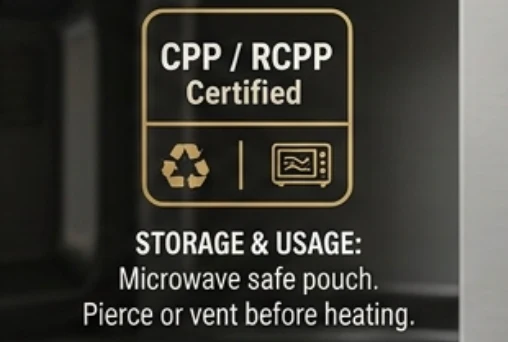
Quick Reference: Your Pre-Heat Safety Check
| Check | What to Confirm | Pass / Fail |
|---|---|---|
| Microwave symbol | Three wavy lines present | Required |
| Steam vent | Visible notch or valve | Required for heat-in-bag |
| Inner film | CPP / RCPP, not standard PE | Required |
| No metal layer | No foil or metalized interior | Mandatory |
| Heat rating sheet | Documented max temperature | Recommended |
The Bottom Line
Whether flexible packaging can go in the microwave comes down to one thing: how it was engineered. Retort-grade CPP with a steam vent? Heat away. Standard PE or anything with foil? Keep it out.
For brands building a product line, the smartest move is to spec heat performance from the start rather than discovering limits after launch. If you want help matching the right structure to your food — and getting documented safety data to back your packaging claims — the YLTPACK team is glad to walk through it with you. Reach out via WhatsApp at +86 182 1944 5665 or email [email protected], and we'll help you get the spec right the first time.
Frequently Asked Questions
Are stand up pouches safe for microwave use if they don't have a symbol?
If there's no microwave symbol, treat it as not safe. The absence of a marking usually means the inner film is standard PE or contains foil. When in doubt, transfer the contents to a microwave-safe dish instead.
Why do some pouches have a small slit or valve on the side?
That's a steam vent. It releases built-up pressure as the contents heat, preventing the seals from bursting. Pouches designed for heat-in-bag use almost always include one, and it's a strong signal the package was built for reheating.
Can I reuse a microwave-safe pouch multiple times?
Most are designed for single-use heating of the original product. Repeated heating can weaken seals and the sealant layer over time. For food safety, it's best to follow the manufacturer's intended use rather than reheating leftovers in the same bag repeatedly.
What temperature can a CPP pouch actually handle?
Retort-grade CPP films are typically rated up to around 121°C (250°F), based on standard sterilization testing. That comfortably covers normal microwave reheating. Always confirm the exact rating on your supplier's technical data sheet, since formulations vary.
How do I prove to customers that my packaging is microwave safe?
Request heat-resistance and material safety data sheets from your supplier, and choose a maker with food-safety certifications like FDA and ISO 22000. Documented test results let you back up any "microwaveable" claim on your label with confidence.