Why Packaging Format Matters More Than You Think
Having produced pet food packaging for over 20 years, we've watched this market evolve dramatically. The format you choose signals quality to the consumer before they ever read your label. Let's break down the real differences so you can make an informed decision for your next production run.
Structural Differences: What Sets These Two Formats Apart
At the most fundamental level, packaging for dry kibble and wet food serves completely different purposes. One protects against moisture and oxygen ingress. The other must contain moisture and withstand retort processing. Understanding these structural distinctions helps you spec the right materials from the start.
Kibble Packaging Construction
Packaging for dry formulas typically uses a multi-layer laminate structure — often a combination of PET, nylon, and polyethylene. This layered approach creates barriers against oxygen transmission while providing the mechanical strength needed to hold 15 to 30 kilograms of product without tearing.
The best dry dog food bags for large breeds, for instance, require reinforced bottom gussets and heavy-duty side seals. These structural elements aren't optional — they prevent blowouts during palletized shipping and retail handling.
- Outer layer: PET or BOPP for printability and scuff resistance
- Middle layer: Nylon or aluminum foil for barrier properties
- Inner layer: LLDPE or CPP for heat-seal integrity
- Additional: Valve systems for degassing in some formulations
Wet Food Pouch Construction
Wet food sachets face a tougher engineering challenge. They must survive retort sterilization at temperatures exceeding 121°C while maintaining seal integrity. The laminate structure typically incorporates aluminum foil as an absolute moisture and light barrier.
These pouches use thicker sealant layers to withstand internal pressure during thermal processing. The result is a fundamentally different material specification — one that prioritizes inward containment rather than outward protection.
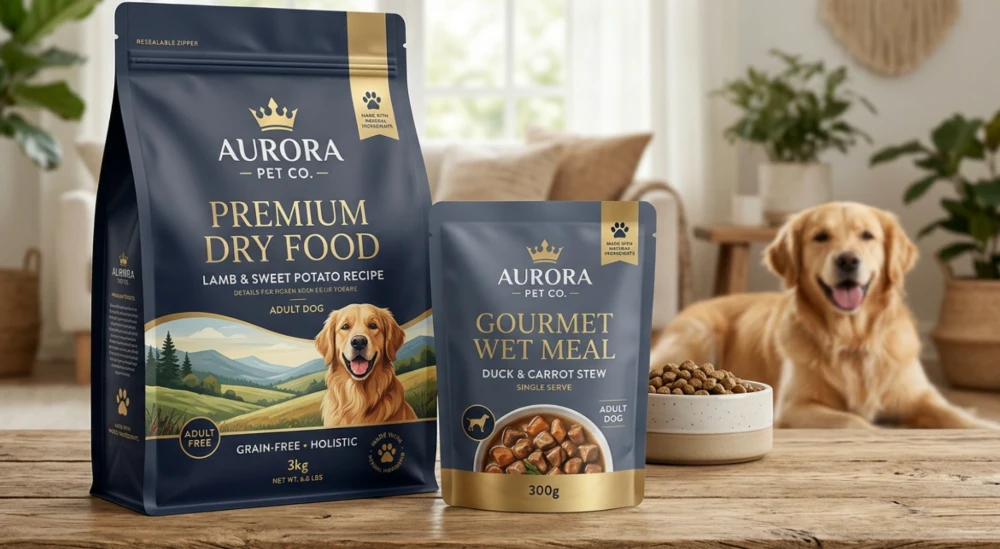
Material Composition: A Side-by-Side Comparison
| Feature | Dry Kibble Packaging | Wet Food Pouches |
|---|---|---|
| Primary barrier | Oxygen and moisture ingress | Moisture retention and light block |
| Typical layers | 2–3 layer laminate | 3–4 layer with aluminum foil |
| Seal type | Heat seal, often with zipper closure | Retort-grade heat seal |
| Weight capacity | 1 kg to 30 kg | 70 g to 500 g per pouch |
| Processing requirement | Standard FFS or pre-made pouch fill | Retort sterilization compatible |
| Shelf life mechanism | Low moisture transmission rate | Hermetic seal + thermal processing |
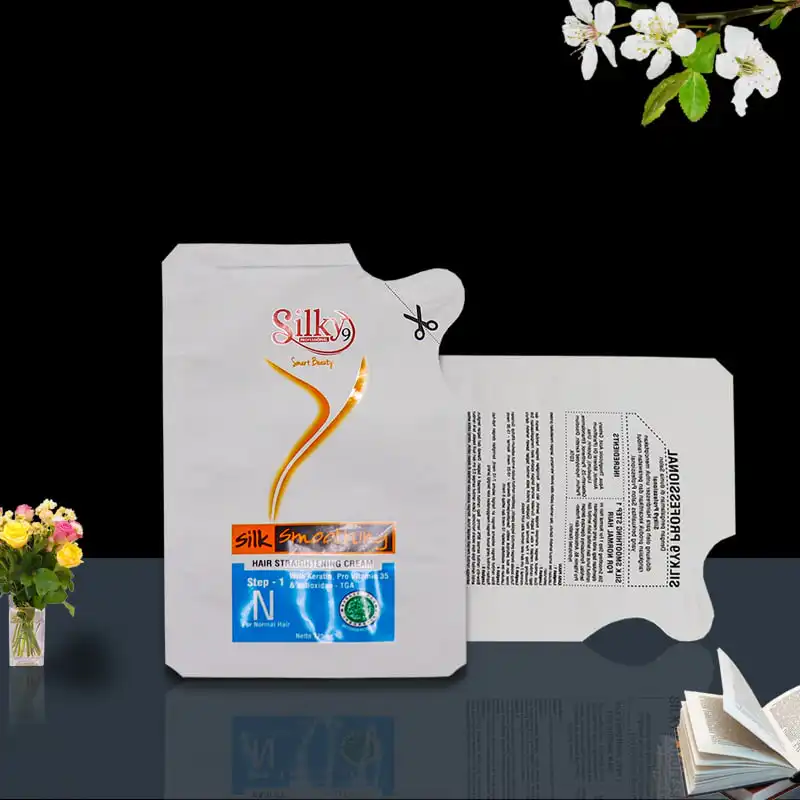
| Common closure | Resealable zipper or tin-tie | Tear notch, single-use |
Shelf Life and Freshness: How Each Format Performs
Shelf life expectations differ wildly between these two categories. Dry formulations rely on low water activity (typically below 0.65 aw) combined with packaging that prevents moisture regain. A well-designed kibble container with proper oxygen barriers can deliver 12 to 18 months of shelf stability.
Wet pouches achieve shelf life through a completely different mechanism — thermal sterilization destroys microorganisms, and the hermetic seal prevents recontamination. This allows 24 to 36 months of ambient stability without refrigeration.
The Freshness Factor Pet Owners Care About
Here's something we've observed working with brands across North America: pet owners increasingly associate resealability with freshness. A 2024 Packaged Facts survey found that 67% of dog owners consider packaging freshness features when choosing between brands on shelf.
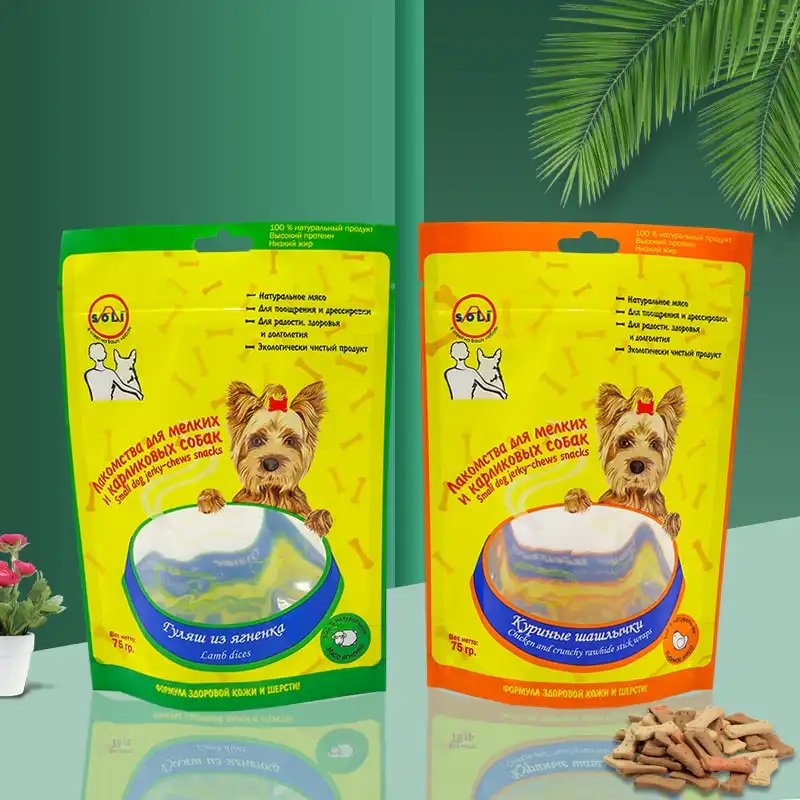
This is why dry dog food bags with resealable closure have become the expected standard rather than a premium add-on. Zipper closures, press-to-close strips, and even integrated pour spouts all communicate that your brand cares about the product after purchase — not just at the point of sale.
Choosing the Right Format for Your Brand
The format question isn't purely technical — it's strategic. Your choice affects everything from warehousing costs to how your product performs in e-commerce channels. Let's walk through the decision factors that matter most when you're ordering at scale.
Volume and Storage Considerations
Dry kibble packaging in bulk quantities ships flat before filling, which means your unfilled inventory takes up minimal warehouse space. A pallet of flat-bottom gusset pouches occupies roughly one-tenth the volume of the same bags once filled. For brands considering affordable dry dog food bags bulk buy options, this flat-shipping advantage significantly reduces logistics costs.
Wet pouches, being smaller and lighter per unit, stack efficiently when filled. However, they require more complex filling equipment and retort access, which influences your co-packer selection.
Consumer Use Patterns
Think about how your customer actually interacts with the package at home. A 15 kg sack of kibble sits in a pantry or utility room for weeks. It gets opened and closed daily. It might get dragged across a floor. These real-world use cases demand:
- Tear resistance at the carry handle
- Reliable reclose mechanism that works after 30+ openings
- Print durability that survives handling and light exposure
- Easy-pour spout or wide opening for scooping
Wet pouches, by contrast, are single-serve. The consumer interaction lasts seconds — tear, squeeze, discard. Here, the priorities shift to easy-open features, clean dispensing, and portion visibility.
Sustainability Trends Reshaping Both Categories
Sustainability isn't a future concern — it's a current purchasing criterion. According to the Pet Sustainability Coalition's 2025 report, 58% of pet food brands have committed to packaging recyclability improvements by 2027. This pressure hits both format categories differently.
Challenges for Kibble Packaging
Multi-layer laminates have historically been difficult to recycle through standard municipal streams. The industry is responding with mono-material PE structures that maintain barrier properties while being technically recyclable. Because we hold FDA and ISO 22000 certifications, we recommend these newer mono-PE structures to brands who need to meet retailer sustainability scorecards without compromising food safety.
Challenges for Wet Pouches
Aluminum-containing retort pouches face even steeper recycling hurdles. Some brands are exploring high-barrier transparent alternatives using SiOx or AlOx coatings, though these require careful validation for retort compatibility. The transition is happening, but slowly.
Printing and Branding Opportunities
Your packaging is your most powerful marketing asset on shelf. Both formats offer different canvases for brand storytelling, and the print considerations vary significantly.
Surface Area and Visual Impact
Large-format kibble packaging gives you generous real estate for nutritional claims, ingredient transparency, and brand narrative. With pet owners increasingly reading back panels — a trend driven by the humanization of pet nutrition — this space matters. You can accommodate detailed feeding guides, sourcing stories, and certification marks without crowding.
Our in-house design team often helps brands who only have a rough concept. For top rated dry dog food bags 2026 trends, we're seeing brands move toward clean, minimalist front panels with rich information density on back and side panels.
Print Method Differences
| Print Aspect | Large Kibble Sacks | Wet Food Pouches |
|---|---|---|
| Preferred method | Rotogravure or flexographic | Rotogravure (higher detail) |
| Color range | Up to 10 colors | Up to 10 colors |
| Finish options | Matte, gloss, soft-touch, spot UV | Matte, gloss, metallic effects |
| MOQ impact on cost | Higher MOQ = lower per-unit print cost | Smaller pouch = less material per impression |
| Transparency windows | Optional clear window for kibble visibility | Less common due to barrier requirements |
Ingredient transparency is a major consumer driver in pet food. Adding a clear window to your kibble storage solution lets shoppers see the actual product — building trust before purchase. It's a small engineering addition that delivers outsized brand value.
Common Mistakes We See Brands Make
Working with brands across multiple markets over two decades, we've catalogued the recurring errors that cost companies time and money. Here are the ones most relevant to this format decision.
Mistake 1: Under-Specifying Barrier Requirements
Some brands choose materials based on cost alone without testing oxygen transmission rates (OTR) for their specific formulation. A high-fat kibble formula requires significantly better oxygen barriers than a low-fat variant. Dry dog food bags for sensitive stomach dogs often contain novel proteins and limited ingredients that oxidize faster — making barrier specification critical.
Mistake 2: Ignoring E-Commerce Stress Testing
The package that performs perfectly on a retail shelf may fail in a shipping box. Drop tests, compression testing, and vibration simulation are essential if any percentage of your volume moves through online channels. In our 6,800㎡ cleanroom facility, we run ISTA-standard transit testing before approving production runs.
Mistake 3: Choosing Format Before Understanding Fill Equipment
Your co-packer's filling line dictates what pouch styles are viable. A beautiful stand-up pouch design means nothing if your filling partner can't run it efficiently. Always confirm equipment compatibility before finalizing packaging specifications.
How to Brief Your Packaging Supplier
Whether you're launching a new SKU or switching suppliers, a clear brief saves weeks of back-and-forth. Here's what to prepare before your first conversation with any manufacturer:
- Product specs: Weight per fill, moisture content, fat percentage, any volatile ingredients
- Target shelf life: Minimum months at ambient temperature
- Sales channels: Retail, e-commerce, or both (this affects durability requirements)
- Volume forecast: Annual quantity and order frequency
- Regulatory market: Which countries you'll sell in (affects compliance markings)
- Sustainability goals: Recyclability targets, PCR content requirements, certification needs
- Design readiness: Final artwork, rough concept, or need design support
A complete brief at YLTPACK typically moves from concept to approved proof within 5 to 7 business days. Incomplete briefs can stretch that to 3 weeks or more — not because of manufacturing delays, but because of revision cycles.
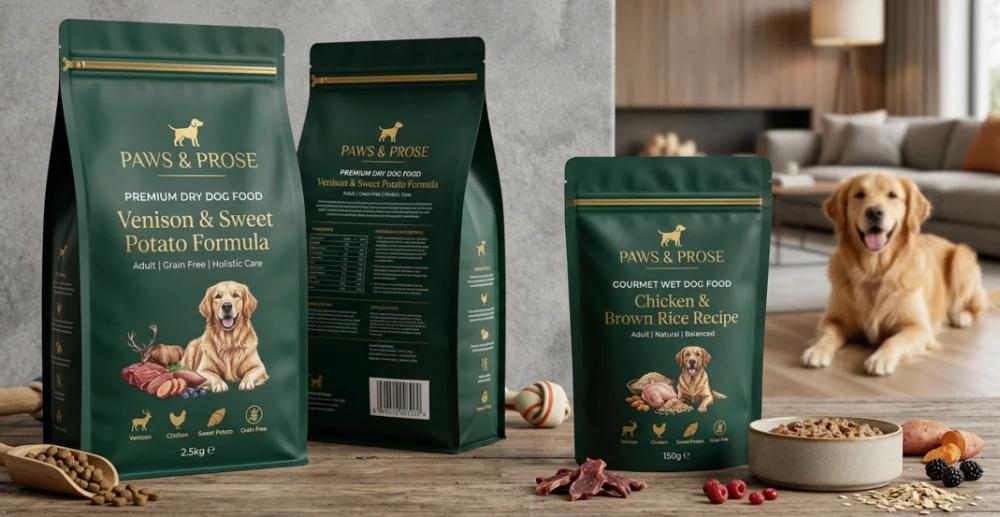
Regulatory and Safety Considerations
Pet food packaging must meet food-contact material regulations in every market you sell into. FDA compliance (Title 21 CFR) governs the U.S. market, while EU regulations (EC 1935/2004) apply across Europe. These aren't optional — retailers will audit your compliance documentation.
Key compliance areas include:
- Migration testing for food-contact layers
- Heavy metals limits in printing inks
- BPA-free declarations for can and pouch linings
- Country-specific labeling requirements
This is where manufacturer certifications matter tangibly. An FDA-registered, ISO 22000-certified facility like ours maintains documented traceability from raw resin to finished product — which simplifies your audit preparation considerably.
Making Your Final Decision: A Quick Checklist
Use this framework to determine which format — or combination of formats — fits your product line:
| Decision Factor | Choose Large Kibble Packaging If... | Choose Wet Pouches If... |
|---|---|---|
| Product type | Extruded or baked dry formulas | Gravy, pâté, or stew formulations |
| Portion size | Multi-serve (days to weeks of feeding) | Single-serve meals or toppers |
| Storage at home | Pantry, utility room, dog food container | Cupboard, minimal space needed |
| Shipping weight | Heavier per unit, fewer SKUs per order | Lighter per unit, variety packs possible |
| Machinery needs | VFFS or pre-made pouch fillers | Retort-capable pouch fillers |
| Reclose requirement | Essential — zipper or press-close | Not needed — single use |
Frequently Asked Questions
What materials provide the strongest barrier for keeping kibble fresh?
A laminate combining PET (outer), nylon or metallized PET (barrier), and LLDPE (sealant) delivers excellent oxygen and moisture protection. For ultra-premium lines, aluminum foil as a middle layer provides near-zero OTR. The right choice depends on your target shelf life and fat content — higher fat means you need better oxygen barriers to prevent rancidity.
Can I use the same packaging supplier for both dry and wet formats?
Not always. Wet food pouches requiring retort compatibility demand specialized material sourcing and testing capabilities. At YLTPACK, we produce both format types because our facility handles the full range of laminate structures — but many suppliers specialize in only one. Always verify retort experience specifically.
What's the minimum order quantity for custom-printed pet food packaging?
MOQs vary by manufacturer and format. Custom rotogravure-printed packaging for bulk dry dog food typically starts at higher volumes than digital-printed pouches. We work with brands at various scales, and MOQs depend on pouch dimensions, material structure, and print complexity. Request a specific quote based on your actual specs rather than relying on published minimums.
How do resealable closures affect production timelines?
Adding zipper closures or press-to-seal features typically adds 3 to 5 days to production because these components require separate sourcing and additional sealing steps during converting. However, the consumer experience improvement and reduced food-waste complaints make this a worthwhile investment for any product over 2 kg fill weight. Resealable dog food bags have become standard in the market for good reason.
What sustainability options exist for pet food packaging right now?
Current viable options include mono-material PE laminates (recyclable in PE streams), post-consumer recycled content (PCR) in non-food-contact layers, and paper-based outer layers with thin PE liners. Full compostability remains challenging for pet food due to barrier requirements, but the technology is advancing. We recommend starting with recyclable mono-PE structures that meet current retailer sustainability requirements without sacrificing shelf life performance.
Ready to Spec Your Next Packaging Run?
Choosing between formats — or designing a product line that uses both — comes down to understanding your product's specific needs, your consumer's expectations, and your supply chain realities. The right packaging partner helps you navigate these decisions with data, not guesswork.
If you're developing new pet food packaging or re-evaluating your current supplier, reach out to our team at YLTPACK. We'll review your brief and provide material recommendations based on your exact formulation and market requirements.
WhatsApp: +86 182 1944 5665
Email: [email protected]