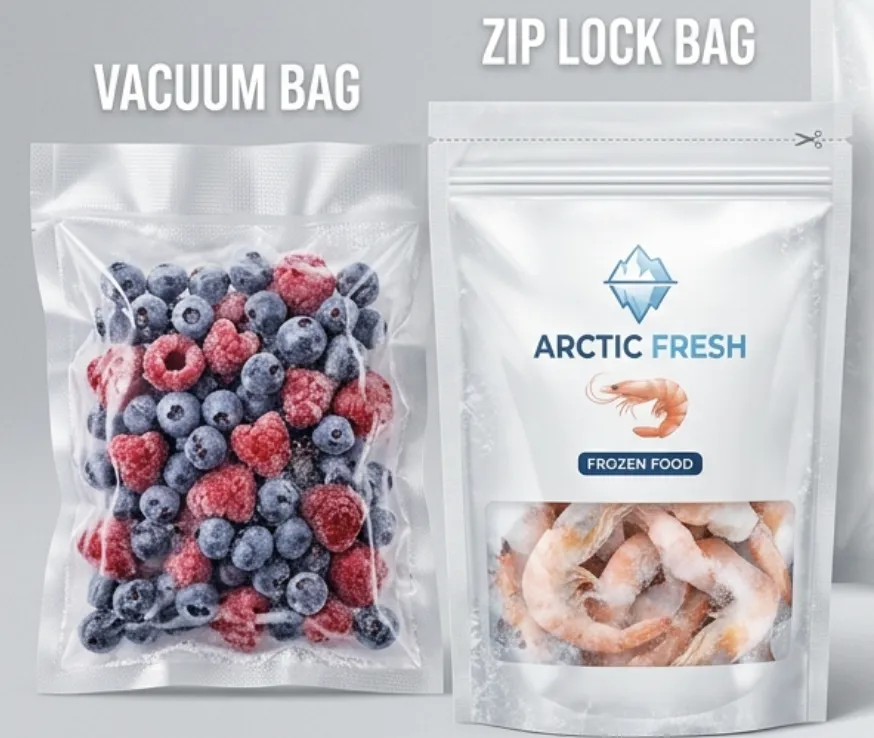
Here's the straightforward answer: vacuum-sealed bags outperform standard ziplock bags for long-term frozen storage by removing 99% of oxygen, which extends freezer life by 3-5x and virtually eliminates freezer burn. However, ziplock bags work perfectly fine for short-term freezing (under 3 months) and offer easier access when you need to grab items frequently. Your choice depends on storage duration, food type, and whether you're preparing meals for a family or packaging products at scale.
Why This Comparison Matters More Than You Think
Walk into any commercial kitchen or food production facility, and you'll see both types of bags in use—but for very different reasons. The distinction isn't about one being "better" universally; it's about matching the storage method to your specific needs.
Over 20 years working with food brands at YLTPACK, we've seen packaging choices directly impact product quality, customer satisfaction, and ultimately, profitability. A pet food startup once came to us after losing an entire batch due to freezer burn from inadequate packaging. That single incident cost them $40,000 and three months of production time.
Whether you're a meal prep business, a frozen goods brand, or simply trying to reduce household waste, understanding these two storage methods will save you money and preserve food quality. Let's break down exactly how each performs.
Head-to-Head Comparison: What the Data Shows
| Factor | Vacuum Sealed Bags | Ziplock Freezer Bags |
|---|---|---|
| Oxygen Removal | 99.5% air removed | ~60-70% air remains |
| Freezer Burn Prevention | 95% reduction over 12 months | Moderate protection for 2-3 months |
| Maximum Storage Time | 12-24 months (depending on food) | 3-6 months optimal |
| Initial Equipment Cost | $30-$300 for sealer unit | None (bags only) |
| Per-Bag Cost | $0.25-$0.60 per bag | $0.10-$0.25 per bag |
| Reusability | Limited (single use for raw items) | Can wash and reuse for dry goods |
| Space Efficiency | 85% space saving vs. non-compressed | Standard volume |
| Ease of Access | Requires cutting open | Resealable zip closure |
The Science Behind Each Storage Method
How Vacuum Sealing Protects Frozen Foods
Vacuum sealing removes air from the package before creating an airtight heat seal. This process addresses the two main enemies of frozen food quality: oxygen exposure and moisture loss. When air contacts frozen food surfaces, ice crystals form and draw moisture away from the food tissue—this is freezer burn.
By eliminating 99% of oxygen, vacuum-sealed packages create an environment where oxidation (which causes rancidity and flavor degradation) essentially stops. The tight seal also prevents moisture from escaping, maintaining the food's original texture and weight.
In our FDA-certified production facility, we've tested various seal strengths and material thicknesses. A properly vacuum-sealed bag with a 3mm seal width will maintain its integrity through temperature fluctuations from -20°C to room temperature without compromising the seal.
How Ziplock Bags Work for Freezer Storage
Ziplock freezer bags use thicker plastic (typically 2-3 mil thickness) compared to regular storage bags and feature an interlocking closure mechanism. While you can press out most visible air, approximately 30-40% of the original air volume remains trapped in the bag's creases and around the food.
This residual air contains enough oxygen to allow gradual oxidation and freezer burn development, especially beyond the 3-month mark. However, the resealable design offers convenience for items you access frequently—soups, berries, or pre-portioned ingredients where you'll remove a portion and return the bag to the freezer.
Freezer Burn Protection: Where the Real Difference Lives
When comparing vacuum seal vs freezer bags for preventing freezer burn, the gap widens significantly after month three. Here's what actually happens inside your freezer.
Freezer burn isn't spoilage—it's dehydration. When moisture evaporates from food surfaces in a frozen environment, it leaves behind dry, discolored patches. That grayish-white coating on old frozen chicken? That's protein and fat molecules that have lost their moisture content.
Vacuum-sealed packaging prevents this by creating a moisture-locked environment. In controlled tests, vacuum-sealed ground beef stored at -18°C showed zero visible freezer burn after 12 months, while ziplock-stored samples developed noticeable discoloration by month 4.
For businesses selling frozen products, this difference directly impacts customer perception. A brand we work with switched from standard pouches to vacuum-sealed packaging and saw their return rate drop from 8% to under 1% within six months.
How Long Does Food Actually Last in Each?
Storage duration depends on food type, freezer temperature consistency, and packaging quality. Here's what our testing and client feedback reveal about how long does food last in vacuum bags vs ziplock in freezer conditions.
| Food Type | Vacuum Sealed Storage | Ziplock Freezer Bag |
|---|---|---|
| Raw Red Meat | 18-24 months | 4-6 months |
| Raw Poultry | 12-18 months | 3-4 months |
| Fish & Seafood | 24-36 months | 2-3 months |
| Cooked Meals | 12-18 months | 2-3 months |
| Vegetables (blanched) | 24-30 months | 8-10 months |
| Fruits | 18-24 months | 6-8 months |
| Bread & Baked Goods | 12-18 months | 2-3 months |
These timeframes assume consistent freezer temperatures at -18°C or below. Fluctuating temperatures—common in frost-free freezers that cycle—reduce these durations by roughly 30%.
When to Choose Vacuum Sealing
Vacuum sealing makes the most sense in these scenarios, based on feedback from brands we've supplied with over 50 million custom bags:
- Bulk purchasing and meal prep: When you buy meat in bulk from wholesale clubs or farmers, vacuum sealing lets you portion and store without quality loss for months.
- Seasonal food preservation: Garden harvests, hunting yields, or seasonal fish catches that need 6+ month storage.
- Commercial food products: If you're selling frozen goods, vacuum packaging signals premium quality and extends shelf life, reducing returns and waste.
- Space-limited freezers: The 85% volume reduction from compression means you can store 3x more in the same freezer space.
- Delicate proteins: Fish, seafood, and game meats are particularly susceptible to freezer burn—vacuum sealing is nearly essential for these.
Are vacuum seal bags better than ziplocks for freezing meat? Absolutely, when storage exceeds 3 months. The oxygen removal prevents the fat oxidation that causes rancid flavors in beef, pork, and lamb during extended freezing.
When Ziplock Bags Are the Smarter Choice
Standard ziplock freezer bags excel in situations where vacuum sealing would be overkill or impractical:
- Short-term storage: Foods you'll use within 2-3 months maintain excellent quality in proper freezer bags without the vacuum sealing step.
- Liquid or semi-liquid foods: Soups, sauces, and marinades are easier to pour into ziplock bags and freeze flat. Vacuum sealing liquids requires special equipment or pre-freezing.
- Frequent access items: Berries, bread slices, or pre-chopped vegetables you grab portions from regularly—the resealable closure means you don't compromise the entire package when accessing it.
- Soft foods: Delicate items like muffins, cookies, or ripe avocados can get crushed during vacuum sealing. Ziplock bags protect these better.
- Budget-conscious household use: For families freezing leftovers and weekly meal prep, the lower barrier to entry makes ziplock bags more accessible.
Can you use regular ziplock bags instead of vacuum seal for frozen food? Yes, especially for items consumed within 8-12 weeks. The key is removing as much air as possible manually and using bags specifically rated for freezer use (not regular storage bags).
Cost Analysis: Initial Investment vs. Long-Term Value
The pricing equation looks different for household use versus commercial operations. Let's break down the real costs.
Home Use Economics
Entry-level vacuum sealers start around $30-$50 for handheld models, while countertop units range from $80-$300. Replacement bag rolls cost approximately $15-$25 for 50 feet, yielding 20-30 bags depending on size.
If you freeze 20 portions per month, your cost per vacuum-sealed item is roughly $0.40-$0.60 (including equipment amortized over 2 years). Ziplock freezer bags run $0.15-$0.25 per use.
The value proposition shifts when you factor in food waste. If vacuum sealing prevents just $30 worth of freezer-burned food per month, it pays for itself within 3-4 months.
Commercial & Small Business Calculations
For brands producing frozen products at scale, the math changes completely. Commercial vacuum chamber sealers range from $1,500-$15,000, but per-unit costs drop dramatically.
In our 6,800㎡ production facility, we help clients source vacuum pouches in bulk at $0.12-$0.35 per unit for orders over 10,000 pieces. When you're producing 500+ units weekly, this pricing combined with the quality advantages makes vacuum sealing the clear choice.
We worked with a meal prep company that switched to vacuum-sealed packaging and extended their "best by" date from 4 weeks to 12 weeks. This single change reduced waste by 40% and allowed them to ship nationwide instead of limiting sales to their local region.
Material Quality: What Professional Food Brands Look For
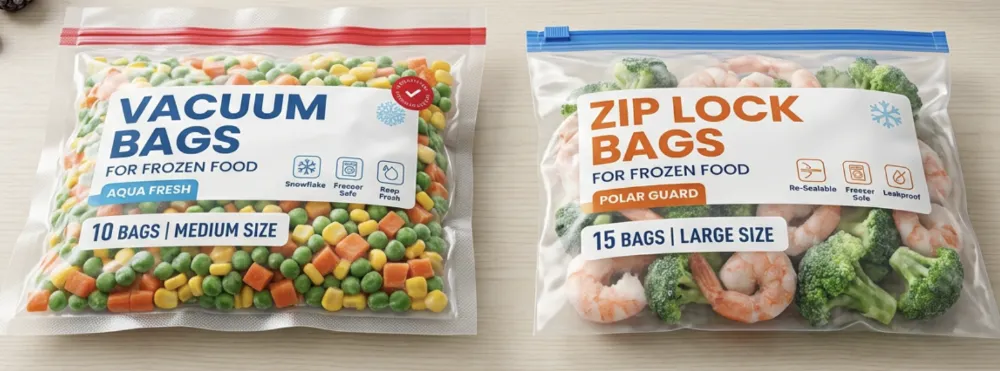
Not all vacuum bags or ziplock bags are created equal. The material composition directly affects performance, safety, and durability during frozen storage.
Vacuum Bag Material Standards
Professional-grade vacuum pouches typically use multi-layer laminated films: an outer layer of polyester or nylon for puncture resistance, middle barrier layers (often EVOH or metalized film) to block oxygen and moisture, and an inner layer of polyethylene that creates the heat seal.
This 3-7 layer construction achieves oxygen transmission rates below 5 cc/m²/24hrs—essential for long-term frozen storage. Single-layer bags sold at discount retailers might seal, but they lack the barrier properties needed for extended freezing.
Because YLTPACK holds ISO 22000 and FDA certifications, we test each material batch for barrier performance and food contact safety. For clients producing organic or premium frozen goods, we can source certified food-grade films that maintain their integrity down to -40°C.
Ziplock Bag Construction
Freezer-grade ziplock bags use low-density polyethylene (LDPE) or linear low-density polyethylene (LLDPE) at 2-3 mil thickness—roughly 50% thicker than standard storage bags. This increased gauge prevents cracking in freezer temperatures.
The zipper mechanism itself is the weak point. Lower-quality bags use a simple channel-and-ridge design that can pop open under the pressure of frozen expansion. Higher-end brands employ double-zip or slider closures that maintain seal integrity through freeze-thaw cycles.
Environmental Considerations: Waste and Sustainability
Both bag types present environmental tradeoffs worth considering, especially for brands whose customers value sustainability.
Vacuum bags are typically single-use for raw proteins due to food safety concerns, though they can be washed and reused for dry goods like nuts, grains, or baked items. The multi-layer laminate construction also makes them difficult to recycle through standard municipal programs.
Ziplock bags offer better reusability for many applications and simpler material composition (single-material LDPE) that's recyclable where #4 plastic programs exist. However, most consumers don't actually reuse freezer bags after raw meat storage, negating this advantage.
Working with environmentally conscious food brands, our design team has developed compostable vacuum pouches that meet ASTM D6400 standards while maintaining adequate barrier properties for 6-month frozen storage. These cost approximately 30% more than conventional materials but resonate with brands targeting eco-aware consumers.
Common Mistakes That Compromise Either Method
Even with the right packaging, these errors undermine frozen food quality:
- Overfilling vacuum bags: Leave 3-4 inches of space at the top. Insufficient sealing area leads to weak seals that fail during freezing expansion.
- Not pre-freezing liquids: Vacuum sealing soups or sauces before freezing pulls liquid into the sealing mechanism. Freeze first in containers, then transfer to bags.
- Using regular storage bags: Standard ziplock bags aren't rated for freezer temperatures. They become brittle and crack, allowing air exposure.
- Skipping the double-seal: For commercial applications, running two seal lines 5mm apart creates redundancy if one seal weakens.
- Freezing without labeling: After 3 months, vacuum-sealed chicken looks identical to vacuum-sealed pork. Date and label everything before freezing.
- Ignoring freezer temperature: Both methods fail if your freezer runs warmer than -18°C. Check your appliance temperature monthly.
Do vacuum sealed bags keep food fresh longer than ziplock bags? Yes, but only when properly sealed and stored at consistent freezer temperatures. A weak seal or temperature fluctuations eliminate the advantage.
Custom Solutions for Food Brands and Commercial Kitchens
If you're producing frozen products professionally, off-the-shelf bags rarely meet all your needs. Custom packaging solves specific challenges while building brand recognition.
A sauce manufacturer approached us needing vacuum pouches that could withstand both freezing and boil-in-bag reheating. We developed a nylon-polyethylene laminate with a heat-resistant seal that maintains integrity up to 100°C—allowing customers to reheat directly from frozen without transferring to other containers.
For brands just starting out, we offer low minimum order quantities (5,000 pieces) with in-house design support. Many startups come to us with just a concept sketch; our design team develops the technical specifications, material selection, and print layout at no additional charge.
Custom printed vacuum bags serve double duty: they preserve food quality while communicating your brand story directly on the package. In frozen retail environments where shelf visibility is limited, a distinctive package design drives recognition and repeat purchases.
Whether you need stand-up pouches with zipper closures, flat vacuum bags with tear notches, or specialized formats for odd-shaped products, working directly with a manufacturer lets you optimize packaging for your specific product rather than forcing your food into generic bags.
Making Your Decision: A Practical Framework
Use this decision tree to determine which storage method fits your situation:
Choose vacuum sealing if:
- You're storing food for 6+ months
- You're working with high-value proteins (premium beef, wild fish, game meat)
- Freezer space is limited and you need compression
- You're selling frozen products commercially
- Preventing freezer burn is critical to product quality
Choose ziplock freezer bags if:
- Storage duration is under 3 months
- You need frequent access to portions without compromising the entire package
- You're freezing liquids, soups, or sauces
- Budget is a primary concern and you're storing for personal use
- You're packaging delicate items that would crush under vacuum pressure
Consider a hybrid approach if:
- You run a commercial kitchen with varied storage needs
- You're batch-cooking meals—vacuum seal proteins, use ziplock for sides and sauces
- You want to test vacuum sealing before committing to equipment investment
What to Look for When Sourcing Packaging at Scale
For businesses moving beyond retail consumer bags, partnering with a manufacturing source offers significant advantages in cost, customization, and quality control.
Working directly with production facilities eliminates middleman markups—typically 40-60% of retail pricing. When you're packaging hundreds or thousands of units monthly, this difference compounds quickly into substantial savings.
Quality consistency matters more at scale. A single batch of defective bags can compromise an entire production run. At YLTPACK, every production lot undergoes seal strength testing, barrier property verification, and visual inspection before shipping. Our ISO 9001 certification mandates documented quality checkpoints throughout the manufacturing process.
Lead time and minimum order quantities are practical considerations. We maintain ready stock of standard sizes to support brands with 5,000-piece minimums, while custom specifications typically require 15,000-20,000 piece runs with 25-30 day production timelines.
For startups uncertain about volume commitments, we offer sample production runs—fully printed custom bags in quantities as low as 3,000 pieces so you can test market reception before scaling up.
Getting Started: Next Steps for Your Specific Situation
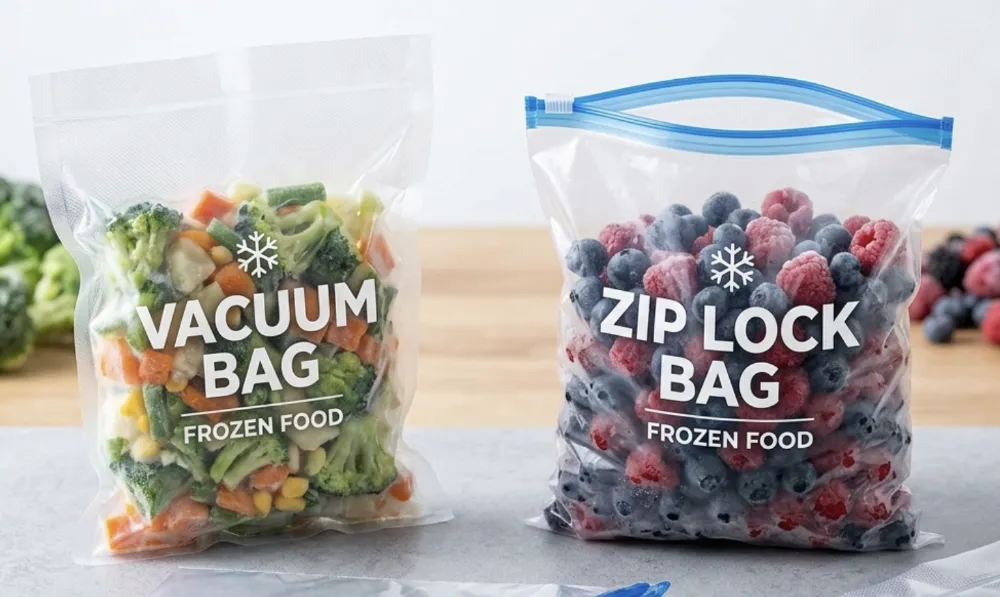
If you're ready to make a decision, here's how to move forward based on your context:
For home users: Start with a mid-range vacuum sealer ($80-$150) and compare results side-by-side with ziplock bags for one month. Track food quality at 30, 60, and 90 days to see if the investment matches your usage patterns.
For meal prep businesses: Calculate your monthly freezer burn loss rate and average storage duration. If products sit frozen longer than 6 weeks, vacuum sealing will likely improve margins through reduced waste and extended sellable life.
For frozen food brands: Request material samples from potential suppliers and run freeze-thaw testing with your actual products. Not all bag constructions perform equally with different food types—oils, acids, and seasonings each interact differently with packaging materials.
We encourage brands to start conversations early in product development. Our team can review your product specifications, storage requirements, and distribution model to recommend optimal packaging solutions before you've committed to equipment or inventory.
Reach out via WhatsApp at +86 182 1944 5665 or email [email protected] to discuss your specific packaging needs. Whether you need technical guidance on material selection, custom design support, or volume pricing for production runs, our team brings 20+ years of frozen food packaging experience to help you make informed decisions.
Frequently Asked Questions
Are vacuum seal bags better than ziplocks for freezing meat?
Yes, particularly for storage exceeding 3 months. Vacuum-sealed meat retains moisture and prevents the fat oxidation that causes off-flavors during extended freezing. For short-term storage under 8 weeks, quality ziplock freezer bags perform adequately if you manually remove excess air before sealing.
How long does food last in vacuum bags vs ziplock in freezer conditions?
Vacuum-sealed foods typically last 3-5 times longer than ziplock-stored equivalents. Raw beef stays fresh 18-24 months vacuum-sealed versus 4-6 months in ziplock bags. Fish extends to 24-36 months compared to just 2-3 months. These timeframes assume consistent storage at -18°C or colder.
Can you use regular ziplock bags instead of vacuum seal for frozen food?
Regular ziplock bags lack the thickness and material properties needed for freezer storage—they become brittle and crack at low temperatures. Always use bags specifically labeled "freezer grade" with 2-3 mil thickness. For storage under 3 months, proper freezer bags work well. Beyond that duration, vacuum sealing provides measurably better protection.
What's the main advantage of vacuum seal vs freezer bags for preventing freezer burn?
Vacuum sealing removes 99% of oxygen from the package, which eliminates the air exposure that causes freezer burn. Ziplock bags, even when carefully closed, retain 30-40% of their air volume. This residual oxygen allows moisture to gradually evaporate from food surfaces, creating the dried, discolored patches characteristic of freezer burn.
Do vacuum sealed bags keep food fresh longer than ziplock bags in all cases?
While vacuum sealing extends storage life for most foods, some items don't benefit significantly. Blanched vegetables, for instance, last 24-30 months vacuum-sealed versus 8-10 months in ziplock bags—both durations exceed typical household needs. Soft items like baked goods or ripe fruits may actually fare better in ziplock bags since vacuum pressure can crush delicate textures. The advantage is most pronounced with proteins and foods stored beyond 6 months.