Can You Actually Boil or Steam a Spouted Pouch? Let's Settle This
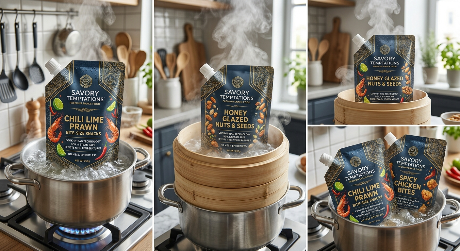
If you've ever stood in your kitchen holding a baby food pouch and wondered, "Can I just toss this in boiling water to warm it up?"—you're not alone. Brands ask us this question constantly, especially those packaging soups, sauces, or purees. The honest answer for spouted stand-up barrier pouches is: it depends entirely on the material build.
Let's break down exactly when heat is fine and when you're asking for trouble.
The Short Answer (And Why "It Depends" Isn't a Cop-Out)
Whether a pouch can handle boiling or steaming comes down to one thing: the laminate structure and the spout's heat tolerance. A standard pouch built for room-temperature liquids is not the same as one engineered for high heat.
Here's the quick rule of thumb:
- Standard barrier pouches: Safe up to around 80–90°C. Fine for warm water baths, risky for full boiling.
- Retort-grade pouches: Built to survive 121°C+ sterilization. These are the ones you can truly boil.
- Microwave pouches: Different story—designed for steam venting, not submersion.
So before you boil anything, you need to know which type you're holding. Confusing the two is the most common mistake we see.
Boiling vs. Steaming vs. Retort: They're Not the Same Thing
People throw these terms around interchangeably, but the temperature and pressure differences matter a lot for packaging.
| Method | Typical Temp | Pressure | Pouch Needed |
|---|---|---|---|
| Warm water bath | 40–70°C | None | Standard barrier |
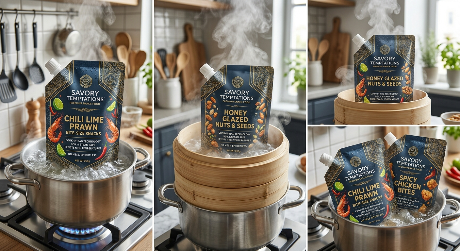
| Boiling | 100°C | None | Heat-resistant grade |
| Steaming | 100°C (moist) | Low | Heat-resistant grade |
| Retort sterilization | 116–135°C | High | Retort barrier pouches |
The jump from boiling to retort is huge. Retort packaging isn't just "thicker"—it uses specialized adhesives and films that won't delaminate under steam sterilization packaging conditions. A pouch that boils fine might still fail in an autoclave.
What Happens When You Boil the Wrong Pouch
We've heard the horror stories from brands who learned the hard way. Boil a standard pouch and you might see:
- Delamination: The layers separate, creating cloudy bubbles between films.
- Seal failure: Side seams weaken and leak the contents into your water.
- Spout deformation: The cap warps or the spout softens and loses its seal.
None of these are cosmetic problems—they're food safety problems. That's why matching the material to the intended heat process is non-negotiable.
Which Materials Actually Survive Heat?
The film structure is where the magic (or disaster) happens. For genuinely boil-safe pouch packaging, the laminate usually includes specific high-temp layers.
Common Heat-Capable Structures
- PET / Nylon / RCPP: The retort cast polypropylene inner layer is the workhorse for high-heat applications.
- PET / AL / Nylon / RCPP: Adds an aluminum layer for full light and oxygen blocking—great for shelf-stable retort foods.
- Transparent retort films: When brands want product visibility but still need heat tolerance.
As a manufacturer that has produced packaging for 20+ years, we've found the inner sealant layer is what most brands overlook. Standard PE seals melt; RCPP holds. That single swap is often the difference between pass and fail.
The Spout and Cap Matter Too
Here's a detail people forget: even with a heat-resistant film, a low-temp spout ruins everything. The spout and cap need to be molded from polypropylene rated for the same temperature. Matching the spout to the film is part of why custom engineering beats off-the-shelf for heated products.
Industry Reality: Who Actually Needs Boilable Pouches?
This isn't a niche question. Several categories live and die by heat compatibility.
Baby Food and Purees
Parents warm pouches in water baths constantly, and many products are retort-sterilized for shelf stability without preservatives. If you're sourcing spouted stand-up barrier pouches for baby food packaging, retort capability plus a BPA-free build isn't optional—it's the baseline expectation parents have in 2026.
Soups, Sauces, and Ready Meals
These often need full retort processing to be shelf-stable. The pouch becomes the cooking vessel and the package in one. Heat-resistant spouted pouches let these brands skip cans entirely while keeping a modern, squeezable format.
Liquid Concentrates and Beverages
Hot-fill applications are common here. For custom printed spouted stand-up barrier pouches for liquids that get filled at high temperatures, the film needs to handle the fill heat without warping the printed surface or the seals.
How to Choose Without Guessing
Picking the right spec doesn't require a chemistry degree. Run through this short checklist before you commit to a production run.
- Define the process: Warm bath, boil, steam, or full retort? Get specific on temperature and time.
- Confirm the inner sealant: RCPP for boiling and retort; standard PE only for warm or ambient.
- Match the spout rating: Ensure cap and fitment handle the same temperature.
- Check certifications: Food contact compliance for the actual heat range you'll use.
- Test before scaling: Always run a small batch through your real process.
Because we hold FDA and ISO 22000 certifications, we recommend brands document their exact heating process up front—it's the single fastest way to avoid an expensive material mismatch later.
Sustainability vs. Heat Resistance: The Real Trade-Off
One question we hear a lot in 2026: "Can I get something boilable AND recyclable?" It's a fair ask, since sustainability pressure keeps climbing.
Traditional retort pouches use mixed materials that are hard to recycle. But mono-material polypropylene structures are improving fast. For brands seeking recyclable spouted stand-up barrier pouches with cap that still handle moderate heat, mono-PP options are increasingly viable—though full high-pressure retort still favors traditional laminates today.
In our 6,800㎡ cleanroom facility, we help brands weigh this trade-off honestly. Sometimes a slightly lower heat ceiling is worth the recyclability win; sometimes it isn't. It depends on your process and your audience.
| Priority | Best Fit Structure | Heat Ceiling | Recyclable? |
|---|---|---|---|
| Max heat tolerance | PET/AL/Nylon/RCPP | 135°C | Limited |
| Balance | PET/Nylon/RCPP | 121°C | Limited |
| Eco-priority | Mono-PP | ~95°C | Yes |
What to Ask Your Supplier Before Ordering
Whether you're sourcing food grade spouted stand-up barrier pouches wholesale or testing a single new product line, the questions you ask up front shape everything.
- What's the exact maximum temperature and dwell time the pouch tolerates?
- Is the spout rated for the same heat as the film?
- Can you provide test reports for retort or boil performance?
- Is the structure BPA-free across all layers, including the spout?
- What minimum order applies for custom printing on heat-grade films?
Working with brands across North America and Europe, we've found the suppliers worth keeping are the ones who answer these without hesitation. Our in-house design team often helps brands who only have a rough idea of their heating process turn it into a concrete spec.
If you'd like that kind of help, you can reach YLTPACK directly at WhatsApp +86 182 1944 5665 or [email protected]. We'd rather get your spec right the first time than ship something that fails in your kitchen test.
Quick Recap Before You Order
Heat compatibility isn't a single yes or no—it's a spectrum tied to your exact process. Standard pouches handle warm baths. Retort-grade films and matched polypropylene spouts handle boiling, steaming, and full sterilization. And BPA-free spouted stand-up barrier pouches in bulk are absolutely achievable across all these tiers when the food-grade pouch temperature resistance is engineered in from the start.
The takeaway? Never assume. Confirm the structure, match the spout, and always run a test batch through your real heating method before committing to scale.
Frequently Asked Questions
Can I put a spouted pouch directly in boiling water?
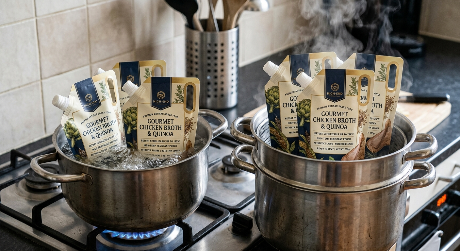
Only if it's a retort or heat-resistant grade with an RCPP inner layer and a matching high-temp spout. Standard barrier pouches will likely delaminate or leak at 100°C, so check the spec first.
Are these pouches microwave safe?
Some are, but microwave-safe and boil-safe aren't the same. Microwave pouches need steam-venting features to release pressure. Always confirm the specific microwave rating rather than assuming heat tolerance transfers.
Will boiling release BPA or chemicals into the food?
A properly made food-grade pouch with BPA-free films and spouts won't leach harmful substances at rated temperatures. The key is staying within the certified heat range—exceeding it is where problems start.
What's the difference between heat-resistant and retort pouches?
Heat-resistant generally covers boiling and steaming up to around 100°C. Retort barrier pouches go further, surviving pressurized sterilization at 116–135°C, which makes products shelf-stable without refrigeration.
Can recyclable pouches handle high heat?
Mono-material polypropylene options handle moderate heat well, typically up to around 95°C. For full high-pressure retort, traditional multi-layer laminates still perform better today, though recyclable high-heat options keep improving each year.