To order custom tea bags pouches brand packaging, first define your tea format, serving size, barrier needs, artwork, order quantity, and packing method. Then ask a packaging manufacturer to confirm materials, dimensions, printing, samples, production checks, and delivery terms before you approve the final order.
The design is only one part of the decision. A pouch must also protect aroma, run smoothly on your filling line, communicate required information, and remain practical for customers to open and store.

What Should You Decide Before Requesting a Quote?
A useful quotation depends on clear specifications. If you send only a logo and a reference photo, the supplier must make assumptions about size, material, printing, and packing conditions.
Start with the tea itself. Loose-leaf tea, pyramid sachets, flat filter bags, herbal blends, and individually wrapped tea bags can require different structures and dimensions.
- Tea format: Loose leaf, flat tea bag, pyramid sachet, or another format
- Pack style: Individual envelope, stand-up pouch, three-side-seal pouch, flat-bottom pouch, or roll film
- Pack quantity: One sachet per envelope or multiple servings per outer pouch
- Target fill weight: The weight and approximate volume of tea in each package
- Filling method: Hand filling, semi-automatic equipment, or a fully automated line
- Storage conditions: Expected temperature, humidity, light exposure, and shelf-life target
- Sales channel: Retail shelf, hospitality service, subscription box, gift set, or online delivery
- Order plan: Quantity per design, flavor, size, and repeat-order forecast
Volume matters as much as weight. Five grams of a dense black tea blend may occupy far less space than five grams of whole chamomile flowers, so a physical filling test is more reliable than choosing dimensions from a catalog.
Which Packaging Format Fits Your Tea Product?
The right format depends on how the tea is packed, displayed, transported, and consumed. Choosing a style only because it looks attractive can create avoidable filling or storage problems.
| Format | Common Use | Main Advantage | Point to Confirm |
|---|---|---|---|
| Individual envelope | One flat or pyramid tea bag | Protects each serving and supports portion control | Seal integrity and compatibility with packing equipment |
| Three-side-seal pouch | Samples, refills, or small tea portions | Compact shape with a large printable area | Tear notch position and opening width |
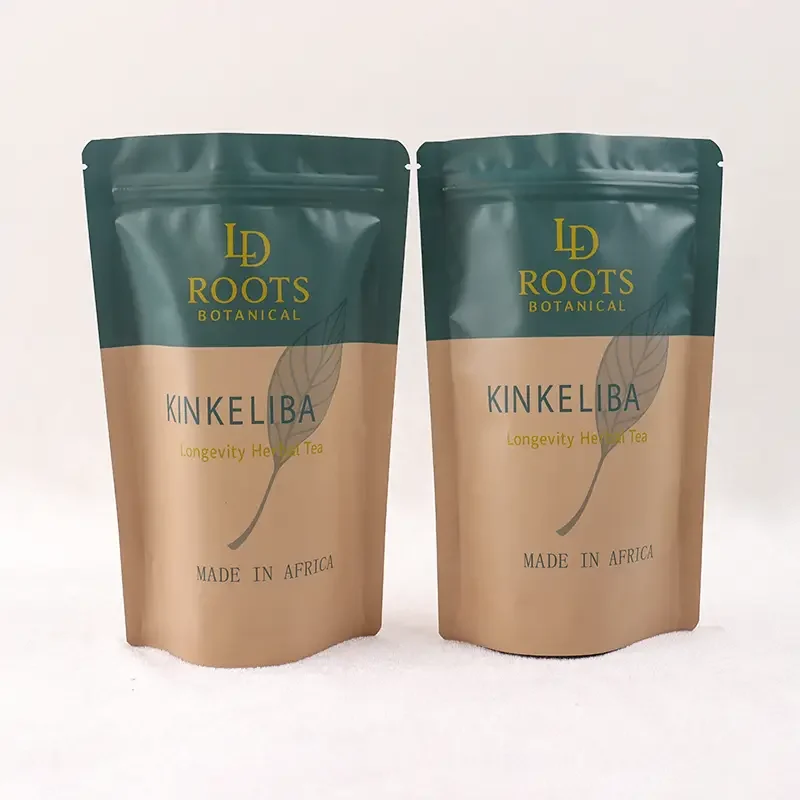
| Stand-up pouch | Multiple tea bags or loose-leaf blends | Strong shelf presentation and optional reclosure | Bottom gusset, zipper position, and fill volume |
| Flat-bottom pouch | Premium loose tea and gift ranges | Stable base with several branding panels | Case-packing efficiency and finished dimensions |
| Roll film | High-volume automated packing | Efficient continuous machine feeding | Film width, repeat length, eye mark, and sealing temperature |
For hotels, cafés, offices, and tasting sets, individually wrapped sachets offer hygiene and convenient distribution. For retail shelves, custom branded tea bag pouches can hold several servings while giving the brand more space for brewing instructions and product storytelling.
If customers will open the package repeatedly, consider a zipper. If the contents are intended for one use, a clean tear opening may be simpler and may use less material.
How Do You Select a Material That Protects Tea?
Tea is sensitive to moisture, oxygen, light, and surrounding odors. A pouch that looks polished but allows aroma to escape can weaken the customer’s first impression before brewing even begins.
Material selection should therefore follow the product’s sensitivity and expected shelf life. Ask the supplier to explain why a proposed structure is suitable instead of accepting vague terms such as “high barrier.”
| Packaging Need | Possible Approach | What to Verify |
|---|---|---|
| Strong aroma retention | Multi-layer barrier structure | Oxygen and moisture barrier data for the complete film |
| Light-sensitive blend | Opaque or metallized layer | Whether the contents remain fully protected around seals |
| Product visibility | Clear film or a transparent window | Potential trade-off between visibility and light protection |
| Paper-style appearance | Paper-laminated or paper-effect structure | Grease, moisture, sealing, and recycling implications |
| Recyclability goal | Compatible mono-material design where feasible | Local collection rules and performance under real storage conditions |
Because YLTPACK holds FDA, ISO 9001, ISO 22000, and GRS certifications, we recommend requesting documentation that relates to the exact material and intended food-contact use. A certification logo alone does not replace traceability, migration documentation, or a written material specification.
Sustainability claims also require care. Terms such as recyclable, compostable, and biodegradable describe different end-of-life routes, and their practical value depends on the collection and processing systems available in the destination market.
What Information Belongs on the Artwork?
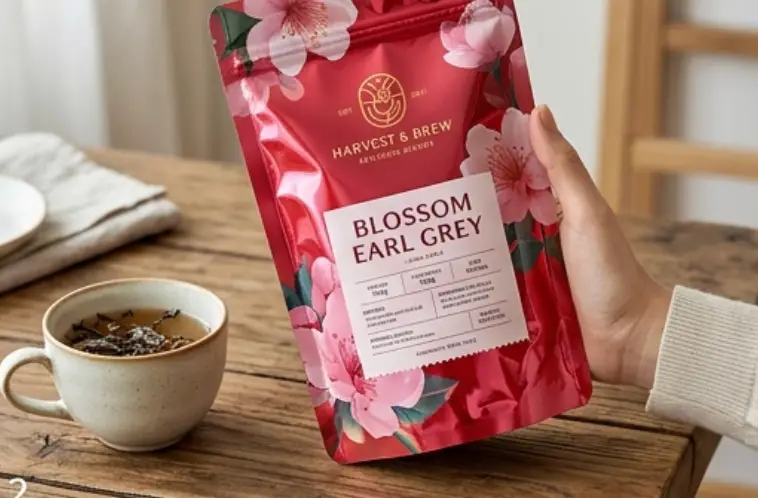
Effective packaging helps a shopper identify the tea in seconds. It should make the brand, variety, flavor cues, quantity, and preparation method easy to find without overcrowding the front panel.
Custom printed tea bag packaging commonly includes the following elements, although legal requirements vary by destination:
- Brand name and product name
- Tea type, blend, or flavor
- Net quantity and serving count
- Ingredient and allergen information where applicable
- Brewing temperature, steeping time, and serving guidance
- Storage instructions
- Lot or batch code area
- Use-by or best-before date area
- Business identity and required contact details
- Barcode, recycling guidance, and market-specific statements
Regulatory responsibility remains with the company placing the product on the market. As of July 22, 2026, labeling, environmental claims, language rules, and producer-responsibility requirements continue to differ across countries and regions, so confirm the current rules with a qualified local adviser.
Build the Design on the Supplier’s Dieline
A dieline shows the pouch’s finished edges, seals, folds, gussets, zipper, tear notch, and safe artwork area. Designing on the correct template prevents important text from disappearing into a seal or folding around a corner.
Our in-house design team often helps brands that only have a rough idea, a logo, and several reference images. Even when a supplier assists with layout, the brand owner should approve spelling, colors, claims, barcodes, and regulatory text.
Prepare Print-Ready Artwork
- Use the requested vector file format for logos and line graphics
- Outline or package fonts according to the printer’s instructions
- Supply linked images at the required resolution
- Include bleed beyond the trim or seal boundary
- Set up spot colors, white ink, and special finishes as directed
- Keep barcodes at a scannable size with sufficient contrast and quiet space
If you want personalized tea bags with logo graphics, clarify whether the mark will appear on the filter bag, string tag, individual wrapper, outer pouch, or all four. These components use different materials, print processes, and artwork templates.
Which Printing Method Should You Choose?
Printing should match the number of designs, forecast quantity, image complexity, and repeat-order plan. The lowest setup burden is not always the most efficient choice over several production runs.
| Factor | Digital Printing | Gravure Printing |
|---|---|---|
| Typical fit | Trials, seasonal designs, and several smaller variations | Larger repeat quantities and stable artwork |
| Printing setup | No engraved cylinders | A cylinder is generally required for each print color |
| Design changes | Usually easier between short runs | Changes may require new cylinders |
| Color planning | Suitable for detailed graphics and variable design needs | Strong consistency for established repeat programs |
| Decision priority | Flexibility and lower inventory exposure | Long-run efficiency and repeatability |
Ask whether the quoted quantity applies to the total order or to each design. Ten flavors using one pouch size may still require separate artwork preparation, cylinder sets, or production minimums.
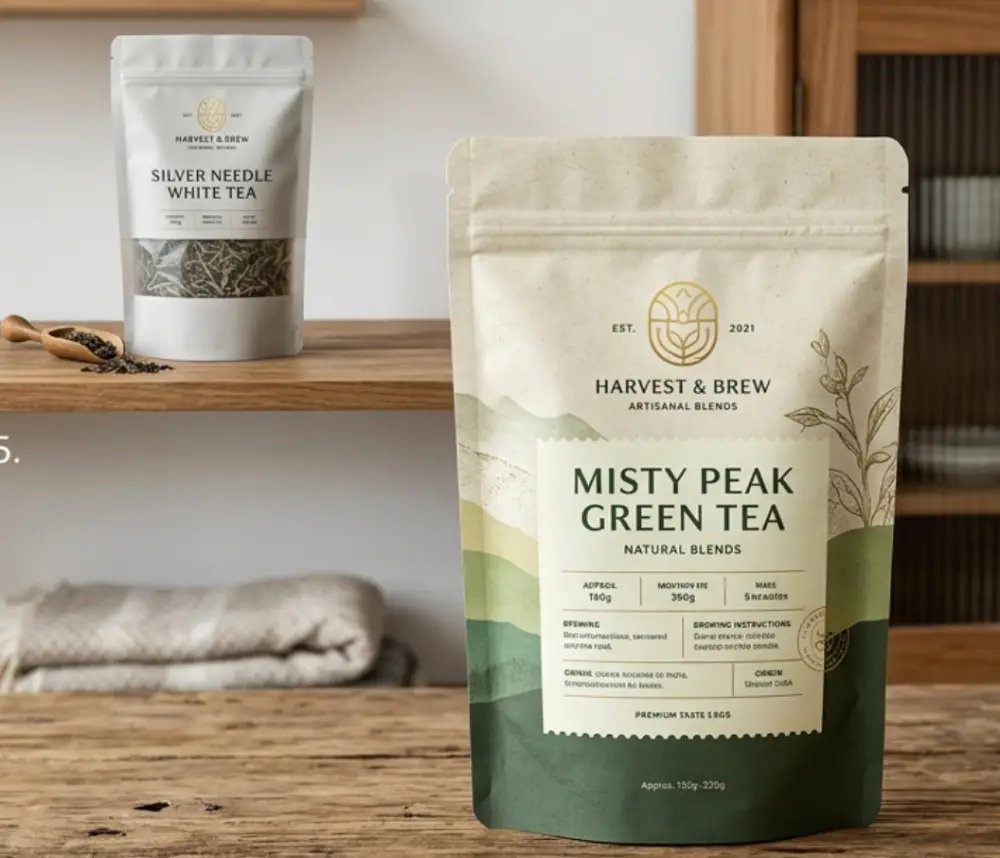
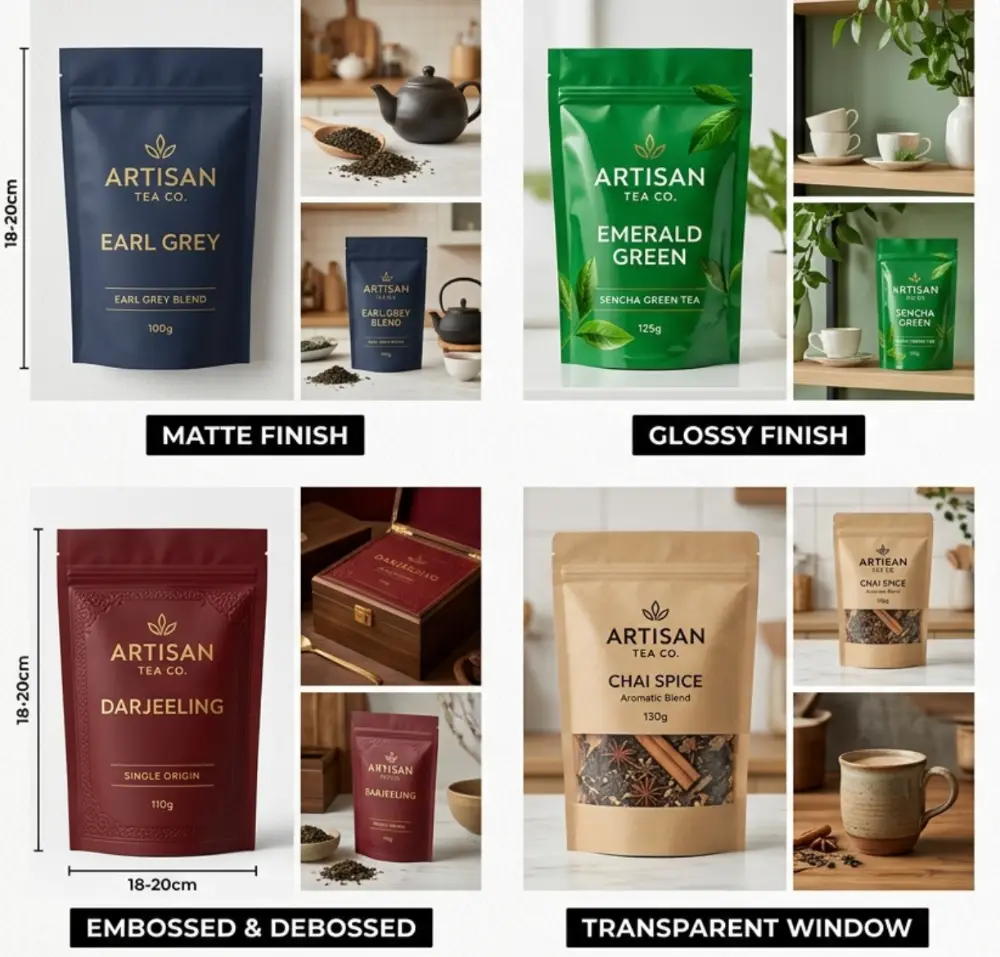
Finishes such as matte surfaces, gloss highlights, soft-touch effects, metallic areas, and windows can improve shelf impact. Each addition should have a purpose, because complex decoration may affect lead time, recyclability, scuff resistance, and consistency.
How Should You Evaluate Samples Before Production?
A screen proof can confirm layout, but it cannot fully demonstrate pouch feel, zipper strength, seal behavior, or actual fill capacity. Use several approval stages when the order is important or the package is technically demanding.
- Stock sample: Evaluate material feel, general construction, zipper, tear notch, and finish.
- Size prototype: Confirm the dimensions using the intended tea and serving count.
- Digital or printed proof: Review placement, spelling, graphics, and approximate color.
- Production sample: Approve the final material, printing, seals, and conversion details where available.
In YLTPACK’s 6,800㎡ cleanroom facility, packaging is produced under controlled hygiene procedures. Buyers should still define measurable acceptance criteria, including dimensions, print position, sealing appearance, odor, and any performance tests required for their product.
Run a Practical Packaging Test
- Fill the pouch with the actual tea or sachets
- Check whether the package stands and closes correctly
- Test opening with dry and slightly damp hands
- Store filled samples under expected conditions
- Place samples in shipping cartons and check compression
- Run machine trials if automatic equipment will be used
- Scan barcodes from several printed samples
- Compare approved colors under consistent lighting
Working with brands across North America, we have found that one common mistake is approving dimensions from artwork alone. A pouch may appear correct on screen yet become too tight after the zipper, seals, and real product volume reduce its usable space.
What Determines the Order Quantity and Lead Time?
Production planning depends on pouch size, material structure, print method, number of designs, finish, testing needs, and factory schedule. Delivery time must also account for artwork approval, material preparation, manufacturing, inspection, packing, and freight.
When comparing wholesale custom tea bag packaging proposals, ask every supplier to quote against the same specification. Otherwise, one option may appear more attractive simply because it uses a different material, omits a feature, or assumes a larger tolerance.
| Order Variable | Why It Matters | Question to Ask |
|---|---|---|
| Quantity per design | Each flavor may require separate print setup | Is the minimum calculated per artwork or across the total order? |
| Material availability | Special structures may require additional preparation | Is the film stocked or made specifically for this order? |
| Number of print colors | Color count can affect setup and production planning | How are white ink, spot colors, and finishes counted? |
| Approval process | Late artwork changes delay material release | Which approval starts the production schedule? |
| Shipping method | Carton volume and urgency influence transit planning | What are the packed carton dimensions and total volume? |
As a manufacturer that has produced packaging for more than 20 years, YLTPACK recommends planning repeat orders before stock becomes urgent. Allow time for quality checks and freight disruption rather than treating the estimated factory completion date as the guaranteed arrival date.
How Can You Compare Packaging Suppliers Fairly?
A reliable supplier comparison goes beyond images and quotations. You need evidence that the manufacturer can reproduce the approved package, document the materials, communicate changes, and handle a problem if one occurs.
- Food-contact documentation: Request records relevant to the material and destination market.
- Quality system: Ask how incoming film, printing, lamination, curing, pouch making, and final goods are checked.
- Traceability: Confirm whether materials and production batches can be identified after delivery.
- Artwork control: Check how revisions are numbered, approved, and protected from accidental reuse.
- Color control: Agree on the reference standard and acceptable variation.
- Complaint handling: Ask what evidence is required and how corrective action is documented.
- Communication: Confirm who manages artwork, production updates, documents, and shipping coordination.
For private label tea bag pouches, confidentiality and version control deserve special attention. A supplier should separate customer artwork, confirm ownership of print files or cylinders, and obtain written approval before production.
A useful supplier does not simply agree with every request. The team should explain trade-offs, identify missing information, and recommend testing when a design choice could affect tea protection or filling performance.
What Mistakes Commonly Delay an Order?
Most delays begin before manufacturing. They occur when the product, artwork, or approval process is not fully defined.
- Choosing dimensions without testing the actual contents
- Sending a low-resolution logo instead of editable artwork
- Placing text inside seals, gussets, or zipper areas
- Assuming screen colors will match printed film exactly
- Changing ingredients or legal text after print approval
- Failing to reserve space for date and batch coding
- Ordering several flavors without stating quantities per design
- Ignoring machine direction, eye marks, or roll specifications
- Approving a sustainability claim without checking local rules
- Planning delivery around production time while excluding freight
Create one approval document that records size, material, thickness, print file version, finish, closure, quantity, packing method, and testing requirements. This becomes the shared reference if different team members handle design, purchasing, and product launch.
What Should Your Final Purchase Checklist Include?
Before authorizing production, confirm every item below in writing. Verbal discussions are useful, but the signed specification and approved artwork should control the order.
| Checkpoint | Approval Requirement |
|---|---|
| Product | Tea type, fill weight, volume, and number of servings |
| Dimensions | Finished width, height, gusset, seals, and usable internal space |
| Material | Layer structure, thickness, barrier properties, and food-contact use |
| Features | Zipper, notch, valve if relevant, window, hang hole, and rounded corners |
| Printing | Method, colors, finish, surface treatment, and approved reference |
| Artwork | Correct revision, dieline, legal text, barcode, and coding area |
| Quantity | Total units and allocation per size, flavor, and design |
| Quality | Tolerances, inspection criteria, test methods, and reporting |
| Packing | Units per carton, carton marks, pallet requirements, and moisture protection |
| Delivery | Production basis, trade terms, destination, documents, and shipping method |
For a specification review, send YLTPACK your tea format, target quantity, pouch style, approximate dimensions, artwork status, destination country, and desired delivery window. You can reach the team through WhatsApp at +86 182 1944 5665 or email [email protected].
Frequently Asked Questions
Can I order packaging if I only have a logo and a rough idea?
Yes. A design team can help turn your logo, product details, preferred colors, and reference images into a workable layout. You will still need to review all claims, ingredients, spelling, barcodes, and market-specific labeling before approval.
How do I determine the correct pouch size?
Provide the actual tea, sachet dimensions, serving count, and desired headspace whenever possible. The supplier can create a size recommendation, but you should approve it through a physical fill test because tea volume varies greatly by leaf cut and blend.
Can different tea flavors share the same pouch size?
Yes, if the blends have similar volume and use the same serving count. Test each variety separately, however, because whole leaves, fruit pieces, flowers, and finely cut tea can fill the same pouch very differently.
What should I approve before full production begins?
Approve the final dimensions, material structure, closure features, artwork revision, print colors, finish, quantity per design, packing method, and quality criteria. Keep the signed specification, approved proof, and color reference together so every party works from the same version.
How far ahead should I place an order?
Work backward from the required arrival date and include time for design, sampling, approvals, material preparation, production, inspection, and shipping. Build in additional time for artwork revisions, machine trials, peak production periods, customs clearance, and unexpected freight delays.
Conclusion: Order for Performance, Not Appearance Alone
Successful tea packaging begins with the product and customer experience, then moves into dimensions, barrier protection, artwork, printing, testing, and delivery planning. A clear specification helps suppliers give comparable recommendations and reduces expensive changes after production starts.
Before placing a bulk order, test the real contents, verify the labeling requirements in your sales market, and approve every technical detail in writing. That disciplined process gives your tea a package that protects its aroma, supports efficient packing, and presents your identity consistently from the first shipment to future reorders.