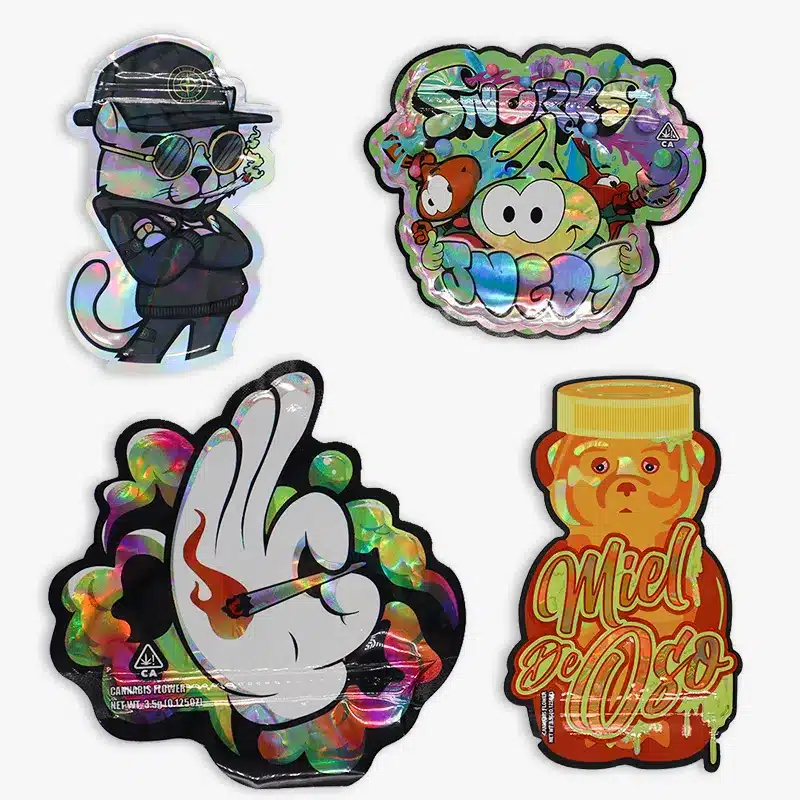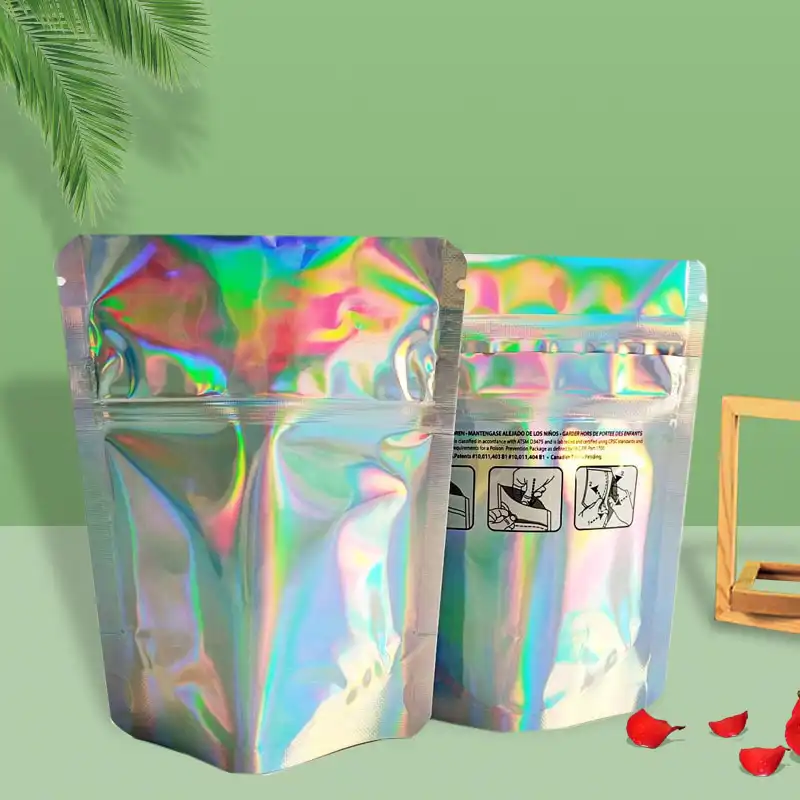
"Just copy the one on the shelf" is how most pouch briefs start, and it overlooks that a pouch that sells for one product can fail for yours. Pouch selection is unglamorous and easy to get wrong. It still decides shelf impact, shelf life and returns. Hot selling packaging pouches are only hot for a particular fill, barrier and channel. The criteria below are product fit, barrier, closure, print method and minimum order. Each item is a stop-doing / start-doing pair.
Which Pouch Types Sell Best for Food, and Why Sales Rank Misleads
Stand-up, flat bottom, spout and ziplock formats lead in food packaging. Which one sells best for you depends on the product, not on a ranking. A "best seller" describes other brands' fills, shelf spaces and price points, so treat it as a starting list, not a verdict.
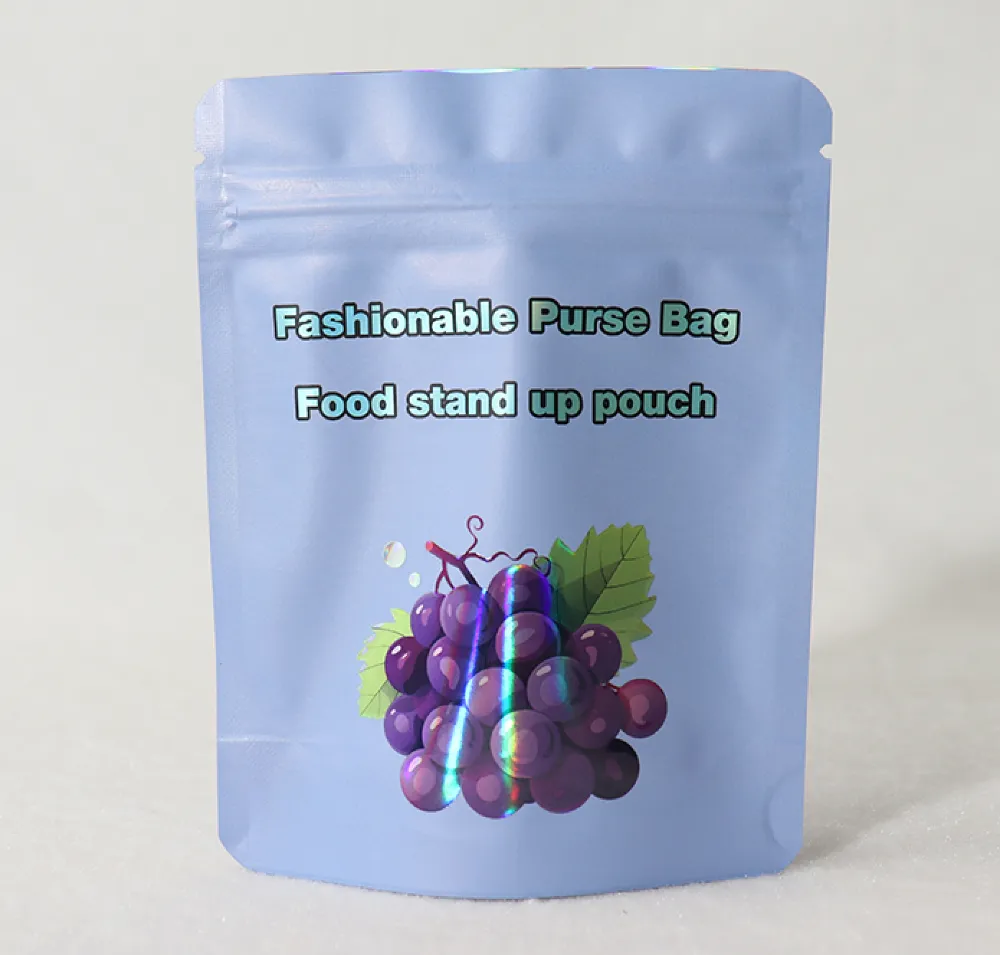
A stand-up pouch is a flexible bag with a sealed gusset at the bottom that lets it stand on a shelf. A flat bottom pouch (also called a box pouch) has a formed base and two side gussets, so it stands like a small carton. A spout pouch carries a fitment for pouring liquids and pastes. A ziplock pouch has a press-to-close zipper for repeated opening.
Five checks decide the choice. They come back in every section that follows.
- Product fit: dry, liquid, paste, oily, sharp-edged or gassing.
- Barrier: how much oxygen, moisture and light the product tolerates over its shelf life.
- Closure: how often the consumer opens the pack.
- Print method: digital or gravure, set by how many designs and how many pieces per design.
- Minimum order: what the structure and print method require per design.
Stand-Up Pouch Styles: Which One Sells Best
Stop copying the most common stand-up style by default. Start by matching style to the product and the shelf. The question "which stand up pouch style sells best" has no single answer. The one that suits your fill weight and your shelf does.
Snacks, granola and powders
Stop picking a size from a competitor's photo. Photos hide fill weight, and bulk density changes everything: granola and powders fill very differently at the same weight. Start from the fill per bag, then size the pouch around it with a capacity calculator and a physical sample. Check the bottom gusset too. A shallow gusset slumps under a heavy fill. Add a tear notch if the pouch has no zipper, or consumers will open it with scissors, or worse, with their teeth.
Custom printed stand-up pouches with window or full print
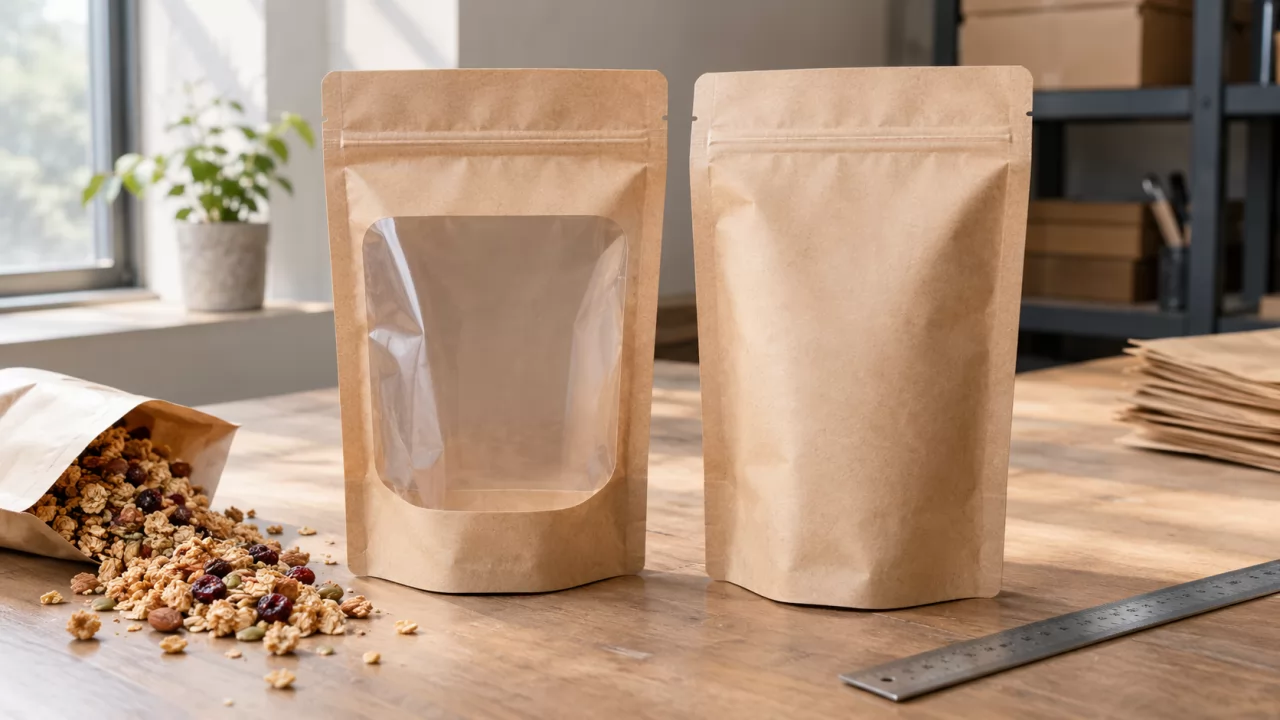
Stop adding a large window because the product looks good. A big window cuts the printed area and can let in light that shortens shelf life. Start by deciding what sells the product: seeing it, or the brand story. Full-coverage print with a small window often works for custom printed stand-up pouches. If light-sensitive contents matter, ask for the barrier effect of the window to be stated in the quote.
Flat Bottom Coffee Pouches and the Degassing Valve
Stop treating coffee and snacks as one pouch decision. Start with three things: the release of CO₂, the barrier, and the shelf face. Freshly roasted coffee gives off carbon dioxide for days. A sealed bag without a way out swells. A bag with no barrier lets oxygen in and flavour out.
So the answer to "what type of pouch is best for coffee or snacks" splits. For coffee: a flat bottom or stand-up pouch with a degassing valve and a high-barrier laminate. For snacks: a stand-up pouch, often with a zipper, with barrier matched to how quickly the product goes stale or soft.
Flat bottom versus stand-up for coffee
Stop choosing by price alone. A flat bottom pouch has five printable faces: front, back, two side gussets and the base. It stands firmly, stacks neatly in cartons and gives roasters a shelf face that looks like a box. A stand-up pouch has two large faces and is usually simpler and cheaper to make. Start by asking where the bag will be sold. Shelf-led retail rewards the flat bottom. Online and subscription sales, where the bag ships in a mailer, often do fine with stand-up.
When both fit, don't leave the decision to the buyer's guess. Ask the supplier to name one recommended structure in writing and to price each option. Then compare the two quotes line by line. My default for a retail coffee line is flat bottom; for a trial line or online-only sales, stand-up.
Valve, barrier layer and roast freshness
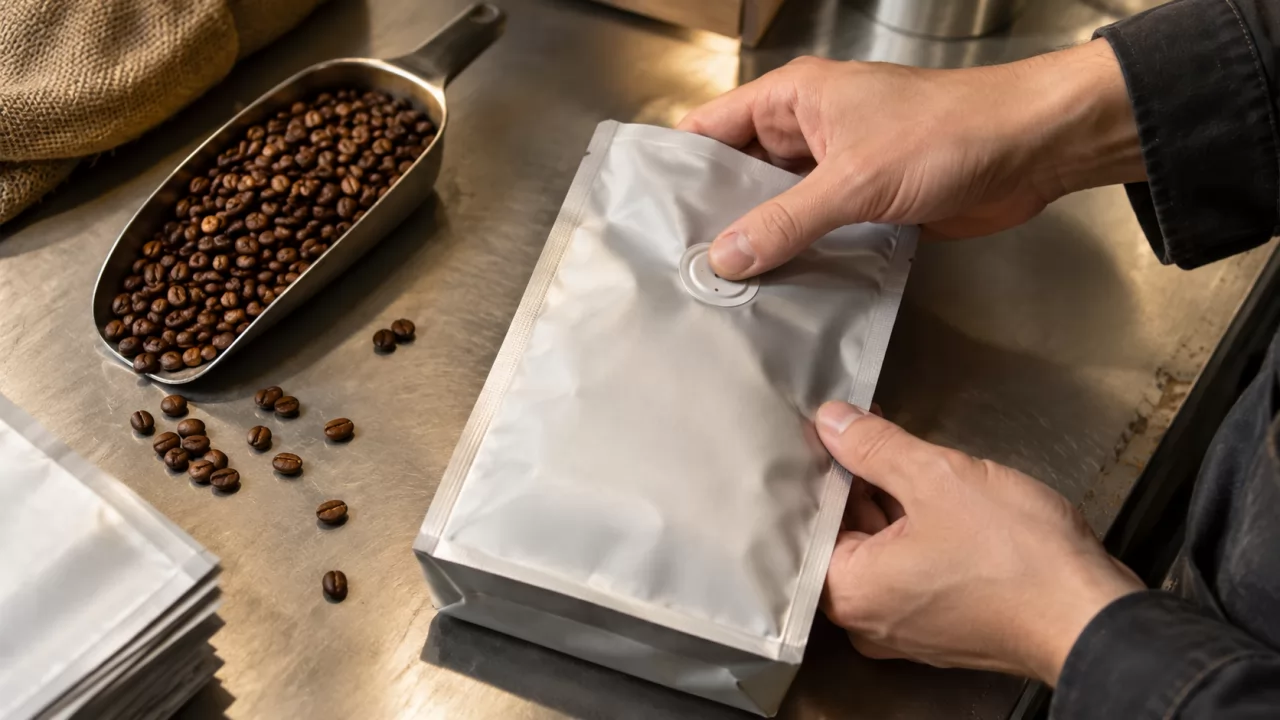
A degassing valve is a small one-way valve fitted to the bag that lets gas out and keeps air out. Stop assuming every coffee bag needs one. Freshly roasted whole beans usually do. Ground coffee off-gases faster. Coffee that has rested long enough before packing may not need one. Start by asking your roaster how long the coffee rests before packing, then choose.
The barrier matters as much. Aluminium foil laminate or another high-barrier laminate slows oxygen and light far better than clear film. Kraft-look bags are popular, but a kraft-paper laminate still needs a barrier layer inside.
Stop ordering a full run without a sample. A valve can sit too close to a seam or sit in the wrong place for your filling line. Ask for a free sample of a similar bag first. Check fit, feel, valve position and size against a real filled bag. The courier cost for the sample is usually on the buyer, so ask for it up front.
Pet food and premium dry food on the same format
Stop reusing a coffee spec for pet food. Kibble is heavy, sharp-edged and oily. It stresses the seams and can puncture thin laminates. Start from the fill weight and the shape of the product. Ask for a laminate thickness suited to it, and drop-test a filled sample. Pick the zipper to suit the weight: a light press-to-close zipper can pop open under a heavy fill or after repeated openings. Treats and premium dry food can use the same flat bottom format, but the fill weight and fat content decide the structure.
Spout Pouch Packaging and Resealable Ziplock Pouches
Stop choosing a closure by looks. Start by matching it to liquid or dry goods and to how often the pack is opened. A spout works for pouring. A zipper works for scooping or repeated access. Using the wrong one is a common cause of leaks and complaints.
Liquids, sauces and refills
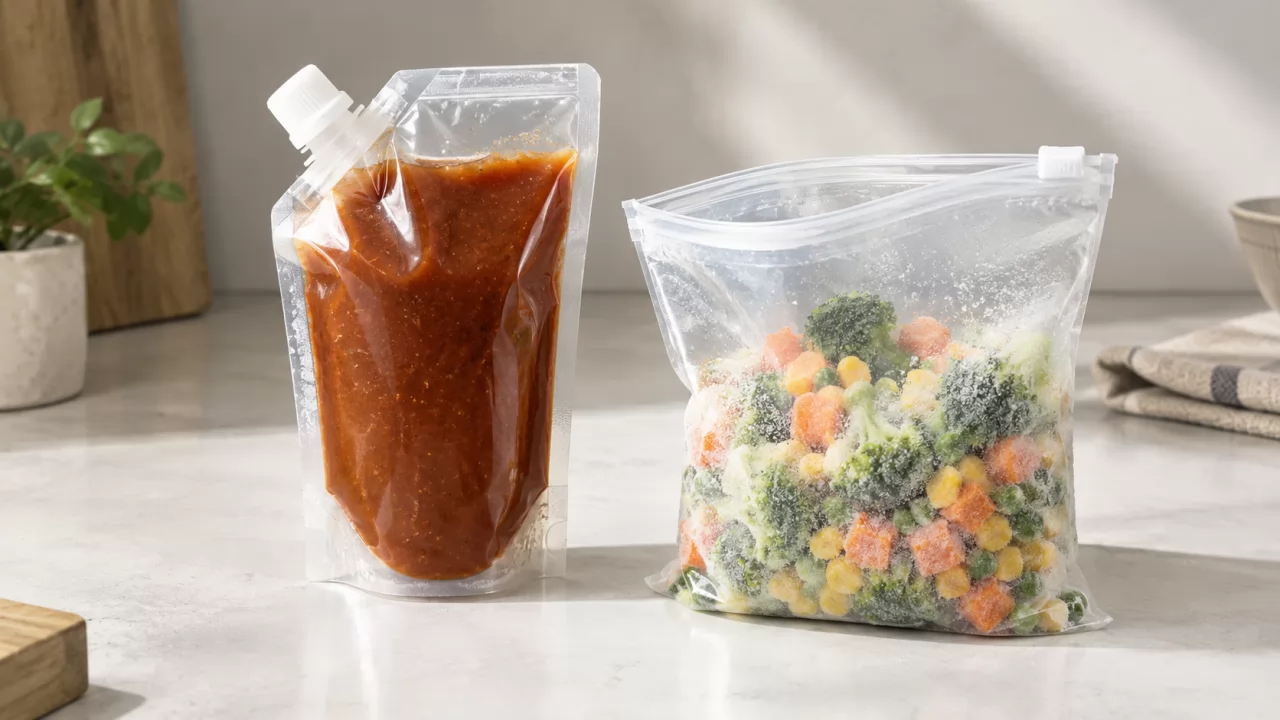
Stop picking the spout by its cap alone. Spout diameter sets the flow: a narrow spout clogs on thick sauce, and a wide one gushes with thin liquid. Start with the viscosity and any particles in the product, then confirm the spout size and the seal around the fitment. Ask how the pouch is leak-tested. Leak testing before production, and again before shipment, is the standard to expect for spout pouch packaging. Hot-fill or sterilised contents change the laminate, so state the process.
Dry and frozen goods with zippers
Stop assuming every zipper is the same. Standard press-to-close zippers, slider zippers and child-resistant versions differ in ease of opening and in closing force. Start by naming how the pack is used: pantry, freezer or travel. Frozen goods need a laminate and zipper that stay workable when cold. And ask about seal-width tolerance on the bag itself. A narrow or uneven seal near the zipper is where resealable ziplock pouches tend to fail first, so check it on the sample before filling.
Hot-Selling Pouch Types Compared
The table below sets the main formats side by side. Treat it as a first filter before you request quotes.
| Item | What to look for |
|---|---|
| Stand-up pouch | Snacks, granola, powders and pet treats; zipper and tear notch options; barrier set by shelf life; suits digital or gravure print. |
| Flat bottom pouch | Coffee, premium food and pet food; five printable faces; degassing valve and zipper options; high-barrier laminate common; suits both print methods. |
| Spout pouch | Sauces, drinks, detergent and refills; spout size matched to viscosity; seal strength and leak testing are the main checks. |
| Ziplock pouch | Dry and frozen food; zipper type and seal-width tolerance; barrier chosen by product. |
| Retort pouch | Ready meals, rice and pet food cooked in the bag; laminate must be rated for the process temperature you state. |
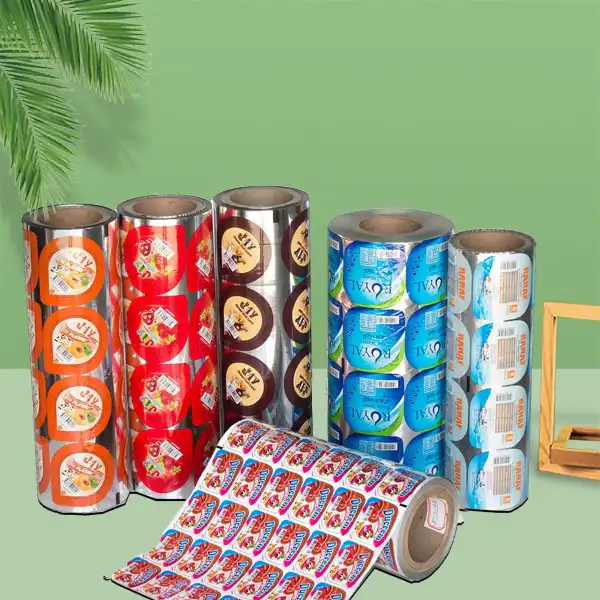
| Roll stock film | For form-fill-seal lines; film must run on your machine; unwind direction and core size are part of the spec. |
If you want a layout before committing, YLTPACK's in-house design team does free artwork layout from an idea or reference photo, and a free sample of a similar bag is available, with the courier paid by the buyer.
Custom Printed Pouches for Small Brands: Print Method, MOQ and Materials
Stop jumping to gravure for a first launch. Start with digital for test runs and many designs, then move to gravure for repeat orders and the lowest unit price. Digital print needs no cylinders, so a short run of several flavours stays practical. Gravure uses engraved cylinders, which pay off only when volume per design is high. For custom printed pouches for small brands, that order of steps limits the stock you carry before the market has voted.
How to choose, in five checks:
- Digital print: minimum 1,000 pcs per design. Suits launches, test runs and many designs.
- Gravure: minimum 10,000 pcs per design. Suits repeat orders and the lowest unit price.
- Compostable, mono-PE or recycled-content structures: minimum 30,000 pcs per design.
- Roll stock film: minimum 100 kg.
- Cost drivers: material, size, print colours, quantity per design and extras such as zipper, valve or window. These are itemised in the quote.
Rule of thumb: pick the print method from your quantity per design, then pick the material. And keep eco wording honest. A compostable, recyclable or recycled-content claim depends on the exact structure, so ask for the film certificates with the quote. Foil and mylar bags are not recyclable.
Matching Pouches to Your Product: Three Buying Scenarios
A snack launch with several flavours. You need low risk per flavour and a shelf face that differs by flavour. A stand-up pouch with a zipper, printed digitally, fits. In the RFQ, give fill weight, number of designs, quantity per design and the barrier you expect for shelf life.
A coffee roaster with a fresh-roast line. You need CO₂ release and oxygen protection. A flat bottom pouch with a degassing valve and a high-barrier laminate is the usual pick. Ask for a sample, give roast-to-pack rest time and say whether beans are whole or ground.
A sauce refill brand. You need leak-proof pouring and a stable base. A spout pouch fits. State the viscosity, fill temperature, whether the pouch will be heated and the spout size you want. Ask how leak testing is done and request test results with the quote.
FAQ
What is the best-selling pouch type for food packaging?
The stand-up pouch is the most common starting point. Flat bottom leads for coffee and premium food, spout for liquids and ziplock for dry and frozen goods. Choose by product, not rank.
Can small brands order custom printed pouches in low volumes?
Yes. Digital print starts at 1,000 pcs per design, which suits launches and several designs. Compostable, mono-PE and recycled-content structures start at 30,000 pcs.
Do I need a degassing valve on every coffee pouch?
No. Freshly roasted beans usually need one. Coffee that has rested before packing may not. Confirm the rest time with your roaster and test a sample.
What information does a supplier need to quote a pouch accurately?
Product and fill per bag, bag type or photo, size if known, quantity per design, number of designs, artwork or idea, extras and target market. Missing items slow the quote.
Send those details to [email protected], and our team returns an itemised quote in one business day. Compliance documents for your target market depend on the exact structure and are confirmed in the quote.