Why Choosing the Right Pouch Structure Matters for Your Product
Understanding the various types of stand-up pouches packaging available helps you match form to function. A pouch designed for dry snacks won't protect a moisture-sensitive protein powder the same way. A bag built for liquids needs entirely different engineering than one holding coffee beans.
This guide walks you through the major pouch formats, the materials behind them, and which product categories each one serves. Think of it as a decision framework — not a sales pitch.
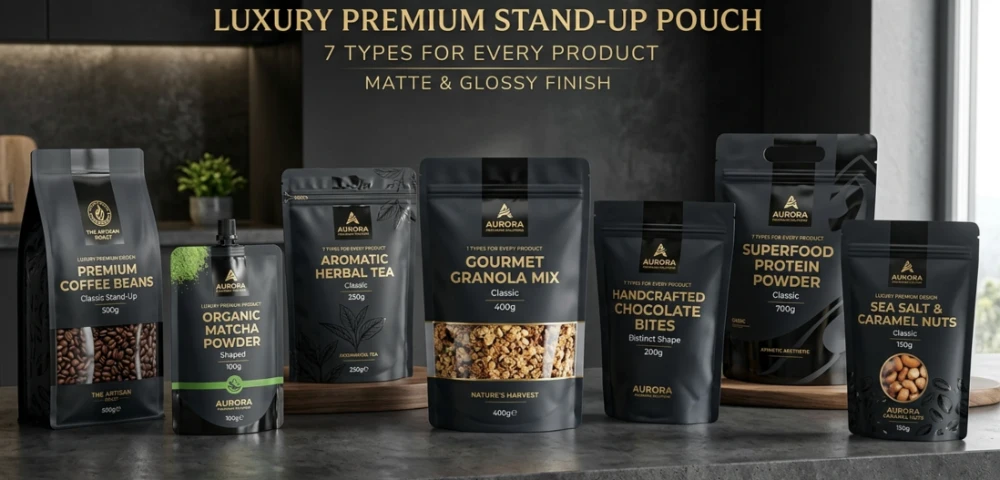
The Core Formats: How Each Pouch Style Serves a Different Purpose
Stand-up pouches come in several structural variations, each engineered for specific product needs. Here's a breakdown of the most common formats brands order for bulk custom packaging runs.
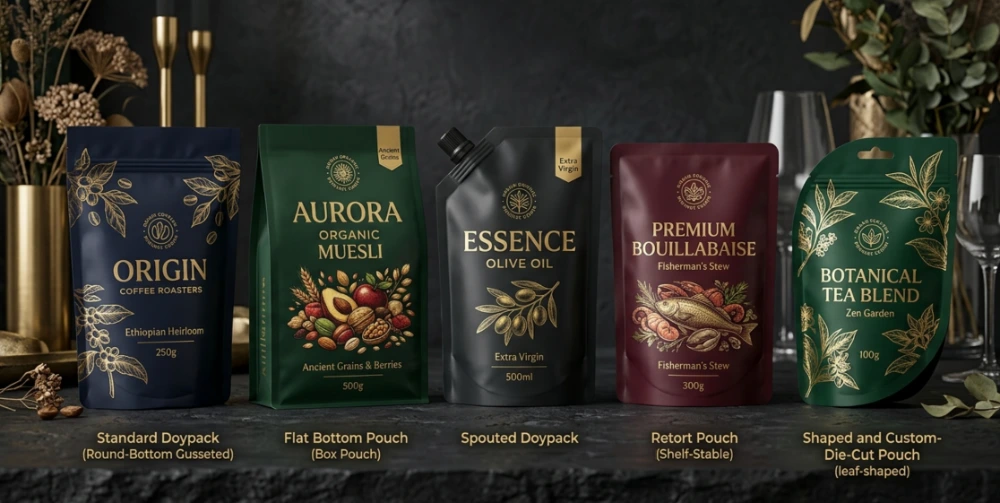
Standard Doypacks (Round-Bottom Gusseted Pouches)
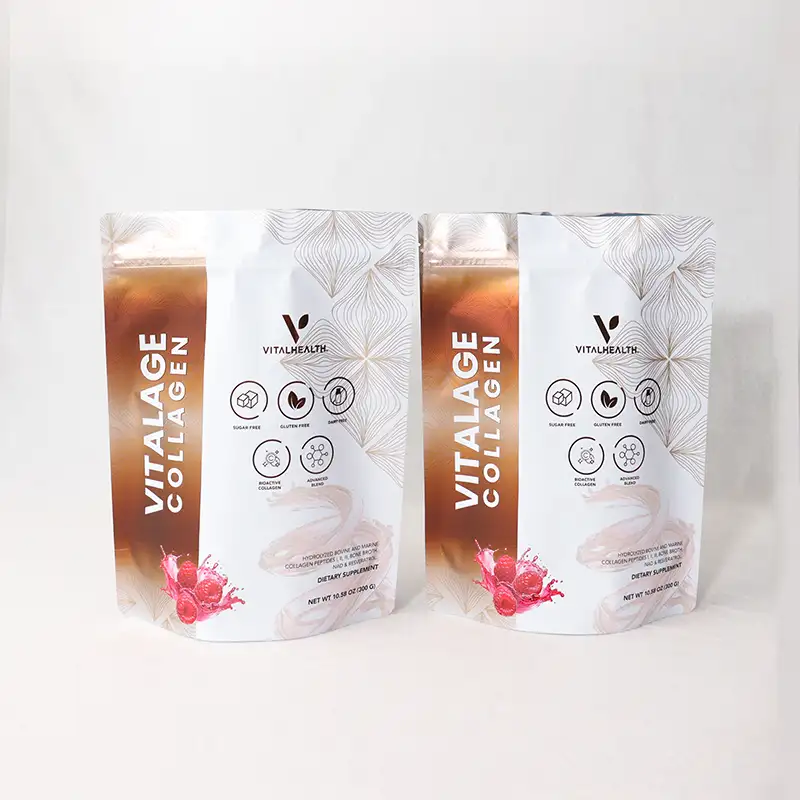
This is the classic format most people picture. A bottom gusset allows the pouch to stand upright on retail shelves, offering strong brand visibility. It works well for dry goods like nuts, candy, granola, and dried fruit.
The round-bottom design distributes product weight evenly, which helps with stacking during transit. For brands launching a new SKU, this format offers the lowest tooling complexity and fastest turnaround.
Flat Bottom Pouches (Box Pouches)
Flat bottom pouches provide a box-like shape with five printable panels, giving brands significantly more real estate for storytelling and regulatory information. They stand more rigidly than round-bottom styles, creating a premium shelf presence.
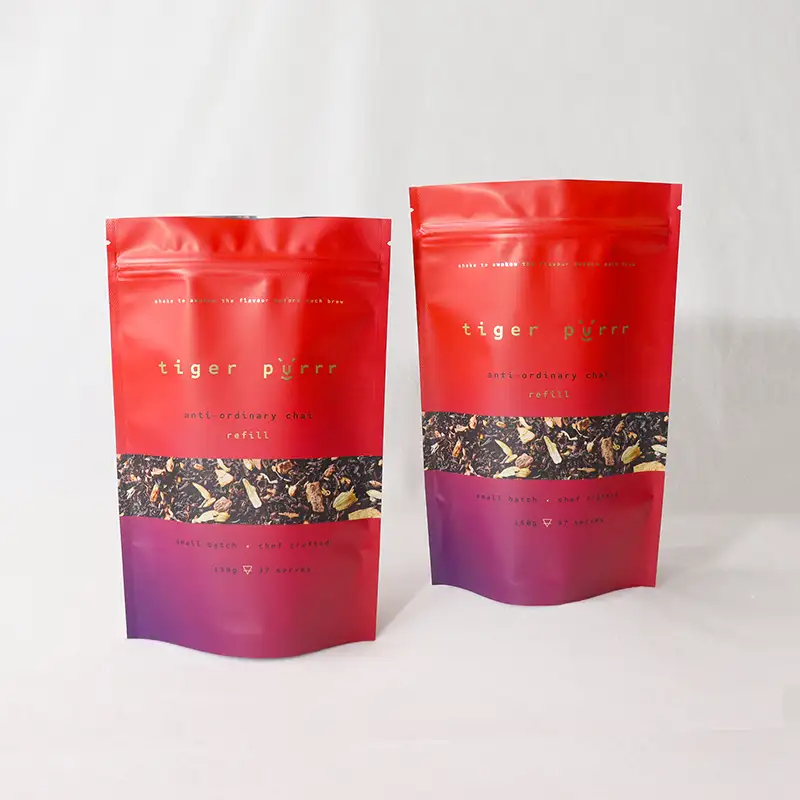
Coffee roasters and specialty tea brands frequently choose this format. The structure supports a degassing valve installation, which allows freshly roasted beans to off-gas CO₂ without letting oxygen in — preserving aroma integrity for weeks longer.
Spouted Doypack Pouches
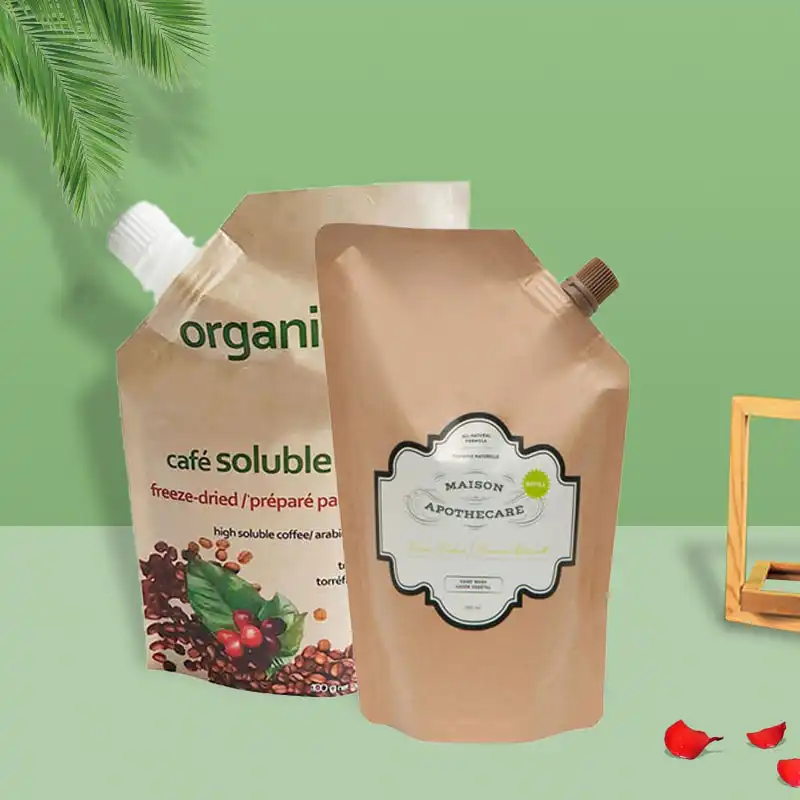
When your product is liquid or semi-liquid — think juice concentrates, baby food purees, cleaning solutions, or condiment refills — spouted doypack pouches provide controlled dispensing without mess. The spout and cap system also functions as a reseal mechanism.
These pouches typically require heavier-gauge laminations to handle the weight of liquids. As a manufacturer that has produced packaging for 20+ years, we've found that brands often underestimate the importance of seal strength testing for liquid applications. A burst failure in transit can destroy an entire pallet.
Retort Pouches (Heat-Processed Shelf-Stable Bags)
Retort stand-up bags are designed to withstand high-temperature sterilization (typically 121°C or higher), making them suitable for ready-to-eat meals, soups, pet food, and military rations. They replace traditional cans while reducing weight by up to 80%.
The laminate structure for retort applications usually involves aluminum foil or AlOx-coated layers sandwiched between PET and CPP films. This creates an impenetrable barrier against oxygen, moisture, and light — critical for products requiring 18–24 month ambient shelf life.
Shaped and Custom-Die-Cut Pouches
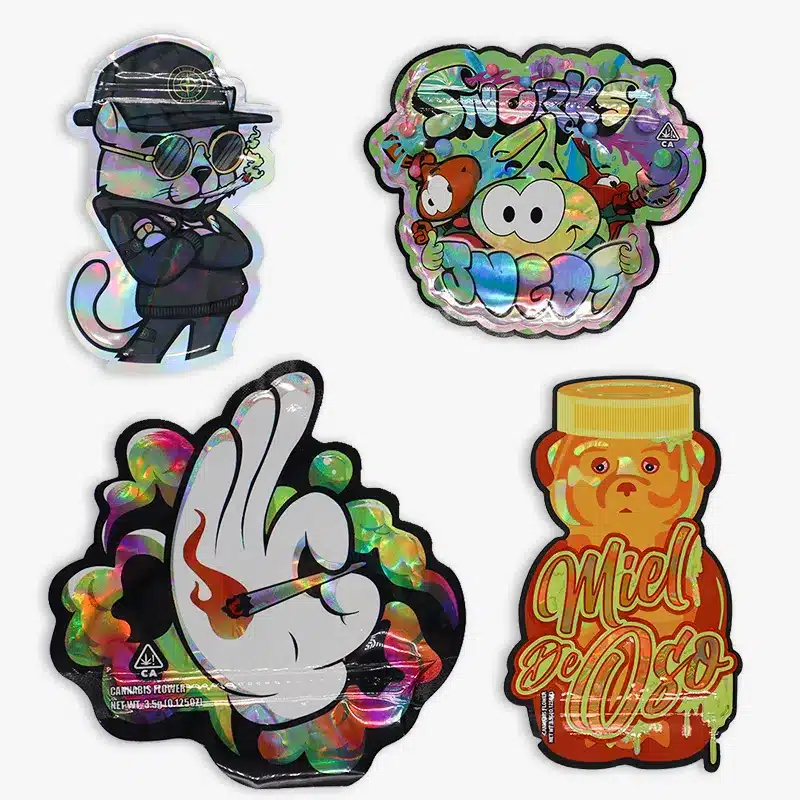
For brands competing in crowded retail environments — particularly snack foods, children's products, and limited-edition launches — custom-shaped pouches offer instant differentiation. These require specialized die-cutting tooling but create an unboxing moment that standard rectangles simply cannot match.
Our in-house design team often helps brands who only have a rough concept sketch and need structural engineering support to turn that vision into a production-ready file.
Matching Pouch Formats to Product Categories
| Product Category | Recommended Pouch Format | Key Feature Required | Barrier Priority |
|---|---|---|---|
| Coffee & Tea | Flat bottom with valve | Degassing valve, high oxygen barrier | Oxygen + Light |
| Dry Snacks & Nuts | Standard doypack with zipper | Resealable closure, grease resistance | Moisture + Oxygen |
| Protein Powder / Supplements | Standard or flat bottom | High moisture barrier, wide opening | Moisture |
| Pet Food (Dry Kibble) | Large-format flat bottom | Puncture resistance, heavy-duty zipper | Oxygen + Moisture |
| Pet Food (Wet/Treats) | Retort pouch | High-temp sterilization compatibility | Full barrier (foil) |
| Baby Food / Purees | Spouted pouch | Child-safe cap, squeeze-dispensing | Oxygen + Light |
| Sauces & Condiments | Spouted or retort | Leak-proof seals, chemical resistance | Oxygen |
| Detergent / Household Liquids | Spouted doypack | Chemical-resistant inner layer | Puncture resistance |
| Cannabis / CBD Products | Child-resistant pouch | Compliance closure, opaque barrier | Light + Odor |
| Cosmetics / Sheet Masks | Three-side seal or shaped pouch | Aesthetic finish, foil inner layer | Moisture |
Understanding Materials: What Goes Into a Multi-Layer Laminate
A pouch is not a single material — it's an engineered laminate. Each layer serves a function: printability, barrier protection, puncture resistance, or heat-seal performance. Choosing different types of stand-up pouch packaging materials directly determines your product's shelf life and consumer experience.
Common Material Layers Explained
- PET (Polyester): Outer print layer. Excellent clarity, stiffness, and heat resistance. Provides the surface for rotogravure or digital printing.
- Aluminum Foil: The strongest barrier available. Blocks 100% of light, oxygen, and moisture. Used for coffee, retort meals, and sensitive supplements.
- MOPP/MOPe (Metallized Films): A cost-effective alternative to full foil. Offers good barrier properties at lower gauge, but not suitable for retort.
- Nylon (PA): Adds puncture and flex-crack resistance. Critical for products with sharp edges (freeze-dried fruits, bone-shaped pet treats).
- PE/CPP (Inner Sealant Layers): These create the heat-seal bond. CPP is chosen for retort applications; PE variants (LLDPE, HDPE) serve ambient products.
How to Choose the Right Laminate Structure
The decision depends on three factors: what your product needs protection from, how long it needs to last, and what format you're filling on. A granola brand shipping domestically with a 6-month shelf life needs far less barrier than an export-grade instant coffee targeting 18 months.
Because we hold FDA and ISO 22000 certifications, we routinely help brands navigate compliance for food-contact materials — especially when exporting to North America or the EU where migration testing requirements differ significantly.
Closure Systems: Zippers, Spouts, and Tear Notches
The closure mechanism you select impacts both consumer convenience and product freshness after first opening. Here's what to consider for your types of resealable stand-up pouches packaging options.
Press-to-Close Zippers
The most common reclosure method. Available in standard (single-track) or heavy-duty (double-track) configurations. Snack brands overwhelmingly prefer these because consumers expect resealability — a 2025 Mintel study found that 73% of snack buyers consider reclosure a purchase factor.
Slider Zippers
These provide a more tactile, secure close and are perceived as more premium. Common on larger-format bags (500g+ pet food, family-size snack packs) where consumers open and reclose frequently. They add slightly to material cost but reduce consumer complaints about incomplete sealing.
Child-Resistant Closures
Required by regulation in cannabis packaging across most North American markets. These use push-turn or squeeze-slide mechanisms that prevent young children from accessing contents. Compliance testing to ASTM D3475 standards is non-negotiable here.
Tear Notches and Easy-Open Features
For single-use pouches (condiment sachets, sample packs, sheet masks), laser-scored tear notches ensure clean opening without scissors. The tear direction and position should be validated during prototyping to avoid tearing into the product area.
Industry-Specific Considerations That Impact Your Choice
Food Products: Barrier Science Meets Freshness
When selecting types of stand-up pouches packaging for food products, barrier performance is your primary variable. Oxygen transmission rate (OTR) and moisture vapor transmission rate (MVTR) determine how long flavors, textures, and nutritional values remain intact.
For example, a craft jerky brand needs low OTR to prevent rancidity but also needs puncture resistance because the product has irregular edges. A freeze-dried meal brand needs near-zero moisture ingress. Each scenario demands a tailored laminate stack.
Pet Food: Durability Meets Transparency
Stand-up pouch packaging types for pet food face unique challenges. Bags must withstand the weight of dense kibble (often 2–10 kg per unit), resist puncture from bone-shaped treats, and survive warehouse stacking. But there's a marketing angle too: pet owners increasingly demand ingredient transparency.
Clear windows, matte-finish printing, and "clean label" design language all influence purchase behavior in this segment. Working with brands across North America, we've found that the most common mistake pet food startups make is under-specifying puncture resistance, leading to pinholes during distribution.
Liquid and Semi-Liquid Products
Liquids amplify every weakness in a pouch's design. Seal integrity must be tested under pressure. Drop tests simulate real shipping conditions. The inner layer must resist chemical interaction with the product — particularly for acidic juices, oily sauces, or household chemicals.
In our 6,800㎡ cleanroom facility, liquid pouch production follows stricter contamination controls because any particulate trapped in a seal creates a potential leak path.
Beauty and Personal Care
Cosmetics brands care about the Instagram unboxing moment. Holographic finishes, soft-touch coatings, and custom shapes transform a pouch from commodity packaging into a brand asset. Sheet mask brands in particular benefit from individual aluminum-foil pouches that maintain serum hydration until the moment of use.
Sustainability: What "Eco-Friendly" Actually Means in Pouch Packaging
The flexible packaging industry is undergoing a material transition. Brands asking about eco-friendly types of stand-up pouches packaging in 2026 now have realistic options that didn't exist five years ago — though trade-offs remain.
Current Sustainable Approaches
- Mono-material PE or PP structures: Designed for mechanical recycling in existing streams. Barrier performance is lower than multi-material laminates, suitable for shorter shelf-life products.
- PCR (Post-Consumer Recycled) content: Incorporating 30–50% recycled material into non-food-contact layers. Requires certification and supply chain traceability.
- Paper-front laminates: A paper outer layer bonded to a thin plastic inner layer. Provides a "natural" aesthetic. Recyclability depends on local infrastructure — it's not universally accepted in paper recycling streams.
- Compostable films: PLA or PBAT-based structures that break down in industrial composting facilities. Not yet suitable for high-barrier applications or products requiring more than 6 months shelf life.
Making the Right Sustainability Decision
The key question isn't "what's the most sustainable material?" — it's "what's the most sustainable material that still protects my product?" An eco-friendly pouch that fails to preserve freshness creates more waste through product spoilage than a conventional laminate that works as designed.
YLTPACK holds GRS (Global Recycled Standard) certification, which means we can verify and document recycled content claims for brands whose customers or retail partners require third-party validated sustainability credentials.
How to Evaluate Whether Your Current Pouch Is Right
If you already have packaging in market and are considering a change — or if you're launching and evaluating samples from multiple suppliers — here's a practical checklist.
Performance Checklist
- Does the product maintain quality through your stated shelf-life window? (Test at 3-month and 6-month intervals.)
- Are you receiving consumer complaints about difficulty opening, resealing, or dispensing?
- Do pouches survive your distribution chain without pinholes, delamination, or seal failures?
- Does the format fit your filling equipment's specifications (fill width, seal temperature range)?
- Is the packaging communicating your brand story effectively at shelf?
Cost Optimization Signals
- You're over-specifying barrier (paying for aluminum foil when metallized film would suffice for your shelf-life target).
- Your current format wastes material on oversized pouches with excessive headspace.
- You're using resealable ziplock bags on a product that's consumed in a single sitting — unnecessary cost.
- Your pouch dimensions don't optimize for case-pack efficiency, driving up freight costs.
Working With a Manufacturer: What to Prepare Before Requesting Samples
To get accurate samples and pricing from any packaging supplier, have these details ready. This saves weeks of back-and-forth.
| Information Needed | Why It Matters |
|---|---|
| Product type and physical form (powder, liquid, solid, granule) | Determines pouch format and filling compatibility |
| Target fill weight or volume | Drives pouch dimensions |
| Required shelf life | Determines barrier specification |
| Storage conditions (ambient, refrigerated, frozen) | Affects material selection and seal requirements |
| Filling method (manual, semi-auto, high-speed line) | Influences pouch mouth width and material stiffness |
| Target market and compliance needs (FDA, EU, etc.) | Determines certifications required from your supplier |
| Estimated annual quantity | Affects MOQ tiers and tooling amortization |
| Artwork status (ready files vs. need design support) | Determines whether you need pre-press and structural design services |
If you're early in the process and don't have artwork finalized, that's normal. YLTPACK's design team supports brands from concept through press-ready files, including dieline creation, color matching, and material mock-ups.
Frequently Asked Questions
What is the most versatile pouch format for a brand with multiple product types?
The standard doypack with a press-to-close zipper covers the widest range of dry and semi-dry products. If you're launching multiple SKUs simultaneously, starting with a consistent format across the line simplifies filling operations and reduces tooling costs. You can differentiate through print design rather than structural format.
How do I know which barrier level my product needs?
Start with your target shelf life and storage conditions. Products stored at ambient temperature with a 12+ month shelf life typically require aluminum foil or high-barrier metallized layers. Shorter shelf-life products (under 6 months) or refrigerated items can often use lighter, more cost-effective flexible packaging materials. Accelerated shelf-life testing confirms whether your chosen structure performs as expected.
Can I use the same pouch for both domestic sales and international export?
Often, yes — but compliance requirements differ. FDA food-contact standards differ from EU regulation (EC) No 1935/2004. If you're shipping to multiple markets, ensure your supplier holds relevant certifications for each destination. Printing requirements (language, nutritional panel format) will also change by market.
What minimum order quantities should I expect for custom-printed pouches?
MOQs vary by format complexity, number of SKUs, and printing method. Rotogravure printing (best for large runs) typically starts at 10,000–30,000 units per design. Digital printing enables shorter runs for market testing. Discuss your volume projections early — a good supplier will recommend the most cost-efficient approach for your scale.
How long does production and shipping typically take for a custom order?
From approved artwork to delivery, most custom pouch orders require 25–35 days for production plus shipping time. Factors that extend timelines include new structural tooling (custom shapes or spouts), color proofing cycles, and third-party lab testing for compliance documentation. Planning 6–8 weeks from initial inquiry to delivery is a realistic baseline for first orders.
Ready to Explore the Right Format for Your Product?
Selecting the right pouch structure isn't just a packaging decision — it's a product protection strategy, a brand communication tool, and a logistics optimization lever all at once. The formats and materials outlined above give you a framework, but every product has unique variables that require tailored engineering.
If you're comparing options or preparing to scale a new product line, YLTPACK's team can provide structural recommendations, material samples, and mock-ups based on your specific requirements. Reach out to start a conversation — no commitment required.
- WhatsApp: +86 182 1944 5665
- Email: [email protected]
Whether you need a simple doypack for trail mix or a retort-grade solution for shelf-stable meals, the right starting point is always the same: define what your product needs, then engineer the packaging around it.