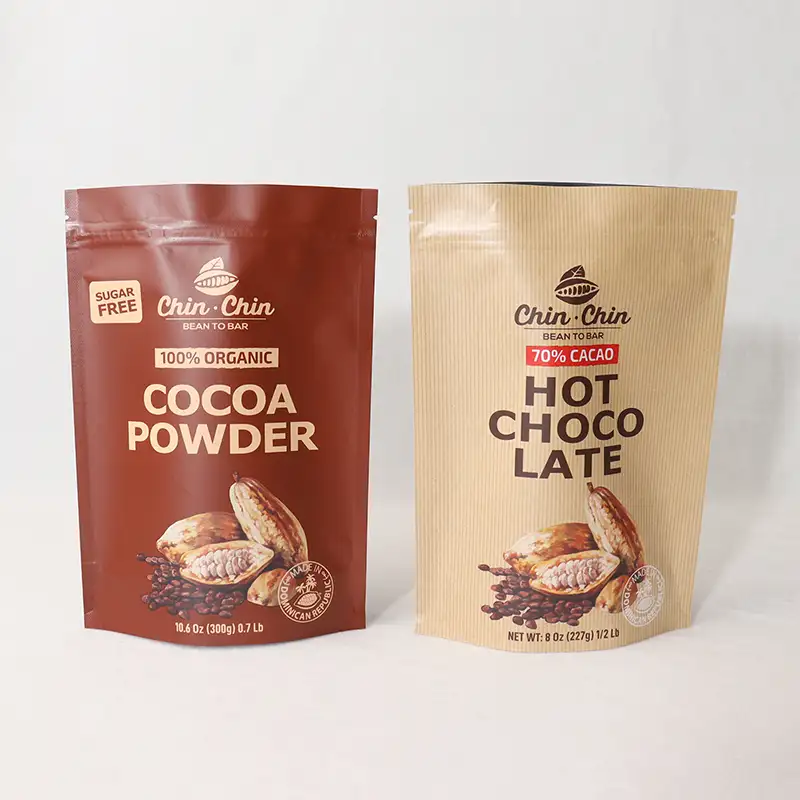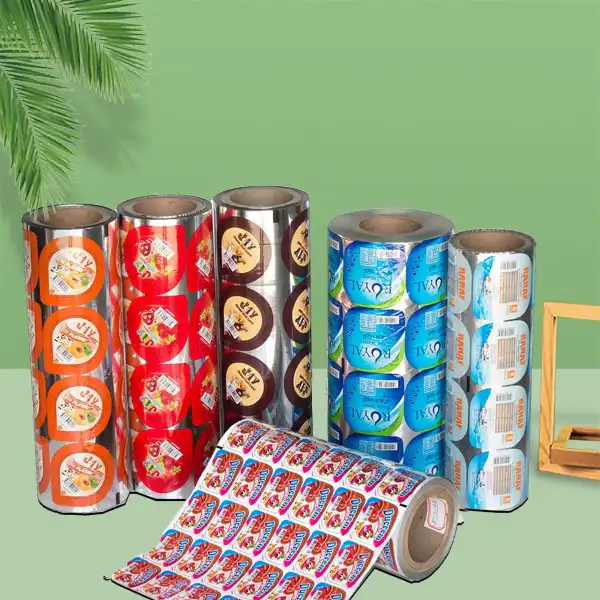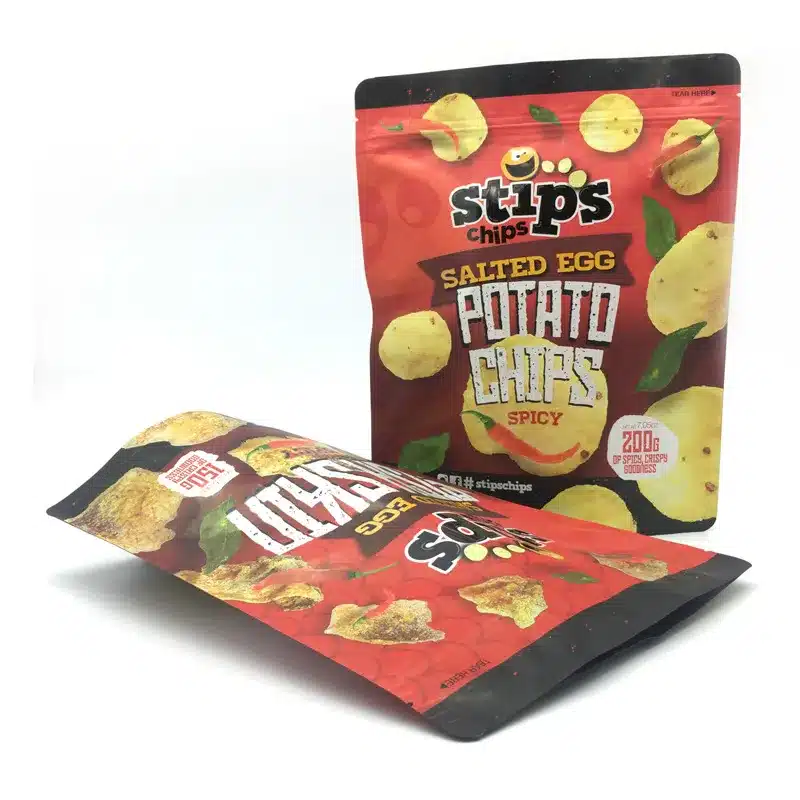

The secret to keeping your chips crispy and nuts crunchy for months lies in choosing packaging materials with the right barrier properties—specifically, films that block oxygen, moisture, and light while maintaining seal integrity throughout distribution. High-barrier flexible films, typically combining multiple layers of metallized PET, aluminum foil, or EVOH, are the gold standard for extending shelf life from weeks to 12-18 months when properly engineered.
Why Barrier Protection Matters More Than You Think
Every day your product sits on a shelf, it's fighting three invisible enemies: oxygen that turns fats rancid, moisture that makes textures soggy, and UV light that degrades flavors. For snack brands, this isn't just about quality—it's about your reputation and return rates.
Here's what happens without adequate protection: potato chips lose crispness within 48 hours of exposure to ambient moisture levels above 3%. Roasted nuts develop off-flavors from lipid oxidation in as little as 30 days when oxygen transmission rates exceed 1 cc/m²/day. The financial impact? Brands report that poor packaging accounts for 18-23% of product returns in the snack category.
Working with food manufacturers across North America for over 20 years, we've seen brands lose entire production runs because they underestimated moisture ingress during humid summer shipping. The cost of upgrading to proper barrier materials is typically 15-20% of package cost, but it prevents losses that can reach 40% of retail value.
Understanding the Three Critical Barriers Your Snack Packaging Must Have
Oxygen Barrier: Your First Line of Defense Against Rancidity
Oxygen is the primary culprit behind that stale, cardboard-like taste in chips and the bitter notes in oxidized nuts. For most snack applications, you need packaging films with an oxygen transmission rate (OTR) below 1.0 cc/m²/day at 23°C and 0% relative humidity.
The most effective snack packaging oxygen barrier materials include metallized films (OTR as low as 0.05 cc/m²/day), aluminum foil laminates (essentially zero transmission), and EVOH-based structures (0.3-0.8 cc/m²/day depending on thickness). Each has trade-offs in cost, recyclability, and visual appeal.
| Material Type | Typical OTR (cc/m²/day) | Cost Factor | Best For |
|---|---|---|---|
| Standard PET/PE | 8-15 | 1x (baseline) | Short shelf life (30-45 days) |
| Metallized PET/PE | 0.05-0.5 | 1.3-1.5x | Premium chips, 9-12 months shelf life |
| EVOH Coextruded Films | 0.3-0.8 | 1.6-2.0x | Transparent windows, eco-conscious brands |
| Aluminum Foil Laminate | <0.01 | 1.8-2.2x | 18+ month shelf life, export markets |
In our 6,800㎡ FDA-certified cleanroom facility, we run accelerated shelf life testing at 38°C and 90% RH to simulate six months of real-world exposure in just three weeks. This helps brands validate whether their chosen structure truly delivers the protection claims promise.
Moisture Barrier: Keeping Crunch Where It Belongs
Even a 2% increase in moisture content can turn a crispy chip into a disappointingly soft one. The target for most snack applications is a water vapor transmission rate (WVTR) below 2.0 g/m²/day at 38°C and 90% RH.
Understanding flexible snack packaging moisture barrier requirements means recognizing that different products have different tolerances. Potato chips are extremely sensitive (target final moisture: 1.5-2.0%), while some nuts can tolerate slightly higher levels (3-4%) before texture suffers noticeably.
Polypropylene-based structures offer decent moisture resistance (WVTR 3-5 g/m²/day) at lower cost points. For premium protection, multi-layer laminates incorporating aluminum or metallized layers can achieve WVTR below 0.5 g/m²/day—essential for products destined for tropical or coastal markets where humidity routinely exceeds 70%.
Light Barrier: The Often-Overlooked Factor
UV and visible light accelerate lipid oxidation and can degrade natural colorants and seasonings. This is particularly critical for products with high unsaturated fat content—think gourmet nuts, flavored chips with natural ingredients, or snacks containing herbs and spices.
Opaque films (whether through metallization, aluminum foil, or pigmented layers) provide essentially 100% light blocking. Clear or translucent structures, even with UV-absorbing additives, typically only block 85-95% of damaging wavelengths. If your marketing team insists on transparency for product visibility, consider a small clear window in an otherwise opaque structure—it's a compromise that preserves most of your barrier performance.
Matching Barrier Requirements to Your Product and Distribution Reality
Short Shelf Life Products (30-90 Days)
If you're a local artisan brand selling through farmers markets or regional retailers with rapid turnover, you might get away with standard PET/PE or BOPP/PE structures. These offer moderate protection (OTR 8-12 cc/m²/day, WVTR 4-6 g/m²/day) at the lowest cost point.
However, even for shorter shelf life expectations, seal integrity matters enormously. We've seen brands blame film performance when the real issue was insufficient seal width (minimum 5mm recommended) or incompatible sealing parameters that created micro-channels for gas exchange.
Standard Retail Distribution (6-12 Months)
This is where most commercial snack brands operate. You need robust protection because you're dealing with variable warehouse conditions, potential temperature cycling during transport, and unknown storage conditions at retail.
The sweet spot for high barrier films for snack packaging in this category is typically metallized PET/PE or PET/metallized PET/PE structures. These deliver OTR below 1.0 cc/m²/day and WVTR around 1.5-2.5 g/m²/day while maintaining reasonable cost and providing excellent printability for brand graphics.
Because we hold FDA and ISO 22000 certifications, we recommend accelerated testing that simulates your entire supply chain—not just ideal storage. Package a sample batch, expose it to 35°C for two weeks (equivalent to a summer truck shipment), then evaluate. Many brands discover their barrier performs well in lab conditions but fails under real distribution stress.
Extended Shelf Life and Export Markets (12-18+ Months)
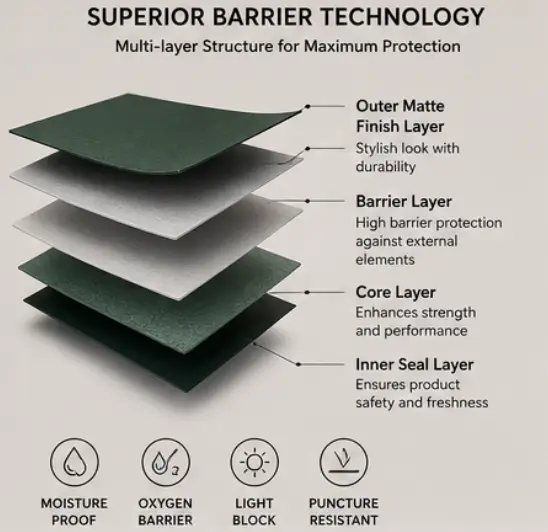
For international shipping, military contracts, or products targeting long-term pantry storage, aluminum foil laminates become the practical choice despite higher costs. Typical structures like PET/aluminum foil/PE or PET/aluminum foil/nylon/PE offer near-absolute barriers (OTR <0.01 cc/m²/day).
One consideration often overlooked: flex-crack resistance. Aluminum foil can develop micro-cracks during shipping if the package experiences repeated flexing or compression. Adding a nylon layer improves puncture resistance, while careful cushioning during palletization prevents damage that compromises barrier integrity.
Testing Standards You Need to Know (And Actually Verify)
Supplier data sheets are a starting point, not the final word. Third-party verification of barrier performance protects you from costly surprises after your product hits the market.
Essential Test Methods
- ASTM D3985: Standard test method for oxygen gas transmission rate—the industry benchmark for OTR measurement
- ASTM F1249: Water vapor transmission rate testing, critical for validating moisture protection claims
- ASTM F88/F88M: Seal strength testing to ensure your closures maintain integrity through distribution abuse
- ASTM F1980: Accelerated aging protocol that simulates months of shelf life in weeks
In our experience helping brands troubleshoot packaging failures, about 60% of issues trace back to seal failures rather than film barrier inadequacy. That's why we test seal strength across multiple temperature points (cold seal performance at 5°C, hot seal at 45°C) to ensure year-round reliability.
Real-World vs. Laboratory Conditions
Standard snack packaging barrier testing standards typically specify 23°C and 0% or 50% RH. But your product likely faces harsher realities: warehouse temperatures that spike to 35°C in summer, relative humidity that swings from 20% to 80% between Denver and Miami, and handling that includes drops, compressions, and vibration.
Request testing at conditions that mirror your distribution footprint. If you're shipping to Southeast Asia, test at 38°C and 90% RH. If your product goes through frozen distribution before retail display, test thermal cycling between -5°C and 25°C to verify seal integrity and film flexibility across temperature extremes.
Material Selection Strategies for Different Snack Categories
Potato Chips and Kettle Chips
These are perhaps the most demanding applications because of their extremely low target moisture content (1.5-2%) and high surface oil content susceptible to oxidation. Metallized structures are the industry standard here, providing excellent oxygen and moisture barriers while maintaining the distinctive crinkle and tactile feedback consumers associate with freshness.
One insight from working with kettle chip brands: if you use high-oleic sunflower oil or avocado oil (more oxidatively stable), you can sometimes step down to a slightly lower barrier specification without sacrificing shelf life—creating cost savings that add up significantly at scale.
Nuts and Trail Mixes
Roasted nuts present a particular challenge because their oils are directly exposed and highly prone to rancidity. Snack food packaging shelf life barrier properties become critical when you're promising 12+ months of freshness with natural ingredients and no synthetic preservatives.
Modified atmosphere packaging (MAP) combined with high-barrier films delivers the best results. Flushing packages with nitrogen before sealing reduces residual oxygen to below 2%, while the barrier film prevents oxygen ingress during storage. This combination can extend shelf life from 4-6 months to 12-15 months for most nut varieties.
Our in-house design team often helps brands transitioning from rigid containers to flexible pouches, which offers freight savings of 60-70% but requires upgrading barrier specifications to compensate for the thinner material profile.
Extruded Snacks and Puffs
Products like cheese puffs, veggie straws, and extruded corn snacks are less oil-intensive than chips but equally sensitive to moisture. They typically require WVTR below 2.0 g/m²/day but can accept slightly higher oxygen transmission (OTR 2-3 cc/m²/day) because oxidation progresses more slowly.
Standard BOPP/metallized BOPP/PE structures work well here, offering a good balance of barrier performance, printability, and cost efficiency. The metallized layer provides adequate moisture resistance while the BOPP surface accepts high-quality flexographic or rotogravure printing for eye-catching shelf presence.
Common Mistakes That Compromise Barrier Performance
Ignoring Seal Area Contamination
Product fines, oils, and seasoning dust in the seal area create pathways for gas exchange even when the film itself performs perfectly. Your filling process needs dust extraction or seal area cleaning, or alternatively, specify wider seal bands (8-10mm instead of the standard 5mm) to maintain some integrity even with light contamination.
Underspecifying for Distribution Abuse
Laboratory testing happens under controlled conditions with careful handling. Real distribution includes dropped pallets, compressed stacks, temperature extremes, and rough handling. Build in a safety margin: if calculations suggest you need OTR of 2.0 cc/m²/day, specify 1.0 cc/m²/day to account for real-world degradation.
Focusing Only on Initial Barrier, Not Sustained Performance
Some film structures show excellent initial barrier properties that degrade over time, especially under stress. EVOH barriers, for example, lose effectiveness when exposed to high humidity. Metallized coatings can delaminate if adhesion isn't properly optimized. Request aged sample testing—not just fresh film characterization.
Overlooking Puncture and Tear Resistance
A perfect barrier is useless if the package develops a pinhole during filling or shipping. For snacks with sharp edges (hard pretzels, some extruded shapes), incorporating a nylon layer significantly improves puncture resistance. The cost increase is typically 10-15%, but it prevents the complete barrier failure that occurs with even tiny perforations.
Balancing Barrier Performance with Sustainability Expectations
Here's the tension every snack brand faces today: consumers want both extended freshness and environmental responsibility, but traditional high-barrier structures (metallized films, aluminum laminates) remain difficult to recycle in most municipal systems.
Several pathways are emerging. Mono-material PE structures with EVOH barriers maintain recyclability in existing PE streams while delivering moderate barrier performance (suitable for 6-9 month shelf life in many applications). Paper-based laminates with thin barrier coatings appeal to eco-conscious consumers but require careful engineering to maintain moisture protection—paper's inherent hygroscopicity works against you.
As a manufacturer that has produced packaging for 20+ years, we've noticed an interesting pattern: brands succeeding in this space set clear priorities. If sustainability is paramount and you accept a shorter shelf life (6 months instead of 12), mono-material solutions become viable. If your distribution model demands 18-month shelf life for export markets, aluminum laminates remain necessary, but you can partner with specialized recycling programs like TerraCycle to offer take-back options.
The emerging middle ground involves advanced coating technologies—transparent oxide coatings on PET or PE that deliver near-metallized barrier performance while maintaining recyclability. These currently cost 25-40% more than standard metallized films but offer a genuine sustainability story without major performance compromise.
Working with Your Packaging Partner to Optimize Barrier Specifications
What Information to Provide
Effective packaging development starts with complete information. Your manufacturing partner needs to know your target shelf life, distribution geography, expected storage conditions, product moisture and fat content, fill weight, and any marketing requirements for transparency or specific aesthetics.
We've found that brands who only have a rough idea of their requirements benefit from a structured discovery process: sample your product in 3-4 candidate structures, place them in accelerated aging, and test at defined intervals. This data-driven approach prevents both over-engineering (paying for barrier performance you don't need) and under-specifying (facing costly package failures post-launch).
Questions to Ask Potential Suppliers
- What specific film structure do you recommend, and what are the verified OTR and WVTR values?
- Can you provide third-party test reports from accredited labs, not just manufacturer data sheets?
- What are your quality control procedures for barrier consistency across production runs?
- How do you validate seal integrity, and what is your defect rate for seal-related failures?
- What minimum order quantities are required for custom structures vs. stock materials?
Be wary of suppliers who provide only generic material categories ("high barrier metallized film") without specific transmission rates. Barrier performance varies significantly even within material classes depending on layer thickness, metallization density, and lamination adhesives used.
The Value of Prototyping and Shelf Life Testing
Before committing to a 50,000-unit production run, invest in 500-1,000 prototype packages for validation. Fill them with actual product, store half at ambient conditions and half under accelerated aging (38°C, 75% RH), and evaluate at defined intervals for moisture gain, oxygen ingress, and sensory quality.
This approach costs $800-1,500 upfront but prevents the catastrophic scenario of discovering inadequate barrier performance after your product reaches retail—when the cost to address is 100x higher. For brands scaling from local to regional distribution, this validation step is non-negotiable.
Practical Cost Considerations
Packaging typically represents 8-15% of delivered product cost for snack brands, with barrier film material being the largest component. Understanding the cost-benefit math helps you make informed decisions rather than simply choosing the cheapest option.
Upgrading from standard PET/PE to metallized PET/PE typically adds $0.008-0.015 per package, depending on size. For a product retailing at $3.99, this represents a 0.2-0.4% increase in total cost—negligible compared to the risk of product failure and the reputational damage of delivering stale snacks.
Volume matters significantly. MOQs for custom structures often start at 10,000-15,000 units, while stock structures might be available in quantities as low as 5,000. For startup brands, beginning with stock films and upgrading to custom structures as volume scales makes financial sense.
Consider total cost of ownership rather than just material cost per unit. A package that extends shelf life from 6 to 12 months reduces inventory pressure, decreases waste from expired product, and opens new distribution channels that require longer dating. These operational benefits often justify 20-30% higher packaging costs.
Regulatory and Certification Considerations
All food contact packaging materials must comply with FDA regulations (21 CFR Part 177 in the United States) or equivalent international standards. For export markets, you may need additional certifications such as EU food contact compliance (Regulation 10/2011) or specific country requirements like China's GB standards.
If you're targeting organic certification, verify that your packaging materials and any additives (slip agents, anti-block agents, printing inks) are approved for organic food contact. Some metallized films use coatings that aren't organic-compliant, requiring specification changes.
For brands making sustainability claims, be precise and defensible. "Recyclable" only applies if the material is actually accepted in a meaningful percentage of municipal programs—a claim you'll need to substantiate. "Reduced plastic" claims require comparative data. Third-party certifications like How2Recycle labels or specific recyclability testing provide credibility.
Future Trends in Barrier Technology
The packaging industry is actively developing solutions that reconcile performance, cost, and sustainability. Several technologies merit attention if you're planning product launches 12-24 months out.
Bio-based barrier polymers derived from plant sources (PLA with enhanced barrier coatings, PHA structures) are approaching commercial viability for snack applications. Current limitations around heat resistance and moisture barrier are being addressed through multi-layer structures and advanced coatings. Expect costs to become competitive with petroleum-based materials within 2-3 years as production scales.
Nano-coatings represent another promising avenue—ultra-thin layers of inorganic materials (aluminum oxide, silicon oxide) deposited via plasma or vapor deposition. These deliver excellent barrier performance while using minimal material, potentially enabling recyclable mono-material structures with performance approaching current multi-layer laminates.
Digital printing and shorter runs are becoming economically viable, allowing brands to test multiple barrier specifications across regional markets or seasonal variations without committing to massive inventory. This flexibility particularly benefits brands expanding into new geographic markets with different climate challenges.
Making Your Decision: A Practical Framework
Start by defining your non-negotiables: required shelf life, distribution geography, sustainability priorities, and budget constraints. Map your product's sensitivity profile—how quickly doesquality degrade under oxygen exposure, and what moisture level triggers unacceptable texture changes?
Match these requirements to material options using the decision matrix approach. For example: if you need 12-month shelf life, distribute primarily in temperate climates, and prioritize cost efficiency, metallized PET/PE structures likely hit your sweet spot. If you're targeting premium natural/organic retailers who value sustainability messaging, EVOH-based mono-material structures warrant the cost premium despite slightly lower barrier performance.
Run the numbers on total cost impact. Calculate how packaging cost per unit affects your retail price positioning and margin structure. Factor in potential savings from reduced spoilage, fewer customer complaints, and expanded distribution opportunities that longer shelf life enables.
Finally, validate through testing before scaling. The investment in prototype runs and accelerated shelf life studies pays for itself many times over by preventing costly failures after launch.
Getting Started with the Right Partner
Whether you're launching a new snack brand or reformulating packaging for an established product line, the path forward starts with a manufacturing partner who understands both the science of barrier protection and the practical realities of your business.
At YLTPACK, we've spent over two decades helping brands navigate exactly these decisions—from startups filling their first 5,000 pouches to established companies transitioning product lines to higher-barrier specifications. Our approach combines technical expertise with practical guidance: we'll recommend the barrier level you actually need, not the most expensive option we can sell.
Our ISO 22000-certified facility handles everything from material selection and structure design through printing, lamination, and final pouch manufacturing. Because we control the full process, we can optimize each layer of your package structure for maximum barrier efficiency while maintaining printability and seal integrity.
Ready to discuss your specific requirements? Our technical team can review your product characteristics, shelf life targets, and distribution plans to recommend the optimal barrier solution. Reach out via WhatsApp at +86 182 1944 5665 or email [email protected] to start the conversation. We'll ask detailed questions about your product and distribution model, then provide specific material recommendations with verified barrier performance data—not generic proposals.
Frequently Asked Questions
What oxygen transmission rate is needed for most chip and nut products?
For standard potato chips and salted nuts targeting 9-12 month shelf life, aim for OTR below 1.0 cc/m²/day measured at 23°C and 0% RH. Products with higher fat content or longer shelf life requirements (12+ months) benefit from ultra-high barrier structures with OTR below 0.3 cc/m²/day. If your product has a rapid turnover model with 60-90 day shelf life expectations, you can accept OTR of 3-5 cc/m²/day, though we generally recommend over-specifying slightly to account for distribution variability.
How do I know if my current packaging barrier is adequate?
Conduct a simple shelf life comparison: store product in your current packaging alongside samples in a known high-barrier structure (aluminum foil laminate as a control) at 35°C and 75% RH. Evaluate both at weekly intervals for moisture gain (measure with a moisture analyzer), sensory changes (texture, flavor), and peroxide value if you have lab access (indicates lipid oxidation). If your current packaging shows significant degradation compared to the control within your target shelf life timeframe, it's time to upgrade barrier specifications.
Are bio-based or recyclable materials compatible with high barrier requirements?
Emerging solutions are closing this gap, though some performance trade-offs remain. Mono-material PE structures with EVOH barriers can achieve OTR around 0.8-1.5 cc/m²/day while maintaining recyclability in existing PE streams—adequate for many 6-9 month shelf life applications. Paper-based laminates with functional coatings work for dry snacks in controlled humidity environments but struggle in tropical climates. For truly extended shelf life (15+ months) in variable conditions, traditional metallized or aluminum structures still outperform sustainable alternatives, though the gap is narrowing as coating technologies advance.
What's the difference between metallized film and aluminum foil laminate?
Metallized films feature an ultra-thin aluminum coating (typically 30-50 nanometers) vacuum-deposited onto a plastic substrate, delivering OTR around 0.05-0.5 cc/m²/day. Aluminum foil laminates use a thicker foil layer (typically 6-9 microns) bonded between plastic layers, providing near-absolute barrier (OTR less than 0.01 cc/m²/day). Metallized films cost 30-40% less, offer better flexibility and printing surface, but provide somewhat lower barrier performance. Foil laminates are essential for maximum protection but risk flex-cracking and are more difficult to recycle. Choose based on your shelf life requirements and distribution stress factors.
How do I balance barrier performance with package cost in a competitive market?
Start by calculating your true cost of inadequate barriers: spoilage rates, customer returns, restricted distribution channels, and brand reputation impact. Often, upgrading from standard to high-barrier films adds only 8-12% to packaging cost, which translates to under 1% of retail price for most snack products. This modest investment prevents losses that can reach 20-40% of product value. Focus your barrier investment where it matters most—oxygen protection for oil-based snacks, moisture protection for extruded products—rather than over-specifying across all barrier types. Consider tiered approaches: premium barriers for products with longer distribution chains, moderate barriers for regional direct-to-retail products with faster turnover.