Why Storage Matters More Than You Think
Most quality complaints we trace back are not manufacturing defects. They start after the goods leave the line, during transport and storage. Getting stand up pouch with spout packaging to your customer intact depends as much on how you store it as how it was made.
This guide walks through the practical side: temperature, stacking, humidity, and the small habits that protect your inventory. Think of it as a field manual rather than a sales pitch.
What Happens to Pouches in Poor Storage Conditions
Flexible packaging is durable, but it is not indestructible. The materials respond to their environment in ways that show up weeks or months later. Understanding the failure modes helps you prevent them.
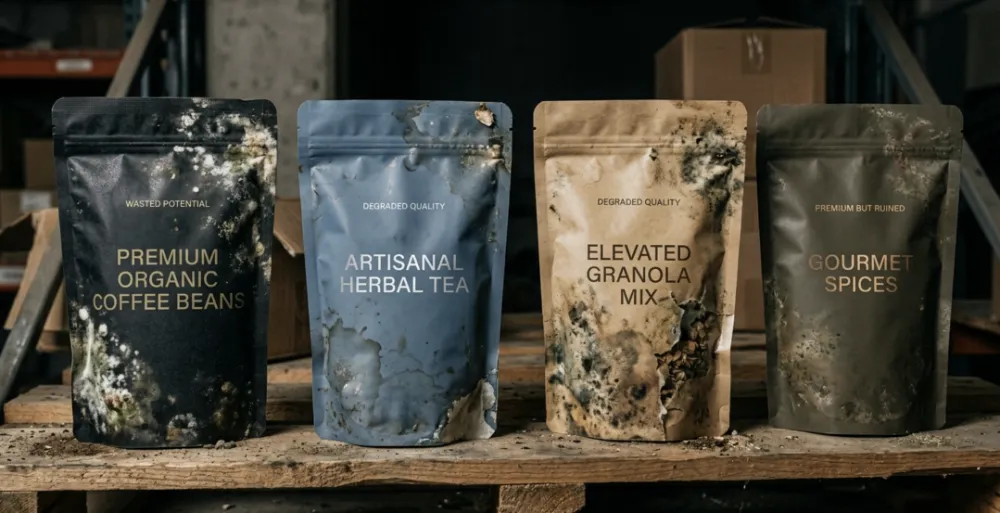
Heat softens the seal layer
The inner sealant film has a melting threshold. Sustained heat above roughly 40°C (104°F) can weaken seals and cause spouts to loosen under internal pressure. Warehouses near loading docks or under metal roofs hit these temperatures fast in summer.
Humidity attacks the barrier
Moisture-sensitive structures, especially those with paper or certain metallized layers, lose barrier performance when stored in damp conditions. You may not see it, but oxygen and moisture transmission rates climb, shortening the shelf life of whatever sits inside.
Light degrades printing and contents
Direct sunlight fades inks and can break down UV-sensitive products. If your brand colors matter on the shelf, faded stock arriving at a retailer is a real problem.
Crushing weight deforms the structure
Empty pouches arrive flat-packed and tightly bundled. Filled units, on the other hand, need careful stacking. Excess weight on the spout fitment is the single most common cause of cracked threads and post-fill leaks.
The Ideal Storage Environment
You do not need a climate-controlled vault. You need a stable, dry, shaded space. Here are the target ranges we share with brands when they ask how to protect their inventory.
| Factor | Recommended Range | Why It Matters |
|---|---|---|
| Temperature | 15–25°C (59–77°F) | Keeps seal layers stable and adhesives intact |
| Relative Humidity | 40–60% | Prevents barrier loss and label lifting |
| Light Exposure | Indirect / shaded | Protects print color and contents |
| Off-floor clearance | 10–15 cm on pallets | Avoids ground moisture wicking |
| Stack height | Per supplier guidance | Prevents spout and seal damage |
As a manufacturer that has produced flexible packaging bags for over twenty years, we've found these ranges hold true across most product categories, from beverages to liquid soaps.
Storing Empty Pouches Before Filling
Many brands receive bulk shipments and fill in batches. The window between delivery and filling is where quality quietly slips. A few habits keep empty stock production-ready.
- Keep cartons sealed until you need them, so dust and humidity stay out
- Store boxes flat, never on their edges, to protect spout alignment
- Rotate stock first-in, first-out so older inventory fills first
- Avoid stacking heavy items on top of pouch cartons
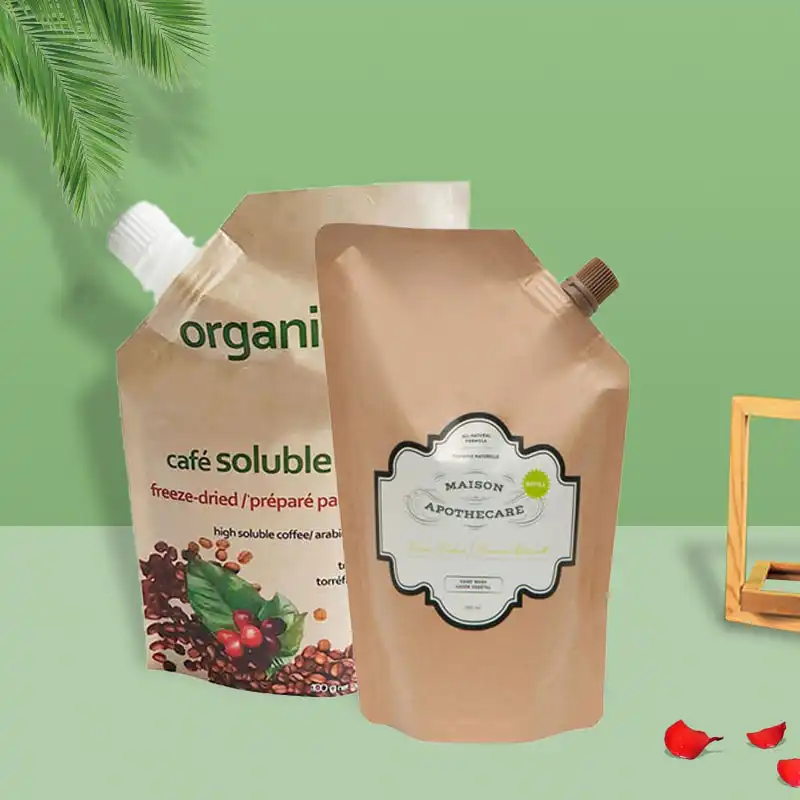
For resealable stand up pouch with spout bulk orders, we ship in right-sized cartons with internal supports specifically so the fitments do not shift in transit. Ask your supplier whether their cartons are engineered for the spout, not just the bag.
The spout is the fragile part
The body of the pouch tolerates handling well. The spout and cap assembly does not. Pressure on the neck can crack threads in ways invisible to the eye until a unit leaks during filling.
Storing Filled Pouches
Once a spouted stand up pouch holds product, weight and pressure dynamics change completely. This is where stacking discipline pays off.
Stack with the spout protected
Whenever possible, store filled units upright so the spout sits at the top and bears no weight. If you must lay them flat, limit layers and use dividers to distribute pressure evenly.
Mind the fill ratio
Overfilled units have little headspace, so internal pressure rises with temperature swings. A small amount of headspace lets the structure flex without stressing the seals. Our in-house design team often helps brands who only have a rough idea calculate the right fill volume for their format.
Watch your cold chain if needed
Some liquids need refrigeration. Repeated freeze-thaw cycles stress seals more than steady cold, so keep temperatures consistent rather than letting product warm and re-chill.
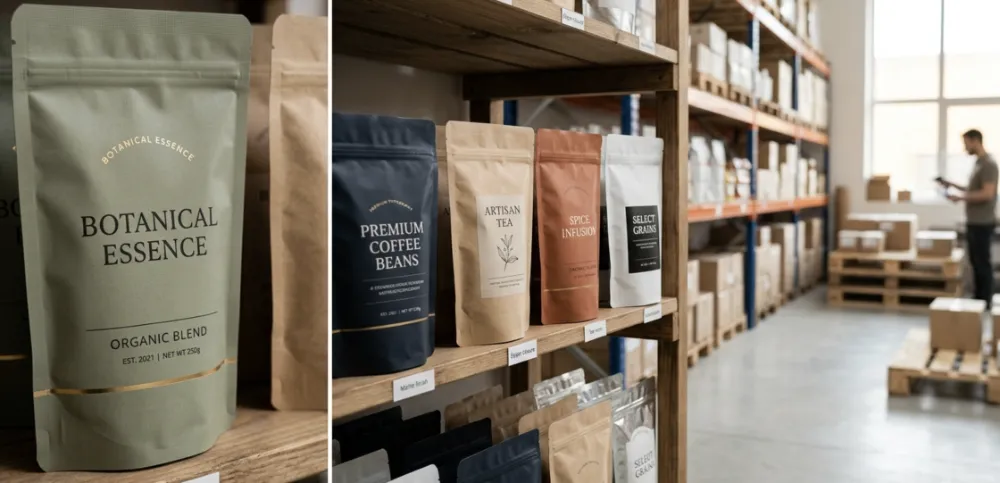
Product-Specific Storage Notes
Different contents bring different risks. Understanding your category helps you store smarter.
Beverages and liquid foods
For stand up spout pouch packaging for liquids like juices, smoothies, and broths, oxygen ingress is the enemy of flavor and color. Store away from heat to slow any barrier degradation, and keep the cold chain unbroken for perishable contents.
Sauces, condiments, and oils
High-fat contents can interact with sealant layers over time. Cooler storage slows this, and proper food grade materials reduce the risk. Because we hold FDA and ISO 22000 certifications, we recommend matching the film structure to the specific oil or acid profile of your recipe.
Liquid soaps, detergents, and cosmetics
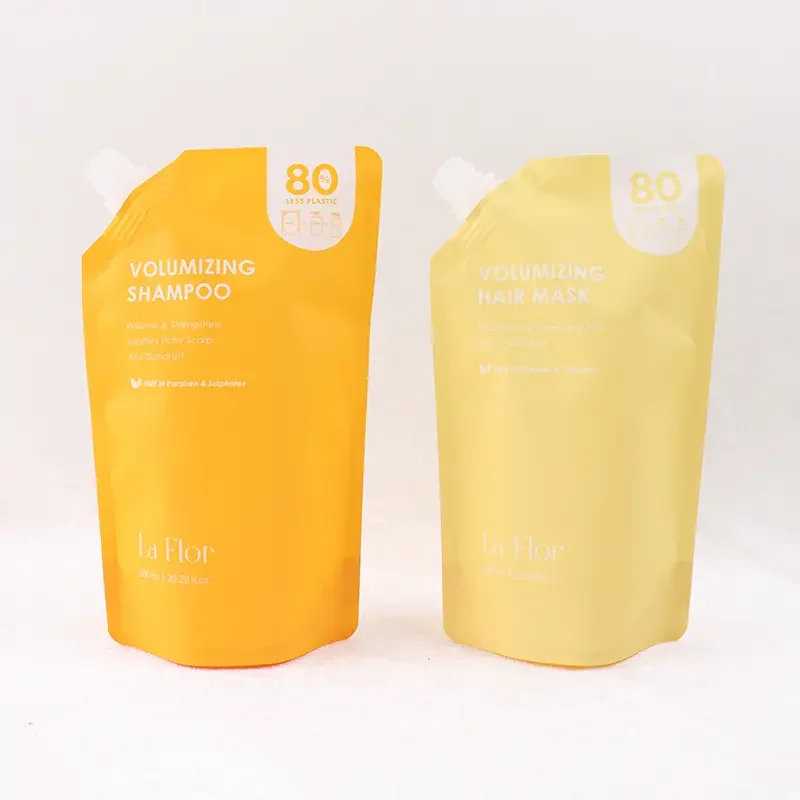
A liquid packaging pouch for personal care often doubles as a refill format, which buyers love for its lower waste. Store these away from direct light to protect fragrance and color, and keep caps fully seated to prevent evaporation.
Pet food and supplements
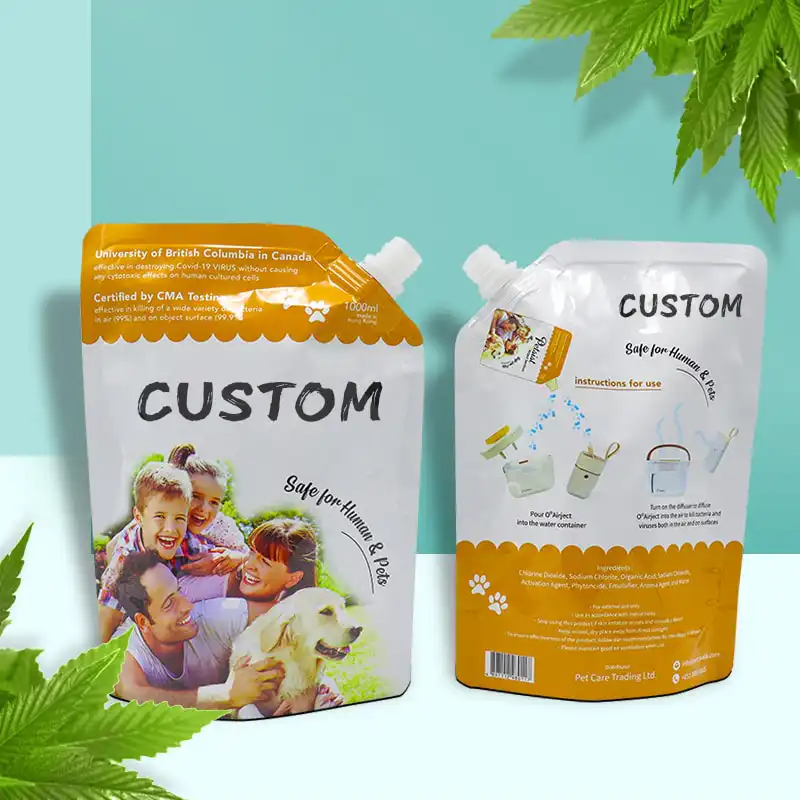
Pet owners read ingredient panels closely, so faded or smudged print undermines trust. Shaded, dry storage keeps your transparency claims looking as credible on arrival as they did on day one.
Shelf Life: How Long Can You Store Pouches?
Empty packaging and filled product follow different clocks. Here is a general framework, though your supplier's specifications always take priority.
| Item | Typical Storage Window | Key Condition |
|---|---|---|
| Empty pouches (sealed cartons) | 12–24 months | Cool, dry, dark |
| Filled shelf-stable liquids | Per product formula | Stable temperature |
| Filled perishables | Per cold-chain spec | Unbroken refrigeration |
Working with brands across North America, we've found that the most common mistake is assuming empty stock lasts forever. Adhesives and sealant layers do age. Buying realistic quantities you can use within a year protects both quality and cash flow.
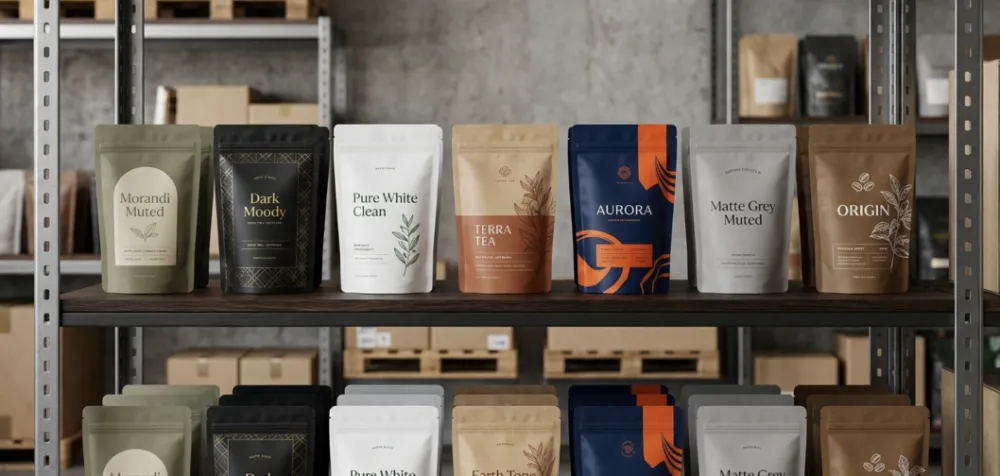
A Simple Storage Checklist
Print this and tape it to your warehouse wall. It captures the essentials without overcomplicating things.
- Pallets off the floor, away from exterior walls and dock doors
- Temperature held between 15–25°C, away from heat sources
- Humidity kept moderate, with no standing dampness
- Cartons shaded from direct sunlight
- Filled units stored upright with spouts unweighted
- First-in, first-out rotation labeled clearly
- Stack heights within supplier limits
- Periodic spot checks for leaks, fading, or carton damage
How Packaging Quality Affects Storage Performance
Good storage habits matter, but they can only protect well-made goods. The construction itself sets the ceiling on how forgiving your inventory will be.
Film thickness, lamination quality, and spout welding determine how much heat, pressure, and handling a unit can take. Poorly welded fitments leak no matter how carefully you stack them. This is why sourcing matters before storage ever enters the picture.
In our 6,800㎡ cleanroom facility, units are produced and inspected under controlled conditions, which reduces the contamination and weak-seal issues that surface later in a customer's warehouse. When the build quality is sound, your storage routine has far less to fix.
If you are weighing options, ask any potential partner about their seal-strength testing and barrier specifications. A food grade stand up pouch with spout supplier should be able to share these details without hesitation.
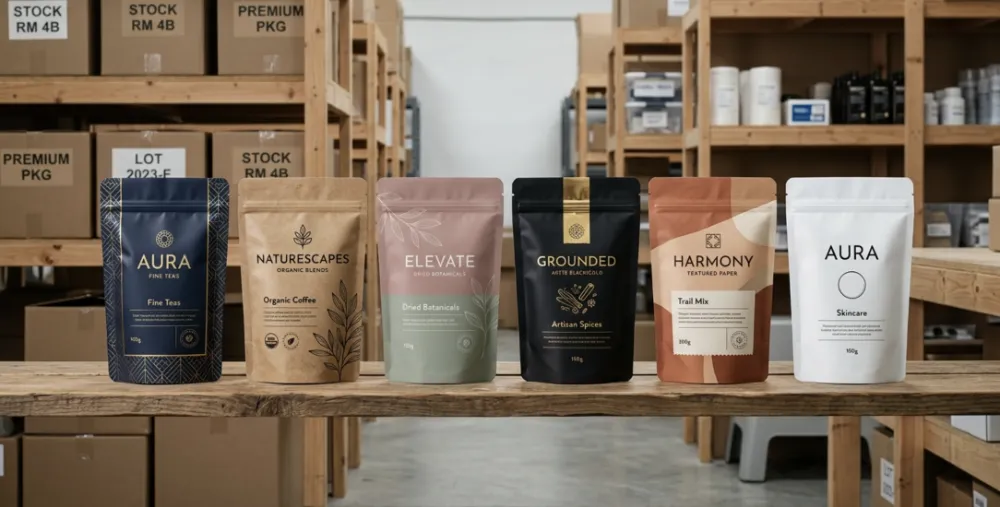
Working With the Right Packaging Partner
Storage is easier when your packaging is designed for your real conditions. That is a conversation worth having before you order, not after problems appear.
For brands ordering custom printed stand up pouch with spout packaging, we map out the film structure, spout type, and carton design around how and where you store. That includes climate, stacking, and transit distance.
We also help newer brands sourcing eco friendly stand up pouch with spout wholesale balance sustainability goals with shelf-life needs, since recyclable mono-material structures behave differently in storage than traditional laminates. Getting that match right early saves headaches later.
If you want a second opinion on your format or storage plan, the YLTPACK team is reachable on WhatsApp at +86 182 1944 5665 or by email at [email protected]. We are happy to talk through the details before you commit to a run.
Final Thoughts
Protecting your inventory comes down to four levers: temperature, humidity, light, and weight. Control those, rotate your stock, and respect the spout, and most storage failures simply never happen.
The packaging carries your brand to the shelf. Treating storage as part of your quality process, not an afterthought, keeps that first impression intact all the way to your customer's hands.
Frequently Asked Questions
Can I store filled spout pouches lying flat?
You can, but upright is safer. Lying flat puts pressure on seals and can stress the fitment. If flat storage is unavoidable, limit stack layers and use dividers to spread the load evenly.
How long do empty pouches stay usable in storage?
Sealed in their cartons under cool, dry, dark conditions, most empty stock holds for 12 to 24 months. Adhesives and sealant films age over time, so first-in, first-out rotation is the safest practice.
What temperature ruins these pouches fastest?
Sustained heat above roughly 40°C (104°F) is the biggest threat. It softens seal layers and raises internal pressure in filled units, which loosens spouts and weakens bonds. Keep stock away from direct heat and sunlight.
Does humidity really affect sealed packaging?
Yes. High humidity can lift labels, degrade certain barrier layers, and encourage carton collapse. A moderate range of 40 to 60% relative humidity keeps both the packaging and its printing in good shape.
Should storage requirements influence my packaging design?
Absolutely. Your climate, stacking method, and transit distance should shape film thickness, spout choice, and carton engineering. Sharing these details with your supplier up front leads to packaging that survives real-world conditions.