Why Coffee Bag Pricing Confuses So Many Brand Owners
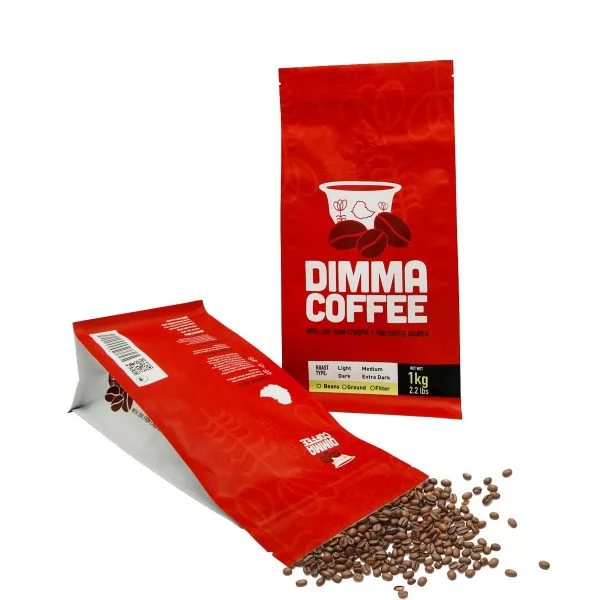
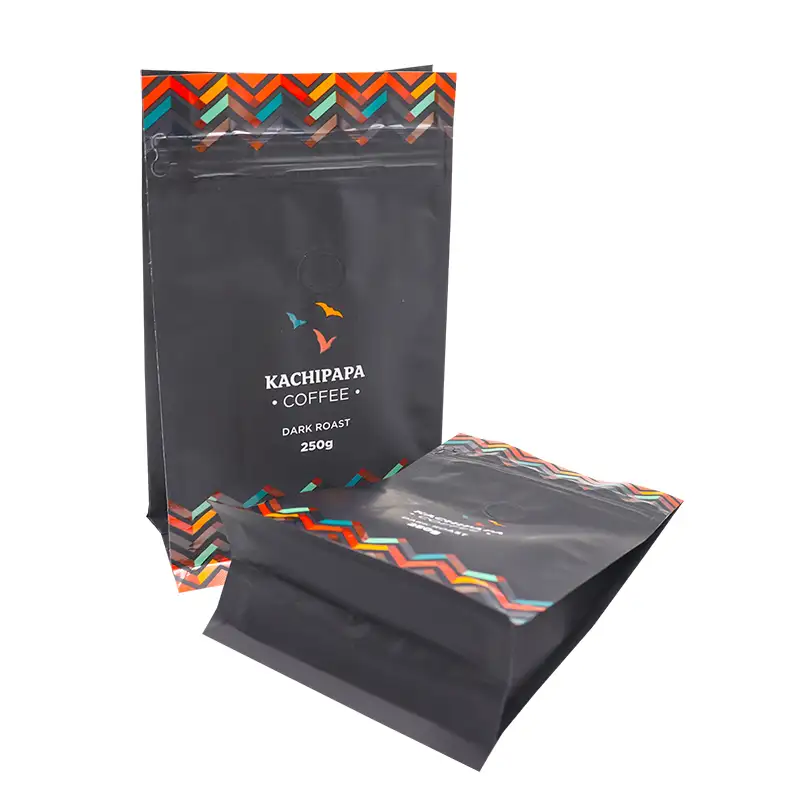
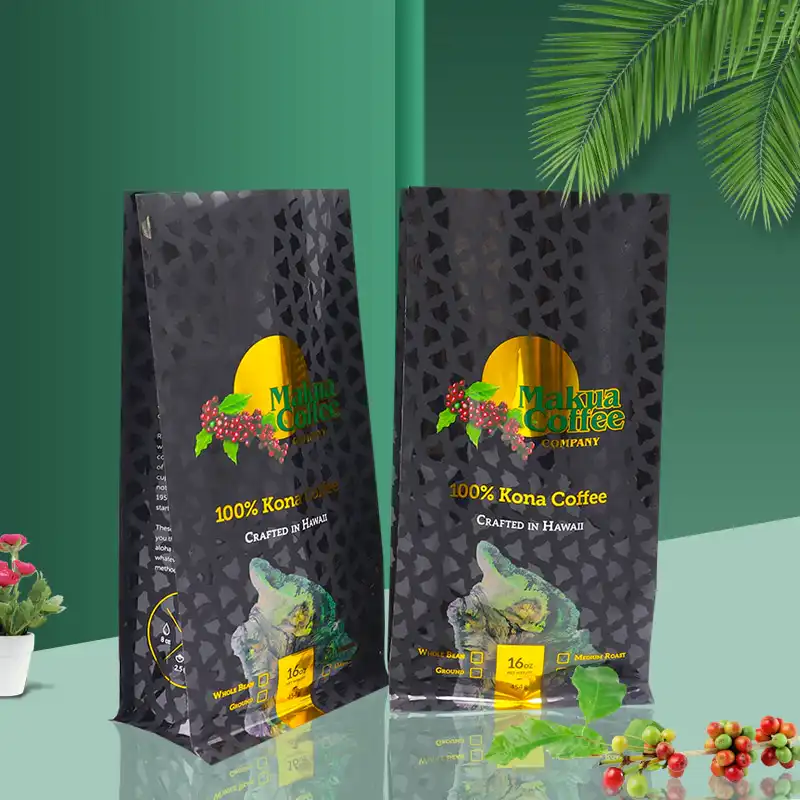
Working with brands across North America and Europe, we've found that the most common mistake is comparing bag prices without comparing what sits behind them. Material structure, barrier layers, valve type, and order volume all shift the final figure. This guide breaks down what actually drives cost at each size.
We will keep things practical and decision-focused, so you can walk into supplier conversations knowing exactly what to ask. No fluff, just the mechanics that move your per-unit number up or down.
What Actually Determines the Price of a Coffee Bag
Before comparing sizes, it helps to understand the cost components shared by every pouch. These factors apply whether you order a small batch of single serve coffee bags or a pallet of 1kg wholesale pouches.
The Five Core Cost Drivers
- Film structure: The number of laminated layers and the choice of foil, kraft, or recyclable mono-material directly changes raw material cost.
- Barrier performance: Coffee loses aroma fast. A strong oxygen barrier and moisture protection require higher-grade films that cost more per square meter.
- Order quantity: Setup, plate, and tooling costs spread across the run. Larger volumes lower the per-bag figure significantly.
- Add-ons: One-way degassing valves, resealable zippers, tin ties, and spouts each add incremental cost.
- Print and finish: Color count, matte or gloss lamination, and special effects like spot UV affect tooling and ink usage.
Because we hold FDA and ISO 22000 certifications, we recommend confirming food-contact compliance before locking any material choice. A cheaper film that fails safety testing costs far more in the long run.
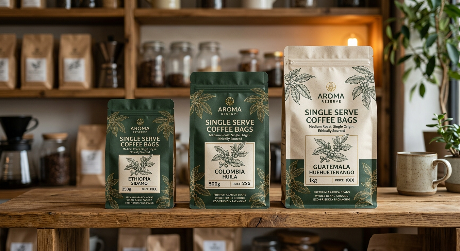
How Bag Size Changes the Cost Equation
Size affects price in two ways that often pull in opposite directions: material consumption and production efficiency. Understanding both keeps you from over-paying.
Material Usage Does Not Scale Linearly
A 1kg bag uses more film than a 250g bag, but not four times more. Bag geometry means the surface area grows more slowly than the volume it holds. So larger pouches usually carry a lower cost-per-gram of capacity.
Why Small Bags Can Cost More Per Unit Than You Think
Tiny formats like individual coffee bags carry fixed costs that do not shrink. The valve, the print setup, and the labor per pouch stay roughly constant. Spread across a small surface area, those fixed costs make small formats surprisingly expensive per unit.
Illustrative Cost Index by Size
The table below uses a relative index rather than currency, since custom pricing depends on your specs and volume. It shows the typical relationship we see in production runs.
| Bag Size | Relative Material Cost (Index) | Cost Per Gram of Capacity | Typical Use Case |
|---|---|---|---|
| 250g | 1.0 | Highest | Retail shelf, specialty roasters, gifting |
| 500g | 1.6 | Moderate | Household repeat buyers, subscriptions |
| 1kg | 2.5 | Lowest | Cafés, offices, bulk retail |
Notice the 1kg index is 2.5, not 4.0. That is the efficiency gain larger formats deliver. The figures are directional and reflect common 2025 production patterns rather than a fixed quote.
Material Choices and What They Cost You
The film you choose is usually the single largest variable. Here is how the common options compare for coffee specifically.
Common Coffee Pouch Materials
| Material Type | Barrier Strength | Relative Cost | Best Suited For |
|---|---|---|---|
| Foil laminate (PET/AL/PE) | Excellent | Higher | Long shelf life, premium whole bean |
| Kraft with foil liner | Very good | Moderate | Artisan look with protection |
| Recyclable mono-material | Good (improving) | Moderate to higher | Sustainability-focused brands |
| Compostable film | Moderate | Highest | Eco-first positioning |
Roasted coffee releases CO2 and is highly sensitive to oxygen, which degrades aroma within weeks. That is why barrier quality is not a place to cut corners. A poorly sealed pouch can flatten the flavor your roastery worked hard to develop.
As a manufacturer that has produced flexible packaging for over 20 years, we've watched recyclable structures improve sharply. The barrier gap that once forced a tradeoff between sustainability and freshness has narrowed considerably.
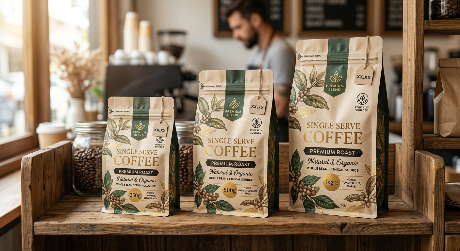
How Order Volume Reshapes Your Per-Unit Price
Volume is the lever most buyers underestimate. Fixed costs like printing plates and machine setup are charged once, then divided across your run.
The Volume Effect in Practice
| Order Quantity | Per-Unit Cost Trend | What Drives It |
|---|---|---|
| Small (sampling run) | Highest | Setup costs spread thin |
| Medium | Noticeably lower | Better material purchasing |
| Large | Lowest | Full economies of scale |
If you plan to order single serve coffee bags bulk, consolidating sizes into one print run can lower tooling charges further. Many brands split orders unnecessarily and pay setup fees twice.
In our 6,800㎡ cleanroom facility, we batch compatible jobs to keep changeover waste low. That efficiency is part of why larger runs unlock better pricing without sacrificing hygiene standards.
Single-Serve Formats: A Different Pricing Logic
Portion-sized packaging follows its own rules. Because each unit is small, the cost story is dominated by fixed and labor elements rather than film volume.
Why Portion Packs Command a Premium
The convenience category, including single serve coffee pods and drip-style sachets, carries higher per-gram costs. You are paying for precision filling, extra sealing points, and often individual outer wraps. The value is in convenience, not material savings.
For brands exploring single serve pour over coffee bags, the inner filter and the outer barrier sachet are two separate components. That dual structure raises complexity, so plan your budget around assembly, not just the pouch itself.
Where the Demand Is Heading
Single-cup formats keep gaining share as remote work and travel routines reshape coffee habits. Industry data through 2025 points to steady double-digit growth in portion-controlled coffee packaging, outpacing traditional bulk bags in many markets.
- Travel-ready packs: Lightweight, spill-proof options designed as single serve coffee bags for travel appeal to commuters and hotels.
- Subscription boxes: Consistent portioning simplifies fulfillment and reduces waste.
- Sampling programs: Roasters use single cup coffee bags to let customers try multiple origins affordably.
Common Add-Ons and Their Cost Impact
Features sell, but each one adds to the unit price. Knowing the impact helps you spend where it matters to your customer.
| Feature | Cost Impact | When It Is Worth It |
|---|---|---|
| One-way degassing valve | Low to moderate | Freshly roasted whole bean or ground |
| Resealable zipper | Moderate | 500g and 1kg repeat-use formats |
| Matte finish + spot UV | Moderate | Premium shelf differentiation |
| Tin tie closure | Low | Artisan, rustic positioning |
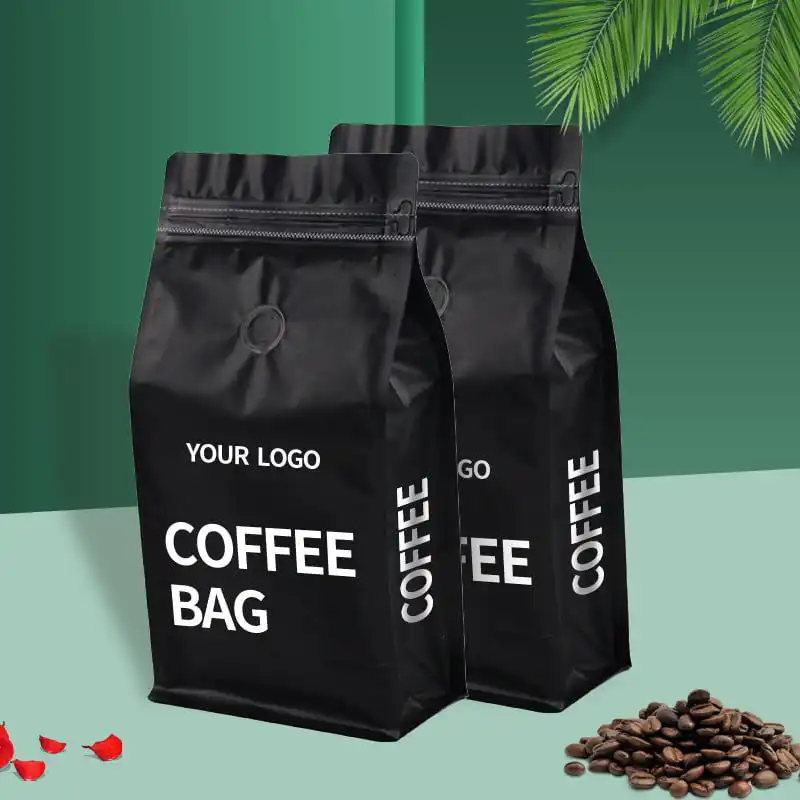
A degassing valve is nearly essential for fresh coffee, since trapped CO2 can swell or burst a sealed pouch. For larger pouches, a zipper pays for itself in customer satisfaction because the product is used over many days.
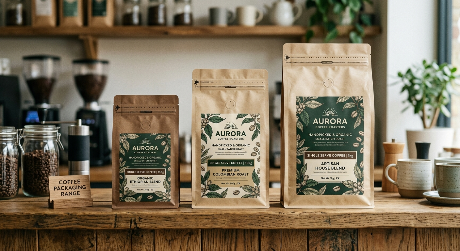
How to Choose the Right Size Mix for Your Brand
Most successful coffee brands do not pick one size. They build a portfolio matched to how customers actually buy.
A Practical Sizing Checklist
- 250g: Lead with this for retail shelves, gifting, and new-customer trials where shelf presence matters most.
- 500g: Position as the value sweet spot for loyal household buyers and subscription tiers.
- 1kg: Reserve for cafés, offices, and high-consumption customers who prioritize cost-per-gram.
- Single-serve: Add for travel, sampling, and gifting where convenience justifies the premium.
If you are researching the best single serve coffee bags 2026 buyers are gravitating toward, expect demand to favor recyclable structures paired with strong barrier performance. Sustainability and freshness are no longer either-or choices.
Avoiding the Most Expensive Procurement Mistakes
A few recurring errors quietly inflate costs. Catching them early protects both your margin and your brand reputation.
- Over-specifying barrier: Not every product needs the heaviest foil. Match the film to your real shelf-life target.
- Under-ordering: Tiny runs carry punishing setup costs. Forecast realistically before committing.
- Ignoring artwork prep: Poor print files cause delays and reprints. Get files validated before production.
- Skipping samples: Always approve a physical proof before a full run.
Our in-house design team often helps brands who only have a rough idea of their artwork, turning sketches into print-ready files that avoid costly reruns. That early collaboration prevents the silent fees that erode margins.
Brands focused on organic single serve coffee bags should also verify that inks and films meet food-safe and certification requirements for their claims, since compliance gaps can derail an entire launch.
Putting It All Together
Pricing across 250g, 500g, and 1kg formats comes down to a balance of material efficiency, barrier needs, volume, and features. Larger bags win on cost-per-gram, while smaller and portioned formats sell convenience at a premium.
The smartest approach is a size portfolio that mirrors how your customers buy, backed by film choices that protect aroma without overspending. Get those decisions right and your packaging budget works harder for every cup sold.
If you want a tailored quote or help mapping the right structure to your roast, reach out to YLTPACK at [email protected] or WhatsApp +86 182 1944 5665. We are happy to review your specs and flag any cost-savings before you commit.
Frequently Asked Questions
Why does a 1kg coffee bag not cost four times more than a 250g bag?
Bag surface area grows more slowly than the volume it holds, so material use does not scale one-to-one. Larger pouches also dilute fixed setup costs across more product, lowering the cost-per-gram of capacity.
Are degassing valves necessary for all coffee bags?
They are strongly recommended for freshly roasted coffee, which releases CO2 for days after roasting. Without a valve, gas buildup can swell or rupture a sealed pouch. Pre-ground coffee that has fully degassed may not require one.
Which bag size offers the best value for subscription coffee brands?
The 500g format usually hits the sweet spot for repeat household buyers. It balances a reasonable cost-per-gram with a quantity that matches typical monthly consumption, reducing shipping frequency and waste.
Can sustainable packaging match the freshness of traditional foil?
Recyclable mono-materials have improved markedly, with barrier performance through 2025 now close to conventional laminates for many applications. For very long shelf-life products, foil still leads, but the gap continues to narrow.
How large should my first order be to keep per-unit costs reasonable?
Fixed setup and plate costs dominate small runs, so very low quantities are expensive per unit. A medium-sized first order generally balances risk and economy. Share your forecast and we can suggest a quantity that protects your margins.