Choosing Between a Reclosable Zipper and a Permanent Heat Seal
If you are sourcing flexible packaging for a new product, the closure decision feels small but shapes everything: cost, freshness, and how customers feel when they open the bag. The zipper stand up pouch vs heat seal debate comes up in almost every kickoff call we have with brands. Both can look great on a shelf. The right pick depends on what is inside and how people use it.
So let's skip the sales pitch and walk through this like two people figuring out a real problem. By the end you'll know which closure fits your product, your budget, and your customers' habits.
What Each Closure Actually Does
Before comparing, it helps to be clear on the mechanics. These two formats solve different jobs, and that difference drives almost every decision downstream.
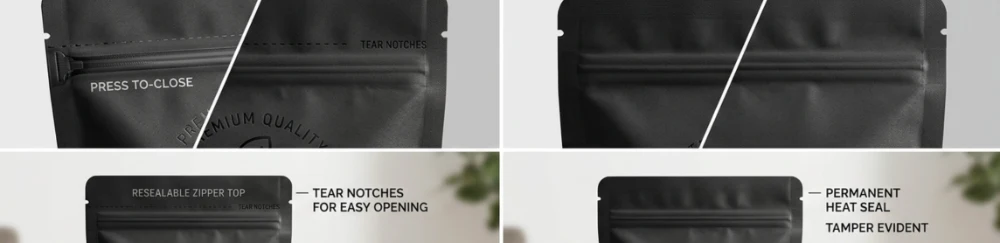
The reclosable zipper
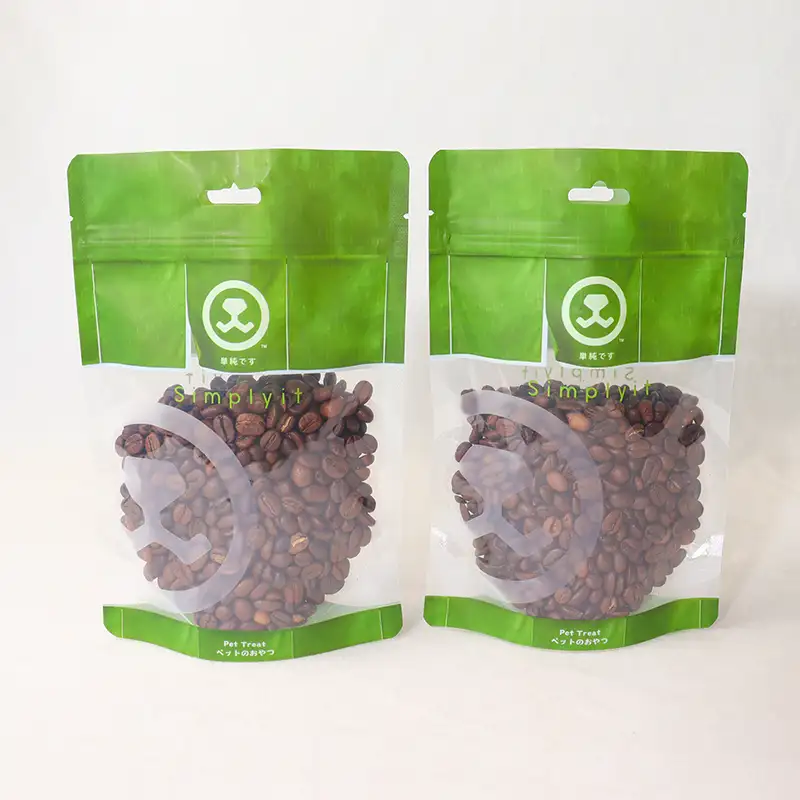
This is the press-to-close or slider track running across the top of a standing pouch. Customers tear or cut the top, then open and close the bag as many times as they want. Think coffee, granola, pet treats, anything used over days or weeks.
The permanent heat seal
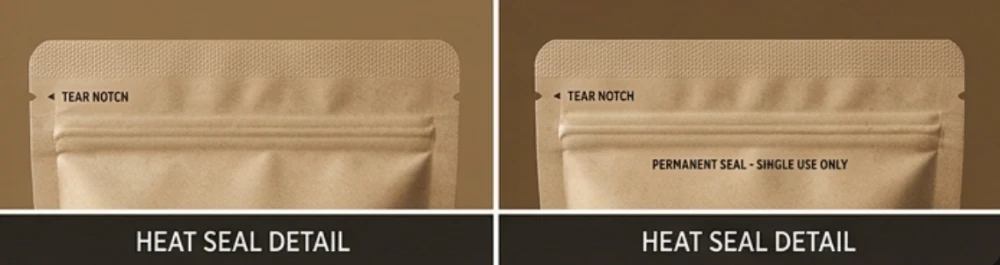
Here the top is fused shut with heat after filling. There's no track to reopen. Once a customer cuts it open, it stays open. This format shines for single-use portions or products consumed quickly.
Quick rule of thumb: if the product gets used in one sitting, a fused closure is often enough. If it lingers in a pantry, reclosability earns its keep.
Side-by-Side: How the Two Closures Compare
Numbers help more than adjectives. The table below reflects typical performance ranges we see in production and from supplier material data as of early 2026. Exact figures shift with film structure and fill conditions.
| Factor | Reclosable Zipper Pouch | Permanent Fused Seal |
|---|---|---|
| Reusability | Opens and closes 50+ cycles | Single open, no resealing |
| Relative unit cost | Higher (added closure component) | Lower (no extra parts) |
| Typical opened-product freshness | 2–4 weeks if resealed properly | Best consumed within hours to a day |
| Filling line speed | Slightly slower (zipper alignment) | Faster, fewer steps |
| Perceived premium feel | High | Moderate |
| Best fit | Multi-use pantry items | Portions, samples, fast-moving snacks |
The Cost Question Most Brands Ask First
Let's be honest, budget often drives the call. A resealable zipper pouch vs heat seal cost comparison usually lands the same way: the track adds material and a touch of machine time, so per-bag cost runs higher for the reclosable option.
But cost-per-bag is the wrong lens on its own. The better question is cost-per-experience. If a zipper keeps product fresh and cuts waste, the slightly higher unit price can pay for itself in repeat purchases.
As a manufacturer that has produced packaging for 20+ years, we've found the most common mistake is optimizing for the cheapest bag instead of the lowest total waste. A cheap bag that lets product go stale costs you a customer.
When the lower-cost seal makes sense
- Single-serve portions where reuse is irrelevant
- Promotional samples and trial sizes
- High-volume runs where every fraction of a cent scales up
- Products with naturally long stability, like dried goods sealed in small amounts
Freshness and Shelf Life: Where Things Get Interesting
This is where a lot of brands get surprised. People assume the closure controls freshness. It mostly doesn't, at least not before opening.Before the bag is opened
The heat seal vs zipper pouch shelf life difference is small while the package is intact, because both rely on the same fused bottom seam and barrier film to keep oxygen and moisture out. A well-built bag of either type protects product equally until a customer breaks the seal.
Because we hold FDA and ISO 22000 certifications, we recommend matching the film barrier to the product first, then choosing the closure. The barrier layer does the heavy lifting on shelf life, not the top of the bag.
After the bag is opened
This is the real divide. A fused seal, once cut, offers no further protection. A reclosable track restores a partial seal every time, slowing staleness for items used over days or weeks. For anything that won't be finished in one go, that resealing matters a lot.
Keeping Moisture and Oxygen Out
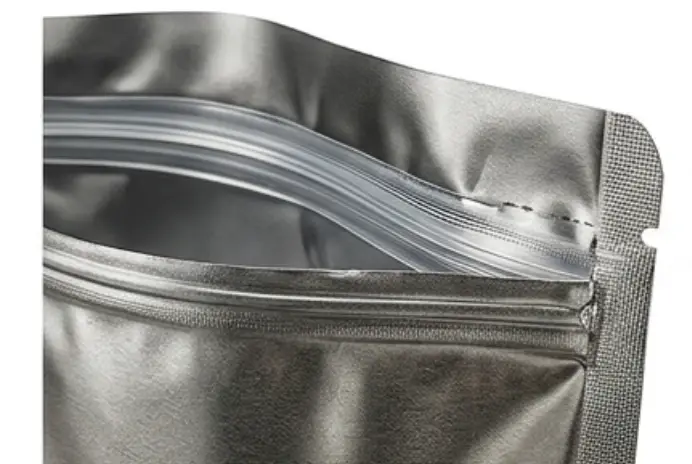
Barrier performance is its own conversation, and it's worth getting right. When we talk about zipper vs heat seal pouch moisture barrier performance, the honest answer is that the film structure decides most of it, while the closure decides what happens after first use.
A fused seam is technically the most airtight closure you can make, since there's no track to leak through. A quality zipper closes tightly too, but a tiny bit of air exchange can occur if a customer doesn't press it fully shut. For moisture-sensitive products like crispy snacks, that user behavior is part of the design.
Common barrier film choices
- Foil laminates for the highest oxygen and light protection, common in coffee
- Metallized films for a strong barrier at a friendlier cost
- Clear high-barrier films when shoppers want to see the product
- Recyclable mono-material structures for brands prioritizing sustainability
In our 6,800㎡ cleanroom facility, we test seal integrity on these structures so the barrier you spec on paper is the barrier you get in the warehouse.
Matching the Closure to Your Product
Here's where it gets practical. The right answer changes by category, so let's look at how this plays out across common products.
Snacks and chips
Shoppers rarely finish a big bag of chips at once, so reclosability protects crunch and reduces waste. If you're weighing the best stand up pouch closure type for snacks zipper or heat seal, the resealable track usually wins for shareable sizes, while single-serve portions do fine fused shut.
Coffee and tea
Coffee lives and dies by aroma. Oxygen dulls those volatile compounds fast, so brands pair a one-way degassing valve with a tight reclosable top. That combination lets fresh-roasted beans release CO2 while protecting the flavor customers paid for.
Pet food and treats
Pet owners read ingredient panels closely and care about keeping food fresh between feedings. A resealable closure signals that you respect both the pet and the wallet, and it keeps kibble from going stale halfway through the bag.
Powders and supplements
Protein powders, drink mixes, and supplements get scooped repeatedly over weeks. Reclosability is almost non-negotiable here, and a wider track makes scooping easier without spills.
Single-serve and sample sizes
Trial packs, condiment portions, and on-the-go snacks are used once and tossed. A fused seal is faster to fill, cheaper to produce, and perfectly suited to the job.
The Unboxing and Brand Experience
Packaging is part of how customers feel about your brand, especially when they share that first open on social media. A smooth, satisfying reclosable track reads as premium and considered. A tear-open seal can feel disposable, which is fine for samples but less ideal for a flagship product.
Our in-house design team often helps brands who only have a rough idea of the look they want, shaping artwork, finish, and closure into one coherent shelf presence. Matte finishes, tactile spot textures, and clean tear notches all add to that moment.
A Simple Decision Checklist
Still on the fence? Run your product through these questions. Most brands land on a clear answer in under a minute.
- Will the product be used more than once? Yes leans reclosable, no leans fused.
- Is it moisture or aroma sensitive? If yes, prioritize barrier film, then add a reclosable top.
- Is it a sample or single portion? A fused seal keeps cost and complexity low.
- Does premium feel matter for your category? A clean zipper elevates perception.
- Is filling line speed a constraint? Fused seals run slightly faster.
So Which Closure Is Best for Food Packaging?
The real takeaway on a zipper stand up pouch vs heat seal which is better for food packaging question is that there's no universal winner, only a best fit for your product's use pattern. Reclosable tracks win for anything used over time. Fused seals win for portions, samples, and cost-sensitive high-volume runs.
Working with brands across North America, we've seen the smartest move is to test a small custom run of both before committing to a large order. That way the decision rests on real customer feedback, not a spreadsheet guess.
If you want help mapping the right structure and closure to your product, the YLTPACK team is happy to walk through it with you. Reach us on WhatsApp at +86 182 1944 5665 or by email at [email protected], and we'll help you weigh the tradeoffs against your goals.
Frequently Asked Questions
Does a reclosable zipper really keep food fresher than a fused seal?
Before opening, both protect food about equally because the barrier film does the work. After opening, a reclosable track restores a partial seal each time, so it keeps multi-use products fresher than a seal that can't be reclosed.
Is a fused seal always cheaper than a zipper pouch?
Per bag, yes, because there's no added closure component. But if reclosability cuts product waste and drives repeat purchases, the slightly higher zipper cost often delivers better value over the product's life.
Can I get a high barrier with either closure type?
Absolutely. Barrier performance comes from the film structure, foil, metallized, or high-barrier clear, not the closure. You can pair a strong barrier with either a reclosable track or a fused top.
Which closure works best for coffee?
Most coffee brands use a reclosable top with a one-way degassing valve. The valve lets roasting gases escape, the barrier film blocks oxygen, and the resealable closure protects aroma between brews.
Can I order custom sizes and finishes with my own design?
Yes. Custom dimensions, finishes, barrier films, and closures are all configurable. If you only have a rough concept, a design team can help turn it into print-ready artwork and a structure that runs cleanly on your fill line.