Your Pouch Is the First Thing a Shopper Touches
Picture a customer reaching for your product on a crowded shelf. Before they read a single word, they feel the bag, see the finish, and judge whether it's worth their money. That split-second reaction is why choosing among the best stand up pouch styles food brands rely on matters as much as the recipe inside.
The good news? You don't need to guess. After helping launch and relaunch hundreds of food lines, we've seen which formats actually move product and which ones just look pretty in a render.
This guide breaks down five formats worth your attention in 2025, what each one does well, and how to match a style to your product. Let's dig in.
A Quick Framework Before You Pick a Format
Style follows function. Before falling in love with a finish, answer three questions about your product. They'll narrow your options fast.
- How is it consumed? One-time use or opened daily over weeks?
- What's the enemy? Oxygen, moisture, light, or aroma loss?
- How does it travel and stack? Single shelf units or palletized cases?
Working with brands across North America, we've found the most common mistake is reversing this order, picking a look first and then forcing the product to fit. Function first keeps your reorders simple and your shelf life honest.
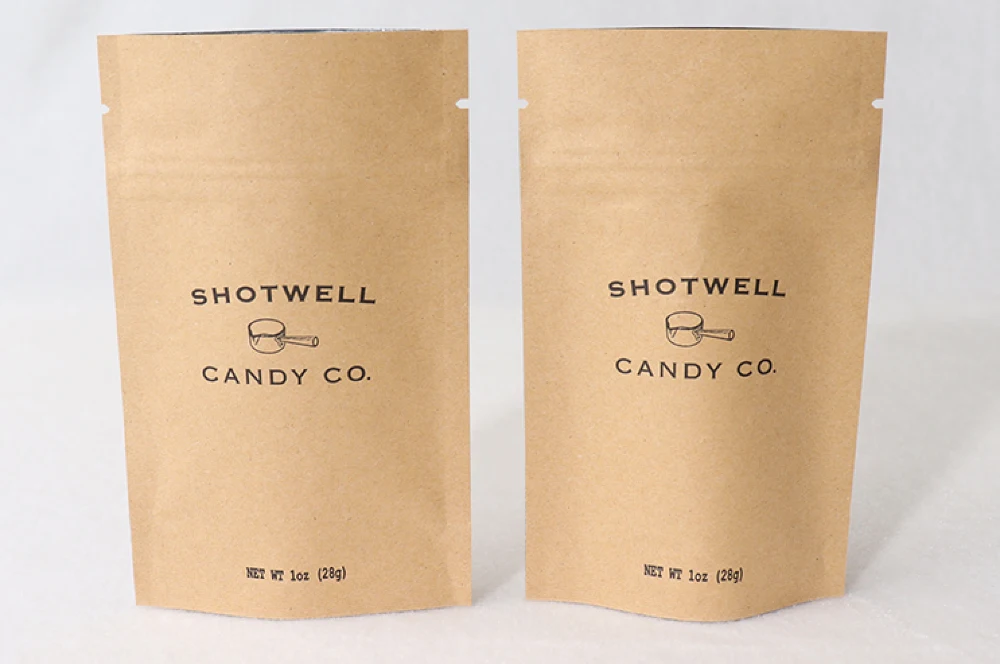
The 5 Pouch Styles Food Brands Are Choosing Now
Each format below solves a different problem. Read them as tools, not trends. The right pick depends on your product and how people actually use it.
1. Resealable Zipper Pouches
If a customer opens the bag more than once, a zipper is non-negotiable. It keeps contents fresh, reduces waste, and signals quality the moment fingers find the seal. This is the workhorse format for products consumed over days or weeks.
Among the top resealable stand up pouches for snack brands, press-to-close zippers handle granola and trail mix beautifully, while child-resistant or slider versions suit specialty categories. The press-to-seal style also reads as premium without inflating cost.
Field note: chips and puffed snacks need a slightly taller headspace and a stiffer film so the bag holds shape after the first open. A flimsy reseal feels cheap, even if the food is great.
2. Clear Window Pouches
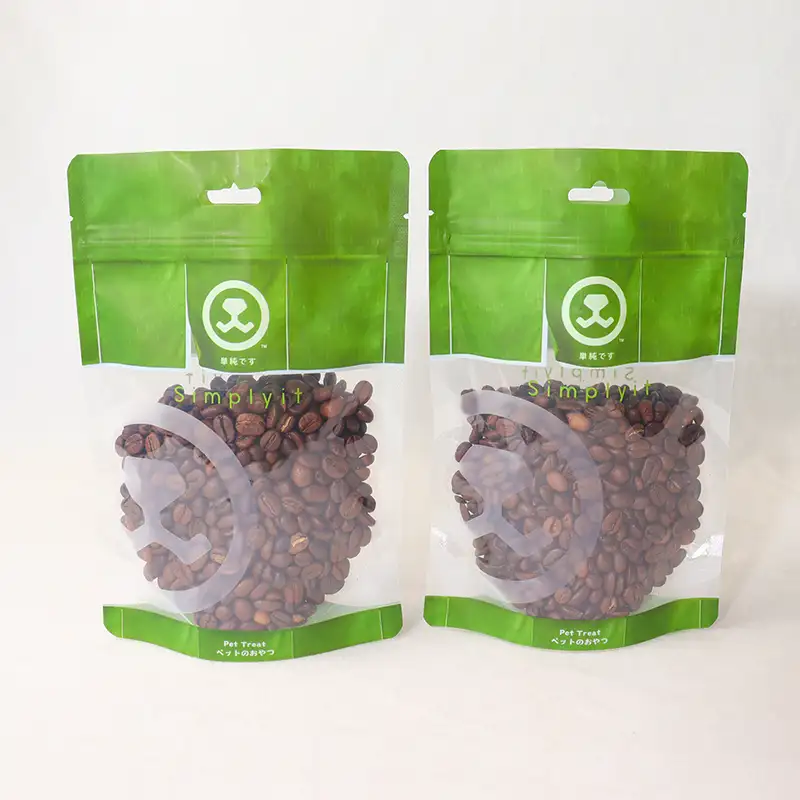
Shoppers trust what they can see. A window lets the product sell itself, which is why dried fruit, nuts, pasta, and pet treats lean on this format. It builds confidence without a single marketing claim.
Pet food is a perfect example. Owners increasingly read labels like they're shopping for themselves, and a clear window paired with a clean ingredient panel turns curiosity into trust. Show the kibble, show the freeze-dried bits, let transparency do the talking.
You can place a die-cut window anywhere, full-front, a strip, or a shaped reveal. Just balance it against barrier needs, since clear film offers less protection than fully laminated structures.
3. Custom Printed Matte and Gloss Pouches
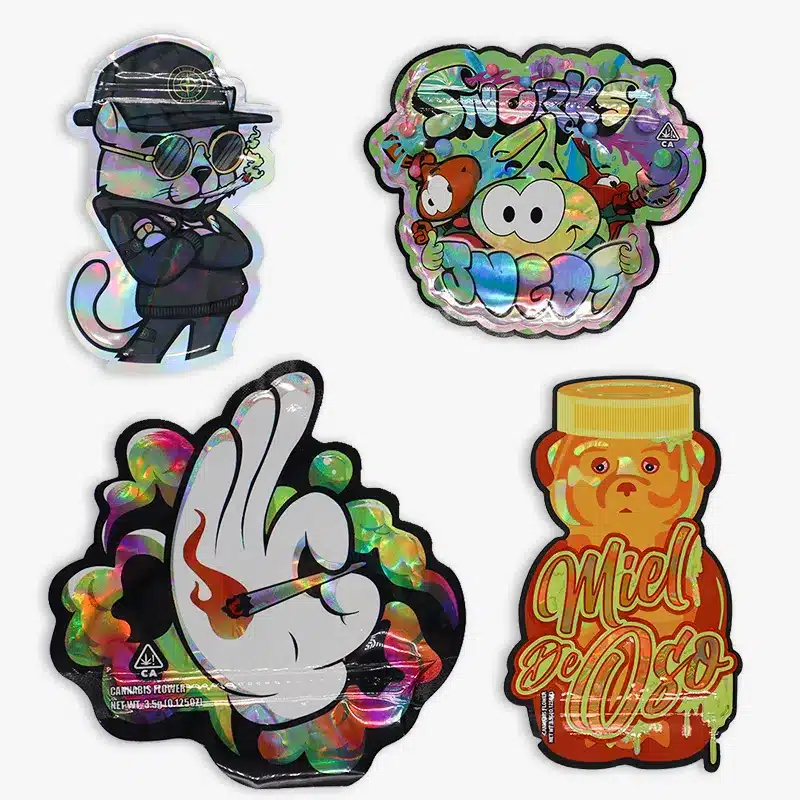
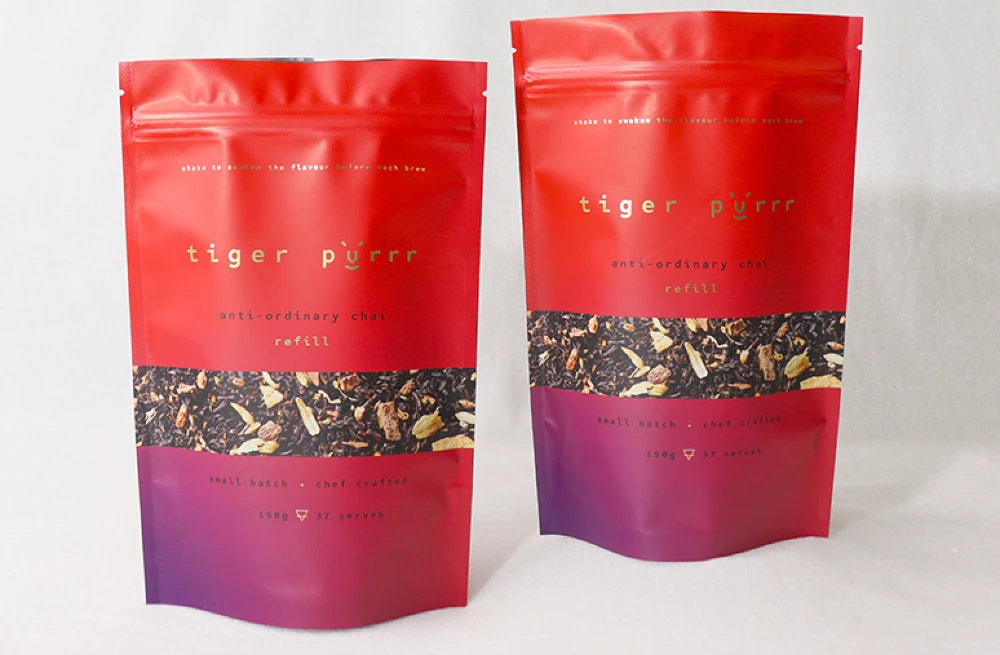
Finish is where personality lives. Matte reads premium and modern, gloss pops with color and energy, and spot finishes let you highlight a logo or texture. This is your branding canvas.
Beauty and wellness food brands understand this instinctively. A satisfying matte bag with a soft-touch feel becomes part of the unboxing moment people share on Instagram, and that free reach is worth far more than the print upgrade.
Among custom printed stand up pouch designs for food products, the combinations are nearly endless, foil stamping, embossing, gradient inks, and registered matte-gloss contrast. Our in-house design team often helps brands who only have a rough sketch turn it into a print-ready file that holds up on press.
4. Eco-Friendly Recyclable Pouches
Sustainability has moved from nice-to-have to expected. According to a 2023 McKinsey and NielsenIQ analysis, products with sustainability-related claims grew faster than conventional counterparts across most categories. Your packaging is part of that promise.
Today's eco friendly stand up pouch styles for food packaging include recyclable mono-material structures (mono-PE or mono-PP), recycled-content films, and home-compostable options for the right products. Each has tradeoffs in barrier and price, so the choice depends on shelf life targets.
Because we hold GRS certification alongside FDA and ISO 22000, we recommend validating barrier performance before switching to a recyclable structure. A greener bag that lets your product go stale helps no one.
5. Spouted Stand Up Pouches
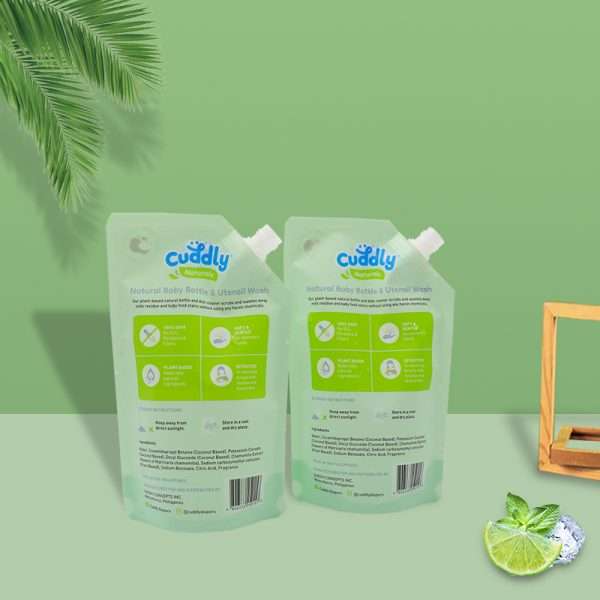
For anything pourable, baby food, sauces, smoothies, juices, the spout changes everything. It enables clean dispensing, controlled portions, and on-the-go use that rigid bottles can't match while weighing a fraction as much.
Spout placement (corner vs. center) and cap diameter both affect usability. A wide cap suits thicker purees; a narrow one works for drinks. Match the spout to how your customer will actually hold and pour it.
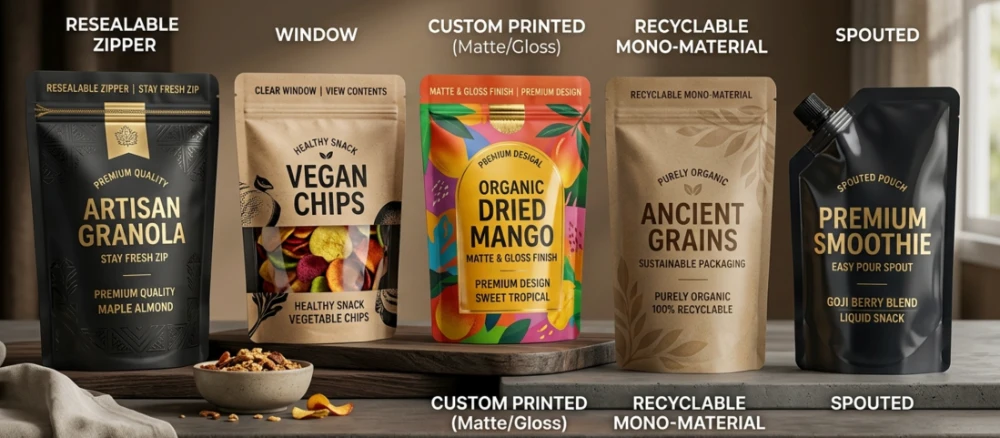
Side-by-Side: Which Style Fits Your Product?
Here's a quick reference comparing the five formats on the factors that usually drive the decision. Use it as a shortlist, then refine with samples.
| Style | Best For | Barrier Strength | Reseal | Shelf Appeal |
|---|---|---|---|---|
| Resealable Zipper | Snacks, coffee, granola | High | Yes | Medium-High |
| Window | Nuts, pasta, pet treats | Medium | Optional | High |
| Custom Printed Matte/Gloss | Premium, beauty, gifting | High | Optional | Very High |
| Recyclable Mono-Material | Dry goods, eco-focused lines | Medium-High | Yes | Medium-High |
| Spouted | Sauces, drinks, baby food | High | Cap reseal | Medium |
Matching the Format to Your Industry
Generic advice only goes so far. The smartest pouch decision accounts for what your specific category demands. A few examples we see constantly.
Coffee: Aroma Is Everything
Roasted beans release CO2 and lose volatile aromatics quickly. You need a high oxygen barrier plus a one-way degassing valve so gas escapes without letting air in. A resealable zipper format with foil-grade barrier keeps that fresh-roast smell alive.
Some roasters compare upright formats against the best flat bottom stand up pouches for coffee brands for a boxier, premium shelf presence. The core trade-off is the same, protect the aroma first, then optimize the look.
Pet Food: Transparency Builds Loyalty
Owners want proof of quality. Pair a window with a strong moisture and grease barrier, and add a sturdy zipper since these bags get opened daily. Heavier formats may also need a thicker film to survive repeated handling.
Rice and Grains: Built to Stack
Heavier products test seal strength and bottom-gusset stability. For larger fills, you want reinforced seals and a film gauge tuned to weight so cases stack on a pallet without slumping or splitting in transit.
How to Get Your Pouch Right the First Time
Mockups lie a little. A design that looks crisp on screen can shift on press, and a film that seems strong in theory can fail under real fill weights. A few habits save you from costly reprints.
- Order samples before mass production. Feel the film, test the zipper, check the print.
- Confirm barrier specs against your shelf-life target, not just a generic spec sheet.
- Validate seal integrity at your actual fill weight, especially for heavier products.
- Lock your color standards so reorders match the first run.
As a manufacturer that has produced flexible packaging for 20+ years, we run print and seal trials before any full run. In our 6,800㎡ cleanroom facility, that consistency is what keeps batch number two looking identical to batch number one.
If you're weighing options for a launch or a redesign, our team at YLTPACK is happy to talk through structures, finishes, and barrier needs based on your product, no pressure, just clarity. Reach us on WhatsApp at +86 182 1944 5665 or email [email protected].
The Bottom Line
There's no single winner here. The smartest packaging decision starts with how your product is consumed, what it needs protection from, and how it travels. Get those right and the format almost picks itself.
Resealable zippers protect freshness, windows build trust, custom finishes win the shelf, recyclable structures meet rising expectations, and spouts unlock pourable convenience. Pick the one your customer's hands and habits are asking for, then validate with real samples.
Frequently Asked Questions
Which pouch format is best for a brand-new snack line?
A resealable zipper format is usually the safest first move. Snacks get opened repeatedly, and the reseal protects freshness while signaling quality. Add a window if you want shoppers to see the product, and a matte finish if premium positioning matters.
Are recyclable pouches as protective as traditional ones?
It depends on the structure. Mono-material recyclable films have improved significantly, but some offer slightly lower barrier than multi-layer foil laminates. Match the recyclable option to your shelf-life target, and run a barrier test before committing to a full run.
What's the minimum I need to provide to start a custom design?
A rough idea is enough to begin. Many founders come to us with just a logo and a color direction. A design team can translate that into print-ready artwork and recommend the structure that fits your product and budget.
How do I keep coffee fresh in a pouch?
Use a high oxygen barrier film plus a one-way degassing valve. The valve releases CO2 from roasted beans without letting air in, and a tight zipper preserves aroma between uses. Foil-grade barriers extend freshness the longest.
How long does custom production usually take?
Timelines vary by quantity, finish, and structure, but custom orders generally move through design approval, sampling, and production in phases. Ordering samples early and locking color standards upfront is the fastest way to avoid delays on the main run.