Frozen Foods Put Packaging Through a Brutal Test
Freezing isn't just cold storage. It's a slow stress test that exposes every weakness in a package. Films grow brittle, seals crack, and moisture finds its way in.
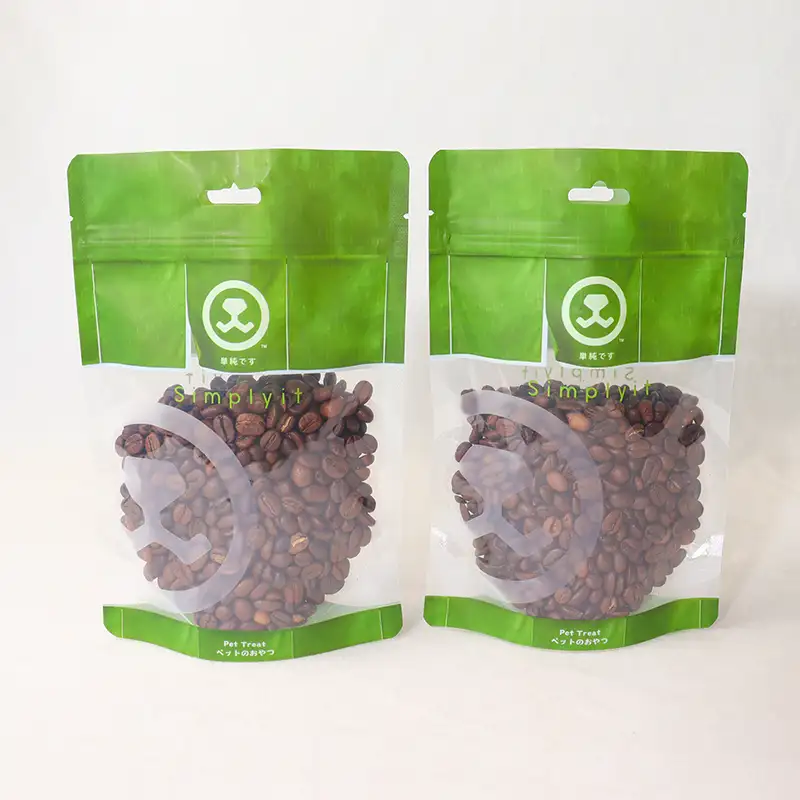
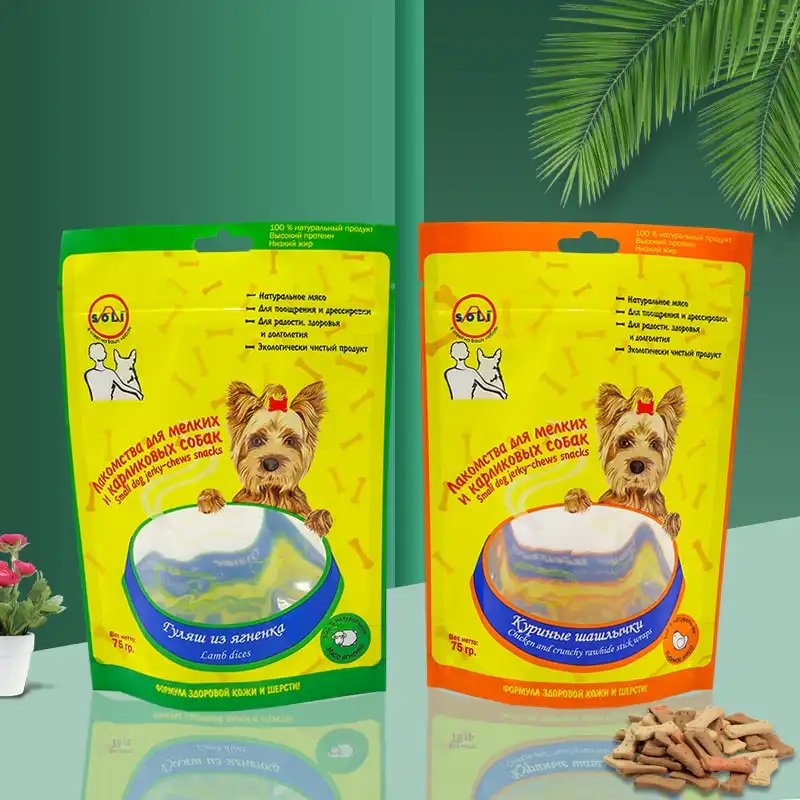
If you're sourcing flexible packaging for frozen products, choosing the right material build matters more than almost any other decision. Among the formats available, stand up pouches have become a favorite for retail freezers because they sit upright, save shelf space, and pour cleanly.
This guide walks through the film layers, common builds, and product-specific choices that actually hold up in the cold. Think of it as a planning checklist before you request samples or quotes.
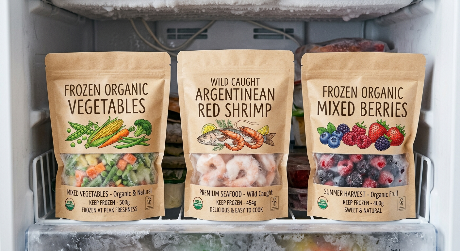
What Happens to Packaging at Freezer Temperatures
Cold changes how plastics behave. A film that feels flexible at room temperature can turn stiff and snap-prone once it hits the freezer. That's the single biggest reason frozen-food packaging fails.
Three problems show up most often:
- Brittleness: Standard films lose flexibility and crack at the seals or corners.
- Moisture migration: Weak barriers let water vapor in, causing freezer burn and ice crystals.
- Seal failure: Poor seal integrity in the cold leads to leaks during transport and stacking.
The fix lies in choosing films rated for low temperatures and barrier layers built to block oxygen and moisture. Get those two right and most freezer headaches disappear.
The Film Layers That Survive the Cold
Flexible packaging is a sandwich. Each layer does a job, and frozen products need specific ingredients in that stack.
The sealant layer (inside)
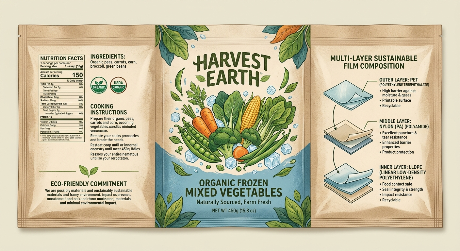
This is the layer that touches your food and forms the seal. For freezing, linear low-density polyethylene (LLDPE) is the workhorse. It stays flexible in deep cold and forms strong, leak-resistant seals.
The barrier layer (middle)
This layer keeps oxygen and moisture out. Options include nylon (PA) for puncture resistance and flex strength, plus metallized films or aluminum foil for high-barrier needs.
The outer layer (print and protection)
Usually PET (polyester), which holds vibrant printing and adds structural stiffness. It's the face your customer sees on the shelf.
Here's a quick reference on how the most common materials perform in freezer conditions:
| Material | Role | Cold Performance | Barrier Strength |
|---|---|---|---|
| LLDPE | Inner sealant | Excellent flexibility, no cracking | Low (needs barrier partner) |
| Nylon (PA) | Barrier / puncture resistance | Strong, flex-resistant | Good oxygen barrier |
| PET | Outer print layer | Stable, stiff | Moderate |
| Metallized PET | High barrier | Stable | High moisture/oxygen barrier |
| Aluminum Foil | Maximum barrier | Can crack if flexed hard |
Highest barrier |
Common Structures Built for Frozen Products
Suppliers combine those layers into a handful of proven laminations. Here are the builds you'll see most often for freezer applications, from everyday to heavy-duty.
PET / PE
A simple, budget-friendly two-layer build. It works for short freezer storage and lighter products like frozen fruit or single-serve snacks. Limited barrier means a shorter shelf life.
PET / NY / PE (with nylon)
Adding a nylon layer boosts puncture resistance and cold flexibility. This is the popular choice for frozen dumplings, seafood, and vegetables with sharp or irregular edges.
PET / VMPET / PE (metallized)
The metallized layer adds a strong moisture and oxygen barrier and gives a premium look. Good for products needing longer shelf life and light protection.
PET / AL / PE (foil)
The heaviest barrier, used when oxygen and moisture must be fully blocked. Often chosen for high-value items or extended frozen storage. Foil can be less flexible, so the build needs careful engineering.
This comparison helps match a structure to your needs:
| Structure | Best For | Shelf Life | Puncture Resistance |
|---|---|---|---|
| PET / PE | Light snacks, frozen fruit | Short to medium | Basic |
| PET / NY / PE | Seafood, dumplings, veg | Medium to long | High |
| PET / VMPET / PE | Ready meals, premium snacks | Long | Medium-high |
| PET / AL / PE | High-value, long storage | Longest | High (engineered) |
Matching the Package to Your Product
The right build depends on what's inside. Working with brands across North America, we've found that the most common mistake is choosing one generic film for every product line. Here's how different categories differ.
Frozen seafood and meat
Sharp bones, shell edges, and ice crystals demand puncture resistance. A nylon-based lamination resists tears, and a strong oxygen barrier protects flavor and color. Buyers here care deeply about preventing freezer burn, which dulls appearance and texture.
Frozen vegetables and fruit
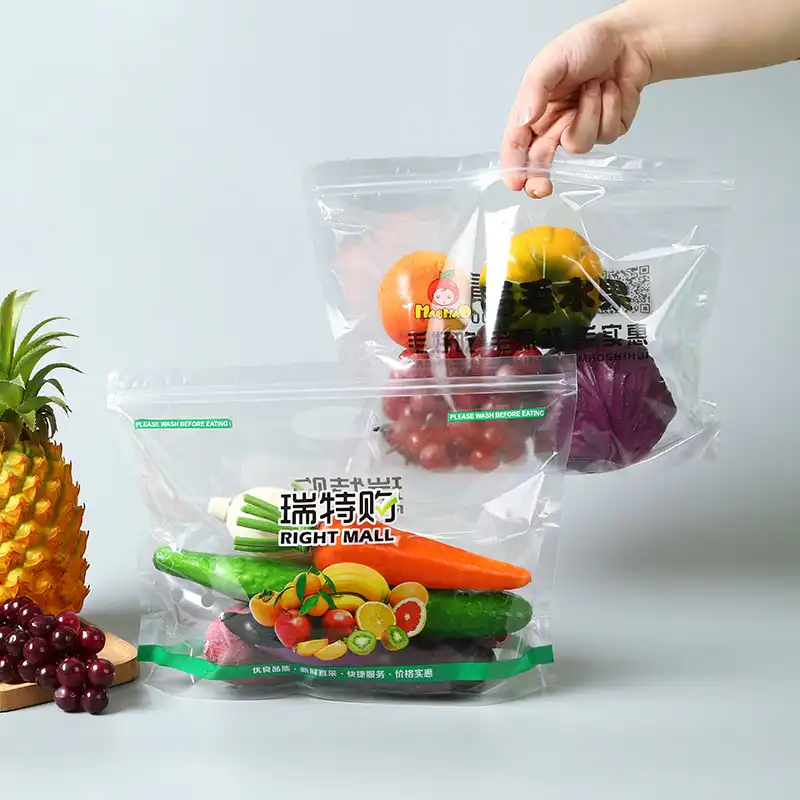
These products are usually free-flowing and lighter. A nylon or metallized build keeps moisture out so pieces don't clump into a frozen block. A resealable closure adds real value, since customers rarely use the whole bag at once.
Ready meals and prepared foods
Shoppers buy these for convenience, so packaging that goes from freezer to microwave is a selling point. Some structures are engineered for steam release. Clear panels that show the actual food also build trust at the shelf.
Frozen dough, dumplings, and bakery
Irregular shapes and edges punish weak seams. A flexible, puncture-resistant build prevents leaks when bags shift during stacking and shipping. Strong bottom gussets help the pack stand and stay full.
Features That Make a Real Difference in the Freezer
Beyond the film, small design details decide whether customers reach for your product again. These add-ons matter more in frozen aisles than people expect.
- Resealable zippers: Choose cold-rated zippers that still open and close after months in the freezer. Standard zippers can stiffen and fail.
- Tear notches: Frozen hands and gloves struggle with tough films. Easy-open features prevent frustration.
- Strong bottom gussets: A well-built base lets the pack stand upright and stack without toppling.
- Hang holes: Useful for freezer displays where shelf space is tight.
- Frosted or matte finishes: These hide condensation better than glossy films when bags warm slightly.
Because we hold FDA and ISO 22000 certifications, we recommend confirming that any food-contact film and zipper meet the same safety standards as the pouch body. It's an easy detail to overlook.
Printing and Branding That Hold Up Through Cold and Condensation
A frozen package faces a unique visual challenge: condensation. When a bag moves from freezer to cart to kitchen, moisture forms on the surface. Cheap surface printing can smear or fade.
Reverse printing, where the ink sits between film layers, protects your design from scuffing and moisture. This keeps logos and nutrition panels crisp through the whole cold chain.
Our in-house design team often helps brands who only have a rough idea of their look. We map artwork to the right film and print method so colors stay accurate even on metallized or matte surfaces, which can shift tones if not managed well.
A Practical Checklist Before You Order
As a manufacturer that has produced flexible packaging for more than 20 years, we've seen which questions prevent costly reprints. Run through this list before you commit to a structure:
- Storage temperature and duration: How cold, and for how long? This sets your barrier needs.
- Product weight and shape: Heavy or sharp contents need nylon and stronger seals.
- Shelf life target: Longer life means a higher barrier (metallized or foil).
- Reseal need: Multi-use products benefit from a cold-rated zipper.
- Cooking method: Microwave or boil-in-bag use requires specific films.
- Sustainability goals: Recyclable mono-material options exist; ask early.
- Fill and seal equipment: Your machinery affects film thickness and format.
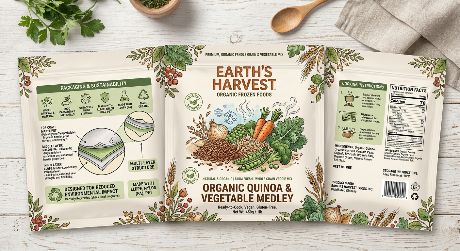
The Move Toward Recyclable Freezer Packaging
Sustainability is reshaping frozen-aisle packaging. According to the Flexible Packaging Association, recyclable and mono-material structures have been one of the fastest-growing requests through the mid-2020s.
The challenge: traditional freezer films mix PET, nylon, and PE, which are hard to recycle together. Newer all-polyethylene (mono-PE) builds aim to keep cold performance while becoming recyclable in store drop-off streams.
In our 6,800㎡ cleanroom facility, we produce both conventional and recycle-ready structures, and we hold GRS certification for recycled content. If a greener footprint is on your roadmap, it's worth testing these films early, since cold performance varies by formulation.
How to Avoid the Most Expensive Mistakes
A few errors show up again and again with frozen-food packaging. Each one is preventable with the right planning.
- Skipping cold-temperature testing: Always test seal integrity and zipper function at your actual storage temperature, not just at room conditions.
- Under-specifying the barrier: Aiming too low causes freezer burn and customer complaints within weeks.
- Ignoring transport stress: Stacking and rough handling break weak corners. Request drop tests.
- Choosing thickness blindly: Thicker isn't always better; the right lamination beats raw gauge.
A reliable supplier will run these tests with you and share the data, rather than asking you to take performance on faith.
Bringing It All Together
The right frozen-food package starts with the film stack, not the artwork. Choose an LLDPE sealant for cold flexibility, add nylon for puncture resistance, and scale the barrier (metallized or foil) to your shelf-life goal.
From there, match the build to your product, add cold-rated features like zippers and tear notches, and protect your branding with reverse printing. A short round of cold-temperature testing saves far more than it costs.
If you're weighing options for upright flexible packaging, YLTPACK can help you sample and compare structures matched to your exact product. As a long-running source factory with FDA, ISO 9001, ISO 22000, and GRS certifications, we'll guide the technical choices so you don't have to guess.
Reach our team on WhatsApp at +86 182 1944 5665 or email [email protected] to talk through your project and request free samples.
Frequently Asked Questions
Can these flexible pouches really survive deep-freeze temperatures?
Yes, when built correctly. A film stack with an LLDPE sealant stays flexible at -18°C (0°F) and below, preventing the cracking that ruins standard packaging. The key is specifying cold-rated materials from the start, not adapting room-temperature films.
What's the difference between metallized and foil structures for frozen food?
Metallized film (VMPET) offers a strong moisture and oxygen barrier with good flexibility and a premium look. Aluminum foil provides the highest barrier of all but is stiffer and needs careful engineering. Foil suits the longest storage and highest-value products.
Do I need a resealable zipper on a frozen-food pouch?
It depends on usage. Single-serve items don't need one, but products customers use over multiple meals, like frozen vegetables or berries, benefit greatly. Just confirm the zipper is rated for cold so it still works after months in the freezer.
Are recyclable options strong enough for the freezer?
Increasingly, yes. Mono-material polyethylene builds have improved a lot and can handle many frozen applications. Performance still varies by formulation, so test recyclable films at your real storage temperature before committing to large volumes.
How do I prevent my printing from smudging in the cold chain?
Use reverse printing, where ink is sealed between film layers rather than on the surface. This protects designs from condensation and scuffing as the package moves from freezer to home. It keeps logos and nutrition panels readable throughout.