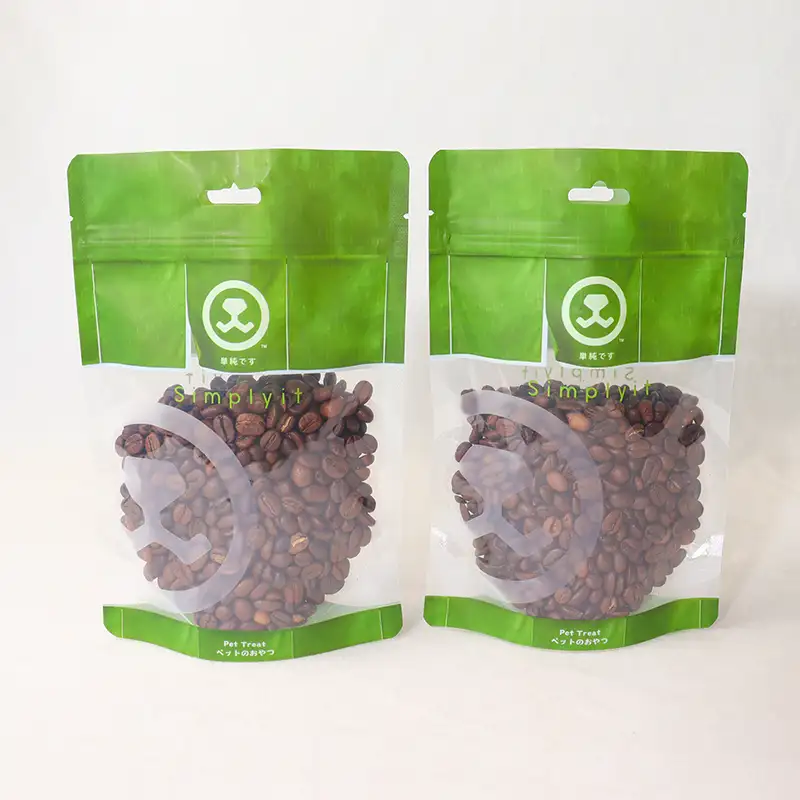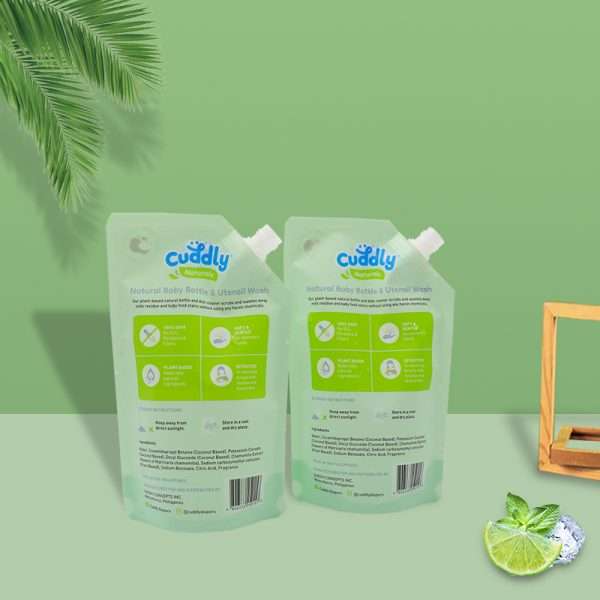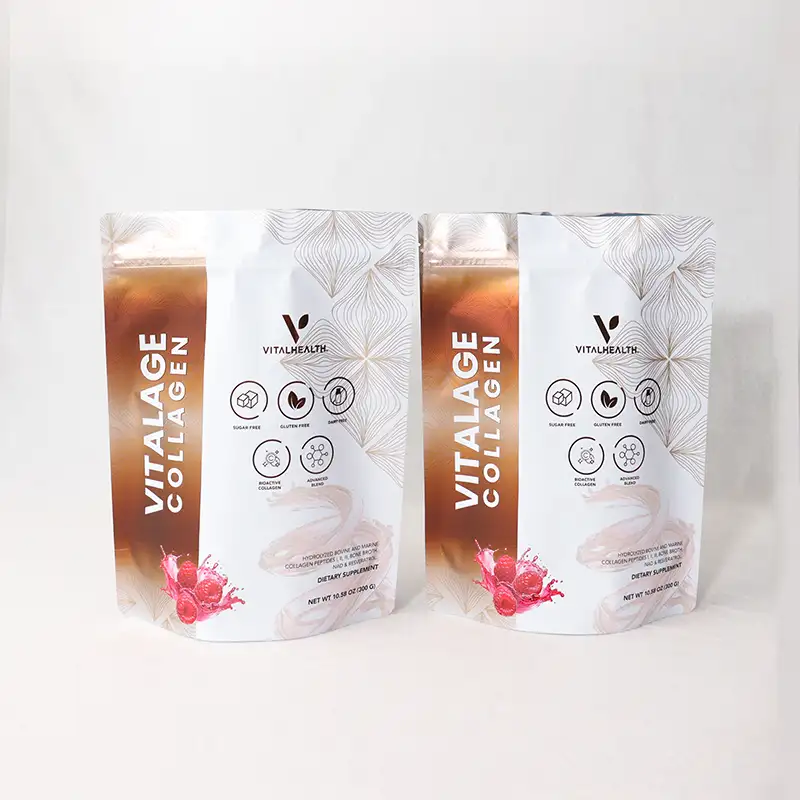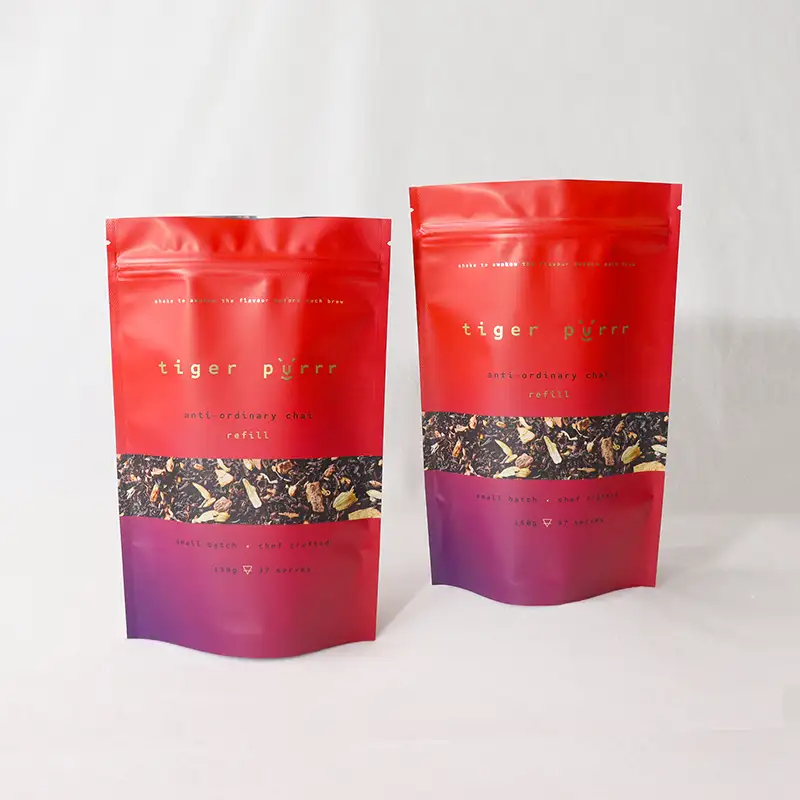
Pick the pouch around how the product is filled, opened and kept. Looks come last. A style chosen for the shelf often fails on the filling line or in the customer's kitchen, so custom stand up pouch styles are best sorted by function first, then by finish.
What a Good Pouch Result Looks Like
A good result is checkable. The pouch fills cleanly and seals with no product in the seal area. It stands on a shelf, protects the contents to the end of the intended shelf life, and reaches the customer undamaged.
Three things decide the style: the product form (dry, powder, liquid or paste), how often the pack is opened, and the barrier the product needs. Dry goods usually suit a zipper stand-up pouch, while liquids and pastes usually need a spout. Fresh roasted coffee needs a valve plus a barrier laminate.
Which Stand Up Pouch Is Right for My Product?
A stand-up pouch (also called a doypack) is a flexible bag with a bottom gusset that lets it stand when filled. Work backwards from what goes inside, because each product form stresses the pouch in a different place.
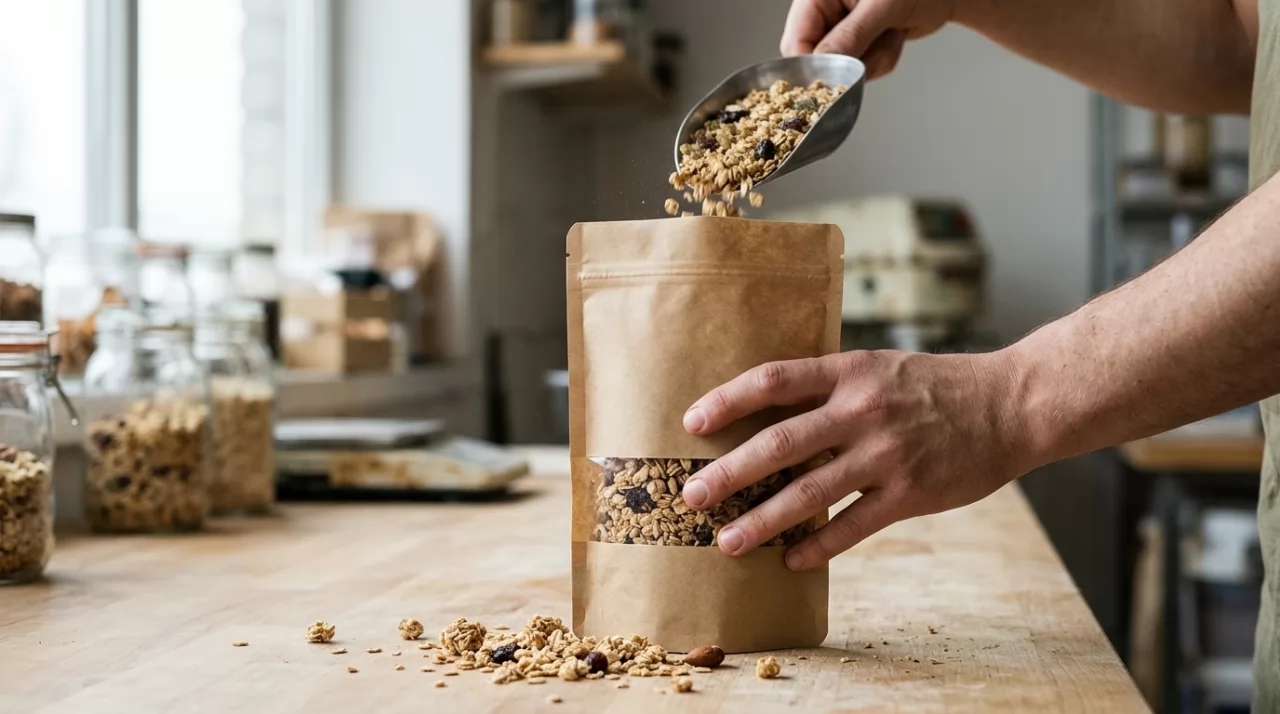
Dry food, snacks and powders
A standard stand-up pouch, with or without a zipper, covers most dry products. Fine powders dust into the seal area and can cause weak seals, so the fill method and seal width matter as much as the style. Fill weight also sets the pouch size, and a heavy fill can make a standard base bulge.
Liquids, sauces and refills
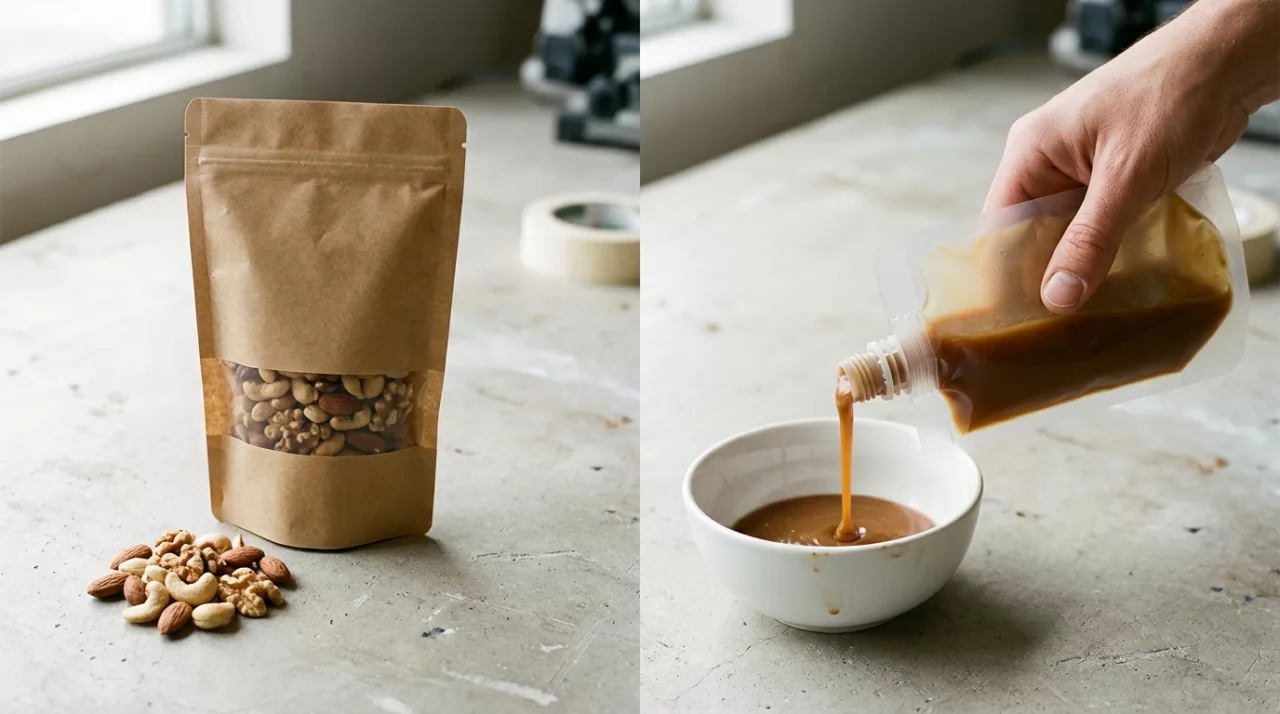
Here you want a spout pouch. Most of the leak risk sits in the spout fitment rather than the pouch body: the weld between fitment and film, and how the cap seats. The sensible check is a leak test on the filled pouch, not only the empty one.
Coffee and pet food
A flat bottom pouch has side gussets and a squarer base. It stands more firmly and holds heavier fills with less bulging, which suits larger coffee bags and pet food. Fresh roasted coffee gives off gas, so a one-way degassing valve is usually added. For lighter fills, a standard stand-up pouch is still fine.
Stand Up Pouch With Zipper vs Spout
The two are not rivals. A zipper suits solids you scoop or pour; a spout suits anything that flows. They overlap on thick pastes, granular sauces and some powders, where either could work.
| Option | Product suited | Reclosing | Filling method | Leak risk | Main cost driver | Shelf look |
|---|---|---|---|---|---|---|
| Zipper stand-up | Dry food, snacks, powders | Good, repeated | Open top, standard fill | Low for dry goods | Zipper type | Full print, clean face |
| Spout pouch | Sauces, drinks, refills | Good, screw cap | Through the spout or before capping | Concentrated at the fitment | Spout and cap | Full print, spout at top |
| Tear notch only | Single-use or short-life dry goods | None | Open top, standard fill | Low for dry goods | Lowest of the four | Full print, plain top |
| Flat bottom with zipper | Coffee, pet food, heavier fills | Good, repeated | Open top, standard fill | Low for dry goods | Pouch construction plus zipper | Box-like, five printable panels |
For a flowing product, the spout row decides; for a dry one, the zipper row does. Where two options both fit, choose one as your lead and ask for both to be priced. The price gap, plus how each runs on your line, usually settles it.
Ask for a spout or zipper sample filled with your actual product, not water. Water hides oil creep, powder in the seal and thick paste that will not pass the spout.
Choosing Size, Material and Print
How to choose a stand up pouch size and material
Start with fill weight and bulk density, because a pouch is sized by volume, not by weight. Two powders of equal weight can need very different pouches. Next come the pouch dimensions and gusset depth: the filled pouch must stand without tipping, and the zipper must sit clear of the product. Then look at barrier need, meaning how much oxygen, moisture and light the product tolerates. Last are the seal and fill method and the shelf life you are aiming for, which tell you how much barrier you are really paying for.
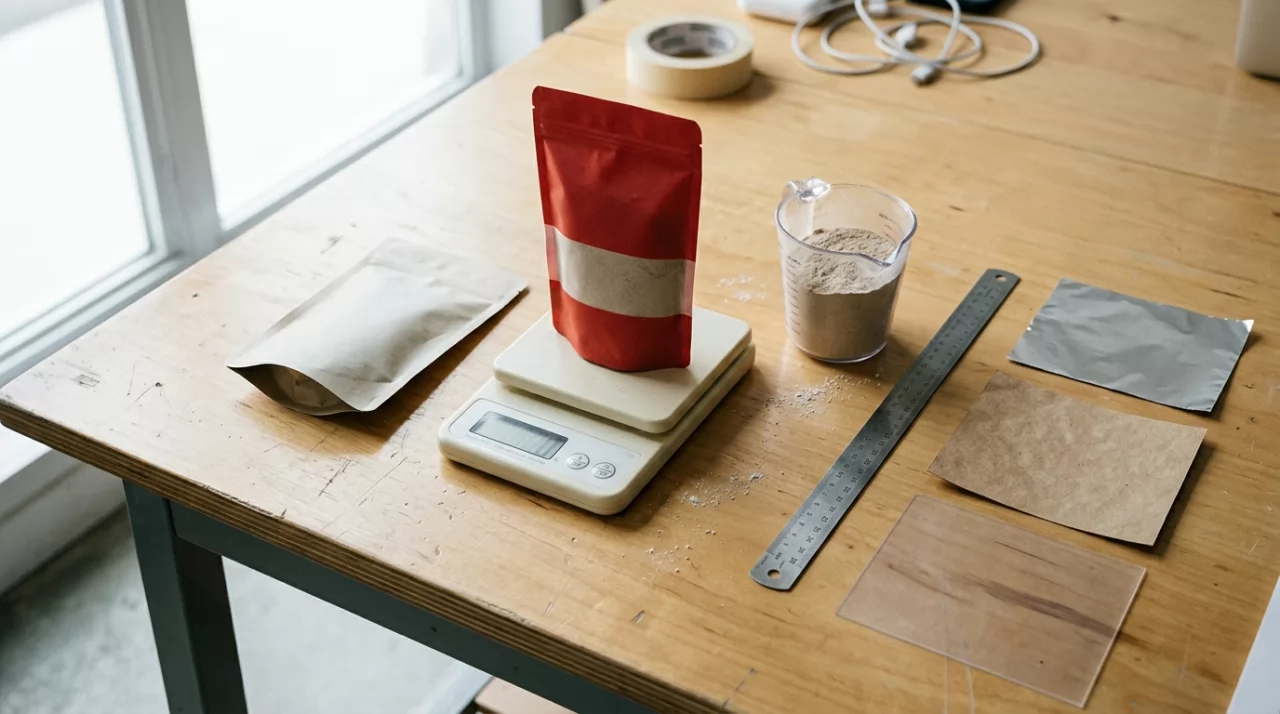
Foil and other high-barrier laminates give the longest protection against oxygen, moisture and light. Kraft laminates give a natural look and clear films show the product, but both usually give less barrier unless built with a barrier layer. Foil and Mylar (metallised PET) structures are not recyclable. If you need a recycled-content, compostable or mono-PE structure, name that exact structure when you ask, because the claims and certificates differ by film.
A rule of thumb: choose the thinnest structure that still meets the shelf life, then test it filled.
Custom printed stand up pouches for food
For food, ask for film test reports that match the country you sell in. Common references are FDA 21 CFR food-contact requirements in the US and the EU food-contact framework, Regulation (EC) No 1935/2004. Say "tested to" a standard, never "approved". Digital printing suits short runs and many designs. Gravure suits repeat volume, with a lower unit price once the cylinders are made. Colour count affects cost, and minimums differ by print method and by material.
Minimums and lead time
Minimums are set per design. Digital print starts at 1,000 pcs and gravure at 10,000 pcs. Compostable, recyclable mono-PE and recycled-content structures start at 30,000 pcs. Production takes 7-15 days after artwork approval. Air, sea or express shipping is quoted with the order, and no transit time is promised in advance.
Three Scenarios Worked Backwards
- A granola launch with several flavours. The aim is to test the range without tying up cash. Digital print fits, since each flavour is its own design at a low minimum. A zipper stand-up pouch lets customers reseal it, and a window is optional if you want the product visible.
- A sauce brand moving into pouches. The aim is no leaks from filling line to kitchen. That points to a spout pouch, with the fitment matched to your filler and the cap tested filled. The barrier must suit the sauce, whether it is acidic, oily or hot-filled.
- A coffee roaster with repeat volume. The aim is fresh beans after weeks on the shelf. A flat bottom pouch with a degassing valve and a foil barrier fits. Once volumes settle, gravure lowers the unit price. If you have only an idea or a reference photo, the in-house design team lays out artwork free, and a similar sample is free while you pay the courier.
Mistakes That Cost a Reorder
The first is sizing from empty-pouch dimensions. A filled pouch is shorter and wider than a flat one. The second is judging by the empty sample and skipping a filled one. The third is ignoring the filling line, where pouch width, spout size or opening style may not match your machine. The fourth is picking barrier by habit, copying someone else's foil bag when the product needs less, or more.
Before anything else, send your product, fill weight and a reference bag, then test the filled sample before approving artwork.
FAQ
Can I mix styles across one product range?
Yes. Many ranges pair a zipper stand-up for dry lines with a spout pouch for liquids. Keep the artwork system the same so the range reads as one family.
Is a zipper always worth adding?
No. If the product is used once or eaten quickly, a tear notch is cheaper. Add a zipper when customers open the pack several times.
Can I get a quote with only a reference photo?
Yes. Send the photo with the product, fill weight and quantity per design. Size can be worked out from the fill.
Do I need my own artwork before asking?
No. Finished files can be reproduced, or the design team can lay out artwork from your idea or reference photo.