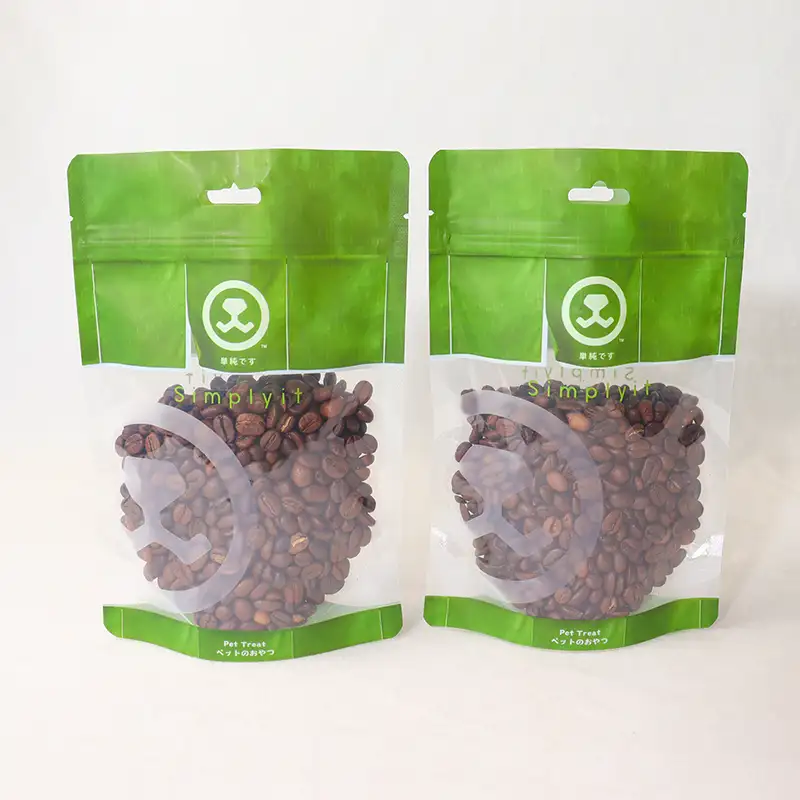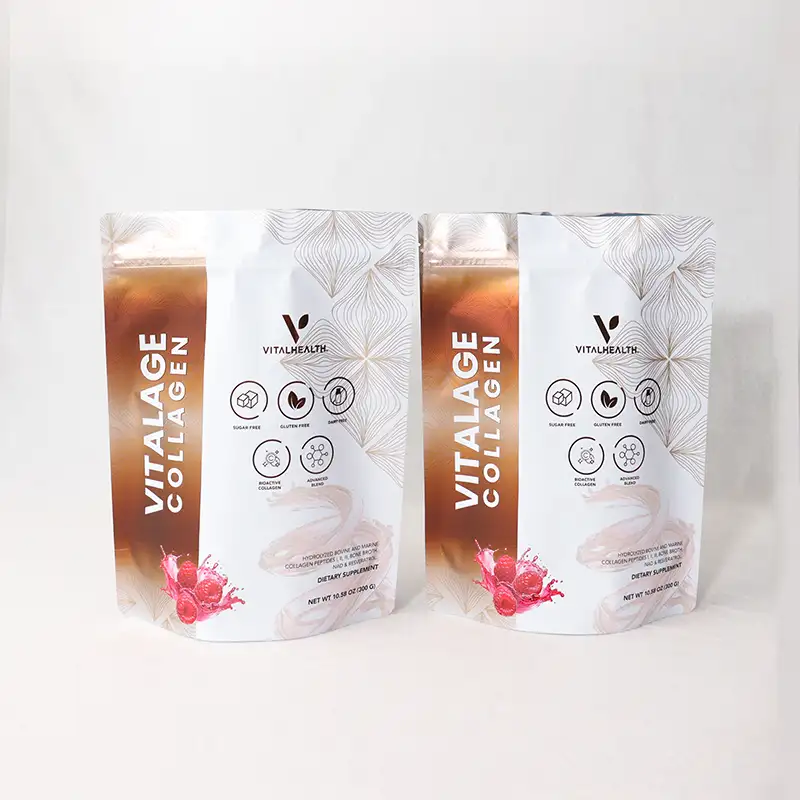
"Just send us the size of your current bag" is the line that opens most pouch RFQs — after format, material and print are already settled, and on the assumption that the numbers are the easy part. They are not. Learning how to measure a stand-up pouch takes a flat table and five minutes: width across the sealed edge, height from the bottom fold to the top seal, and gusset depth with the base opened out.
What do stand up pouch dimensions actually describe?
A stand-up pouch is defined by three numbers: width, height and bottom gusset depth. Width is the flat panel measured seal to seal, height runs from the bottom fold to the top seal, and gusset depth is the base opened out and measured fold to fold. Those three set fill volume, print area and case count together, so none of them stands alone.
Width and height come off the sealed, closed bag as it sits in the carton. Between them they fix the printable panel and how many bags fit across a shipper. Both are easy to check on any bag in your stock — no opening, no guessing at the film.
The gusset is the number that goes missing. It is the depth of the base once the bag is opened out: the folded floor the pouch stands on. It decides how much usable volume sits above the gusset and how stable the bag is when full. Two pouches with identical width and height can hold noticeably different amounts, which is why quoting only two dimensions leads to a sample that fits the shelf but not the fill weight.
| Dimension | Where it is measured | What it changes | If you get it wrong |
|---|---|---|---|
| Width | Across the flat, closed bag, seal to seal | Printable panel, fill opening, bags per carton | Artwork cropped; filler tube or hopper no longer fits |
| Height | Bottom fold to the inner edge of the top seal | Standing height, volume above the gusset, carton height | Bag too tall for the shelf or case; product line reaches the seal |
| Bottom gusset depth | Base opened out flat, fold to fold | Usable volume and standing stability | Bag tips; the fill weight no longer fits the same footprint |
The takeaway is simple: width and height are numbers you can read on any sealed bag, and gusset depth is the one you have to open the bag to find. Quote all three, with units — millimetres or inches, never "standard".
How to measure a stand-up pouch you already have
Pull one bag out of the carton, put it on a hard table, and write the numbers down as you go. Steel rule, pencil, five minutes.
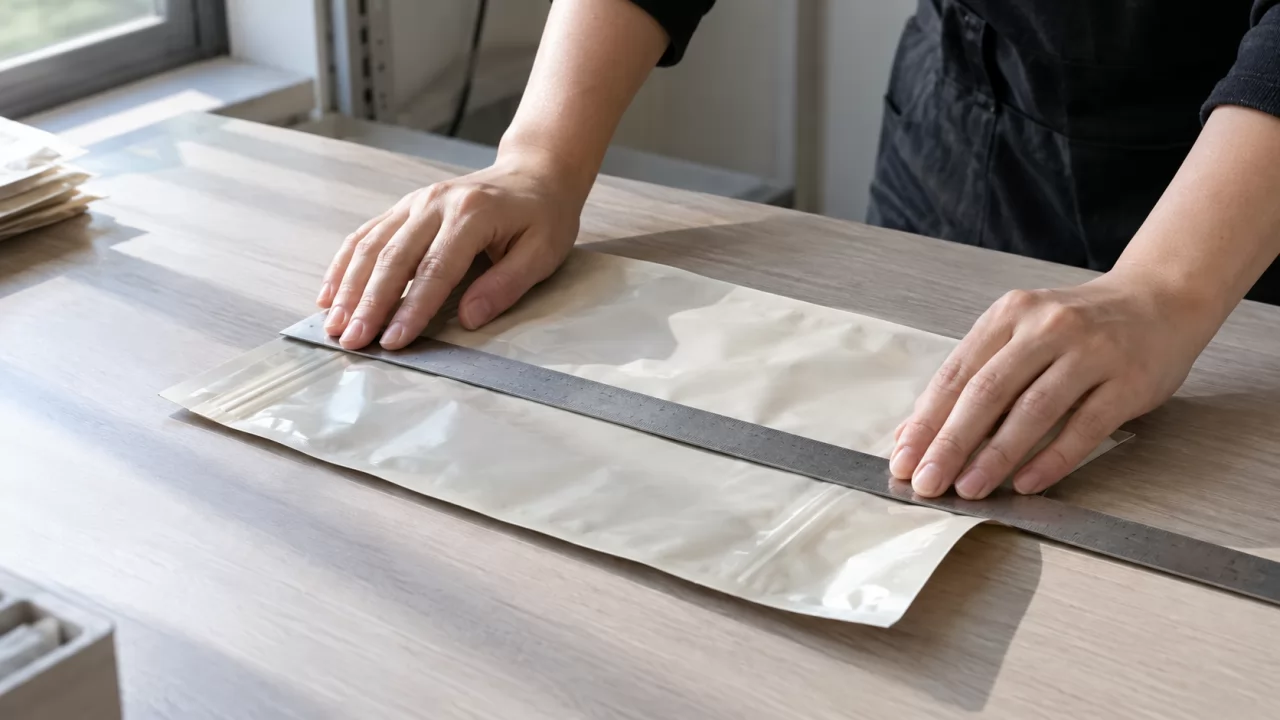
- Lay the bag flat and let it relax. Film has memory, and a bag that has been compressed under other cartons reads short for a minute or two.
- Measure width across the sealed bag, seal to seal. Take it at mid-height, parallel to the top seal, and note which edge of the seal you measured to.
- Measure height from the bottom fold to the top seal. The bottom fold is the crease the base turns on; stop at the inner edge of the top seal, not at a tear notch above it.
- Open the base and measure the gusset. Stand the bag up, press the base flat, and measure fold to fold across the opened floor. That is the bottom gusset width.
- Note the extras and where they sit. A zipper, degassing valve, spout or tear notch each take space; measure the distance from the top seal down to each one.
- Write down the material if you can tell. A foil laminate behaves differently from kraft or mono-PE, and the quote will differ with it.
Two habits will ruin the numbers. Do not stretch the film to flatten a crease, and do not measure a filled bag — a full pouch bulges and gives you a height and width no empty bag will match. (If the bag has been sitting squashed at the bottom of a pallet, say so in the RFQ; a supplier can allow for it when recommending a size.)
What size stand up pouch do I need for my fill weight?
No formula converts grams to millimetres. The right pouch is the one that holds your product at target weight with the fill line still clear of the seal and any zipper. You find it by filling a sample with the actual product and reading where the product sits — not by scaling up from a size chart.
Size charts online map fill weight to pouch width, height and gusset on the assumption of a certain bulk density. Treat them as a starting point. A set weight of puffed snack and the same weight of fine salt occupy very different volumes in the same bag, and only one of them will still leave room for a seal.
Fill capacity versus headspace
Fill capacity is what the pouch holds to the seal. Headspace is the clear band you deliberately leave above the product, and it is where most spec errors start. Powders settle in transit and pull the product line down; granules and flakes do not.
Anything going through a retort cycle needs headspace planned in, because the product and the air around it expand under heat and the seal area has to stay clean to close. Squeeze a retort pouch to the top and you are asking the seal to survive both pressure and product residue.
How to measure stand up pouch for filling, step by step
Take a similar bag — same format, same rough footprint — fill it with your product to the target weight, and close it. Stand it up and read the fill line against the top seal and any zipper. If the product sits tight under the seal, step up a size or go to a deeper gusset rather than filling a heavier bag short.
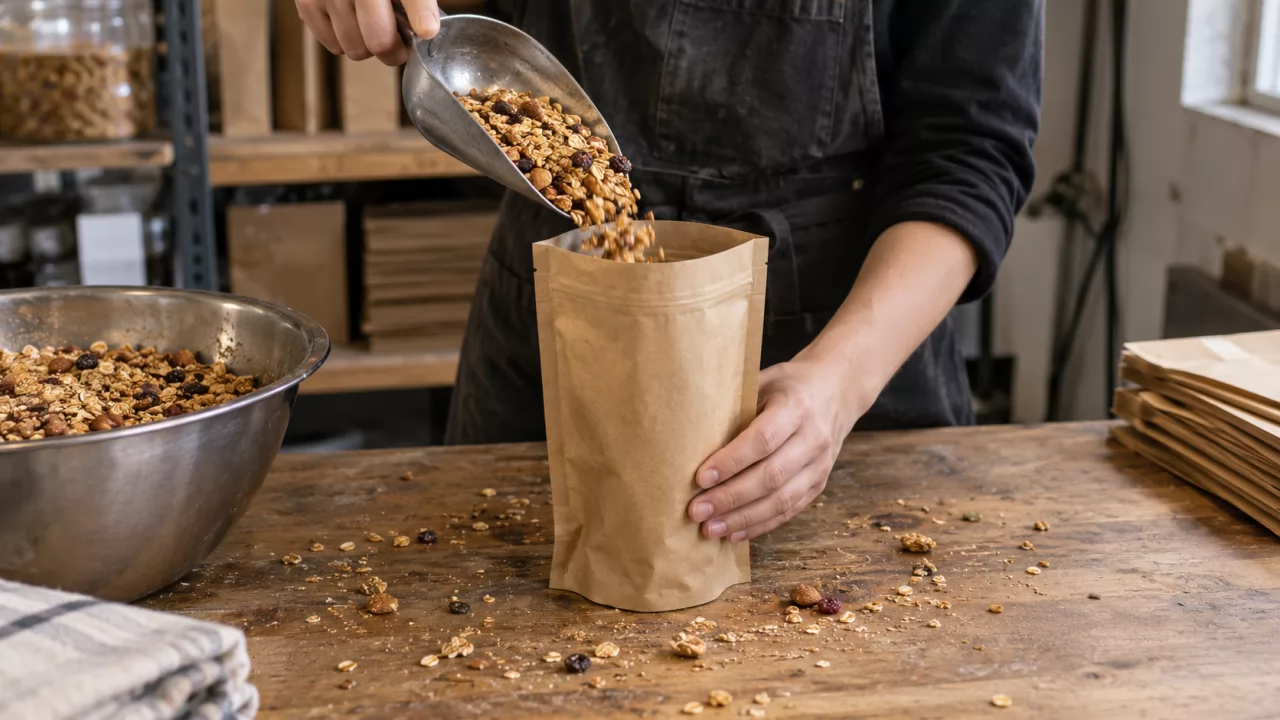
Check the opening as well. Hold the bag open at the top and measure the mouth: your filler tube, auger or hopper has to enter it cleanly. A wide bag with a shallow gusset opens differently on the line from a narrow bag with a deep one, and the same width can behave two ways.
When the gusset changes the decision
A deeper gusset buys volume without adding height, which is what you want when the shelf or the carton limits how tall the bag can be. But the base has to carry the bag. A shallow gusset under a tall, heavy fill gives a footprint too small for the load, and the pouch tips on the shelf.
Once the height budget runs out, or the product is dense and the fill weight climbs, a flat bottom pouch holds more in a squatter shape and stacks squarely in the case. That is the point to change structure instead of hunting for a bigger stand-up.
If two structures both fit your product, ask for both priced in writing. One recommendation plus each option costed is a normal request, and it beats guessing at which one fills better on your line.
Tolerances, checks and what to send in the RFQ
Measurements only help if the supplier knows which ones matter. Say which dimension is fixed — the one your filler, carton or shelf dictates — and which can move a couple of millimetres without consequence.
Before the RFQ goes out
- Three dimensions with units, plus the fill weight per bag and what the product is.
- Which dimension is fixed and which flexes, so tolerances are applied where they matter.
- Extras and target market — zipper, valve, window, spout; the market decides which documents you need with the quote.
When the sample bags arrive
- Fill one to target weight and check the product line against the seal and zipper.
- Run it on the line if you can — filler opening, seal jaws, case fit — before artwork is approved.
- Measure it again flat and empty, and log any gap against the numbers on the quote.
Similar bags in the same format and material are the cheapest way to test a spec before tooling: fill one, seal it, see how it carries. YLTPACK sends free similar bags for that check, with the courier paid by the buyer.
Common stand-up pouch measurement questions
Should a stand-up pouch be measured filled or empty?
Empty. A filled bag bulges at the base and sides, so its width and height read larger than the flat pouch and will not match what the supplier can make. Use a filled sample to check the fill line, and an empty one for dimensions.
Is the bottom gusset included in the stated height?
No. Quoted height runs from the bottom fold to the top seal; the gusset is listed separately as its own depth. If a supplier gives you only two numbers, ask for the third before you compare prices.
Does laminate or print thickness change the finished size?
Barely. Each layer adds a fraction of a millimetre, which shifts internal volume slightly but not the cut dimensions in any way you would measure on a table. Structure matters for stiffness and barrier, not for the spec sheet size.
What tolerance should I expect on a printed pouch?
Usually around ±1–2 mm on cut dimensions, with print registration held tighter than that. Ask for the figure in writing on the quote, before you approve artwork — that number tells you whether the bag will run on your filler.