Many buyers assume a size chart gives them the right pouch, but two bags with the same width and height can hold very different amounts of coffee, granola or powder. Capacity depends on fill density, gusset depth and headspace, and zip lock bag sizes on a chart say little about any of them. The sections below follow the order of decisions: fill first, then format, then chart, then proof.
What Size Ziplock Bag Do I Need? Start From the Fill, Not the Chart
The right size is set by fill weight, bulk density and headspace, which you then convert into width, height and gusset. Choosing dimensions first and hoping the product fits reverses the logic. A pouch is a container for a defined mass of a specific product, so the product sets the geometry.
Weight, volume and why the two disagree
Bulk density is the mass of a product per unit of volume, including the air between particles. Fine powder, whole-bean coffee and puffed snacks can all weigh the same in a bag and occupy very different volumes. A pouch capacity figure by volume is therefore a starting estimate, not a promise about weight.
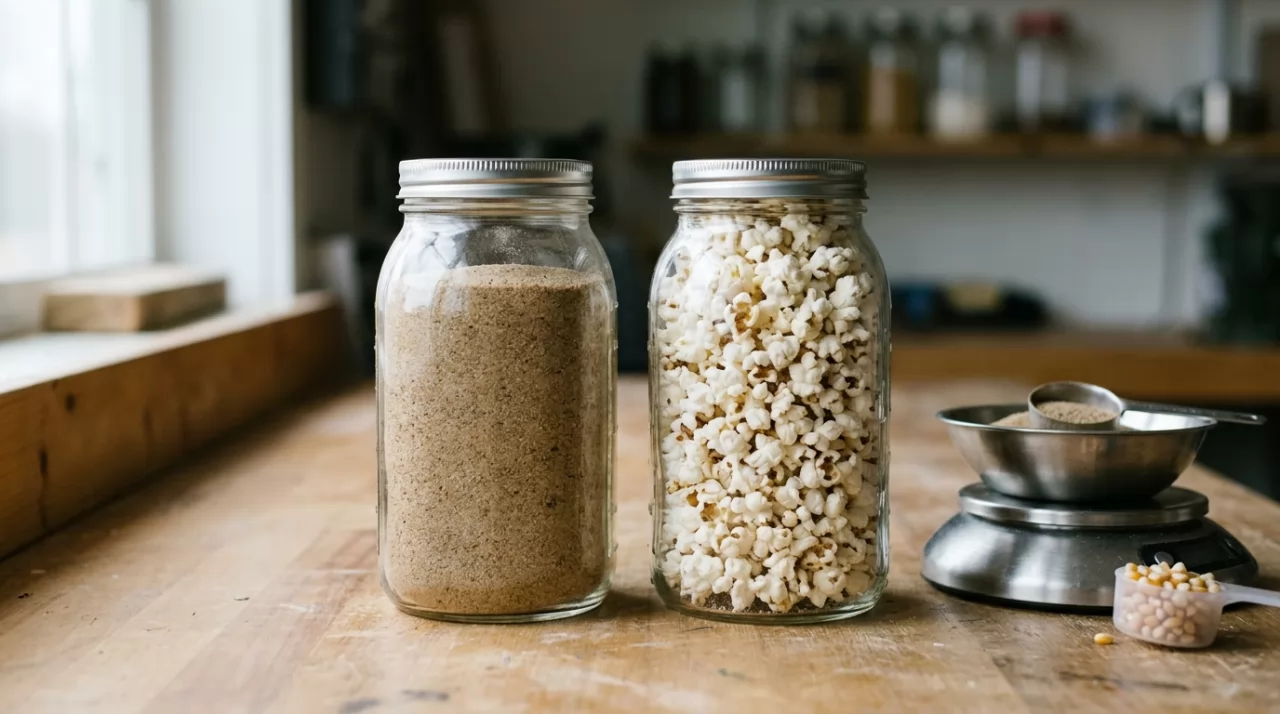
Think of two jars of the same size, one filled with sand and one with popcorn. The jars hold the same volume, but the weights are nowhere near each other. Pouches behave the same way. If you quote "250 g" to a supplier without saying what the product is, the volume they calculate may be wrong by a wide margin.
A stand-up pouch also does not fill to its geometric maximum. Once filled, the walls bulge, the bottom opens into its gusset, and the top needs a clean zone for the heat seal and the zipper. Usable volume is lower than the arithmetic volume of the flat dimensions, and the gap changes with film stiffness and fill type.
Product types that need extra room
Powders that settle are the common surprise. A bag filled from a loose, aerated state looks full on the line, then the powder compacts in transit and the bag looks half empty on the shelf. Sizing for the settled volume is safer for presentation, though it leaves more headspace at filling.
Granules and flakes tend to behave better, but flakes such as granola or dried leaves trap air and resist compression, so they usually need a taller bag or a deeper gusset than their weight suggests. Frozen items, which are bulky and irregular, leave air pockets between pieces and need width and gusset rather than height. Products with sharp or rigid pieces also need wall room so the film is not stretched against the seal.
Tip: Give your supplier the fill weight and a photo of the filled product, not only a target size. A photo shows piece shape and air gaps that a weight figure hides.
Sizing Criteria: Density, Headspace, Closure and Filling Method
These criteria are listed in the order most buyers decide them. Each one pushes the dimensions up or down, and a few of them conflict.
- If the fill is dense and heavy, then keep the bag compact but check seal strength and gusset depth.
- If the fill is light or airy, then add height and gusset to hold the volume.
- If the consumer opens the bag many times, then add clear space above the fill line for the zipper to work.
- If a machine fills the bag, then confirm the opening width and fill height with the machine maker.
- If shelf presence matters, then size the front panel for the print and the way the bag stands.
Fill weight and density set the baseline volume. Everything else adjusts around it.
Headspace is the empty zone above the product. It has two jobs: it gives the heat seal a clean, product-free surface, and it gives the zipper room to close without pinching powder or flakes in the track. Contamination in the seal is a common cause of weak seals and leaks. A tight bag filled to the top looks generous on paper and gives trouble at the seal.
Reopening frequency affects the zone between the zipper and the top seal. A bag opened daily, such as pet treats or a household product, needs enough room to tear open or cut, then reach in and press the zipper shut. A single-serve bag opened once can do without that room.
Filling method matters more than most size discussions admit. Hand filling tolerates a narrow opening and a tight fit. Machine filling needs a wider mouth and extra height, because the fill spout, the product drop and the vibration all take space. Where hand filling suits a small run and a machine suits volume, size for the method you will actually use at scale.
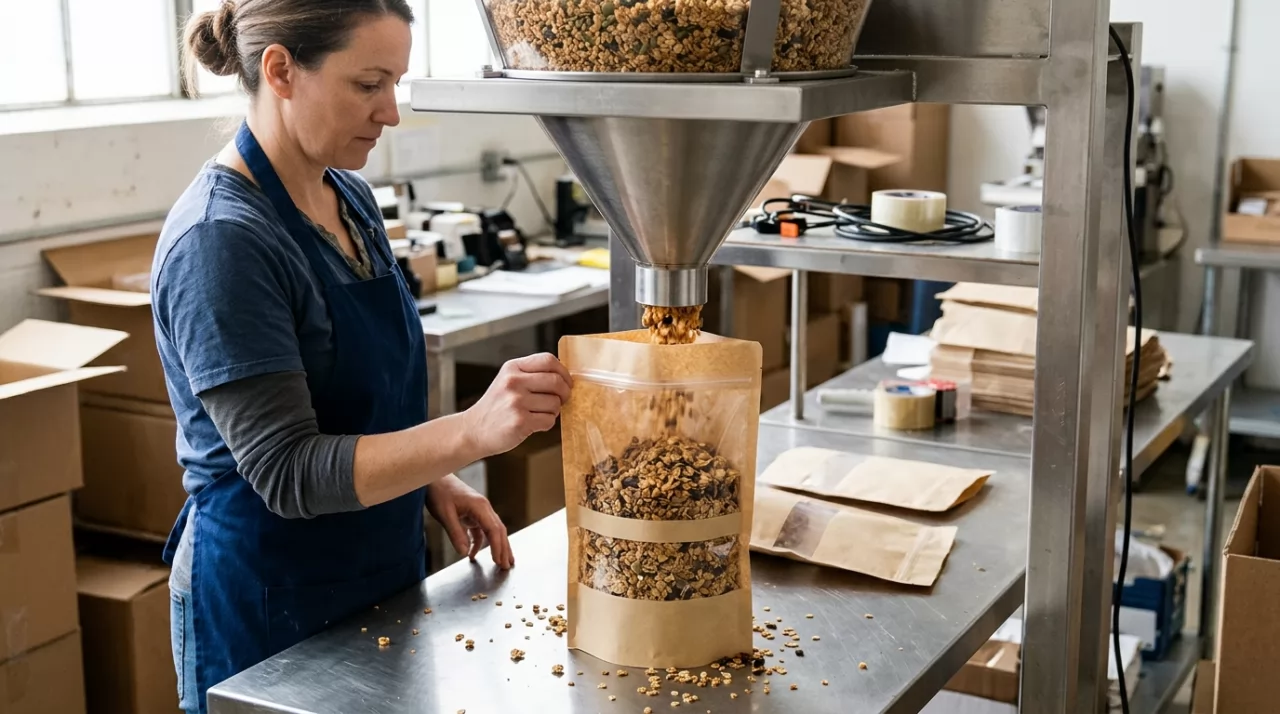
Conflicts do occur. A bag sized to look full and premium on the shelf may be too tight to seal reliably. A bag sized generously for easy filling may look under-filled on the shelf. You cannot optimise both, so decide which one you give up. For most food products, a reliable seal and a clean fill take priority, and appearance is adjusted through print and bag proportions.
Shelf stance is the last check. A stand-up pouch that is tall and narrow tips over, and one that is short and wide looks squat. Proportion, not just capacity, decides how the bag sits among its neighbours.
Stand-Up Zipper Pouch Dimensions Compared With Flat and Flat-Bottom Formats
Stand-up zipper pouch dimensions are stated differently from other formats, and that is where many misreadings start. The table sets out four common formats side by side.
| Format | How the size is stated | Where capacity comes from | Typical products | Main sizing trap |
|---|---|---|---|---|
| Stand-up pouch | Width × height + bottom gusset | Bottom gusset opens into a base | Snacks, granola, powders, pet treats | Gusset folded into the height figure or left out |
| Flat-bottom pouch | Width × height + base depth | Box-like body with side gussets | Coffee, premium food, pet food | Base depth ignored when comparing volume |
| Flat (three-side seal) bag | Width × height | Only the flat width, with little depth | Samples, flat items, dry food | Looks larger than its real capacity |
| Spout pouch | Width × height + gusset, with spout position | Gusset plus fill height below the spout | Sauces, drinks, detergent refills | Nominal volume ignores spout space |
The takeaway: depth, not width and height, separates formats of similar flat size, so compare gusset or base depth before you compare anything else.
If your product is a free-flowing dry food that should stand and be reopened, look at a stand-up pouch with a zipper. If it is coffee or a product that justifies a box-like shelf face, look at flat-bottom. If it is flat, light or sold as a sample, a flat bag is enough. If it is liquid, sauce or paste, look at a spout pouch and size it by the fill line rather than the full outline.
Reading a Custom Ziplock Bag Size Chart
A custom ziplock bag size chart normally lists width, height and bottom gusset, in millimetres or inches. The first question is whether those figures are internal (usable space inside the seals) or external (the cut size of the bag). The difference is a few millimetres on each side, and on a small pouch that is enough to change what fits.
The second question is where the zipper sits. The zipper is placed below the top seal and above the fill line, so the usable height is the stated height minus the top seal, the zipper zone and the bottom seal area. A bag listed at a given height may have noticeably less room for product than the number implies.
Third, cut size carries a tolerance. Converting and bag making vary slightly, so a stated size is a target with a permitted range. Ask what that range is, and check that your filling line and carton layout can cope with it at both ends.
Before you accept a chart, put these questions to the supplier:
- Are the dimensions internal or external?
- Is the gusset included in the height?
- How far is the zipper from the top edge?
- What is the tolerance on width and height?
- What fill weight is the size based on?
Note: Confirm the measuring convention in writing, because two charts with identical numbers can describe different bags.
How Print Method and Minimums Affect Which Sizes Make Sense
Minimums are set per design, and that interacts with how many sizes you plan. Digital printing starts at 1,000 pcs per design, which suits launches, test runs and ranges with many designs. Gravure starts at 10,000 pcs per design and suits repeat orders where the lowest unit price matters.
A range of many sizes with few pieces each points toward digital. One core size at volume points toward gravure. A middle path is to run the core size in gravure and the secondary sizes in digital, then check whether the total fits your demand. Compostable, recyclable mono-PE and recycled-content structures have a higher minimum of 30,000 pcs per design, so that decision belongs early in the size plan.
Extras change the usable print area and the interior. A zipper, degassing valve, window or hang hole each takes space on the front or in the header, so a bag that fits the fill may not fit the artwork you had in mind. Print colours, material, size, quantity per design and extras are the price drivers, and the quote itemizes them so you can see what each size costs.
Proving the Size Before the Full Run
Fill a sample with the real product, not a stand-in. Close the zipper several times, stand the bag on a flat surface, and check how it sits beside a neighbouring pack. Then load filled bags into the carton you plan to ship in.
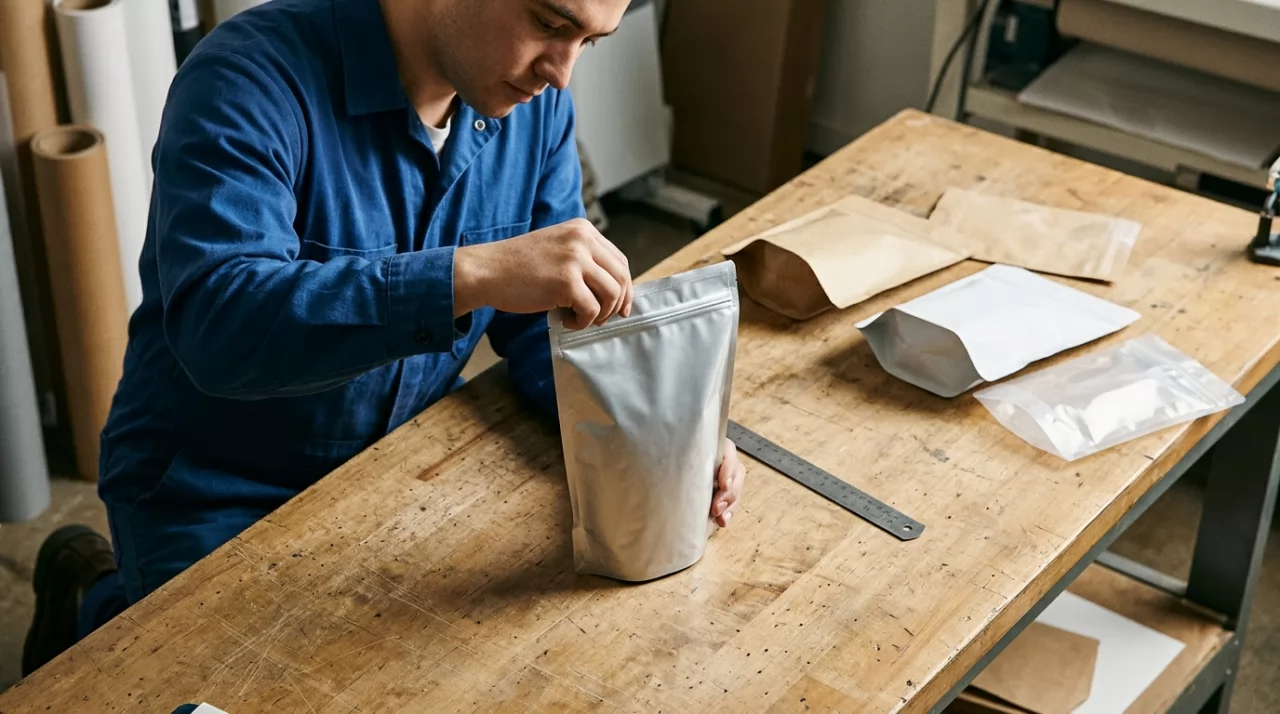
On the filled bag, measure the following:
- Fill height from the bottom seal to the product surface.
- Clear space between the product and the zipper.
- Bag thickness at its widest point.
- Whether the bag stands without leaning after handling.
Only after those checks should you approve the artwork. Production time is 7-15 days after artwork approval. A free sample of a similar bag is available, and you pay the courier. The free pouch capacity and carton CBM calculators on the website give a first estimate before you order anything.
FAQ
How do I convert fill weight into a pouch size?
Divide fill weight by bulk density to get product volume, then add headspace for the seal and zipper. Pick width, height and gusset that give that volume. Treat the result as a starting point and confirm it with a filled sample.
How to choose ziplock bag size for food that settles or compresses?
Size for the settled volume if shelf appearance matters, and accept extra headspace at filling. Powders and ground products compact in transit. A filled sample left through a few days of handling shows how far the product drops.
Should I order one size or several for a product range?
One core size is usually cheaper per piece at volume, but several sizes serve different pack weights. Digital printing at 1,000 pcs per design makes a multi-size range workable. Gravure at 10,000 pcs per design favours fewer sizes.
What do I need to send to get a size recommendation?
Send the product, fill per bag, bag type or photo, size if known, quantity per design, number of designs, artwork or idea, extras and target market. The product photo and fill weight matter most. With those, a supplier can recommend a size instead of guessing.
Get a Size Recommendation
Send the fill per bag, a photo of the filled product, the quantity and number of designs, and the market you sell into to [email protected] or WhatsApp +86 182 1944 5665. Our team replies with an itemized quote and a recommended structure within one business day.