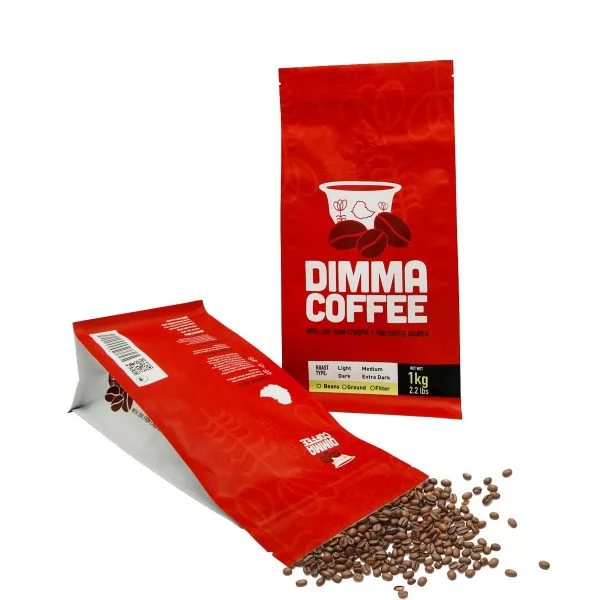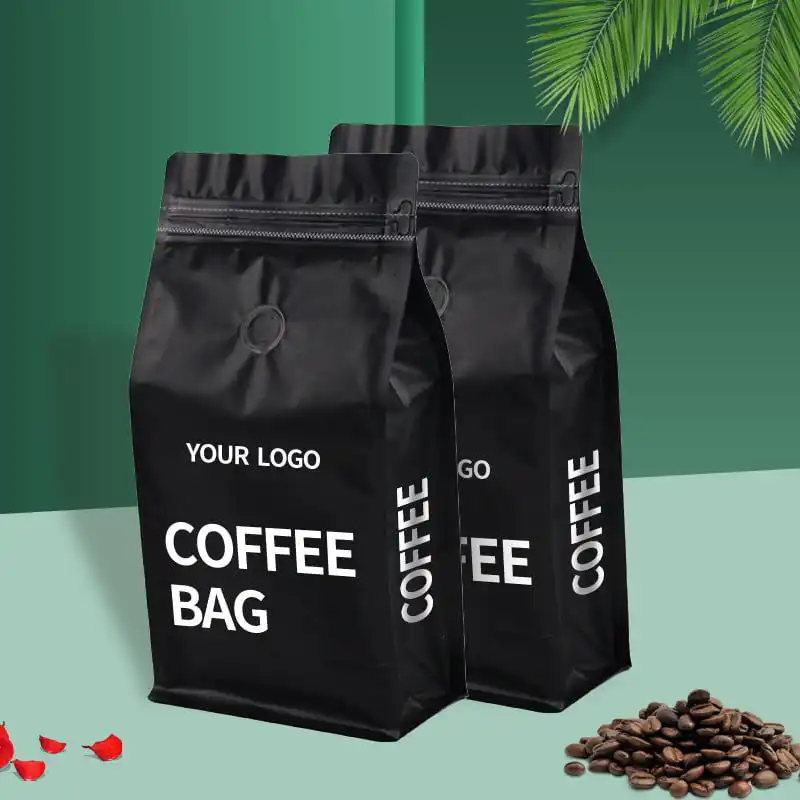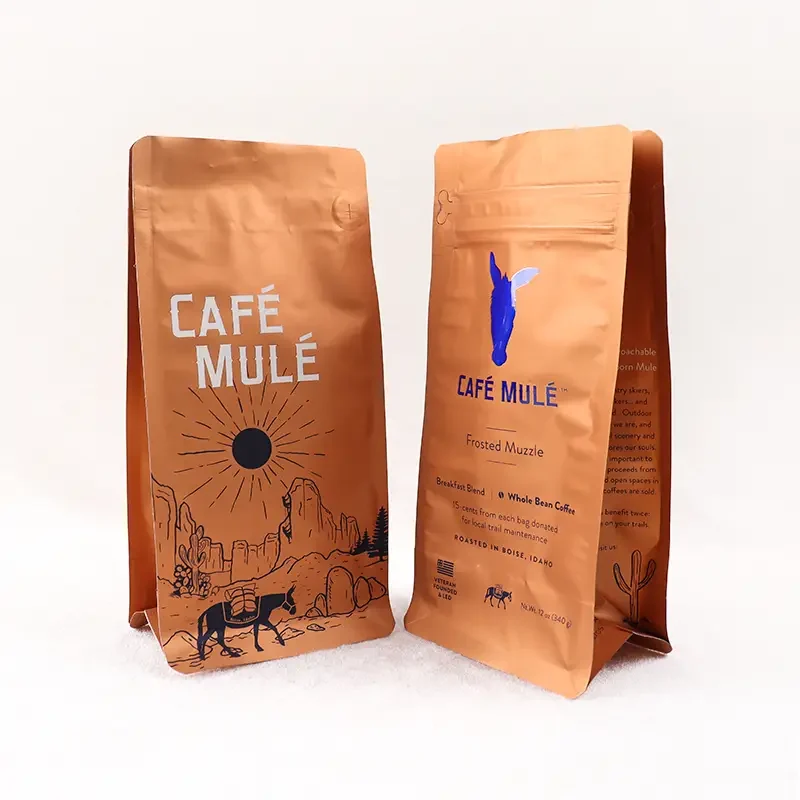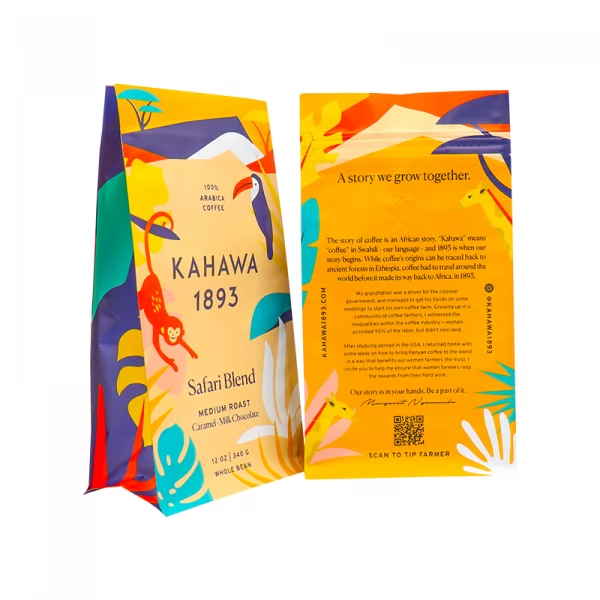
Short answer first: for most coffee and tea brands, a 250g flat bottom pouch suits retail shelf sales, a 500g size works for repeat buyers and gifting, and a 1kg bag fits subscriptions or wholesale.
The Quick-Reference Size Table
If you only read one section, make it this one. Here's a practical capacity chart for tea and coffee packaging that lines up product weight with typical bag dimensions. These figures reflect common density ranges we package across roasted coffee and dried tea leaves.
| Product Weight | Typical Width × Height (mm) | Gusset Depth (mm) | Best For |
|---|---|---|---|
| 50g | 80 × 130 | 40 | Samples, tea tasting kits |
| 100g | 90 × 150 | 50 | Single-origin trials, specialty tea |
| 250g | 105 × 180 | 60 | Retail shelf standard |
| 500g | 130 × 220 | 70 | Repeat buyers, gift sets |
| 1kg | 160 × 280 | 80 | Subscriptions, café supply |
Note these are starting points, not fixed rules. Whole bean coffee takes up more room than ground, and fluffy loose leaf tea takes up far more than its weight suggests. We'll cover those adjustments below.
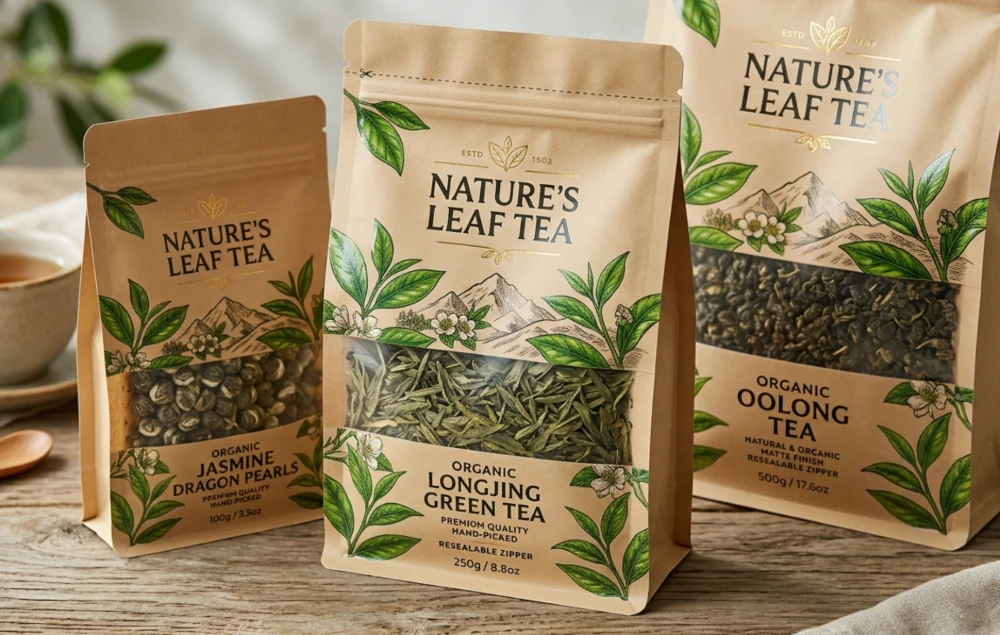
Why Bag Size Affects More Than You Think
Size isn't just about fitting product inside. It quietly drives three things that hit your bottom line: shelf appeal, freshness, and freight cost. A pouch that stands tall and full reads as premium. One that sags looks cheap, even with great coffee inside.
Freshness matters too. Excess air space speeds up oxidation, and oxygen is the enemy of aroma. For coffee especially, the oxygen barrier of your film and the amount of trapped headspace directly affect how long those roasty notes survive. We'll touch on valves shortly.
Then there's shipping. Oversized bags waste carton space and inflate your per-unit freight. Working with brands across North America, we've found the most common mistake is ordering a size "just to be safe" that ends up 30% larger than needed. That padding adds up fast across thousands of units.
Matching Size to How People Buy
Before you look at millimeters, look at your customer. The right format follows buying behavior, not the other way around.
Retail shelf sales
If your bags sit on a store shelf competing for attention, 250g is the sweet spot. It's an approachable price point for a first-time buyer and stands upright nicely on a flat base. The flat bottom design gives you a wide front panel, basically a billboard for your brand story.
Online and subscription buyers
Direct shoppers tend to buy more per order. 500g and 1kg sizes reduce how often they reorder and lower your shipping frequency. For a monthly coffee subscription, a 340g (12oz) or 500g bag often hits the perfect rhythm between freshness and value.
Café and bulk supply
Selling to cafés or offices? 1kg is your friend. Just confirm the bag's seal strength and base stability, because heavier fills put more stress on the bottom seam during stacking and transport.
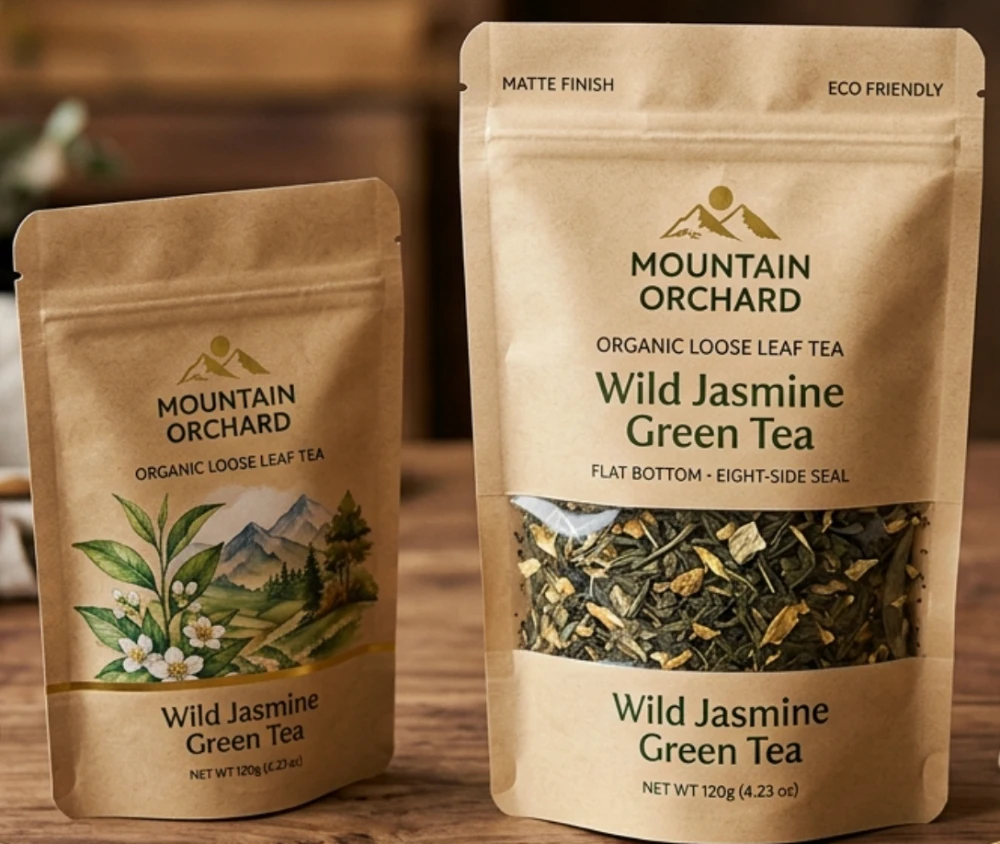
Flat Bottom Coffee Bag Sizes: 250g, 500g, 1kg Explained
Roasted coffee has a quirk worth knowing. Whole beans are bulkier per gram than ground coffee, so the same weight needs a taller or deeper bag. Here's how the popular flat bottom coffee bag sizes of 250g, 500g, and 1kg actually behave in practice.
| Weight | Whole Bean Fill | Ground Fill | Recommended Headroom |
|---|---|---|---|
| 250g | Fills ~90% of standard bag | Fills ~75% | 10-15% |
| 500g | Fills ~88% | Fills ~72% | 12-15% |
| 1kg | Fills ~85% | Fills ~70% | 15% |
So what's the best flat bottom bag size for whole bean coffee? For a roaster selling premium single-origin beans, 250g gives a full, plump look that signals quality. If you grind in-house or sell pre-ground, size down slightly since ground coffee packs denser.
One tip from experience: always order based on your roast date and bean variety. Lighter roasts are denser, darker roasts are airier and take more space. If you switch roast profiles seasonally, build a little flexibility into your dimensions.
How to Choose a Flat Bottom Pouch Size for Loose Leaf Tea
Tea plays by different rules entirely. This is where many brands get caught out. Knowing how to choose a flat bottom pouch size for loose leaf tea comes down to one word: volume.
A whole-leaf white tea or a hand-rolled oolong can take up three to four times the space of the same weight in coffee. Picture this: 100g of dense black tea fits a small pouch, but 100g of fluffy chamomile flowers might need a 250g coffee bag's worth of room.
- Dense teas (CTC black, fannings): pack tight, choose smaller dimensions
- Medium-density teas (green, pu-erh): standard sizing works
- Fluffy teas (white tea, herbal blends, whole-leaf oolong): size up generously
Because we hold FDA and ISO 22000 certifications, we always recommend testing a sample fill before locking your order. Tea volume varies so much by leaf style that a quick fill test saves you from a warehouse full of half-empty pouches.
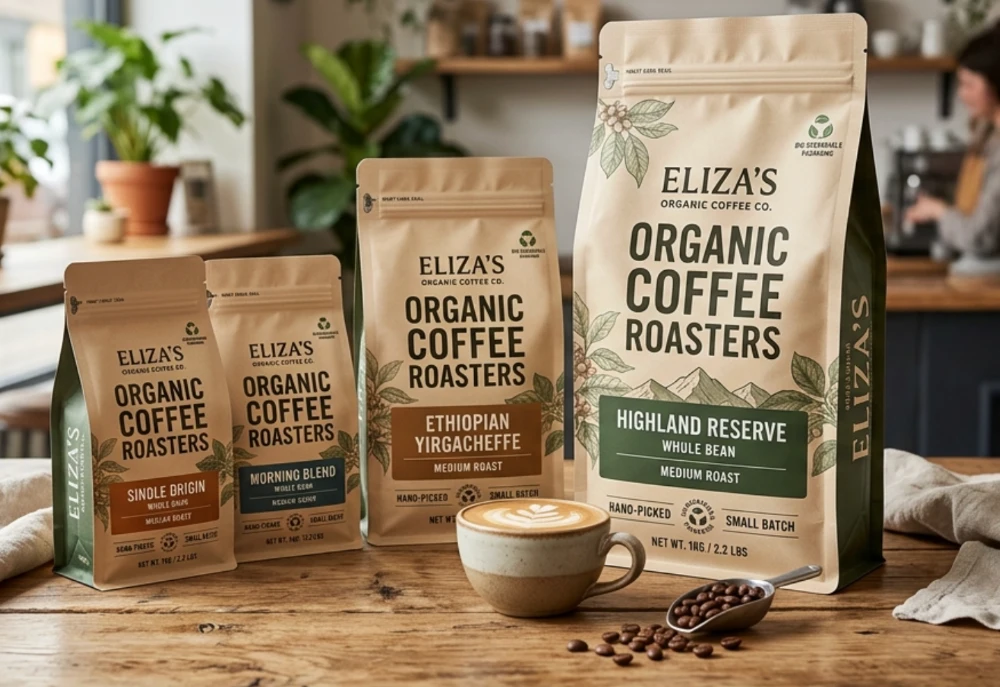
The Degassing Valve: Dimensions That Make Room for It
Freshly roasted coffee releases CO2 for days after roasting. Without a valve, your bag can balloon or even burst. The valve lets gas out while keeping oxygen from coming in. It's small but mighty.
When planning flat bottom coffee bag dimensions with a degassing valve, give yourself enough flat surface for proper valve placement, usually on the front or back panel, centered and clear of seams. A cramped bag leaves no clean spot for the valve, and a poorly placed valve can leak.
| Bag Size | Min. Panel Height for Valve (mm) | Valve Placement |
|---|---|---|
| 250g | 160+ | Upper-center front |
| 500g | 200+ | Upper-center front or back |
| 1kg | 250+ | Center back panel |
Tea generally doesn't need a valve since it doesn't off-gas, so you save a little cost there. But if you blend tea with coffee or sell freshly roasted grain teas, factor the valve in.
The Headroom Rule Nobody Talks About
Here's a detail that separates a polished package from an amateur one: headroom. You need empty space at the top to seal the bag cleanly and let the zipper or tin-tie function. Fill a bag to the brim and you'll get crooked seals and frustrated customers.
Our rule of thumb is 10-15% headroom for coffee and 15-20% for tea, since tea settles and compresses over time. Skip this and your bags will look overstuffed on day one and oddly empty after settling.
A bag that looks 80% full on the shelf almost always outsells one that looks stuffed to bursting. Full but composed reads as premium.
A Quick Checklist Before You Order
Run through this before you commit to a production run. Our in-house design team often helps brands who only have a rough idea of weight, and these are the first questions we ask.
- What's your fill weight, and is it whole bean, ground, or loose leaf?
- How dense is your product? (Run a quick volume test)
- Do you need a degassing valve?
- What closure: zipper, tin-tie, or heat seal only?
- Where does it sell, shelf, online, or café?
- Have you left 10-20% headroom?
- Will it stack and ship without crushing?
If you can answer these, you're 90% of the way to the right format. The rest is fine-tuning dimensions, which is where a sample run pays off.
Material and Barrier: The Freshness Equation
Size and material work together. A perfectly sized bag with a weak barrier still lets aroma escape. For coffee, look for a multi-layer film with a strong oxygen and moisture barrier, often a kraft or matte outer with a foil or metallized inner layer.
As a manufacturer that has produced packaging for over 20 years, we've seen brands obsess over print and forget the barrier. Yet barrier quality is what keeps coffee tasting like coffee three months later. For tea, moisture control matters most, since leaves absorb humidity and lose their character fast.
Sustainability is also rising fast. Recyclable mono-material and compostable structures are increasingly requested, and we produce GRS-certified recycled options for brands that want their packaging to match their values.
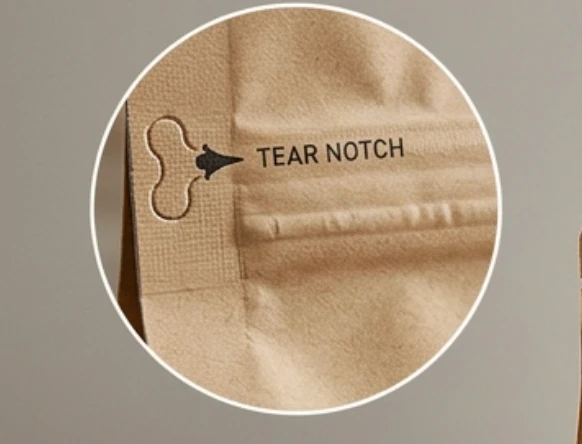
Common Sizing Mistakes and How to Dodge Them
Let me save you some headaches with the slip-ups we see most often.
| Mistake | What Happens | Fix |
|---|---|---|
| Sizing for weight, not volume | Fluffy tea overflows or coffee sags | Do a fill test first |
| Zero headroom | Messy seals, broken zippers | Leave 10-20% space |
| Oversizing "to be safe" | Wasted film, higher freight | Match real fill volume |
| Ignoring valve placement | Leaks, ugly layout | Plan panel space upfront |
| Skipping a sample run | Costly reorders | Approve a physical sample |
Every one of these is preventable with a little planning. In our 6,800㎡ cleanroom facility we run sample approvals precisely so brands can hold the real thing before committing to volume.
Getting From Idea to Finished Bag
You don't need to have everything figured out to start. Many of the brands we work with come to us with just a target weight and a logo. From there, we help translate that into exact dimensions, barrier specs, and valve placement.
If you want a second opinion on sizing or a sample to test your fill, the YLTPACK team is easy to reach. Send a quick message to [email protected] or WhatsApp +86 182 1944 5665 with your product weight and density, and we'll point you toward the right format.
Frequently Asked Questions
What is the most popular flat bottom bag size for coffee?
250g (roughly 8.8oz) is the most widely used for retail. It balances an approachable price, a full appearance on the shelf, and enough panel space for a degassing valve. Subscription and online brands often lean toward 340g or 500g.
Why does loose leaf tea need a bigger bag than coffee?
Tea leaves, especially whole-leaf and herbal blends, are far less dense than roasted coffee. The same weight can occupy three to four times the volume, so always size by volume and run a fill test rather than going by grams alone.
Do I always need a degassing valve?
Only for freshly roasted coffee, which releases CO2 for several days. Tea and aged or pre-ground products generally don't need one. Adding an unnecessary valve just raises cost without benefit, so match it to your product.
How much empty space should I leave at the top?
Aim for 10-15% headroom for coffee and 15-20% for tea. This allows clean sealing, proper zipper function, and room for the product to settle without looking overstuffed or, later, half-empty.
Can I get a custom size instead of a standard one?
Yes. Standard dimensions are a starting point, but custom sizing is common when your product density or branding needs something specific. Pricing depends on your specs and quantity, so share your fill weight and material preferences for an accurate quote.
Final Takeaway
Choosing the right pouch comes down to three honest answers: how heavy is your fill, how dense is your product, and how do your customers buy? Nail those, leave proper headroom, and confirm everything with a physical sample before production.
Get the dimensions right and your packaging protects flavor, stands tall on the shelf, and ships efficiently. That's the whole game. When you're ready to translate your numbers into a finished bag, reach out and we'll help you size it with confidence.