Every roaster knows the truth: a perfect roast can lose its soul inside the wrong bag. Within 72 hours of roasting, beans release CO2 and start absorbing oxygen, and if your packaging can't keep up, your customers taste the difference long before they finish the pouch.
For coffee brands buying in bulk, packaging is more than a wrapper. It's a shelf-life guarantee, a branding tool, and increasingly, a sustainability statement. This guide walks you through everything you need to know before placing your next custom order.
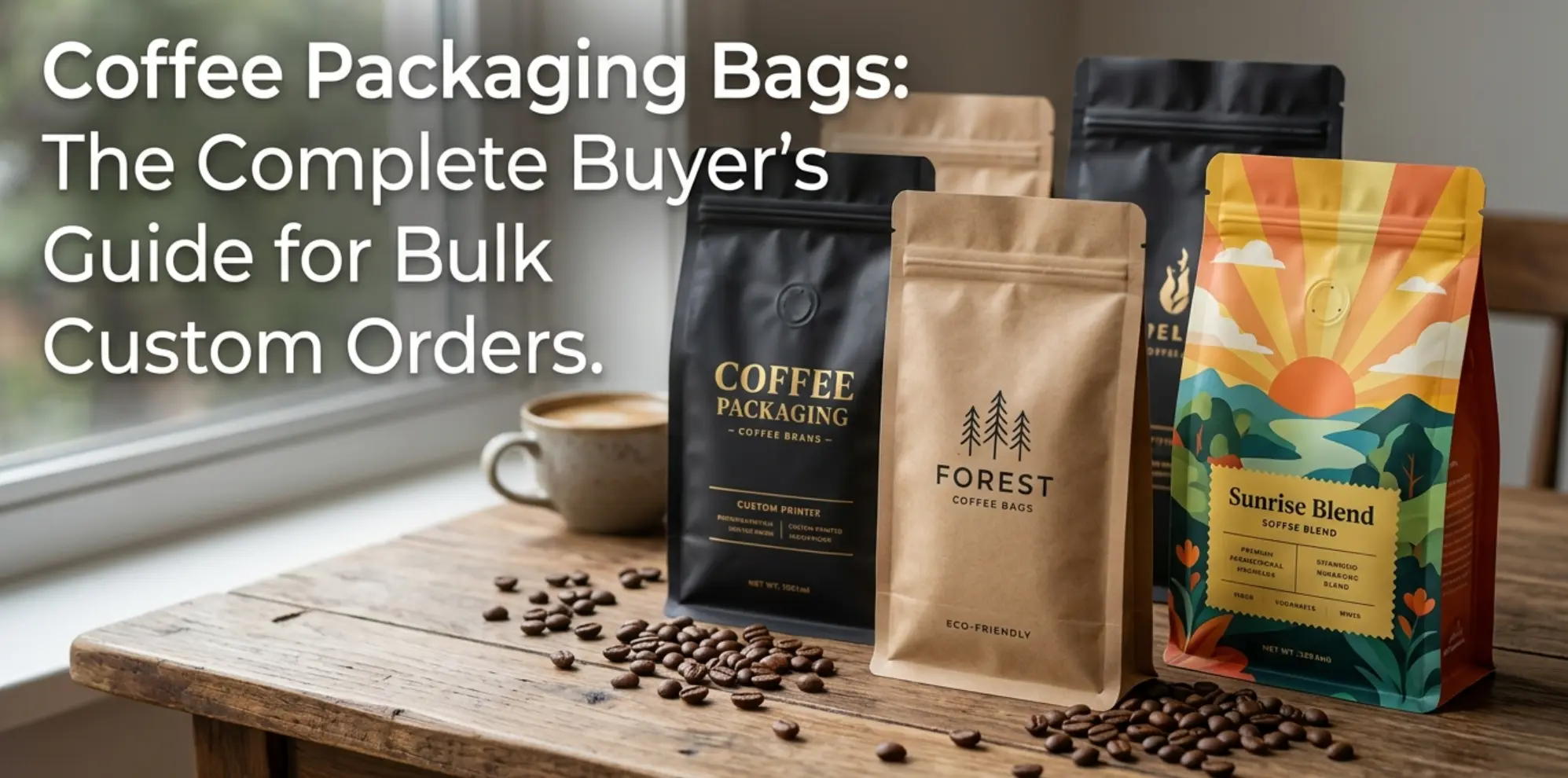
Understanding Coffee Packaging Bags
What Makes Coffee Bags Different from Standard Pouches
Coffee bags are engineered to block four enemies of freshness: oxygen, moisture, light, and aroma loss. A regular snack pouch simply can't handle the demands of a freshly roasted bean.
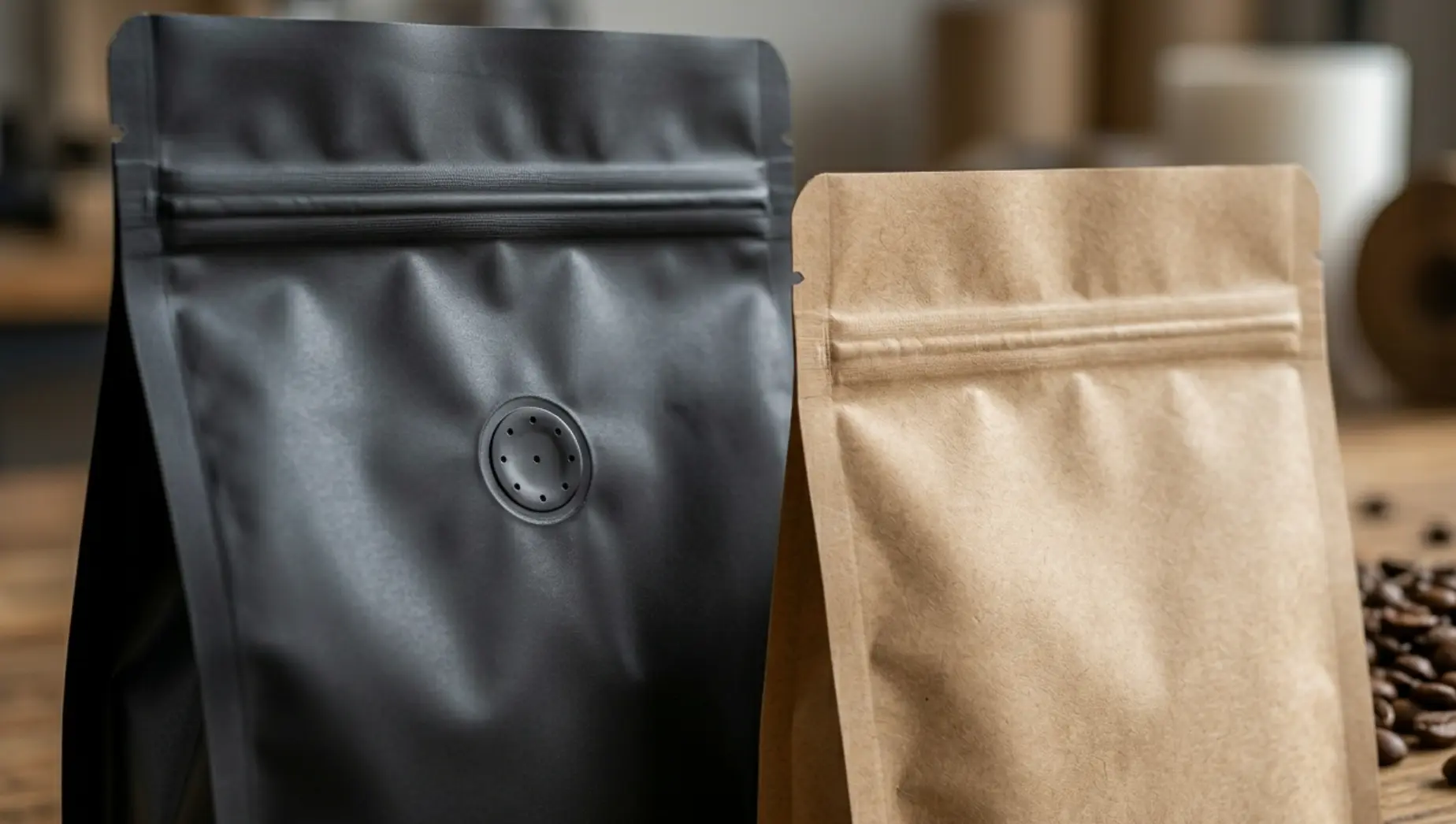
The signature feature is the one-way degassing valve. It releases CO2 from the beans without letting outside air sneak in, which is why properly built coffee bags can hold quality for months instead of weeks.
Key Performance Demands for Roasted Coffee
Most specialty roasters target a 6 to 12-month shelf life. Hitting that benchmark requires films with low oxygen transmission rates (OTR) and strong moisture barriers.
Equally important is aroma retention. A premium bag protects the unique notes of single-origin beans, whether it's the floral lift of an Ethiopian Yirgacheffe or the chocolatey depth of a Brazilian roast.
Types of Coffee Packaging Bags Available for Wholesale
Stand-Up Pouches
The most popular format for retail shelves. Stand-up pouches sit upright, display branding clearly, and work for 250g to 1kg sizes used by independent roasters and specialty cafés.
Flat Bottom (Box Pouch / Quad-Seal) Bags
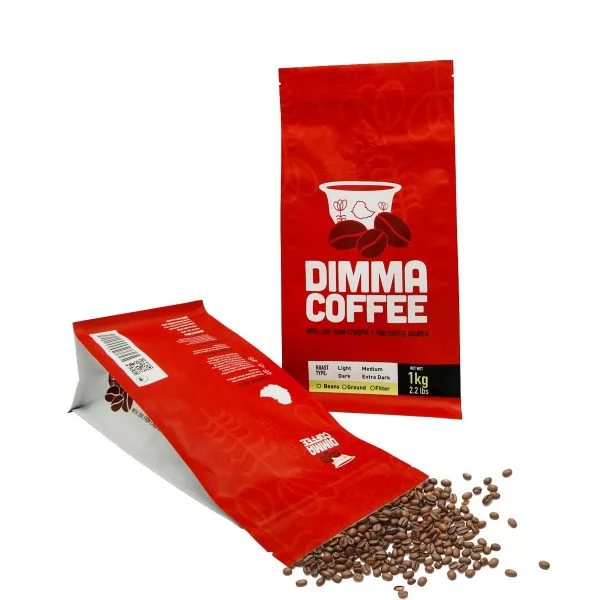
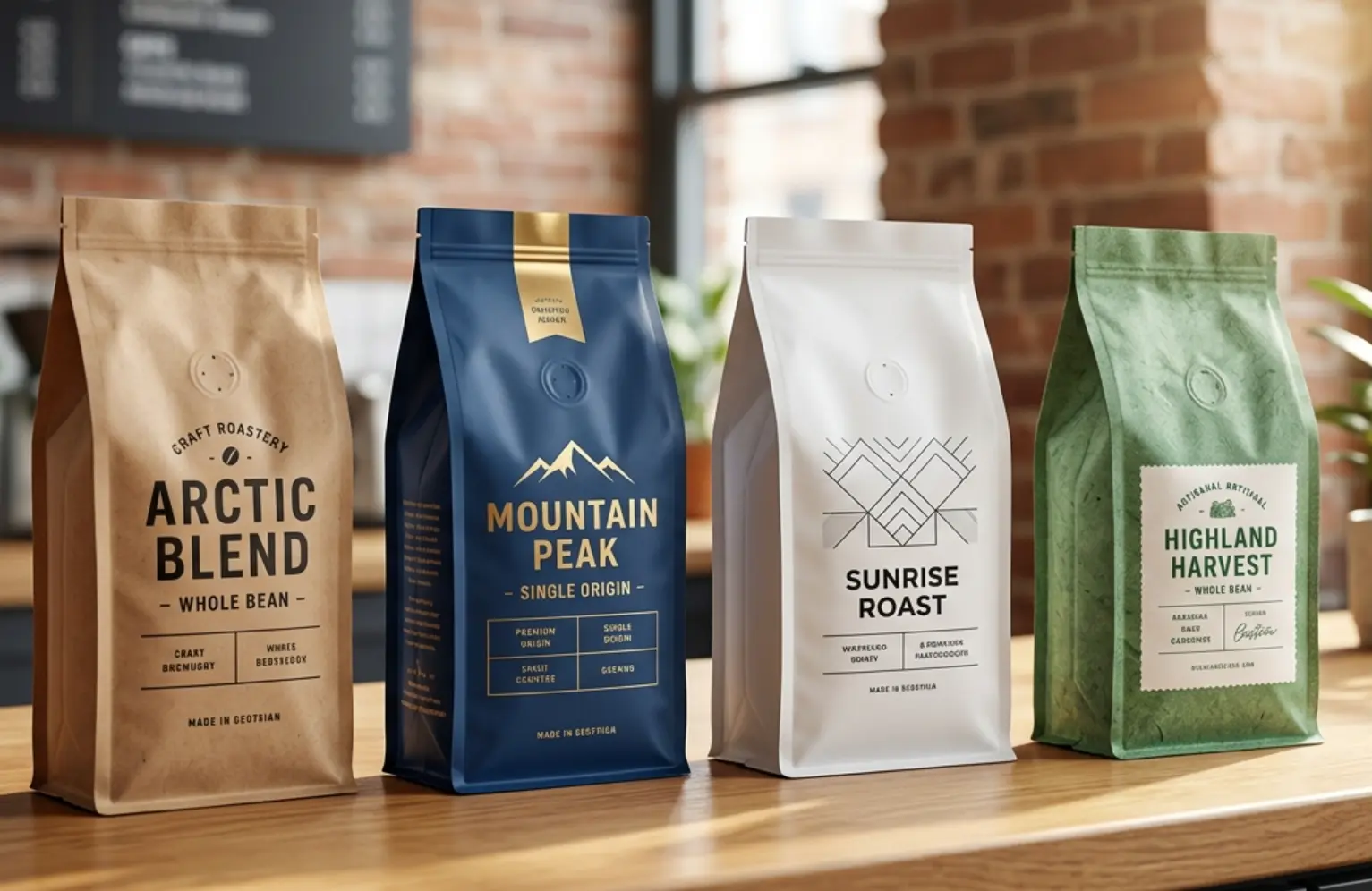
The premium choice for specialty coffee. Four panels create a structured, box-like shape that looks polished on shelves and offers maximum surface area for storytelling and branding.
Side Gusset Bags
The classic look paired with a tin-tie closure. Side gusset bags appeal to traditional roasters and bulk buyers who want a heritage feel and easy resealing.
Drip Coffee Sachets & Single-Serve Bags
Demand from hotels, offices, and travel-friendly brands keeps growing. Single-serve sachets typically hold 8g to 12g and require precision filling and high-barrier films.
Comparison Table: Bag Styles at a Glance
| Bag Style | Best Use | Shelf Appeal | Common Sizes |
|---|---|---|---|
| Stand-Up Pouch | 250g–1kg retail | High | 250g, 500g, 1kg |
| Flat Bottom | Specialty/Premium | Very High | 250g, 340g, 1kg |
| Side Gusset | Traditional roasters | Medium | 500g, 1kg, 2kg |
| Drip Sachet | Single-serve | Medium | 8g–12g |
Material Options for Coffee Packaging
Traditional Multi-Layer Films
Structures like PET/AL/PE and kraft paper laminated with aluminum still set the gold standard for barrier protection. They handle long shelf-life targets and aggressive shipping conditions reliably.
Compostable Coffee Bags
Built from PLA, PBAT, and kraft combined with bio-films, compostable coffee bags are the fastest-growing category in the segment. Look for credible certifications: BPI (North America), TÜV OK Compost (Europe), and the Seedling logo.
Recyclable Mono-Material Bags
PE/PE mono-structures are gaining traction with brands aligning to circular economy goals. They simplify recycling streams while still offering solid barrier performance for medium shelf-life products.
Material Performance Table
| Material Type | Barrier Level | Sustainability | Best For |
|---|---|---|---|
| PET/AL/PE | Excellent | Low | Long shelf-life beans |
| Kraft + AL | Excellent | Medium | Premium specialty |
| Compostable (PLA/Kraft) | Good | High | Eco-focused brands |
| Mono-PE Recyclable | Good | High | Mainstream retail |
Custom Coffee Bags: Design and Branding Essentials
Printing Methods
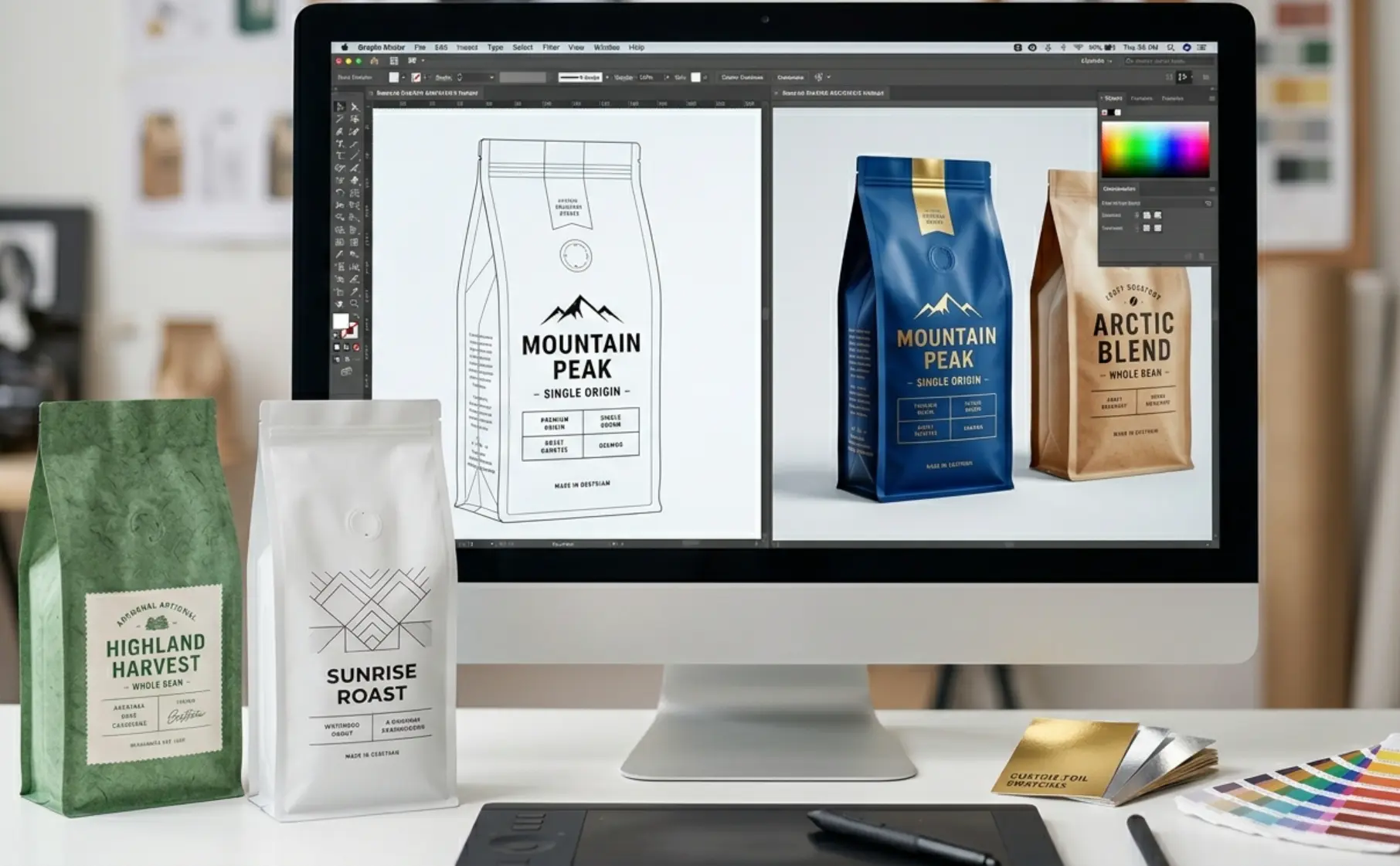
Rotogravure printing delivers crisp colors and is cost-efficient for larger runs and stable SKUs. Digital printing wins for smaller batches, frequent design changes, and brands launching multiple single-origin lots.
Finishes That Boost Shelf Impact
Matte and soft-touch finishes signal craft and premium positioning. Spot UV, embossing, and metallic foiling create tactile contrast that makes bags pop on a crowded shelf.
Branding Components Buyers Should Plan For
- Logo placement and brand hierarchy
- Origin storytelling and tasting notes
- Roast date labels and batch traceability
- QR codes linking to farm stories or brewing guides
Functional Features to Specify Before Ordering
Closures and Openings
Resealable zippers are now expected for retail. Tin-ties suit rustic branding, while tear notches help consumers open bags cleanly without scissors.
Degassing Valves
Specify valve diameter, opening pressure, and placement. Most valves sit on the upper front panel, but flat-bottom bags often place them on the side gusset to keep front graphics clean.
Window Patches
Clear strips let buyers see the actual beans, building trust for whole-bean shoppers. Use UV-protected film windows to avoid light damage to oils.
Recommended Specifications by Coffee Weight
| Coffee Weight | Suggested Bag Dimensions | Recommended Valve | Closure |
|---|---|---|---|
| 250g | 90 × 230 mm | Yes | Zipper |
| 500g | 130 × 280 mm | Yes | Zipper or tin-tie |
| 1kg | 165 × 290 mm | Yes | Zipper |
| 2kg+ | 200 × 340 mm | Yes | Heat-seal + tin-tie |
How to Source Coffee Packaging for Wholesale
Defining Your Order Specifications
Before reaching out to a supplier, clarify your minimum order quantity, SKU breakdown, and finished artwork. Files should be supplied in AI or PDF format, CMYK color mode, at 300dpi with outlined fonts.
Evaluating Suppliers
Look for verifiable food-grade certifications including FDA, LFGB, and ISO 22000. Request audit reports, factory videos, and references from existing coffee clients to confirm production capability.
Sample and Pre-Production Process
A reliable workflow runs digital proof first, then a physical sample, then a pre-production roll. Skipping any of these steps is the most common reason bulk orders arrive with color or sizing surprises.
Lead Times and Shipping Considerations
Plan production windows of 25 to 35 days for custom orders. Sea freight remains the practical choice for bulk volumes, while air freight makes sense for urgent product launches or sample shipments.
Sourcing Checklist Table
| Stage | Action | Typical Timeline |
|---|---|---|
| Inquiry | Specs + artwork | 1–3 days |
| Quotation | Confirm structure | 2–5 days |
| Sampling | Pre-production sample | 7–15 days |
| Mass Production | Printing, lamination, bag making | 20–35 days |
| Shipping | Sea or air freight | 7–40 days |
Sustainability Trends Driving Coffee Bag Choices
Compostable Coffee Bags on the Rise
The global bioplastic packaging market is projected to grow at a CAGR above 17% through 2030, with coffee leading early adoption. Specialty brands often see compostable packaging as a brand-aligned investment, not just a compliance choice.
Brand Case Examples
Roasters from Counter Culture to smaller regional brands have publicly transitioned to recyclable or compostable structures. Many report stronger customer loyalty and improved retail placement after the switch.
Regulatory Pressures
The EU's Packaging and Packaging Waste Regulation (PPWR) and U.S. state-level Extended Producer Responsibility (EPR) laws are reshaping buyer decisions. Brands selling internationally now need packaging strategies that meet multiple regional requirements.
Common Mistakes to Avoid in Coffee Packaging Procurement
- Ignoring OTR data: A bag that looks identical to a competitor's may have triple the oxygen transmission rate.
- Underestimating color matching: Always confirm Pantone references; screen colors lie.
- Overlooking valve quality: Cheap valves leak or fail under pressure changes during shipping.
- Choosing material on appearance alone: Kraft paper looks rustic but needs proper barrier lining to perform.
Why Buyers Choose YLTPACK
YLTPACK has manufactured custom coffee packaging since 2005, supplying roasters and coffee brands across more than 60 countries. Every bag is built to client specifications, from material structure to valve placement to finishing.
Our facility is certified to ISO 22000 and FDA standards, ensuring food-safe production at every step. Free samples are available so you can verify barrier performance, print quality, and structural feel before committing to a bulk order.
Frequently Asked Questions
What is the typical minimum order quantity for custom coffee bags?
MOQs typically start around 10,000 pieces per design for printed custom bags, though digital printing can accommodate smaller pilot runs. Plain stock bags with custom labels offer a lower-volume entry point.
How long does production take for bulk custom coffee bags?
From confirmed artwork to finished goods, expect 25 to 35 days for most custom orders. Complex finishes like cold foiling or unusual structures may add an additional week.
Are compostable coffee bags as effective as traditional foil bags?
Modern compostable structures protect freshness for 6 to 9 months, which suits most specialty coffee turnover cycles. For 12+ month shelf life, traditional foil-based bags still offer the strongest barrier.
Can I order multiple sizes and designs in one production run?
Yes. Most suppliers allow combined orders across SKUs, provided each design meets its minimum quantity. This is a smart way to consolidate freight and reduce per-unit costs.
Do all coffee packaging bags need a degassing valve?
Whole-bean and freshly ground coffee almost always need valves to release CO2. Pre-ground coffee that has been fully degassed before packing, or single-serve sachets, may not require one.
What artwork format should I provide for printing?
Submit vector files in AI or PDF format, CMYK color mode, with all fonts outlined and images at 300dpi. Include Pantone codes for any critical brand colors.
How should I store coffee bags before filling?
Keep unfilled bags in a cool, dry environment below 25°C and away from direct sunlight. Properly stored, most coffee bags maintain barrier integrity for 12 to 18 months before use.
Ready to Build Your Next Coffee Packaging Run?
Whether you need flat-bottom bags for a premium single-origin launch, compostable pouches for an eco-conscious line, or side-gusset bags for traditional retail, YLTPACK can help you spec, sample, and produce them.
Send us your design files, target sizes, and shelf-life goals, and our team will recommend the right structure and provide free samples for evaluation. Reach out at [email protected] to start your custom coffee packaging project today.