Walk down any health-food aisle and you'll notice something interesting: the granola brands that fly off the shelves rarely have the best recipe. They have the best packaging. In a category projected to surpass $7.2 billion globally by 2028, the bag, box, or pouch your granola sits in is doing more selling than your marketing budget ever will.
Whether you're launching a private label line, refreshing an established SKU, or sourcing for a national rollout, this guide walks you through every packaging decision that matters — from material science to shelf appeal to production timelines.
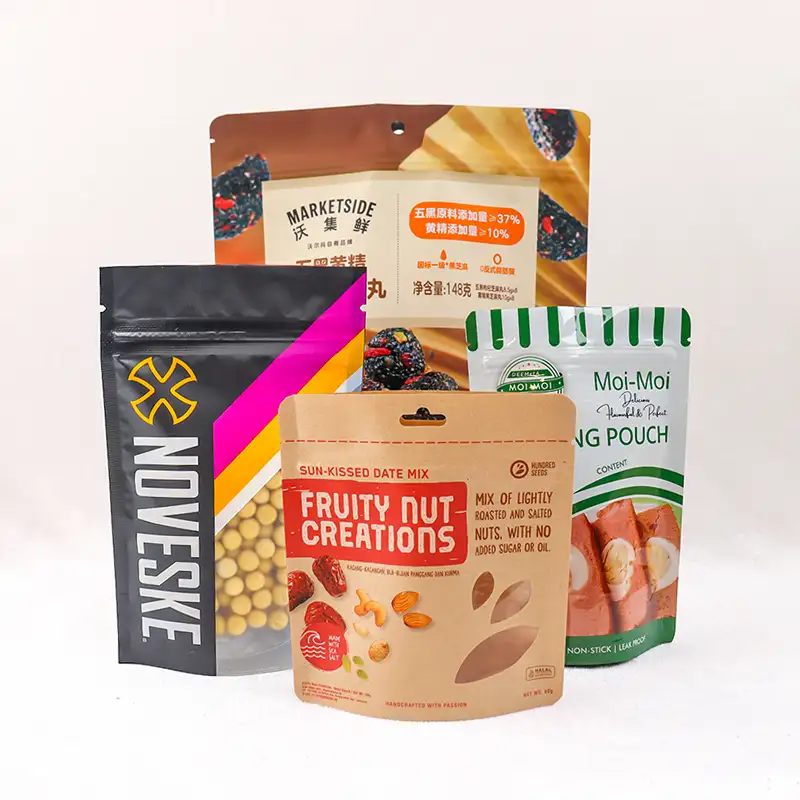
Top 10 Granola Packaging Ideas Trending This Year
These formats consistently outperform on shelves, in subscription boxes, and across hospitality channels. Pick the one that matches your buyer's habits.
1. Stand-Up Resealable Granola Pouches
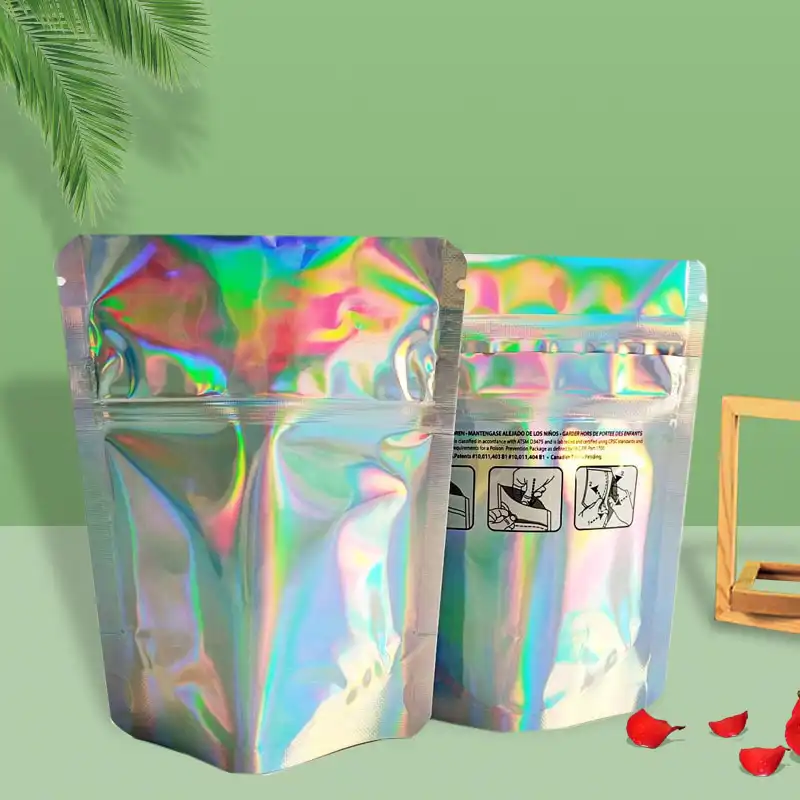
The workhorse of modern cereal aisles. A zipper closure keeps clusters crunchy through repeat openings, and the upright shape gives you a full panel of branding real estate. Most successful in 8oz–32oz formats.
2. Kraft Paper Snack Bags with Clear Window
Kraft paper snack bags signal "small batch" and "real ingredients" before a shopper reads a single word. A die-cut window lets the granola itself become part of the visual sell — particularly powerful for clusters with visible nuts, oats, and dried fruit.
3. Custom Cereal Box Design with Inner Liner
Family-size households still gravitate toward boxes. A printed paperboard exterior paired with a food-safe inner liner gives you the rigidity of traditional cereal packaging with extended freshness inside.
4. Compostable Flat-Bottom Bags
Eco-friendly granola pouches built from PLA or kraft + PLA laminate stand confidently on shelf and break down in industrial compost facilities. Flat-bottom construction gives premium presence without a plastic feel.
5. Single-Serve Stick Packs & Mini Pouches
The fastest-growing format in hospitality. Hotels, gyms, airlines, and meal-kit services rely on portion-controlled packs for portability and inventory predictability.
6. Bulk Bins & Refill Pouches
Zero-waste retailers need durable, large-format kraft sacks with strong reseal closures. Refill pouches let loyal customers top up reusable jars at home.
7. Glass Jars with Custom Labels
Premium gifting and specialty stores often choose glass for its tactile weight and reusability. Strong choice for granola gift sets paired with honey, nut butter, or yogurt toppers.
8. Tin Tie Paper Bags
Bakery-style closures resonate at farmers markets, cafés, and grab-and-go counters. The bend-and-fold seal communicates freshness instantly.
9. Spouted Pouches for Pourable Granola
An innovative format reducing spills for commuters and outdoor consumers. Especially effective for finely chopped or "sprinkle" granola blends.
10. Multi-Pack Carton Bundling
Warehouse clubs and Amazon listings perform better when individual pouches are bundled into a printed sleeve or carton — protecting product in transit while creating an upsell unit.
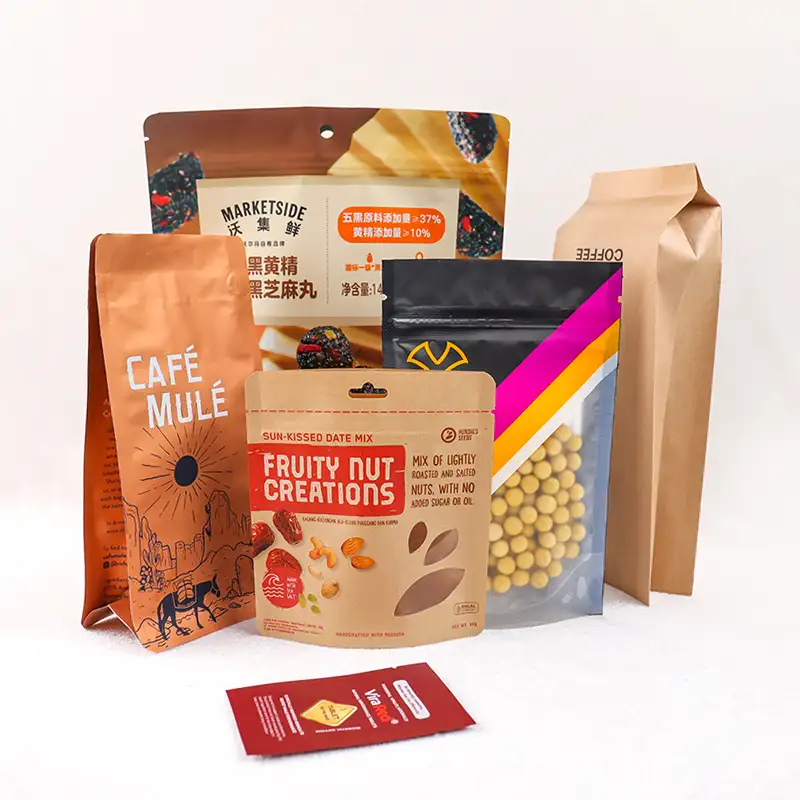
Material Comparison: Choosing the Right Packaging Substrate
Material selection drives shelf life, sustainability claims, print quality, and unit economics. Use the comparison below as a starting framework.
Material Performance Table
| Material | Shelf Life Support | Sustainability | Print Quality | Best Use Case |
|---|---|---|---|---|
| Kraft + PLA Laminate | 9–12 months | High (compostable) | Good | Eco-focused retail brands |
| PET/AL/PE Foil Pouch | 12–18 months | Low | Excellent | Long shelf life, export |
| Recyclable Mono-PE | 9–12 months | High (curbside recyclable) | Excellent | Mainstream retail |
| Paperboard Box + Liner | 6–9 months | Medium–High | Excellent | Family cereal format |
| Glass Jar | 12+ months | Very High (reusable) | Label-based | Premium / gifting |
Barrier Layer Explained
Granola fails on two fronts: moisture absorbs into oats and ruins crunch, and oxygen oxidizes nut oils into rancidity. Your barrier layer — typically aluminum foil, metallized PET, or EVOH — is what holds those two enemies back.
High-oil granolas with coconut, almond butter, or chocolate clusters demand stronger barrier construction than plain oat-and-honey blends. Skipping this step is the single most common mistake first-time brands make.
Custom Design Elements That Sell More Granola
Color Psychology for Granola Brands
Earth tones — terracotta, sage, oat beige — dominate the "natural and wholesome" category. Pastels work for kid-focused and family lines, while bold oranges, electric blues, and matte black signal performance nutrition.
Typography & Front-of-Pack Hierarchy
Shoppers scan in this order: brand mark, flavor name, key claim, weight. Place gluten-free, vegan, high-protein, or non-GMO badges where the eye lands naturally — usually upper-third of the panel.
Finishing Techniques That Add Premium Appeal
Soft-touch matte coatings feel velvety in hand and photograph beautifully for social content. Spot UV creates contrast on matte surfaces, while foil stamping and embossing give artisanal lines a tactile signature.
Window Placement & Shape Strategy
Die-cut windows boost perceived freshness, but oversized windows weaken structural integrity and expose product to light. A mid-panel window covering 15–25% of the front face is the sweet spot for most granola pouches.
Sustainable Granola Packaging Options for Forward-Thinking Brands
Compostable vs Recyclable vs Biodegradable
These terms are not interchangeable. Compostable packaging breaks down into nutrient-rich soil under specific conditions. Recyclable packaging re-enters the manufacturing stream. Biodegradable is a vague marketing term with no fixed timeline — use it carefully or avoid it entirely.
Certifications That Matter
Look for BPI (compostability in North America), TÜV OK Compost (Europe), FSC (responsibly sourced paper), and How2Recycle (consumer-facing recyclability labeling). These certifications protect you from greenwashing accusations and unlock retailer sustainability programs.
Real Brand Examples
Purely Elizabeth shifted its full lineup to recyclable pouches, citing measurable shelf lift among Gen Z buyers. Bear Naked uses How2Recycle-labeled bags, while Seven Sundays operates on paper-based pouch construction to reinforce its sustainability story.
Packaging Formats Matched to Your Sales Channel
Retail Shelf (Grocery, Health Stores)
Stand-up pouches and printed cartons with strong front-panel hierarchy. Shelves are crowded — your packaging has roughly 1.7 seconds to win attention.
E-Commerce & Subscription Boxes
Choose durable structures with tamper-evident features. Photogenic flat-bottom pouches outperform basic pillow bags in unboxing video content.
HoReCa & Hospitality
Single-serve stick packs and mini pouches dominate hotel breakfast bars, premium economy airline service, and gym pro shops.
Private Label & Wholesale
Flexible artwork zones, scalable order volumes, and quick reprint cycles matter more than premium finishing for fast-moving private label programs.
Format Recommendation Table
| Sales Channel | Recommended Format | Typical Size | Key Feature |
|---|---|---|---|
| Supermarket | Stand-up resealable pouch | 10–16 oz | Zipper + window |
| Specialty / Gourmet | Glass jar or kraft bag | 8–12 oz | Premium finish |
| Hotel / Airline | Stick pack / mini pouch | 1–2 oz | Easy tear |
| Subscription Box | Flat-bottom pouch | 6–12 oz | Bold artwork |
| Bulk / Refill | Large kraft sack | 2–10 lb | Resealable seal |
How to Plan a Bulk Custom Packaging Order
Minimum Order Quantities Explained
Digital printing supports the lowest entry points — ideal for new launches and limited-edition flavors. Flexographic printing offers the strongest balance of cost and quality at mid-volume. Rotogravure delivers premium results for large-scale national runs.
Artwork Files & Dieline Requirements
Prepare vector files in AI or PDF format, set to CMYK with any spot Pantone colors specified, and include 3–5mm bleed margins on every edge. Embedded fonts and outlined text prevent printing errors.
Sampling and Pre-Production Approvals
Digital proofs verify layout and copy. Pre-production samples confirm material feel, color accuracy, and structural performance. Approving both stages dramatically reduces the risk of receiving 50,000 pouches with a typo.
Production Timeline Snapshot
| Stage | Typical Duration |
|---|---|
| Design & Dieline Confirmation | 3–7 days |
| Pre-Production Sample | 7–14 days |
| Mass Production | 15–30 days |
| Shipping (Sea / Air) | 7–40 days |
Quality Checks Before Shipment
Reputable manufacturers run seal strength tests, print color matching against approved targets, food-grade compliance verification, and drop tests on filled samples. Always request an inspection report before goods leave the factory.
Common Mistakes to Avoid When Ordering Granola Packaging
Ignoring Barrier Requirements for High-Oil Granolas
Oil migration through unlined kraft bags creates dark patches within weeks, ruining shelf presentation and signaling spoilage to shoppers.
Underestimating Lead Times for Seasonal Launches
Q4 holiday SKUs, back-to-school promotions, and New Year health resets all require packaging locked in 3–4 months ahead. Late ordering forces costly air freight or missed retail windows.
Choosing Aesthetics Over Functionality
A beautiful pouch that fails its zipper test or splits at the seal during shipping costs you twice: in wasted inventory and in lost trust with retail buyers.
Overlooking Regional Labeling Laws
FDA nutrition panel requirements (U.S.), EU Regulation 1169/2011 (Europe), and FSSAI rules (India) each demand specific allergen, nutrition, and country-of-origin formatting. Confirm before printing.
Why YLTPACK Is a Trusted Partner for Granola Brands Worldwide
Founded in 2005, YLTPACK has spent nearly two decades engineering custom flexible packaging for food brands across more than 60 countries. Every order is built around your specs — material, size, finish, certifications, and artwork — rather than forced into stock molds.
Our facility is certified to ISO 22000 and produces packaging compliant with FDA and EU food-contact standards, giving procurement teams the documentation needed for retailer onboarding and export clearance.
We offer free samples so you can verify barrier strength, print quality, and structural integrity before committing to mass production. From the first sketch to the pallet arriving at your warehouse, you work with one team that handles design, prepress, production, and logistics.
FAQ: Granola Packaging Questions Buyers Ask Most
What is the best packaging material for granola?
Multi-layer resealable pouches — either recyclable mono-PE or kraft-PLA laminate — typically offer the strongest combination of freshness retention, brand presentation, and sustainability credentials.
How long does custom granola packaging take to produce?
Most custom orders run 4–8 weeks from approved artwork to delivery, depending on material complexity, finishing choices, and shipping method.
Can I order eco-friendly granola pouches at small quantities?
Yes. Digital printing technology now supports lower order minimums for compostable and recyclable substrates, making sustainable packaging accessible to emerging brands.
What sizes are most popular for retail granola?
In U.S. retail, 12 oz stand-up pouches and 11 oz cereal boxes dominate. European markets lean toward 350g and 500g formats.
Are kraft paper snack bags suitable for granola with chocolate or yogurt clusters?
Only when paired with a proper inner barrier liner. Without it, oils from chocolate coatings and moisture from yogurt clusters will compromise both the bag and the product inside.
Can packaging be designed for multiple SKUs in one production run?
Yes. Shared dielines with flavor-specific artwork layers keep tooling costs efficient and let brands launch full product families without separate setup fees per variant.
Get a Custom Granola Packaging Quote
Whether you're testing a single flavor or rolling out a full national line, your packaging deserves a partner who treats your project as more than a purchase order. Share your product specs, target market, and design direction — we'll respond with a tailored proposal covering material, structure, finishing, and timeline.
Included with every project: free design consultation, full customization across size, material, and finish, flexible order volumes, free samples, and end-to-end production support from concept to warehouse delivery.