Stand up pouches win on retail shelf presence and resealability. Flat pouches win on cost-per-unit, filling speed, and single-serve formats. The right answer depends on fill weight, sales channel, and whether your customer reopens the pack.
You've narrowed your packaging shortlist down to two formats. Now you need to defend the choice to your team — with logic, not gut feel. This guide walks through the structural, performance, and operational differences procurement teams actually weigh before committing to tooling.
What Is a Stand Up Pouch? (Structure & Use Cases)
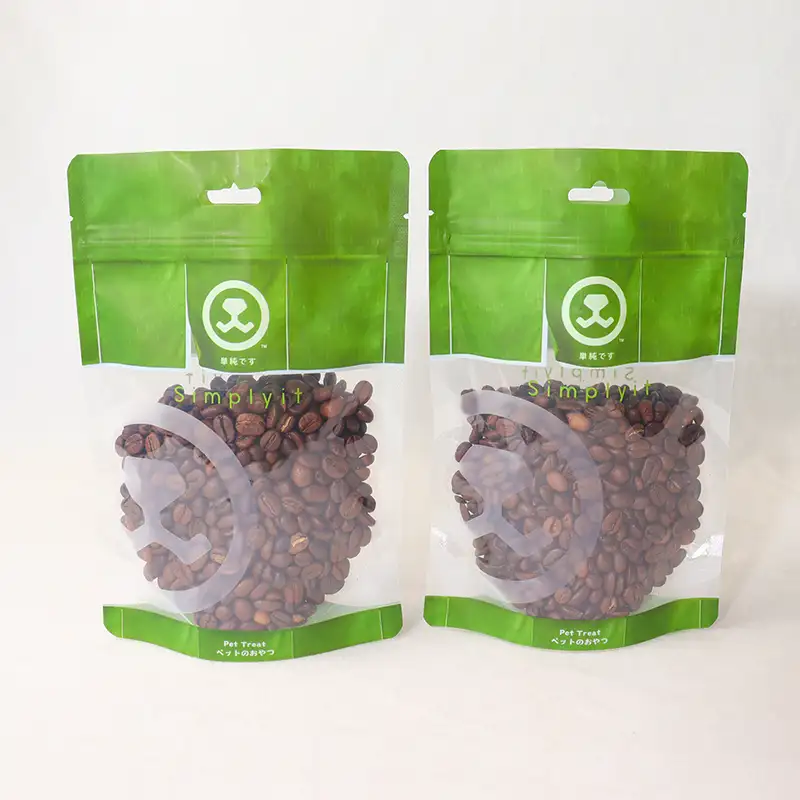
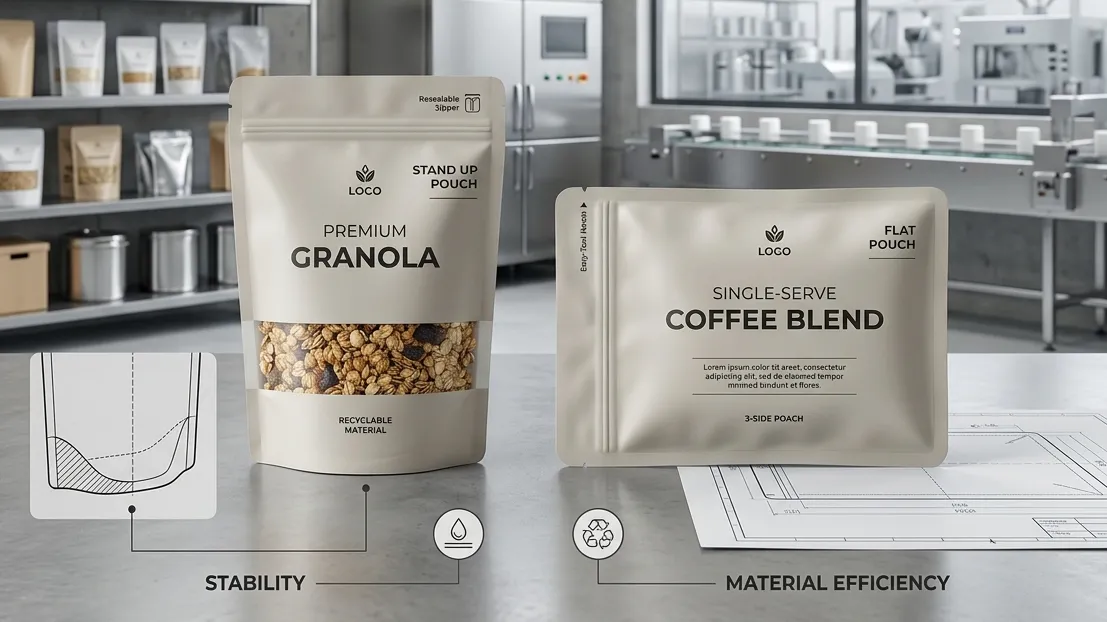
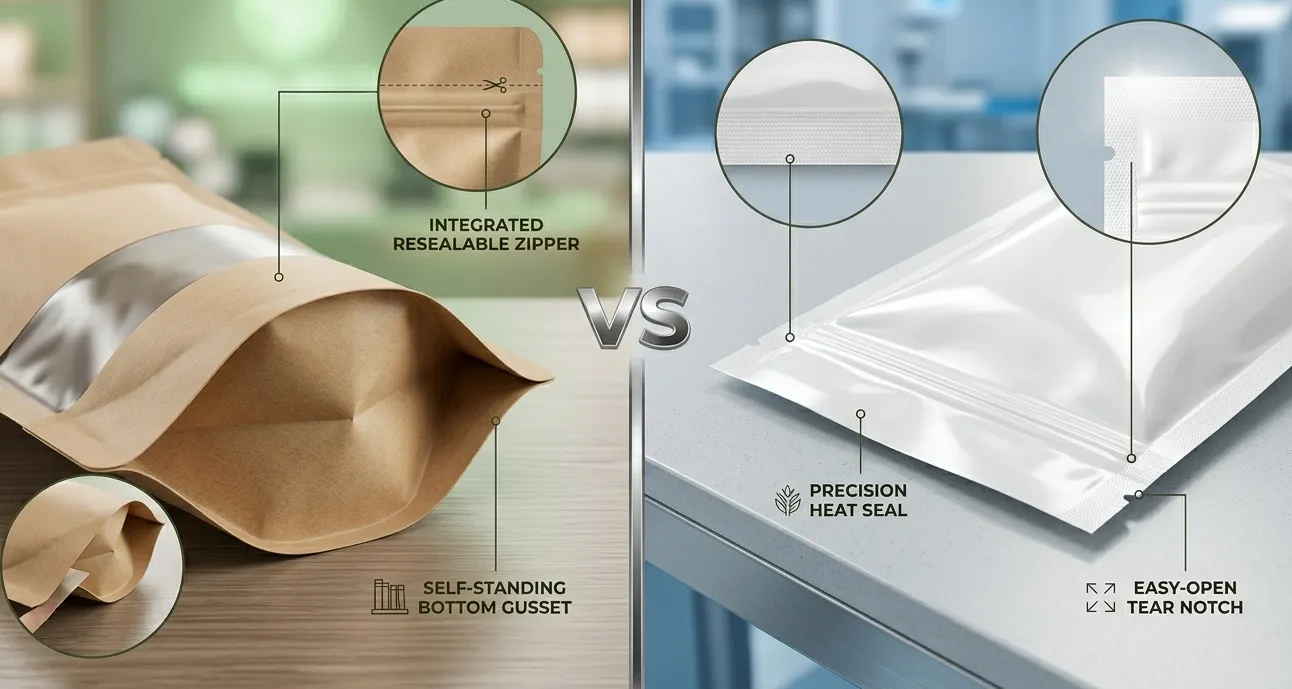
A stand up pouch — sometimes called a doypack — is a flexible bag with a bottom gusset that opens into a flat base, allowing the pack to stand upright on a shelf without external support.
Anatomy of a Stand Up Pouch
- Bottom gusset that unfolds into a stable base when filled
- Optional features: zipper, spout, tear notch, hang hole, transparent window
- Common film laminates: PET/PE, PET/AL/PE, kraft/PE, recyclable mono-PE
- Heat-sealed side seams with reinforced bottom seal
Where Stand Up Pouches Win
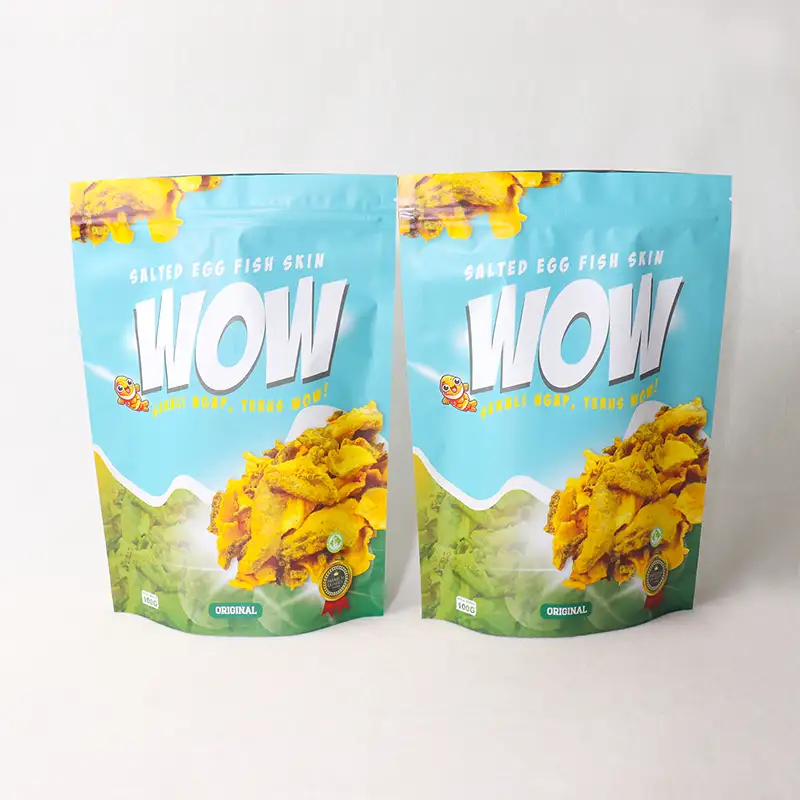
- Retail shelf categories: whole-bean coffee, pet treats, granola, supplements, detergent pods
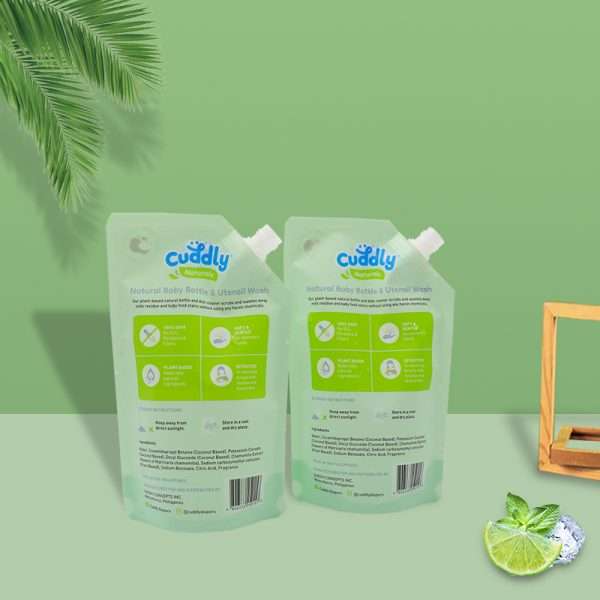
- Refill formats replacing rigid jars and bottles (a fast-growing category in beauty and home care)
- Resealable applications — a stand up pouch with zipper extends product use across multiple sessions
If your product sits on a shelf next to competitors, the upright front panel is doing real merchandising work. That's usually where the conversation starts.
What Is a Flat Pouch? (Structure & Use Cases)
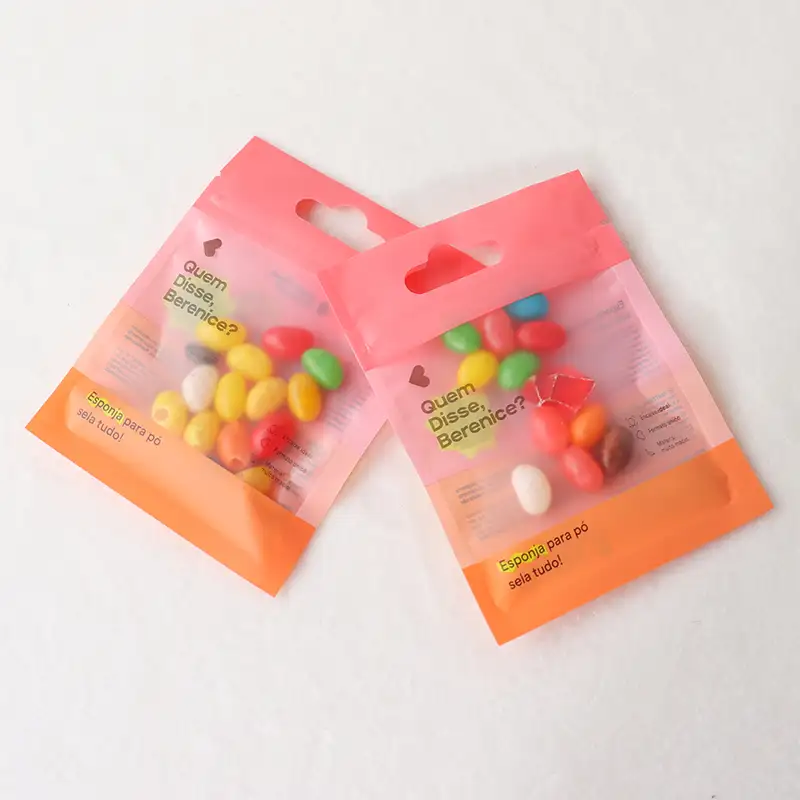
"Flat pouch" is an umbrella term covering several formats — three side seal pouches, pillow bags, and back-seal sachets. They share one trait: no gusset, no standing geometry.
Anatomy of a Flat Pouch
- Three side seal pouch: sealed on three edges, one open for filling — the most common flat pouch packaging style
- Pillow pouch (two side seal): back fin seal plus top and bottom seals, typically VFFS-produced
- Typical film thickness: 70–120 microns depending on barrier needs and fill weight
Where Flat Pouches Win
- Single-serve sachets, sample packs, face masks, wet wipes
- Subscription boxes and e-commerce inserts where flat ship density matters
- High-volume SKUs where the product is consumed in one use and shelf standing is irrelevant
Stand Up Pouch vs Flat Pouch: Side-by-Side Comparison
This is the table most readers screenshot. It captures the structural and operational differences in one view.
Quick Comparison Table
| Factor | Stand Up Pouch | Flat Pouch (3-Side Seal) |
|---|---|---|
| Shelf presence | Stands upright, full front panel | Lies flat, needs hooks or trays |
| Material usage | ~15–25% more film per unit | Lower film consumption |
| Fill volume range | 50g – 5kg typical | 1g – 500g typical |
| Reclosability | Easy (zipper, spout) | Limited unless zipper added |
| Filling line speed | Slower (gusset opening) | Faster (simpler geometry) |
| MOQ flexibility | Moderate | Generally lower |
| Best for | Retail-facing SKUs | Sachets, single-use, e-commerce |
| Tooling complexity | Higher | Lower |
Cost Drivers You Should Actually Compare
- Film square meters per unit — not just per-piece price
- Tooling and plate setup amortized across order quantity
- Add-ons: zipper, spout, valve, matte lamination
- Freight cube — flat pouches ship denser, lowering ocean freight cost per unit
Performance: Shelf Life, Barrier, and Product Protection
Here's a useful reframe: pouch shape doesn't protect your product. Film structure does. Whether you choose stand up or flat, the barrier laminate determines shelf life.
Barrier Film Choices for Both Formats
- Aluminum foil layer: for oxygen-sensitive products like coffee, nuts, and supplements
- Metallized PET (VMPET): moderate barrier at lower cost
- Transparent high-barrier (EVOH, SiOx): when product visibility matters
- Mono-material recyclable structures: PE/PE or PP/PP — barrier is improving but still trails foil laminates
Shelf Life Reference Data
| Product | Format | Film Structure | Tested Shelf Life |
|---|---|---|---|
| Roasted coffee (250g) | Stand up + valve | PET/AL/PE 100µm | 12–18 months |
| Roasted coffee (250g) | Flat pouch + valve | PET/AL/PE 100µm | 12–18 months |
| Protein powder (30g) | Flat sachet | PET/AL/PE 80µm | 24 months |
| Pet treats (500g) | Stand up + zipper | PET/VMPET/PE 110µm | 12 months |
As a manufacturer that has produced both formats for 20+ years, we've consistently seen barrier structure — not pouch shape — drive about 90% of shelf-life outcomes. Films are validated under FDA and ISO 9001 protocols in our 6,800㎡ cleanroom facility.
For coffee specifically, the one-way degassing valve matters more than format. Both stand up and flat pouches accept valves; the choice comes down to whether the bag stands on a café shelf or ships flat to a subscription customer.
Branding & Print: Which Format Sells Harder?
If your packaging is also your storefront — true for most challenger brands — print real estate becomes a strategic question, not a creative one.
Print Real Estate
- Stand up pouch: front panel, back panel, two side gussets, and bottom — five printable zones
- Flat pouch: front and back only — two printable zones
- This affects how much room you have for ingredient lists, regulatory copy, brand storytelling, and certifications
For pet food brands where pet parents scrutinize ingredient transparency, the extra panels of a stand up pouch let you tell the sourcing story without crowding the front. For a single-serve protein sachet, two zones are plenty.
Finish & Tactile Options
- Matte vs gloss lamination — matte reads more premium but shows fingerprints
- Soft-touch coating, spot UV, embossing for tactile differentiation
- Window patches and registered metallization for retail standout
Beauty and supplement brands optimizing for Instagram unboxing often pair a soft-touch matte stand up pouch with spot UV on the logo — a finish combination that photographs well under ring lights.
Operations: Filling Lines, MOQs, and Supply Logic
This is the section your operations lead will care about most. Format choice has to survive the filling line.
Filling Line Compatibility
- Pre-made stand up pouches: require HFFS (horizontal form-fill-seal) or rotary fillers
- Flat pouches: compatible with VFFS (vertical form-fill-seal) roll stock or pre-made workflow
- Always confirm with your co-packer before locking format — retrofitting a line is expensive
Order Quantity Considerations
- Plate and tooling setup costs are similar for both formats
- Per-unit cost gap narrows significantly above 50,000 units
- Artwork changes are cheap; structural changes (adding a zipper, changing film) require re-tooling
Our in-house design team often helps brands who only have a rough idea of fill weight and barrier need — translating that into a dieline before tooling commits. Catching a structural mistake at artwork stage saves weeks downstream.
Lead Time Comparison
| Stage | Stand Up Pouch | Flat Pouch |
|---|---|---|
| Artwork & dieline | 3–5 days | 2–3 days |
| Plate making | 5–7 days | 5–7 days |
| Production | 12–18 days | 10–15 days |
| Sea freight (to US/EU) | 25–35 days | 25–35 days |
Decision Framework: Choosing the Right Format for Your Product
Cut through the comparison with a simple decision logic.
Choose a Stand Up Pouch If…
- Your product sells on retail shelves and competes visually
- Customers reuse the pack across multiple sessions (resealable need)
- Fill weight is 50g or higher and visual presence matters
- You're replacing a rigid jar, can, or bottle to reduce shipping weight
Choose a Flat Pouch If…
- It's a single-use, sachet, sample, or trial format
- Cost-per-unit is the dominant constraint
- Product ships in secondary packaging (boxes, retail displays, subscription kits)
- A high-speed VFFS line is already in place at your co-packer
Hybrid Scenarios Worth Considering
- Flat pouch with zipper: resealable without the cost of a bottom gusset
- Stand up pouch without zipper: shelf presence at a lower cost when the product is consumed quickly
- Three side seal pouch with bottom gusset: a middle ground for moderate fill weights
Sustainability: Material Footprint of Each Format
"Eco-friendly" claims need to survive a procurement audit. Here's what the numbers actually look like.
Material Weight Per Unit
| Format | Avg. Film Weight (250g fill) | Recyclable Mono-PE Option |
|---|---|---|
| Stand up pouch | 9–11g | Available |
| Flat pouch | 6–8g | Available |
| Rigid jar (comparison) | 60–90g | Available |
Both flexible formats use 80–90% less material than a comparable rigid container. Between the two flexible options, the flat pouch wins on raw material weight — but only meaningfully at scale.
What "Recyclable" Actually Requires
- Mono-material structure (PE/PE or PP/PP) — not multi-layer foil laminates
- Compatibility with How2Recycle (US) or CEFLEX (EU) guidelines
- Ink coverage thresholds and adhesive selection that don't contaminate the recycling stream
Because we hold FDA, ISO 9001, ISO 22000, and GRS certifications, we typically recommend brands validate recyclability claims against the destination market's specific scheme — a "recyclable" label that fails How2Recycle review is a regulatory risk.
FAQ: Stand Up Pouch vs Flat Pouch
Is a stand up pouch always more expensive than a flat pouch?
Per unit, yes — typically 15–25% higher due to extra film and slower production. But the gap narrows above 50,000 units, and stand up pouches often justify the premium through better shelf conversion, higher perceived value, and the ability to charge more at retail.
Can I add a zipper to a flat pouch?
Yes. A zipper can be heat-sealed across the top of a three side seal pouch, giving you reclosability without a bottom gusset. The trade-off: filling line compatibility may shift, and the seal integrity around the zipper ends needs testing — particularly for powders and oils.
Which format is better for Amazon FBA and e-commerce?
Flat pouches usually win on dimensional weight and ship density, lowering FBA fees. Stand up pouches deliver a stronger unboxing moment when the customer opens the outer carton. For first-purchase categories where retention depends on the unboxing experience, the stand up format often pays back.
What's the difference between a doypack and a stand up pouch?
They're the same thing. "Doypack" is the original branded term coined by the French company Thimonnier in the 1960s; "stand up pouch" is the generic English term. In a pouch packaging comparison, you'll see both names used interchangeably across spec sheets and supplier catalogs.
Can both formats be food-safe certified?
Yes. Both stand up and flat pouches can meet FDA 21 CFR (US), EU 10/2011 (Europe), and migration testing requirements. Compliance depends on the film and ink stack, not the pouch shape. Always request food-contact declarations and migration test reports from your supplier before production.
What's the minimum order quantity for custom-printed pouches?
Digital printing makes runs as low as a few thousand units viable for prototypes and limited editions. Gravure printing — standard for production — typically starts around 10,000 units per SKU due to plate amortization. Flat pouches generally have lower minimums than stand up pouches because tooling is simpler.
Next Step: Get a Format Recommendation Based on Your Product
Generic comparisons only get you so far. The decision tightens once you apply real numbers — your fill weight, shelf-life target, retail channel, and barrier needs — to both formats side by side.
Send us your product specs and you'll receive:
- A comparison sheet showing both stand up and flat pouch options applied to your SKU
- Recommended film structure with barrier data matched to your shelf-life target
- Dieline mockup for both formats so your team can preview print real estate
- Lead time and tooling roadmap from artwork through first production run
Working with brands across North America andEurope, we've found that the most common mistake is locking in a format before validating barrier needs — which leads to expensive re-tooling six months in. A 30-minute spec review upfront prevents that.
Share your product details and let's map the right format to your numbers — not generic advice.