The $40,000 Packaging Mistake You Can Avoid
A specialty coffee startup we spoke with last year ordered 50,000 side gusset bags for their new single-origin line. Beautiful kraft finish, custom valve, branded tin-tie. The problem? Their largest retail buyer required a free-standing pouch on the planogram.
The bags couldn't stand up. The buyer pulled the listing. The brand was left repackaging into bottom gusset pouches by hand — a five-figure mistake that a 20-minute conversation would have prevented.
This guide walks you through the structural, operational, and commercial differences between the two most common gusseted bag styles, so you can decide before tooling is cut.
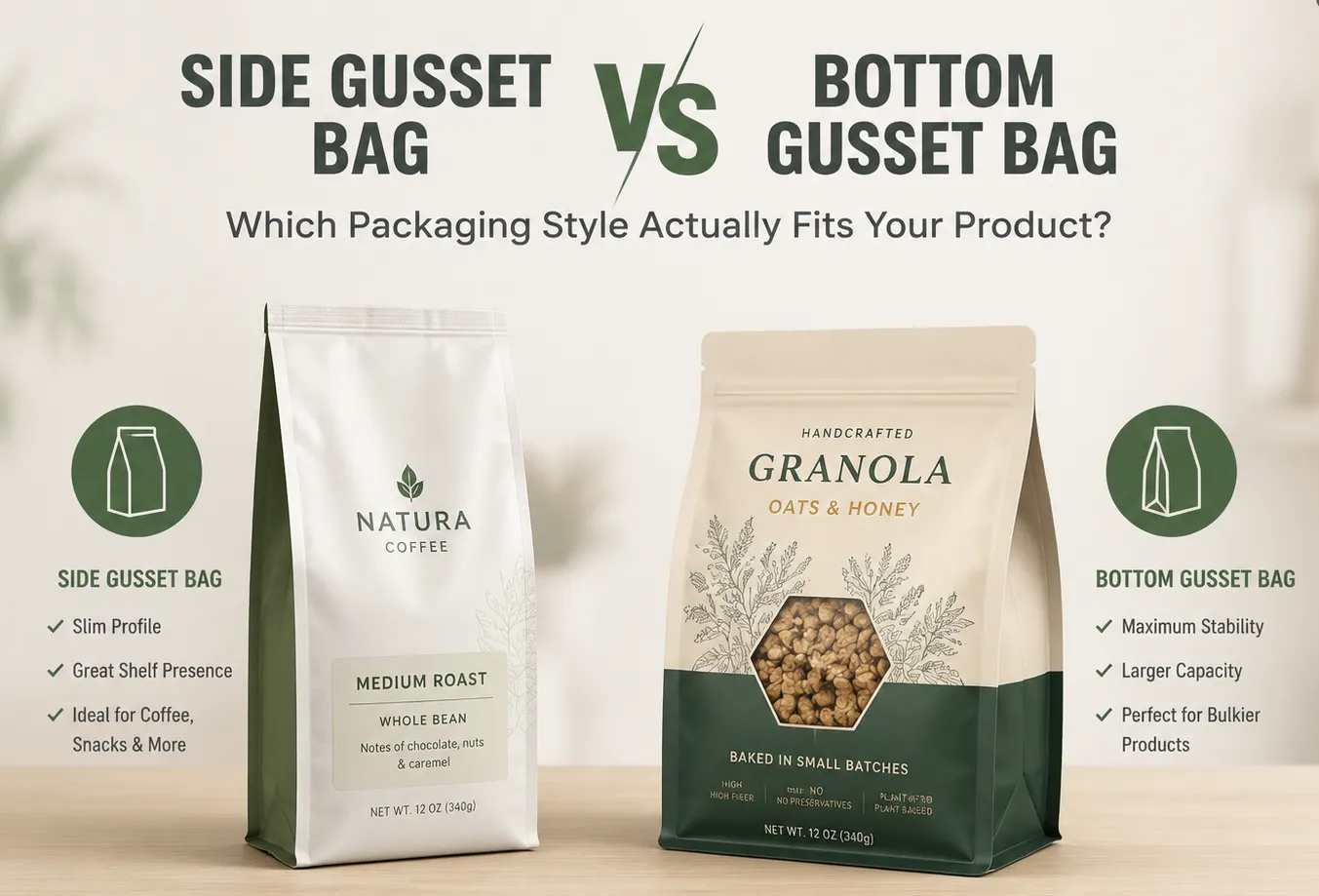
What Is a Side Gusset Bag?
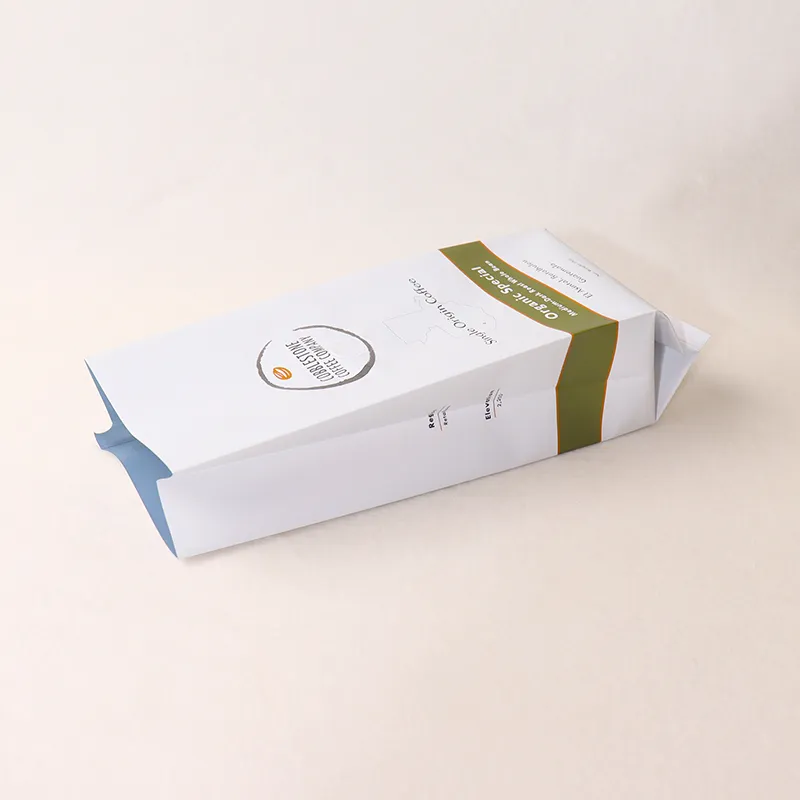
A side gusset bag has two folded panels along its vertical sides. When filled, those gussets expand outward, giving the bag a brick-like or cylindrical shape. The structure includes a flat front panel, two expanding side panels, a top seal, and a bottom seal that runs across the base.
The format has been a workhorse in flexible packaging for decades because it uses film efficiently and runs fast on automated lines.
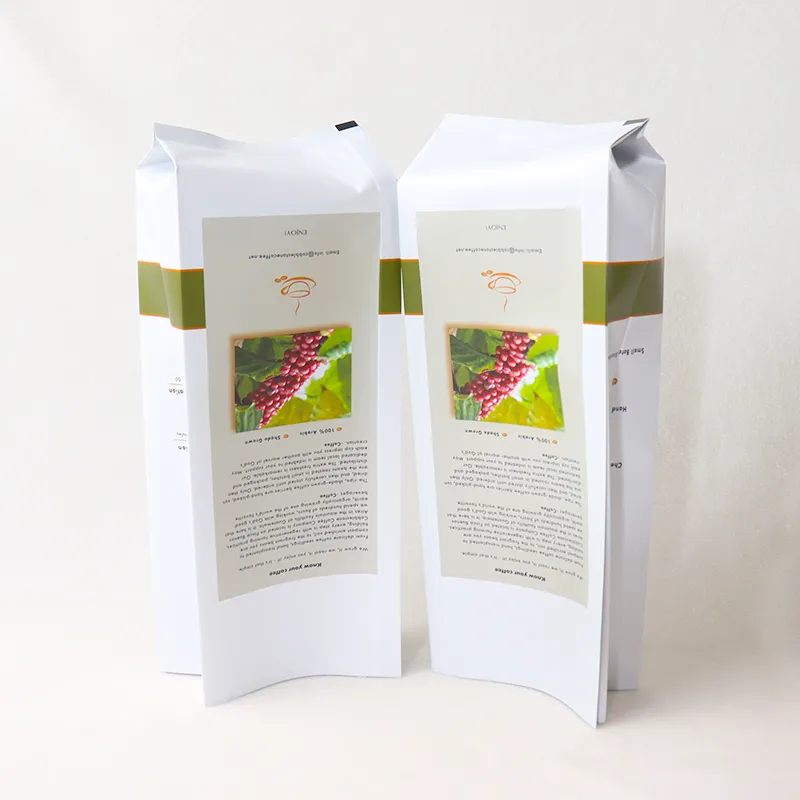
Typical Industries Using Side Gusset Bags
- Whole bean coffee — the classic 250g and 1kg roaster format
- Loose-leaf tea — particularly bulk and wholesale formats
- Pet food — 2kg and above, where stacking strength matters
- Charcoal and BBQ pellets — heavy, abrasive contents
- Rice and grains — high fill weights with pallet stacking
These products share two traits: heavier fill weights and a tolerance for lying or leaning on the shelf rather than standing.
Filling Method and Production Speed
Side gusset bags are typically top-filled and pair well with vertical form-fill-seal (VFFS) machines on the production side, or pre-made bag fillers for branded SKUs. Their geometry tolerates high-speed filling without deforming, which is why coffee roasters running 60+ bags per minute stay loyal to this format.
What Is a Bottom Gusset Bag?
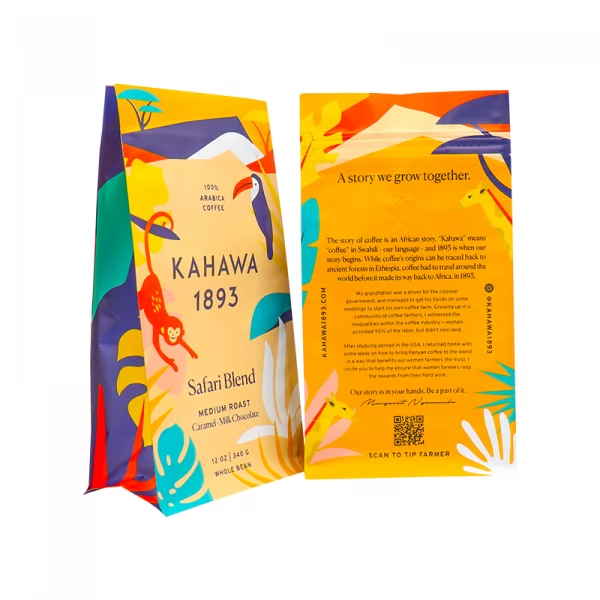
A bottom gusset bag — sometimes called a K-seal or stand-up pouch with bottom expansion — has a folded panel at the base that opens flat when the bag is filled. The result: the pouch stands upright on its own, like a small paper bag.
The structure is two front-and-back panels sealed on three sides, with the bottom gusset folded inward and heat-sealed in a curved or W-shaped pattern.
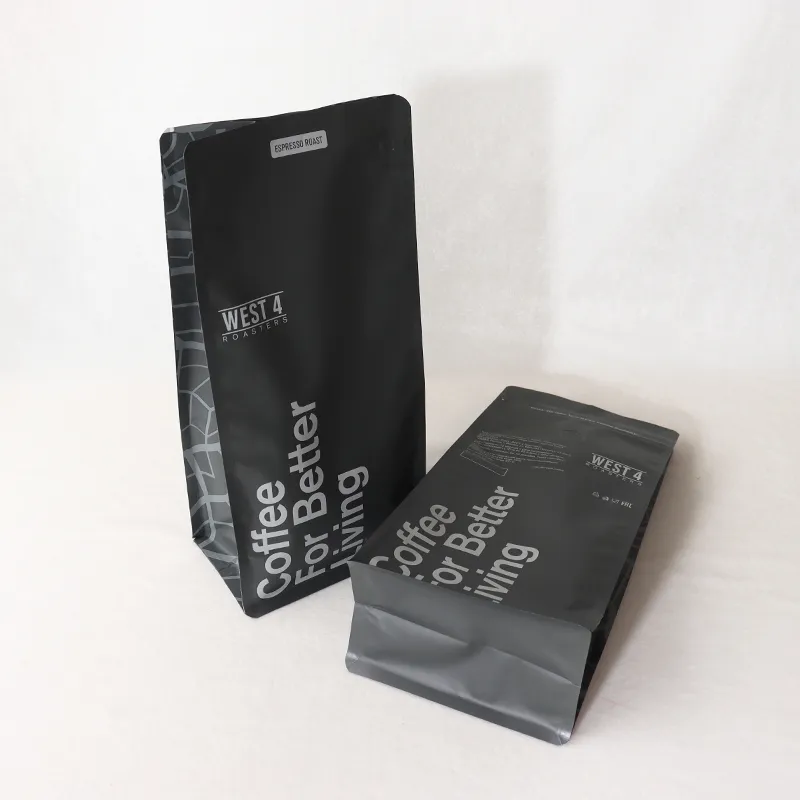
Typical Industries Using Bottom Gusset Bags
- Snacks and granola — chips, trail mix, popcorn
- Protein powder and supplements — daily-use SKUs
- Ground coffee — café retail and gift formats
- Premium tea — sachet and loose-leaf hybrids
- Baby food and meal replacements
The common thread: shelf presence is the primary marketing channel, and unit weights stay under roughly 2kg.
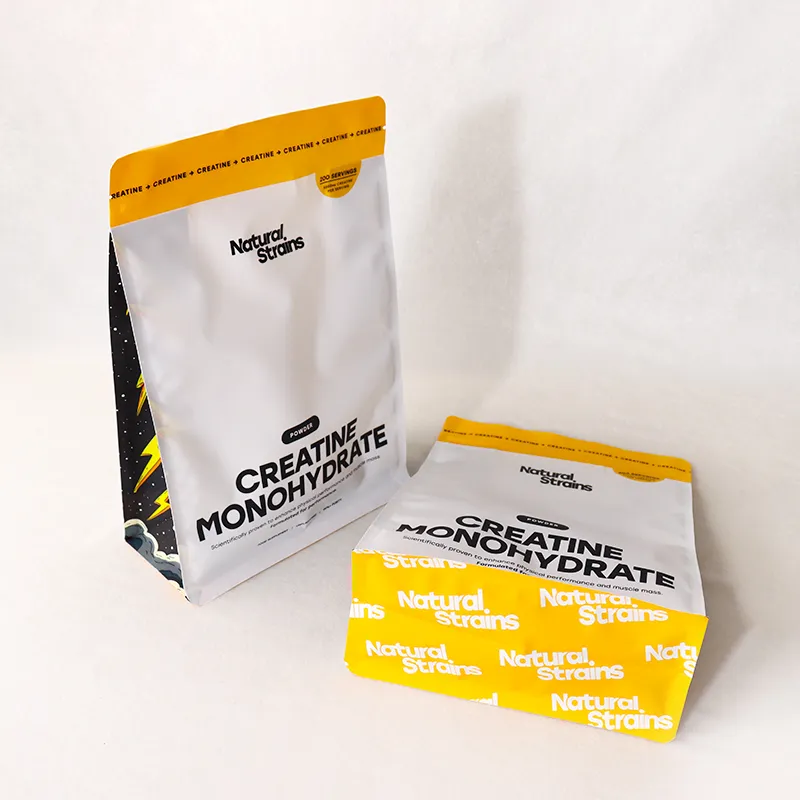
Filling Method and Retail Display Behavior
The flat base lets the bag sit confidently on retail shelves and Amazon FBA bins. Shoppers can read the front panel from three feet away, which matters in categories where 70%+ of purchase decisions happen at shelf. The trade-off: filling lines for stand-up pouches typically run slower than side gusset VFFS systems.
Side-by-Side Comparison
Here's how the two formats compare across the decision factors that most often come up in supplier conversations.
| Feature | Side Gusset Bag | Bottom Gusset Bag |
|---|---|---|
| Shelf stability | Lies flat or leans | Stands upright |
| Typical fill capacity | 250g – 5kg+ | 50g – 2kg |
| MOQ flexibility | Moderate (gravure-leaning) | Higher digital print compatibility |
| Print surface area | Wraparound (narrow front) | Wide flat front panel |
| Valve compatibility | Excellent (front panel) | Good (front or back) |
| Machine compatibility | High-speed VFFS friendly | Premade pouch fillers |
| Unit cost tendency | Lower film usage at equal volume | Slightly higher film usage |
| Ideal product weight | Heavier (1kg+) | Lighter to mid-weight |
| Retail visibility | Lower (flat orientation) | High (front-facing) |
| Freight cube efficiency | Denser palletizing | Less dense (flat profile helps somewhat) |
Visual Footprint and Shelf Presence
If your retail buyer's planogram requires a free-standing pouch — and most North American grocery and specialty buyers do — bottom gusset is non-negotiable. Side gusset bags work for online-only brands, bulk B-channel sales, or shelves where products are stacked or laid horizontally.
Capacity and Fill Volume Differences
Side gussets generally hold more volume per square inch of film thanks to their cylindrical-like expansion. For a 1kg whole-bean coffee SKU, a side gusset typically uses 8–12% less laminate than an equivalent bottom gusset stand-up pouch. At 100,000 units annually, that adds up.
How Each Bag Performs Across Real Products
Coffee: Whole Bean vs Ground
Whole bean coffee almost always uses a side gusset bag with a one-way degassing valve — this has been the roaster standard for 30+ years because freshly roasted beans release CO₂ for up to two weeks post-roast. The side gusset format handles that pressure release efficiently.
Ground coffee, especially for café retail and gift markets, typically moves to bottom gusset stand-up pouches. The flat front panel showcases origin storytelling, and ground coffee doesn't degas as aggressively.
Pet Food and Bulk Dry Goods
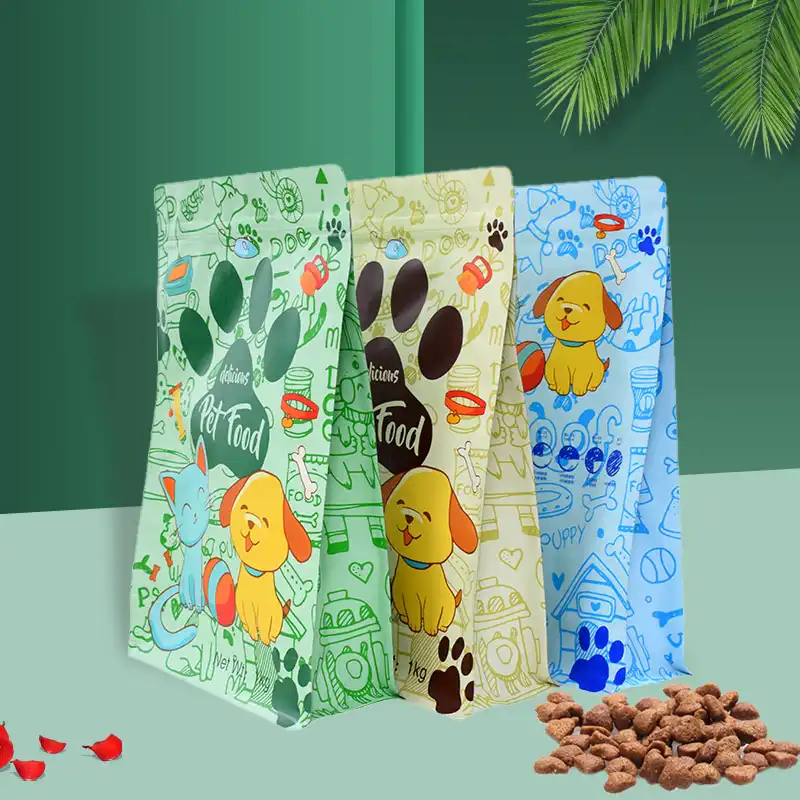
For pet food at 2kg and above, side gusset with a tin-tie or zipper top wins on three fronts: stacking strength, pallet efficiency, and the perception of "value" that bulk-buying pet owners associate with the format. Pet parents increasingly read ingredient panels carefully, so wrapping the certifications and feeding guide across the side gussets works well.
Snacks, Powders, and Premium Tea
Direct-to-consumer snack and supplement brands almost always default to bottom gusset stand-up pouches. The unboxing moment matters — the bag has to look intentional on a kitchen counter and photograph well for Instagram. Working with brands across North America, we've found that snack startups who choose side gusset for "cost savings" often switch back within 12 months once retail conversations begin.
Material and Barrier Considerations
Both formats can be built from identical laminate structures. Film thickness requirements differ slightly because of seal geometry, and that decision directly affects shelf life.
Common Film Structures
| Laminate | Best For | Format Fit |
|---|---|---|
| PET/AL/PE | Highest barrier (coffee, jerky) | Both |
| PET/VMPET/PE | Mid-tier barrier (snacks, tea) | Both |
| Kraft/PE | Natural look (coffee, granola) | Both — better visual on bottom gusset |
| Mono-PE recyclable | Sustainability-led brands | Both — bottom gusset more common |
Barrier Performance for Oxygen-Sensitive Products
For coffee, nuts, and jerky, oxygen transmission rate (OTR) and water vapor transmission rate (WVTR) determine shelf life. Drawing on 20+ years of producing barrier laminates for coffee and pet food brands, our team has observed that side gusset bottom seals require tighter tolerance to prevent oxygen ingress at the gusset corners — a detail that's worth confirming with any supplier you evaluate.
Customization Options: Where the Two Differ
Printing and Artwork Layout
Side gussets have a narrow front panel and wide gussets, so branding has to wrap around the structure. Bottom gussets give you a wide flat front for hero artwork and a clean back panel for nutrition facts and certifications. Dieline preparation differs — our in-house design team often helps brands who only have a rough idea of layout, adjusting artwork to account for seal zones and gusset folds.
Closure Options
- Side gusset: tin-tie, pocket zipper, degassing valve, tear notch
- Bottom gusset: press-to-close zipper, slider zipper, hang hole, spout (for liquids)
Finishing Effects
Matte, gloss, soft-touch, spot UV, and embossing are all feasible on both formats, though placement varies based on panel layout. In our 6,800㎡ cleanroom facility, finishes such as soft-touch matte are applied before lamination to maintain food-contact compliance — something to ask any supplier about, since post-lamination finishing can compromise barrier integrity.
Cost Drivers: What Actually Moves Your Quote
Material Usage per Unit
Bottom gusset bags typically use slightly more film per unit at equivalent capacity due to the additional bottom panel and curved seal geometry. The difference is usually 8–15% at the same fill weight.
MOQ and Run Length Sensitivity
Tooling and plate setup costs amortize across order volume. Digital printing allows lower MOQs and faster turnaround but costs more per unit; gravure requires higher volumes but drops the unit cost significantly. Bottom gusset bags often suit digital print runs better because brands testing market fit start small.
Hidden Costs Buyers Often Miss
- Secondary packaging fit — does the bag fit standard carton sizes?
- Freight cube efficiency — side gusset bags pack denser for ocean freight
- Filling line speed — slower filling is a real per-unit labor cost
- Damaged-in-transit rates — heavier bags in bottom gusset format can split at base seals
Decision Framework: Choosing the Right Gusseted Bag
The 5-Question Checklist
- Where will the product sit? Retail shelf → bottom gusset. Bulk bin or online → side gusset is fine.
- What's the unit weight? Under 2kg → either works. Over 2kg → side gusset.
- Is barrier or degassing required? Whole bean coffee → side gusset with valve.
- Is shelf branding your primary marketing channel? Yes → bottom gusset's flat front wins.
- What filling equipment is in place? VFFS line → side gusset. Premade pouch filler → bottom gusset.
When a Hybrid Makes Sense
If you want both shelf stability and high capacity, consider a flat bottom bag (also called box pouch or quad seal). It stands like a bottom gusset but holds volume like a side gusset. Premium coffee, pet treats, and luxury tea brands increasingly choose this third option.
Compliance, Certification, and Food Safety
What to Verify Before Confirming a Supplier
- FDA food-contact compliance — required for any food product entering the US
- ISO 9001 quality systems — consistency across production runs
- ISO 22000 — food safety management for direct-contact packaging
- REACH or LFGB — required for European markets
- Recyclability claims — How2Recycle, CEFLEX, or GRS for recycled content
YLTPACK operates under FDA, ISO 9001, ISO 22000, and GRS-certified processes, with documentation provided per order for customs clearance and retailer audits. Whichever supplier you choose, ask for current certificates rather than referenced PDFs from previous years.
Frequently Asked Questions
Can I switch from side gusset to bottom gusset mid-product-line?
Yes, but expect new tooling, an artwork redesign for the different panel geometry, and possible filling line adjustments. Plan a 6–10 week transition window and run both SKUs in parallel for a quarter to avoid retail gaps.
Which format is more sustainable?
Neither format is inherently greener — recyclability depends on the film structure, not the gusset shape. Both side and bottom gusset bags can be produced in mono-material recyclable PE laminates that qualify for store drop-off recycling programs.
What's the minimum order quantity for custom printed gusset bags?
MOQ varies by print method. Digital printing allows lower minimums and works well for new product launches or limited editions. Gravure printing requires higher volumes but delivers lower per-unit costs at scale. Ask suppliers for both options before committing.
Do side gusset bags need a degassing valve?
For freshly roasted coffee, yes — beans release CO₂ for up to two weeks and the bag will balloon or burst without a valve. For tea, pet food, nuts, and other dry goods, valves are optional and usually unnecessary.
Can both formats include resealable zippers?
Yes. Bottom gusset bags typically use press-to-close or slider zippers near the top seal. Side gusset bags can use tin-tie closures, pocket zippers built into the front panel, or zipper-on-gusset configurations depending on fill weight.
How long does sampling and production typically take?
Plan for 5–7 days for a digital design proof, 10–15 days for a physical pre-production sample, and 25–35 days for mass production after sample approval. Sea freight adds another 25–40 days depending on destination.
Working With a Manufacturer Who Understands Both Formats
The biggest spec mistakes happen before tooling is cut — not during production. Misaligned dielines, wrong film thickness for the fill weight, valve placement that conflicts with artwork, gusset depth that doesn't match the carton.
With an in-house design team and two decades of producing both gusset formats for coffee, pet, and snack brands, we help buyers work through these decisions systematically. That includes dieline review, material recommendations based on shelf-life targets, and physical samples you can put in front of retail buyers before approving mass production.
Get a Tailored Recommendation for Your Product
Tell us three things: your product type, target market, and intended fill weight. We'll send back:
- A structural recommendation (side gusset, bottom gusset, or flat bottom) with reasoning
- A dieline mockup showing your artwork on the recommended format
- A physical sample pack so you can compare formats in your hand before deciding
Two ways to start: request a sample pack with examples of both gusset formats in your category, or book a 20-minute packaging consultation to walk through your product specs with our design team. No quote pressure — the goal is to help you decide correctly the first time.