First, What Are We Actually Comparing?
Both options are flexible pouches, but their construction creates very different experiences on the shelf and in the warehouse.
The Flat Pouch (Three-Side Sealed)
This is the slim, lay-flat format sealed on three edges, with one side left open for filling. Think single-serve coffee, face masks, supplement samples, or spice sachets. It's minimal, lightweight, and beautifully suited for thin or small-volume items.
Because there's no bottom gusset, this style lies flat in a box or hangs from a hook. It's the go-to for products where presentation is clean and quantities per pack are modest.
The Stand-Up Pouch
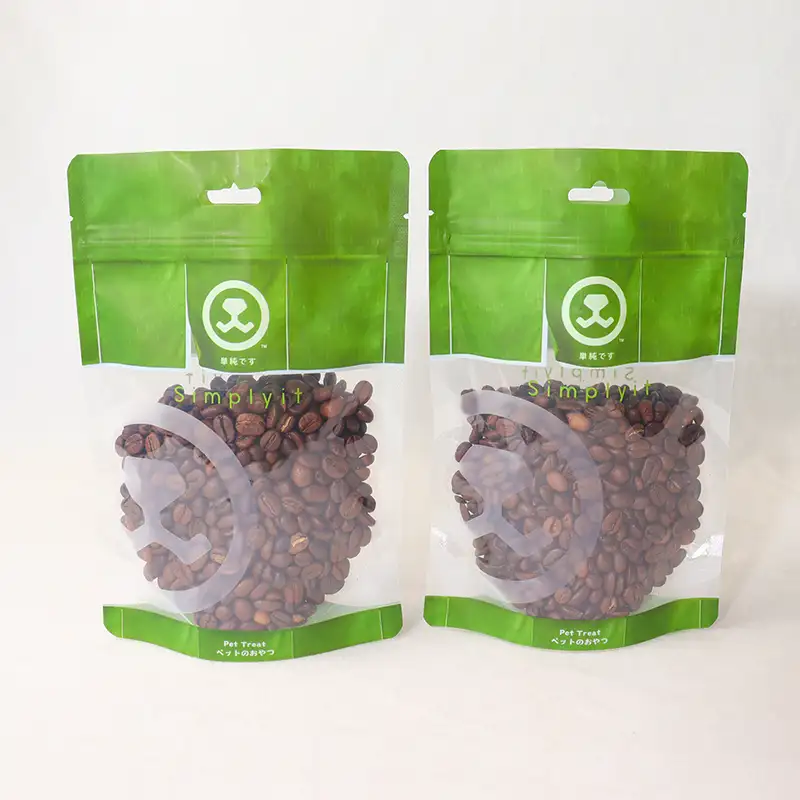
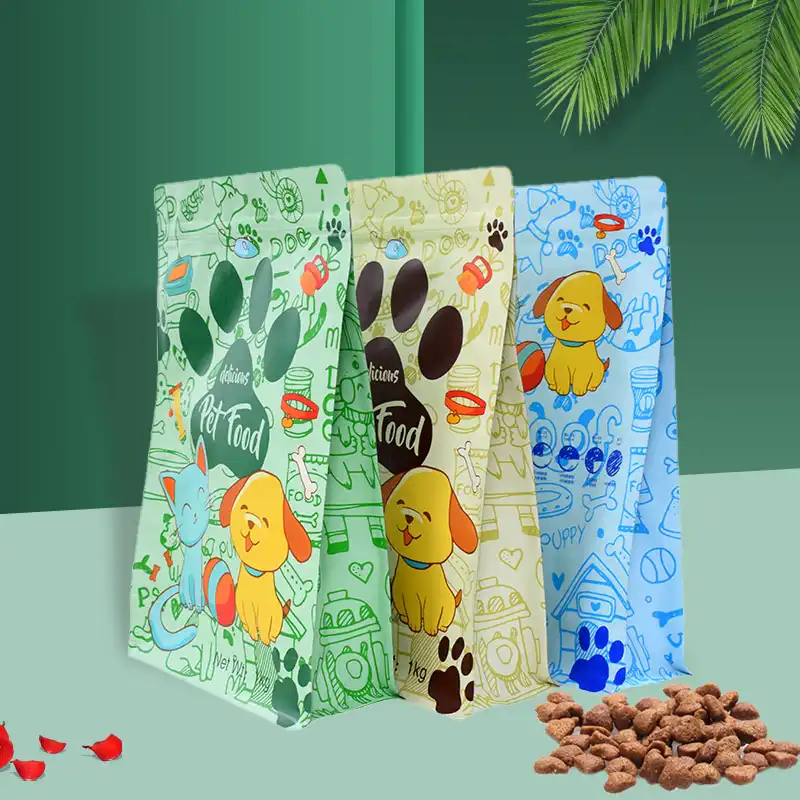
This one has a gusseted bottom that expands so the package stands on its own. Coffee bags, pet treats, granola, and protein powders almost always use this shape because shelf presence matters and the volume is larger.
The upright design gives you front-and-back printing real estate, a stable base, and that premium retail feel shoppers associate with quality.
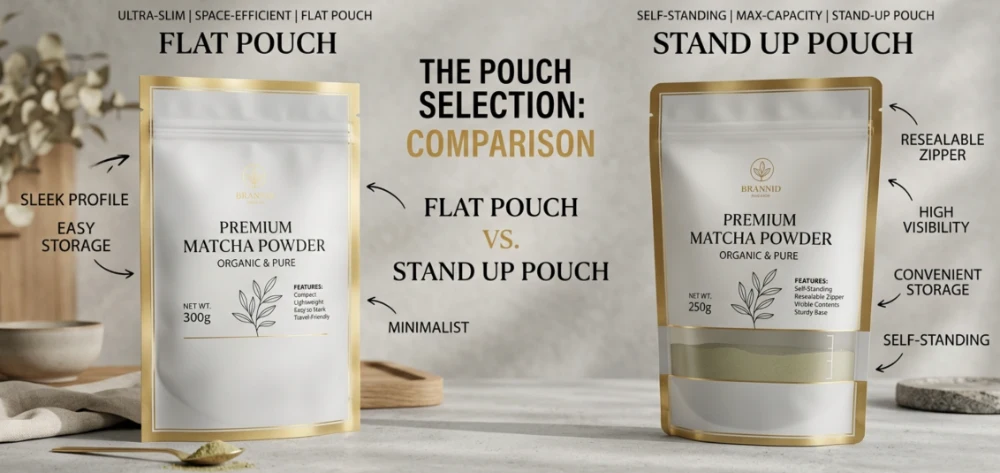
Shelf Presence: How Customers See Your Product
Here's where the two formats diverge most. On a crowded shelf, an upright pouch acts like a mini billboard. It faces the customer directly, holds a tall label, and projects confidence.
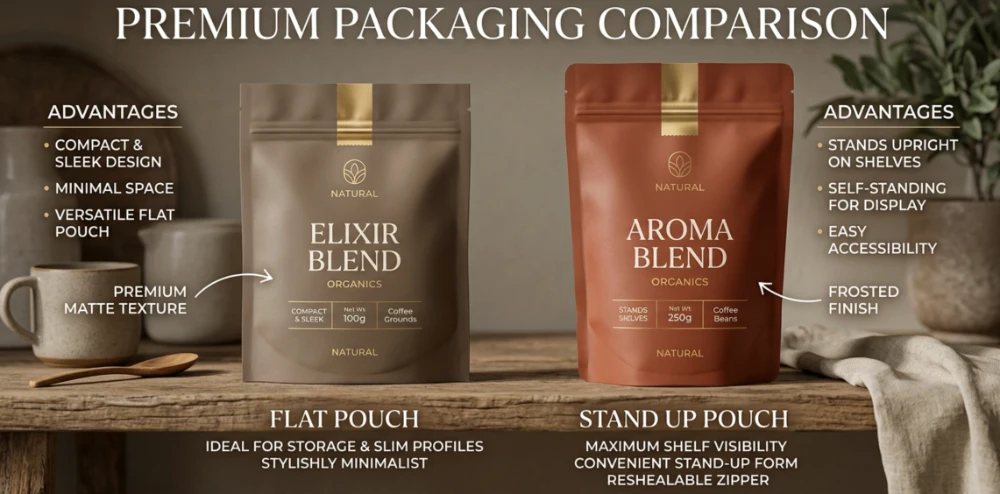
A flat sealed pouch, by contrast, shines in hanging displays, subscription boxes, and sample kits. It looks tidy, modern, and intentional when the item is thin.
If a shopper picks your product off a shelf, go upright. If they receive it in a box or grab it from a hook, flat usually wins.
For beauty and wellness brands counting on that Instagram unboxing moment, the format you choose affects how the reveal feels. A crisp flat sachet reads as luxe and clinical; a sturdy stand-up pouch reads as generous and full.
Cost and Material Efficiency
Budget always enters the conversation, so let's be honest about it. Flat pouches use less film and have simpler construction, which generally makes them more economical per unit for small products.
Stand-up styles require more material for the gusset and stronger seals, so they cost a bit more. But they hold more product and command higher shelf prices, so the math often balances out.
| Factor | Flat Pouch (3-Side Seal) | Stand-Up Pouch |
|---|---|---|
| Material used | Lower (no gusset) | Higher (gusseted base) |
| Typical fill volume | 1g – 250g | 50g – 5kg |
| Shelf standing | No (lays flat) | Yes (self-standing) |
| Print area | Front + back, slim | Front, back + gussets |
| Best retail setting | Hanging racks, boxes | Open shelves, freezers |
| Filling speed | Very fast for small items | Moderate, needs support |
As a manufacturer that has produced flexible packaging for over 20 years, we usually tell brands to weigh per-unit savings against shelf impact rather than chasing the lowest number alone.
Product Protection and Barrier Needs
The shape matters, but so does what's inside the film. Different products need different barrier layers, and both formats can be engineered for that.
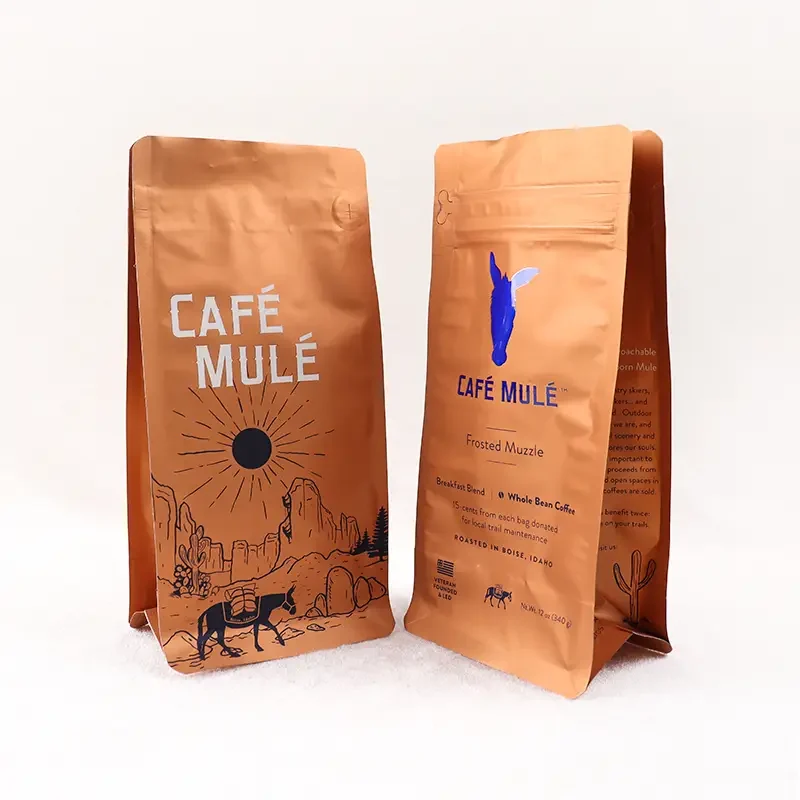
Take coffee, for example. Roasted beans release CO2 and lose aroma fast, so an oxygen barrier and often a degassing valve are non-negotiable. A stand-up pouch handles this beautifully because it accommodates valves and larger volumes.
For dry, single-use items like a face serum sachet or a seasoning packet, a slim heat seal packaging bag with a foil layer protects against moisture and light without wasting material.
- Coffee & tea: high oxygen barrier, often upright with a valve
- Snacks & granola: moisture barrier, stand-up for shelf appeal
- Supplements & samples: light-blocking foil, flat sachet
- Pet treats: grease-resistant film, upright for ingredient labels
Pet owners increasingly scan ingredient panels before buying, so giving that label room to breathe is smart. Because we hold FDA and ISO 22000 certifications, we typically recommend food-contact-safe structures verified for the exact product going inside.
Filling, Sealing, and Production Reality
How your product gets into the pouch matters more than most first-time buyers expect. Flat sachets fill fast on high-speed lines and are ideal for powders, liquids, and small counts.
Upright pouches need a base that opens cleanly, so filling is a touch slower but still efficient at scale. If you're running large volumes, your equipment compatibility should guide the decision as much as aesthetics.
In our 6,800㎡ cleanroom facility, we test seal integrity on every production run because a weak seal undoes all the design work. A flat plastic pouch with a clean three-edge seal and a standing pouch with a reliable bottom both depend on consistent heat sealing to keep contents fresh.
Convenience Features Customers Notice
Little touches drive repeat purchases. Resealability is the big one. A three side seal bag with zipper lets customers reclose a snack or supplement pack, which feels premium and reduces waste.
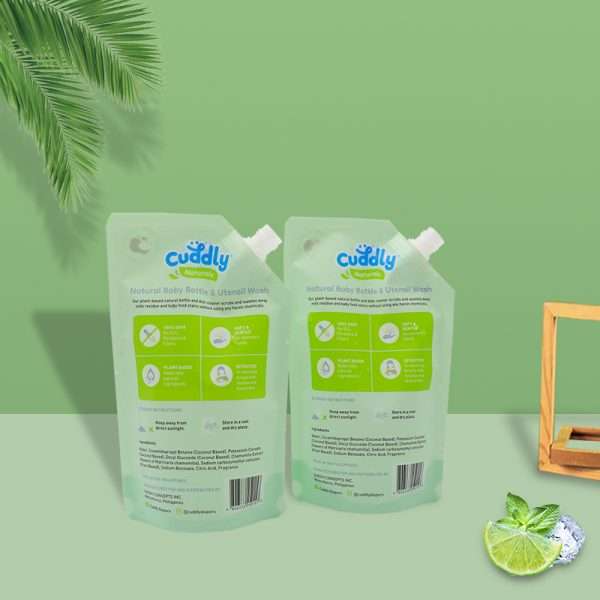
Stand-up versions often add zippers, tear notches, and spouts for liquids. Match the feature to behavior: if people use the product over several days, resealing is worth the small added cost.
Quick Feature Checklist
- Will customers use it more than once? → Add a zipper
- Is it a liquid or paste? → Consider a spout pouch
- Single serving? → Keep it a clean flat sachet
- Premium retail shelf? → Go upright with rich print
Sustainability: A Growing Decision Driver
Shoppers increasingly check whether packaging is recyclable or compostable. A 2024 survey of grocery buyers found that more than 60% factored eco-friendliness into purchase decisions, and that share has kept climbing.
Both formats now come in greener materials. Mono-material recyclable films and biodegradable three side seal bags let brands cut their footprint without sacrificing protection. Our in-house design team often helps brands who only have a rough idea translate sustainability goals into a structure that still seals reliably.
If your audience cares about the planet, say so on the pack. The format you choose should align with the eco-story you tell, and we hold GRS certification to support recycled-content claims.
Branding and Print: Telling Your Story
Your pouch is your loudest salesperson. Upright styles give you more canvas, including those side gussets that catch the eye at an angle on the shelf.
Flat sachets reward minimalist design. With limited space, every element has to earn its place, which often produces a cleaner, more confident look.
Whether you want custom printed three side seal bags for a sample line or bold full-color stand-up pouches for retail, the print process is similar. Working with brands across many categories, we've seen that a strong, simple layout outperforms a busy one almost every time.
So, Which One Should You Choose?
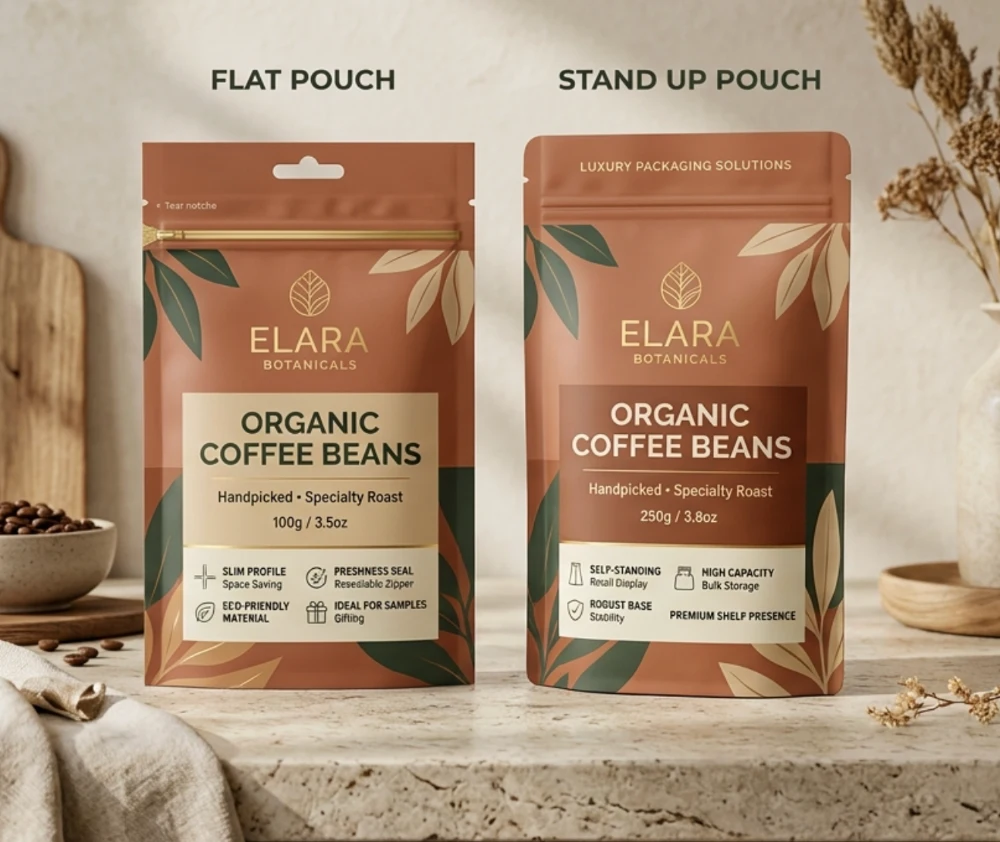
There's no single winner, only the right fit for your product, audience, and sales channel. Use this quick decision guide.
| If your product is... | Choose... |
|---|---|
| Single-serve, small, or a sample | Flat three-edge sachet |
| Sold on open retail shelves | Stand-up pouch |
| High-volume, like 1–5kg | Stand-up pouch |
| Shipped in subscription boxes | Flat sachet (saves space) |
| Reused over several days | Either, with a zipper |
When brands come to us unsure, we look at three things: how the product is filled, where it's sold, and how customers handle it. Answer those and the shape usually picks itself.
If you'd like a second opinion on your specific product, the YLTPACK team is happy to map out the options for food packaging or any other category. You can reach us on WhatsApp at +86 182 1944 5665 or email [email protected], and we'll talk through structure, barrier, and print before any commitment.
Frequently Asked Questions
Can a flat sachet hold liquids or pastes?
Yes, with the right film and seal strength it handles sauces, serums, and gels well. For single-use portions it's often the most economical choice, and a tear notch makes opening easy.
Is a stand-up pouch always more expensive?
Per unit, it usually costs a bit more because of the extra material in the base. But it holds more product and earns better shelf placement, so the overall return often justifies the difference.
How do I know which barrier material my product needs?
It depends on sensitivity to oxygen, moisture, and light. Coffee needs high oxygen protection; dry snacks need moisture barriers. Share your product details with a packaging specialist and they'll match the film structure.
Can I get small quantities for a product test?
Many suppliers, including our team, support smaller trial runs so you can validate design before scaling. As a three side seal bag manufacturer, we encourage testing the format with real customers first.
How long does custom design and production take?
Timelines vary by artwork complexity, printing method, and quantity. A typical custom printed seal bag project moves from approved design to finished goods in a few weeks. Sharing clear specs early keeps everything on schedule.