The Short Answer First
Child-resistant packaging is any container designed to be difficult for children under five to open, while still remaining accessible to adults. It works by requiring two coordinated actions at once—like pressing and sliding, or squeezing and pulling. For cannabis products, this usually means a specially engineered mylar pouch with a built-in locking zipper.
So when brand owners ask what is child resistant packaging in the context of legal cannabis, the honest answer is this: it's a safety-first pouch that keeps curious kids out, keeps your product fresh, and keeps you compliant with state law. Everything below unpacks the how and why.
Why This Matters More Than Most Buyers Realize
If you're sourcing pouches for edibles, flower, or concentrates, packaging isn't a formality—it's a legal requirement in every U.S. state with a legal market. Get it wrong, and you risk failed inspections, product recalls, or worse, an accidental ingestion incident.
According to data published by U.S. poison control centers, pediatric exposures to cannabis edibles rose sharply between 2017 and 2023 as more states legalized adult use. That trend is exactly why regulators tightened rules on protective closures.
The upside? A well-designed pouch protects families and your brand at the same time. That dual role is what makes this category worth getting right the first time.
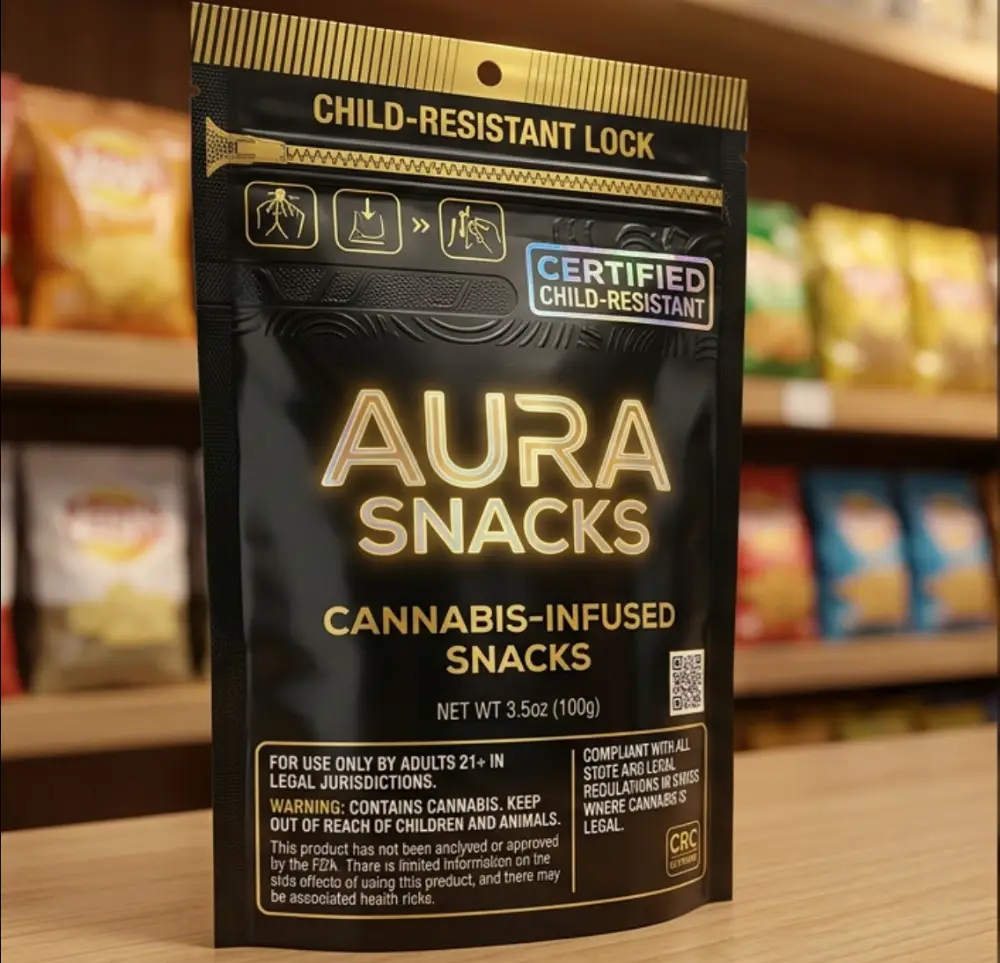
How Does Child Resistant Packaging Work?
Let's break down how does child resistant packaging work at the mechanical level, because it's simpler than it sounds. The core idea is "two hands, two steps."
A child typically can't coordinate two separate motions with enough grip strength. An adult can. That single design principle drives every certified closure on the market.
Common Locking Mechanisms in Mylar Pouches
- Press-to-close slider zippers: You pinch two points and slide simultaneously.
- Push-and-pull zip locks: You apply downward pressure while pulling the seal open.
- Tear-notch plus resealable zipper: A first-open tear combined with a lockable interior track.
The genius of mylar is that these mechanisms integrate directly into a flexible film. You get a lightweight, shippable pouch that still passes rigorous child-safety testing.
Why Mylar Is the Material of Choice
Not all films are equal. Mylar—a polyester film often layered with foil and food-grade laminates—has become the standard for cannabis pouches for four practical reasons.
1. Moisture Barrier
Flower dries out fast when exposed to air. Concentrates get sticky and degrade. A multi-layer mylar structure blocks water vapor, holding humidity stable inside the pouch so terpenes and texture stay intact.
2. Light Protection
UV and visible light break down active compounds over time. Opaque or foil-lined mylar blocks light almost entirely, which is why so many premium products ship in matte or metalized pouches rather than clear plastic.
3. Built-In Child Safety Lock
The locking zipper isn't glued on as an afterthought—it's welded into the seam. That means the safety feature survives repeated opening and reclosing without failing.
4. Fully Customizable Appearance
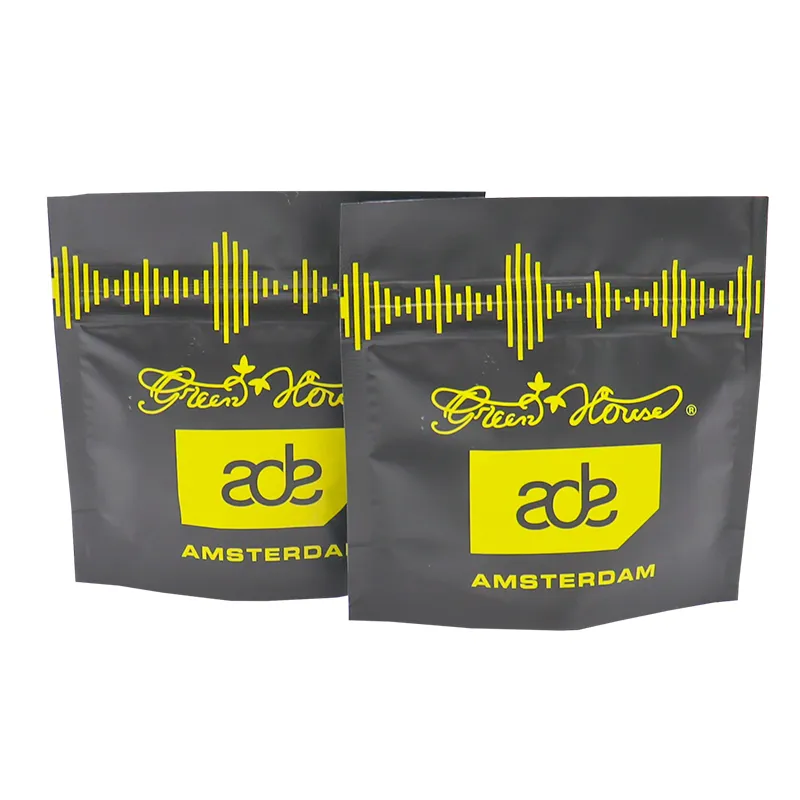
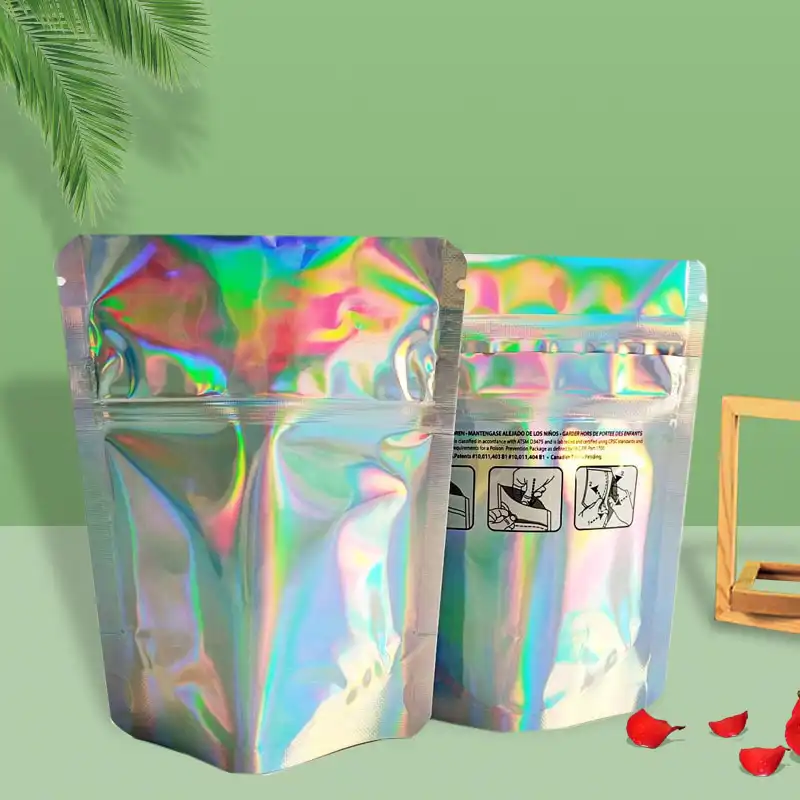
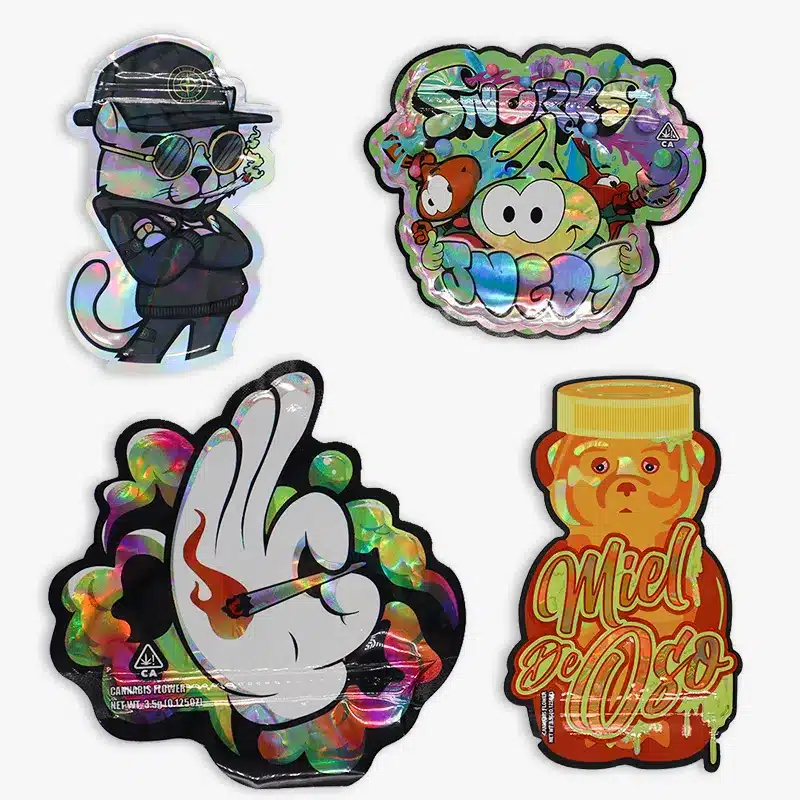
Here's what surprises new brands: safety and aesthetics aren't a trade-off. Matte finishes, spot gloss, holographic accents, custom sizes, and full-color print all work on the same protected pouch.
| Property | Standard Poly Bag | Multi-Layer Mylar Pouch |
|---|---|---|
| Moisture barrier | Low | High (foil laminate) |
| Light blocking | Minimal | Up to ~99% with foil layer |
| Child-safety closure | Rarely certified | Certified locking zipper |
| Shelf life impact | Weeks | Months |
| Print quality | Basic | Full-color, custom finishes |
The Rules You Actually Have to Follow
Regulations trace back to the federal Poison Prevention Packaging Act of 1970, which established the testing protocol still referenced today. The benchmark is ASTM D3475 classification, tested under a standardized child-and-adult panel protocol.
What the Testing Involves
Certification labs run panels with real participants. The pass criteria are strict and measurable.
| Test Group | Requirement |
|---|---|
| Children (42–51 months) | At least 80% cannot open it within 10 minutes |
| Adults (50–70 years) | At least 90% can open and properly reclose it |
Understanding child resistant packaging requirements 2026 means knowing that most states layer their own cannabis-specific rules on top of the federal baseline. Many now require the pouch to be resealable and to remain child-resistant after multiple openings—not just on first use.
State-Level Variation to Watch
Rules differ by jurisdiction, so a pouch approved in one state may need adjustments for another. Common add-on requirements include:
- Opaque film so contents aren't visible to minors
- Universal warning symbols printed on the front panel
- Restrictions on cartoon imagery or child-appealing designs
- Milligram-per-serving and total-THC labeling
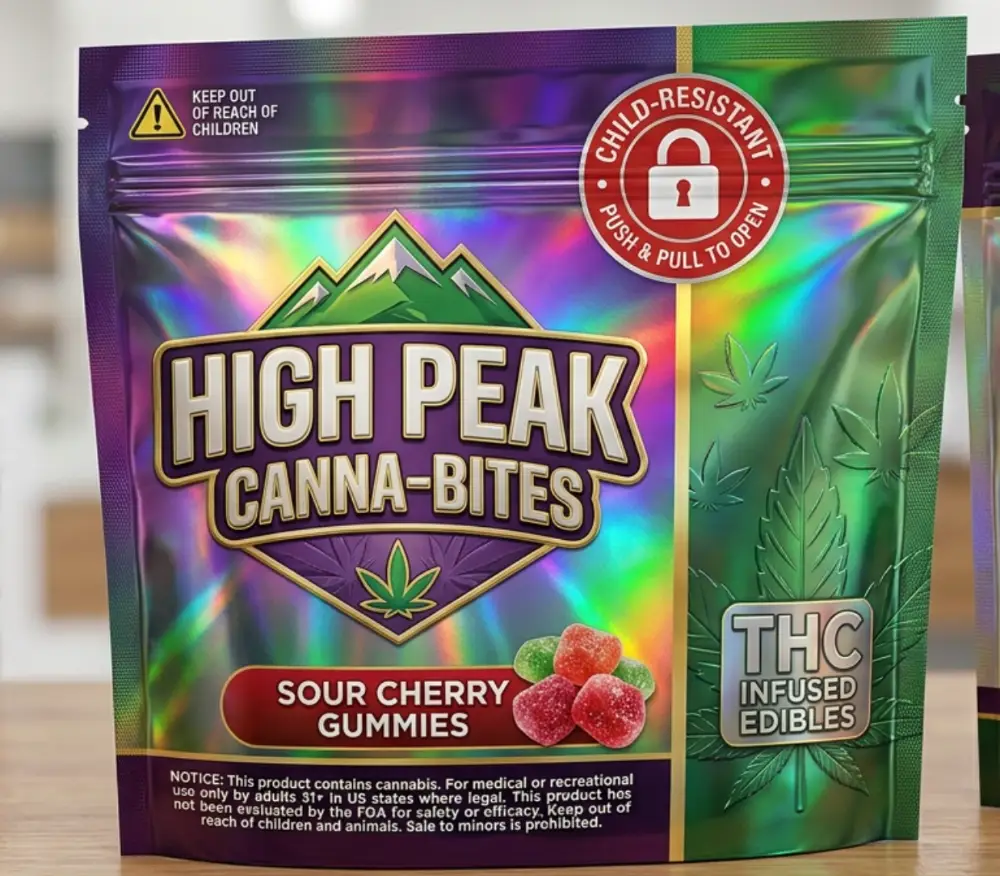
What "Certified" Really Means
There's a big difference between "looks safe" and "proven safe." Knowing what is certified child resistant packaging protects you from a costly mistake: buying pouches that only appear compliant.
Certification means an accredited lab tested the exact closure design and issued documentation. If a supplier can't show you a test report tied to the specific pouch you're buying, treat that as a red flag.
Working with brands across North America, we've found the most common and expensive mistake is assuming a locking zipper is automatically certified. Always ask for the test report tied to your pouch spec.
How Cannabis Packaging Differs From Medicine Bottles
People often ask what is child resistant packaging for pharmaceuticals versus cannabis, since both rely on the same safety principle. The mechanics overlap, but the product needs differ.
Medicine leans on rigid bottles with push-and-turn caps and blister packs. Cannabis leans on flexible pouches because it needs a strong barrier against moisture, oxygen, and light that a simple pill bottle doesn't provide.
In both cases, the closure must defeat a child's grip strength and coordination. The difference is that a cannabis pouch also has to preserve freshness and carry retail-grade branding.
Matching the Pouch to Your Product
Different product formats have different demands. Choosing the right structure up front saves you from reprints and compliance headaches later.
| Product Type | Recommended Structure | Key Concern |
|---|---|---|
| Flower (3.5g–28g) | Stand-up pouch, foil-lined, locking zipper | Humidity + light control |
| Edibles / gummies | Flat pouch, opaque, resealable lock | Odor + child access |
| Pre-rolls | Tall mylar sleeve or tube-style pouch | Crush protection |
| Concentrates | Small barrier pouch, foil laminate | Temperature + oxygen |
Notice a pattern: nearly every category benefits from the same mylar backbone. That's why so many brands consolidate their line into one film platform with size and print variations.
Designing Something Safe and Sellable
Retail buyers scan shelves in seconds, and dispensary customers increasingly share unboxing moments online. Your pouch has to earn attention while staying strictly within the rules.
Design Choices That Still Pass Compliance
- Finish: Matte for a premium feel, gloss for vibrancy, soft-touch for texture.
- Windows: Where allowed, a small clear window—though many states require fully opaque film.
- Detailing: Foil stamping and embossing for a high-end look without adding cost per unit at scale.
- Info panel: Room for lab results, QR codes, and required warnings without clutter.
Our in-house design team often helps brands who arrive with only a rough sketch and a vibe. Turning that into a dieline that both prints beautifully and passes safety testing is where most of the value gets created.
Getting Custom Pouches Right the First Time
When you understand what is child resistant packaging for cannabis, the sourcing conversation shifts from "cheapest pouch" to "right pouch." Here's a practical checklist to run before you commit to a production order.
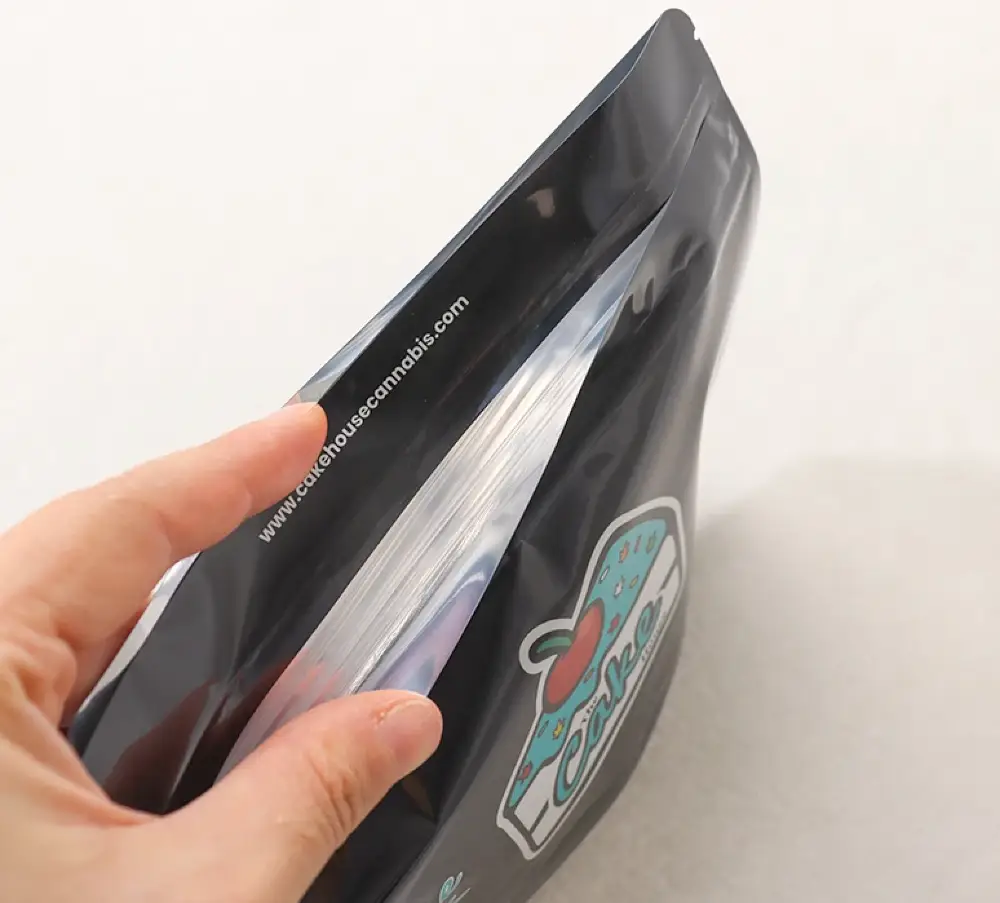
Pre-Order Checklist
- Confirm the closure is certified to ASTM D3475 for your pouch style.
- Request the actual lab test report—not just a verbal claim.
- Verify the film blocks light and moisture for your product's shelf life.
- Check your target state's opacity, labeling, and imagery rules.
- Order a physical sample before scaling to full production.
- Confirm the closure stays child-resistant after repeated openings.
Founded in 2005, Jmeipacking has spent nearly two decades producing barrier pouches, and we hold FDA and ISO 22000 certifications that we lean on when advising brands on food-contact and safety compliance. That background is why we push customers to test before they scale—it's cheaper than a recall.
We also offer free samples so you can put the closure, film, and print in your own hands before deciding. If you want to compare structures for your product line, reach out at [email protected] and we'll walk through the options with you.
Common Mistakes That Cost Brands Money
Over years of production runs, a few errors show up again and again. Avoiding them is the fastest way to protect your margins.
- Skipping certification proof: Assuming a zipper is compliant without documentation.
- Ignoring reseal durability: Passing on day one but failing after ten opens.
- Under-speccing the barrier: Choosing a thin film that lets light degrade the product.
- Designing before checking state rules: Printing artwork that a regulator later rejects.
- Ordering full volume with no sample: The most expensive gamble of all.
Key Takeaways
Safe, compliant pouches aren't a place to cut corners—they protect kids, keep your product fresh, and keep your license clean. Mylar remains the smart default because it delivers moisture control, light blocking, a certified locking closure, and full design freedom in one material.
Before you order, verify certification, match the structure to your product, check your state's specific rules, and always test a sample. Do that, and your packaging becomes a quiet competitive advantage instead of a liability.
Frequently Asked Questions
Do all U.S. states require these safety pouches for cannabis?
Every state with a legal market requires child-resistant packaging, but the specific rules on opacity, labeling, and reseal durability vary. Always confirm the requirements in each state where you sell.
Can a pouch be both resealable and child-resistant?
Yes. Certified locking zippers are designed to stay child-resistant across repeated openings, which is exactly why many state rules now mandate this feature rather than single-use seals.
How is mylar better than a standard plastic bag?
Mylar's multi-layer, often foil-lined structure blocks moisture and light far better than basic poly film. That preserves potency and freshness for months instead of weeks, while still supporting a certified safety closure.
Do you need to see a lab report before ordering?
Absolutely. A closure design must be tested by an accredited lab against ASTM D3475. If a supplier can't provide a report tied to your exact pouch spec, the "certified" label is unverified.
Can we customize the look without breaking compliance?
Yes. Finishes, foil stamping, custom sizes, and full-color print all work on a compliant pouch. The key is designing within your state's rules on imagery, opacity, and required warnings from the start.
Disclaimer: This article is intended for brands operating in U.S. states where cannabis is legal. Regulations differ by jurisdiction and change over time, so consult your local authority before finalizing packaging. Our pouches are produced with certified child-resistant locking closures, and we recommend verifying compliance for your specific market.