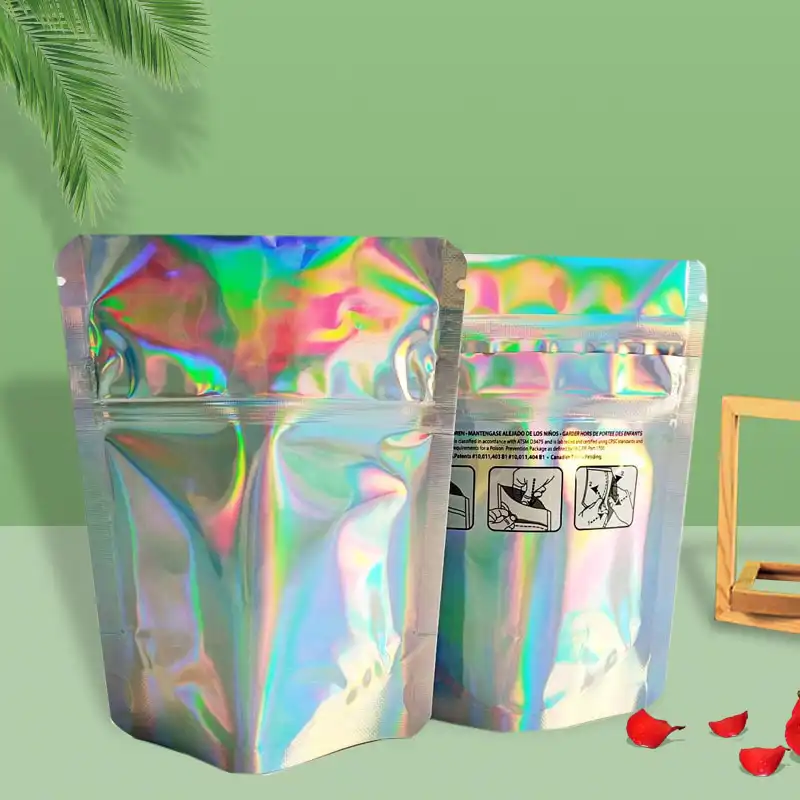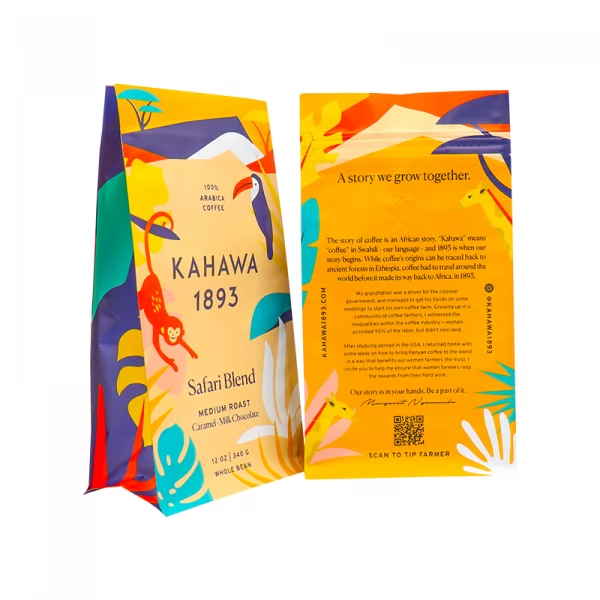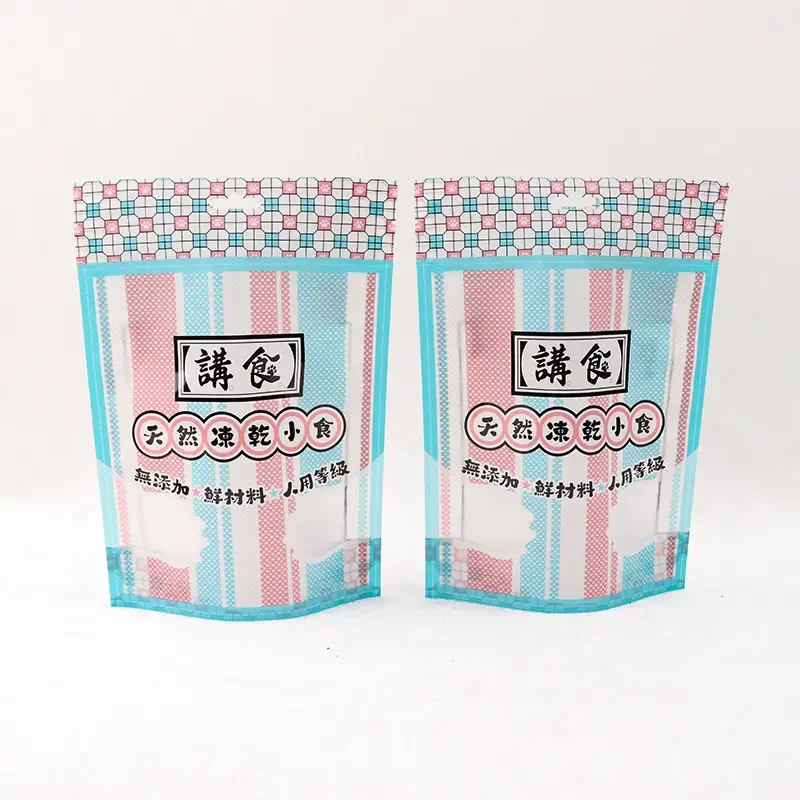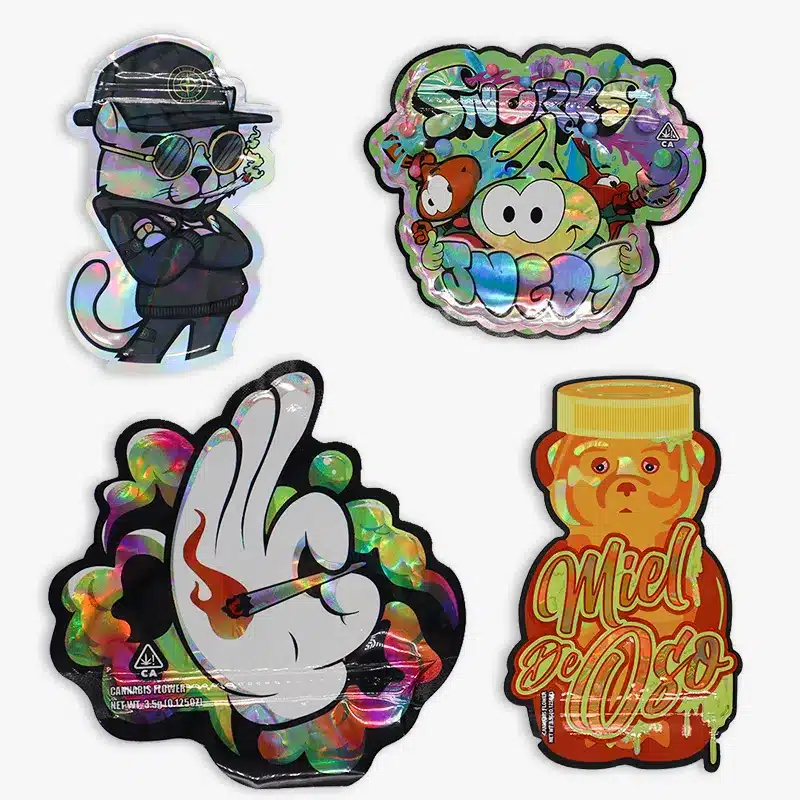
This guide provides a comprehensive, data-driven comparison to help procurement teams and business owners select the right packaging solution. Whether you're scaling a food brand, launching a supplement line, or sourcing industrial packaging at volume, the information here will help you make a confident, informed decision.
What Is a Mylar Bag? Material Composition and Core Properties
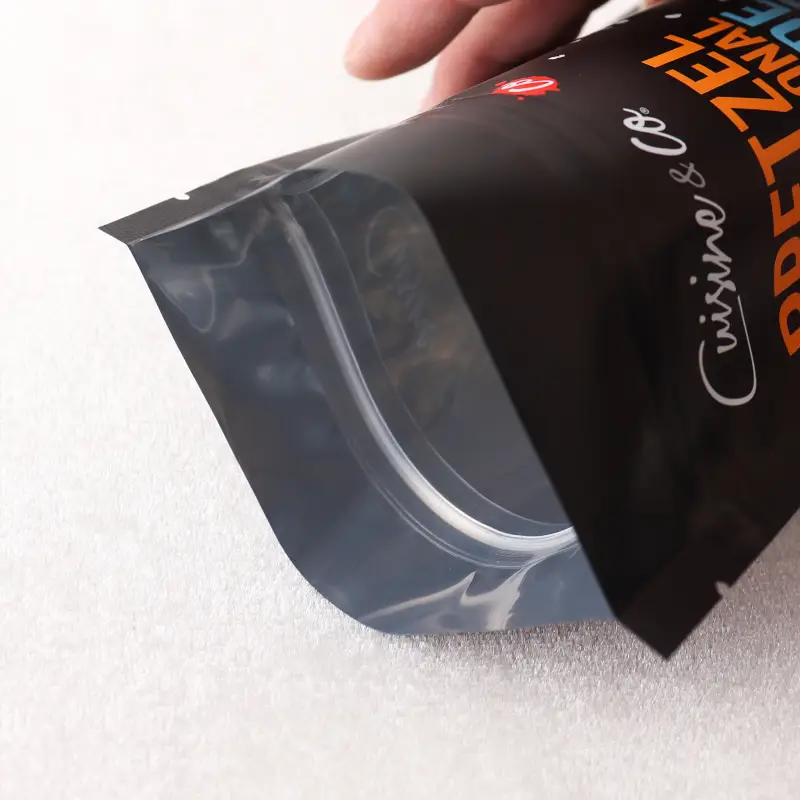
Mylar is a brand name for biaxially-oriented polyethylene terephthalate (BoPET) film, but in the packaging industry, "mylar bag" typically refers to a multi-layer laminate structure. The most common configuration combines a polyester outer layer, an aluminum foil middle layer, and a food-safe polyethylene or polypropylene inner sealant layer.
This laminated construction is what gives mylar pouches their exceptional performance. The aluminum foil layer — typically 6 to 12 microns thick — creates a near-total barrier against oxygen, moisture, and light. The polyester layer provides structural strength and printability, while the inner sealant layer enables reliable heat sealing.
Key properties of mylar bags include:
- Oxygen transmission rate below 0.1 cc/m²/day — effectively zero permeation
- Complete light barrier — blocks UV and visible light that degrade sensitive products
- Excellent moisture barrier — aluminum foil prevents water vapor transmission
- Wide temperature tolerance — performs from -70°C to 150°C without compromising seal integrity
- Compatibility with oxygen absorbers and desiccants — essential for long-term food storage packaging
These characteristics make mylar the material of choice when product preservation is the top priority.
What Is a Polyethylene Bag? Material Composition and Core Properties
Types of Polyethylene Used in Packaging
Polyethylene (PE) is the most widely produced plastic in the world, and it comes in several variants — each suited to different packaging applications.
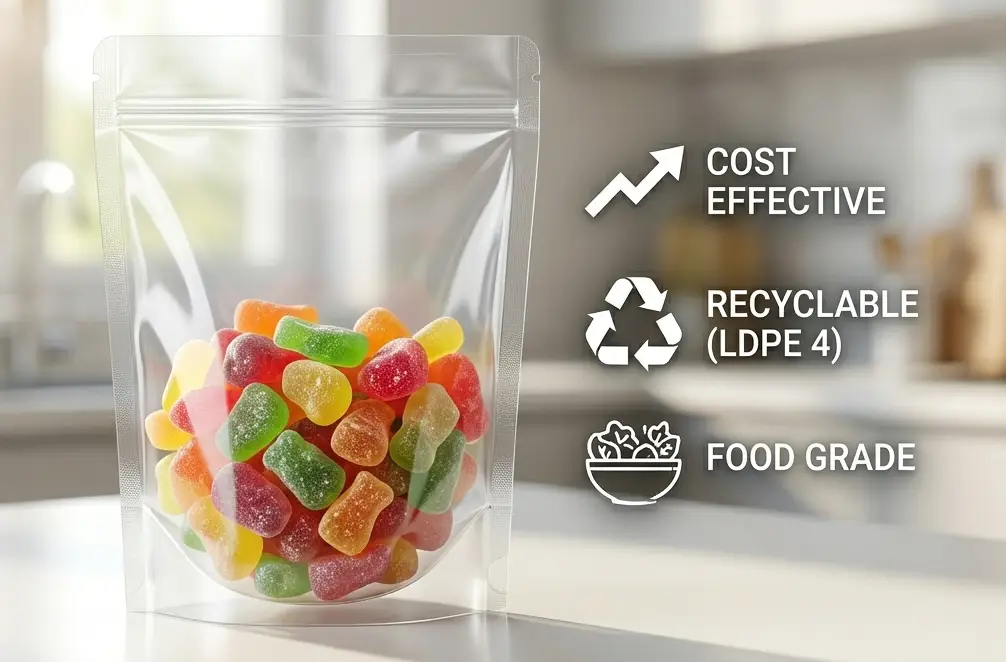
LDPE (Low-Density Polyethylene) is soft, flexible, and transparent. It's commonly used for produce bags, bread bags, and general retail packaging where pliability matters.
HDPE (High-Density Polyethylene) is stiffer and more puncture-resistant. You'll find it in grocery bags, industrial liners, and heavier-duty applications that demand structural integrity.
LLDPE (Linear Low-Density Polyethylene) offers a balance of stretch, strength, and sealability. It's frequently used in stretch wraps, heavy-duty bags, and multi-layer film structures where performance needs to exceed standard LDPE.
Key Performance Characteristics of Polyethylene Bags
Polyethylene bags offer several practical advantages that make them ubiquitous in packaging:
- High flexibility and conformability — wraps around irregular shapes without cracking
- Excellent clarity and transparency — allows full product visibility at point of sale
- Good chemical resistance — resists acids, bases, and most solvents
- Moderate moisture barrier — adequate for short-term protection
- Reliable heat seal compatibility — seals cleanly at relatively low temperatures
- Low material cost per unit — highly economical at scale
However, polyethylene has significant limitations. It provides virtually no oxygen barrier, no light protection, and limited puncture resistance compared to laminated structures. For products vulnerable to oxidation or photodegradation, polyethylene alone is insufficient.
Mylar Bag vs Polyethylene Bag — Head-to-Head Comparison
Barrier Properties Comparison Table
The following table presents a direct comparison of the critical performance parameters that matter most for packaging procurement decisions:
| Property | Mylar Bag (Foil Laminate) | Polyethylene Bag (LDPE/HDPE) |
|---|---|---|
| Oxygen Barrier | Excellent (<0.1 cc/m²/day) | Poor (500–800 cc/m²/day) |
| Moisture Barrier | Excellent | Moderate to Good |
| Light Barrier | Complete (opaque/foil) | None (transparent) |
| Puncture Resistance | High | Moderate |
| Heat Sealability | Excellent | Excellent |
| Flexibility | Moderate | High |
| Transparency | Limited (unless clear mylar) | Full |
| Temperature Tolerance | -70°C to 150°C | -50°C to 80°C |
| Shelf Life Extension | 3–25+ years (depending on contents) | Weeks to months |
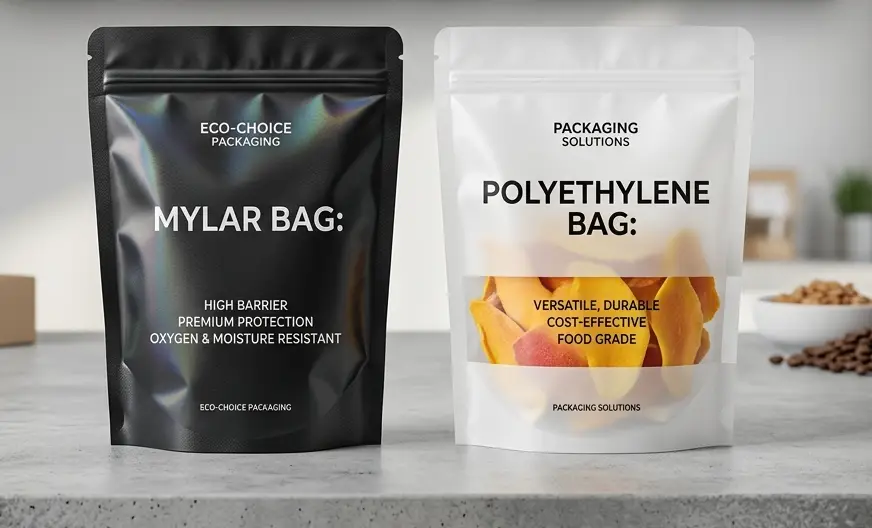
The data tells a clear story: mylar dominates in barrier performance, while polyethylene wins on flexibility, transparency, and cost per unit.
Durability and Shelf Life Performance
For businesses storing or shipping products over extended periods, the difference in shelf life performance is dramatic. Mylar's aluminum layer creates what's essentially an impermeable envelope. When combined with oxygen absorbers, mylar pouches can preserve freeze-dried food, coffee, grains, and dehydrated products for 5 to 25+ years without measurable degradation.
Polyethylene, by contrast, allows continuous oxygen exchange through the film wall. Even sealed polyethylene bags permit enough gas transmission to cause noticeable oxidation within weeks for sensitive products. This makes PE suitable for distribution cycles measured in days or weeks — not months or years.
For businesses in the food storage packaging space, this distinction often determines whether customers receive a premium product or a compromised one.
Cost and Scalability Considerations
Polyethylene offers a lower per-unit material cost, which makes it attractive for high-volume applications where barrier performance isn't critical. For businesses packaging millions of units per year in retail or e-commerce, the savings are substantial.
However, smart procurement teams evaluate total cost of ownership — not just unit price. Mylar's higher material cost is frequently offset by:
- Reduced product spoilage and waste
- Fewer customer returns and complaints
- Extended shelf life reducing inventory pressure
- Enhanced brand perception justifying premium product pricing
When you factor in the cost of a single product recall or a wave of negative reviews caused by degraded product quality, the "premium" for mylar often pays for itself many times over.
Sustainability and Regulatory Compliance
Both materials present sustainability challenges, but in different ways. Polyethylene is more widely accepted in existing recycling streams — particularly HDPE, which carries a #2 recycling code recognized by most municipal programs.
Multi-layer mylar bags, because they combine polyester, aluminum, and polyethylene, require specialized recycling infrastructure that isn't universally available. However, the packaging industry is investing heavily in mono-material laminates and recyclable barrier films that aim to replicate mylar's performance in a recyclable format.
Businesses should also track evolving regulations — including Extended Producer Responsibility (EPR) laws gaining traction in North America and Europe — and factor compliance costs into long-term packaging strategies.
Best Applications for Mylar Bags in Business Packaging
Long-Term Food Storage and Emergency Preparedness
Mylar pouches are the gold standard for freeze-dried meals, whole coffee beans, ground spices, rice, grains, and dehydrated fruits and vegetables. When paired with oxygen absorbers, these bags create a modified atmosphere that halts oxidation and microbial growth.
The emergency preparedness market — including MREs, survival food kits, and bulk grain storage — relies almost exclusively on mylar for multi-year shelf stability. If your business serves this segment, mylar isn't optional; it's required.
Pharmaceutical and Supplement Packaging
Moisture-sensitive products like vitamins, probiotics, protein powders, and nutraceuticals demand the barrier integrity that only foil-laminate structures provide. Even small amounts of moisture ingress can cause tablet degradation, caking, or potency loss.
Medical device packaging also leverages mylar's barrier properties to maintain sterility over extended storage periods. For these applications, supplier certifications — including FDA compliance and ISO standards — are non-negotiable.
Cannabis, Specialty, and High-Value Product Packaging
The legal cannabis industry has driven significant innovation in mylar pouch design. Key requirements include:
- Odor barrier — aluminum layer prevents scent transmission
- Child-resistant closures — regulatory requirement in most markets
- Custom branding — high-quality rotogravure printing for shelf appeal
- Tamper evidence — heat seal integrity provides visual confirmation of unopened product
Beyond cannabis, any high-value product — artisan foods, premium tea, specialty supplements — benefits from the perceived quality and actual protection that custom-printed mylar conveys.
Best Applications for Polyethylene Bags in Business Packaging
Retail, E-Commerce, and Shipping Applications
Poly mailers, garment bags, product wrapping, and general merchandise protection represent the highest-volume applications for polyethylene. These scenarios prioritize lightweight construction, flexibility, and cost efficiency over barrier performance.
E-commerce businesses shipping apparel, accessories, books, and non-perishable goods benefit from polyethylene's durability-to-weight ratio — it protects against physical handling without adding significant shipping cost.
Industrial and Agricultural Uses
Bulk liners, pallet covers, silage bags, and agricultural mulch films consume enormous volumes of polyethylene globally. These applications require large-format, heavy-gauge films that provide mechanical protection and moderate moisture resistance at scale.
Industrial packaging — parts bags, hardware packaging, and equipment covers — also relies on PE for its chemical resistance and conformability around irregular shapes.
Short-Term Food Packaging and Display
When product visibility drives the purchase decision, polyethylene wins. Bakery items displayed in clear bags, fresh produce in perforated PE packaging, and grab-and-go deli items all benefit from transparency that lets the product sell itself.
These applications measure shelf life in days, not years. The product moves quickly through the supply chain, and the packaging's job is protection during transit and visual appeal at the point of sale — not long-term preservation.
How to Choose the Right Bag for Your Business Needs
Decision Framework — 5 Critical Questions to Ask
Before contacting suppliers, work through these five questions to clarify your requirements:
- What is your product's primary vulnerability? — Oxygen, moisture, light, odor, or physical damage? If oxygen or light, mylar is likely required. If only physical protection, polyethylene may suffice.
- What shelf life does your supply chain require? — Days to weeks favors PE. Months to years demands mylar.
- Do you need product visibility at point of sale? — If consumers need to see the product, clear polyethylene or clear mylar with a window is the path.
- What are your volume requirements and order frequency? — Higher volumes improve unit economics for both materials, but PE scales more affordably at very high quantities.
- Are there industry-specific compliance standards? — FDA food contact, child-resistant packaging laws, or pharmaceutical packaging standards may dictate your material choice.
When to Use a Hybrid Approach
Many businesses use both materials in a complementary system. A common configuration: mylar inner pouches protect the product, while polyethylene outer bags handle shipping and handling.
For example, a coffee roaster might package individual portions in foil-laminate mylar pouches, then ship cases in heavy-duty PE bags for warehouse and logistics protection. This layered approach delivers optimal product preservation without over-engineering the outer packaging.
Multi-material laminates also offer hybrid performance — combining a PE base with a thin metallized layer to achieve moderate barrier properties at a lower cost than full foil-laminate mylar.
Customization Factors for Bulk Orders
When specifying custom packaging for volume production, these are the key variables to define:
| Customization Factor | Options Available | Impact on Performance |
|---|---|---|
| Material Thickness | 2 mil – 7+ mil | Puncture resistance, rigidity, barrier strength |
| Printing Method | Rotogravure, digital, flexographic | Color accuracy, cost at volume, lead time |
| Closure Type | Zip-lock, tear notch, heat seal, spout | Consumer convenience, resealability, tamper evidence |
| Finish | Matte, gloss, soft-touch, kraft paper laminate | Brand perception, shelf appeal |
| Bag Style | Stand-up pouch, flat pouch, gusseted, three-side seal | Shelf presence, fill volume, storage efficiency |
| Special Features | Degassing valve, window, hang hole, child-resistant | Product-specific functionality |
Specifications should always be tailored to your product's actual requirements. A reliable packaging partner will help you avoid over-engineering (unnecessary cost) and under-engineering (product risk) by recommending the right combination of materials and features for your application.
Common Mistakes Businesses Make When Selecting Packaging
Over-Engineering vs Under-Engineering
Choosing mylar when polyethylene would perform perfectly well wastes money on every unit produced. If you're packaging non-perishable hardware or shipping apparel, foil-laminate pouches add cost without adding value.
Conversely, choosing polyethylene for oxygen-sensitive products — coffee, supplements, dried foods — is a false economy. The savings on packaging are quickly consumed by product spoilage, shortened shelf life, customer complaints, and brand damage that takes years to repair.
Match the material to the actual threat profile of your product. Nothing more, nothing less.
Ignoring Total Cost of Ownership
A simple framework for evaluating true packaging cost:
| Cost Factor | Cheap Packaging (Under-Engineered) | Right-Fit Packaging |
|---|---|---|
| Unit Material Cost | Lower | Moderate to Higher |
| Product Spoilage Rate | 5–15% | <1% |
| Customer Return Rate | Higher | Minimal |
| Brand Reputation Impact | Negative reviews accumulate | Positive, premium perception |
| Effective Cost Per Delivered Unit | Often higher after losses | Predictable and optimized |
Procurement teams that evaluate packaging purely on unit price often end up spending more in aggregate. Factor in spoilage, returns, and brand equity when making your decision.
Neglecting Compliance and Testing
Every packaging material that contacts food, supplements, or pharmaceutical products must meet regulatory standards. In the United States, FDA food-contact compliance is mandatory. Internationally, standards vary by market.
Always request from your supplier:
- FDA food-contact compliance documentation
- Material safety data sheets (MSDS)
- Barrier property test reports (ASTM standards)
- Manufacturing facility certifications (ISO 22000, HACCP, etc.)
Working with certified manufacturers eliminates the risk of non-compliant materials entering your supply chain — a risk that can result in product recalls, fines, and permanent brand damage.
Why Businesses Trust YLTPACK for Custom Packaging Solutions
Since 2005, YLTPACK has manufactured custom mylar bags, polyethylene packaging, and specialty pouches for businesses across food, supplement, cannabis, and industrial sectors worldwide. With nearly two decades of production experience, we understand that every product has unique protection requirements — and every business has unique volume, branding, and compliance needs.
Here's what sets YLTPACK apart:
- Fully customized production — every order is tailored to your exact specifications (size, material, thickness, printing, closure type, and finish)
- Certified quality — ISO 22000 and FDA compliant manufacturing ensures food-safe, regulation-ready packaging
- Free samples available — evaluate material quality, print accuracy, and seal integrity before committing to a production run
- Scalable capacity — from initial trial orders to large-volume ongoing production
- Expert guidance — our team helps you select the right material structure for your product's specific barrier and shelf life requirements
Ready to discuss your packaging requirements? Reach out to our team at [email protected] for a consultation and free sample request.
Frequently Asked Questions
Are mylar bags food safe?
Yes. Food-grade mylar bags with appropriate inner sealant layers (typically food-safe polyethylene or polypropylene) meet FDA requirements for direct food contact. The key is sourcing from a manufacturer that holds proper certifications. Always verify that your supplier provides FDA compliance documentation and manufactures in a facility certified to standards like ISO 22000. At YLTPACK, all food-contact packaging meets these requirements.
Can polyethylene bags be heat sealed like mylar pouches?
Yes — both materials are heat sealable bags, and both produce strong, reliable seals. The primary difference is temperature. Polyethylene seals at lower temperatures (typically 120–150°C), while mylar laminates require higher heat (160–200°C) due to the multi-layer structure. If you're running both materials on the same packaging line, ensure your sealing equipment is adjustable to accommodate both ranges.
Which bag is better for long-term food storage packaging?
Mylar bags with oxygen absorbers are the industry standard for long-term storage — achieving preservation windows of 1 to 25+ years depending on the product. Polyethylene lacks the oxygen and light barrier properties needed for extended preservation. If your product needs to maintain quality beyond a few weeks, a mylar pouch is the correct choice. For short-term retail distribution where product turns over quickly, polyethylene is perfectly adequate.
Can I get custom-printed mylar bags for my brand?
Absolutely. Custom printing via rotogravure or digital methods is standard for bulk orders. Options include full-color CMYK artwork, spot colors, matte or gloss finishes, soft-touch coatings, and clear window cutouts that allow product visibility while maintaining barrier properties on the remaining surface area. YLTPACK offers full-service design support and free printed samples so you can approve artwork before production begins.
What is the minimum order quantity for custom packaging?
Minimum order quantities vary based on material type, bag dimensions, and customization complexity (particularly printing). Simpler configurations with standard sizes may have lower minimums, while fully custom rotogravure-printed pouches typically require larger runs to justify plate production costs. The best approach is to contact your supplier with your exact specifications — including target size, material, print colors, and closure type — to receive an accurate quote. Reach out to YLTPACK at [email protected] with your requirements, and our team will provide MOQ guidance along with free samples for evaluation.
Final Takeaway
The choice between mylar and polyethylene isn't about which material is "better" in absolute terms — it's about which material is right for your product, your supply chain, and your customer expectations. Mylar delivers unmatched barrier protection for sensitive, high-value, or long-shelf-life products. Polyethylene delivers cost efficiency, transparency, and flexibility for high-volume, short-cycle applications.
The smartest businesses match material to mission — and work with experienced manufacturing partners who can guide that decision with technical expertise, certified quality, and the flexibility to produce exactly what's needed at scale.