Why Packaging Shape Influences How Customers Perceive Your Brand
The corner spout stand up pouch has become a fascinating case study in how a small structural detail — the placement of a dispensing fitment — can shift perceived value dramatically. Over the past two decades helping brands develop their packaging, we've watched this format evolve from a niche solution into a genuine differentiator. Let's explore why.
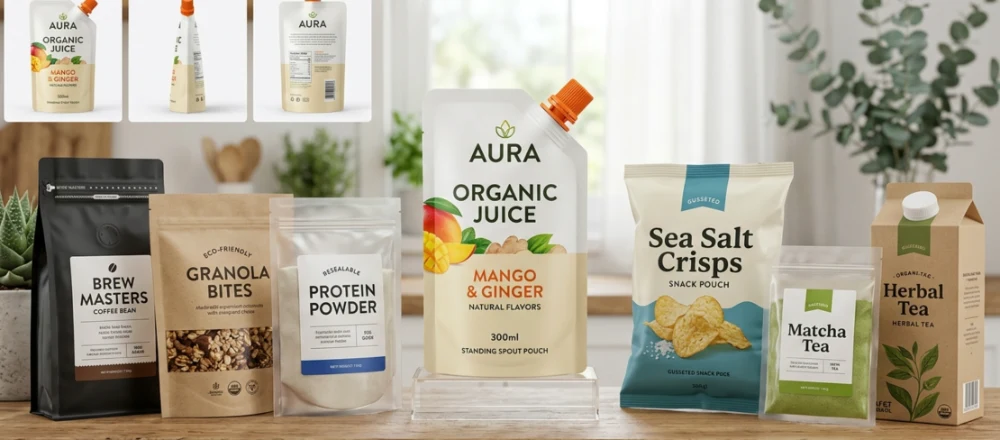
What Makes a Pouch "Look" Premium? The Psychology Behind It
Premium perception isn't about spending more money. It's about visual cues that signal intentional design. Research from the Packaging Innovation Lab at Clemson University (published in 2024) found that consumers associate three structural elements with higher quality: asymmetry, visible functionality, and tactile differentiation.
A corner-placed spout checks all three boxes. The fitment sits at an angle, breaking the visual symmetry in a deliberate way. It signals "this was designed with purpose." And when consumers pick it up, the angled dispensing point feels intuitive — like someone thought carefully about how they'd actually use it.
Visual Cues That Signal Quality
- Asymmetric design — breaks away from "generic" center-spout formats
- Clean front panel — the spout tucks to the side, giving your artwork uninterrupted space
- Structured base — the stand-up gusset creates shelf presence comparable to rigid containers
- Cap visibility — a well-designed cap in the corner acts like a visual "accent piece"
Compare this to a standard center-top spout pouch, where the fitment often competes with your logo and branding for visual attention. The corner placement solves that problem elegantly.
How Corner Spout Formats Compare to Other Pouch Styles
Not all flexible packaging carries the same shelf impact. Here's how the primary formats stack up in terms of perceived value, based on consumer feedback surveys and our own experience producing millions of units across food, beverage, and personal care categories.
| Pouch Format | Premium Perception (1-10) | Front Panel Branding Space | Dispensing Convenience | Shelf Stability |
|---|---|---|---|---|
| Flat pouch (no spout) | 3 | High | Low (tear-open) | Poor |
| Center-top spout pouch | 5 | Moderate (spout blocks top) | High | Good |
| Corner spout stand up pouch | 8 | High (unobstructed front) | High | Good |
| Rigid bottle | 7 | Wrap-around label | High | Excellent |
| Spouted doypack (side spout) | 6 | Moderate | Moderate | Good |
Notice something interesting? The corner-fitment format actually scores higher than rigid bottles on perceived premium feel. That's because consumers increasingly associate flexible packaging with modern, eco-conscious brands — and the angular spout placement reinforces that contemporary feel.
The Unboxing Factor: Why This Format Wins on Social Media
If your product gets shared on Instagram or TikTok — and in categories like cold-pressed juice, craft cocktails, or beauty serums, it almost certainly does — packaging shape directly impacts how "shareable" your product looks. Flat, generic pouches rarely make it into unboxing videos. But a well-designed pouch with a corner fitment and premium matte finish? That earns screen time.
Working with brands across North America and Europe, we've found that products in this format see measurably higher rates of user-generated content. One craft cocktail brand we produced packaging for reported a 40% increase in tagged Instagram posts after switching from standard bottles to custom printed corner spout stand up pouches with metallic accents and soft-touch lamination.
The key takeaway: structure drives storytelling. When your package has a distinctive silhouette, it becomes part of the brand narrative rather than just a container.
Liquid Packaging: Where This Format Truly Shines
Let's talk functionality. A corner spout stand up pouch for liquid packaging isn't just about looks — it solves real pouring problems. The angled dispensing point gives users more control, reduces dripping, and allows for a smoother flow rate compared to top-center alternatives.
This matters enormously in categories like:
- Cold-pressed juices — where consumers pour small servings and reseal
- Craft sauces and marinades — where controlled dispensing prevents waste
- Baby food and nutritional supplements — where precision matters
- Cocktail mixers and wine — where the "pour ritual" is part of the experience
Because we hold FDA and ISO 22000 certifications, we often recommend this format for brands in food and beverage categories where safety compliance is non-negotiable. The sealed fitment provides tamper-evidence, and the structure supports barrier films that protect against oxygen and UV degradation — critical for preserving flavor integrity in products like cold-brew coffee or fresh juice.
Does Premium Perception Actually Translate to Higher Sales?
This is the question every brand decision-maker really wants answered. The short answer: yes, but with nuance.
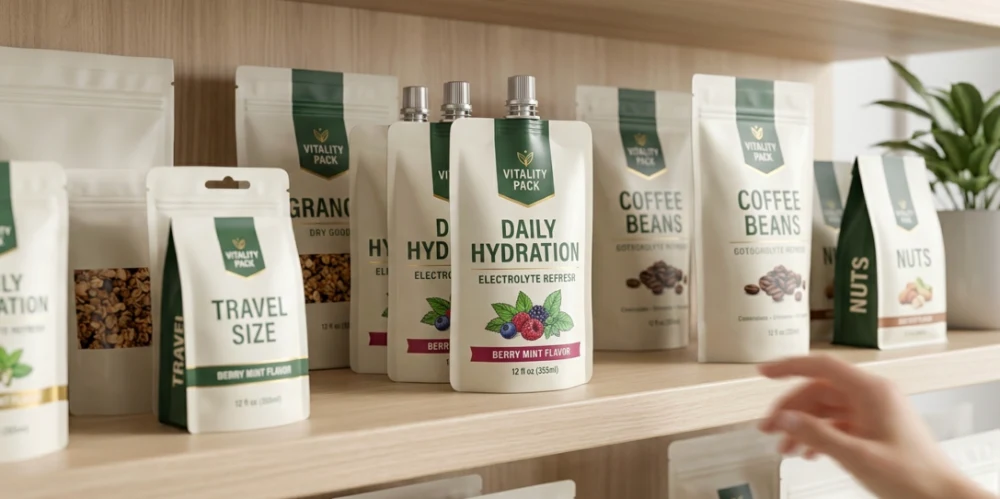
A 2025 study by Smithers Pira on flexible packaging trends found that products in "structurally differentiated" pouches commanded an average 12-18% price premium over identical products in standard packaging. Consumers reported willingness to pay more because the packaging "looked like it contained a higher-quality product."
Where the Premium Effect Is Strongest
- New-to-shelf products — where no brand recognition exists yet and packaging must do all the talking
- Direct-to-consumer brands — where the package IS the first physical brand touchpoint
- Gift-oriented products — where presentation justifies the purchase price
- Health and wellness categories — where consumers equate packaging quality with product purity
For brands sourcing from a corner spout stand up pouch wholesale supplier, the per-unit cost difference between a basic pouch and one with a corner fitment is modest when ordered in bulk. The perceived value increase far outweighs the structural upgrade cost — making the ROI calculation straightforward.
Sustainability and Premium: They're No Longer Opposites
Here's where things get exciting. Five years ago, "premium" and "sustainable" were often at odds in packaging. Brands had to choose between looking upscale and being eco-responsible. That tension has largely dissolved.
Today's consumers — particularly in the 25-45 demographic that drives most premium food and beverage purchases — view sustainability itself as a premium attribute. An eco-friendly corner spout stand up pouch with cap made from recyclable mono-material films communicates both quality and responsibility simultaneously.
In our 6,800㎡ cleanroom facility, we've invested heavily in mono-PE and mono-PP film structures that maintain barrier performance while being fully compatible with existing recycling streams. The corner spout format adapts well to these sustainable materials because the structural rigidity comes from the gusset design, not from multi-layer laminations that complicate recycling.
Sustainability Features That Enhance Perceived Value
| Feature | Environmental Benefit | Consumer Perception Boost |
|---|---|---|
| Mono-material construction | Recyclable in standard streams | "This brand cares about the planet" |
| Reduced material weight vs. bottles | 75% less plastic per unit | "Modern and efficient" |
| Reusable spout and cap design | Encourages refill behavior | "Thoughtfully designed for me" |
| Plant-based inks and coatings | Lower VOC emissions | "Clean and natural" |
A reusable corner spout stand up pouch for beverages isn't just an eco-claim — it's a tangible experience that consumers interact with daily. Every time they refill or reseal, it reinforces the brand's quality positioning.
Design Choices That Maximize the Premium Effect
The format alone doesn't guarantee premium perception. How you design within the format matters just as much. Our in-house design team often helps brands who only have a rough concept transform it into shelf-ready artwork. Here's what consistently elevates perceived quality:
Structural Decisions
- Cap color matching — coordinate the spout cap with your brand palette rather than using generic white
- Spout diameter selection — larger spouts (16mm+) suit viscous products; smaller spouts (10mm) feel more refined for beverages
- Gusset depth — a wider base creates a more substantial shelf footprint
- Film gauge — slightly thicker films create a tactile "quality" sensation in the hand
Graphic and Finishing Choices
- Matte lamination with spot gloss — creates depth and visual contrast that photographs beautifully
- Metallic or holographic accents — draws the eye to key brand elements
- Minimalist design with generous white space — signals confidence and sophistication
- Transparent windows — lets the product color speak for itself (powerful for juices and sauces)
One pattern we notice repeatedly: brands that invest in custom finishes on this format see disproportionate returns compared to the same finishes on standard pouches. The angular shape amplifies visual interest because light hits the surfaces at varying angles, making metallic and matte effects more dynamic.
Common Mistakes Brands Make When Choosing This Format
As a manufacturer that has produced packaging for over 20 years, we've seen certain pitfalls come up again and again. Here's what to watch for:
Mistake 1: Ignoring Fill Orientation
The corner fitment means your filling line needs to accommodate the pouch at an angle or use specialized fixtures. This isn't complicated, but it requires planning with your co-packer early — not after you've ordered 50,000 units.
Mistake 2: Overcomplicating the Design
The pouch shape itself is already distinctive. You don't need to add every possible embellishment. Some of the most striking results we've produced use just two colors and generous negative space, letting the structure do the heavy lifting.
Mistake 3: Choosing the Wrong Cap
A flimsy or poorly colored cap undermines the entire premium impression. The cap is what consumers touch first — it needs to click satisfyingly, seal securely, and align with your brand aesthetic.
Mistake 4: Skipping Prototype Testing
Always request physical samples before committing to a production run. How a design looks on screen versus how it feels in hand are two different conversations. Reputable suppliers will provide pre-production samples for this exact reason.
Industry-Specific Applications: Where This Format Excels
Different product categories benefit from this packaging format in different ways. Here's how we see it performing across the categories we serve most frequently:
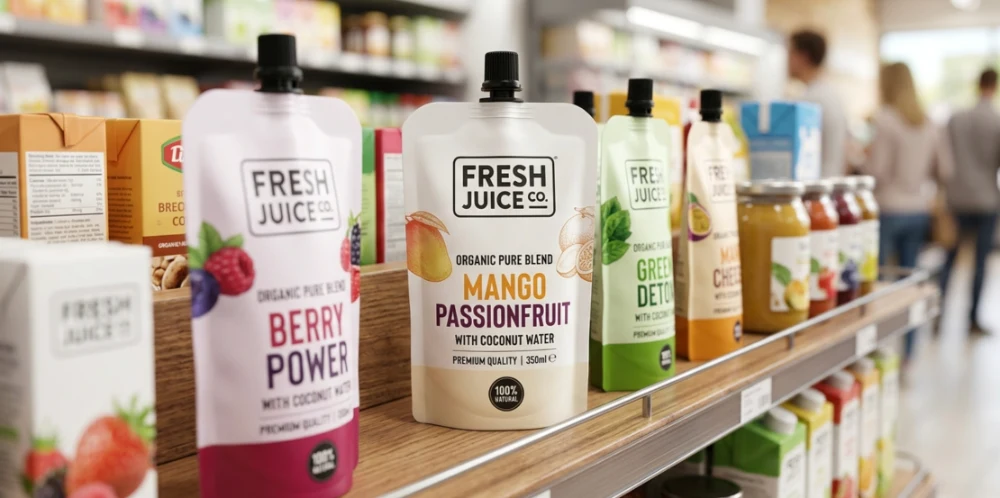
Craft Beverages and Cold-Press Juices
The controlled pour is essential here. Juice consumers often pour partial servings and reseal — and they expect zero leakage. The resealable spout pouch bags format delivers on that promise. Plus, the lightweight structure reduces shipping costs significantly compared to glass bottles, which matters when you're distributing nationally.
Sauces, Condiments, and Marinades
Viscous products benefit from the angled dispensing point because gravity assists the flow. Brands in this space also love the unobstructed front panel for recipe photography and serving suggestions that drive purchase intent.
Baby Food and Nutritional Products
Parents are hypersensitive to packaging quality. A structured pouch with a secure, tamper-evident cap communicates safety without saying a word. The stand-up format also makes it easy to store in refrigerator doors — a practical detail that parents appreciate.
Beauty and Personal Care Serums
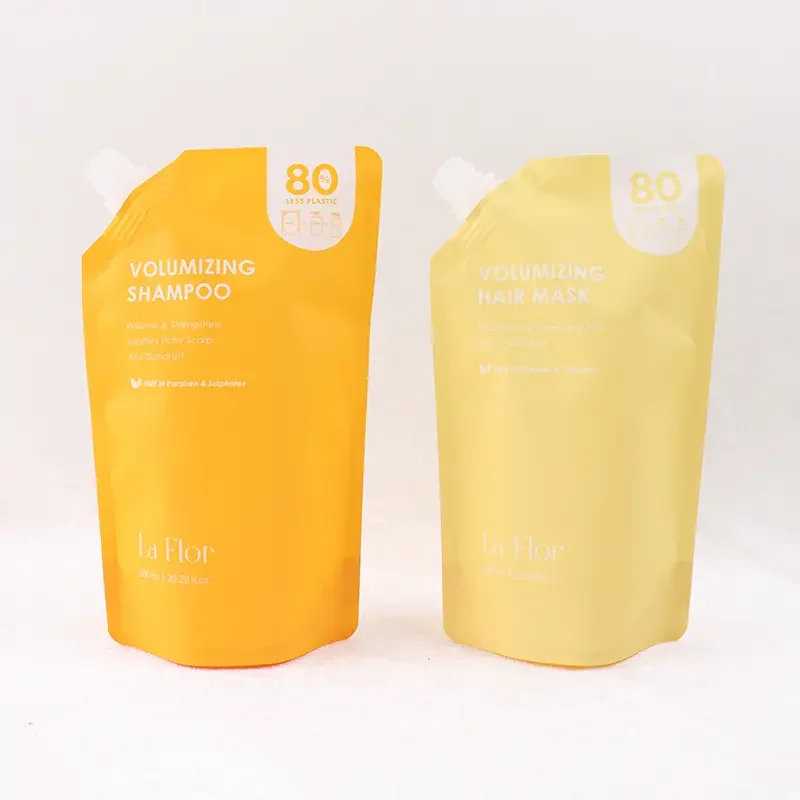
This is where the Instagram factor peaks. A sleek liquid pouch packaging format with matte black finishing and rose-gold cap accents creates an aesthetic that beauty consumers actively want to photograph and share. We've seen several skincare brands successfully use this format for sheet mask essences and hair treatment products.
How to Evaluate Suppliers for This Packaging Format
Choosing the right manufacturing partner is arguably more important than the design itself. A poorly produced premium format actually damages brand perception worse than a well-executed simple pouch. Here's a practical evaluation checklist:
| Evaluation Criteria | What to Ask | Why It Matters |
|---|---|---|
| Spout attachment method | Ultrasonic welding or heat sealing? | Affects leak rate and seal integrity |
| Film sourcing | In-house printing or outsourced? | Controls quality consistency and lead time |
| Certifications | FDA, ISO 22000, BRC? | Required for food-contact products in most markets |
| MOQ flexibility | Can you order test runs of 5,000-10,000 units? | Reduces risk for new product launches |
| Design support | Do they offer structural dieline templates? | Prevents costly artwork revisions |
| Sample turnaround | How long from artwork approval to physical sample? | Indicates production agility |
At YLTPAC, we provide full structural dieline templates, Pantone color matching, and pre-production samples as standard — because we've learned that investing in the proofing stage eliminates the vast majority of production issues downstream.
The Verdict: Does the Corner Spout Format Genuinely Look More Premium?
After two decades in packaging manufacturing and working with hundreds of brands across food, beverage, personal care, and household categories, our answer is an unequivocal yes — but with an important qualifier.
The format creates premium potential. It gives your brand an architectural advantage. But that potential needs to be activated through thoughtful design choices: the right film finish, appropriate cap selection, considered color palette, and clean artwork that lets the structure shine.
When those elements come together, this format consistently outperforms center-spout alternatives and even rigid containers in consumer perception testing. It's the rare packaging choice that simultaneously improves aesthetics, functionality, sustainability credentials, and shelf differentiation.
For brands looking to elevate their product positioning without the cost and environmental burden of rigid packaging, flexible packaging with corner spout placement represents one of the most effective tools available today.
Frequently Asked Questions
Is a corner spout pouch more expensive than a regular stand-up pouch?
The addition of a fitment does add a modest per-unit cost compared to a basic three-side-seal pouch. However, when ordered in production quantities (typically 10,000+ units), the cost difference narrows significantly. Most brands find that the perceived value increase and reduced product waste (from better pouring control) more than justify the investment. Exact pricing depends on film structure, size, cap type, and print complexity — which is why custom quoting based on your specific requirements gives the most accurate picture.
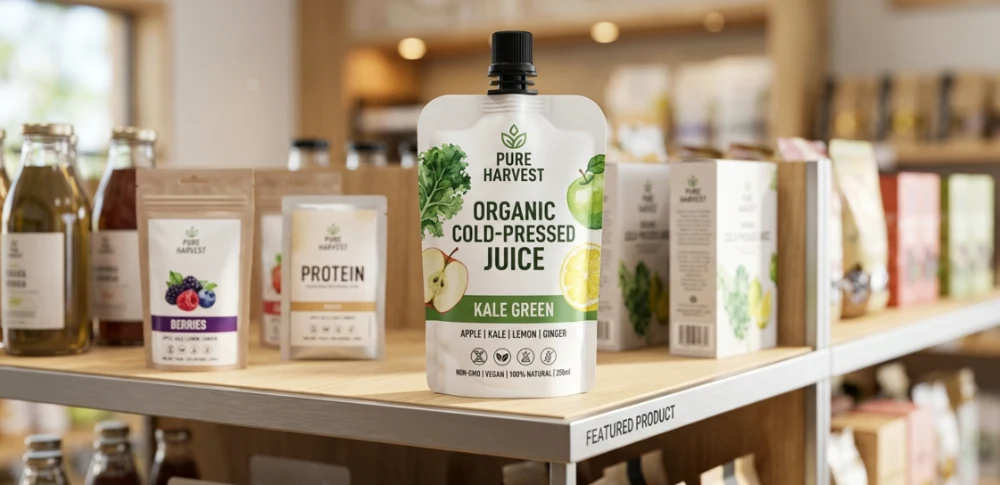
What products are best suited for a stand up pouch with dispensing spout in the corner?
This format works exceptionally well for pourable liquids and semi-viscous products: juices, smoothies, sauces, wine, cocktail mixers, liquid supplements, baby food purees, hair and skincare serums, and cleaning concentrates. The key requirement is that your product needs controlled dispensing and resealability. If your product is a dry powder or solid, other stand-up pouch configurations will serve you better.
Can I use this format for hot-fill products?
Yes, but it requires specific film structures and spout materials rated for elevated temperatures. Standard PE spouts handle temperatures up to approximately 85°C. For products filled above that threshold, PP-based fitments and heat-resistant laminate structures are necessary. This is something your packaging supplier should specify during the quoting process — and it's one reason why working with a manufacturer experienced in food-grade flexible packaging matters.
How does the corner fitment stand up bag perform during shipping?
Remarkably well. The flexible structure absorbs impact rather than shattering (unlike glass), and the sealed spout prevents leakage even under compression. We recommend burst-testing and drop-testing during the sampling phase to confirm performance for your specific product weight and distribution method. The stand-up gusset also allows efficient case-packing in standard corrugated shippers, which optimizes pallet configurations and reduces freight costs.
What minimum order quantities should I expect for custom-designed pouches in this format?
MOQs vary by supplier, but most established manufacturers require 10,000 to 20,000 units per SKU for fully custom-printed orders. Some suppliers, including YLTPACK, offer lower MOQs for initial test runs to help brands validate market response before committing to larger production volumes. When evaluating suppliers, ask whether they offer flexible MOQ tiers — and whether design and plate costs are amortized across reorders or charged upfront. This detail significantly impacts your total cost for the first order versus subsequent replenishment runs.
Ready to Explore This Format for Your Brand?
If you're considering an upgrade to a more premium pouch structure — or launching a new product line and want packaging that earns attention from the first glance — we'd love to help you think through the options. YLTPACK's design team can walk you through film choices, fitment styles, and finishing options based on your specific product requirements and target market positioning.
Reach out to start the conversation:
- WhatsApp: +86 182 1944 5665
- Email: [email protected]
Whether you have polished artwork ready to go or just a rough concept on a napkin, we'll help you get from idea to production-ready packaging that makes your product look as good as it tastes, performs, or feels.