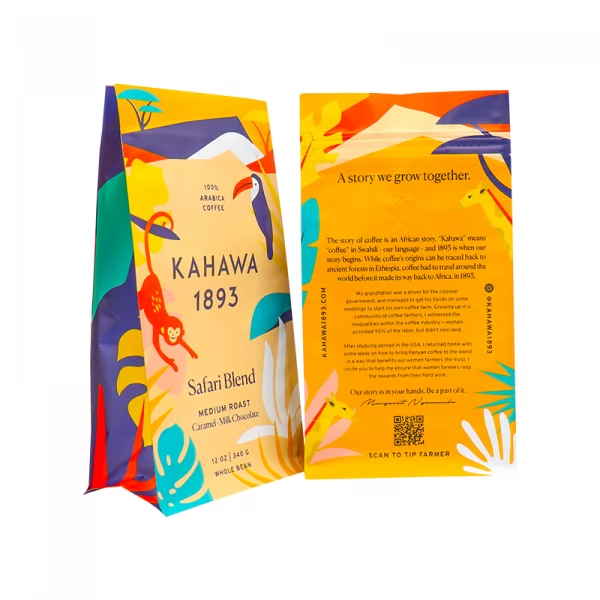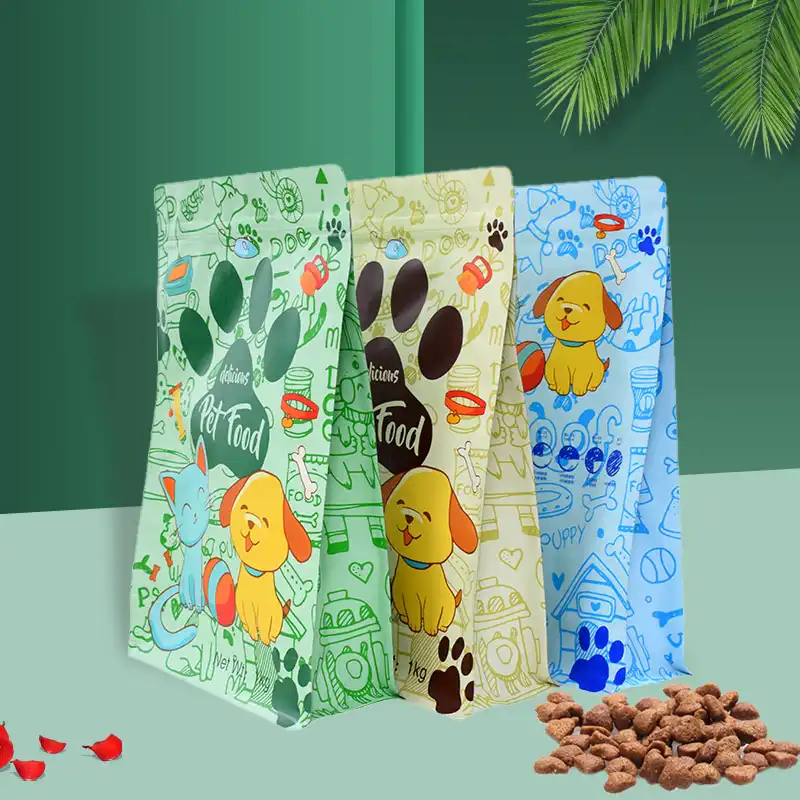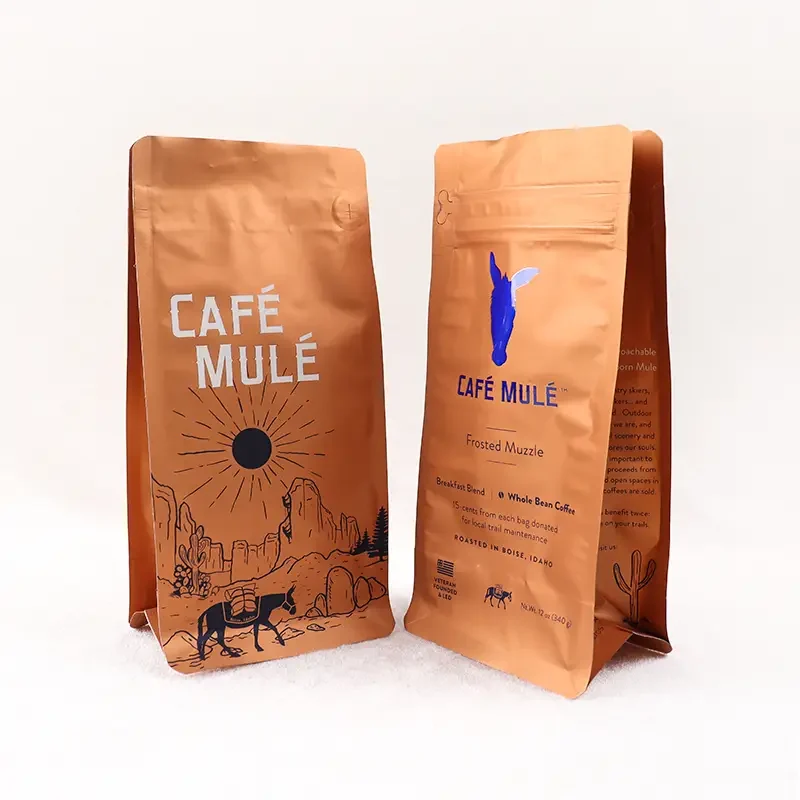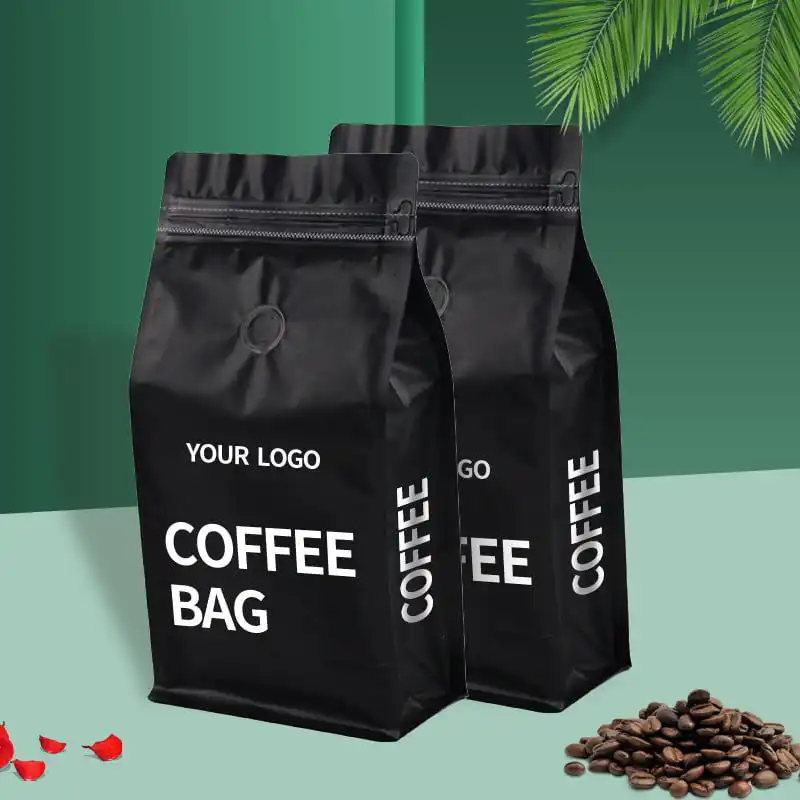
If you're standing at the crossroads of coffee packaging and just want a straight answer, here it is: flat bottom bags look premium and stand tall on the shelf, stand up pouches give you the best balance of cost and flexibility, and side gusset bags are the classic, budget-friendly workhorse. Your ideal pick depends on how you sell, how fast you turn over stock, and the story you want your packaging to tell.
That's the short version. Now let's dig into the real decision-making, because choosing the wrong bag can quietly cost you flavor, shelf appeal, and margin. This best coffee bag styles comparison walks you through each option with the practical trade-offs that actually matter.
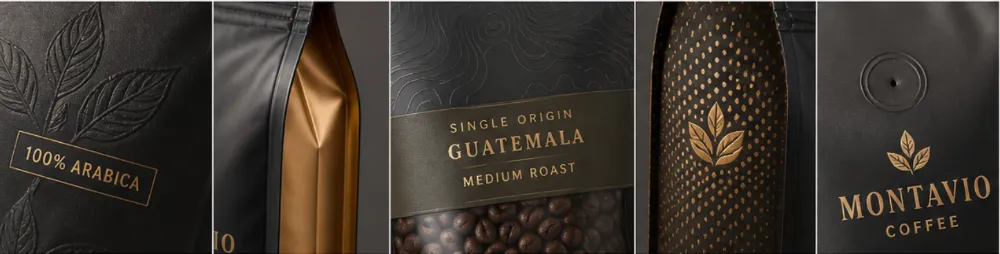
The 30-Second Snapshot
Before we get into the weeds, here's how the three formats stack up at a glance. Think of this as your cheat sheet.
| Style | Shelf Presence | Cost Level | Best For | Typical Fill Range |
|---|---|---|---|---|
| Flat Bottom (Box Pouch) | Premium, structured, 5 printable panels | Higher | Specialty & retail-focused brands | 250g – 1kg |
| Stand Up Pouch | Good, flexible, 2 main panels | Moderate | Growing brands, online sales | 100g – 500g |
| Side Gusset | Traditional, tall & narrow | Lower | High-volume, classic look | 250g – 1kg+ |
Notice there's no single winner. The right answer is the one that fits your product, your channel, and your customer. Let's unpack why.
Why Bag Style Isn't Just About Looks
Here's something a lot of new roasters overlook: the shape of your bag directly affects how long your coffee stays fresh. Roasted beans release carbon dioxide for days after roasting, and oxygen is the enemy of aroma. The wrong structure or the wrong barrier film can flatten your flavor within weeks.
So when you're weighing your options, you're really juggling three things at once:
- Oxygen barrier — keeps outside air out and locks flavor in
- Degassing capability — lets fresh-roast CO2 escape without letting oxygen back in
- Shelf and hand appeal — how it looks stacked, and how it feels to a customer
Working with roasters across North America, we've found that the most common mistake is picking a bag purely on price, then discovering the beans taste dull by the time they reach the customer. Structure and materials matter as much as the print.
Flat Bottom Bags: The Premium Statement
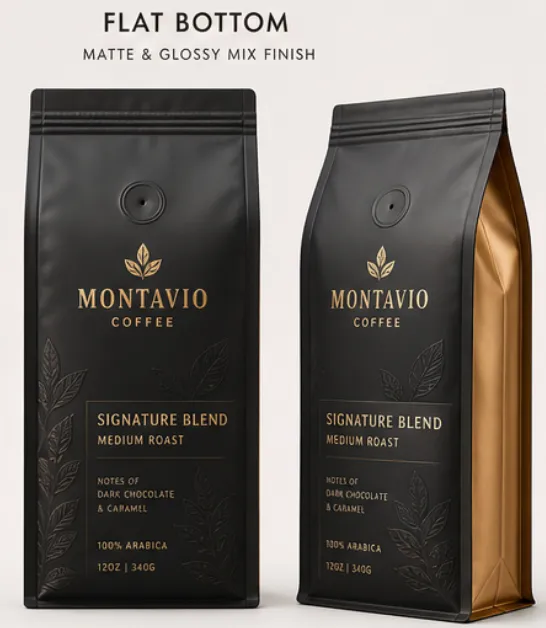
Also called box pouches, flat bottom bags do exactly what the name suggests: they stand on a rigid, rectangular base. That flat footing gives them a boxy, upright posture that reads as high-end the moment it hits a shelf.
Where they shine
These bags have five printable surfaces, including two side panels, front, back, and bottom. That's a lot of real estate for your brand story, origin details, and tasting notes. For specialty roasters selling in cafes and boutique grocery, this format signals quality before a customer even reads the label.
The trade-offs
They cost more per unit and typically need a slightly higher minimum order to justify the tooling. They also work best at 250g and above; smaller fills can look a little lost in the structure. If your brand lives on the shelf and you want to project craft, though, the premium is usually worth it.
Real talk: flat bottom bags photograph beautifully. If your customers share unboxings or your product appears in lifestyle shots, that structured shape earns its keep.
Stand Up Pouches: The Flexible All-Rounder
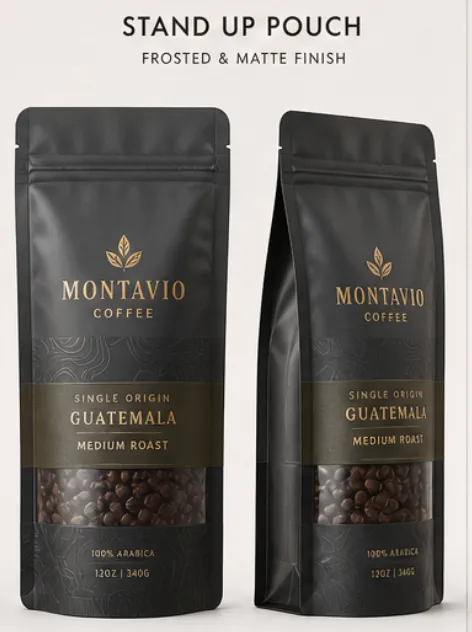
If flat bottom is the tailored suit, the stand up pouch is your reliable smart-casual outfit. It stands upright thanks to a bottom gusset, opens wide, and adapts to almost any volume you throw at it.
Why brands love it
It hits a sweet spot on cost, print quality, and versatility. It's lightweight, ships flat before filling, and pairs naturally with a resealable zipper. For direct-to-consumer sellers and subscription boxes, that combination of shelf stability and easy reseal is hard to beat.
For coffee bag packaging styles for small roasters just finding their footing, this format is often the smartest starting point. Lower entry barriers, flexible sizing, and a look that still feels considered. Our in-house design team often helps brands who only have a rough logo idea turn it into a clean, retail-ready pouch layout.
Keep in mind
At larger fills like 1kg, a stand up pouch can look a touch floppy compared to a rigid box bag. For everyday retail sizes between 100g and 500g, though, it's genuinely versatile.
Side Gusset Bags: The Timeless Classic
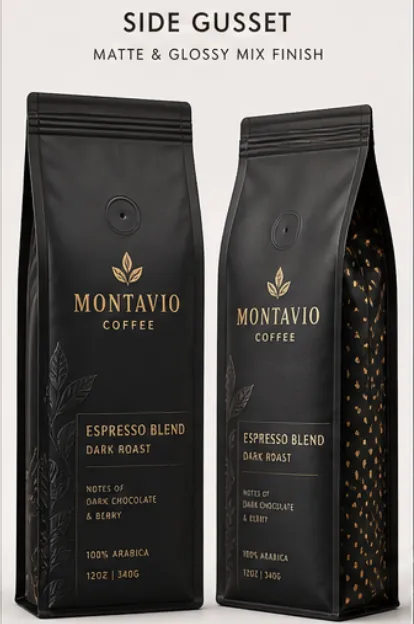
This is the bag most people picture when they think "coffee." Tall, narrow, with folded pleats on both sides that expand as you fill it. It's been the industry standard for decades, and for good reason.
The strengths
Side gusset bags are cost-efficient at volume, hold generous quantities, and carry that nostalgic, artisan roaster vibe. They pair perfectly with a tin-tie top or a one-way valve, and they stack neatly in bulk.
The limitations
They don't stand as confidently as the other two without support, and their front panel is narrower, which gives you less prime branding space. When you're weighing flat bottom vs side gusset coffee bags specifically, it often comes down to this: do you want maximum shelf drama, or proven efficiency at scale?
Side-by-Side: The Freshness and Function Breakdown
Since preserving aroma is the whole point, here's a best coffee bag styles for freshness comparison focused on the features that actually protect your beans.
| Feature | Flat Bottom | Stand Up Pouch | Side Gusset |
|---|---|---|---|
| One-way valve support | Yes | Yes | Yes |
| Resealable zipper option | Yes | Yes (most common) | Tin-tie or zipper |
| Branding surface area | Largest (5 panels) | Moderate | Narrower front |
| Shelf stability (unsupported) | Excellent | Good | Fair |
| Cost efficiency at scale | Moderate | Good | Best |
The Valve Question: Small Part, Big Impact
You can pick the perfect shape and still lose freshness if you skip the degassing valve. Freshly roasted beans off-gas CO2 for up to two weeks, and without an escape route, bags puff up or, worse, burst. A one-way valve lets that gas out while blocking oxygen from sneaking in.
When comparing coffee bag valve types for aroma retention, the main considerations are the valve's seal integrity, its filter to keep coffee oils from clogging it, and whether it's mounted internally or externally. Because we hold FDA and ISO 22000 certifications, we recommend valves that meet food-contact safety standards rather than the cheapest available part, since a leaky valve quietly undoes all your barrier investment.
- External valves — easy to inspect, common on side gusset bags
- Internal valves — cleaner look, popular on premium flat bottom formats
- Filtered valves — resist oil clogging, ideal for oily dark roasts
Resealability: The Detail Customers Notice Daily
Once a bag is opened, freshness is on a countdown. A quality zipper slows that decline and, honestly, it's the feature customers interact with every single morning. That repeated touchpoint builds a quiet loyalty to your brand.
Among the best resealable coffee bag styles 2026 buyers are gravitating toward, press-to-close zippers and pocket zippers lead the pack for their reliable reseal and clean feel. Stand up pouches and flat bottom bags both handle these beautifully, while side gusset bags often lean on tin-tie closures for that classic ritual of folding the top down.
A tip from experience: pair a resealable zipper with a one-way valve, not one or the other. The valve protects the beans before opening; the zipper protects them after.
Matching the Bag to How You Actually Sell
Let's make this practical. Your sales channel should heavily influence your choice. Here's how we'd guide you based on the roasters we work with.
If you sell mostly in retail and cafes
Lean toward flat bottom. Shelf presence and premium feel do the selling for you when a customer is scanning a crowded aisle.
If you sell mostly online
Stand up pouches are your friend. They ship efficiently, resist damage, and photograph well for product listings and social posts.
If you move high volume at a value price
Side gusset delivers the classic look and the friendliest per-unit economics when you're filling thousands of bags.
Materials and Sustainability: The Rising Priority
Buyers increasingly read the back of the bag as closely as the front. Recyclable mono-material structures and compostable films have moved from niche to expected, especially among younger coffee drinkers. As a manufacturer that has produced packaging for over 20 years, we've watched this shift accelerate sharply since 2023.
The catch is that eco-friendly films sometimes offer slightly different barrier performance than traditional laminates. Our GRS certification covers recycled content options, and we test barrier performance in our 6,800㎡ cleanroom facility so brands don't have to choose between sustainability and shelf life blindly. It's a balance, and the right recipe depends on your roast profile and turnover speed.
Your Decision Checklist
Feeling closer to a decision? Run through this quick list before you commit to a format and a print run.
- What's my primary sales channel — shelf, online, or bulk?
- What fill size do I need most often?
- Do my beans need a valve for degassing? (For fresh roast, almost always yes.)
- How important is resealability to my customer experience?
- Does my brand promise sustainability, and can my film back that up?
- What order volume makes the tooling and unit economics work?
If you can answer those six questions, you're most of the way there. And if a couple of them still feel fuzzy, that's exactly the kind of thing a sample round can clear up fast.
Bringing It All Together
There's no universal champion here, and anyone who tells you otherwise is selling something. Flat bottom bags win on presence, stand up pouches win on flexibility, and side gusset bags win on value at scale. Your product, your channel, and your customer decide the rest.
If you'd like a second opinion tailored to your specific beans and volume, we're happy to talk it through, map your options, and even run samples before you commit. YLTPACK has spent two decades helping coffee brands land on packaging that protects flavor and moves product. Reach out any time on WhatsApp at +86 182 1944 5665 or by email at [email protected], and we'll help you narrow it down.
Frequently Asked Questions
Which coffee bag style keeps beans fresh the longest?
Freshness depends less on shape and more on the barrier film and valve combination. All three formats can perform equally well when paired with a high-barrier laminate and a quality one-way degassing valve. Match the material spec to your roast and turnover speed for the best results.
Do I really need a one-way valve on my coffee bags?
For freshly roasted beans, yes. Coffee releases CO2 for up to two weeks after roasting, and without a valve your bags can swell or burst. The valve vents that gas while blocking oxygen from entering, which is essential for preserving aroma.
What's the most budget-friendly option for large orders?
Side gusset bags typically offer the friendliest per-unit economics at high volume. They use less material relative to capacity and have long been the standard for roasters filling thousands of units. Exact pricing depends on size, film, and finishing, so it's best confirmed with a custom quote.
Can I get a resealable zipper on any bag style?
Mostly, yes. Stand up pouches and flat bottom bags pair naturally with press-to-close zippers. Side gusset bags often use tin-tie closures for their classic look, though zipper options exist too. Choose based on how your customer will handle the bag day to day.
How do I choose between styles if I'm just starting out?
Start with your main sales channel and typical fill size, then factor in budget and order volume. Many new roasters begin with stand up pouches for their flexibility and lower entry barrier, then add a premium flat bottom line as the brand grows. Requesting samples of a couple of formats is the fastest way to feel confident.