The Quick Answer: What Thickness Do You Actually Need?
Here's the short version so you can stop guessing. For most frozen products, the sweet spot for frozen food packaging thickness lands between 2.5 and 5 mils (roughly 63 to 125 microns). Lighter items like frozen veggies do fine at the lower end. Heavier or sharp-edged products need more.
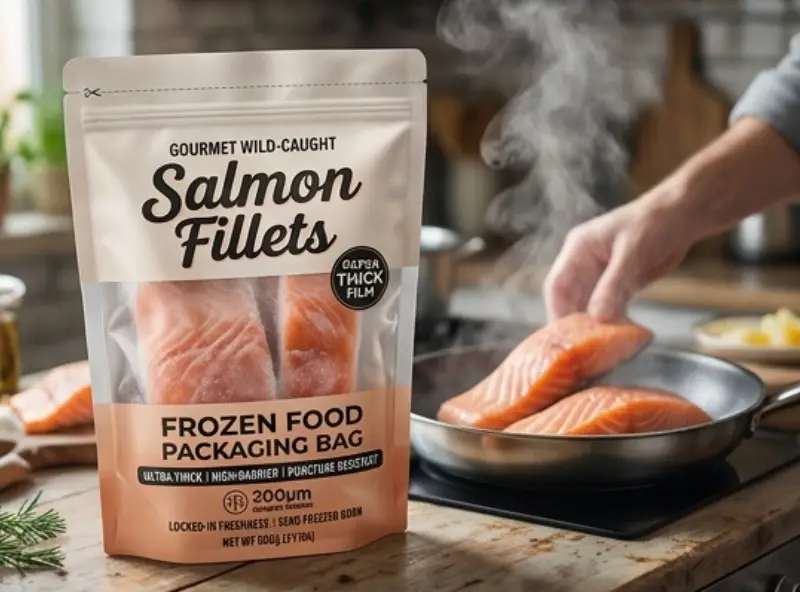
Vacuum-sealed meats and seafood usually call for 3–5 mils to resist freezer burn and punctures. Retail pouches with printing often sit around 4 mils for shelf durability. That's the rule of thumb — now let's dig into how to pick the exact right spec for your product.
Why Thickness Matters More Than You Think
Packaging that's too thin cracks in the freezer. Packaging that's too thick wastes money and hurts your margins. Neither is a good place to be.
At sub-zero temperatures, plastic films become more brittle. A film that flexes fine at room temperature can split when it's frozen solid and dropped in a warehouse.
Working with brands across North America, we've found that the most common mistake is copying a competitor's spec without knowing their product weight or supply chain. That guesswork leads to returns and complaints.
The Three Jobs Your Film Has to Do
- Protect against punctures — think chicken bones, shrimp shells, or frozen edges.
- Block moisture and air — the enemy behind freezer burn and flavor loss.
- Survive the cold chain — freezing, stacking, shipping, and thawing without failing.
How Thick Should Frozen Food Packaging Be by Product Type?
There's no single magic number — it depends on what's inside. Below is a practical starting-point guide we share when brands ask how thick should frozen food packaging be for their specific line.
| Frozen Product | Recommended Thickness (mils) | In Microns | Why |
|---|---|---|---|
| Vegetables, fruit, edamame | 2.5 – 3.0 | 63 – 76 | Light weight, low puncture risk |
| Ready meals, dumplings | 3.0 – 4.0 | 76 – 100 | Mixed contents, retail handling |
| Poultry, red meat | 3.5 – 5.0 | 89 – 125 | Bones, weight, long storage |
| Seafood, shrimp | 4.0 – 5.0 | 100 – 125 | Sharp shells, moisture control |
| Ice cream, novelties | 2.5 – 3.5 | 63 – 89 | Sealed, low puncture, print-heavy |
Notice the pattern: the heavier and sharper the contents, the more material you need. When your product includes bones or shells, err on the thicker side — the cost difference per bag is small next to the cost of a leaking package.
Microns vs. Mils: Reading the Spec Sheet
This trips up a lot of brand owners, so let's clear it up. Suppliers in different regions use different units.
- 1 mil = 25.4 microns (a mil is one-thousandth of an inch).
- North America usually quotes in mils; Europe and Asia quote in microns.
So if you're asked about frozen food packaging film thickness in microns, just multiply your mil number by roughly 25. A 4-mil bag is about 100 microns. Simple.
A Quick Conversion Reference
| Mils | Microns | Feel / Use |
|---|---|---|
| 2.0 | ~50 | Light, single-layer bags |
| 3.0 | ~76 | Standard freezer bags |
| 4.0 | ~100 | Heavy-duty retail pouches |
| 5.0 | ~125 | Vacuum meat & seafood |
It's Not Just Thickness — Material Structure Matters Too
Here's something many buyers overlook. A well-engineered multi-layer film at 3 mils can outperform a cheap single-layer film at 5 mils. Structure beats raw thickness.
The magic happens when you laminate the right layers together. Each layer has a job.
Common Layer Combinations for Frozen Goods
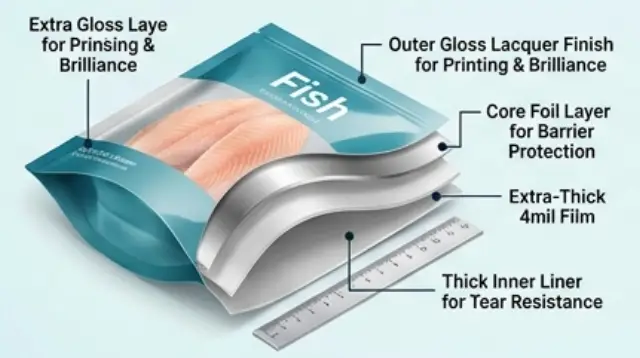
- PE (polyethylene) — the flexible, cold-resistant sealing layer.
- Nylon (PA) — adds puncture resistance and oxygen barrier; ideal for vacuum bags.
- PET — a strong printable outer layer for retail shelf appeal.
Because we hold FDA and ISO 22000 certifications, we recommend food-contact-safe PE layers that stay flexible at –20°C rather than cheaper resins that turn brittle. That single choice prevents most cold-cracking failures.
The Best Film Thickness for Frozen Food Packaging Depends on These 5 Factors
Instead of a fixed number, run your product through this checklist. It's how our engineers scope a new project.
- Product weight — heavier contents stress the seams more.
- Sharp edges — bones, shells, and frozen points demand puncture resistance.
- Storage time — longer freezer life needs a stronger moisture barrier.
- Shipping conditions — long cold-chain routes see more drops and stacking.
- Reseal or vacuum — reclosable and vacuum formats change the structure entirely.
Our in-house design team often helps brands who only have a rough idea of their product but no clear spec — we turn "I sell frozen shrimp" into a tested, buildable film structure.
Vacuum Bags: A Special Case Worth Getting Right
Vacuum sealing removes air, which slows freezer burn dramatically — but it also puts the film under tension against sharp contents. That's a puncture waiting to happen if you undersize.
For a solid frozen food vacuum bag thickness guide, aim for a nylon/PE structure at 3.5–5 mils. The nylon layer resists shrimp shells and bone tips while the PE seals tight.
Tip: For products with sharp bones, always request a puncture-resistance test sample before your full production run. A ten-cent test saves a ten-thousand-dollar recall.
Freezer Bags for Retail: Balancing Durability and Cost
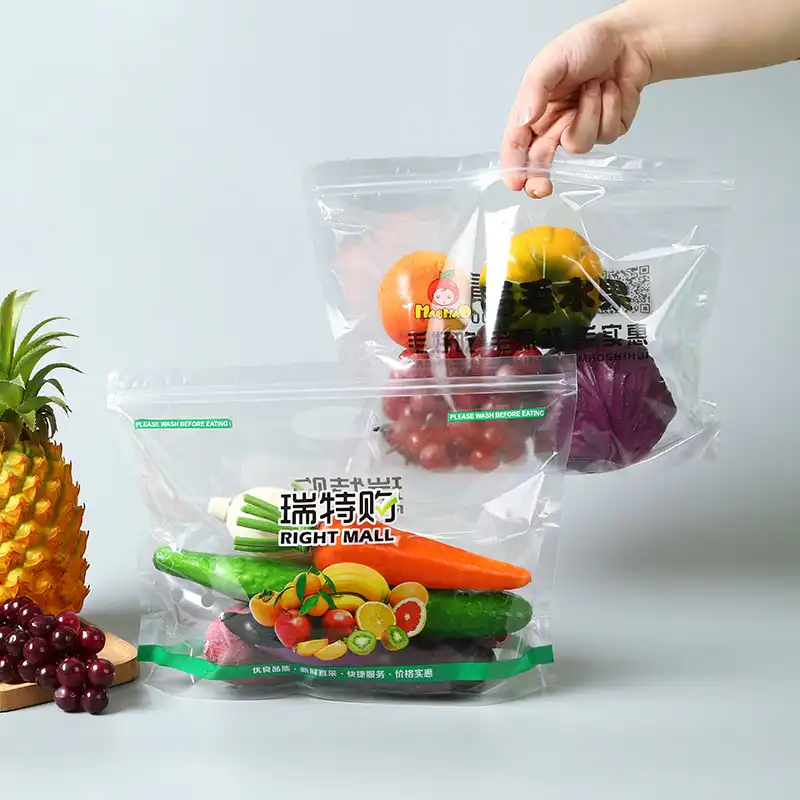
If you're selling reclosable freezer bags on the shelf, buyers judge them by feel. Too flimsy and they assume the food is cheap. The ideal plastic thickness for freezer bags in this category usually sits at 3–4 mils — sturdy in the hand, but not wasteful.
Consider the reseal zipper too. A quality zipper on a thin film feels mismatched, so we usually pair a strong zipper with at least a 3-mil wall.
Print and Shelf Appeal
Frozen aisles are crowded. If your pouch is going retail, the outer layer needs to hold sharp, high-resolution print even after condensation forms during thaw. A PET or matte-laminated outer layer keeps graphics crisp — an easy win for brand recognition.
Common Mistakes That Cost Brands Money
After two decades producing packaging, we see the same avoidable errors again and again.
- Over-speccing. Paying for 6 mils when 4 does the job eats your margin on every unit.
- Ignoring the cold-crack test. A film rated at room temp can fail frozen.
- Skipping seal-strength checks. Most leaks start at the seam, not the middle.
- Copying a competitor. Their product weight and route aren't yours.
In our 6,800㎡ cleanroom facility, every frozen-grade film batch goes through cold-temperature and seal-integrity testing before it ships — so what looks good on paper actually performs in the freezer.
How to Order the Right Spec with Confidence
You don't need to be a materials engineer to get this right. Give your supplier these five details and let them do the math:
- Product name and average weight per pack
- Whether contents have bones, shells, or sharp edges
- Expected freezer storage time
- Vacuum, flat pouch, or reclosable format
- Shipping distance and whether it's retail or bulk
As a manufacturer that has produced packaging for over 20 years, we'd rather send you a tested sample than a spec sheet you have to interpret alone. If you want a second opinion on your current bag, reach out via WhatsApp at +86 182 1944 5665 or email [email protected] and we'll review it with you.
Key Takeaways
Choosing the right wall gauge isn't about going as thick as possible — it's about matching the film to your product, storage, and journey. Get those three right and you protect both your food and your margins.
- Most frozen items land at 2.5–5 mils (63–125 microns).
- Sharp or heavy contents push you toward the thicker end.
- Multi-layer structure often matters more than raw thickness.
- Always test at freezing temperature before full production.
When you're ready to dial in the exact structure for your line, YLTPACK can build and test samples against your real product — no guesswork required.
Frequently Asked Questions
Is thicker frozen packaging always better?
No. Beyond a certain point, extra thickness adds cost without meaningful protection. A well-designed 3–4 mil multi-layer film usually beats a thick single-layer bag. Match the gauge to your product weight and sharpness instead.
What thickness stops freezer burn?
Freezer burn is mainly about the moisture and oxygen barrier, not thickness alone. A film with a nylon or foil barrier layer at 3.5–5 mils, combined with vacuum sealing, gives the best defense against it.
Can I use the same bag for freezing and microwaving?
Only if it's specifically rated for both. Standard freezer PE isn't microwave-safe. Tell your supplier upfront if you need dual-use, and they can spec a heat-tolerant structure.
How do I know if my current bags are too thin?
Watch for cracking after freezing, seam leaks, or punctures during shipping. If you're seeing any of these, your film is likely undersized for your contents. A quick puncture and cold-crack test will confirm it.
Do smaller brands have to order huge quantities to get custom thickness?
Not necessarily. Minimums vary by supplier and product. Share your projected volume and target format, and a source factory can advise on a realistic run size and the right structure for your stage of growth.