If you're sourcing packaging for fresh roasted coffee, you've likely come across this question more than once. The one-way degassing valve adds a component — and a cost — to every bag. So is it genuinely necessary, or just an industry convention nobody questions?
Let's walk through the science, the scenarios, and the practical considerations so you can make an informed sourcing decision.
What Happens Inside a Coffee Bag After Roasting
Coffee beans don't sit still after roasting. The moment they leave the roaster, they begin releasing carbon dioxide — a natural byproduct of the chemical reactions that occurred during the roast. This process is called degassing, and it's more aggressive than most people realize.
In the first 48 to 72 hours, freshly roasted beans can release enough CO2 to visibly inflate a sealed bag. If there's no escape route for that gas, you get swelling, compromised seals, and in some cases, bags that burst in transit or on the shelf.
This is where the coffee bag degassing valve enters the picture — not as a premium add-on, but as an engineered solution to a physical problem. The valve gives CO2 a controlled exit path while keeping oxygen out, preserving both the bag's integrity and the coffee's freshness.
The CO2 Release Timeline — Why Timing Matters
Understanding when gas release peaks helps explain why packaging decisions are so time-sensitive. Here's a simplified breakdown of what happens inside the bag:
| Time After Roast | CO2 Activity Level | Packaging Risk Without Valve |
|---|---|---|
| 0–12 hours | Very high | Bag bursting or seal failure |
| 12–72 hours | High | Visible swelling, potential leaks |
| 3–7 days | Moderate | Gradual flavor degradation begins |
| 7–14+ days | Low | Staling accelerates if oxygen enters |
For brands that pack within 24 to 48 hours of roasting — which is standard practice for anyone prioritizing peak freshness — the valve isn't a nice-to-have. It's the difference between a bag that holds its shape on the shelf and one that looks like a pillow.
How a One-Way Degassing Valve Actually Works
Think of it like a one-way door. Gas from inside the bag can push out, but air from outside cannot push in. The mechanism is simple: a small disc with a flexible membrane responds to internal pressure. When CO2 builds up, the membrane lifts and releases gas. When pressure equalizes, it seals shut again — blocking oxygen from entering.
There are two common styles. Button-style press-fit valves snap into a pre-cut hole in the bag film. Adhesive-mounted valves are bonded directly to the bag's inner surface. Both accomplish the same goal, but adhesive valves tend to offer more flexibility in placement during bag design.
One important clarification: the valve alone doesn't preserve freshness. It works in combination with airtight coffee storage bags — typically multi-layer laminates with aluminum or foil barriers. The bag blocks oxygen and moisture. The valve manages internal gas pressure. Together, they create a controlled atmosphere that keeps coffee at its peak far longer than either element could alone.
Valve vs. Pin-Hole vs. No Valve — A Direct Comparison
Some brands consider alternatives to the one-way valve. Here's how the options stack up:
| Method | CO2 Release | Oxygen Barrier | Shelf Life Impact | Professional Suitability |
|---|---|---|---|---|
| One-way valve | Controlled release | Excellent — no ingress | Maximized (12+ months) | Standard for specialty and commercial brands |
| Pin-hole venting | Uncontrolled | Poor — oxygen enters freely | Reduced by weeks | Budget short-shelf products only |
| No venting (sealed flat) | None — requires extended degassing before packing | Good if timing is perfect | Requires 3–7 day rest period pre-pack | Adds warehouse time and labor cost |
Pin-hole venting is essentially punching tiny holes in the bag. It lets CO2 out, sure — but it also lets oxygen in, which accelerates staling from day one. For any brand selling through retail or shipping to consumers, it's a non-starter.
Sealing without any venting is technically possible, but only if you wait several days post-roast before packing. That delay costs warehouse space, adds handling steps, and still risks some oxygen exposure during the resting period.
Do You Actually Need Them? Scenarios Where Valves Are Non-Negotiable
Not every coffee product requires a valve. But for most brands operating at scale, the answer is yes. Here are the scenarios where skipping the valve creates real problems:
- Packing within 24–48 hours of roast: This is the norm for any brand promising peak freshness. Without a valve, you cannot safely seal the bag this early.
- Subscription and direct-to-consumer brands: Your coffee ships directly to doorsteps. A swollen or burst bag on arrival destroys the unboxing experience and triggers returns.
- Products targeting 6–12 month shelf life: Retail buyers expect bags that look pristine on the shelf for months. The valve enables coffee shelf life preservation at that timeframe.
- Whole bean coffee: Whole beans release more CO2 over a longer period than ground coffee. The degassing challenge is amplified, making the valve even more critical.
When You Might Skip the Valve
There are narrow exceptions. Pre-ground commodity coffee that's been resting in silos for a week or more before packing has already off-gassed most of its CO2. The valve adds less value in that scenario.
Very small-batch local roasters who deliver within days of roasting — and whose customers consume quickly — may also manage without. But this model doesn't scale. The moment you grow into retail distribution, longer shipping timelines, or online sales, the valve becomes necessary.
The Real Cost of Skipping the Valve — What's at Stake
The valve represents a small per-unit cost. What it prevents is far more expensive:
- Product returns and complaints: Swollen or burst bags are the most common packaging-related complaint in coffee. Each return costs more than the valve ever would.
- Accelerated staling: Without proper CO2 release and oxygen protection, roasted coffee can go flat in 2–4 weeks. With a valve and proper barrier material, shelf life extends to 12 months or more.
- Retailer shelf-rejection: Bags that bulge, don't lay flat, or look inconsistent get pulled from shelves. Buyers won't reorder from a brand whose packaging looks unprofessional.
- Brand reputation damage: Customers who receive stale coffee don't always complain — they just don't reorder. The cost is invisible but compounding.
A Quality Issue, Not Just a Packaging Issue
It's tempting to think of the valve as a packaging detail. But from your customer's perspective, it's a product quality issue. The freshness they taste is directly connected to how well your packaging managed atmosphere from the moment beans were sealed.
Repeat orders, subscription retention, positive reviews — these all trace back to consistent cup quality. And consistent cup quality starts with fresh roasted coffee packaging that actually works as intended. The valve protects your brand equity, not just your beans.
What to Look for in a Valve Coffee Bag Supplier
Once you've decided valve bags are the right choice, the next question is who supplies them. Not all valve bags are equal, and the differences show up in failure rates, shelf performance, and long-term reliability.
Here's what matters most:
- Valve reliability: Low-quality valves can clog with coffee oils or fine particles, trapping CO2 inside. Others may fail to seal properly, allowing oxygen ingress over time. Ask about failure rate data.
- Material compatibility: The valve needs to adhere securely to your chosen bag film — whether that's kraft paper, matte laminate, foil-lined, or a combination. Poor adhesion means valves detach during transit or storage.
- Format flexibility: Your bag design might call for the valve on the back panel, the front face, or near the top. A capable supplier offers placement options that suit different bag formats — stand-up pouches, flat-bottom bags, or side-gusset styles.
Questions to Ask Before Placing an Order
Before committing to a supplier, these questions help separate experienced manufacturers from those just assembling components:
- Can the factory test valve performance under simulated storage conditions (temperature, humidity, duration)?
- Are food-safety certifications in place for both the bag material and the valve component? Look for FDA registration and ISO process standards at minimum.
- What's the minimum order flexibility for custom-printed valve bags? Can they accommodate a first run for testing before committing to larger volumes?
- Is valve placement and adhesion inspected as part of quality control, or is it treated as an afterthought?
Factories with established certifications and controlled production environments are better positioned to deliver consistency. For context, a facility like YLTPACKING — with its 6,800㎡ dust-free workshop and over 20 years of flexible packaging manufacturing — represents what production-grade quality control looks like in practice. Cleanroom conditions reduce contamination risk during valve adhesion, and long operational experience means fewer surprises with material compatibility.
Custom Printed Valve Bags — Balancing Branding and Function
Your coffee bag is your brand's most visible touchpoint. It sits on shelves, appears in unboxing photos, and gets held in customers' hands. So how do you balance strong visual design with the functional requirements of a degassing valve?
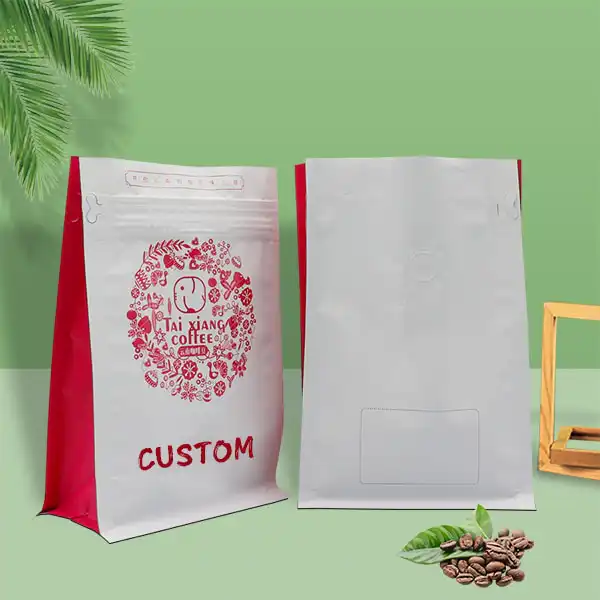
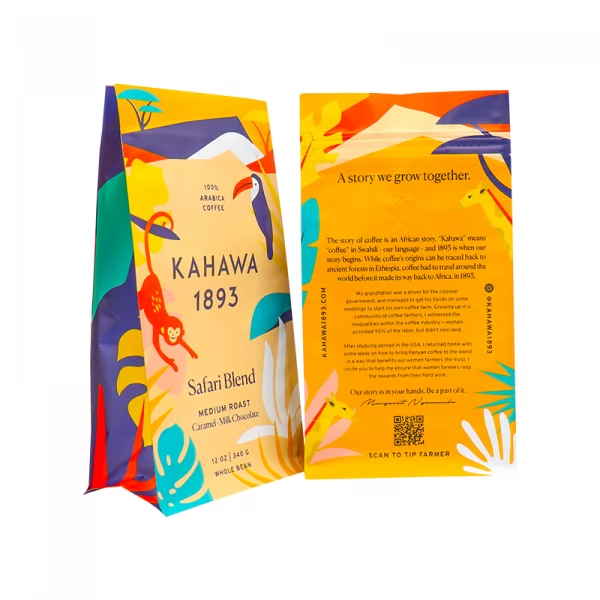
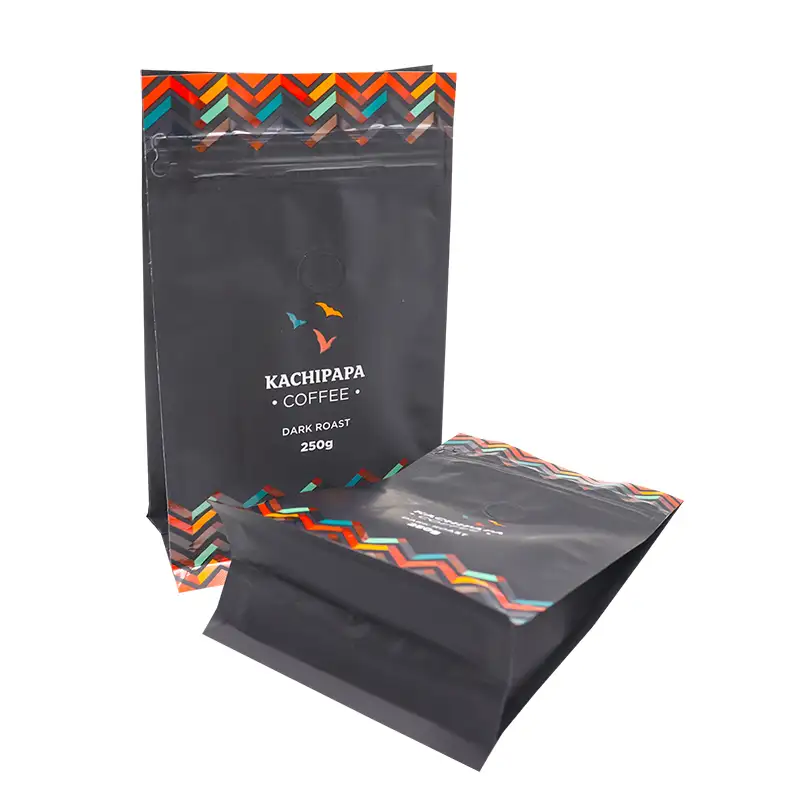
The valve occupies physical space on the bag surface — usually a circular area about 25–30mm in diameter. Your artwork needs to account for this. Smart design works around the valve, incorporating it into the layout rather than fighting it.
Material choice also interacts with valve integration:
- Matte finish films: Popular for premium positioning. Valve adhesion is strong on matte laminates, and the valve disc blends visually.
- Kraft paper laminates: Natural, tactile appearance. Requires testing to ensure valve adhesive bonds properly to the paper surface layer.
- Clear window panels: Let customers see the beans. Valve placement needs to avoid the window area entirely.
Working with a supplier that has an in-house design team makes this coordination much smoother. They can advise on artwork positioning relative to valve and zipper placement before production, catching conflicts early. YLTPACKING's design support team, for example, routinely helps brands align functional elements with visual branding — ensuring neither compromises the other.
Bag Format Options That Work With Valves
The most common formats for valve-equipped coffee bags include:
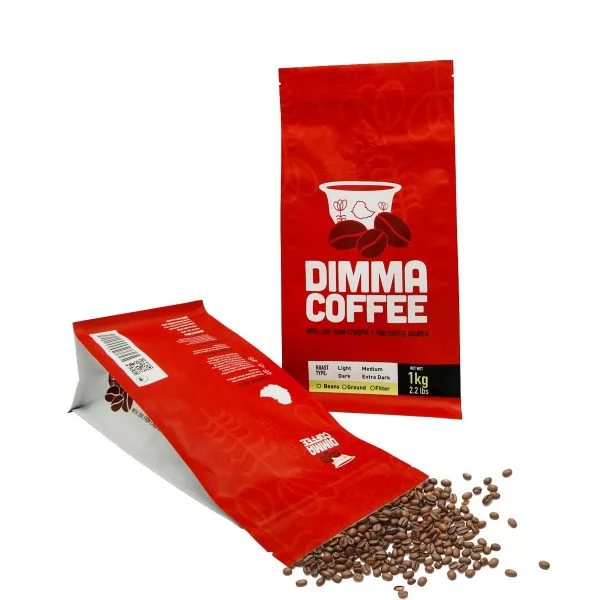
- Stand-up pouch with valve and zipper: The most popular format for retail and DTC. Valve typically sits on the back panel above the fill line.
- Flat bottom bag (box pouch): Premium shelf presence. Valve often placed on the front face for easy squeeze-testing by consumers.
- Side-gusset bag: Traditional format, often used for larger quantities. Valve usually positioned on the top panel or upper back.
Format choice depends on your retail display context, fill weight, and how you want the product to present on shelf. Each format accommodates valves, but placement and design considerations differ.
How Fresh Roasted Coffee Packaging Is Evolving
The valve itself isn't new technology. What's changing is the materials and sustainability expectations surrounding it. Several trends are shaping procurement decisions right now:
- Recyclable mono-material valve bags: Brands pursuing sustainability targets are moving toward single-polymer structures (like all-PE laminates) that can be recycled through existing streams. Valve compatibility with these newer materials is an active area of development.
- Compostable valve integration: Some manufacturers are testing compostable films with valves. Current limitations include reduced barrier performance and higher material costs, but progress is steady.
- Smaller minimum orders and faster turnaround: Emerging direct-to-consumer brands and private-label roasters need smaller initial runs with quick delivery. Suppliers that can accommodate this flexibility — without sacrificing valve quality — have a competitive edge.
- Growing demand from new market entrants: The specialty coffee space continues expanding globally. New brands entering the market need packaging partners who can guide them through material and feature decisions from the start.
What This Means for Your Next Packaging Decision
The degassing valve isn't disappearing — it's being adapted into newer, more sustainable material systems. If you're planning packaging updates 12–18 months out, it's worth asking your supplier about their roadmap for recyclable or compostable valve bags.
Locking in a relationship with a manufacturer that's actively investing in material innovation means you won't need to switch suppliers when your sustainability commitments evolve.
Frequently Asked Questions
Can I just let coffee degas before sealing the bag?
Yes, but it adds 3–7 days to your production timeline. That means more warehouse space, more handling, and a longer window where beans are exposed to ambient oxygen. For brands packing at volume, those extra days create meaningful operational costs and still risk some freshness loss during the resting period.
Do one-way valves affect the taste of coffee?
No. The valve is inert and doesn't contact the coffee directly. Its function is purely atmospheric — managing gas pressure inside the sealed bag. There's no flavor transfer or chemical interaction between the valve and the product.
How long does a one-way valve last?
A properly installed valve maintains function for the full shelf life of the product — typically 12 months or more. The key variables are adhesive quality, valve material grade, and installation precision during production. Low-cost valves from unverified sources are where failures tend to occur.
What's the difference between a valve bag and a bag with a zip-lock?
They serve completely different functions. The valve manages internal CO2 pressure while blocking oxygen entry — it operates automatically while the bag is sealed. The zip-lock provides resealability for the consumer after opening. Most specialty coffee bags include both: the valve for preservation during shelf life, and the zipper for convenience after first use.
Are valve bags more expensive than standard bags?
The valve adds a small incremental cost per unit. For brands packing fresh-roasted coffee, the return on that investment — in extended shelf life, reduced waste, fewer returns, and consistent product quality — far outweighs the cost difference. Exact figures depend on order volume, bag dimensions, material structure, and customization scope.
Can you put a valve on any bag material?
Valves can be integrated into most flexible packaging films including PE, PET, kraft laminates, and foil-barrier structures. Compatibility depends on the specific bag construction — film thickness, surface treatment, and lamination layers all affect adhesive performance. An experienced manufacturer will test and advise on the optimal valve type and placement for your chosen material.
Making the Right Call for Your Brand
The one-way degassing valve isn't a luxury feature or a marketing gimmick. For any brand packaging fresh roasted coffee and expecting it to maintain quality over weeks or months, it's a functional requirement. It protects your product from swelling and bursting. It blocks the oxygen that causes staling. And it enables you to pack closer to roast, delivering fresher coffee to your customers.
For brands scaling from small-batch to larger production, investing in proper valve packaging early prevents costly rebranding or product-quality corrections later. It's easier to build your supply chain right from the start than to retrofit it after quality complaints surface.
Evaluate your roast-to-pack timeline. Define your shelf life goals. Consider your retail or shipping requirements. Then choose packaging that meets all three — not just the cheapest option available today.
Ready to get specific about your coffee packaging? If you're sourcing custom coffee bags — with or without valves — and want clarity on what format, material, and features fit your product, reach out to our team for a no-obligation packaging consultation. We'll help you match the right specs to your roast profile, shelf life targets, and branding needs.
YLTPACK is a direct-from-factory packaging partner with FDA and ISO certification, over 20 years in flexible packaging production, and full custom design support. Whether you're launching a new coffee brand or upgrading your current packaging, we're here as a resource — not a sales pitch. If you have any questions, do not hesitate to contact us directly.
— YLTPACK
WhatsApp: +86 182 1944 5665
Email: [email protected]